Enfilade

New Book | Architecture and Empire in Jamaica

Posted in books by Editor on February 17, 2016

From Yale UP:

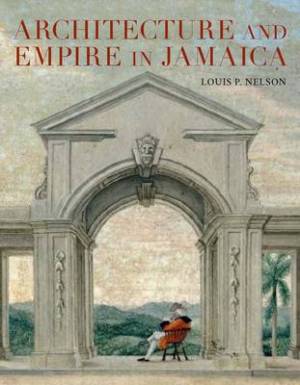
Louis P. Nelson, Architecture and Empire in Jamaica (New Haven: Yale University Press, 2016), 324 pages, ISBN: 978-0300211009, $85.

9780300211009Through Creole houses and merchant stores to sugar fields and boiling houses, Jamaica played a leading role in the formation of both the early modern Atlantic world and the British Empire. Architecture and Empire in Jamaica offers the first scholarly analysis of Jamaican architecture in the long 18th century, spanning roughly from the Port Royal earthquake of 1692 to Emancipation in 1838. In this richly illustrated study, which includes hundreds of the author’s own photographs and drawings, Louis P. Nelson examines surviving buildings and archival records to write a social history of architecture.
Nelson begins with an overview of the architecture of the West African slave trade then moves to chapters framed around types of buildings and landscapes, including the Jamaican plantation landscape and fortified houses to the architecture of free blacks. He concludes with a consideration of Jamaican architecture in Britain. By connecting the architecture of the Caribbean first to West Africa and then to Britain, Nelson traces the flow of capital and makes explicit the material, economic, and political networks around the Atlantic.

Louis P. Nelson is professor of architectural history and associate dean for research in the School of Architecture, University of Virginia.

University of Buckingham’s MA in Decorative Arts and Historic Interiors

Posted in graduate students by Editor on February 17, 2016

MA in French and British Decorative Arts and Historic Interiors
University of Buckingham

Applications are invited for a partial studentship on the London-based MA in Decorative Arts and Historic Interiors offered by the University of Buckingham starting in September 2016.

The bursary, worth £7500, will cover 82% of the course fees for EU students and 55% for international students. Priority will be given to applicants with excellent academic qualifications seeking, or currently pursuing, curatorial careers in museums or the built heritage. The bursary is also open to part-time students currently working in the field, who can take the course as a form of in-service training over two years.

This unique one-year MA in French and British Decorative Arts and Historic Interiors provides sounds vocational and academic training, first-hand study of furniture, silver and ceramics in the context of historic interiors, numerous study trips to museums and historic house collections, (including a study week in Paris) and placements in museums and heritage institutions.

For further details please visit our website or contact Dr Barbara Lasic: barbara.lasic@buckingham.ac.uk

Display | John Cornforth, A Passion for Houses

Posted in books, exhibitions, resources by Editor on February 16, 2016

Now on view at the Paul Mellon Centre:

John Cornforth, A Passion for Houses: Material on the
Georgian Town House from the Cornforth Library Donation

Paul Mellon Centre for Studies in British Art, London, 8 February — 27 May 2016

Curated by Charlotte Brunskill, Frankie Drummond Charig, Emma Floyd, and Jenny Hill

The second Drawing Room Display, curated by Research Collections staff, focuses on material donated to the Paul Mellon Centre from the Estate of John Cornforth. The display concentrates on the town house in the 18th century and will run from February until May 2016.

john-cornforth-book-plates-cropped

Bookplate for John Cornforth, designed by Reynolds Stone (1909–1979).

John Lawley Cornforth (1937–2004) was an architectural historian who wrote numerous articles for Country Life from 1961 to 1993 and worked for the National Trust for many years. His specialism was the 17th- and 18th-century country house, but he also wrote extensively on the town house and its interiors. John Cornforth’s personal working library was donated to the Paul Mellon Centre, through the auspices of the National Trust, in August 2004, shortly after his death. This collection, from which staff selected nearly 800 books and journals, increased the Centre’s already extensive holdings on the history of the town and country house and added considerably to the previously small collection on eighteenth-century decorative arts. He also donated to the Centre’s Photographic Archive the collection of photographs taken for his book, Early Georgian Interiors, published posthumously by Yale University Press for the Paul Mellon Centre in 2004.

The display consists largely of materials donated from Cornforth’s collection but will also include a number of works about John Cornforth or written by him drawn from the rich holdings of the Centre’s library. The holdings relating to John Cornforth are just one of the many points of entry to study the town house of the 18th century in the Research Collections. The Centre’s Archive holds relevant material in, for example, the Oliver Millar Archive and the Brinsley Ford Archive on interiors and architects for this period.

This display is the second in a series featuring material drawn from the Paul Mellon Centre’s own Research Collections. Display and accompanying booklet produced by Charlotte Brunskill, Frankie Drummond Charig, Emma Floyd and Jenny Hill.

The 24-page booklet is available here»

Exhibition | Parties and Entertainment at Court

Posted in exhibitions by Caitlin Smits on February 16, 2016

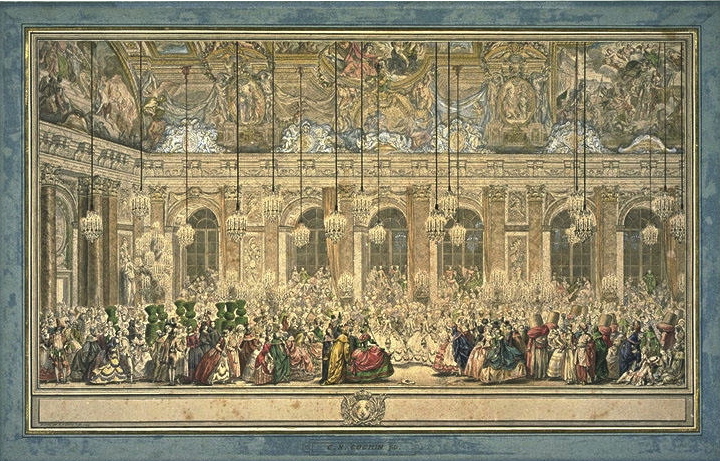
Cochin_Bal_masqué

Charles-Nicolas Cochin the Younger, Le bal des if (The Yew Tree Ball), etching. Masked ball held on the night of 25–26 February 1745 in the Great Gallery at Versailles, to celebrate the marriage of Louis Dauphin of France (father of Louis XVI) and Maria Theresa, Infanta of Spain (Wikimedia Commons).

◊  ◊  ◊  ◊  ◊

Opening this fall at Versailles:

Parties and Entertainment at Court / Fêtes et divertissements à la Cour
Château de Versailles, November 2016 — March 2017

As the political monarch he was, King Louis XIV took “grand entertainment” to the height of its magnificence, making Versailles a venue for celebrations and shows that were ever more grandiose, extraordinary and fantastical. With his eye for human psychology, he understood that the political framework he had forged demanded this “society of pleasures, which gives the people of the Court an honest sort of familiarity with (the sovereign), and touches and delights them more than can be said.” Everyday life at the French Court needed many forms of entertainment. The extraordinary character of royal events was intended to astonish the Court, the kingdom and Europe. Each of his successors, in accordance with their tastes and changes in fashion, preserved this tradition of splendour and creativity in entertainment. The exhibition aims to present the extraordinary variety of entertainment put on at the Court of Versailles, including hunting, shows, comedies, operas, concerts and individual music playing, walks, outdoor games and sport, other games, fires and illuminations, over a fairly long period stretching from Louis XIV to the Revolution. The approach is not designed to be an exhaustive one, but one that shares the feelings of the times through a choice of major works with plenty to delight the eyes and imagination. The curators have relied on scientific expertise in each of these domains.

Exhibition | Versailles and American Independence

Posted in exhibitions by Editor on February 16, 2016

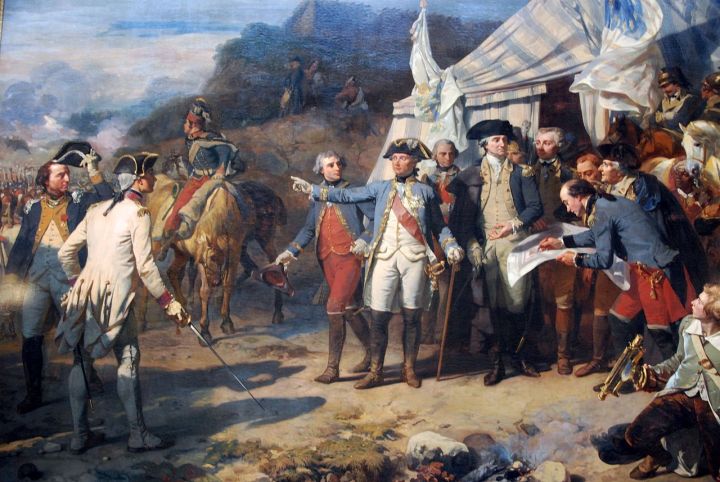
1280px-Couder_Yorktown_Versailles

Auguste Couder, Siege of Yorktown: General Rochambeau and General Washington Give Last Orders before an Attack, October 1781, oil on canvas, 1836 (Versailles, via Wikimedia Commons)

◊  ◊  ◊  ◊  ◊

This summer at Versailles:

Versailles and American Independence / Versailles et l’Indépendance américaine
Château de Versailles, 5 July — 2 October 2016

This exhibition aims to reveal the importance of Franco-American relations at the end of the French Ancien Régime. By assisting the rebels, King Louis XVI showed he was in favour of new ideas, and for nearly a decade the Palace of Versailles, the centre of French government and authority, was a key location for independence and its promotion. The political and military alliance between France and the United States had a lasting effect on artistic principles; there was no such thing as major or minor art, as the infatuation with America found a unique place in everyday objects at Court and in popular American, English and French posters.

Note (added 13 July 2016) — A more complete posting for the exhibition is available here.

Lecture | Philip Morgan on Slavery at Mount Vernon

Posted in lectures (to attend) by Editor on February 15, 2016

50.2.4 v1 KW

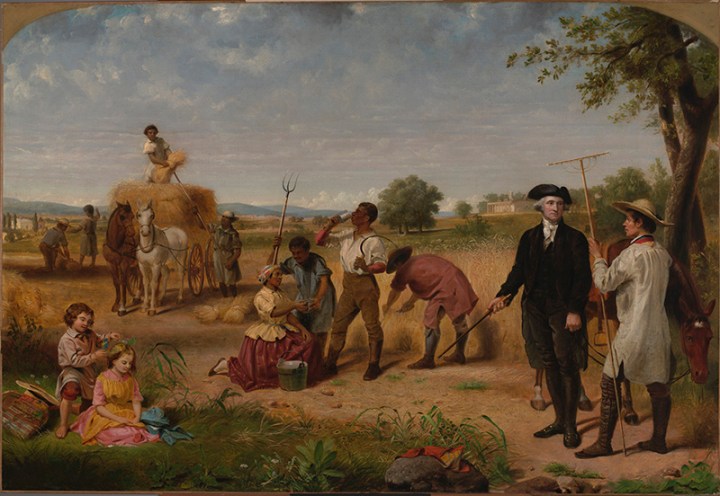
Junius Brutus Stearns, George Washington as a Farmer at Mount Vernon, 1851 (Richmond: Virginia Museum of Fine Arts; photo by Katherine Wetzel). Information on the painting from Colonial Williamsburg.

◊  ◊  ◊  ◊  ◊

From the Homewood Museum at Johns Hopkins:

Philip Morgan, Entangled Lives: Slavery at George Washington’s Mount Vernon
Johns Hopkins University, Baltimore, 18 February 2016

The fifth-largest slave owner in Virginia by the late 1780s, George Washington constantly struggled with the tangled web of slavery despite his personal desires to eliminate it from his life. In this lecture illuminating the lived experience of slavery, historian Philip Morgan will share the ways in which master and slaves, whites and blacks, interacted at Washington’s Mount Vernon plantation with special focus on the workplace, families and resistance.

A reception with the speaker will precede the lecture at 5pm. The lecture, at 6pm, is presented in celebration of African-American History Month by Homewood Museum, the former country house and slave-holding farm of the Carroll family in the early decades of the nineteenth century. Admission is free; however, reservations are requested. Walk-in registration is based on seating availability. The reception and lecture will be held in the Mason Hall Auditorium: 3101 Wyman Park Drive, Baltimore, MD 21211.

Philip Morgan is the Harry C. Black Professor of History at Johns Hopkins University and one of the leading specialists on the history of the Atlantic world.

Additional information on Morgan’s work on slavery at Mount Vernon is available from George Washington University.

◊  ◊  ◊  ◊  ◊

640px-Homewood_Museum,_Johns_Hopkins_University,_Baltimore,_MD

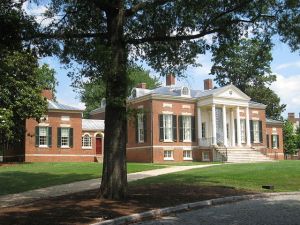
Homewood Museum, Johns Hopkins University, Baltimore. Photo: Wikimedia Commons, July 2008.

Located on the Johns Hopkins University campus, Homewood Museum offers visitors the chance to explore diverse interests in tremendous depth and provides an intimate look at life in early-19th-century Baltimore. The museum’s collections consist of fine and decorative arts objects representative of the furnishings during the Carroll family’s occupancy (1802–1833). Some works have direct affiliation with the Carroll family. The majority of the collection is American, with a strong concentration in high-quality Baltimore furniture of the period. English ceramics, silver, and furniture, as well as items of Chinese and French manufacture, are reflective of the imports available in early-19th century Baltimore.


Marriage Contract with Signatures of Napoleon and Josephine

Posted in Art Market by Editor on February 14, 2016

From NYC-based Lion Heart Autographs:

42805783_1_x

Marriage contract between General Pierre Augustin Hulin and Jeanne Louise Fiersommier, which includes signatures of Napoleon and Josephine Bonaparte, May 1804.

Lion Heart Autographs—for nearly forty years an internationally recognized dealer of autographs and manuscripts focusing on art, history, literature, music and science—has announced an extraordinary opportunity to acquire the finest marriage document ever signed by Napoleon and Josephine. This rare Valentine’s Day opportunity celebrates history’s most romantic and often controversial couple: Napoleon and Josephine. Lion Heart’s rare and evocative marriage contract is not only signed by the historic couple, but by other French notables, including six of Napoleon’s original eighteen marshals (the highest military rank during the Empire). The Valentine’s Day presentation of such a unique, historical document marks the first time Lion Heart Autographs has offered it for sale; it is one of only a handful known to exist in private hands. Lion Heart Autographs will display the document at The Palm Beach Jewelry, Art & Antique Show at the Palm Beach County Convention Center, February 10–16, 2016, where it will be offered for $20,000.

Marie-Josèphe-Rose Tascher de La Pagerie, known as Josephine, was one of the most celebrated women of the 19th century, playing a colorful and pivotal role in the life of her six-year-younger husband, Napoleon Bonaparte. She was one of the most important women in the salons of Paris and her tumultuous love affair with General Bonaparte is well documented. Glamorous and a well-connected socialite, Josephine engaged in several love affairs with highly placed political and military leaders after the failure of her first marriage. Bonaparte, immediately smitten by her upon their first meeting, wed Josephine on March 9, 1796 only a few days before he left on his Italian campaign. During his absence he sent the first of many love letters he would pen throughout their marriage.

Napoleon and Josephine’s marriage was opposed by many members of his family because she was an older widow with children. His mother and sister were especially upset declaring that his new wife considered them well below her status. During Bonaparte’s 1799 Egyptian campaign Josephine purchased the Chateau de Malmaison near Paris taking a special interest in gardens and becoming proficient in botany and horticulture.

Throughout history stories are told of Napoleon and Josephine’s constant separations and rumors of her interest in other lovers. Infidelities troubled the marriage from the start although the couple renewed their marriage vows on December 1, 1804. The following day Napoleon was crowned Emperor and she Empress. The coronation became one of the most famous events of European history, but Josephine’s inability to give birth to a son strained their marriage, and in 1810, Napoleon had the marriage annulled on the pretext that a parish priest had not been present at the original ceremony. Nonetheless, Napoleon and Josephine remain one of history’s most famous couples. The former Emperor’s last words were reported to be “France, armee, tete d’ armee, Josephine.” (France, army, head of the army, Josephine).

The contract witnessed by Napoleon and Josephine celebrates the marriage between General August Hulin (1758–1841) and Marie Jeanne-Louise Tiersonnier (1782–1826). Hulin was an infantryman who rose through the ranks to join the Gardes Français. In the days leading to the storming of the Bastille in 1789, Hulin gave several inflammatory speeches, and on July 14, he organized a small band of armed men at the Hôtel de Ville, marched them to the Bastille where they opened fire and liberated the prisoners. It was this act that sparked the French Revolution. Though recognized as a hero, Hulin was imprisoned during the Reign of Terror. He later rejoined the army and served as an officer during the Napoleonic Wars and as military governor of Paris during Napoléon’s 1812 Russian campaign, where he suppressed a coup against the emperor.

In addition to Napoleon and Josephine’s signatures, the contract is signed by a remarkable cast including six of Napoleon’s original 18 marshals: John Baptiste Bessiers (1786–1813), Louis Nicholas Davout (1770–1823), Andre Massena (1758–1817), Edouard Adolphe Casimire Mortier (1768–1835), Joachim Murat (1767–1815; Napoleon’s brother-in-law and future King of Naples), and Catherine-Dominique de Perignon (1754–1818); two queens: Bonaparte’s step-daughter Hortense Eugenie Cecile Bonaparte (1783–1837) and his sister Marie Annonciade De Caroline Bonaparte Murat (1782–1839); two kings: Murat and Napoleon’s brother Louis-Napoleon Bonaparte (1778–1846) and father to Napoleon’s heir; the three former consuls of France, and many others including Maurice-Jean Raguideau De La Fosse (1759–1805) the Paris notary who presided over Napoleon and Josephine’s own marriage. Just twelve days prior to signing this document, the French Senate proclaimed Napoleon Emperor of France, making this marriage contract one of the earliest documents signed by the Emperor and his wife.

“I am thrilled to share the evocative nature of this historical document on Valentine’s Day. It is assuredly the finest marriage contract signed by Emperor Napoleon and his Empress Josephine available in the world,” said David Lowenherz, founder and owner of Lion Heart Autographs in New York, noting, “Napoleon and Josephine’s own marriage contract is preserved in National Archives of France.” Lowenherz adds, “I don’t think there is a person anywhere who isn’t fascinated by Napoleon and Josephine’s love story—a truly romantic couple joined together during a remarkable period in history. This contract, signed not just by them, but by family members and important military officers as well, all of whom gathered to celebrate the marriage of the man whose actions sparked the French Revolution, offers a rare glimpse into the splendid affairs of the royal household. I am thrilled at the opportunity to offer this precious document first at the Palm Beach Show during the week of Valentine’s Day. What could be more fitting?”

Other highlights to be featured by Lion Heart Autographs at The Palm Beach Jewelry, Art & Antique Show include a letter by Albert Einstein on how intellectuals and the working class should work together; doodles by President Dwight D. Eisenhower on White House stationery; a decorative proclamation signed by President Harry Truman declaring the end of WWII; a very moving letter by Louisa May Alcott about her ailing father and the care she is providing him; a land grant for a revolutionary soldier signed by Benjamin Franklin; an impressive document signed by Thomas Jefferson as Secretary of State about U.S. fishing rights; a very fine art related letter by Henri Matisse; an unpublished handwritten letter by Charles Darwin sending his photograph to a former shipmate aboard the Beagle; a charming letter by Mark Twain in which he offers his autograph to a young collector, and much more.

Exhibition | By Dawn’s Early Light: Jewish Contributions

Posted in exhibitions by Editor on February 14, 2016

prince-2

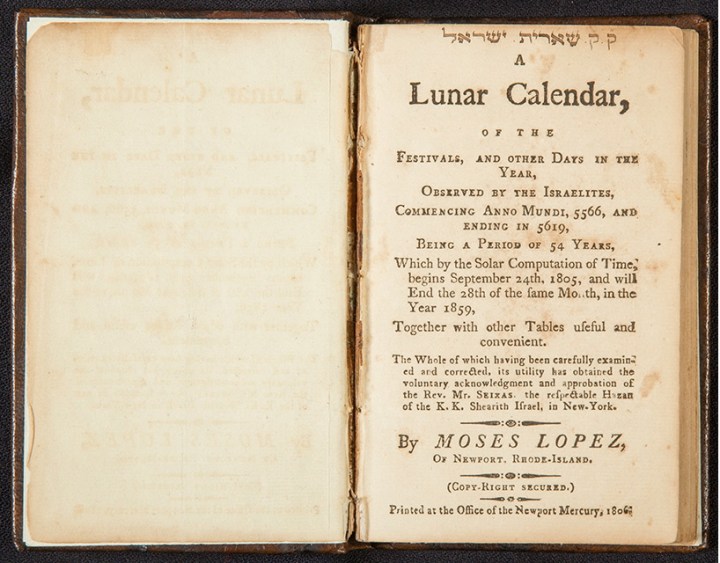
Moses Lopez, A Lunar Calendar, of the Festivals, and Other Days in the Year, Observed by the Israelites: Commencing Anno Mundi, 5566, and Ending in 5619, Being a Period of 54 Years: which by the Solar Computation of Time, Begins September 24th, 1805, and Will End the 28th of the Same Month in the Year 1859: Together with Other Tables Useful and Convenient … Newport, RI, 1806 (Princeton University Library).

◊  ◊  ◊  ◊  ◊

From the Princeton University Art Museum:

By Dawn’s Early Light: Jewish Contributions to American
Culture from the Nation’s Founding to the Civil War

Princeton University Art Museum, 13 February — 12 June 2016
New-York Historical Society, 28 October 2016 — 12 March 2017

Living in an age when Jews are fully integrated into so much of America’s public and popular culture, it is difficult to imagine a time before they shone on the stage and printed page. Such a future for Jews was scarcely imaginable in the crucible years after the birth of the United States. In the colonial period, there was little precedent for Jews speaking for themselves vocally and volubly in the public arena. At the dawn of the Republic, they were new to American public life. Yet as the United States started its grand experiment with liberty, and began to invent a culture of its own, Jews, too, began a grand experiment of living as equals. In a society that promised exceptional freedom, this was both liberating and confounding. As individuals, they were free to participate as full citizens in the hurly-burly of the new nation’s political and social life. But as members of a group that sought to remain distinctive, freedom was daunting. In response to the challenges of liberty, Jews adopted and adapted American and Jewish artistic idioms to express themselves in new ways as Americans and as Jews. In the process, they invented American Jewish culture, and contributed to the flowering of American culture during the earliest days of the Republic.

This exhibition, organized by the Princeton University Library, consists of more than 160 books, maps, manuscripts, prints, and paintings, including some of the earliest novels, plays, scientific treatises, and religious works produced by Jews in the United States. The exhibition is based on the loans and gifts to Princeton University of Leonard L. Milberg, Class of 1953, as well as loans from museums, libraries, synagogues, and private collections.

Note (added 8 March 2017) — The original posting did not include the New-York Historical Society as a venue.

Save

Save

Exhibition | Pastures Green & Dark Satanic Mills

Posted in books, catalogues, exhibitions by Editor on February 14, 2016

03_ThomasJones_TheBard

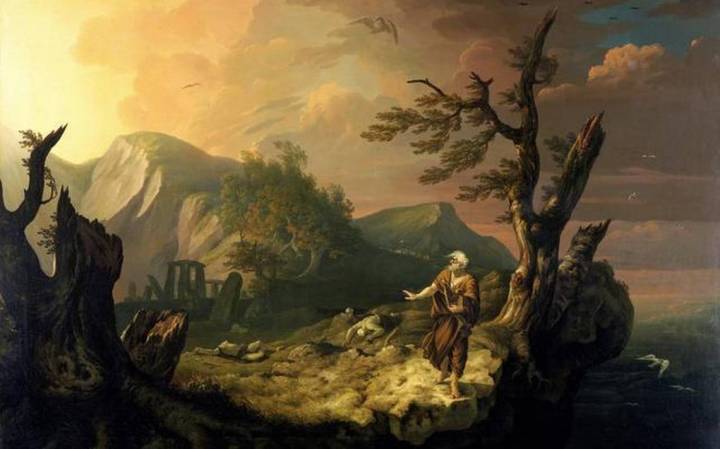
Thomas Jones, The Bard, 1774, oil on canvas, 14.5 x 168 cm
(Amgueddfa Cymru–National Museum, NMW A85)

◊  ◊  ◊  ◊  ◊

From the Princeton University Art Museum:

Pastures Green & Dark Satanic Mills: The British Passion for Landscape
Norton Museum of Art, West Palm Beach, 23 December 2014 — 5 April 2015
Frick Art and Historical Center, Pittsburgh, 7 May — 2 August 2015
Utah Museum of Fine Arts, Salt Lake City, 27 August — 13 December 2015
Princeton University Art Museum, 23 January — 24 April 2016

Organized by the American Federation of Arts and Amgueddfa Cymru–National Museum Wales

The British passion for landscape—already present in the literary works of Milton, Shakespeare, and even Chaucer—began to dominate the visual arts at the time of the Industrial Revolution. In his poem “Jerusalem” (1804), William Blake wrote of both “England’s green and pleasant land” and the “dark satanic mills” of its new industrial cities. Drawn from the remarkable collections of the National Museum Wales, Pastures Green & Dark Satanic Mills: The British Passion for Landscape will offer audiences a rare opportunity to follow the rise of landscape painting in Britain, unfolding a story that runs from the Industrial Revolution through the eras of Romanticism, Impressionism, and Modernism, to the postmodern and post-industrial imagery of today.

Showcasing masterpieces by artists from Constable to Turner, to Monet working in Britain, the exhibition offers new insights into the cultural history of Britain as it became the world’s first industrial nation late in the eighteenth century. Cities—where the nation’s new wealth was generated and its population concentrated—mills, and factories started to challenge country estates and rolling hills as the defining images of the nation, and artists tracked, recorded, and resisted these changes, inaugurating a new era of British landscape painting which both celebrated the land’s natural beauty and a certain idea of Britain while also observing the feverish energies of the modern world.

◊  ◊  ◊  ◊  ◊

The catalogue is published by Giles:

Tim Barringer and Oliver Fairclough, Pastures Green & Dark Satanic Mills: The British Passion for Landscape (London: Giles, 2014), 232 pages, ISBN: 978-1907804342, £40 / $60.
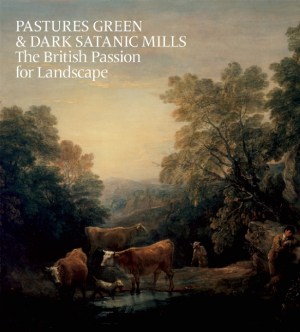
9781907804342Pastures Green & Dark Satanic Mills recounts the story of British landscape painting from the Industrial Revolution in the late 18th century to the present day. Examining 88 paintings from the National Museum of Wales, this volume traces the history of landscape art through romanticism, impressionism and modernism right up to the postindustrial imagery of the 21st century.

The book presents two major essays: one by Tim Barringer on the tradition of British landscape painting and its position within an increasingly industrialized society, the other by Oliver Fairclough on the significance of the Welsh landscape within the British tradition. Loosely chronological and divided into six thematic sections, this new volume demonstrates the strong continuity between the British art of today and that of over 250 years ago: contemporary works, such as conceptual artist Richard Long’s photo pieces based on hiking in the Welsh mountains echo the poetics of place as deeply as Richard Wilson’s landscapes of the 1740s.

Tim Barringer is Paul Mellon Professor of the History of Art, Yale University. His recent publications include Edwardian Opulence: British Art at the Dawn of the Twentieth Century (2013), Pre-Raphaelites: Victorian Art and Design (2013) and Landscape, Innovation, and Nostalgia: The Manton Collection of British Art (2012). Oliver Fairclough is Keeper of Art, National Museum of Wales, and the author of A Companion Guide to the Welsh National Museum of Art (2011) and Turner to Cezanne: Masterpieces from the Davies Collection (2009).


New Book | Rediscovering a Baroque Villa in Rome

Posted in books by Editor on February 14, 2016

From L’ Erma di Bretschneider:

David R. Marshall, Rediscovering a Baroque Villa in Rome: Cardinal Patrizi and the Villa Patrizi, 1715–1909 (Rome: L’ Erma di Bretschneider, 2015), 508 pages, ISBN: 978-8891309310, €290.

00013000Rediscovering a Baroque Villa in Rome: Cardinal Patrizi and the Villa Patrizi, 1715–1909 draws on a large body of archival material to reconstruct in detail the creation of the Villa Patrizi outside Porta Pia from 1715 to 1727 and its afterlife. This material includes building documentation, inventories, and above all the letters written by Cardinal Giovanni Batista Patrizi, papal legate in Ferrara, to his brothers in Rome, both dilettante artist-architects. These letters provide a unique insight into the decision-making processes involved in such a large-scale enterprise, in particular the hiring of artists and the decoration of individual rooms. These rooms included a Gallery inspired by the Galleria Colonna, a romitorio, or fictive hermitage, a Mirror Room anticipating those created later in the century, and one of the first Chinoiserie interiors in Rome.

The Villa Patrizi emerges as perhaps the most important secular project in the barocchetto manner, a distinct design sensibility prevalent in the early decades of the eighteenth century that was oriented towards modern taste (to be found in Northern Italy and France), as opposed to the antiquarianism of Cardinal Albani, whose Villa Albani it faced across the valley. The book demonstrates the crucial role played by Giovanni Paolo Panini, later famous as a painter of capricci and Roman views, not only as a painter of the frescoes that decorated many of the rooms, but also as co-ordinator of the design of the more adventurous interiors, and his progress from employee to friend and collaborator of the family. We follow the fluctuating fortunes of the main building (the Casino) and its surroundings: from the terraces, gardens, and vigna of the original villa, through the acquisition of the Villa Bolognetti next door and the creation of one of the finest English-style gardens of nineteenth-century Rome, the almost complete destruction of the villa and grounds in 1849, its subsequent rebuilding to the same design, the subdivision of the garden in the building frenzy following unification in 1870, through to the demolition of the Casino in 1909 and the levelling of the site.

Embedded in the dominant narrative of the construction and destruction of the villa are the lives of the individual members of the Patrizi family (including the women): their marriages, alliances, and their preoccupation with succession and inheritance. We learn how a Roman family organised itself between its principal residences: the Villa Patrizi outside Porta Pia, the Palazzo Patrizi palace opposite the church of S. Luigi dei Francesi in Rome, and the palace at Castel Giuliano. The wealth of evidence that is drawn upon provides a unique insight into the motivations of Cardinal Patrizi and his brothers, who was preoccupied with the signs of status appropriate to a cardinal, the constraints of etiquette, and above all his desire to leave a building that would enhance the status of his family, and would be a blessing and not a burden on “those who come after me.”

David R. Marshall is Principal Fellow, Art History, School of Culture and Communication, the University of Melbourne, and a fellow of the Australian Academy of the Humanities. He is a specialist in seventeenth- and eighteenth-century landscape and view painting, particularly the work of Giovanni Paolo Panini, Piranesi, and Filippo Juvarra. His interest in architectural view painting was initiated by his research into the seventeenth-century architectural painters, Viviano and Niccolò Codazzi, resulting in his publication Viviano and Niccolò Codazzi and the Baroque Architectural Fantasy (Rome: Jan di Sapi Editori, 1993). He has published widely since on architectural view painting and landscape painting in seventeenth- and eighteenth-century Rome in such journals as The Art Bulletin, The Burlington Magazine, Journal of the History of Collections, Artibus et Historiae, Storia dell’ Arte, and Studies in the History of Gardens and Designed Landscapes. He was the founder and editor of Melbourne Art Journal from 1997 to 2015, and in this role he edited (and contributed chapters to) monographs that include The Italians in Australia: Studies in Renaissance and Baroque Art (Florence: Centro Di, 2004); Art, Site and Spectacle: Studies in Early Modern Visual Culture (Melbourne, 2007); and most recently, The Site of Rome: Studies in the Art and Topography of Rome 1400–1750 (Rome: L’ Erma di Bretschneider, 2014). With Susan Russell and Karin Wolfe he was the editor of Roma Britannica: Art Patronage and Cultural Exchange in Eighteenth-Century Rome (British School at Rome, London, 2010). Complementary to this monograph on the Villa Patrizi is his edition of the letters of Cardinal Patrizi, published in Collectanea Archivi Vaticani / Dall’Archivio Segreto Vaticano. Miscellanea di Testi, Saggi e Inventari 8 (2015), pp. 143–520 [information for ordering a copy is provided below].

◊  ◊  ◊  ◊  ◊

C O N T E N T S

Introduction: Roman Villas and the Villa Patrizi

Part 1 | The Cardinal and His Family
1.1  Patrizio Patrizi the Elder (1629–1689)
1.2  Architect and Patrons
1.3  The Cardinal in Ferrara, 1718–1727
1.4.  Ottavia Sacchetti and Patrizio Patrizi the Younger, 1722–1739
1.5  Maria Virginia and Giovanni, Porzia and Francesco

Part 2 | Vigna and Villa
2.1  Vigna Patrizi, 1650–1715
2.2  Constructing the Casino

Part 3 | Decoration and Function
3.1  Organisation of the Piano Nobile
3.2  Anterooms

◊  ◊  ◊  ◊  ◊

From the Archivo Segreto Vaticano:

David R. Marshall, ed., The Letters of Cardinal Patrizi to His Brothers Mariano and Francesco Concerning The Villa Patrizi (1718–1727), Collectanea Archivi Vaticani (Dall’Archivio Segreto Vaticano. Miscellanea di Testi, Saggi e Inventari VIII 2015), ISBN 978-8898638000, €40.

Orders for publications of the editorial series published by the Archivio Segreto Vaticano should be sent by fax or e-mail to:
Archivio Segreto Vaticano
Economato
Cortile del Belvedere
00120 Città del Vaticano
fax +39 06 69883150
economato@asv.va