Lieke van Deinsen on the ‘Panpoëticon Batavûm’
From the September 2016 Newsletter on Academic Activities at the Rijksmuseum:
As a Johan Huizinga Fellow, Lieke van Deinsen conducted research into a remarkable collection of eighteenth-century portraits of authors, better known as the Panpoëticon Batavûm. Her findings will be published as the first volume in the new book series Rijksmuseum Studies in History, which will be launched 13 October 2016.
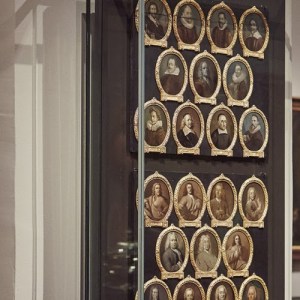 Collecting was extremely fashionable in the eighteenth-century Dutch Republic. Wooden trays and cabinets, made specifically for the purpose, would be filled with collections of coins, stones and shells. The Amsterdam painter, engraver and amateur poet Arnoud van Halen assembled a collection of a different and unique kind. In 1719, he commissioned a cabinet that eventually served as the repository of over three hundred little portraits of Dutch poets past and present. The formal enshrinement of this remarkable collection did not, however, mark its beginning—or its end. Van Halen had started accumulating his Panpoeticon Batavum at the turn of the eighteenth century, and after his death the cabinet and its contents changed hands several times as lovers of literature and literary societies sought to acquire the Panpoëticon. The collection also inspired dozens of poets to articulate their highly emotional reactions on seeing this ground-breaking image of Dutch literary history. The wooden cabinet became the tangible monument to the Dutch literary canon at a time when Dutch culture was primarily described in terms of decline, Frenchification and the waning of the Golden Age.
The history of the Panpoëticon Batavûm literally ended with a bang. The wooden cabinet was severely damaged when a ship filled with gunpowder exploded in the centre of Leiden. In the aftermath of the disaster, the remaining portraits were sold separately and ended up all over Europe. Nowadays, eighty-three of the original portraits can be found in the Rijksmuseum’s collection.
Read more here»
Exhibition | In Pursuit of Pleasure: The Polite and Impolite

Now on view at Fairfax House:
In Pursuit of Pleasure: The Polite and Impolite World of Georgian Entertainment
Fairfax House, York, 29 July — 31 December 2016
From exotica to erotica, In Pursuit of Pleasure opens a window onto the outrageous and sometimes shocking behaviour of ‘polite society’—conducted in the name of entertainment.
Fairfax House’s major summer exhibition will look at the social scene in English towns and cities including London, delving into the tempting array of decadent activities and pleasurable pursuits catering for all tastes and predilections, sometimes challenging the notions of what ‘polite’ entertainment encompassed in the eighteenth century. In Pursuit of Pleasure also specifically uncovers the richness of Georgian York’s offerings as the social capital of the North and the place to see and be seen. With Burlington’s exquisite new Assembly Rooms, the excitement of the races, as well as the city’s renowned Theatre Royal, the city enjoyed a social and cultural renaissance. The explosion of luxury retail experiences combined to make York the destination of choice for those in pursuit of refined amusement. As well as exploring its lively winter season with rounds of dinners, balls, assemblies and parties, the exhibition delves into the city’s debauched diversions, including ‘polite’ society’s taste for notorious trials, visiting prisons and public hangings, the wanton pleasures available in the city’s brothels, as well as raucous activities such as cockfighting, bear baiting and street boxing. In exploring the full gamut of York’s lively social and cultural life In Pursuit of Pleasure reveals a fascinating world of the city’s exuberant, and often times murky, past.
The Fairfax House website includes images of objects in the exhibition, including a remarkable ivory dildo (more information on that here).
◊ ◊ ◊ ◊ ◊
2016 Georgian Studies Symposium
Polite and Impolite Pleasures: Entertaining the Georgian City
York Hilton Hotel and Fairfax House, York, 21 October 2016
Early registration ends 30 September 2016
The Georgian era saw a huge increase in the range and variety of entertainments available to an expanding and urbanising population. In the towns and cities of Georgian Britain, urban life offered a dazzling and constantly changing kaleidoscope of pleasures that could be enjoyed for a price. The lowest and the highest forms of entertainment were catered for along with everything in between, from the cultivated recreations of the nobility through the gentility of middle-class leisure to the earthier enjoyments of the ‘common folk’.
New cultures of entertainment reflected changing patterns of work, mobility and social relations, and reflected developments in class, gender and the dynamics of personal and collective identity. The urban environment itself was affected by these changing cultures of entertainment. From London to provincial centres, industrial cities to market towns, new promenades, parks, streets and squares were developed, new theatres, assembly rooms and concert halls were built and embellished. And paralleling this brightly-lit and orderly world of polite pleasure was another, darker urban realm of more dubious diversions: prostitution and prize fights, the gambling stew and the drinking den.
From theatrical performances and musical recitals, assemblies and dances, to race meetings, boxing matches, cock fights and hangings, the fourth Fairfax House Symposium in Georgian Studies explores the theme of Georgian entertainment and the ‘polite and impolite pleasures’ of the long eighteenth century (c.1680–1830).
Keynote Speakers
• Ivan Day (British and European culinary historian, scholar, broadcaster and writer)
‘Crocants, Collops, and Codsounds: Fashions in Dining and Food in Georgian Provincial Towns and Cities’
• Murray Pittock (Bradley Professor of English Literature, University of Glasgow)
‘Music, Theatre, Innovation, and Resistance: Edinburgh in the First Age of Enlightenment’
New Book | Neo-Georgian Architecture, 1880–1970
Distributed in North America by The University of Chicago Press:
Julian Holder and Elizabeth McKellar, eds., Neo-Georgian Architecture, 1880–1970 (London: Historic England, 2016), 256 pages, ISBN: 978-1848022355, $100.
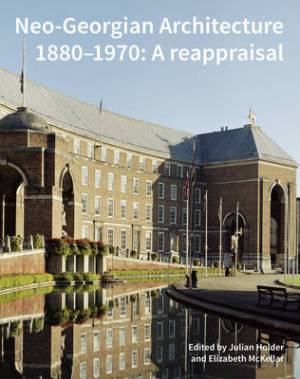 Neo-Georgian design, which began with a revival of the Georgian ideals of symmetry and classical proportion in the late nineteenth century, has exerted a powerful and enduring influence on English-language cultures around the world. Neo-Georgian Architecture, 1880–1970 assesses the impact of this movement through a consideration of the buildings, objects, institutions, and actors involved, contending that Neo-Georgianism was not simply another dying gasp of Revivalism but a complex assertion of national image and identity with a complicated, and at times fraught, relationship to modernism.
Julian Holder is Lecturer in the History and Theory of Architecture department at the University of Salford. Elizabeth McKellar is Professor of Architectural and Design History at the Open University.
◊ ◊ ◊ ◊ ◊
C O N T E N T S
Notes on Contributors
Acknowledgements
Foreword by Louise Campbell
1 Introduction: Reappraising the Neo-Georgian, Julian Holder and Elizabeth McKellar
I: Origins of the Neo-Georgian
2 Quality in Quality Street: Neo-Georgian and Its Place in Architectural History, Alan Powers
3 The Call to Order: Neo-Georgian and the Liverpool School of Architecture, Peter Richmond
4 Georgian London before Georgian London: Beresford Chancellor Rasmussen and ‘The true and sad story of the Regent’s Street’, Elizabeth McKellar
II: Developing the Neo-Georgian Language
5 Edwin Lutyens: Wrenaissance to Neo-Georgian, Margaret Richardson
6 Emanuel Vincent Harris: Civic, Civil and Sane, Julian Holder and Nick Holmes
7 Giles Gilbert Scott and Classical Architecture, Gavin Stamp
8 C. H. James: Neo-Georgian: From the Small House to the Town Hall, Nick Chapple
III: Establishing a New Tradition: Typologies of the Neo-Georgian
9 Banker’s Georgian, Neil Burton
10 A State of Approval: Neo-Georgian Architecture and His Majesty’s Office of Works, 1914–1939, Julian Holder
11 Neo-Georgian: The Other Style in Britain’s 20th-century University Architecture?, William Whyte
IV: Neo-Georgian: A Prelude to Modernism?
12 ‘Modern Swedish Rococo’: The Neo-Georgian Interior in Britain, c. 1920–1945, Clare Taylor
13 ‘A Live Universal Language’: The Georgian as Motif in interwar English Architectural Modernism, Elizabeth Darling
V: Global Neo-Georgian
14 The Neo-Georgian in New Zealand, 1918– 1939: Architectural Revivalism at the End of Empire, Ian Lochhead
15 ‘Phony Coloney’: The Reception of the Georgian and the Construction of 20th-Century America, Stephen Hague
Index
Call for Papers | Medals and Tokens in Europe
From H-ArtHist (7 September 2016). . .
Art for the Powerful, Multiple Objects: Medals and Tokens
in Europe from the Renaissance to the First World War
Art du puissant, objet multiple: Médailles et jetons en
Europe, de la Renaissance à la Première Guerre mondiale
Institut national d’histoire de l’art, Paris, 30 March — 1 April 2017
Proposals due by 6 November 2016
The medal was revived in the princely courts of fifteenth-century Italy as a commemorative art and quickly adopted by sovereigns across Europe. Medals, tokens, and other metallic objects devoid of fiduciary value became more and more widespread and benefitted from several peaks of popularity in the seventeenth, eighteenth, and nineteenth centuries, as illustrated by the metallic histories of Louis XIV or Napoleon, a format adopted by others as far afield as the Tsar of Russia. Whilst changes in taste led the medal to be seen as in or out of fashion at different moments, it has continued to maintain its essentially commemorative function and has been used to express the ideals of all manner of political regimes from monarchies to republics.
This symposium seeks to explore the specificity of a form of official art that associates image and text, producing objects whose message is also partially conveyed by the hierarchy of values intrinsic to the metals used, from the noblest gold to more modest alloys. As objects that can be reproduced, that are easily portable and largely distributed, their biographies also tend to be quite distinct from that of other types of art objects. An initial specificity is that of the role of the engraver whose function oscillates between that of an artist, an artisan, and an agent of a commissioning power. His artistic practice can be considered in some sense as paradoxical in so much as it is constrained by the conventions of the medium and by the outline of the project which his talent is called on to convey in material form. This opens up to the question of the expressive aims of this official art that seeks to capture and commemorate History as it happens, fortifying the glory of the commissioning party. Indeed, medals and tokens represent the result of the interplay of the different actors who contribute to their elaboration: from the initial idea developed by a commissioning power and affiliated scholars, to the drawing of a model, to the production and diffusion of the multiple editions of the final product. Medals also need to be considered as part of a wide range of visual productions that share a common language dedicated to reinforcing the powers in place. Finally, greater attention needs to be paid to the manner in which these objects (and their models) have circulated, in particular by considering the development of a market for modern and contemporary medals and their status in the make-up of private and public coin collections. This may also be an opportunity to consider the reciprocal influence between the evolution of the taste and interest of collectors and production styles, techniques, and themes through time.
This conference will showcase current research that can provide an alternative to a very dispersed historiography dominated by the genre of the catalogue. We hope that a comparative effort, with cases from across Europe, in a large chronological frame will help to establish an interdisciplinary approach to the production and circulation of medals and similar objects; one that reflects their complex nature and the specificity of their biographies. We welcome perspectives from a range of disciplines and research perspectives including art history, social and political history, numismatics, material culture studies, etc.
Proposal of no more than 400 words should be sent accompanied by a short CV before the 6th of November 2016 to the following address: colloquemedailles2017@gmail.com. Each presentation should aim to be no longer than 20 minutes, and the conference papers will be published. Languages are French and English. The organizing committee will give notice of acceptance by mid December 2016.
Organizing Committee
Felicity Bodenstein, docteur en Histoire de l’art, Kunsthistorisches
Institut, Florenz, Max-Planck-Institut
Thomas Cocano, doctorant en Histoire, EPHE
Ludovic Jouvet, doctorant en Histoire de l’art, Université de Bourgogne/ INHA
Katia Schaal, doctorante en Histoire de l’art, École du Louvre / Université de Poitiers / INHA
Sabrina Valin, doctorante en Histoire de l’art, Université Paris Ouest Nanterre-La Défense
Scientific Committee
Marc Bompaire, directeur d’études, EPHE
Béatrice Coullaré, chargée de conservation, Monnaie de Paris
Frédérique Duyrat, directrice du département des Monnaies, Médailles et Antiques, BnF
Victor Hundsbuckler, conservateur du patrimoine, responsable de la Conservation, Monnaie de Paris
Thierry Sarmant, conservateur en chef, Service historique de la Défense à Vincennes
Philippe Thiébaut, conservateur général du patrimoine, conseiller scientifique, INHA
Inès Villela-Petit, conservatrice du patrimoine, département des Monnaies, Médailles et Antiques, BnF
Institutional Partners
Université Paris Ouest Nanterre La Défense (École doctorale 395, Milieux, cultures et sociétés du passé et du présent – Laboratoire du HAR, Histoire des Arts et des Représentations)
École pratique des hautes études (EPHE)
Monnaie de Paris
Bibliothèque nationale de France (BnF)
Institut national d’histoire de l’art (INHA)
Exhibition | Real Time and Time of Reality: Clocks at the Pitti Palace
Opening this week at the Pitti Palace:
Real Time and Time of Reality: Clocks from the Pitti Palace
Tempo reale e tempo della realtà: Gli orologi di Palazzo Pitti dal XVII al XIX secolo
Palazzo Pitti, Florence, 13 September 2016 — 8 January 2017
Curated by Simonella Condemi and Enrico Colle

Amphora-shaped clock, made in Paris, 1810–20, gilt bronze (Florence: Museo Stibbert)
The exhibition will comprise a significant selection of roughly eighty clocks out of the almost two hundred pieces in the Palazzo Pitti’s collection, testifying to the passage of time for those whose daily lives were played out in the Florentine palace in the 18th and 19th centuries.
The selection of these singular objets d’art will allow visitors to admire the astonishing technical and artistic quality of these timepieces in the various different forms and formats in which they were produced, revealing their duality comprising, on the one hand, an often sophisticated and complex mechanism, and on the other, a case which started out life as a cover for the mechanism but which gradually turned into a work of art in its own right.
Additional information (in Italian) and images are available here»
Exhibition | The Four Continents: Florentine Tapestries

Florentine tapestry after cartoons by Giovanni Camillo Sagrestani, The Continent of America, from a series of The Four Continents, ca. 1730s.
◊ ◊ ◊ ◊ ◊
Opening this month at the Pitti Palace:
The Four Continents: Florentine Tapestries after Drawings by Giovanni Camillo Sagrestani
I Quattro Continenti: Arazzi fiorentini su cartone di Giovanni Camillo Sagrestani
Palazzo Pitti, Florence, 27 September 2016 — 8 January 2017
Curated by Caterina Chiarelli and Daniele Rapino
On display will be four beautiful tapestries woven from cartoons by the painter Giovanni Camillo Sagrestani (1660–1731). It is one of the finest series realized by the Grand Ducal tapestry workshop, signed by the most skillful weavers of that time, among whom Vittorio Demignot (d. 1742), whose apprenticeship took place in Flanders. The Four Continents are represented with extravagant features and creative innovations that reflect the contemporary conception of cultural and historical identities of world lands. Comparable to the finest coeval French examples, their magnificent and elegant composition was largely appreciated: in particular, on the 20th of January 1739, they were used as decorative setup for the triumphal entry into Florence of the new Hapsburg-Lorraine Grand Duke, Francis II, and his wife Maria Teresa, future empress of Austria.
Call for Proposals | History of Collecting Seminars
From The Wallace Collection:
History of Collecting Seminars
The Wallace Collection, London, 2017
Proposals due by 12 September 2016
The seminar series was established as part of the Wallace Collection’s commitment to the research and study of the history of collections and collecting, especially in the eighteenth and nineteenth centuries in Paris and London. In 2017, as in previous years, we plan to organise a series of 10 seminars. We are keen to encourage contributions covering all aspects of the history of collecting, including:
• Formation and dispersal of collections
• Dealers, auctioneers and the art market
• Collectors
• Museums
• Inventory work
• Research resources
The seminars, which are normally held on the 4th Monday of every month during the calendar year, excluding August and December, act as a forum for the presentation and discussion of new research into the history of collecting. Seminars are open to curators, academics, historians, archivists and all those with an interest in the subject. Papers are generally 45–60 minutes long and all the seminars take place at the Wallace Collection between 5.30 and 7pm. If interested, please send a short text (500–750 words), including a brief CV, indicating any months when you would not be available to speak, by 12 September 2016. For more information and to submit a proposal, please contact: collection@wallacecollection.org.
Please note that we are able to contribute up to the following sums towards speakers’ travelling expenses on submission of receipts:
• Speakers within the UK – £ 80
• Speakers from Continental Europe – £ 140
• Speakers from outside Europe – £ 200
Remaining lectures in this year’s schedule include:
26 September: Silvia Davoli, Paul Mellon Centre Research Curator, Strawberry Hill House, The Horace Walpole Collection: Researching the Strawberry Hill Sale of 1842: A Real Baedeker’s Guide of Taste
31 October: Hannah Kinney, DPhil candidate, History of Art, University of Oxford: Con fiducia: Commissioning Copies of Antiquities in Eighteenth-Century Florence
28 November: Jessica Feather, Allen Fellow at the Paul Mellon Centre: Collecting the Modern Aesthetic: Britain at the fin de siècle
All lectures start at 17:30 in the Lecture Theatre. Booking not required.
Nicholas Serota To Step Down as Tate Director
From the Tate press release (8 September 2016). . .
Tate’s Board of Trustees today announced that Nicholas Serota will step down as Director of Tate next year. The process of finding a new director will begin immediately and is being guided by a specially appointed committee of trustees and external advisers including senior artists.

Nicholas Serota, © Hugo Glendinning, 2016
Tate’s Chairman, Lord Browne said: “We have been privileged to have in Nicholas Serota one of the world’s greatest museum directors and a leader for the visual arts on a global stage. Under his leadership Tate has become a preeminent cultural organisation nationally and internationally and one of the most visited in the world. He has championed British art and artists throughout the world while at the same time ensuring that Tate has become a much loved, open and accessible institution for the public. He leaves Tate in a strong position on which to build for the future. We wish him well as he takes on new responsibilities which will be for the benefit of all the arts.”
Nicholas Serota said: “It has been an exciting challenge to work with successive Chairmen, trustees and groups of extremely talented colleagues to develop the role of Tate in the study, presentation and promotion of British, modern and international art. Over the past thirty years there has been a sea-change in public appreciation of the visual arts in this country. Tate is proud to have played a part in this transformation alongside other national and regional museums and the new galleries that have opened across the country in places like Walsall, Margate, Wakefield, Gateshead and Nottingham. Tate has always been fortunate to have enjoyed the support of artists and to have benefitted from the international acclaim for the work of British artists in recent years. I leave an institution that has the potential to reach broad audiences across the UK and abroad, through its own programmes, partnerships and online.”
Nicholas Serota is a champion of visual arts throughout the UK and abroad. During his 28 years at Tate, he has helped to make Tate an organisation respected throughout the world. It was his vision that led to the creation of Tate Modern and the redefinition of the original gallery at Millbank as Tate Britain. He led the creation of Tate St Ives and has also sought to strengthen the role of Tate as a national institution through the further development of Tate Liverpool in taking a leading part in the celebration of the city as European City of Culture in 2008 and by establishing partnerships with galleries across the country through the Plus Tate programme.
During his term the range of Tate’s collection has broadened to include photography and the geographical reach has been extended across the world, taking a more global view. The collection has also been strengthened by major acquisitions of historic British art, including Wright of Derby’s An Iron Forge 1772, Reynolds’s The Archers 1769, Turner’s Blue Rigi 1842 and Constable’s Salisbury Cathedral from the Meadows 1831. Additions to the modern collection have included major works by Bacon, Beuys, Bourgeois, Brancusi, Duchamp, Horn, Mondrian, Richter and Twombly, amongst many others. The contemporary collection has been developed into one of the strongest in the world. He was instrumental in helping to secure the ARTIST ROOMS collection given to Tate and the National Galleries of Scotland by Anthony d’Offay as a collection to be shown across the UK. In the past ten years, he has curated some of Tate’s most acclaimed and popular exhibitions including Donald Judd, Howard Hodgkin, Cy Twombly, Gerhard Richter and Henri Matisse: The Cut-Outs.
He will take up the part-time role of Chairman of the Arts Council on 1 February 2017 and will continue at Tate until later in the year.
Martin Roth To Step Down as V&A Director
From the V&A press release(5 September 2016). . .
Martin Roth, Director of the V&A since September 2011, has announced to staff today he will leave his role in the Autumn after five years in post. Martin has presided over a succession of critically acclaimed exhibitions, most notably David Bowie is and Alexander McQueen: Savage Beauty, achieving record visitor numbers, which last year reached the highest level in the Museum’s 150 year history—as well as the ambitious refurbishment of multiple galleries showcasing the V&A’s world-leading collections, including most recently the new Europe 1600–1815 galleries. He has also overseen major developments including construction of the new Exhibition Road entrance, courtyard and gallery, due to open in 2017, as well as developing significant strategic partnerships in Shenzhen, Dundee and with V&A East in the Queen Elizabeth Park, East London.
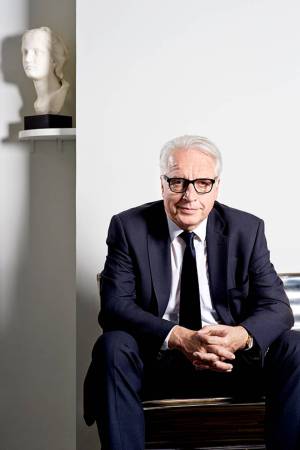
Martin Roth, © Victoria & Albert Museum, London.
Under his directorship, Martin has established the new Design, Architecture and Digital Department and spearheaded new and socially responsive programming, from the Disobedient Objects exhibition to the current Engineering Season. He has also forged many innovative new partnerships, not least with the Venice Biennale, World Economic Forum and International Olympic Committee. The Museum was recently awarded Art Fund Museum of the Year 2016, the biggest museum prize in the world, and praised for its “exceptional imagination, innovation and achievement across the previous 12 months.”
Martin Roth said: “It’s been an enormous privilege and tremendously exciting to lead this great museum, with its outstanding staff and collections, and I’m proud to have steered it to new successes and a period of growth and expansion, including new partnerships around the UK and internationally. Our recent accolade as Art Fund Museum of the Year feels like the perfect moment to draw to a close my mission in London and hand over to a new director to take the V&A forward to an exciting future.”
Nicholas Coleridge, Chairman of the Trustees of the V&A said: “Martin’s tenure as Director has been marked by a highly successful period of creativity, expansion and reorganisation of the V&A. He has made a significant contribution to the success of this museum, and the Trustees are immensely grateful for all that he has achieved here. We are now starting the process of looking
for someone to take on the role and are fortunate to have an exceptional team in place to lead its activities and help build its future with the new Director.”
Martin intends to devote more time to various international cultural consultancies and plans to spend more time with his wife Harriet and their children, in Berlin and Vancouver. The V&A’s Board of Trustees will now begin the search to find a new Director.
Call for Papers | ASECS 2017, Minneapolis
Just a reminder that that the due date for ASECS 2017 proposals is next Thursday (15 September). Send them in!
2017 American Society for Eighteenth-Century Studies Conference
Hyatt Regency Minneapolis, 30 March — 2 April 2017
Proposals due by 15 September 2016
Proposals for papers at the at the 48th annual meeting of the American Society for Eighteenth-Century Studies, at the Hyatt Regency Minneapolis, are now being accepted. Proposals should be sent directly to the session chairs no later than 15 September 2016. Along with our annual luncheon and business meeting, HECAA will be represented with the Anne Schroder New Scholars’ Session, chaired by Jessica Fripp. A selection of other sessions that might be relevant for HECAA members is also included here»










 Enfilade
leave a comment