New Book | The Restoration of Paintings in Paris, 1750–1815
Scheduled for February release from The Getty:
Noémie Étienne, The Restoration of Paintings in Paris, 1750–1815: Practice, Discourse, Materiality (Los Angeles: Getty Conservation Institute, 2017), 384 pages, ISBN: 978-1606065167, $70.
 The decades following the 1973 publication of Alessandro Conti’s Storia del Restauro have seen considerable scholarly interest in the development of restoration in France in the second half of the eighteenth century. A number of technical treatises and biographies of restorers have offered insight into restoration practice. The Restoration of Paintings in Paris, 1750–1815, however, is the first book to situate this work within the broader historical and philosophical contexts of the time. Drawing on previously unpublished primary material from archives in Paris, Berlin, Rome, and Venice, Noemie Etienne combines art history with anthropology and sociology to survey the waning decades of the Ancien Régime and early post- Revolution France. Initial chapters present the diversity of restoration practice, encompassing not only royal institutions and the Louvre museum but also private art dealers, artists, and craftsmen, and examine questions of trade secrecy and the changing role of the restorer. Following chapters address the influence of restoration and exhibition on the aesthetic understanding of paintings as material objects. The book closes with a discussion of the institutional and political uses of restoration, along with an art historical consideration of such key concepts as authenticity, originality, and stability of artworks, emphasizing the multilayered dimension of paintings by such important artists as Titian and Raphael. There is also a useful dictionary of the main restorers active in France between 1750 and 1815.
Noémie Étienne is currently a fellow at the Getty Research Institute. Beginning in September 2016 she will be a Swiss National Science Foundation Professor of Art History at the University of Bern.
2016 Berger Prize for British Art History
 Giles Waterfield’s book The People’s Galleries: Art Museums and Exhibitions in Britain, 1800–1914 (New Haven: Yale University Press for The Paul Mellon Centre, 2015), is the winner of the 2016 William MB Berger Prize for Art History. Alex Kidson’s catalogue raisonné of George Romney’s paintings was included on the ‘short list’. The ‘long list’ of 45 books includes 20 titles relevant for eighteenth-century studies. From The British Art Journal:
• Adriano Aymonino and Anne Varick Lauder, Drawn From the Antique: Artists and the Classical Ideal (London: Sir John Soane’s Museum, 2015), 231 pages, ISBN: 978-0-957339897, £35.
• Christopher Baker, Duncan Bull, William Hauptman, Neil Jeffares, Aileen Ribeiro, MaryAnne Stevens, Jean-Etienne Liotard (1702–1789) (London: The Royal Academy of Arts and National Gallery of Scotland, 2015), 232 pages, ISBN: 978-1910350201, £27.
• Layla Bloom, Nicholas Grindle, et al., George Morland: Art, Traffic and Society in Late Eighteenth-Century England (Leeds: The Stanley & Audrey Burton Gallery, 2015), 99 pages, ISBN: 978-1874331544, £12.
• Oliver Bradbury, Sir John Soane’s Influence on Architecture from 1791: A Continuing Legacy (Farnham: Ashgate, 2015), 480 pages, ISBN: 978-1472409102, £95.
• Mary Clark, The Dublin Civic Portrait Collection: Patronage, Politics and Patriotism, 1603–2013 (Dublin: Four Courts Press, 2015), 224 pages, ISBN: 978-1846825842, £35.
• Tim Clayton and Sheila O’Connell, Bonaparte and the British: Prints and Propaganda in the Age of Napoleon (London: British Museum Press, 2015), 224 pages, ISBN: 978-0714126937, £25.
• Joan Coutu, Then and Now: Collecting and Classicism in Eighteenth-Century England (Montreal: McGill-Queen’s University Press, 2015), 336 pages, ISBN: 978-0773545434, £72.
• Lucy Davies and Mark Hallett, Joshua Reynolds: Experiments in Paint (London: Paul Holberton Publishing for The Wallace Collection, 2015), 192 pages, ISBN: 978-0900785757, £30.
• Loyd Grossman, Benjamin West and the Struggle To Be Modern (London: Merrell Publishers, 2015), 256 pages, ISBN: 978-1858946412, £35.
• E. Geoffrey Hancock, Nick Pearce, and Mungo Campbell, eds., William Hunter’s World: The Art and Science of Eighteenth-Century Collecting (Farnham: Ashgate, 2015), 424 pages, ISBN: 978-1409447740, £80.
• Simon Swynfen Jervis and Dudley Dodd, Roman Splendour / English Arcadia: The English Taste for Pietre Dure and the Sixtus Cabinet at Stourhead (London: Philip Wilson Publishing, 2015), 304 pages, ISBN: 978-1781300244, £45.
• Alex Kidson, George Romney: A Complete Catalogue of His Paintings (New Haven: Yale University Press for The Paul Mellon Centre for Studies in British Art, 2015), 960 pages, ISBN: 978-0300209693, £180.
• William Laffan and Christopher Monkhouse, with the assistance of Leslie Fitzpatrick, Ireland: Crossroads of Art and Design, 1690–1840 (New Haven: Yale University Press for the Art Institute of Chicago, 2015), ISBN: 978-0300210606, £30.
• Stephen Lloyd, ed., Art, Animals and Politics: Knowsley and the Earls of Derby (Unicorn Press, 2015), 822 pages, ISBN: 978-1910065, £60.
• Arthur MacGregor, ed., The Cobbe Cabinet of Curiosities: An Anglo-Irish Country House Museum (New Haven: Yale University Press for The Paul Mellon Centre, 2015), 495 pages, ISBN: 978-0300204353, £75.
• John Richard Moores, Representations of France in English Satirical Prints, 1740–1832 (New York: Palgrave Macmillan/Springer, 2015), 280 pages, ISBN: 978-0230545328, £60.
• Steven Parissien, ed., Celebrating Britain: Canaletto, Hogarth and Patriotism (London: Paul Holberton Publishing, 2015), 128 pages, ISBN: 978-1907372780, £25.
• Alison Smith, David Blayney Brown, Carol Jacobi, Artist and Empire: Facing Britain’s Imperial Past (London: Tate, 2015), 240 pages, ISBN: 978-1849763431, £40.
• David Solkin, Art in Britain, 1660–1815 (New Haven: Yale University Press / Pelican History of Art, 2015), 378 pages, ISBN: 978-0300215564, £55.
• Sheila White and Philip Sheail, eds and trans., Lord Fordwich’s Grand Tour, 1756–60 (Hertford: Hertfordshire Record Publications, 2015), 401 pages, ISBN: 978-0956511140, £22.
Michael Hall Appointed Editor of The Burlington Magazine
Press release (1 December 2016) from The Burlington Magazine:
 Michael Hall has been appointed Editor of The Burlington Magazine, it was announced today. He will take up his new position on 2 May 2017. He succeeds Frances Spalding C.B.E., who left in August 2016. Michael Hall was editor of Apollo from 2004 to 2010, during which time he oversaw the editorial transformation of the magazine. A former architectural editor and deputy editor of Country Life, he is an art historian who is known in particular for his work on the Gothic revival. His book George Frederick Bodley and the Later Gothic Revival in Britain and America was awarded the Alice Davis Hitchcock Medallion by the Society of Architectural Historians of Great Britain for the best book of architectural history published in 2014. Since leaving Apollo he has been a freelance author and editor, writing, among other books, Treasures of the Portland Collection, published in March this year to accompany the opening of a new gallery for the collection at Welbeck Abbey. He is currently working on a history of the Royal Collection, due be published in December 2017. A Fellow of the Society of Antiquaries of London, he is chair of trustees of the Emery Walker Trust, which opens to the public Walker’s Arts and Crafts house in Hammersmith. He is also a trustee of the Marc Fitch Fund and the William Morris Society.
Michael Hall said: “The Burlington Magazine is one of the art world’s most revered institutions, with a reputation that is second to none for publishing new research. I greatly admire its empirical, object-based outlook, which is bracingly based on facts rather than theory, and much enjoy its sharp and wide-ranging reviews. I’m looking forward to working with its distinguished trustees and highly experienced editorial and commercial team to enhance and develop its content, both in print and online, in a way that will reach out to new audiences while preserving the Burlington’s impressive traditions.”
Timothy Llewellyn, O.B.E., Chairman of the Trustees of the Burlington Magazine Foundation said: “The Board of The Burlington Magazine is pleased to appoint Michael Hall as its editor. He is a distinguished scholar, an award-winning author and a very experienced editor of both printed and digital publications. We look forward to welcoming Michael to the role in May 2017. We believe he will help The Burlington enhance its position within the international art history community, especially with a new generation of art historians.”
The Burlington Magazine is the world’s leading monthly publication in the English language devoted to the fine and decorative arts. It publishes concise, well-written articles based on original research, presenting new works, art-historical discoveries and fresh interpretations. Founded in 1903 by a group of art historians and connoisseurs that included Roger Fry, Bernard Berenson, and Herbert Horne, The Burlington Magazine has appeared monthly without interruption ever since. Its aim is to cover all aspects of the fine and decorative arts, to combine rigorous scholarship with critical insight, and to treat the art of the present with the same seriousness as the art of the past. With recent innovative developments such as its highly acclaimed online index, contemporary art writing prize and informative website, the Burlington faces an exciting future.
◊ ◊ ◊ ◊ ◊
Jack Malvern in his article, “Editor Quits Oldest Art Magazine after Brush with Staff,” The Times (7 October 2016) suggests conflicts between Hall’s predecessor, Frances Spalding, and the magazine’s staff became too difficult, in part, over questions of innovation.
Shonibare’s ‘Wind Sculpture VIII’ Installed in D.C.

Yinka Shonibare MBE, Wind Sculpture VII (detail), 2016, steel armature with hand-painted fiberglass resin cast and gold leaf (Smithsonian National Museum of African Art, purchased with funds from Amelia Quist-Ogunlesi and Adebayo Ogunlesi and the Sakana Foundation, 2016-11-1).
◊ ◊ ◊ ◊ ◊
Press release (via Art Daily) from the National Museum of African Art:
The Smithsonian’s National Museum of African Art announced the acquisition and permanent installation of sculpture Wind Sculpture VII by celebrated contemporary artist Yinka Shonibare MBE. Wind Sculpture VII made its Smithsonian debut Saturday, December 3; it has been installed in front of the National Museum of African Art.

A rendering of Shonibare’s sculpture as envisioned outside the National Museum of African Art (James Cohan Gallery).
Part of a series of seven individually designed sculptures, Wind Sculpture VII is the first artwork installed permanently in front of the museum. Constructed from fiberglass, this unique, gold-leaf version of Shonibare’s Wind Sculptures series evokes the sails of ships that have crossed the Atlantic and other oceans, connecting nations through the exchange of ideas, products, and people. In its form, it captures histories that can be inspiring or brutal but always complex. It suggests that the opening of the seas led not only to the slave trade and colonization but also to the dynamic contributions of Africans and African heritage worldwide. Using yellow, blue, rose, and gold, Shonibare celebrates the African men, women, and children who have shaped the United States, Great Britain, and other nations of today and for the future.
“The museum is proud to present this stunning and monumental public sculpture at the museum,” said Karen Milbourne, curator and project lead. “This work of art will transform the façade of our museum and pay tribute to the connections between Africa and America. The patterns emblazoned on this sculpture replicate so-called ‘African print cloth,’ which are in fact based on Indonesian batiks manufactured in the Netherlands and United Kingdom and then exported to West Africa where they have become synonymous with African identity. Shonibare draws on this entangled history to direct attention to the global connections that unite individuals and communities worldwide. Africa’s global connections and the vision of its artists are the focus of this national museum; this sculpture will inspire visitors and spark conversation.”
Facts about Wind Sculpture VII:
• The work weighs 899 pounds
• It took seven people one month to paint and gild the sculpture
• The structure is 20 feet tall and 10 feet, 6 inches wide
• Only about a 7-inch-diameter point of the sculpture touches the ground
Throughout the past decade, Shonibare has become well known for his exploration of colonialism and post-colonialism within the context of globalization. Working in painting, sculpture, photography, film, and performance, Shonibare’s work examines race, class, and the construction of cultural identity. Through sharp political commentary of the interrelationships between Africa and Europe’s economic and political histories and wry citations of Western art history and literature, Shonibare questions the validity of contemporary cultural and national identities.
Shonibare was born in the United Kingdom in 1962 and moved to Lagos, Nigeria, at the age of 3. He returned to London to receive his MFA from Goldsmiths College, a part of the ‘Young British Artists’ generation. He gained notoriety on the international stage via his commission for Okwui Enwezor’s Documenta 10 and was a Turner Prize nominee in 2004. In 2005 he was awarded the decoration of Member of the Most Excellent Order of the British Empire, a title that he officially added on his professional name. His works were featured in the 52nd Venice Biennale and a major mid-career survey toured 2008–09. In 2011, the artist’s sculpture Nelson’s Ship in a Bottle was selected for Trafalgar Square’s prestigious commission series. Shonibare’s works are included in many prestigious public collections spanning the globe. He currently lives and works in London’s East End.
Exhibition | Senses of Time: Video and Film-based Works of Africa

Yinka Shonibare MBE, still from Un Ballo in Maschera (A Masked Ball), 2004, high-definition digital video, 32 minutes
(Courtesy the artist and James Cohan Gallery, New York)
◊ ◊ ◊ ◊ ◊
Now on view at LACMA and the National Museum of African Art:
Senses of Time: Video and Film-based Works of Africa
Los Angeles County Museum of Art, 20 December 2015 — 2 January 2017
Smithsonian National Museum of African Art, Washington, D.C., 18 May 2016 — 2 January 2017
Our hearts beat to the rhythms of biological time and continents drift in geological time, while we set our watches to the precision of naval time. Time may seem easy to measure, but it can be challenging to understand. The six African artists featured in Senses of Time explore how time is experienced—and produced—by the body. Bodies stand, climb, dance, and dissolve in seven works of video and film—or ‘time-based’—art. Characters and the actions they depict repeat, resist, and reverse the expectation that time must move relentlessly forward. Senses of Time invites viewers to consider tensions between personal and political time, ritual and technological time, bodily and mechanical time. Through pacing, sequencing, looping, layering, and mirroring, diverse perceptions of time are embodied and expressed.
History repeats itself as Yinka Shonibare MBE’s European ballroom dancers in sumptuous African-print fabric gowns dramatize the absurdities of political violence, while Sammy Baloji choreographs a haunting exploration of memory and forgetting in the ruins of postcolonial deindustrialization. Sue Williamson sensitively highlights the generational gaps wrought by time, while Berni Searle addresses genealogical time in one work as ancestral family portraits are tossed by the winds and focuses on the slippages and fragility of time and personal identity in another. Moataz Nasr’s work treads upon identities distorted by the march of time as Theo Eshetu draws us into a captivating kaleidoscopic space where past, present, and future converge.
Senses of Time was co-organized by the Los Angeles County Museum of Art and the Smithsonian’s National Museum of African Art.
◊ ◊ ◊ ◊ ◊
Yinka Shonibare MBE, excerpt from Un Ballo in Maschera (A Masked Ball), 2004, high-definition digital video, 32 minutes (Courtesy the artist and James Cohan Gallery, New York). As noted by the NMAfA: “In Un Ballo in Maschera, Yinka Shonibare MBE interweaves and subverts the geographies and temporal assumptions that shape narratives of tradition and modernity. The artist draws on Giuseppe Verdi’s 1859 opera of the same name about the 18th-century Swedish king Gustav III, who was assassinated at a masked ball while his countrymen fought a war far from home. In Shonibare’s rendition, the event is an allegory for political hubris—with the artist specifically thinking of the Iraq war—and a playful attempt to reveal that the Western world has its traditions, too. . .”
Call for Papers | Visual and Material Culture Exchange across the Baltic
From H-ArtHist:
Visual and Material Culture Exchange across the Baltic Sea Region, 1772–1918
Greifswald University, 15–18 June 2017
Proposals due by 15 December 2016
Although the Baltic Sea has been one of the world’s greatest cultural crossroads, scholars often have overlooked cultural exchange in favor of exploring national and regional identities. Since the 1990s, the concept of a Baltic Sea Region encompassing the sea and its surrounding land has fostered transnational thinking about the region, transcending Cold War binaries of ‘East’ and ‘West’ in an effort to view the area more holistically. Still, common terminology such as ‘Scandinavia’ and ‘the Baltic States’, suggests these cultures are mutually exclusive, or, as the case with ‘Central and Eastern Europe’, ambiguously monolithic.
While historians have been examining the Baltic Sea Region—present-day Denmark, Estonia, Finland, Germany, Latvia, Lithuania, Poland, Russia, and Sweden—as an important center of cross-cultural interaction, the area’s visual and material culture, one of the most important avenues of exchange, is often reduced to illustrative examples of historical phenomena. Art historical narratives continue to be tethered to national and ethnocentric approaches, a bias this conference seeks to complicate.
This project—two conferences (in Greifswald and Tallinn) and an anticipated edited volume—emerges from these twin desires: to study the Baltic Sea Region as a cultural crossroads and to depart from isolated, national/regional narratives. By foregrounding visual and material exchanges and the ideological or pragmatic factors that motivated them, we seek to establish common ground for viewing the Baltic Sea as a nexus of intertwined, fluctuating individuals and cultures always in conversation. We invite papers that engage material/visual culture as conceptual lenses through which to reevaluate the history, meaning, and significance of the Baltic Sea Region.
Proposals for this conference must include (in English):
a) an abstract of maximum 150 words summarizing your argument
b) academic resume
c) full contact information including e-mail
Papers will be 20 minutes in length and will be followed by discussion. The language of the conference is English. Contributions should be sent to Michelle Facos (mfacos@indiana.edu) and Bart Pushaw (bcpushaw@gmail.com) by 15 December 2016. Notification of acceptance will be by 15 January. This conference will be co-sponsored by the Baltic Borderlands Program of Greifswald University and the Alfried Krupp Wissenschaftskolleg, Greifswald.
Call for Papers | Travelling Objects: Italy and the Habsburgs
From H-ArtHist:
Travelling Objects: Ambassadors of Cultural Transfer between Italy and the Habsburg Monarchy
Botschafter des Kulturtransfers zwischen Italien und dem Habsburgerreich
Ambasciatori dello scambio culturale tra l’italia e il regno asburgico
Rome, 19–20 May 2017
Proposals due by 15 January 2017
The international conference Travelling Objects will focus on the material aspects of cultural transfers: the exchange of paintings, designs/drawings, sculptures, or books. Our specific interest is in the movement of these inherently ambassadorial objects between Italy and the Habsburg Monarchy during the 17th and 18th centuries and their reception and role in the transmission of information and ideas between the North and the South. Special attention will be given to the agents who promoted, organized, or mediated the exchange.
Collecting without Borders
The extensive art collections of the nobility in the Habsburg lands—Liechtenstein, for instance, or Czernin, or Savoyen—as well as the imperial picture gallery were products of a massive importation of artworks from Italy during the 17th and 18th centuries. Diplomatic missions and the Grand Tour gave collectors direct access to the Italian art market. At the same time, ambassadors and envoys from Italy took advantage of their sojourns at the Imperial court to acquire and mediate works of art for their home courts.
The Art of Gift-Giving
The exchange of representative gifts was a fundamental aspect of early modern diplomacy. The act of gift-giving was a form of symbolic communication that articulated political interests, claims, or demonstrations of fidelity. Furthermore, certain gifts—notably portraits, medals, or paintings—served as signs of friendship as well as devices for the self-promotion of artists. Transnational gift-giving is also a testament of cultural exchange: regional luxury goods not only conveyed prestige and fashion trends but also transmitted technical know-how.
Traveling Objects is organized by Silvia Tammaro and Gernot Mayer (University of Vienna) and aims to link established scholars with young researchers. Scheduled to take place in Rome, 19–20 May 2017, this event is a cooperation between the Austrian Historical Institute in Rome (ÖHI) and the University of Vienna. The conference languages are Italian, German, and English. Please send your proposal (1–2 pages) and a short CV to silvia.tammaro@univie.ac.at and gernot.mayer@univie.ac.at by 15 January 2017. A partial reimbursement of travel costs will be offered.
Brian Sewell Bequeaths a Painting by Lagrenée to the National Gallery
Press release (17 November 2016) from the National Gallery in London:

Louis Jean François Lagrenée, Maternal Affection, 1773, oil on copper, 43.5 × 34.5 cm (London: The National Gallery, gift from the estate of Brian Sewell, 2016).
“As a child, there was not a major museum or art gallery in London I didn’t know, and the National Gallery was my favourite.” –Brian Sewell, interview for The Daily Telegraph (June 2012)
The legendary Evening Standard art critic would often talk about the weekly visits he made to the National Gallery as a child imbuing him with his love of art; indeed, he once quipped, “I’m leaving my body to science, and if there’s anything left, they can burn it, mix the ashes with bird food and scatter them on the steps of the National Gallery” (Mail on Sunday, April 2014). Therefore, it is fitting that a much-loved work from his private art collection will go on display in the National Gallery, presented as a gift to the Gallery following his death in September 2015.
Maternal Affection is a small oil on copper work from 1773 by the French artist Louis-Jean-François Lagrenée. The subject cannot be precisely identified. It takes place in a loggia and shows a woman nursing a child, with another infant held towards her by one of her female companions. Another woman is placing (or removing) bedding in the form of a pillow in or from a wooden crib. In this picture of quiet contentment, Lagrenee has sought balance—balance in the colours of the costumes both of, and between, the individual figures and balance in composition. Maternal Affection is highly typical of the small-scale paintings that the artist made for private collectors.
There are currently eleven paintings by Lagrenée in Great Britain: seven at Stourhead (National Trust) and four at the Bowes Museum, Barnard Castle. Maternal Affection is, therefore, the only one by the artist on public display in a national collection. Eighteenth-century French paintings are sparsely represented in Trafalgar Square, and this generous gift helps to extend the National Gallery’s collection in this area. Maternal Affection also adds to our understanding of the reception of 17th-century Bolognese painting in 18th-century Europe: Lagrenée’s style was greatly influenced by his admiration of the great Bolognese painters of the previous century, in particular the work of Guido Reni.
Christopher Riopelle, National Gallery Curator of Post-1800 Paintings said: “The painting is a beautifully preserved oil on copper of exquisite refinement which allows the National Gallery for the first time to show the work of an artist who was hugely admired by the most discriminating connoisseurs and collectors of contemporary French art, both French and foreign, in the final decades of the 18th century.”
National Gallery Director, Dr Gabriele Finaldi said: “Brian Sewell had a profound love for the National Gallery as well as a connoisseur’s passion for lesser known masters; so it is especially pleasing that Lagrenée’s beautiful and refined Maternal Affection, which he owned, has come to the Gallery as a gift from his estate.”
Maternal Affection can now be seen in Room 33 of the National Gallery hanging alongside other French 18th-century paintings by artists such as Boucher, Vigée Le Brun, Boilly, Nattier, Detroy, and Vernet.
Exhibition | The Art of Law: Three Centuries of Justice Depicted
Now on view in Brugge:
The Art of Law: Three Centuries of Justice Depicted
De kunst van het recht: Drie eeuwen gerechtigheid in beeld
Groeningemuseum, Brugge, 28 October 2016 — 5 February 2017
Curated by Vanessa Paumen
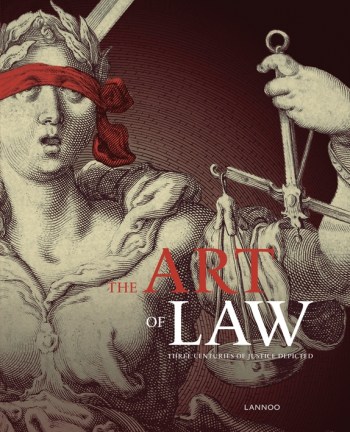 In the fifteenth century, it was customary to decorate courtrooms with works of art that were intended to ‘encourage’ the aldermen and judges to perform their duties in an honest and conscientious manner. These works often depicted the supreme moment of divine justice: the Last Judgement. But other scenes from the Bible were also used, as were images from more profane sources. Together, these are known as the exempla iustitiae (‘examples of fair justice’). In 1498, Gerard David was commissioned by the city council of Bruges to paint just such a work: The Judgement of Cambyses. This remarkably gruesome painting once hung in the courtroom of Bruges town hall and is now one of the finest masterpieces in the Groeningemuseum.
Subjects relating to justice were also depicted outside the courtroom in paintings, prints, drawings, sculpture and stained glass windows. The Art of Law exhibition has brought together some twenty works of art from the collections of Musea Brugge, supplemented by about hundred other pieces on loan from galleries and museums both at home and abroad. They paint a fascinating picture of the way in which justice and the law were represented in art during the Ancien Régime.
Vanessa Paumen works at the Groeningemuseum in Bruges as the coordinator of the Flemish Research Center for the Arts in the Burgundian Netherlands. She earned a BA degree, cum laude and an MA degree in Art History, with a focus on European Art at the University of Texas in Austin. In her master’s thesis, “Judged, Beheaded, Burned: Dieric Bouts, The Justice of Emperor Otto III within the Context of Fifteenth-Century Punitive Practices,” she looked at how justice paintings functioned in fifteenth-century Flemish society.
Vanessa Paumen, et al., The Art of Law: Three Centuries of Justice Depicted (Tielt: Lannoo Publishers, 2016), 208 pages, ISBN: 978 9401440417, £30.
Call for Articles | Spring 2018 Issue of J18: Coordinates

From J18:
Journal18, Issue #5 (Spring 2018) — Coordinates
Digital Mapping & 18th-Century Visual, Material, and Built Cultures
Proposals due by 1 April 2017; finished articles will be due by 1 November 2017
Art history’s digital turn has been stimulated by the possibilities of spatial research. Spurred by the collection, preservation, and distribution of art historical data in digital space—practices that have both collapsed and expanded our own discursive geographies—scholars have exploited the potential of geospatial analysis for art historical study. These new methods are particularly promising for the study of the early modern world, which has been fruitfully understood through the prisms of connections and exchanges that crossed world regions and defied the boundaries drawn on static maps. Digital mapping platforms and applications like CartoDB, Neatline, ArcGIS, Leaflet, and MapBox have made it possible, for example, to visualize the movement of people, such as artists, through temporal and geographic space, thus allowing us to reimagine personal and material contacts in tangible ways. Moreover, the dynamic lives of mobile and fungible objects can be displayed in extended and often circuitous trajectories, thus encouraging the kind of nonlinear visual analysis that is foundational to the practice of art history. Georectification tools have further facilitated the reconciliation of historical figurations of space with contemporary visualizations, which allows competing spatial narratives to coexist productively in a digital realm, while also challenging the magisterial view offered by modern cartography.
In this issue of Journal18, we seek to feature current scholarship that relies on the analytical power provided by digital mapping interfaces for the study of visual, material, and built cultures during the long eighteenth century. How do digital humanities methods and tools shape our understanding of space and place in the early modern period? What impact might digital mapping have on our historical investigations of people, objects, and their environments? Submissions may take the form of an article (up to 6000 words) or a project presented through a digital platform that takes full advantage of Journal18’s online format. We also welcome proposals for shorter vignettes (around 2,500 words) that reflect on projects in progress or consider the potential for particular mapping methodologies for eighteenth-century art history.
Issue Editors
Carrie Anderson, Middlebury College
Nancy Um, Binghamton University
Proposals for issue #5 Coordinates are now being accepted. Deadline for proposals: April 1, 2017. To submit a proposal, send an abstract (200 words) and a brief CV to editor@journal18.org and carriea@middlebury.edu. Articles should not exceed 6000 words (including footnotes) and will be due on November 1, 2017. For further details on the submission process, see Information for Authors.










 Enfilade
leave a comment