
Benjamin West, American Commissioners of the Preliminary Peace Negotiations with Great Britain, begun in 1783, oil on canvas, 72.3 × 92.7 cm. (Winterthur 1957.856)
◊ ◊ ◊ ◊ ◊
With nearly 200 objects, The Met Breuer’s inaugural exhibition includes a handful of striking eighteenth-century paintings and prints. From the press release:
Unfinished: Thoughts Left Visible
The Met Breuer, New York, 18 March — 4 September 2016
Curated by Andrea Bayer, Kelly Baum, Nicholas Cullinan, and Sheena Wagstaff
Unfinished: Thoughts Left Visible examines a subject that is critical to artistic practice: the question of when a work of art is finished. Opening March 18, 2016, this landmark exhibition inaugurates The Met Breuer, ushering in a new phase for The Met’s expanded engagement with modern and contemporary art, presented in Marcel Breuer’s iconic building on Madison Avenue. With over 190 works dating from the Renaissance to the present—nearly forty percent of which are drawn from The Met’s collection, supplemented with major national and international loans—the exhibition demonstrates the type of groundbreaking show that can result when the Museum mines its vast collection and curatorial resources to present modern and contemporary art within a deep historical context.
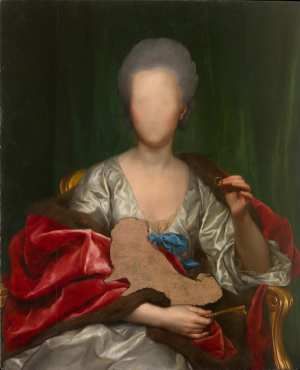
Anton Raphael Mengs, Portrait of Mariana de Silva y Sarmiento, duquesa de Huescar, 1775 (Mr. and Mrs. Otto Naumann, New York)
The exhibition examines the term ‘unfinished’ across the visual arts in the broadest possible way; it includes works left incomplete by their makers, a result that often provides insight into the artists’ creative process, as well as works that engage a non finito—intentionally unfinished—aesthetic that embraces the unresolved and open-ended. Featured artists who explored such an aesthetic include some of history’s greatest practitioners, among them Titian, Rembrandt, Turner, and Cézanne, as well as modern and contemporary artists, including Janine Antoni, Lygia Clark, Jackson Pollock, and Robert Rauschenberg, who have taken the unfinished in entirely new directions, alternately blurring the distinction between making and un-making, extending the boundaries of art into both space and time, and recruiting viewers to complete the objects they had begun.
The accompanying catalogue expands the subject to include the unfinished in literature and film as well as the role of the conservator in elucidating a deeper understanding of artistic thought on the subject of the unfinished.
“Unfinished is a cornerstone of The Met Breuer’s inaugural program and a great example of The Met’s approach to presenting the art of today,” said Thomas P. Campbell, Director and CEO of The Met. “Stretching across history and geography, the exhibition is the result of a cross-departmental collaboration, drawing on the expertise of The Met’s outstanding faculty of curators. We hope the exhibition inspires audiences to reconsider the artistic process as they connect to experiences shared by artists over centuries.”
Sheena Wagstaff, Leonard A. Lauder Chairman of Modern and Contemporary Art, added: “It is rare that an exhibition covering such a broad time span can trace a theme as intimate and essential to the creative process. This sweep of art history throws into sharp focus the ongoing concern of artists about the ‘finishedness’ of their work—which, in the 20th century, they co-opt as a radical tool that changes our understanding of Modernism.”
Using works of art as well as the words of artists and critics as a guide, Unfinished: Thoughts Left Visible strives to answer four questions: When is a work of art finished? To what extent does an artist have latitude in making this decision? During which periods in the history of art since the Renaissance have artists experimented most boldly with the idea of the unfinished or non finito? What impact has this long trajectory had on modern and contemporary art?
The exhibition features works that fall into two categories. The first includes works of art that are literally unfinished—those whose completion was interrupted, usually because of an accident, such as the artist’s death. In some instances, notably Jan van Eyck’s Saint Barbara (1437), there is still debate about whether the artist meant the work to be a finished drawing, which would have been considered unusual at the time, or if it was meant to be a preparation for a painting. Because such works often leave visible the underlying skeleton and many changes normally effaced in the act of completion, they are prized for providing access to the artist’s thoughts, as well as to his or her working process.
The second category includes works that appear unfinished—open-ended, unresolved, imperfect—at the volition of the artist, such as Janine Antoni’s Lick and Lather (1993–1994). Antoni used a mold to create a series of self-portrait busts, half from chocolate and half from soap, fragile materials that tend to age quickly. After finishing the busts, she set to work unfinishing them, licking those in chocolate and bathing with those in soap, stopping once she had arrived at her distinctive physiognomy. The unfinishedness of objects in this second category has been debated and appreciated at definite times, in definite places. Unlike the historical art presented in the exhibition, which includes a significant number of truly unfinished objects, art from the mid-to-late 20th and 21st centuries is represented almost entirely through the lens of non finito.
The exhibition is organized chronologically, spanning the third and fourth floors of The Met Breuer. The works are subdivided thematically, with each group representing a specific case-study in unfinishedness—corresponding to specific times (such as the Renaissance, Baroque, and Modern periods), media (prints and sculpture), artists (including Turner, Cézanne, and Picasso), and genres (most importantly portraiture).
A new, light-based installation by Tatsuo Miyajima, created especially for Unfinished, will be on view in the Tony and Amie James Gallery in the lobby of The Met Breuer (late April through mid-October).
Unfinished: Thoughts Left Visible is curated by Andrea Bayer, Jayne Wrightsman Curator in the Department of European Paintings; Kelly Baum, Curator of Postwar and Contemporary Art in the Department of Modern and Contemporary Art, both at The Metropolitan Museum of Art; and Nicholas Cullinan, former curator in The Met’s Department of Modern and Contemporary Art and current Director of the National Portrait Gallery in London, all working under the direction of Sheena Wagstaff, Leonard A. Lauder Chairman of Modern and Contemporary Art at The Metropolitan Museum of Art. Many curators, conservators, fellows, and research assistants at The Met contributed to this exhibition and its accompanying catalogue, including experts from the Museum’s departments of American Paintings and Sculpture, Drawings and Prints, European Paintings, European Sculpture and Decorative Arts, Paintings Conservation, and Modern and Contemporary Art.
A series of experimental films made by many of the 20th and 21st century’s most innovative filmmakers are being shown in conjunction with the exhibition. Organized by Thomas Beard, founder and director of Light Industry, a venue for film and electronic art in Brooklyn, these screenings, which take place on The Met Breuer’s second floor, address the unfinished in cinematic terms. Details on screening times will be available at a later date.
In collaboration with The Met, The Orchestra Now (TŌN) will present The Unfinished, a performance at Carnegie Hall of two unfinished works: Schoenberg’s Chamber Symphony No. 2 and Mozart’s Great Mass in C minor. The concert will include a panel discussion with the Museum’s Sheena Wagstaff and Andrea Bayer; TŌN’s music director Leon Botstein; Columbia University’s Elaine Sisman, Anne Parsons Bender Professor of Music; and others. Friday, May 13, 2016, 7:30–9:45 pm; tickets start at $25.
Related programs include a Sunday at The Met on May 8 that considers the idea of the unfinished in relation to works across times and cultures and a lecture series on June 20 presenting new scholarship on the subject.
Kelly Baum, Andrea Bayer, and Sheena Wagstaff, Unfinished: Thoughts Left Visible (New York: The Metropolitan Museum of Art, 2016), 336 pages, ISBN: 978-1588395863, $65.
The exhibition is accompanied by a 336-page fully illustrated catalogue that constitutes the most exploratory, yet also comprehensive, introduction to date of the long history of the unfinished in the visual arts, film, and literature. The book is divided into two main sections that roughly correspond to the periods 1435–1900 and 1900–2015. It contains essays by 13 curators, scholars, and a conservator on a range of artists and subjects related to the theme of the unfinished. The catalogue also features interviews with five contemporary artists—Vija Celmins, Marlene Dumas, Brice Marden, Luc Tuymans, and Rebecca Warren—whose work is represented in the exhibition; and a section of brief catalogue entries on each of the objects featured in the exhibition that explores the significance of the work, with an emphasis on its place in the broader narrative and, frequently, an account of its reception. The catalogue is published by The Met and distributed by Yale University Press. The catalogue is made possible by the Samuel I. Newhouse Foundation, Inc. and the Roswell L. Gilpatric Publications Fund.

 Over the centuries, the Salzburg prince archbishops collected a voluminous treasury of paintings and the graphic arts, furniture and porcelain, minerals, weapons and coins, books and sculptures. Much of this was created especially for Salzburg. The Salzburg prince archbishops assigned renowned artists with commissions for ivory carvings, rock crystal and ibex horn artefacts, goldsmith’s art and paintings—all these objects belonged to the inventory of the court treasure chamber and enhanced prestige. The rulers of the time naturally saw themselves as personal owners of these riches; thus, it frequently occurred in case of war that all treasures were conveyed to the next residence. The exhibits tell their own stories and raise questions: what significance did they originally have, what was their origin, or how did they end up in Salzburg? The exhibition Treasure House Salzburg in the Kunsthalle in the basement of the Neue Residenz is designed to awaken in visitors a historical awareness for the former riches and status of Salzburg within Europe.

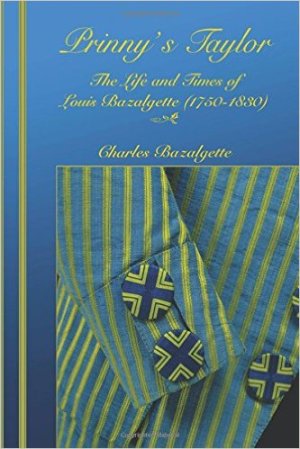 The excesses of George IV, his debts, and the huge sums that he expended on his wardrobe are legendary. It is, therefore, strange that the man who was the Prince’s tailor for over thirty-two years, and his principal tailor for over half of that time, should have been named, and then only in passing, in just two other books. Louis Bazalgette (1750–1830) has been a shadowy figure until now; the relationship between the two men was discreet and almost clandestine. This biography presents a detailed picture of an extraordinary man, of humble origins, whose influence on tailoring, and upon the Prince himself, must have been far-reaching. This fascinating story presents a new angle on Georgian and Regency life, as seen through the eyes of a little French tailor who by his own efforts became a wealthy propertied merchant. There is also a great deal of information on tailoring of the period. Some of Louis Bazalgette’s descendants also enter the story. His eldest son Joseph William Bazalgette, R.N, served with distinction during the Napoleonic Wars, and his grandson of the same name was a noted civil engineer. The author is Louis’s great-great-great-great-grandson.
 This study day will comprise a morning lecture by Michael Phillips, who will discuss Blake’s ground-breaking print techniques, followed by lunch (for those attending the full day) and an afternoon demonstration of the full-scale reproduction of Blake’s wooden printing press that is currently located in the exhibition gallery at Gainsborough’s House. Attendees will have the rare opportunity to use the press to make a print from a choice of copper plates.
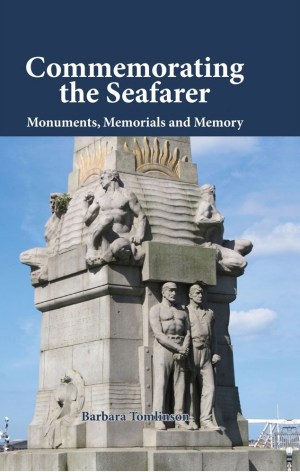 This book discusses memorials—stained glass windows, church, cemetery and public monuments—commemorating British seafarers, shipbuilders and victims of shipwreck from the sixteenth century to the present. Examples have been chosen mainly from Great Britain and Ireland with a few from wider afield. They include important works by major British artists as well as more modest productions by anonymous carvers. The book retells the dramatic stories behind them, illustrating significant social and cultural changes in Britain’s relationship to the sea. Memorials vividly illustrate the hazards of seagoing life and the impact these had both upon the family of the deceased and the general public. The book has a cultural historical focus. Each chapter includes case studies of both high status and popular memorials, showing how iconography such as the depiction of the wrecked ship was widely transmitted. The book covers both naval and commercial aspects of seafaring and includes memorials to naval officers, merchants, explorers, fishermen, leisure sailors, victims of shipwrecks and lifesavers, with around 100 illustrations of memorials. Published in association with the National Maritime Museum, Greenwich.
 • Genevieve Warwick and Richard Taws, “After Prometheus: Art and Technology in Early Modern Europe,” pp. 198–209.

 Die Graphische Sammlung des Germanischen Nationalmuseums bewahrt rund 130 niederländische Zeichnungen des 15. bis einschließlich 18. Jahrhunderts, die durch Ankäufe, Schenkungen und Vermächtnisse in den Jahren 1858 bis 1982 erworben wurden. Hierzu zählen Werke von Jan Breughel d.J., Philips Koninck oder Bartholomeus Spranger, aber auch Arbeiten von weniger bekannten und anonymen Meistern. In dem vorliegenden Bestandskatalog sind die niederländischen Zeichnungen nun erstmals in ihrer Gesamtheit wissenschaftlich bearbeitet, mit Provenienzangaben sowie den technischen und bibliographischen Daten dokumentiert und farbig abgebildet. Den Katalog ergänzen Textbeiträge zur Sammlungsgeschichte niederländischer Kunst am Germanischen Nationalmuseum sowie zu den Funktionen niederländischer Zeichnungen.









 Enfilade
leave a comment