Call for Papers | Recasting Reproduction, 1500–1800
From The Courtauld:
Recasting Reproduction, 1500–1800
The Courtauld Institute of Art, London, 18 November 2017
Proposals due by 6 July 2017
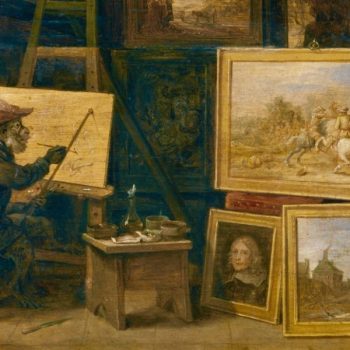
David Teniers, The Monkey Painter (detail), ca.1660, oil on panel (Madrid: Museo del Prado).
The contested concept of ‘reproduction’ stands at a critical nexus of the conceptualisation of early modern artistic thought. The early modern period has been characterised by the development of novel and efficient reproduction technologies, as well as the emergence of global empires, growing interconnectedness through trade, warfare and conquest, and the rise of new markets and cultures of collecting. This ethos of innovation and exchange was, however, contextualised against myriad contemporary ideologies still rooted in the values and legends of past narratives. Reproduction stood at the centre of this dichotomy. Set against the context of changing cultural tastes and the increasingly overlapping public and private spheres, ‘reproductions’ were involved within changing viewing practices, artistic pedagogy, acts of homage, and collecting.
The idea of reproduction connotes a number of tensions: between authenticity and counterfeit; consumption and production; innovation and imitation; the establishment of archetype and the creation of replica; the conceptual value of the original and the worth of the reproduction as a novel work of art; the display of contextualised knowledge and the de-contextualisation of the prototype. At the same time, production is shaped historically through practices and discourses and has figured as a key site for analysis in the work of, for example, Walter Benjamin, Richard Wolin, Richard Etlin, Ian Knizek, and Yvonne Sheratt. Participants are invited to explore reproduction ‘beyond Benjamin’, investigating both the technical and philosophical implications of reproducing a work of art and seeking, where possible, a local anchoring for the physical and conceptual processes involved.
We welcome proposals for papers that investigate the theme of reproduction from the early modern period (c.1500–1800), including painting, print making, sculpture, decorative arts, architecture, graphic arts, and the intersections between them. Papers can explore artistic exchanges across geopolitical, cultural and disciplinary divides and contributions from other disciplines, such as the history of science and conservation, are welcome. Topics for discussion may include, but are not limited to
• The conceptualisation and processes of reproduction and reproduction technologies before and at the advent of ‘the mechanical’
• Reproduction in artistic traditions beyond ‘the West’
• The slippage between innovation and imitation
• Part-reproduction and the changing, manipulation and developments of certain motifs
• Problematizing the aura of ‘authenticity’ and the ‘value’ of the original, copies and collecting
• Fakes and the de-contextualisation of a work through its reproduction
• Reproduction within non-object based study e.g. architecture
• Theoretical alternatives and the vocabulary used to describe the process and results of reproduction in contemporary texts
Please send proposals of no more than 300 words along with a 150 word biography by 6th July 2017 to kyle.leyden@courtauld.ac.uk and natasha.morris@courtauld.ac.uk.
Organised by Kyle Leyden, Natasha Morris, and Angela Benza
Canova and His Legacy at Tomasso Brothers Fine Art
From Tomasso Brothers Fine Art:
Canova and His Legacy
Tomasso Brothers Fine Art , London, 30 June — 7 July 2017
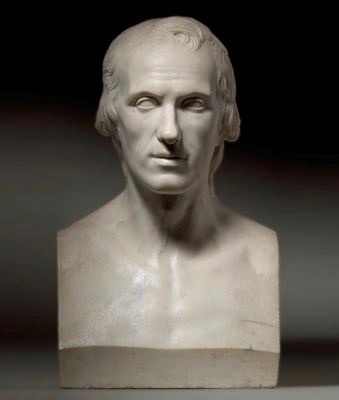
Antonio D’Este, Portrait of Antonio Canova.
Tomasso Brothers Fine Art is opening a new London gallery space at Marquis House, 67 Jermyn Street, St. James’s with a very special exhibition timed for London Art Week 2017. Canova and His Legacy will focus on the Italian master Antonio Canova (1757–1822), arguably the greatest and most illustrious sculptor of his age, and synonymous to this day with the height of Neoclassicism. His works, celebrated for their timeless beauty and grace, have never ceased to inspire generations of artists and collectors alike, and are exhibited in pride of place in the most important museums across the world.
Highlights include a magnificent and exquisite pair of plaster busts by Antonio Canova depicting Paris and Helen, cast at the artist’s atelier in 1812; the supremely graceful Baccante Cimbalista (1837) by Cincinnato Baruzzi (1796–1878), one of Canova’s leading pupils; and, by Bertel Thorvaldsen (1770–1844), a charming portrayal of Cupid with His Bow (Amorino), dating to 1826–28, and which has remained in the same Scottish family since its purchase from Thorvaldsen in 1828.
“Tomasso Brothers is committed to being part of the rich and vibrant art scene in the heart of this historic area of central London. The opening of our new space on Jermyn Street, timed for London Art Week 2017, is an exciting development,” says gallery Director, Dino Tomasso, who has recently been appointed to the Board of London Art Week.
“We chose Canova as a central subject for this exhibition,” adds Raffaello Tomasso, Director, “because, like Michelangelo and Bernini, Canova was a revolutionary force in the field of sculpture. His impact on the Italian School and beyond cannot be overstated. Throughout the Neoclassical period his workshop represented the focal point of sculptural studies in Europe and for generations of marble carvers to come. His legacy reached as far away as Denmark and Scotland, Germany, and Spain.”
Dino and Raffaello Tomasso are recognised internationally for specializing in important European sculpture from the early Renaissance to the Neoclassical periods, and have had a presence in St. James’s since 2013, in addition to their principal gallery at Bardon Hall, Leeds.
The Getty and YCBA Make 100,000 Images Available via IIIF
Press release (1 June 2017) from The Getty:
The Getty today made available more than 30,000 images of objects in the J. Paul Getty Museum collection using the International Image Interoperability Framework (IIIF) [pronounced ‘triple eye eff’], which allows researchers to bring together images from different institutional websites for comparison, manipulation and annotation. By clicking on the IIIF logo next to an image, users can pull together images from different collections, dragging and dropping millions of images and associated metadata from institutions across the world for side-by-side analysis. As a result, for the first time, users can digitally examine works of art held in separate collections worldwide and easily share their findings.
“With IIIF, scholars can move images beyond the confines of separate institutional websites and bring them together for study. It allows for deeper digital engagement with our collections than ever before,” said James Cuno, president of the J. Paul Getty Trust.
The Getty is a member of the International Image Interoperability Framework Consortium, a group of museums, libraries, archives and other research and educational institutions working together to advance the adoption of IIIF to facilitate scholarship and research. Another Consortium member, The Yale Center for British Art, also announced today the availability of nearly 70,000 images in its collection. The Yale Center and Getty join a growing number of institutions that are using IIIF or moving toward its implementation.
“The release of these images is just the first step for the Getty as we move toward universal adoption of IIIF for images from both the Getty Museum and the Getty Research Institute collections,” said Rich Fagen, the Getty’s Vice President and Chief Digital Officer. “We are excited to help digital arts scholarship reach this next frontier.”
The Getty and Yale Center for British Art release of IIIF images comes as both organizations are joining other members of the IIIF community at an international conference on IIIF development and implementation at the Vatican beginning June 5.
Learn more about IIIF at the Getty Iris.
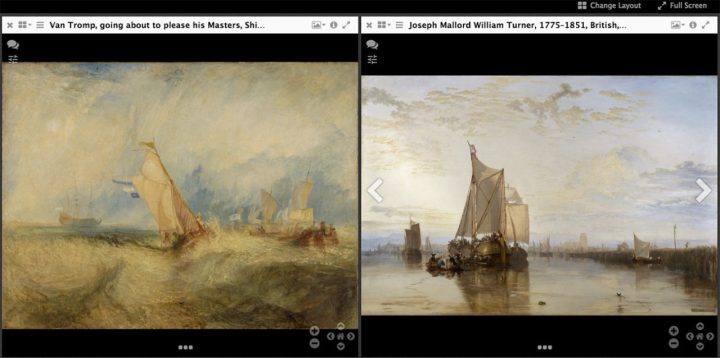
Left: Joseph Mallord William Turner, Van Tromp, going about to please his Masters, Ships a Sea, getting a Good Wetting, 1844, oil on canvas (Los Angeles: J. Paul Getty Museum). Right: Joseph Mallord William Turner, Dort or Dordrecht: The Dort Packet-boat from Rotterdam Becalmed, 1818, oil on canvas (New Haven: Yale Center for British Art, Paul Mellon Collection).
Call for Papers | Libraries and Museums in Switzerland
From H-ArtHist:
Bibliothèques et Musées en Suisse: Histoires Croisées, 18e-19e siècles
Musée historique de Lausanne, 24–25 May 2018
Proposals due by 31 August 2017
La présence d’objets, voire de véritables cabinets de curiosités, dans l’enceinte des bibliothèques caractérise bon nombre de bibliothèques d’Ancien Régime. Depuis le XVIIe siècle, l’interaction entre livres et objets est en effet thématisée comme un enjeu bibliothéconomique primordial : monnaies, médailles, instruments scientifiques, échantillons naturels et artéfacts exotiques sont appelés à dialoguer avec les livres afin de nourrir le projet de connaissance encyclopédique de la bibliothèque. À la fois ornements et compléments du savoir livresque, ils mettent en scène une confrontation entre le discours et la dimension matérielle, voire palpable de ce même discours.
À la suite de la Révolution française, qui décrète le musée espace public aux fins didactique, patrimoniale et civique, ces objets se voient cependant progressivement expulsés de l’enceinte des bibliothèques et soutiennent, dans de nombreux cas, la naissance d’institutions muséales. Entre la fin du XVIIIe siècle et tout au long du siècle suivant, innombrables sont en effet les musées qui se créent sur la base de collections « éjectées » de l’espace de la bibliothèque. Les causes de cette autonomisation forcée sont souvent pratiques, ces collections ayant atteint une ampleur qui ne leur permet plus de demeurer intégrées aux surfaces prévues pour les livres. Mais des raisons d’ordre politique, scientifique voire épistémologique entrent également en ligne de compte. Il n’en reste pas moins que, dans cette perspective, les bibliothèques, et notamment les bibliothèques publiques, apparaissent comme des antichambres des musées et la condition sine qua non de l’émergence d’un panorama muséal régional et national.
La Suisse et ses villes illustrent clairement la fécondité de cette articulation. Les collections des cabinets de la bibliothèque de Genève, de la bibliothèque de l’Académie de Lausanne ou encore de la Bibliothèque de la Bourgeoisie de Berne, pour n’en mentionner que quelques-unes, provoquent et alimentent dans un premier temps la création des muséums d’histoire naturelle de leurs villes respectives, puis dans un second temps celles des musées d’art, d’histoire et d’ethnographie de ces lieux.
Malgré son importance, cette interdépendance ne semble pas avoir stimulé l’intérêt des chercheurs. Au contraire, un certain cloisonnement disciplinaire persiste entre les spécialistes de l’histoire des bibliothèques et de l’histoire des musées. Si les premiers attribuent aux cabinets un rôle fondamentalement mineur dans le programme de connaissance de la bibliothèque des Lumières, les seconds ne concentrent leur regard que sur le musée dès le moment où celui-ci acquiert une existence autonome. C’est cette lacune que le colloque propose de combler. Dans le but d’élaborer une réflexion interdisciplinaire, la rencontre souhaite réunir historiens des collections et professionnels du monde des bibliothèques et des musées pour présenter une série de cas d’étude. Le colloque se focalisera essentiellement sur la Suisse afin de faciliter la délimitation géographique de la problématique. Cependant, des propositions concernant d’autres territoires nationaux seront les bienvenues dans la mesure où elles contribueront à la formulation de principes méthodologiques.
Quatre axes de réflexion structureront les échanges
1. il s’agira d’abord de problématiser le statut des collections d’objets de bibliothèques pour saisir les modalités sous-jacentes de leur arrivée et de leur arrangement. De même, nous chercherons à comprendre comment ces objets négocient leur cohabitation avec les collections livresques.
2. nous soulèverons également la question de leur émancipation par rapport aux livres : qu’est-ce qui motive cette émancipation ? Qui en sont les acteurs ? Qu’est-ce que ces remaniements impliquent au sein même de la bibliothèque ? Comment le rapport entre le musée naissant et la bibliothèque se pense-t-il ? Comment s’entretient-il ? Pourquoi se dégrade-t-il ?
3. nous aborderons ensuite le problème de la perte de sens souvent provoquée par la répartition des objets dans des collections spécialisées, perte qui se répercute sur les politiques de gestion des collections.
4. des questions méthodologiques retiendront enfin notre attention : est-ce qu’une histoire croisée des bibliothèques et des musées est véritablement réalisable ? Quels types de sources peuvent la soutenir ? Et qu’en est-il aujourd’hui de l’articulation bibliothèques/musées dans la gestion d’institutions culturelles ? Conditionne-t-elle les politiques patrimoniales contemporaines ?
La période prise en compte est celle allant du XVIIIe siècle à la fin du XIXe siècle ; des communications portant sur le XXe seront toutefois acceptées si elles dialoguent avec des pratiques ou des discours hérités des siècles précédents.
Les communications individuelles seront limitées à 25 minutes, celles en tandem à 40 minutes. Les propositions, en français, en allemand, en italien ou en anglais comprendront environ 300 mots. Elles sont à adresser à Rossella Baldi (rossella.baldi@unine.ch) et à Valérie Kobi (valerie.kobi@uni-bielefeld.de). Délai pour l’envoi des propositions : 31 août 2017. Les réponses seront envoyées dans le courant du mois d’octobre 2017.
Comité scientifique
Rossella Baldi, Danielle Buyssens, Valérie Kobi, Claude-Alain Kuenzi, Matthias Oberli, Michel Schlup, Martin Schultz.
Journal of Art Historiography, June 2017
Selection of articles from the current issue of the Journal of Art Historiography most relevant to the eighteenth century:
Journal of Art Historiography 16 (June 2017)
The Limits of Connoisseurship: Guest Edited by Valérie Kobi
Valérie Kobi (Bielefeld University), “The Limits of Connoisseurship: Attribution Issues and Mistakes, An Introduction.”
David Pullins (The Frick Collection), “The Individual’s Triumph: The Eighteenth-Century Consolidation of Authorship and Art Historiography.”
Portuguese Art Historiography
Edward J. Sullivan (New York University), “Portuguese Art History: A View from North America.”
Foteini Vlachou (Instituto de História Contemporânea, Lisbon), “The Discourse on Utility: Art Theory in Eighteenth-Century Portugal.”
Reviews
Ingrid R. Vermeulen (Vrije Universiteit Amsterdam), Review of Kristel Smentek, Mariette and the Science of the Connoisseur in Eighteenth-Century Europe (Ashgate, 2014).
Call for Papers | Fans as Images, Accessories, and Instruments of Gesture
From H-ArtHist:
‘Num’rous Uses, Motions, Charms, and Arts’: Fans as Images,
Accessories, and Instruments of Gesture in the 17th and 18th Centuries
University of Zurich, 30 November — 1 December 2017
Proposals due by 30 June 2017
This interdisciplinary conference discusses the cultural role of fans in art, fashion, and material culture in the seventeenth and eighteenth centuries. Taking the visual and material diversity of fans as a point of departure, it aims at gaining new insights into the various interrelations between fans, paintings, and printed artworks in this period.
The conference takes painted and printed folding fans as its main focus in order to take a closer view of the pictorial and intermedial interplay of ornamental patterns, figurative elements, and artistic subject matters. From the late seventeenth century onwards, fan depictions were often inspired by or based on Renaissance and contemporary paintings. In the course of the eighteenth century, fan leaves displayed an increasing variety of cultural themes, thereby also functioning as souvenirs as well as conveyors of political and social messages.
Furthermore, the conference seeks to examine fans as gender-specific instruments of gesture and communication. In eighteenth-century Europe, fans became important fashion accessories across the social classes and were almost omnipresent in social interaction. In 1711, Joseph Addison, satirizing social etiquette, describes fans as “modish machines” and powerful “weapons” of their female owners. Later visual and written sources enhanced this attribution of meaning, particularly emphasizing the fan’s expressive movements of opening and closing, of displaying and not displaying, which could hide their owners’ faces while at the same time rendering visible their emotions. On the other hand, painted and printed fans presented a wide variety of social knowledge in fast and fleeting pictures, in this way conveying personal statements of those who carried them.
The conference aims to bring together different perspectives on the cultural importance of fans in order to consider issues such as their production, their material qualities, the visual elements and subject matters in fan painting, as well as the various social uses and the reception of fans in art and literature. We invite discussions of both individual fans as well as visual and written sources which reveal the cultural role of the fan in the seventeenth and eighteenth centuries.
This call addresses art historians, fashion historians, and researchers from related disciplines. Possible topics may include, but are not limited to
• painted and printed fans as conveyors of (political and cultural) information
• fans as souvenirs and conveyors of memory
• the reception of artworks in fan depictions
• fans as/within the context of fashion accessories, dress norms and gender-specific body cultures
• fans in cultures of communication and cultures of feeling
• fans in the visual arts (portraits, genre painting, caricatures, etc.) and in literature
• the manufacture and (global) trade of fans
• case studies in the conservation and restoration of fans
Please send your proposal (max. 300 words, in English, German or French), for a paper (20 minutes), a short CV and a short list of keywords (max 6) no later than June 30, 2017 to Dr Miriam Volmert (miriam.volmert@khist.uzh.ch) and lic. phil. Danijela Bucher (danijela.bucher@uzh.ch). Notification of authors: July 7, 2017. Travel reimbursement depends on the availability of funds.
New Book | Early Professional Women in Northern Europe, c. 1650–1850
Scheduled for release in July from Routledge:
Johanna Ilmakunnas, Marjatta Rahikainen, and Kirsi Vainio-Korhonen, eds., Early Professional Women in Northern Europe, c. 1650–1850 (New York: Routledge, 2017), 312 pages, ISBN: 978 14724 71345, $150.
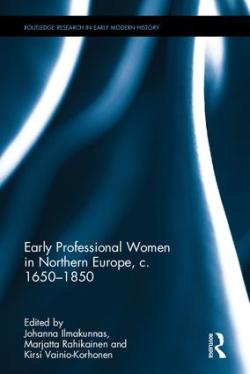 This book focuses on early examples of women who may be said to have anticipated, in one way or another, modern professional and/or career-oriented women. The contributors to the book discuss women who may at least in some respect be seen as professionally ambitious, unlike the great majority of working women in the past. In order to improve their positions or to find better business opportunities, the women discussed in this book invested in developing their qualifications and professional skills, took economic or other kinds of risks, or moved to other countries. Socially, they range from elite women to women of middle-class and lower middle-class origin.
In terms of theory, the book brings fresh insights into issues that have been long discussed in the field of women’s history and are also debated today. However, despite its focus on women, the book is conceptually not so much focused on gender as it is on profession, business, career, qualifications, skills, and work. By applying such concepts to analyzing women’s endeavours, the book aims at challenging the conventional ideas about them.
Johanna Ilmakunnas is acting professor of Finnish history at the University of Turku, Finland.
Marjatta Rahikainen is a docent of social history at the University of Helsinki, Finland.
Kirsi Vainio-Korhonen is a professor of Finnish history at the University of Turku, Finland.
◊ ◊ ◊ ◊ ◊
C O N T E N T S
1 Johanna Ilmakunnas, Marjatta Rahikainen and Kirsi Vainio-Korhonen, Women and Professional Ambitions in Northern Europe, c.1650–1850
2 Kirsi Vainio-Korhonen, Midwives: Birthing Care Professionals in Eighteenth-Century Sweden and Finland
3 Britta Kägler, Serving the Prince as the First Step of Female Careers: The Electoral Court of Munich, c.1660–1840
4 Johanna Ilmakunnas, From Mother to Daughter: Noblewomen in Service at the Swedish Royal Court, c.1740–1840
5 Anna Lena Lindberg, Remarkable Women Artists: Flower Painting and Professional Changes in Copenhagen, c.1690–1790
6 Marie Steinrud, Performing Women: The Life and Work of Actresses in Stockholm, c.1780–1850
7 Deborah Simonton, ‘Sister to the Tailor’: Guilds, Gender and the Needle Trades in Eighteenth-Century Europe
8 Galina Ulianova, Independent Managers: Female Factory Owners in the Northern Provinces of the Russian Empire, c.1760–1810
9 Marjatta Rahikainen, Urban Opportunities: Women in the Restaurant Business in Swedish and Finnish Cities, c.1800–1850
10 Åsa Karlsson Sjögren, Desirable Qualifications and Undesirable Behaviour: Teachers in Swedish Schools for Poor Children, c.1780–1820
11 Olga Solodyankina, Cross-Cultural Closeness: Foreign Governesses in the Russian Empire, c.1700–1850
12 Marjatta Rahikainen, Shaping Middle-Class and Upper-Class Girls: Women as Teachers of Daughters of Good Families in the Baltic Sea World, c.1780–1850
Exhibition | Romantic Shakespeare
Now on view in Saint-Omer:
Shakespeare Romantique: Füssli, Delacroix, Chassériau
Musée de l’hôtel Sandelin, Saint-Omer, 24 May — 30 August 2017
Curated by Dominique de Font-Réaulx, Marie-Lys Marguerite, and Roman Saffré
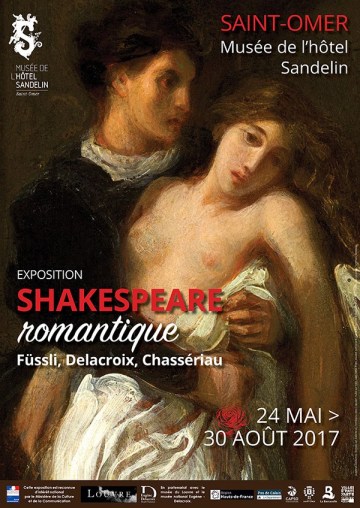 In May 2017, the musée de l’hôtel Sandelin presents a new exhibition organized as part of a prestigious partnership with the musée du Louvre and the musée national Eugène-Delacroix. The exhibition will present some 70 exceptional works. These painters, printmakers, and sculptors built a collective imagination around the parts of an author who was particularly inspirational for them throughout the 19th century, the great English playwright Shakespeare. Fuseli, Delacroix, Chassériau, Moreau, Préault, and Doré were able to recreate in their creations the feelings, the strangeness, and the morality of Shakespearean tragedies. Their works still influence the staging of Shakespeare’s plays.
In 1824, Stendhal wrote: “All the great writers were romantics of their time.” In fact, the 19th century was marked by a renewed interest in the great literary frescoes past Dante, Ariosto, Shakespeare, Racine become essential sources of inspiration for the romantic authors, but also for painters, who then have a special relationship to the art of staging.
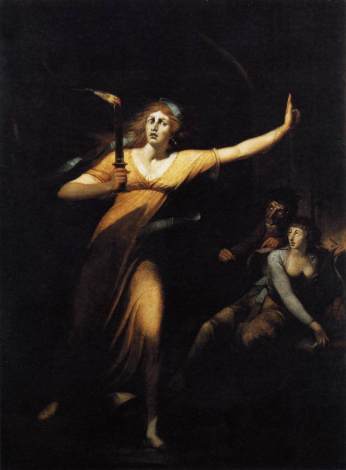
Henry Fuseli, Lady Macbeth, 1784, 221 × 160 cm (Paris: Louvre).
The early 19th century saw the birth of a true rediscovery of Shakespeare in France. The feelings of strangeness and morality in each of Shakespearean tragedies influence painters, printmakers and sculptors to create some art of emotion and narrative. The exhibition aims to show the the creation of a collective imagination that gave rise to the plays of Shakespeare. These designs still influence the staging of the texts of the English playwright. Works presented in the exhibition come mainly from the collections of the Louvre, the Musée national Eugène-Delacroix, the d’Orsay Museum, and the Victoria and Albert Museum in London.
Curators
Dominique de Font-Réaulx, General Curator of Heritage and Director of Eugene Delacroix Museum
Marie-Lys Margaret, Heritage curator and director of the Museum of Fine Arts of Arras
Romain Saffré, Heritage curator and director of museums Saint-Omer
New Book | Baroque Seville: Sacred Art in a Century of Crisis
The focus rests on the 1660s and 70s—with plenty, nonetheless, relevant for the eighteenth century. –CH.
From Penn State UP:
Amanda Wunder, Baroque Seville: Sacred Art in a Century of Crisis (University Park: Penn State University Press, 2017), 232 pages, ISBN: 978 02710 76645, $85.
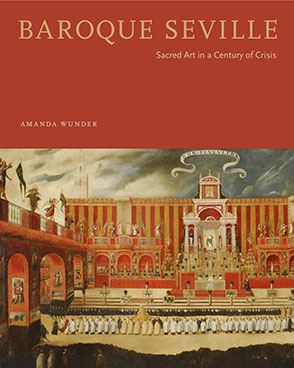 Baroque art flourished in seventeenth-century Seville during a tumultuous period of economic decline, social conflict, and natural disasters. This volume explores the patronage that fueled this frenzy of religious artistic and architectural activity and the lasting effects it had on the city and its citizens.
Amanda Wunder investigates the great public projects of sacred artwork that were originally conceived as medios divinos—divine solutions to the problems that plagued Seville. These commissions included new polychromed wooden sculptures and richly embroidered clothing for venerable old images, gilded altarpieces and monumental paintings for church interiors, elaborate ephemeral decorations and festival books by which to remember them, and the gut renovation or rebuilding of major churches that had stood for hundreds of years. Meant to revive the city spiritually, these works also had a profound real-world impact. Participation in the production of sacred artworks elevated the social standing of the artists who made them and the devout benefactors who commissioned them, and encouraged laypeople to rally around pious causes. Using a diverse range of textual and visual sources, Wunder provides a compelling look at the complex visual world of seventeenth-century Seville and the artistic collaborations that involved all levels of society in the attempt at its revitalization.
Amanda Wunder is Associate Professor of History at Lehman College and of Art History at the Graduate Center of the City University of New York.
◊ ◊ ◊ ◊ ◊
C O N T E N T S
List of Illustrations
Acknowledgments
Currency, Weights, and Measures
Introduction
1 The Art of Disillusionment: The Patronage of Mateo Vázquez de Leca
2 The Piety of Powerful Neighbors: The Renovation of Santa María la Blanca
3 A Temporary Triumph: The Seville Cathedral’s Festival for San Fernando
4 The Nobility of Charity: The Church and Hospital of the Santa Caridad
5 The Phoenix of Seville: Rebuilding the Church of San Salvador
Conclusion
Chronology
Notes
Bibliography
Index
Call for Papers | Landscape Now
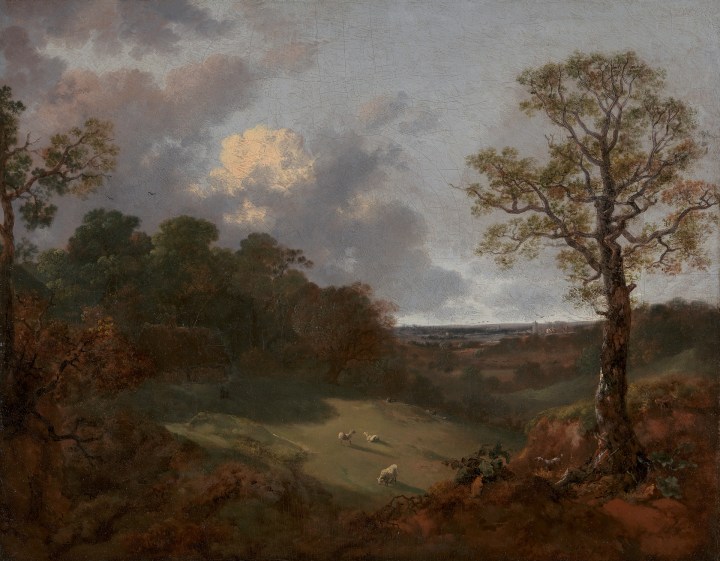
Thomas Gainsborough, Wooded Landscape with a Cottage and Shepherd, 1748–50, oil on canvas, 43.2 × 54.3 cm (New Haven: Yale Center for British Art, Paul Mellon Collection, B1976.2.1).
◊ ◊ ◊ ◊ ◊
From the Paul Mellon Centre:
Landscape Now
Paul Mellon Centre for Studies in British Art, London, 30 November – 1 December 2017
Proposals due by 30 June 2017
The pictorial representation of the landscape has long played an important role in the history of British art. It has been central to writers from Gilpin and Ruskin onwards, and was the subject of sustained scholarly attention in the 1980s and 1990s with the emergence of a social history of art. Writers such as John Barrell, Anne Bermingham, Stephen Daniels, Christiana Payne, Michael Rosenthal and David Solkin not only helped transform interpretations of British landscape painting, but made the study of such imagery seem essential to a proper understanding of British art itself.
Over the past two decades the centre of gravity of British art studies has shifted. An imperial turn has characterized some of the most ambitious scholarship in the field; a raft of powerful new voices have shifted attention to the Victorian and modern periods, and to the imagery of urban life; and there has been a dramatic growth of interest in such topics as print culture, exhibition culture, and the material culture of the work of art. With these developments, existing approaches to the study of landscape pictures lost some of their urgency and relevance.
However, this same period has seen the growth of a broader interest in landscape images in adjacent disciplines, driven in part by political and environmental imperatives. A newly energised category of ‘nature writing’, associated with authors such as Robert Mcfarlane and Helen MacDonald, has gained widespread currency beyond the purely academic arena. Cultural geographers such as David Matless and film-makers such as Patrick Keillor have offered nuanced investigations of the British landscape in their work, asking us to think afresh about its relationship to national identity, memory and post-imperial decline. And while many scholars in the humanities, in an age of globalisation and deepening ecological concern, have felt compelled to think about landscape on a vastly expanded basis, others have been driven to offer a new and suggestive focus on the local.
The moment thus seems ripe for a major art-historical reassessment of the image of the British landscape, taking account these and other emergent concerns. This international conference—the third in an annual series organised collaboratively by the Paul Mellon Centre, the Yale Center for British Art, and the Huntington Library, Art Collections, and Botanical Gardens—is designed to offer an opportunity for such a reassessment.
We seek proposals for 20-minute papers that offer new perspectives on the visual representation of the British landscape of any period. We equally welcome papers that focus on canonical landscape artists and paintings, and those that deal with lesser-known figures and objects, as well as those that investigate the topic in relation to drawing, printmaking, photography, film and television. Themes that might be addressed include:
• Landscape imagery and national identity
• Local/global histories of British landscape art
• The production of landscape images – in the field and in the studio
• Alternative landscapes: urban, suburban, rural, wild, touristic, agricultural
• The landscape image in a wider visual culture
• The pictorial logic of the landscape image
• The landscape image in an age of erosion
Please send proposals of 400 words maximum together with a short biography of no more than 100 words to events@paul-mellon-centre.ac.uk by 30 June 2017.










 Enfilade
leave a comment