New Book | The Power of Objects in Eighteenth-Century British America
From UNC Press:
Jennifer Van Horn, The Power of Objects in Eighteenth-Century British America (Chapel Hill: The University of North Carolina Press, 2017), 456 pages, ISBN: 978 14696 29568, $55.
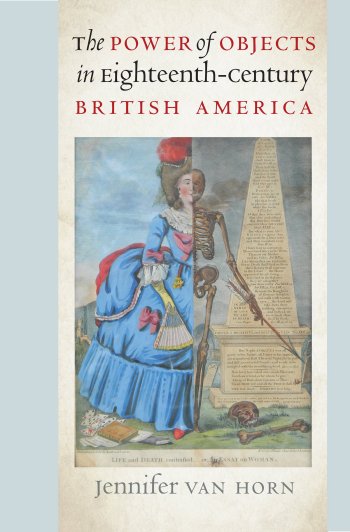 Published for the Omohundro Institute of Early American History and Culture, Williamsburg, Virginia.
Over the course of the eighteenth century, Anglo-Americans purchased an unprecedented number and array of goods. The Power of Objects in Eighteenth-Century British America investigates these diverse artifacts—from portraits and city views to gravestones, dressing furniture, and prosthetic devices—to explore how elite American consumers assembled objects to form a new civil society on the margins of the British Empire. In this interdisciplinary transatlantic study, artifacts emerge as key players in the formation of Anglo-American communities and eventually of American citizenship. Deftly interweaving analysis of images with furniture, architecture, clothing, and literary works, Van Horn reconstructs the networks of goods that bound together consumers in Boston, New York, Philadelphia, and Charleston.
Moving beyond emulation and the desire for social status as the primary motivators for consumption, Van Horn shows that Anglo-Americans’ material choices were intimately bound up with their efforts to distance themselves from Native Americans and African Americans. She also traces women’s contested place in forging provincial culture. As encountered through a woman’s application of makeup at her dressing table or an amputee’s donning of a wooden leg after the Revolutionary War, material artifacts were far from passive markers of rank or political identification. They made Anglo-American society.
Jennifer Van Horn is assistant professor of art history and history at the University of Delaware.
C O N T E N T S
Acknowledgments
List of Illustrations
Introduction
1 Imprinting the Civil
2 The Power of Paint
3 Portraits in Stone
4 Masquerading as Colonists
5 The Art of Concealment
6 Crafting Citizens
Epilogue
Index
Exhibition | Hidden From View: The 5th Duke of Portland’s Art Collection
Press release (via Art Daily) from The Harley Gallery:
Hidden From View: The 5th Duke of Portland’s Art Collection
The Harley Gallery, Welbeck, Nottinghamshire, 31 March — 30 September 2017
Curated by Vanessa Remington
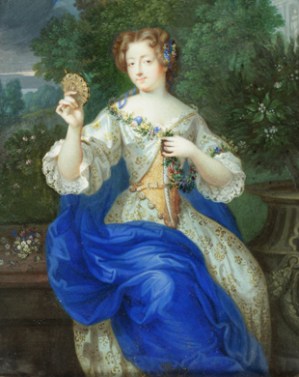
Marie Angélique de Scorailles, Duchess of Fontanges, Continental School, 18th Century.
Best known for the extensive tunnels he built underneath the family home at Welbeck Abbey on the Welbeck Estate, the eccentric and reclusive 5th Duke of Portland (1800–1879) is revealed in a new light through his “extraordinary collection” of miniature paintings says Senior Curator of Paintings at the Royal Collection, Vanessa Remington. Having catalogued the miniatures in the Royal Collection, Remington was invited to curate a new exhibition of more than 25 paintings opening at The Harley Gallery on the Welbeck Estate in Nottinghamshire on 31 March and running until 30 September 2017.
She describes the Portland Collection’s miniatures as “probably second only to the Royal Collection,” and the new exhibition focuses on the 5th Duke to show a man very different from his public persona. Despite his reputation as a recluse with little social life who avoided the outside world, Remington’s research shows a Duke who was nevertheless fascinated by youth, beauty, celebrities, and high society.
“Unfortunately, we have no diary or memoirs from the 5th Duke, and so he’s been very much defined by the miles of tunnels he built under the family home. By examining his collection of miniatures though we see a man fascinated by women, despite being a recluse who had no personal relationships with them other than his sister.
“There is a very clear focus on beautiful and famous young women so it’s a sad irony of his life that he felt unable to engage and enter that world despite the access his wealth and social status gave him,” says Remington.
Miniatures were very popular across Europe in the 18th and 19th centuries and were usually intimate and informal portraits painted by specialist artists for rich patrons who often gave them as love tokens. The 5th Duke was an avid collector, and among more than 80 miniatures he collected personally are key pieces including:
• Emperor Napoleon Bonaparte and Empress Josephine of France
• The beautiful but doomed mistress of Louis XIV, the Duchess of Fontanges
• Two young girls dressed as angels
• Louis XV, King of France and his consort, Marie Leszczynska, Queen of France
• The famous soprano, Adelaide Kemble, with whom the Duke was once in love, and her sister, the actress Frances ‘Fanny’ Kemble. Also on show will be a series of pastel paintings of the opera singer, which he commissioned.
Painted on vellum and ivory, the miniatures of the Portland Collection are displayed very infrequently and for short periods because of the risk of light damage. Many of the miniatures are painted with watercolour paint which is light sensitive. A specialist viewing area uses sophisticated PIR technology to manage light levels in order to protect the works for generations to come.
The Portland Collection at Welbeck houses treasures assembled over 400 years by the Dukes of Portland and their families. It opened to the public on Sunday 20th March 2016 and includes masterpieces such as Michelangelo’s Madonna del Silenzio, on show for the first time in 50 years; Van Dyck’s paintings of a young Charles II in armour and Thomas Wentworth, 1st Earl of Strafford, not publicly exhibited since 1960; as well as the pearl earring worn by Charles I at his execution in 1649. The Portland Collection was named RIBA East Midlands’ building of the year, as well as winning the East Midlands Sustainability Award, Heritage award and a prestigious national RIBA award. The Gallery most recently won a silver award in the American Architecture Prize, and is currently in the running for a ‘Building’ award and a Civic Trust award.
New Book | Textile Terms: A Glossary
From Gebr. Mann Verlag (and soon to be available from Amazon) . . .
Anike Reineke, Anne Röhl, Mateusz Kapustka, and Tristan Weddigen, eds., Textile Terms: A Glossary (Berlin: Edition Imorde 2017), 359 pages, ISBN: 978 39428 10364, 360 pages, 40€ / $60.
 The glossary is addressed to scholars and students of art and architectural history and related fields as well as to artists and curators. It offers a new point of reference and departure for future research on the textile medium as such. It presents sixty-five critical terms that define the textile medium as a specific form, material, technique, and metaphor from antiquity to the present through contributions by international specialists in the field. Each entry discusses one illustrated object which epitomizes the main concepts related to one of the volume’s keywords:
Absorption, Abstraction, Affect, Canopy, Canvas, Carpet, Case, Clothing, Cotton, Craft, Curtain, Cushion, Cut, Digitality, Display, Drapery, Dye, Embroidery, Felt, Flag, Flatness, Fold, Formlessness, Gender, Globalism, Glove, Grid, Hair, Hem, Knitting, Knot, Labor, Lace, Marginalization, Mobility, Network, Ornament, Patchwork, Pattern, Rags, Recto/Verso, Revival, Sacredness, Sampler, Screen, Sewing, Silk, Skin, Space, Spider, Stockings, Tactility, Tapestry, Tear, Technology, Tent, Texture, Textus, Thread, Upholstery, Veil, Wallpaper, Weaving, Wrapping, Wool.
Anika Reineke, Anne Röhl, Mateusz Kapustka, and Tristan Weddigen are part of the SNF Research Project Textile: An Iconology of the Textile in Art and Architecture, University of Zurich.
Conference | The Sacred at European Courts
From H-ArtHist:
Sakralität an europäischen Höfen: Bau—Bild—Ritual—Musik, 1648–1740
LWL-Museum für Kunst und Kultur, Münster, 4–6 May 2017
Die Tagung widmet sich der Frage, wie und in welchen Kontexten Konzepte von Sakralität des Königs bzw. Kaisers als Legitimationsressource und Repräsentationsstrategie in den künstlerischen Medien zu einem zentralen Thema werden. Im Mittelpunkt stehen zwischen dem Westfälischen Frieden und dem Tod Kaiser Karls VI. der kaiserliche und die königlichen sowie solche Höfe Europas, die sich im Streben nach einer Königskrone an royalen Repräsentationsstandards orientiert haben.
Ein zentraler Fokus liegt auf traditionellen ebenso wie neuen Symbolvorräten und Symbolisierungsprozessen, die dabei zum Tragen kommen, sowie auf dem Beitrag, den sie (oder auch der Verzicht auf sie) im Hinblick auf die Konstitution und Stabilisierung der Institution ‚Kaiser- bzw. Königtum‘ konkret leisten. Davon nicht zu trennen ist die Frage, auf welche medialen Bezugssysteme, gattungsbezogenen Kontexte und repräsentativen Modelle jeweils zurückgegriffen wird und inwiefern diese dabei auch eine Neusemantisierung erfahren. Schließlich sollen in diesem Zusammenhang das Verhältnis der ‚Sakralität‘ zu anderen dem Kaiser bzw. König zugeschriebenen Attributen seiner Macht sowie die Rolle konfessioneller und politischer Verbindungen oder Gräben in den Blick genommen werden.
D O N N E R S T A G , 4 M A I 2 0 1 7
13:30 Begrüßung und Einführung
14:00 Dietrich Erben (München), Das ‚Sakrale‘ als Handlungsalternative zur Antikenrezeption
14:45 Alexandre Maral (Versailles), L’architecture et le décor au service d’une conception du pouvoir : l’exemple de la chapelle royale de Versailles sous Louis XIV
15:30 Kaffeepause
16:00 Jens Niebaum (Münster), Symbolisierungen sakraler Kaiser-und Königsmacht: Kirchenfassaden für Paris, Berlin und Wien
16:45 Cornelia Jöchner (Bochum), Dynastischer Kirchenbau in Piemont-Savoyen: die Superga und ihre Vorgänger
19:30 (Abendvortrag) Ronald G. Asch (Freiburg), Das Trauma des Königsmordes und die Sakralität des englischen Königtums nach 1660
F R E I T A G , 5 M A I 2 0 1 7
9:15 Štepan Vacha (Prag), Aus frommer Pflicht: Das Engagement Kaiser Karls VI. für die Vollendung des Veitsdoms in Prag (1728)
10:00 Sabrina Leps (Münster), Reliquienkult und Königsmacht am sächsischpolnischen Hof unter August III. und Maria Josepha
10:45 Kaffeepause
11:15 Eva-Bettina Krems (Münster), Konzepte der Sakralisierung zwischen Bildnis und Performanz
12:00 Herbert Karner (Wien), Habsburg und die Sakralisierung des öffentlichen Raums: Wien und Preßburg im 17. Jahrhundert
12:45 Mittagspause
14:15 Hendrik Ziegler (Reims), Der Erlanger Hugenottenbrunnen des Markgrafen Christian Ernst. Zu den Sakralisierungsstrategien eines kaisertreuen protestantischen Reichsfürsten
15:00 Peter Schmitz (Münster), Musik und Tod im Augusteischen Zeitalter
15:45 Kaffeepause
16:15 Panja Mücke (Mannheim), Musikalische Imagepflege und sakrale Repräsentation: Die Oratorien für Kaiser Karl VI.
17:00 Josef Johannes Schmid (Mainz), Westminster 1727 – God, the King and Mr Handel
S A M S T A G , 6 M A I 2 0 1 7
9:15 Birgitte Boggild Johannsen (Kopenhagen), Death and the Absolute Monarch: Mediating the Myth of Sacral Kingship at Royal Funerals in Denmark during the Second Half of the 17th Century
10:00 Barbara Arciszewska (Warschau), Constructing ‘here’ and ‘hereafter’: Pompa funebris as a court ritual in the Polish-Lithuanian Commonwealth, c.1650–1750
10:45 Kaffeepause
11:15 Mark Hengerer (München), Herrschertod, Memoria und Sakralität. Europäische Perspektiven um 1700
12:00 Werner Telesko (Wien), Mors et Aeternitas. Der Sarkophag für Kaiser Joseph I. in der Wiener Kapuzinergruft
Konzept und Organisation
Prof. Dr. Eva-Bettina Krems (eva.krems@uni-muenster.de)
Dr. Jens Niebaum (niebaumj@uni-muenster.de)
Institut für Kunstgeschichte der Universität Münster / Exzellenzcluster
“Religion und Politik”
Univ.-Doz. Mag. Dr. Herbert Karner
Univ.-Doz. Mag. Dr. Werner Telesko
Institut für kunst- und musikhistorische Forschungen der
Österreichischen Akademie der Wissenschaften, Wien
Exhibition | America Collects Eighteenth-Century French Painting
From the NGA:
America Collects Eighteenth-Century French Painting
National Gallery of Art, Washington, D.C., 21 May — 20 August 2017

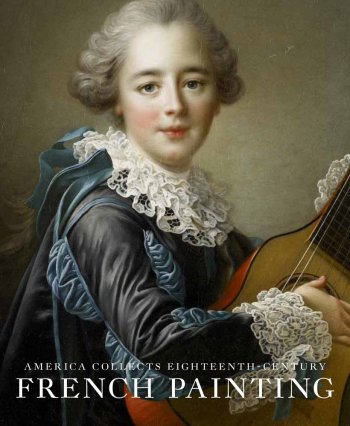
When Joseph Bonaparte, elder brother of Napoleon, arrived in the United States in 1815, he brought with him his exquisite collection of eighteenth-century French paintings. Put on public view, the works caused a sensation, and a new American taste for French art was born. Over the decades, appreciation of French eighteenth-century art has fluctuated between preference for the alluring decorative canvases of rococo artists such as François Boucher and Jean Honoré Fragonard to admiration for the sober neoclassicism championed by Jacques Louis David and his pupils. This exhibition brings together sixty-eight paintings that represent some of the best and most unusual examples of French art of that era held by American museums and tells their stories on a national stage: Who were the collectors, curators, museum directors and dealers responsible for bringing eighteenth-century French painting to America? Where are the paintings now?
The exhibition highlights smaller museum collections, less well-known paintings, and diverse locations across the United States, from Pittsburgh and Indianapolis to Birmingham and Phoenix. It considers eighteenth-century America’s very real fascination with France—a staunch ally in the American Revolution, an intellectual model for Benjamin Franklin, Thomas Jefferson, and other Americans abroad—and how the cultural ideal of eighteenth-century France has continued to endure in the American imagination to this day.
Image: Joseph Ducreux, Le Discret, ca. 1791, oil on aluminum, transferred from canvas (Lawrence: Spencer Museum of Art, University of Kansas).
◊ ◊ ◊ ◊ ◊
Note (added 28 May 2017) — A checklist for the exhibition is available here. Online, there’s also a useful chronology (condensed from the catalogue), establishing larger contexts and tracing the history of selected works in the exhibition.
Note (added 30 May 2017) — The catalogue is published by Lund Humphries:
Yuriko Jackall, Philippe Bordes, Jack Hinton, Melissa Hyde, Joseph Rishel, and Pierre Rosenberg, with Joseph Baillio, Susan Earle, Christophe Leribault, Robert Schindler, and D. Dodge Thompson, America Collects Eighteenth-Century French Painting (London: Lund Humphries, 2017), 304 pages, ISBN: 978 18482 22342, £50 / $70.
 C O N T E N T S
Director’s Foreword
Acknowledgments
Lenders to the Exhibition
Essays
• Pierre Rosenberg, Only in America
• Yuriko Jackall, American Visions of Eighteenth-Century France
• Joseph Bailliom, Wildenstein in America
• Jack Hinton, Fiske Kimball and French Period Rooms in America
• Christophe Leribault, The Tuck Donation to the Petit Palais: A Mirror of American Taste
• Melissa Hyde, Femmes-Artistes and America from the Early Republic to the Gilded Age
• Robert Schindler, Eugenia Woodward Hitt Collects
• Philippe Bordes, Buying against the Grain: American Collections and French Neoclassical Paintings
• Susan Earle, Joseph Ducreux, John Maxon, and the Spencer Museum of Art
• D. Dodge Thompson, When the Eighteenth Century Was New: Joseph Bonaparte in America
• Joseph Rishel, Notes on the American Reception of Eighteenth-Century French Painting
Plates
Yuriko Jackall
• Collector’s Century: From the King’s Mistress to the Shores of San Francisco
• Sensual Century: Pursuit of Love
• Opulent Century: Douceur de Vivre
• Playful Century: Games and Pastimes
• Fanciful Century: Masquerade and the Pleasures of the Imagination
• Inspired Century: Artists and Artistic Practice
• Virtuous Century: Institutional Taste
• Enlightened Century: Science, Nature, and the Passage of Time
Checklist of the Exhibition
Chronology
Bibliography
Index
Symposium | The Royal Palace in the Europe of Revolutions
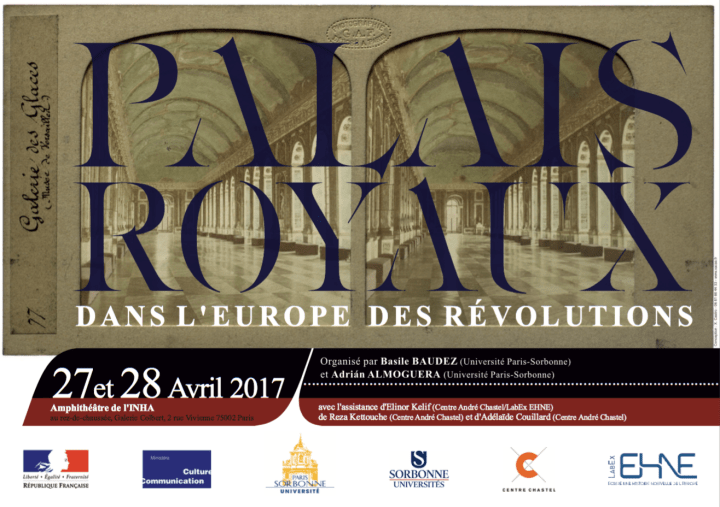
From the conference programme:
The Royal Palace in the Europe of Revolutions, 1750–1850
Palais Royaux dans l’Europe des Révolutions
Institut national d’histoire de l’art, Paris, 27–28 April 2017
Organized by Basile Baudez and Adrián Almoguera
Since the publication of Nikolaus Pevsner’s History of Building Types in 1976, architectural historians have been alert to the importance of typologies for rethinking their discipline. As analyzed by Werner Szambien or Jacques Lucan, thinking through types allowed for the articulation of concepts of convenance, character and composition in both public and private commissions. Along with metropolitan churches and royal basilicas, in ancien régime Europe princely palaces represented the most prestigious program an architect could expect. For a period in which the divine right of kings was being called into question, however, what happened to the physical structures of royal or princely power, symbol of political authority and dynastic seats? Did the national models of the Escorial, Versailles, Het Loo, or Saint James palaces still hold, even in light of new models made available through the publication of archeological discoveries in Rome or Split? The second half of the eighteenth and first half of the nineteenth century represent a moment of intense construction or reconstruction of the principal European palaces, from Caserta to Buckingham Palace, Saint-Petersburg to Lisbon, Versailles to Coblenz. This trend, addressed by Percier and Fontaine in their Résidences des souverains de France, d’Allemagne, de Russie, etc. (1833), took place in a Europe that was undergoing political developments that altogether changed the nature and symbolic structure of princely power.
This symposium, focused on Europe from roughly 1750 to 1850, aims to interrogate the manner in which architects and their patrons integrated the changing concepts of character in architecture and symbolic place of dynastic palaces, reconciling them with theory and/or practice through rethinking issues of distribution, construction, environmental situation, décor, function, reuse of interpretations of printed or drawn sources.
T H U R S D A Y , 2 7 A P R I L 2 0 1 7
9.30 Introduction
10.00 Basile Baudez (Université Paris-Sorbonne), Reconstruire Versailles, de Louis XV à Louis-Philippe
10.30 Francesco Guidoboni (Université Paris 1 Panthéon-Sorbonne) et Pierre Geoffroy (Université Paris-Sorbonne), Napoléon Ier empereur ou citoyen? Du choix de la résidence privée du souverain
11.15 Fabien Passavy (architecte du patrimoine, Versailles), Au service de la nouvelle élite au tournant du siècle: les cas des hôtels de Bourrienne et de Beauharnais
12.00 Mathieu Caron (Université Paris-Sorbonne), La France en ses meubles: Une symbolique du décor dans les palais du Domaine étranger (Italie, Belgique, Hollande) de l’an X à 1815
14.00 Guillaume Nicoud (Archivio del Moderno, Accademia di Architettura Università della Svizzera italiana), Fastes, étiquette et collection: regard croisé sur la nécessaire transformation des complexes palatiaux des Tuileries et du Louvre, du palais d’Hiver et de l’Ermitage vers 1800
14.30 Elizaveta Renne (Musée de l’Ermitage, Saint-Pétersbourg), The Chesma Palace in St. Petersburg and Catherine II’s Shifting Political Ambitions
15.30 Delfín Rodríguez (Universidad Complutense de Madrid), Théories et typologies de l’idée de palais royal dans la culture espagnole du XVIIIe siècle: histoire d’un conflit artistique et politique
16.15 Adrián Almoguera (Université Paris-Sorbonne), Le Palais du roi au temps de l’empereur: réflexions sur le Palacio Nuevo de Madrid
F R I D A Y , 2 8 A P R I L 2 0 1 7
10.00 Susanna Pasquali (Università di Roma La Sapienza), Nouvelles façades pour un palais trop sévère: projets inédits de Raffaele Stern pour le Palais Impérial de Rome, 1811–14
10.30 Ludovica Cappelletti (Politecnico di Milano), Towards a Modern Imperial Palace: The Ducal Palace of Mantua in the Eighteenth Century
11.15 Paolo Cornaglia (Politecnico di Torino), La forteresse et le palais: Plusieurs projets pour la dynastie de Savoie dans une ville juste annexée et hostile après la tempête napoléonienne 1818–25
12.00 Alba Irollo (chercheur indépendant), Changements de goût et d’étiquette: les souverains français et les palais royaux des Bourbons de Naples
14.00 Pablo Vázquez Gestal (Université Paris-Sorbonne), Pour le roi, pour l’État: Caserte et Charles de Bourbon
14.30 Dirk Van de Vijver (Université d’Utrecht), Le projet de Barnabbé Guimard pour un palais à Bruxelles vers 1768
15.00 Nilay Ozlu (Bogazici University, Istanboul), Showcases of Modernity in the Age of Reforms: Nineteenth-Century Ottoman Palaces of Istanbul
Call for Papers | Celebrating Female Agency in the Arts
From H-ArtHist:
Celebrating Female Agency in the Arts
Christie’s Education New York, 26–27 June 2018
Proposals due by 15 July 2017
Following the success of the 250-anniversary conference held in London in July 2016, Christie’s Education is organizing its second academic conference on the theme of women in the arts. The conference will take place at Christie’s, 20 Rockefeller Plaza in New York on Tuesday June 26th and Wednesday June 27th 2018.
From Antiquity to today, women have always played a significant role in the arts and their markets. With this call for sessions, we welcome proposals coming from a wide range of disciplines that would consider women’s diverse contributions to the arts from a transnational and transhistorical perspective. We hope that the sessions will reflect the global and historical diversity of the issues at stake.
This conference is not advocating for a separate history nor an alternative history of art and its markets, but rather we want to look at the central role played by women in the creation, development, support and preservation of the arts and, also how their contribution has changed over time. Sessions should consider globally and throughout history women as artists, patrons and collectors of art and architecture, dealers and brokers, art historians and art critics as well as curators and preservers of culture. From the presence of women in emerging and established art centers to historical aristocratic patronage and back in time to the medieval period and antiquity we hope that the sessions will investigate a diverse range of topics.
We encourage academics across disciplines and art professionals to submit proposals for individual sessions. Sessions will be 115 (4 x 20 minute papers) or 90 minutes (3 x 20 minute papers) in length. Please send a 250/300-word abstract to Dr. Cecily Hennessy (chennessy@christies.com) and Dr. Véronique Chagnon-Burke (vchagnon-burke@christies.edu) by July 15th 2017. We look forward to receiving your proposal.
New Book | Body Narratives: Motion and Emotion
This collection of essays grew out of the 2015 conference; from Brepols:
Susanna Caviglia, ed., Body Narratives: Motion and Emotion in the French Enlightenment (Turnhout: Brepols, 2017), 291 pages, ISBN: 978 2503 574745, 100€ / $125.
 The first art historical interrogation of the body as an object and discursive ensemble that questions the power and limits of visual representation, this book explores, in broad terms, the representations and understandings of the body’s physical and psychological movement’s meanings during the French Enlightenment in its many guises—artistic, esthetic, social, and erotic. It is centered on the fundamental tension between stasis and movement, which is both constitutive of art historical reflection and embedded in the body’s existence. Stasis and movement not only correspond to the potential modalities of the body’s visual representations, but they are also the conditions which govern the relationship between the viewer and the artwork as well as that between the viewers and the spaces in which they encounter the represented body. Based on this dialectic, the present book proposes a dynamic approach of the body considered as a focus of composition, an object of interrogation, and a site of meaning during a time when the body became the focus of an increasing number of artistic, technical, scientific, and philosophical inquiries directly connected to larger historical forces and discourses. During this time, the body’s stasis and movement became the vehicles for recording cultural and social transformations but also the producers of new meanings inherent to the body itself and unveiled by the development of the new scientific and philosophical approaches of it.
C O N T E N T S
Susanna Caviglia (University of Chicago), Introduction
I Body Language: Narrative Stasis
• Dorothy Johnson (University of Iowa), The Body Speaks: Anatomical Narratives in French Enlightenment Sculptures
• Étienne Jollet (Université Paris 1 Panthéon-Sorbonne), Anti-Pygmalion: Jean-Baptiste Restout’s Diogenes and Materiality as Truth
II The Mobile Body: Social Identity and Visual Dynamics
• Mimi Hellman (Skidmore College), Engaging Tapestries at the Hôtel de Soubise: Attention, Mobility, Intercorporeality
• Melissa Hyde (University of Florida), Watching Her Step: Women and the Art of Walking after Marie-Antoinette
III Body Temporality: Aesthetics of Walking
• Mary Sheriff (University of North Carolina at Chapel Hill), Movement and Stasis: Mapping Cythera
• Ewa Lajer-Burcharth (Harvard University), Strolling Time
Exhibition | Francisco de Goya: Los Caprichos
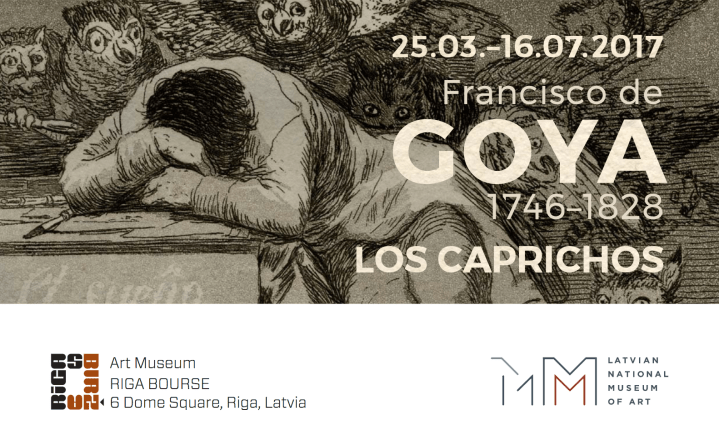
Press release from the Riga Bourse:
Francisco de Goya: Los Caprichos / Fransisko Goija: Kaprīzes
Art Museum Riga Bourse, 25 March — 16 July 2017
Curated by Daiga Upeniece
The exhibition introduces us to one of the world’s most famous art masterpieces by the brilliant Spanish artist Francisco José de Goya y Lucientes (1746–1828) Los Caprichos series of graphics. The album, containing 80 pages of graphics compiled and published by the artist himself in 1799, gained popularity in Spain and elsewhere soon after its publication and captured the quintessence of Goya’s style, reflecting a new, freer, and much more expressive approach to reality’s portrayal. Los Caprichos reverberated in 19th-century art and ended the dominance of Neo-Classicist academic style graphics.
There are many unsolved riddles hidden within the series. It has been assumed that the artist was influenced by various works of philosophy and art. However, Goya himself—disregarding references to some well-known poets, for example, Gaspar Melchor de Jovellanos, or parallels with the plays of Goya’s friend Leandro Fernández de Moratín—has categorically denied any kind of influence.
Goya was already focusing on the everyday life of his time and, in particular, on the position of women in society in the voluminous selection of drawings in his Madrid album (1796–97). La Celestina, a traditional image in Spanish literature who takes on particularly symbolic importance in Goya’s art, appears there for the first time. Her image reminds us of the temporality of youth and beauty and the inescapable approach of decrepitude. Like La Celestina, the often-utilized image of the prostitute and a focus on the theme of magic personify the dark aspects of society.
The blending of fantasy and reality forms the uniqueness of Goya’s vision. The dream motif was a traditional element that was used by Spanish artists and writers and those of other European countries, to tell of fantastic, philosophically tangible or surreal creatures. Initially, Goya’s series was also called Sueños—that is, dreams, instead of whims.
Some of Goya’s compositions are like theatrical scenes—others, like a parade of eccentric images. The mood in most of the works has similar qualities to Dante’s Inferno—every imaginable mischief rages within them: hypocrisy, lies, cruelty and the collapse of morality. The subjects tell of the church, the nation, the court, laws, physicians, art and science, the streets of Madrid, rural life, the poetry and philosophy of the time, about the needy, the rich, the sick, the young and the old, combining all of these images in a unified mirror of society. Goya’s self-portrait, found on the first page, explains his attitude to what is portrayed in Los Caprichos. The artist, in a way, identifies with the new, modern Enlightenment period; and looked at from these positions, his gaze slides obliquely to the graphics which he himself has created.
Goya used a complex and innovative graphic technique. At its foundations was traditional etching, which Goya combined with a comparatively new invention—aquatint. In this way, clean lines, engraved with acid were supplemented with pale, sort of washed-out tones, which were created with fine dots, obtained, by processing the graphic plate with crushed resin. Of equal importance were the very delicate lines that were engraved with a blade, directly onto the surface of the plates. In graphic art, etching with drypoint on a black background or creating delicate lines and subtle shading around the eyes and hands of the images created the equivalent of airy brushstrokes in painting.
There are 78 works from the second impression in the collection at the Art Museum Riga Bourse. The works’ annotative texts consist of Goya’s comments, explanations about Goya’s works by art historians, as well as informative materials about people and events in Spain in the late 18th century. The exhibition is curated by Daiga Upeniece, Head of the Art Museum RIGA BOURSE / Latvian National Museum of Art.
Monographs used in the notes: Sarah Simmons, Goya (London: Phaidon Press, 1998), pp. 139–84; Xavier de Salas, “Light on the Origin of Los Caprichos,” The Burlington Magazine 121 (1979): 711–16; В. Прокофьев. Капричос Гойи. 2 т., Искусство, Москва, 1969.
Exhibition | British Art: Ancient Landscapes
Opening next month at The Salisbury Museum:
British Art: Ancient Landscapes
The Salisbury Museum, 8 April — 3 September 2017
Curated by Sam Smiles
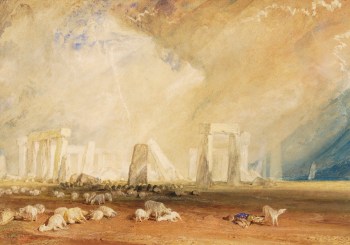
J.M.W. Turner, Stonehenge, ca. 1827–28, watercolour (The Salisbury Museum).
The British landscape has been a continual inspiration to artists across the centuries and particularly the landscapes shaped and marked by our distant ancestors. The megaliths, stone circles, and chalk-cut hill figures that survive from Neolithic and Bronze Age times have stimulated many artists to make a response. In this major new exhibition curated by Professor Sam Smiles, these unique artistic responses have been brought together to create a new discussion. Featuring the work of some of the greatest names in British art from the last 250 years—including John Constable, J.M.W. Turner, Eric Ravilious, John Piper, Barbara Hepworth, Henry Moore, Paul Nash, Richard Long, and Derek Jarman—the exhibition explores how this work records and reflects on some of Britain’s most treasured ancient landscapes.
The catalogue is published by Paul Holberton:
Sam Smiles, British Art: Ancient Landscapes (London: Paul Holberton Publishing, 2017), 120 pages, ISBN: 978 19113 00144, £25.
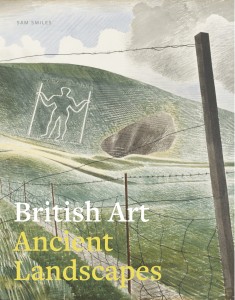 Published to accompany an exhibition at The Salisbury Museum and Art Gallery, this volume explores the most significant works of art engaged with prehistoric moments across Britain from the 18th century to the 21st. While some of the works in the earlier period may be familiar to readers—especially Turner and Constable’s famous watercolours of Stonehenge—the varied responses to British Antiquity since 1900 are much less well known and have never been grouped together.
The author aims to show the significance of antiquity for 20th-century artists, demonstrating how they responded to the observable features of prehistoric Britain and exploited their potential for imaginative re-interpretation. The classic phase of modernist interest in these sites and monuments was the 1930s, but a number of artists working after WWII developed this legacy or were stimulated to explore that landscape in new ways. Indeed, it continues to stimulate responses and the book concludes with an examination of works made within the last few years.
An introductory essay looks at the changing artistic approach to British prehistoric remains over the last 250 years, emphasizing the artistic significance of this body of work and examining the very different contexts that brought it into being. The cultural intersections between the prehistoric landscape, its representation by fine artists and the emergence of its most famous sites as familiar locations in public consciousness will also be examined. For example, engraved topographical illustrations from the 18th and 19th centuries and Shell advertising posters from the 20th century will be considered.
Artists represented include: J.M.W. Turner, John Constable, Thomas Hearne, William Blake, Samuel Prout, William Geller, Richard Tongue, Thomas Guest, John William Inchbold, George Shepherd, William Andrews Nesfield, Copley Fielding, Yoshijiro (Mokuchu) Urushibara, Alan Sorrell, Edward McKnight Kauffer, Frank Dobson, Paul Nash, Eric Ravilious, John Piper, Henry Moore, Barbara Hepworth, Ithell Colquhoun, Gertrude Hermes, Norman Stevens, Norman Ackroyd, Bill Brandt, Derek Jarman, Richard Long, Joe Tilson, David Inshaw and Jeremy Deller.
Sam Smiles is the author of The Image of Antiquity: Ancient Britain and the Romantic Imagination (1994), Flight and the Artistic Imagination (2012), and West Country to World’s End: The South West in the Tudor Age (2013).










 Enfilade
leave a comment