Exhibition | Goethe and France
Now on view at the Bodmer Foundation, just outside of Geneva:
Goethe et la France
Fondation Martin Bodmer, Cologny, 12 November 2016 — 23 April 2017
Curated by Jacques Berchtold

Heinrich Christoph Kolbe, Portrait of Goethe (detail), oil on canvas, ca. 1826 (Cologny: Fondation Martin Bodmer).
Martin Bodmer (1899–1971) placed Johann Wolfgang von Goethe (1749–1832) high in his personal hall of fame and at the center of his collection, one of the most important in the world. In many ways he owed the very concept of Weltliteratur to this towering figure. Goethe was familiar with French culture from very early on. Like many of his contemporaries of feudal and aristocratic Europe, he too felt the shock of the French Revolution, and his participation in the failed campaign against the Revolutionary forces (the Battle of Valmy in 1792) was a trauma that marked him for the rest of his days.
From his affinities for Rousseau, Goethe changed directions, and the work he did in Weimar, the new capital of the Aufklärung, established a uniquely German classicism. In the process, the ideologues of classicism at court drew on antiquity but also fostered a competitive relationship with their predecessors at Versailles. Goethe—who managed the library, theater, and opera—introduced Germans to the masterworks of French geniuses in literature, theater, music, and painting. Odd writers of the French canon were rehabilitated (Rabelais), and innovative authors of the period were discovered (Diderot).
The social, ethical, and political thinking that resulted from the shock of the French Revolution was crystallized in Goethe’s play The Natural Daughter (Die natürliche Tochter). Under the protectorate of the Confederation of the Rhine, Goethe met Napoleon—a great reader of Werther—in October 1808, and contemplated creating a portrait of him as Julius Caesar in homage to this genius of visionary and decisive action. And Faust, which Goethe pursued from 1808 on, had a special resonance in France. Taking off from the many Goethean gems in the Bodmer Collection, the exhibition shows the extent to which a complex and ambivalent ‘French question’ deeply influenced Goethe’s output for some sixty years.
Call for Proposals | Swiss Art and the Grand Tour
From H-ArtHist:
Special Issue of the Zeitschrift für Schweizerische Archäologie und Kunst (ZAK) for 2018
Travelling People, Travelling Objects: The Reception of Swiss Art in the Context of the Eighteenth-Century European Grand Tour
Menschen und Objekte auf Reisen: Die Rezeption Schweizer Kunst im Kontext der europäischen Grand Tour des 18. Jahrhunderts
Proposals due by 1 May 2017; finished articles are due by 31 January 2018
In 2018, a special issue of the Zeitschrift für Schweizerische Archäologie und Kunst (ZAK) will be dedicated to Swiss art in the eighteenth century. Focusing on the context of European travel culture, the issue will address the various ways in which Grand Tourists perceived, purchased, and collected Swiss art objects during and after their travels. This perspective will help to gain new insight into the distribution and reception of Swiss art in eighteenth-century Europe.
It has often been claimed that the so-called Swiss Kleinmeister, printmakers of small genre and landscape scenes between 1750 and 1850, sold their artworks to Grand Tour travellers, thus contributing to the construction and popularization of a new ‘image of Switzerland’ in Europe. However, little is known about the travelling art buyers and the specific ways in which these small Swiss art objects were distributed, collected, and displayed abroad. Taking this question as a starting point, we welcome contributions which investigate the reception and distribution of these traveling images of Switzerland. Special priority will be given to topics which focus on the materiality of specific objects as well as topics which centre on the role and the meaning of Swiss artworks at their places of destination.
Proposals might address the following issues, among others:
1 Images, media, materialities
It is a widespread opinion that the small format and low price of the graphic art of the Swiss Kleinmeister contributed to the medium’s popularity among European travellers. Does a close view on European collections allow another, more complex perspective on the reception and distribution of Swiss art and the related role of its specific medial and material characteristics? What can be said about the collection-specific relations of graphics, watercolors, paintings, and decorative art objects of Switzerland?
2 Paths and destinations of Swiss graphic art
Kleinmeister graphic art was traded in single sheets, within illustrated books but also in literary works such as travel descriptions. Can individual trade routes be traced within this context of travel culture? Which European collections (libraries, print rooms etc.) owned (Kleinmeister) graphic art works, in which forms were they held and what role did they play within the formation of a specific
collection?
3 Swiss landscape images—identities and memories
The graphic images of the Swiss Kleinmeister are often said to have played an important role in shaping the identity of Switzerland by constructing a typical image of the country’s ‘national landscape’. What was the meaning and function of these graphic landscapes in European collections? Which role did Swiss landscapes play in other objects, for example decorative art, that were purchased by travellers?
4 Switzerland—Italy—Europe
Grand Tour travellers often purchased a great number of art objects which can be considered as conventionalized souvenirs of the places of their production along the travel routes. How were these imaginary sites of memory perceived and represented in European collections? What kinds of medial, material, and semantic relations are constructed between these collection objects on a transregional level, and which position did the objects from Switzerland occupy?
This call addresses art historians and researchers from related disciplines. Please send your proposal (max. 300 words in English, German, French, or Italian), a short CV, and a short list of keywords (max 6) no later than May 1st, 2017 to Danijela Bucher (danijela.bucher@uzh.ch) and Miriam Volmert (miriam.volmert@khist.uzh.ch). Final selection and notification to authors will be announced no later than July 31st, 2017. Finished articles (ca. 30,000–40,000 characters including spaces and ca. 12–15 illustrations) should be submitted by 31st January 2018. No royalty will be paid for any article. Authors are responsible for all reproduction right fees.
Call for Papers | The Unique Copy: Extra-Illustration

First page of text in an illustrated edition of A Midsummer Night’s Dream, 1908 (Folger Digital Image 81266), exhibited in the Folger’s 2010 exhibition Extending the Book: the Art of Extra-Illustration.
◊ ◊ ◊ ◊ ◊
From the Call for Papers:
The Unique Copy: Extra-Illustration, Word and Image, and Print Culture
Herzog August Library, Wolfenbüttel, Germany, 24–25 May 2018
Proposals due by 30 May 2017
Organized by Christina Ionescu and Sandro Jung
Is extra-illustration an ornamental art or does it add layers of significance and nuance to the accompanying text? How does it shed light on authorship, the act of reading, book history, and print culture? How does text-image interaction manifest itself in the extra-illustrated book-object? Is extra-illustration the equivalent of grangerising or are there other means of materially expanding the text? Is it a creative act or a form of customised reproduction or reuse of print matter? Who are the artists, readers, collectors, publishers, and curators who are responsible for the creation of extra-illustrated objects?
In his study of the history, symptoms, and cure of a fatal disease caused by the unrestrained desire to possess printed works, Thomas Frognall Dibdin (1776–1847) observes that “[a] passion for a book which has any peculiarity about it,” as a result of grangerising by means of collected prints, transcriptions, or various cutouts, “or which is remarkable for its size, beauty, and condition—is indicative of a rage for unique copies, and is unquestionably a strong prevailing symptom of the Bibliomania.” Extra-illustration as a practice did not emerge during bibliomaniac Dibdin’s birth century, which witnessed the publication of James Granger’s Biographical History of England (1769) and a widespread rage for unique copies of books, nor has it been extinguished in our digital era by modern technology. Whether it manifests materially as a published work that is supplemented verbally (with interleaved or pasted autograph letters, handwritten notes, or print matter either directly or tangentially linked to its content), or visually (with additional drawings, prints, maps, watercolours, photographs, or other forms of artwork that are similarly connected to a variable degree of closeness to the text), an extra-illustrated copy is important not only for its uniqueness as an original artefact and its commercial value as a desired commodity. As emblematic of an artistic, bibliographic, and cultural practice, it sheds light on its creator, the context of its production, and the reception of a text. As a form of personalised book design, it is moreover significant as a means of creative expression, an outlet of reader empowerment, and an archival repository of historical or cultural insight. Some of the popular targets of extra-illustration through time have been the Bible, biographies, historical treatises, topographical surveys, travel narratives, and popular plays.
A plethora of monographs and special journal issues dealing with book illustration from various theoretical and (inter)disciplinary perspectives have been published in recent years, but the subfield of extra-illustration remains largely unstudied. It is important to note, however, the contribution to the field by Luisa Calè, Lucy Peltz, and Stuart Sillars, who have proposed useful in-depth reflections on extra-illustration and grangerising as a practice. To address this gap in current scholarship, we invite papers that engage with extra-illustration through the conceptual lenses of book history, print and visual culture studies, and word and image theory. Contributions that focus on original artwork contained in extra-illustrated copies from the perspective of word and image studies are of particular interest to the co-editors, as are studies of extra-illustration as a link between text, book-object, and context, as approached through the prism of the book arts and reception theory. Other possibilities include contributions investigating extra-illustration diachronically or cross-culturally, and case studies dealing with a special copy, a collection of extra-illustrated books, or an individual collector, publisher, curator, or artist responsible for the creation of such unique artefacts.
Possible themes include but are not limited to:
· grangerising as a biblio-cultural practice
· grangerising as a form of material repurposing in relation to print culture
· grangerising as a fashionable and biblioclastic pastime
· grangerising as an act of authorship
· the Grangerite, bookscrapping, and collecting practices
· illustrative responses to the text in the form of unique infra-textual images
· marginal illustration and text-image interaction
· extra-illustration as interactive and engaged reading
· extra-illustration as emblematic of institutional/curatorial collecting practices
· extra-illustration as personalised book design
· extra-illustration as a window into history and intellectual thought
· extra-illustration as a book customisation response to mass production
· digital imports of extra-illustration as a means of expression
500-word abstracts, along with the author’s contact information and bio-bibliographical note, should be sent to the co-editors (cionescu@mta.ca / prof.s.jung@gmail.com) by 30 May 2017. A publication on the topic, either a journal issue or a collection of essays, is envisaged.
New Book | Facing the Text: Extra-illustration
Distributed by Manchester University Press:
Lucy Peltz, Facing the Text: Extra-illustration, Print Culture, and Society in Britain, 1769–1840 (San Marino, Huntington Library Press, 2017), 424 pages, ISBN: 978 08732 82611, $150 / £115.
 During the eighteenth and nineteenth centuries, thousands of books were customized with prints and drawings in a practice called extra-illustration. These books were often massively extended, lavishly bound, and prized by their owners as objects of display, status, and exchange. The scale of these compilations as well their interdisciplinary nature—at once literary texts, printed books, art collections, and indexes of visual culture—have typically excluded them from histories of art and literature. In this book, Lucy Peltz maps a history of extra-illustration and its social and cultural meanings, providing a fascinating account of the practice itself and the often colourful personalities who engaged in it. The remarkable contents of key extra-illustrated books are explored, along with the broader historical and commercial contexts in which they were produced and enjoyed.
Lucy Peltz is Senior Curator of Eighteenth-Century Collections and Head of Collections Displays (Tudor to Regency) at the National Portrait Gallery, London.
◊ ◊ ◊ ◊ ◊
C O N T E N T S
Introduction: A Long History of Extra-Illustration
Part I: Getting Your Heads in Order: Engraved Portrait Collecting and the Origins of Extra-Illustration
1 ‘Of Collectors of English Portrait Prints’
2 Genteel Authorship, the Community of the Antiquarian Text, and the Invention of Extra-Illustration
3 Portraiture, Order, and Meaning
4 John, Lord Mountstuart and the Ends of the Bull Granger
Part II: From Domestic Retirement to a Commercial Marketplace: Amateurs, Antiquaries, and Entrepreneurs
5 ‘Retirement, Rural Quiet, Friendship, Books’: Amateurism and Its Trophies
6 Charting the Craze: Anthony Storer and Richard Bull
7 The Strawberry Hill Press and the Rituals of Bibliographic Exchange
8 Antiquarian Topography or Armchair Tourism: Thomas Pennant’s “Labors”
9 Popularizing Pennant’s London: How the Art World Sold Extra-Illustration
Part III: The Sutherland Clarendon: Gender, the Print Market, and National Heritage
10 ‘Buried under Its Own Grandeur’: Understanding the Sutherland Clarendon
12 The Cut and Thrust of the Print Market in the Early Nineteenth Century
13 Women, Widowhood, and Collecting: Charlotte Sutherland’s Inheritance
14 Monumentalizing the Sutherland Clarendon: Between Rhetoric and Content, 1820–1839
15 The Female Connoisseur and the Private Catalogue
16 A ‘National Work’ Completed: The Sutherland Clarendon and Cultural Heritage
Epilogue: Rethinking the Past, Securing the Future
Select Bibliography
Index
Postdoctoral Research Assistant: Enlightenment Architectures
From the position description:
Postdoctoral Research Assistant: Enlightenment Architectures
The British Museum, London, 28 months, starting May 2017
Applications due by 13 March 2017
An exciting opportunity has arisen at the British Museum for a Postdoctoral Research Assistant to contribute to the Leverhulme Trust funded research project Enlightenment Architectures: Sir Hans Sloane’s catalogues of his collections under the Principal Investigator, Kim Sloan and Co-Investigator Julianne Nyhan (UCL).
Beginning ideally in May 2017, as part of this project, the post-holder will work alongside another Postdoctoral Research Assistant on the process of digitally encoding externally sourced transcriptions of six of Sir Hans Sloane’s manuscript catalogues and will assist with identifying information entities within them which will inform research. You will also participate in the production of the project’s peer-reviewed research publications, planned to be a minimum of four co-authored interdisciplinary articles which will be published by the end of the project.
The successful candidate will have completed a PhD, or equivalent, and will be proficient in Latin and/or at least one modern language related to the project. With experience of research/teaching/curatorial work, you will have strong knowledge of electronic text, particularly digital cultural heritage resources for the 17th and 18th centuries.
More information is available here»
ASECS 2017, Minneapolis

2017 American Society for Eighteenth-Century Studies Conference
Hyatt Regency Minneapolis, 30 March — 2 April 2017
The 48th annual meeting of the American Society for Eighteenth-Century Studies takes place at the Hyatt Regency in Minneapolis. HECAA will be represented by the Anne Schroder New Scholars’ Session, chaired by Jessica Fripp and scheduled for Thursday afternoon. Right after that panel, members can gather to share memories of Mary Sheriff. Our annual luncheon and business meeting is scheduled for Friday.
A selection of additional panels is included below (of the 192 sessions scheduled, many others will, of course, interest HECAA members). For the full slate of offerings, see the program.
H E C A A E V E N T S
Anne Schroder New Scholars’ Session — Historians of Eighteenth-Century Art and Architecture
Thursday, 30 March, 4:15–5:45, Greenway Ballroom C
Chair: Jessica L. FRIPP, Texas Christian University
1. Olaf RECKTENWALD, McGill University, “Built Decay: Architectural Ruins in Bavarian Rocaille”
2. Kelsey MARTIN, University of North Carolina at Chapel Hill, “‘Sade From the Cave and Rousseau From the Cloud’: An Intertextual Analysis of Female Sexual Consent in the Frontispiece of La Philosophie dans le boudoir and Chapter V of Émile”
3. Andrea BELL, Parsons School of Design, The New School, “The Fainting Maenad in David’s Brutus: Associationism and the Antique”
4. Paris SPIES-GANS, Princeton University, “‘Exercising it as a profession’: The Rise of the Female Artist in London and Paris, 1760–1815”
◊ ◊ ◊ ◊ ◊
Mary Sheriff (1950–2016): A Memorial Session
Thursday, 30 March 2017, 6:00–7:00, Lakeshore A, 1st Floor
Please join us as we remember our colleague, dear friend, and mentor. There will be a cash bar, a short program, and an opportunity for people to share memories and celebrate Mary’s vibrant life.
◊ ◊ ◊ ◊ ◊
HECAA Luncheon and Business Meeting
Friday, 31 March, 1:00–2:30, Mirage Room
◊ ◊ ◊ ◊ ◊
O T H E R S E S S I O N S R E L A T E D T O T H E V I S U A L A R T S
T H U R S D A Y , 3 0 M A R C H 2 0 1 7
Aesthetic Subjects
Thursday, 30 March, 8:00–9:30, Greenway Ballroom C
Chairs: Sarah ERON, University of Rhode Island and David ALVAREZ, DePauw University
1. Elizabeth MANSFIELD, Getty Foundation, “Picture This: Empirical Imagination and the Aesthetics of Realism”
2. Neil SACCAMANO, Cornell University, “Judgment Time”
3. Rebecca TIERNEY-HYNES, University of Waterloo, “Eighteenth-Century Tragedy and the Ethics of Passivity”
4. Amit YAHAV, University of Minnesota, Twin Cities, “Durational Aesthetics and Durational Subjectivity”
◊ ◊ ◊ ◊ ◊
The State, the Household, and Discourses of ‘Economic Development’ (Roundtable)
Thursday, 30 March, 8:00–9:30, Nicollet D-1
Chair: Emily BRUCE, University of Minnesota, Morris
1. Xiaolin DUAN, Elon University, “Fashion, State, Social Changes: Chinese Silk in the Early Modern Global Trade”
2. Mary Jo MAYNES, University of Minnesota, “Technology, Entrepreneurialism, the Household, and the State: The European Textile Labor Force in the Long Eighteenth Century”
3. Ann WALTNER, University of Minnesota, “Picturing the Ideal Peasant: ‘Pictures of Tilling and Weaving’ and the Household Economy in Eighteenth Century China”
Respondent: Sarah CHAMBERS, University of Minnesota
◊ ◊ ◊ ◊ ◊
Women of Power and the Power of Women: Rethinking Female Agency in Honor of Maria Theresa, I
Thursday, 30 March, 9:45–11:15, Nicollet D-2
Chair: Rita KRUEGER, Temple University
1. Kate MULRY, California State University, Bakers eld, “Mary Rich’s ‘Strong Cryes for Mercy’: Signing, Groaning, and Fasting on Behalf of the Nation”
2. Kelsey RUBIN-DETLEV, Queen’s College, University of Oxford, “The Epistolary Strategies of Catherine the Great and Maria Theresa”
3. Mandy PAIGE-LOVINGOOD, University of North Carolina at Chapel Hill, “Marie-Antoinette: Une Identité Melange”
4. Yolopattli HERNÁNDEZ-TORRES, Loyola University Maryland, “Women and Productivity in Late Colonial Mexico”
5. Amanda STRASIK, Eastern Kentucky University, “Revolutionizing Royal Motherhood: Marie Antoinette and Her Children”
◊ ◊ ◊ ◊ ◊
Art and/in the Private House
Thursday, 30 March, 9:45–11:15, Greenway Ballroom G
Chairs: Anne Nellis RICHTER, American University and Melinda MCCURDY, The Huntington Library
1. Kristin O’ROURKE, Dartmouth College, “Domesticity and the Everyday in the New Urban Paris of the Eighteenth Century”
2. Laurel O. PETERSON, Yale University, “Priming the Eye, Producing Splendor: Pellegrini on the Grand Staircase at Kimbolton Castle”
3. Hyejin LEE, University of North Carolina at Chapel Hill, “Scent of Paradise: Visual-Material Culture of Salubrious Air and Medicalizing the Home in Eighteenth-Century Paris”
4. Craig STAMM, Carnegie Mellon University, “Harriet Mathew’s Parlor for the Arts: Producing Taste in the Middle-Class Interior”
◊ ◊ ◊ ◊ ◊
Medium and Magic II: Nature and Imagination — German Society for Eighteenth-Century Studies / Deutsche Gesellschaft für die Erforschung des 18. Jahrhunderts
Thursday, 30 March, 11:30–1:00, Greenway Ballroom A
Chair: Hania SIEBENPFEIFFER, Ludwig-Maximilians University
1. Michael Dominik HAGEL, Humboldt University, “Device and Figuration: Ghosts in Schiller’s Geisterseher”
2. Urte HELDUSER, Leibniz University, “Telescope of Fantasy: Johann Karl Wezel’s and Jean Paul’s ‘natural magic of imagination’”
3. Anita HOSSEINI, Leuphana University, “Magic and Verité: Chardin’s Paintings as Strong Medium”
◊ ◊ ◊ ◊ ◊
Empire and the Antique in Art and Design
Thursday, 30 March, 11:30–1:00, Greenway Ballroom E
Chairs: Jocelyn ANDERSON, Independent Scholar and Holly SHAFFER, Dartmouth College
1. J. Cabelle AHN, Harvard University, “Arcadia ‘sous la latitude des Iroquois:’ Representing Indigenous Canadians in the Salon”
2. Susan DEANS-SMITH, The University of Texas at Austin, “‘This Mexican Marvel:’ Manuel Tolsá’s Bronze Equestrian Statue of Charles IV All’Antica”
3. Amelia RAUSER, Franklin & Marshall College, “Neoclassical Dress and Imperial Cotton”
◊ ◊ ◊ ◊ ◊
1680–1715: A Crisis of the European Mind?
Thursday, 30 March, 2:30–4:00, Greenway Ballroom C
Chair: Aaron WILE, Harvard University
1. Anton MATYTSIN, Kenyon College, “The Crisis of Chronology at the Académie des inscriptions”
2. Katharine J. HAMERTON, Columbia College Chicago, “A Malebranchean Moment at the Turn of the Eighteenth Century?”
3. Izabel GASS, Yale University, “The ‘Uneasiness’ of Spectatorship: Locke and the Burkean Sublime”
◊ ◊ ◊ ◊ ◊
Clothing as Visual Language
Thursday, 30 March, 2:30–4:00, Nicollet A/B
Chair: Kristin O’ROURKE, Dartmouth College
1. David PULLINS, Massachusetts Institute of Technology, ‘“To traverse all the nations of the world without leaving one’s cabinet’: Developing a Model for Rethinking the Global in Early Modern Europe”
2. Olivia SABEE, Swarthmore College, “Ladies in White: From Revolutionary Fête to Iconic White Act”
3. Heather MCPHERSON, University of Alabama at Birmingham, “Style Récamier: The Lady in White”
4. Elise Urbain RUANO, University of Lille, École du Louvre, ‘“I wear, therefore I am’: Female Self-Definition through Clothing in Eighteenth- Century French Portraiture”
◊ ◊ ◊ ◊ ◊
Material Culture, Then and Now
Thursday, 30 March, 4:15–5:45, Nicollet D-2
Chairs: Chloe Wigston SMITH, University of York and Beth Fowkes TOBIN, University of Georgia
1. Laura ENGEL, Duquesne University, “Performing Presence: Eighteenth-Century Silhouettes and the Shadow Archive”
2. Elisabeth FRASER, University of South Florida, “The Color of the Orient and the Materiality of the Ottoman Costume Book”
3. Robbie RICHARDSON, University of Kent, “‘[P]ray what a pox are those damned Strings of Wampum?’: The Illegibility of North American Material Culture”
4. Joseph DRURY, Villanova University, “Objects of Violence in Enlightenment Britain”
◊ ◊ ◊ ◊ ◊
Gendered Materialities —Women’s Caucus
Thursday, 30 March, 4:15–5:45, Nicollet A/B
Chairs: Hannah Wirta KINNEY University of Oxford and Rivka SWENSON, Virginia Commonwealth University
1. Catherine COKER, Texas A&M University, “Materializing Gender in English Printing Houses”
2. Claudia Thomas KAIROFF, Wake Forest University, “What to Wear to the Apocalypse: Politics and Fashion in the Poems of Anne Finch”
3. Tracey HUTCHINGS-GOETZ, Indiana University, “If the Glove Fits: Materializing Gender on the Eighteenth-Century Female Hand”
4. Alicia CATICHA, University of Virginia, “From the Salon to the Salon: Étienne-Maurice Falconet and the Gendering of Sculpture in Eighteenth-Century France”
5. Lindsey ECKERT, Georgia State University, “Lady Caroline Lamb and Recuperative Materiality”
◊ ◊ ◊ ◊ ◊
Contextualizing the Passions: Eighteenth-Century Theories — Cultural Studies Caucus
Thursday, 30 March, 4:15–5:45, Greenway Ballroom F
Chair: Aleksondra HULTQUIST, Stockton University
1. Joel SODANO, University at Albany, State University of New York, “‘Love is not a Voluntary Thing’: Pamela and the History of the Passions”
2. Paul HOLMQUIST, Concordia University and Carleton University, “Moving Useful Passions: Claude-Nicolas Ledoux’s Architectural Language of Virtue”
3. Barrett KALTER, University of Wisconsin-Milwaukee, “Disgusting Swift”
◊ ◊ ◊ ◊ ◊
Members Reception
Thursday, 30 March, 6:00–7:00, Greenway Promenade
◊ ◊ ◊ ◊ ◊
F R I D A Y , 3 1 M A R C H 2 0 1 7
Visualizing Weimar
Friday, 31 March, 8:00–9:30, Nicollet A/B
Chair: Amelia RAUSER, Franklin and Marshall College
1. Karin SCHRADER, Independent Scholar, “Between Dynastic Demands and Idealization: The Portraits of Anna Amalia, Duchess of Saxe-Weimar-Eisenach”
2. Thomas WILLETTE, University of Michigan, “Italy in Weimar: Goethe’s Leben des Benvenuto Cellini”
3. Karin A. WURST, Michigan State University, “Weimar and Beyond: Visual Culture and Bertuch’s Journal des Luxus und der Moden”
Respondent: Christina LINDEMAN, University of South Alabama
◊ ◊ ◊ ◊ ◊
Aesthetics of the Urban, I
Friday, 31 March, 9:45–11:15, Nicollet D-2
Chair: Joanne MYERS, Gettysburg College
1. Catherine LABIO, University of Colorado Boulder, “The Cries of the Mississippi: Paris and New Orleans, ca. 1720”
2. Ellen R. WELCH, University of North Carolina at Chapel Hill, “Towards an Urban Aesthetics of Sound: Listening to Paris in the Eighteenth Century”
3. Alison O’BYRNE, University of York, “London’s Commercial Sublime”
4. Jocelyn ANDERSON, Independent Scholar, “Representing Settlements Abroad: British Artists’ Views of India in the Mid- Eighteenth Century”
◊ ◊ ◊ ◊ ◊
Politics of the Emotions under the Ancien Régime, I – Bodies
Friday, 31 March, 9:45–11:15, Nicollet A/B
Chairs: Kate TUNSTALL, University of Oxford and Logan J. CONNORS, University of Miami
1. Aaron WILE, Harvard University, “The Decline of Expression and the Autonomy of Painting in the Final Years of the Sun King”
2. Chloe Summers EDMONDSON, Stanford University, “Absolutism, Emotion, and the Novel: A Socio-Literary History of Interiority”
3. Katharine JENSEN, Louisiana State University, “Le roi sensible: The Politics of Emotion in Genlis’s La Duchesse de la Vallière”
4. Julie C. HAYES, University of Massachusetts, Amherst, “Verzure’s Politics of Emotion in Ré exions hasardées d’une femme ignorante”
◊ ◊ ◊ ◊ ◊
Textual and Visual Representations of Nature and Landscape Architecture (Roundtable)
Friday, 31 March, 9:45–11:15, Greenway Ballroom C
Chairs: Chunjie ZHANG, University of California, Davis and Alessa JOHNS, University of California, Davis
1. Cynthia WALL, University of Virginia, “The Topography of the Text”
2. Susan Clare SCOTT, McDaniel College, “The Marriage of Word and Image: Poetry on Landscape Painting in China”
3. Rebecca Anne BARR, National University of Ireland Galway, “‘Scenes of Woe in Perspective’: James Thomson’s Winter and Irish Poetry on the Great Frost”
4. Servanne WOODWARD, University of Western Ontario, “The Mazes of Paul et Virginie by Bernardin de Saint-Pierre”
5. Jason H. PEARL, Florida International University, “The Bird’s-Eye View of Nature”
6. Susan EGENOLF, Texas A&M University, “Cultivating the Industrial Sublime in the Western Midlands”
◊ ◊ ◊ ◊ ◊
Amateurism in the Eighteenth Century
Friday, 31 March, 9:45–11:15, Greenway Ballroom D
Chairs: Lindsay DUNN, Texas Christian University and Franny BROCK, University of North Carolina at Chapel Hill
1. Julie PRIOR, The University of Toronto, “‘I cannot be said in the least to wander from my Profession’: Amateurism, Innovation, and Adaptation on the Eighteenth-Century Stage”
2. Marilyn CASTO, Virginia Polytechnic Institute and State University, “Women’s Craft in the Long Eighteenth Century: Materiality, Purpose and Judgment”
3. Andrew CURRAN, Wesleyan University, “Diderot at the Louvre: The Non-Amateur Amateur”
◊ ◊ ◊ ◊ ◊
Made Up in the Eighteenth Century: Cosmetics, Wigs, and Ornamentation — Graduate Student Caucus
Friday, 31 March, 9:45–11:15, Greenway Ballroom F
Chair: Courtney HOFFMAN, University of Georgia
1. Mallory Anne PORCH, Auburn University, “Embroidering Detail: Narrative and Eighteenth-Century Needlework”
2. Jessica L. FRIPP, Texas Christian University, “Fashioning the Friendly Artist”
3. Henna MESSINA, University of Georgia, “Fanny’s Necklaces: Gift Economy in Mansfield Park”
◊ ◊ ◊ ◊ ◊
Aesthetics of the Urban, II
Friday, 31 March, 11:30–1:00, Nicollet D-2
Chair: Alison O’BYRNE, University of York
1. Emerson WRIGHT, State University of New York at Buffalo, “Filthy Beautiful: Hogarth’s Aesthetics of the Urban”
2. Nathan PETERSON, Saginaw Valley State University, “The Aesthetics of Poverty in the Eighteenth-Century Guidebook”
3. Joanne MYERS, Gettysburg College, “Henry Fielding and the Marvellous Uses of Urban Spaces”
4. Jason H. PEARL, Florida International University, “Satire and the View from above London”
◊ ◊ ◊ ◊ ◊
Rococo Queens
Friday, 31 March, 11:30–1:00, Nicollet A/B
Chair: Melissa HYDE, University of Florida
1. Tara ZANARDI, Hunter College, City University of New York, “Surface Play and Rococo Ambition: Isabel de Farnesio’s Lacquered Bedroom”
2. Christina LINDEMAN, University of South Alabama, “Composing the Rococo: Representations of Musical Princesses in Eighteenth-Century Germany”
3. Amy FREUND, Southern Methodist University, “Killer Queens: Royal Women and Hunting Guns in Rococo Europe”
4. Susan WAGER, University of New Hampshire, “Van Loo, Pompadour, Rococo: A Material Media Event”
◊ ◊ ◊ ◊ ◊
What is ‘The Eighteenth Century’ Now? (Roundtable)
Friday, 31 March, 11:30–1:00, Greenway Ballroom I
Chair: Rebecca L. SPANG, Indiana University
1. Al COPPOLA, City University of New York
2. Steven PINCUS, Yale University
3. Jenny DAVIDSON, Columbia University
4. Darrin MCMAHON, Dartmouth University
5. Laura M. STEVENS, Tulsa University
6. James WEBSTER, Cornell University
◊ ◊ ◊ ◊ ◊
Awards Presentation, ASECS Business Meeting, and Presidential Address
Friday, 31 March, 2:30–4:30, Nicollet A/B
Dena GOODMAN, University of Michigan, “A Secret History of Learned Societies”
◊ ◊ ◊ ◊ ◊
S A T U R D A Y , 1 A P R I L 2 0 1 7
Color in Eighteenth-Century Architecture
Saturday, 1 April, 8:00–9:30, Nicollet A/B
Chair: Basile BAUDEZ, Université Paris-Sorbonne, Paris IV
1. Kim DE BEAUMONT, Hunter College, City University of New York, “Gray Areas: Unraveling Fact and Fancy in a Colored Fête Design with Figures by Gabriel de Saint-Aubin (1724–1780)”
2. Samuel OMANS, Institute of Fine Arts, “Color, Vision and Sensationalist Aesthetics”
3. Anika REINEKE, Universität Zurich, “Crimson Damask, Yellow Tapestries: Colored Textiles in Eighteenth-Century French Interior Spaces”
◊ ◊ ◊ ◊ ◊
On the Walls: Painting in Eighteenth-Century Europe
Saturday, 1 April, 9:45–11:15, Greenway Ballroom D
Chair: William W. CLARK, Queens College and City University of New York Graduate Center
1. Vivian P. CAMERON, Independent Scholar, “Upholding Justice: Allegory, Performance, and Brenet’s Paintings for the Parlement de Flandre, Douai”
2. Elden GOLDEN, Union Institute & University, “The Purpose and Placement of Benjamin West’s Paintings for the Audience Chamber of Windsor Castle”
3. Vincent PHAM, University of California, San Diego, “Streatham Park in Action, Space, Sociability, and Conversation”
4. Joanna M. GOHMANN, Walters Art Museum, “Exposing the Animal Within: The Cultural Work of Christophe Huet’s Painted Petite Singerie”
◊ ◊ ◊ ◊ ◊
Illustrating Nature from the Margins
Saturday, 1 April, 9:45–11:15, Greenway Ballroom C
Chair: Craig Ashley HANSON, Calvin College
1. Kristina KLEUTGHEN, Washington University in St. Louis, “Exotic Zoology: Illustrating a Chinese Musk Deer for the Philosophical Transactions”
2. Nicole LABOUFF, Minneapolis Institute of Art, “Garden-Variety Science: How Women Cultivated English Botany”
3. Beth Fowkes TOBIN, University of Georgia, “John Abbot: Early Georgia’s Naturalist Artist”
◊ ◊ ◊ ◊ ◊
Strawberry Hill and Other Queer Spaces
Saturday, 1 April, 9:45–11:15, Greenway Ballroom F
Chair: George E. HAGGERTY, University of California, Riverside
1. Abby COYKENDALL, Eastern Michigan University, “Epistemologies of the Surface: Horace Walpole’s Strawberry Hill”
2. Caroline GONDA, Cambridge University, “Anne Damer and Strawberry Hill”
3. Fiona BRIDEOAKE, American University, “Collaboratively Queer: Strawberry Hill and Collective Spaces”
4. Ann A. HUSE, John Jay College, City University of New York, “Sapphic Wales: The Ladies of Llangollen and ‘Heritage Patronage’ at Plas Newydd”
◊ ◊ ◊ ◊ ◊
Clifford Lecture
Saturday, 1 April, 11:30–12:30, Nicollet A/B
David SHIELDS, University of South Carolina, “What Survives of the Flavors of the Eighteenth Century”
◊ ◊ ◊ ◊ ◊
Art Markets: Agents, Dealers, Auctions, Collectors
Saturday, 1 April, 2:00–3:30, Greenway Ballroom B
Chair: Wendy Wassyng ROWORTH, University of Rhode Island
1. Karin WOLFE, British School at Rome, “John Cecil, 5th Earl of Exeter (1648–1700): Contemporary Art Collector for Burghley House”
2. Kee Il CHOI, Jr., University of Warwick, “‘Copies from European Prints’ : Andreas Everardus van Braam Houckgeest and the Export Art of Canton”
3. Bénédicte MIYAMOTO, Université Sorbonne Nouvelle, “A Public Event with a Private Agenda: London Auctions as Dealers’ Clearance Sales”
4. Anne Nellis RICHTER, American University, “‘A confusion of persons, and of property’: British Collecting after the French Revolution”
◊ ◊ ◊ ◊ ◊
Addressing Structural Racism in Eighteenth-Century Studies (Roundtable) — Women’s Caucus
Saturday, 1 April, 2:00–3:30, Greenway Ballroom E
Chairs: Regulus ALLEN, California Polytechnic State University and Emily MN KUGLER, Howard University
1. Christine CLARK-EVANS, Pennsylvania State University, “Including People of Color in Early Modern History: Why Race? Why Now? What Is Next?”
2. Susan S. LANSER, Brandeis University, “Making Black Lives Matter in Eighteenth-Century Studies”
3. Michael J. LEE, Eastern University, “The Face of Race: Teaching the Historical Constructedness of Race”
4. Kathleen HANKINSON, State University of New York, Stony Brook, “Racism and Relationality in Eighteenth-Century Pro- and Anti-Slavery Texts”
5. Wayne RIPLEY, Winona State University, “Eighteenth-Century Studies, Social Justice, and Campus-Community Engagements”
6. Christy PICHICHERO, George Mason University, “Beyond Liberalism: Real Pathways to Inclusiveness in the Professoriate”
◊ ◊ ◊ ◊ ◊
Trigger Warnings and Safe Spaces: Teaching the Eighteenth Century (Roundtable)
Saturday, 1 April, 2:00–3:30, Greenway Ballroom I
Chair: Linda ZIONKOWSKI, Ohio University
1. Danielle BOBKER, Concordia University, “The Limits of Inclusion”
2. Ann CAMPBELL, Boise State University, “‘Out Rushed My Master, in a Rich Silk and Silver Morning Gown’: Addressing Attempted Rape in Richardson’s Pamela”
3. Melanie D. HOLM, Indiana University of Pennsylvania, “Teaching The Rape of the Lock in a Culture of Campus Rape”
4. Heidi KRAUS, Hope College, “Body Conscious: Trigger Warnings and the Reception of the Nude”
5. Pam LIESKE, Kent State University, “Trigger Warnings and Safe Intellectual Spaces: Differing Perceptions of Students and Faculty”
6. Jacob SIDER JOST, Dickinson College, “Wounded By Literature, From Montaigne to Austen”
◊ ◊ ◊ ◊ ◊
Difficulties in Diplomacy : International Relations between European Nations and the ‘Orient’
Saturday, 1 April, 2:00–3:30, Greenway Ballroom G
Chair: Nathan D. BROWN, Furman University
1. Greg CLINGHAM, Bucknell University, “Cosmology, Commerce, and Diplomacy on Sir George Macartney’s Embassy to China, 1792–94”
2. Christopher, M.S. JOHNS, Vanderbilt University, “Ceremonial Miscommunication or Diplomatic Incompatiability?: The Macartney and Amherst Embassies to Qing China, 1793 and 1816”
3. Mary E. ALLEN, University of Virginia, “Proposing Marriage, Pursuing Peace: Diplomatic Relations and Discord between Mouley Ismaël and Louis XIV”
4. Liza OLIVER, Wellesley College, “Honor and Extortion: The Evolution of the Gift in Eighteenth-Century French India”
◊ ◊ ◊ ◊ ◊
The Delusional Self or the Artful Self
Saturday, 1 April, 3:45–5:15, Greenway Ballroom F
Chair: Enid VALLE, Kalamazoo College
1. Kathleen FUEGER, Independent Scholar, “Staging the Self: Play, Performance, and Delusion in the Comedies of Moratín”
2. Katherine MULLINS, Vanderbilt University, “Sensory Signs: Perception, Passion, and Identity in Eliza Haywood’s Fantomina”
3. Elizabeth Franklin LEWIS, University of Mary Washington, “An Old Woman’s Guide to Love: María Gertrudis Hore’s Amor caduco”
4. Amber LUDWIG, Independent Scholar, “Anne Damer, Identity, and the Practice of Collecting”
5. Susan SPENCER, University of Central Oklahoma, “Saikaku Ihara’s Amorous Woman and the Cash Nexus in Genroku-era Osaka”
◊ ◊ ◊ ◊ ◊
Beautiful Books, Ugly Books — North West Society for Eighteenth-Century Studies
Saturday, 1 April, 3:45–5:15, Nicollet D-1
Chair: Johann REUSCH, University of Washington, Tacoma
1. Pamela PLIMPTON, Warner Pacific College, “Reader Reception and the Ugly Truth(s) of Aphra Behn’s Oroonoko”
2. Roger SCHMIDT, Idaho State University, “John Baskerville’s Beautiful Books”
3. Marvin D. L. LANSVERK, Montana State University, “The Good, the Bad, and the Ugly in William Blake’s Prophetic Books”
Website of The Carl Heinrich von Heineken Society
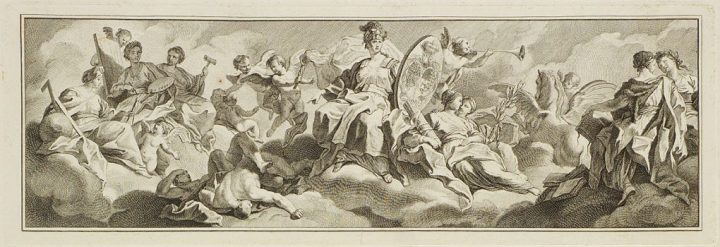
Many readers are likely to find the the Society and its website (in German, English, and French) of interest:
 The Carl Heinrich von Heineken Society (Die Carl Heinrich von Heineken Gesellschaft) was established in 2016 and aims to explore the work and life of Carl Heinrich von Heineken (1707–1791), the founder of modern print studies. Building on Heineken’s Idée générale (the founding manifesto of all modern print rooms written in exile in Altdöbern), the Society considers previously unevaluated sources and sheds new light on the historic significance of the universal scholar for the Age of Enlightenment in the second half of the eighteenth century.
The Society also places particular emphasis on researching the history of Altdöbern Palace, including the sumptuous gardens co-designed by Heineken. The scholarly findings are frequently showcased in publications, public events, lectures, and exhibitions.
An art historical reference library is also being assembled, together with an extensive collection of prints which encompasses all engravings published by Heineken during his lifetime after artworks in the Dresden Picture Gallery and the painting collection of Count Brühl. These resources are available to all parties interested in art and culture upon request.
TEFAF Maastricht 2017 Opens March 10
TEFAF Maastricht
Maastricht, 10–19 March 2017
The 30th edition of TEFAF Maastricht welcomes 270 internationally renowned exhibitors to the Fair including five young and recently established dealers to TEFAF Showcase. As the world’s leading fine art and antiques Fair, TEFAF Maastricht provides an unrivaled meeting place for the best dealers in the world, attracting major international private and institutional collectors. Through the careful selection of its exhibitors, TEFAF enables visitors to make unexpected connections across disciplines creating a marketplace for the highest level of collecting at all of its Fairs. TEFAF Maastricht 2017 takes place March 10–19 at the MECC (Maastricht Exhibition and Congress Centre), Maastricht in The Netherlands.
TEFAF Maastricht is divided into nine sections (TEFAF Antiques, TEFAF Classical Antiquities, TEFAF Curated, TEFAF Design, TEFAF Haute Joaillerie, TEFAF Modern, TEFAF Paintings, TEFAF Paper, TEFAF Showcase) with the selected dealers presenting over 7,000 years of art history under one roof. The Fair looks forward to welcoming 18 new exhibitors in 2017, who will both strengthen and extend the range of objects being shown at the Fair.
More information is available here»
◊ ◊ ◊ ◊ ◊
From a press release (27 February) from Tomasso Brothers Fine Art:
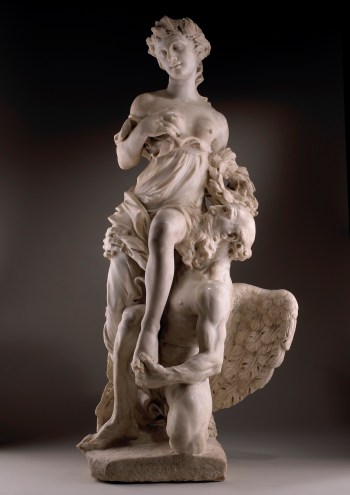
Paul Heermann (1673–1732), Saturn and Ops, white marble; 139.5cm (55in) high, 66cm (26in) wide, 53cm (21in) deep.
Among the highlights offered by Tomasso Brothers Fine Art is a remarkable Saturn and Ops by Paul Heermann (1673–1732), the German late Baroque sculptor to the Courts of Bohemia and Saxony. Ops, the Roman goddess of abundance and fertility, is depicted with her consort Saturn, the early Roman god of agriculture, forming an allegorical representation of Summer and Winter. Related works by Heerman include two busts of Winter: one in the Staatliche Kunstsammlungen Dresden and another at the J. Paul Getty Museum in Los Angeles.
Working with his uncle Johann Georg Heermann, the Electoral Saxon sculptor, Paul Heermann executed his most important, late seventeenth-century project, the spectacular grand staircase on the external façade of the Troja Castle in Prague, where another depiction of Saturn is prominently positioned. The present sculptural group was recorded at the historically important Schloss and estate of Rittergut Lucklum, Germany, by 1806, where it remained in situ until the late twentieth century. It will be offered with a price in the region of €2million.
The gallery’s essay on Saturn and Ops is available as
a PDF file here»
New Book | The Fabric of Creativity in the Dutch Republic, 1580–1800
Distributed by The University of Chicago Press:
Claartje Rasterhoff, The Fabric of Creativity in the Dutch Republic, 1580–1800 (Amsterdam: Amsterdam University Press, 2017), 352 pages, ISBN: 978 90896 47023, $149.
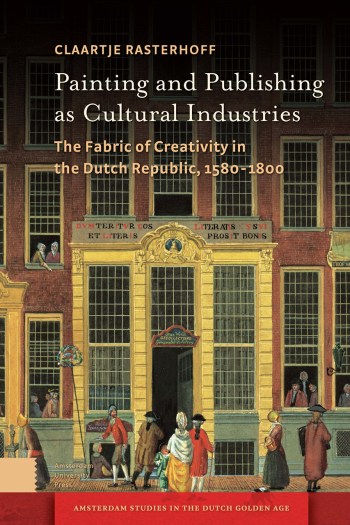 The Dutch Republic was a cultural powerhouse in the modern era, producing lasting masterpieces in painting and publishing—in the process transforming those fields from modest trades to booming industries. This book asks the question of how such a small nation could become such a major player in those fields. Claartje Rasterhoff shows how industrial organizations played a role in shaping patterns of growth and innovation—as early modern Dutch cultural industries were concentrated geographically, highly networked, and institutionally embedded, they were able to reduce uncertainty in the marketplace and stimulate the commercial and creative potential of painters and publishers—though those successes eventually came up against the limits of a saturated domestic market and an aversion to risk on the part of producers that ultimately brought an end to the boom.
Claartje Rasterhoff is a postdoctoral researcher and lecturer in arts and culture studies at Erasmus University, Rotterdam.
New Book | Merian, Metamorphosis insectorum Surinamensium
From Lannoo, with more information available here:
Maria Sibylla Merian, Metamorphosis insectorum Surinamensium Verandering der Surinaamsche insecten / Transformation of the Surinamese Insects, edited by Marieke van Delft (Tielt: Lannoo Publishers, 2017), 200 pages, ISBN: 978 94014 33785, $145 / €99.
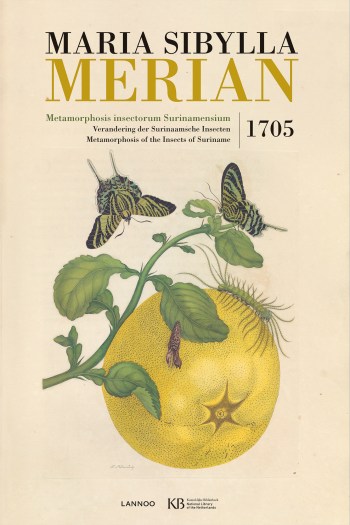 Maria Sibylla Merian (1647–1717) was a German naturalist and scientific illustrator. She is considered to be among the most significant contributors to the field of entomology because of her careful observations and documentation of the metamorphosis of the butterfly. In 1705, Merian published Metamorphosis Insectorum Surinamensium, for which she became famous. No more than 30 copies of this masterwork are left worldwide. In 2017, it will be 300 years since Maria Sibylla Merian’s death. To mark the occasion, a facsimile of Merian’s highly successful book will be released. Modern readers will at last be able to see with their own eyes how detailed and colourful Merian’s magnificent work was. The book includes a comprehensive introduction and background information by renowned historians and biologists.
Included is a foreword by Merian specialist Redmond O’Hanlon and a biographical introduction by art historian Ella Reitsman. Kay Etheridge, professor biology at Gettysburg College, discusses the meaning of Merian’s work for biology, and Bert van de Roemer talks about the historical context.
Marieke van Delft is Curator of Early Printed Collections at the Koninklijke Bibliotheek, National Library of the Netherlands, in The Hague. She studied history and book history at the universities of Amsterdam and Leiden and gained her doctorate in cultural studies at the KU Leuven. Van Delft has published on many aspects of the history of the printed book in the Netherlands. In collaboration with Uitgeverij Lannoo she has created real-size facsimile editions of major books from the collections of the Koninklijke Bibliotheek: Atlas De Wit (2012), Nozeman & Sepp, Nederlandsche vogelen (2014), and Merian’s Metamorphosis insectorum Surinamensium (2016).










 Enfilade
leave a comment