New Book | Thomas Jefferson at Monticello
From Rizzoli:
Leslie Greene Bowman and Charlotte Moss, eds., with photographs by Miguel Flores-Vianna, and contributions by Annette Gordon-Reed, Carla Hayden, Jay McInerney, Jon Meacham, Xavier Salomon, Gil Schafer, Alice Waters, and Thomas Woltz, Thomas Jefferson at Monticello: Architecture, Landscape, Collections, Books, Food, Wine (New York: Rizzoli Electa, 2021), 208 pages, ISBN: 978-0847865222, $45.
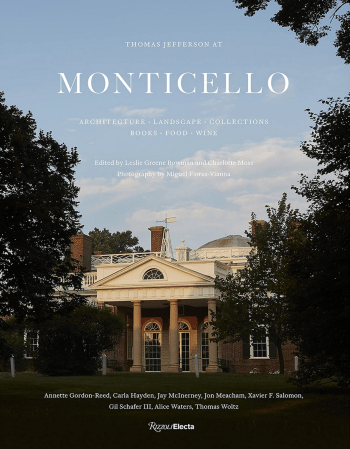 This visually stunning volume explores Monticello, both house and plantation, with texts that present a current assessment of Jefferson’s cultural contributions to his noteworthy home and the fledgling country.
Thomas Jefferson (1743–1826), third president of the United States, designed his Virginia residence with innovations that were progressive, even unprecedented, in the new world. Six acclaimed arts and cultural luminaries pay homage to Jefferson, citing his work at Monticello as testament to his genius in art, culture, and science, from his adaptation of Palladian architecture, his sweeping vision for landscape design, his experimental gardens, and his passion for French wine and cuisine to his eclectic mix of European and American art and artifacts and the creation of the country’s seminal library. Each writer considers the important role, and the painful reality, of Jefferson’s enslaved workforce, which made his lifestyle and plantation possible. This book, illustrated with superb photography by Miguel Flores-Vianna, is a necessary addition to the libraries of those who love historical architecture and landscape design, art and cultural history, and the lives of prominent Americans.
Leslie Greene Bowman is president of Monticello and the Thomas Jefferson Foundation. Charlotte Moss is a designer and author. Miguel Flores-Vianna is an interiors photographer. Annette Gordon-Reed is a Pulitzer Prize–winning author and historian. Carla Hayden is the 14th Librarian of Congress. Jay McInerney is a novelist and wine columnist. Jon Meacham is a Pulitzer Prize–winning presidential historian. Xavier Salomon is the deputy director/chief curator at The Frick Collection (NYC). Gil Schafer is an award-winning architect. Alice Waters is a chef, activist, and author. Thomas Woltz is an award-winning landscape architect.
October Is Virginia Archaeology Month
From Monticello:
Archaeology Open House at Monticello
Charlottesville, Virginia, 9 October 2021
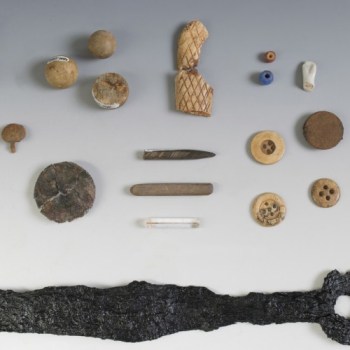 Help celebrate Virginia Archaeology Month. Monticello’s Archaeology Department hosts its annual open house, featuring displays on recent discoveries in the field and the lab, walking tours of the vanished Monticello Plantation landscape, and lightning-talks about current research. Archaeology staff members will be on hand to answer questions. Displays and exhibits are found in the Woodland Pavilion and the Visitors Center. Lightning talks begin at 10.30am, 12.30pm, and 2.30pm.
This year’s walking tours will visit Site 6, an archaeological dig that revealed important information about enslaved agricultural laborers at Monticello and, following a visit in 2018, proved deeply impactful for Ta-Nehisi Coates’s novel, The Water Dancer. Walking tours leave the Woodland Pavilion at 11am, 1pm, and 3 pm. Be prepared to walk over uneven terrain; sturdy (preferably waterproof) shoes recommended. The walk roundtrip is approximately one mile with one steep hill.
Online Talk | Linda Binsted, Jefferson’s Brick Palladian Architecture
This afternoon, from Monticello:
Linda Binsted, Brick Palladian Architecture: Jefferson’s Transformation of Stone to Clay
Online, 21 September 2021, 4.00pm (Eastern Time)
Join the Robert H. Smith International Center for Jefferson Studies at Monticello for a virtual Fellow’s Forum with architect and architectural historian, Linda Binsted. Click here to join us on Zoom on Tuesday, 21 September at 4.00pm.
Thomas Jefferson’s international travels took him to the cities and countryside of England and France but not to Italy, the birthplace of Palladian design. His travels never took him to Rome and its classical buildings, nor did he see any works by Palladio firsthand. Yet, through architectural treatises, the prevalent pattern books of the 18th century, visits to architecturally significant structures in America, England, and France, and the intellectual thoughts of the day, he came to produce some of the most influential Palladian designs in the still young United States.
Palladio’s villas are visions of smooth planar beauty, crisp whiteness in the Italian piedmont sun. Jefferson’s Palladian work in the Virginia piedmont—Monticello, Poplar Forest and the University of Virginia—are clothed in molded red brick and striped with sand mortar. Other builders and architects of the era studied the same sources as Jefferson and used the same materials to produce worthy Palladian-inspired plans and volumes; however, their detailing of the façade merely replicated the prevalent Georgian and Federalist manner. This presentation examines the pathway Jefferson travelled and the methods he employed to purify the brick edifice to better attain the planar volumes depicted in Palladio’s folios.
Linda Binsted is a practicing architect working in Washington, DC. Her architectural designs have garnered design awards and appeared in local and national publications. She has conducted seminars focused on the intersection of the design, technology, and history of building materials including brick and concrete as well as mid-century urban renewal at American Institute of Architects (AIA) conferences including AIA Washington Chapter’s Design DC and Virginia AIA ArchEx. She is also a graduate of the University of Virginia’s Master’s program in architectural history. As an architectural historian, she has presented her preliminary findings on Jefferson’s brickwork design at the Southeast Chapter of the Society of Architectural Historians (SESAH) regional conference in 2017 and the New Discoveries of Thomas Jefferson’s Architecture and Design symposium sponsored by the University of Virginia in 2018.
Online Roundtable | Russia in Europe / Europe in Russia

Russia in Europe / Europe in Russia: Cross-Cultural Connections in a Recentered Art World
Rosalind Polly Blakesley, Catherine Phillips, Emily Roy, Margaret Samu, and Zalina Tetermazova
Online, 23 September 2021, noon (Eastern Time)
HECAA is pleased to announce the next installment in our Zoom event series. Please join us on Thursday, 23 September 2021 for Russia in Europe / Europe in Russia: Cross-Cultural Connections in a Recentered Art World. The roundtable will take place at the following times: 9.00 Los Angeles, 12.00 New York, 17.00 London, and 19.00 Moscow.
Registration is available here»
Call for Papers | Milan in a European Context
From ArtHist.net:
Milan in a European Context: Tradition, Persistence, and Innovation in Artistic Craftsmanship and in Building and Architectural Production between the Napoleonic Era and the Restoration
Accademia di Architettura, Università della Svizzera Italiana, Mendrisio, 24–25 February 2022
Proposals due by 31 October 2021
International study seminar organised by Romain Iliou (AHTTEP, ENSA Paris-La Villette), Serena Quagliaroli (Università della Svizzera italiana, Accademia di Architettura, Archivio del Moderno) and Stefania Ventra (Università della Svizzera italiana, Accademia di Architettura, Archivio del Moderno). Promoted by the Università della Svizzera italiana, Accademia di Architettura, Archivio del Moderno and HICSA, Université Paris 1 Panthéon-Sorbonne.
With Milan proclaimed first the capital of the Cisalpine Republic in 1797 (from 1802, Italian Republic) and then in 1805 the capital of the Kingdom of Italy, the city was challenged to reconsider and rebuild its image and its urban spaces in order to adapt them to its new role. Part of a network of capitals responding to a single central power, both political and cultural, Milan experienced a period that featured significant incentives for public and private architectural building works and for the transformation of urban spaces. These conditions make the Lombard capital a privileged context in which to investigate the multiple forms of organization of artisanal and artistic work, as well as the circulation of people and materials. The seminar aims to reflect on the dialectic between the new status quo and the centuries-old stratified traditions inherent to the Milanese territory, also taking into consideration the Restoration period, when, in the new political-administrative structure of the Lombard-Veneto Kingdom, Milan, while remaining the capital, found itself in a new context that established a variety of artistic geographies.
The workshop aims to provide a meeting point for ongoing research that analyses the organization and definition of professions, materials, tools and the techniques of artistic craftsmanship, and of building and architectural production and design. It will reflect both on the transformations and the phenomena of continuity and persistence that characterize the city of Milan between the Napoleonic era and the Restoration, in an artistic, architectural, social, and economic context, with regard to the political administrative management of urban spaces and links with the surrounding territory.
Events in Milan can be better understood if placed in dialectical comparison with what occurred in other cities in both Italy and Europe: contributions will be welcomed, therefore, which, in a comparative perspective, present case studies aimed at exploring other urban realities. Particular attention might be paid to the relationship between Milan and the Canton of Ticino and to the changes that this centuries-old bond underwent over the period of time under consideration.
Proposals for contributions must concern one or more of the following topics, with particular attention to the connections with events relating to government policies, to administration and to the organization of the artistic and cultural system:
Artistic craftsmanship, building and architectural production, and society: Actors and materials
• What are the particularities of the considered period in the context of the commissioning, design and organization of the building works that redefined the space of the city?
• What was the impact on the shape of the city of an artisanal presence, with its workshops, warehouses, transport networks, and economic activities?
• Alongside architects and engineers, which other professional figures emerge from archival documents and sources? What was their status, their education and training, what were their forms of aggregation and organization? What was the impact of the presence of workers from Ticino?
• What materials were used, what were their trade routes and the supply chains for their production processes? What were the mechanisms of exchange and circulation?
Tradition, continuity, and innovation
• New materials, new techniques, and new construction ambitions, linked to market and bureaucratic requirements, joined the established crafts, practices and knowledge. This created a new form of professionalism which needed not only know-how but also the ability to organize, to establish relationships and to mediate between different skills and different social contexts.
• How did education and training change and how did these subordinate practices establish a relationship with academic artistic and architectural teaching, its programs based on consolidated tradition? What skills and techniques were available as part of artisanal training? How, from a historiographical point of view, can we trace the changes and innovations in production techniques, which are often not codified? And how did the survival of traditional practices and figures fit in with the new context? How and to what extent did political authority intervene in the regulation and systemisation of professions and the transmission of knowledge? Was innovation actively encouraged or, on the contrary, were disincentives employed?
Territory, materials, and techniques
• In addition to insights into the processes of the acquisition of technical knowledge, at the centre of the investigation lie tools and materials: were there tools designed to standardize and serialize work? Can divisions be found in the broad sphere of materials between those intended for the public and those intended for the private sector, or can their interactions be investigated? What is the contribution made to artisanal and building production by surrogate materials and materials designed for ephemeral projects?
• Other issues contributors are invited to explore include the importation, exportation, and adaptation of models, techniques and solutions, as well as the relationship between the city and the territory: what impact did the availability or lack of materials and infrastructures have on what was built?
It is planned that the workshop will be held in a blended format with a mix of online and on-site presentations on 24–25 February 2022 at Accademia di Architettura, Mendrisio (CH). Depending on the evolution of the international health situation, the organisers will endeavour to guarantee the best solution in compliance with national recommendations. Proposals (in Italian, French, or English) should be sent to workshop.artigianato2022@gmail.com in the form of abstracts (300–500 words) and be accompanied by a short biographical presentation (150–200 words) by 31 October 2021. The selection will be communicated by 30 November 2021.
Exhibition | Grinling Gibbons
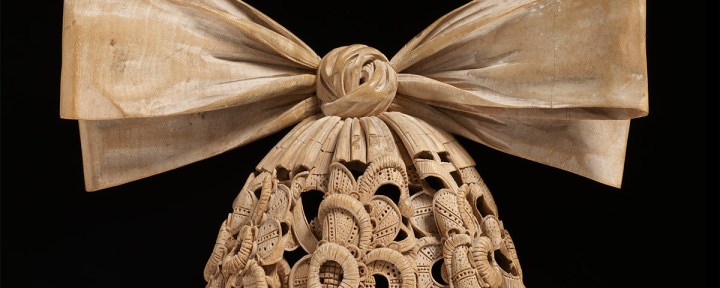
Grinling Gibbons, Carved Limewood Cravat, ca. 1690
(London: Victoria and Albert Museum, W.181:1-1928)
◊ ◊ ◊ ◊ ◊
Opening this week at Compton Verney:
Grinling Gibbons: Centuries in the Making
Bonhams, London, 3–27 August 2021
Compton Verney Art Gallery & Park, Warwickshire, 25 September 2021 — 30 January 2022
The remarkable life and legacy of Grinling Gibbons (1648–1721) will be celebrated at Compton Verney, as part of a year-long series of events to commemorate the tercentenary of the most renowned British woodcarver of the 17th century, often called the ‘Michelangelo of Wood’. The exhibition Centuries in the Making has been created in partnership with the Grinling Gibbons Society and will reveal the life, genius and legacy of this legendary sculptor and craftsman.
Arguably the greatest carver in British history, Grinling Gibbons remains a potent symbol of inspiration and achievement. He carved with an unsurpassed realism that could literally fool the eye. A fine example is the limewood cravat (ca.1690, V&A), which was once owned by Sir Horace Walpole. Exquisitely carved to imitate Venetian needlepoint lace, it was so realistic it is said that when Walpole wore it to greet visitors at his home at Strawberry Hill House, they believed it was the real thing. Walpole described how, “There is no instance of man before Gibbons who gave to wood the loose and airy lightness of flowers.”
Centuries in the Making will explore the influences that shaped Gibbons’ vision, his skills and techniques, and the stylistic and cultural impact that he had on this country. Through sculpture and carving in wood and stone, drawings and sketches, portraits, still life paintings, and documents, the exhibition brings fresh perspective to Gibbons and shows how his bold new direction changed the landscape of British carving, sculpture, and interiors. The influence of Gibbons will be traced to the present day, with works by contemporary artists and designers including Phoebe Cummings, Rebecca Stevenson, and Alexander McQueen. Also showcased will be the work of the eleven finalists in the Grinling Gibbons Tercentenary Award, which will be displayed throughout the galleries.
Visit grinling-gibbons.org to find out more.
Online Symposium | Corning Museum’s 59th Annual Seminar on Glass
From the Corning Museum of Glass:
59th Annual Seminar on Glass
Online, Corning Museum of Glass, Corning, New York, 8–9 October 2021
 The Corning Museum’s 59th Annual Seminar on Glass will be presented virtually, in conjunction with the special exhibition In Sparkling Company: Glass and the Costs of Social Life in Britain during the 1700s. For the first time, the Annual Seminar on Glass will take place online, on Friday, 8 October, and Saturday, 9 October 2021. All are welcome to register for the free two-day seminar, which will include lectures and panel discussions, with pre- and post-seminar digital materials. We hope that this edition of the seminar will be of interest to Corning Museum of Glass members, students, museum and academic professionals, dealers, collectors, artists, glass enthusiasts, and anyone curious to learn more about glass in the 18th century. We look forward to welcoming speakers and attendees from around the world.
F R I D A Y , 8 O C T O B E R 2 0 2 1
Staging the 18th Century for 21st-Century Museum Audiences
Dr. Christopher Maxwell, curator of early modern glass, will introduce the major themes and highlights of the special exhibition In Sparkling Company: Glass and the Costs of Social Life in Britain during the 1700s. Three panel discussions will follow, in which CMoG staff and external collaborators will consider approaches to the interpretation, design, and digital components of the exhibition, including the remarkable virtual reality reconstruction of the now-lost glass drawing room at Northumberland House, London, designed in 1775 by Robert Adam for the 1st Duke and Duchess of Northumberland.
10.00 Welcome
10.10 Video tour of the exhibition In Sparkling Company: Glass and the Costs of Social Life in Britain during the 1700s
10:45 Panel One: In Sparkling Company and Interpretation
Moderator: Mieke Fay (Manager, Education and Interpretation, CMoG)
• Christopher ‘Kit’ Maxwell (Curator of Early Modern Glass, CMoG)
• Kris Wetterlund (former Director of Education and Interpretation, CMoG)
• Cheyney McKnight (Founder and Director of Not Your Momma’s History)
11.45 Break, with hot glass demonstration
12.15 Introduction to the Glass Drawing Room at Northumberland House
• Kit Maxwell (Curator of Early Modern Glass, CMoG)
12.30 Panel Two: In Sparkling Company and Digital Technology
Moderator: Scott Sayre (Chief Information Officer, CMoG)
• Niall Ó hOisín (Noho, Dublin)
• John Buckley (Noho, (Dublin)
• Maria Roussou (Assistant Professor in Interactive Systems, Department of Informatics & Telecommunications, National and Kapodistrian University of Athens)
• Tom Hambleton (Undertone Music, Minnesota)
• Mandy Kritzeck (Digital Media Producer and Project Manager, CMoG)
1.30 Panel Three: In Sparkling Company and Design
Moderator: Carole Ann Fabian (Director of Collections, CMoG)
• Selldorf Architects (New York)
• Warren Bunn (Collections Manager, CMoG)
• Kit Maxwell (Curator of Early Modern Glass, CMoG)
2.30 Q&A
S A T U R D A Y , 9 O C T O B E R 2 0 2 1
Glass and the 18th-Century Atlantic World
The day will open with a live introductory paper. A series of pre-recorded papers, made available a week before the event, will inform three live panel discussions relating to the many contexts, meanings, functions, and innovations of glass within cultures and communities throughout the Atlantic World during the long 18th century (about 1680–1820). The day will end with a state-of-the-field discussion considering the achievements of and possibilities for glass scholarship and 18th-century studies.
10.00 Welcome
10.15 Introduction
• Kit Maxwell (Curator of Early Modern Glass, CMoG), Glass in the 18th-Century Atlantic World
10:45 Panel One: De-centering Glass Production in the Atlantic World
Moderator: Elliot Blair (Assistant Professor of Anthropology and Curator of Southeastern Archaeology, University of Alabama)
• Karime Castillo Cárdenas (Assistant Professor of Anthropology, Bowdoin College), An 18th-Century Glass Workshop in Mexico City: Economic and Social Aspects of Colonial Glassmaking
• Liesbeth Langouche (PhD candidate, University of Antwerp), Clear Window Glass in the Age of Enlightenment
• Melania Ruiz Sanz de Bremond (PhD candidate, Universidad Autónoma de Madrid), Transfer and Reception of Reverse Painting on Glass in Spain and Latin America through Three Case Studies
11.45 Panel Two: Mobility, Identity, and Empire
Moderator: Kerry Sinanan (Assistant Professor in 18th- and 19th-Century Transatlantic Literature, University of Texas at San Antonio)
• Anna Laméris (Frides Laméris Art and Antiques, Netherlands), A History of Colonial Exploitation as Featured on Dutch Ceremonial Goblets
• Hannah Young (Lecturer in 19th-Century British History, University of Southampton), Glass and the Atlantic World: Ralph Bernal, Collecting, and Slave-Ownership
• Philippe Halbert (PhD candidate, History of Art, Yale University), La Belle Créole: Identity, Race, and the Dressing Table in the French Atlantic World
• Alexi Baker (Division of the History of Science and Technology, Yale Peabody Museum), Empire, Science, and Spectacle: Glass Instruments on the Transatlantic Stage
12.45 Break, with a glass-making demonstration
1.15 Panel Three: Cultural Practices of Glass
Moderator: Iris Moon (Department of European Sculpture and Decorative Arts, Metropolitan Museum of Art)
• Suzanne Phillips (PhD student, University of Buckingham), Francis Eginton (1737–1805): A Satellite in the Orbit of the Lunar Circle
• Sammi Lukic-Scott (PhD candidate, University of York), Illuminating Images: The Role of Glass in Developing Reproductive Translucent Images in the Long 18th Century
• Ann Smart Martin (Stanley and Polly Stone Professor of American Decorative Arts and Material Culture, University of Wisconsin), Blaze-Creators: A Material Culture of Lighting and Surfaces in 18th-Century Domestic Interiors
2.15 Panel Four: Wrap-Up Discussion
Moderator: Kit Maxwell
• Elliot Blair
• Kerry Sinanan
• Iris Moon
American Ceramic Circle Journal 21 (2021)
In the latest issue of the ACC Journal:
 The American Ceramic Circle (ACC) is pleased to announce the release of its anniversary issue, volume XXI, of the American Ceramic Circle Journal. For this volume, the Journal committee has selected articles of great variety on quite different and diverse subjects. In the opening essay, “The Mysterious World of Redwares: Medicine and Magic in the Pottery of Pre-Enlightenment Europe,” Errol Manners connects the dots between redwares across Europe, the Americas, and China and explores their historical context. Alison McQueen’s research is an important milestone in giving the female workers of the Vincennes, and later Sevres, manufactory, their identities back. Her “study examines works by the female painters Marie-Victoire Jaquotot, Pauline Knip, Marie-Adélaide Ducluzeau, and Pauline Laurent, and the undervalued contributions of female employees responsible for retouching glaze, laying down prints, and burnishing the wares.” Ronald Fuchs’s essay “From Rehe, China, to Staffordshire, England: The Voyage of a Chinese Image” follows the ‘India Temple’ pattern made by John and William Ridgway of Staffordshire from its origin in China to its appearance on ceramics in England. For the 2019 ACC Symposium, we offered a wonderful excursion to Seagrove, NC, and Stephen Compton’s article “Jugtown Ware: A Modern Primitive Expression” will bring back for those who attended pleasant memories of that experience. Stephen will give a deeper insight into the founding and production of Jugtown Pottery. Radhika Vaidyanathan, a researcher and artist from South India, focuses on the tile-manufacturing process in the Indian subcontinent by the Swiss/German Basel Mission. Manhattan’s Hadler Rodriguez Gallery is the topic of Tom Folk’s article. The two New York gallerists were offering gay and lesbian ceramists a rare forum to freely exhibit in the 1970s and 1980s. Tizziana Baldenebro surveys Fred Marer’s collection of mid-century ceramics, which is now housed at Scripps College, Claremont, CA. The Marer Collection, which holds important examples of the American Studio Pottery Movement, is also part of the Marks Project’s online database. The Marks Project (TMP) received an ACC Grant in 2018.
C O N T E N T S
• Errol Manners — The Mysterious World of Redwares: Medicine and Magine in the Pottery of Pre-Enlightenment Europe
• Alison McQueen — Making the Marks: The Significant Roles and Challenges for Women in the First Century of Sèvres Porcelain
• Ronald W. Fuchs II — From Rehe, China to Staffordshire, England: The Voyage of a Chinese Image
• Stephen C. Compton — Jugtown Ware, a Modern Primitive Expression: American and Asian Pottery Traditions Come together in North Carolina
• Radhika Vaidyanathan — Ceramics and Missionaries in Colonial India: A Preliminary Survey of the Basel Mission Tile Factories
• Tom Folk — The Heroic Story of Manhattan’s Hadler Rodriguez Gallery
• Tizziana Baldenebro — The Marer Collection: Persistent Witness
The American Ceramic Circle (ACC) was founded in 1970 as a non-profit educational organization committed to the study and appreciation of ceramics. Its purpose is to promote scholarship and research in the history, use, and preservation of ceramics of all kinds, periods, and origins. The current active membership of approximately 500 is composed of museum and auction house professionals, collectors, institutions, and a limited number of dealers ceramics. The American Ceramic Circle Journal was first produced in 1971. Each volume has typically included five to ten articles presenting original research on a particular aspect of world ceramics. Many of the articles over the years have concentrated on American, European, and Asian ceramics from the sixteenth to the twentieth centuries, but the Journal welcomes a wide variety of ceramics-related topics. Submissions include papers presented at the ACC’s annual symposium, articles based on research sponsored by an ACC grant, and contributions from independent scholars. The Journal is distributed to all current ACC members, both individuals and institutions, as part of their membership, and individual issues are available for purchase on the ACC website. For questions, please contact ACC Journal Editor, Dr. Vanessa Sigalas, at journal@americanceramiccircle.org.
Print Quarterly, September 2021

Gottfried August Gründler, Frontispiece Der Naturforscher (1774), engraving, 90 × 110 mm
(Cambridge University Library)
◊ ◊ ◊ ◊ ◊
The eighteenth century in the latest issue of Print Quarterly:
Print Quarterly 38.3 (September 2021)
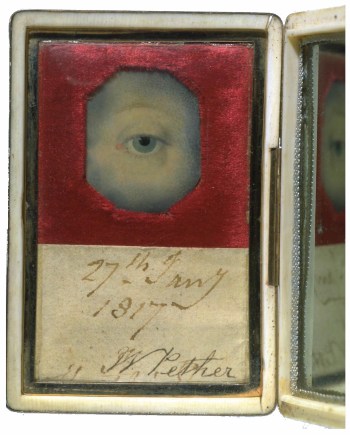
William Pether, Eye Miniature, 1817, watercolour on ivory, embedded in red velvet, 27 × 22 mm (London: Victoria & Albert Museum).
A R T I C L E S
Dominika Cora, “New Light on the Life and Work of the Mezzotint Engraver William Pether (1739–1821)”
William Pether (1739–1821) was one of the most distinguished English mezzotint engravers in the second half of the eighteenth century. Responding to scholarly confusion around his life, this article presents archival discoveries that illuminate his biography and personal life, as well as unpublished drawings and an overview of his artistic output.
N O T E S
Anna Gielas, “Gottfried A. Gründler’s Der Naturforscher (1773)”
During the second half of the eighteenth century, there was a peak in the usage of elaborate frontispiece engravings for European naturalist periodicals. Gielas introduces the frontispiece created by the renowned German engraver Gottfried August Gründler (1710–1775) for the naturalist journal Der Naturforscher and examines the useful information it displayed to the periodical’s (potential) audience. The engraving can be seen as an illustration of the cultural identity of naturalists as well as the Enlightened individual in the later decades of the eighteenth century.
Exhibition | Masterpieces from Buckingham Palace

Installation of the exhibition Masterpieces from Buckingham Palace, at The Queen’s Gallery In London.
◊ ◊ ◊ ◊ ◊
Now on view at The Queen’s Gallery:
Masterpieces from Buckingham Palace
The Queen’s Gallery, Buckingham Palace, London, 17 May 2021 — 13 February 2022
Curated by Desmond Shawe-Taylor and Isabella Manning
Masterpieces from the Royal Collection have been displayed in Buckingham Palace since the residence was acquired by George III and Queen Charlotte in 1762. The painting displays were reinvented during the reign of their son, George IV, who commissioned the architect John Nash to renovate the palace in the 1820s. A Picture Gallery was included to display the monarch’s exceptional collection of paintings. Since then, the Picture Gallery has remained the focus for some of the most treasured Italian, Dutch, and Flemish paintings from the Royal Collection.
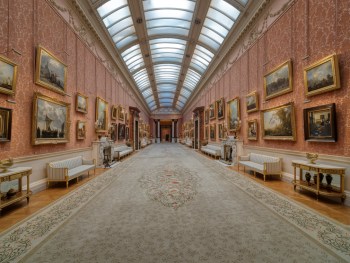
The Picture Gallery at Buckingham Palace (typically open to visitors only during the summer) is currently being renovated–creating an opportunity to display the paintings normally installed there in other contexts.
Palace displays are often imbued with dynastic meaning; the Picture Gallery was one of the few spaces intended for the enjoyment of art, pure and simple. It is in this same spirit that we have mounted this exhibition: for the first time the paintings are displayed together in modern gallery conditions, allowing us to look at them afresh.
In general these paintings are securely dated and attributed; mostly we know which monarch bought them. We are providing this information here, but we are also asking a different, more subjective question—what makes them important? What do they have to offer? In the exhibition catalogue we have suggested qualities that were valued by the makers of these works and can still be appreciated today: the imitation of nature; the sensuous use of materials; the creation of beautiful design; and the ability to express human emotion. But are we missing something? We hope that visitors will make up their own minds about what there is to enjoy in these paintings and find reasons to believe that they are still worth exploring.
Dou to Vermeer
The paintings in this room were all created in the Low Countries between 1630 and 1680, the heyday of the so-called Dutch Golden Age. They are modest in scale, the majority scenes of everyday life, with figures in landscapes or in homes, taverns and shops. These artists didn’t set up their easels in the market place; they worked from drawings, memory and imagination, but they depicted the familiar everyday world around them. The people they painted were of the same kind that bought their paintings: we can see examples in simple ebony frames on the walls of the interiors of de Hooch and Vermeer.
All but two of these paintings were acquired by George IV to hang in the sumptuous interiors of Carlton House, his London residence when Prince of Wales. Like their original purchasers, he admired them for their comedy, their brilliant technique and their truth to life. They continue to fascinate through their minute detail, tactile surfaces and ability to suggest spaces filled with light and air.

Canaletto, The Piazza Looking North-West with the Narthex of San Marco, ca. 1723–24, oil on canvas, 172 × 134 cm (London: Royal Collectin Trust, RCIN 401037). The painting is one of a set of six views of the Piazza San Marco and the Piazzetta.
Rubens, Rembrandt, and Van Dyck
The artists in this room all come from the Low Countries, as in the previous section. There are some comic scenes of everyday life, but the majority of works belong to the more prestigious branches of art—narrative painting, commissioned portraits, and ambitious landscapes with a symbolic or religious meaning.
This room is dominated by three artists of very different character: Rubens, a diplomat and land-owner; van Dyck, a courtier; and Rembrandt, a professional serving the merchants of Amsterdam. In other ways they are similar, especially in their enthusiasm for the type of Venetian painting that can be seen in the next section.
Painting in Italy, 1510–1740
The paintings in this room were created in Italy, in various artistic centres and over a period of two hundred years. Bringing together this great range of painting evokes something of the first displays at Buckingham Palace, during the reign of George III.
Several strands of Italian art are here on show. There are sober male portraits, often painted with a bare minimum of detail and colour range, but conveying great psychological intensity. There are ideal female figures, derived from the study of antique sculpture, their beauty impassive however dramatic the narrative. There are expressive landscapes, ranging from a cataclysmic storm to the unruffled stillness of a sunset. Then there are Canaletto’s boldly expressive views of Venice, where the imposing monuments of the city are spiced with a hint of picturesque shabbiness.
◊ ◊ ◊ ◊ ◊
In the United States, the catalogue is distributed by The University of Chicago Press:
Desmond Shawe-Taylor and Isabella Manning, Masterpieces from Buckingham Palace (London: Royal Collection Trust, 2021), 160 pages, ISBN: 978-1909741737, £20 / $25.
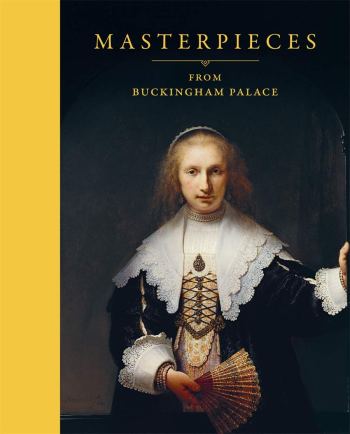 In this beautifully designed book, Desmond Shawe-Taylor, Surveyor of The Queen’s Pictures, and Assistant Curator of Paintings, Isabella Manning, examine 65 of the most celebrated paintings from the Picture Gallery, which sits at the heart of Buckingham Palace. With masterpieces by such artists as Vermeer, Rembrandt, Van Dyck, Rubens, Titian, Jan Steen, Claude, and Canaletto, this publication offers new insights into these world-famous works of art. The authors encourage readers to look at the works in a new way and to consider how Claude paints a sky; how Rubens models the landscape through his use of color; and how Titian uses contrast to add gravitas to a portrait. Rather than re-treading the old boards of provenance and attribution, the authors seek to engage with different, perhaps riskier and more subjective, questions: asking not when were they painted and by whom, but why should we concern ourselves with them? A short introduction gives an account of the creation of the Picture Gallery and tells the story of the monarchs who curated this extraordinary collection of paintings and how the works entered the Collection.
C O N T E N T S
A History of Old Master Paintings at Buckingham Palace
Looking at the Old Masters
The Pictures
Further Reading
Index
◊ ◊ ◊ ◊ ◊
Desmond Shawe-Taylor’s very productive fifteen-year tenure as Surveyor of the Queen’s Pictures came to an end in December 2020, as reported by the BBC, in response to £64m of lost income related to the pandemic. Indeed, the historic Surveyor position—first filled in 1625 during the reign of Charles I—is for now “lost and held in abeyance.” Royal Collection Director, Tim Knox, has taken on “overall responsibility for the curatorial sections, supported by the Deputy Surveyors of Pictures and Works of Art.”










 Enfilade
leave a comment