Call for Papers | American Popular Graphic Arts, Yesterday and Today
From The Library Company of Philadelphia:
Collecting, Curating, and Consuming American Popular Graphic Arts Yesterday and Today
The Library Company of Philadelphia, 25 March 2022
Proposals due by 2 August 2021
A symposium held in conjunction with the exhibition Imperfect History: Collecting the Graphic Arts Collection at Benjamin Franklin’s Public Library in commemoration of the fiftieth anniversary of the Graphic Arts Department at the Library Company of Philadelphia
In 1876, during the exhibition in Philadelphia in honor of the 100th anniversary of the birth of the republic, Philadelphia Evening Telegram art critic John V. Sears noted, “in Philadelphia today, the scion of art culture … has taken deep root in the homes of the people … Not so cosmopolitan as New York, nor so thoroughly local in character as Boston, Philadelphia represents American institutions and the progress of American civilization more perfectly than any other of our older cities ….”
Today, nearly one hundred and fifty years later, Philadelphia and the country inhabit a world in which our “art culture” is influenced and inspired by rhetoric and current events challenging our perception, trust in, and inherent understanding of what we see in our daily lives, and in public and private spaces. In this climate, creators, stewards, and collectors of fine and popular art representing and documenting American civilization have begun to question and address their role in a conflicted and diverse democratic society in a tenuous condition. How can a public library founded by Benjamin Franklin and with significant holdings of historical and popular American graphic arts confront this critical period in the history of our country’s evolving democratic principles and art culture?
In response to this salient question and to commemorate the fiftieth anniversary of the establishment of the Graphic Arts Department, the Library Company will display Imperfect History: Curating the Graphic Arts Collection at Benjamin Franklin’s Public Library, September 20, 2021 – April 8, 2022. Imperfect History explores the development of the Library’s graphics art collection as it relates to historical and cultural biases within American history. The exhibition is a candid exploration of the evolution of American graphic arts curatorship and collections in one of the oldest cultural institutions in the country. The Library’s graphic arts collection, including prints, photographs, original works of art, and ephemera primarily dated between the late 18th and mid-20th-century is vital to the understanding of the nation’s complex visual history.
Collecting, Curating, and Consuming American Popular Arts Yesterday and Today continues the conversation started through Imperfect History. The symposium seeks to examine changing and innovative directions in how historical popular graphic art (i.e., art not traditionally classified as fine art, that is representative of popular culture, and/or is mass produced and consumed) is curated, interpreted, and used and understood by those who produced, viewed, and consumed it. Collecting, Curating, and Consuming asks how does historical American popular graphic art act as a mirror, bridge, and barrier in facilitating our visual conceptions of our past and present?
We invite proposals for twenty-minute papers that will foster broad and interdisciplinary discussions about historical American popular graphic arts collected by individuals or institutions; the evolving meaning of the term curator; (un)conscious bias in the creation, collection, and curation of popular graphic arts; and the contemporary and historicized role of the visual consumer of mass-produced art. Submissions from a wide range of scholars, practitioners, and specialists are encouraged. We seek proposals from art historians, historians, artists, curators, conservators, emerging scholars, and other voices within the humanities, arts, and cultural communities.
Possible topics might include:
• Popular graphic art collectors and/or their collections
• History and evolution of the institutional role of the curator of American graphic arts
• Visual literacy and an engaged citizenry
• Politics of art
• Digital humanities projects based on popular graphic arts collections
• Remediation projects in the description and access of visually harmful historical graphic arts in institutional collections
• Art libraries and libraries of art
• Racialized/Black/gendered/queer gaze
Proposals should include an abstract of no more than 300 words and a two-page CV or resume. Joint proposals and illustrated proposals are welcome. Please email your proposals with the subject line “IH 2022” as a Word or PDF document to epiola@librarycompany.org. Submissions should be received by Monday, August 2. Selected participants will be notified via email by early October 2022. Any questions may be directed to Erika Piola epiola@librarycompany.org.
Call for Papers | Glass in the Atlantic World
From the Call for Papers:
Glass in the Atlantic World during the Long 18th Century
59th Annual Seminar on Glass
Online, Corning Museum of Glass, Corning, New York, 8–9 October 2021
Proposal due by 1 June 2021
 The Corning Museum of Glass is pleased to announce its 59th Annual Seminar on Glass, presented in conjunction with the exhibition In Sparkling Company: Glass and the Costs of Social Life in Britain during the 1700s, on view at the Museum from 22 May 2021 until 3 January 2022. For the first time, the Annual Seminar on Glass will take place virtually, on Friday, 8 October, and Saturday, 9 October 2021.
We invite sparkling minds from all backgrounds to submit abstracts for papers that offer diverse and multidisciplinary perspectives on glass in the Atlantic World during the long 18th century.
Broad topics might include:
· science, innovation, and travel
· trade networks
· architecture and interiors
· cultural reception
· beads and beadmaking
· collecting and display
· fashion and personal adornment
· colonization, enslavement, and resistance
Papers will be pre-recorded and made available to registrants before the event. Presenters will be invited to participate in one of three live panel discussions on 9 October 2021. Each moderated panel discussion will address a particular theme common to the papers in question, and will last 45 minutes with the opportunity for Q&A.
We hope that this event will offer a unique foray into the many approaches we might take in understanding glass within the time and places it was designed, made, marketed, consumed, and valued. Papers will be published in digital proceedings in early 2022.
For selected papers, we are pleased to offer an honorarium of $200, a complimentary copy of the exhibition publication In Sparkling Company: Reflections on Glass in the 18th-Century British World, and access to both days of the seminar. To submit a proposal, please send a 250-word abstract and abbreviated resume to seminar@cmog.org.
◊ ◊ ◊ ◊ ◊
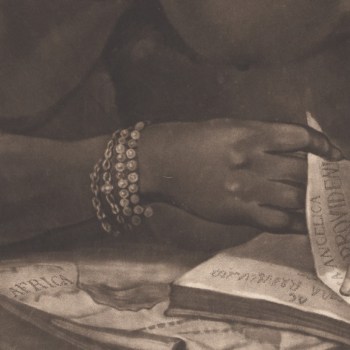
W. Pyott after Carl Frederick van Breda, The Benevolent Effects of Abolishing Slavery, or the Planter Instructing his Negro, detail, 1792 (Yale Center for British Art, B2010.14). More information»
Important Dates for Presenters
Friday, 11 June
Selected speakers will be notified.
Friday, 25 June
Approve abstract for publication and submit short bio (150 words) with headshot. This material will be made available on the seminar webpage and through institutional social media promotions.
Monday, 6 September
Submit a 20-minute pre-recorded paper with transcript (without footnotes). Your paper will be reviewed by the panel moderators for discussion points and made available for asynchronous viewing by registrants no less than one week before the live event. We assume that speakers have the necessary software and capabilities to record their illustrated paper. However, please let us know if you require assistance and we will be happy to help. We will use your transcript to make your paper accessible through subtitles. Please indicate slide breaks.
Saturday, 9 October
Participation in one live panel discussion. Selected papers will be grouped according to common themes. Live panel discussions will be held on Saturday, October 9, and hosted by a moderator who will facilitate discussion. All panel discussions will take place live between 10am and 4pm EDT. This event will be recorded.
Monday, 22 November
Submit manuscript and 5–10 figures with permissions for publication in proceedings. Papers will be published in a digital proceedings.
Online Seminars | Sartorial Society Series, Summer 2021

I’ve included here a selection of talks most relevant to the 18th century, but the whole series looks terrific.–CH From the Sartorial Society Series:
Looking Back: The Historicisms, Hauntings, and Heritage of Dress
Sartorial Society Series, Summer Semester 2021
A digital seminar series exploring the history of dress, fashion, and bodily adornment.
“The past has to be taken apart. Old themes are worn as new details.” –Judith Clark
When introduced to histories of dress, we are often met with timelines of fashion that imply a neat, progressive evolution of fashionable styles through the years. Clothing is framed as an index to history. Yet dress does not conform to an orderly chronology. It is full of disruptive reverberations, re-interpretations, and revivals. The fashions of the past are repeatedly dismantled and reimagined, sending sartorial echoes through time.
The historic resonance of dress can also carry an emotional weight on a personal level. Clothes can serve as welcome memories of loved ones, or less-welcome spectres of the past. Memories of clothes can be deeply nostalgic, while the garments not-worn can serve as ‘sliding-door’ moments, causing us to dwell on the parallel lives we did not live or bodies unlike our own. This has been explored, for example, by Shahidha Bari, who describes “spectral visions of ourselves [that] haunt these garments like all things that are romanticised and never realised.”
Dress maintains its capacity to ‘haunt’ in the setting of the museum or archive. Elizabeth Wilson described museums of dress as ‘mausoleums of culture’: haunted and eerie. She stated that ‘there are dangers in seeing what should have been sealed up in the past. We experience a sense of the uncanny when we gaze at garments that had an intimate relationship with human beings long since gone to their graves.’ Carol Tulloch has written of the power of archives to access personal fashion histories that may otherwise have been lost, suggesting that: “archives enable a lived experience to be revived and reassessed time and time again.”
The Sartorial Society Series is organised by a group of dress historians and curators with the aim of celebrating the diverse, innovative, and excellent research emerging in the field of dress history. We want to create a space that welcomes and supports dress historians from all backgrounds, and fosters positive connections within our field. The series will encourage collegiality and will be an open, inclusive, and friendly space to meet others interested in dress history. We encourage BYO wine, tea or soft drink of choice and invite you to join the post-talk Q&A.
All sessions are held on Thursday evenings at 6pm UK time (BST/GMT). Most talks are 20 minutes; some are 10 minutes. Registration links are available here.
◊ ◊ ◊ ◊ ◊
Week 1 | Nostalgia and Nationalism
20 May 2021
• Cecilia Gunzburger, French Revolutionary Dress in the Bourbon Restoration: The Political Uses of Historic Dress
• Sabine Wieber, Vienna’s 1879 Festzug and the Habsburg Empire’s ‘Glorious’ Past
• Alison Toplis, An Exploration of the Smock as a Nostalgic Spectre of Rural England
◊ ◊ ◊ ◊ ◊
Week 3 | Reconstruction and Reproduction
10 June 2021
• Amber Pouliot, Serena Partridge’s ‘Accessories’ Collection for the Brontë Parsonage Museum: Haunting the Heritage Context
• Jordan Mitchell-King, Reanimating Dress: Interpreting Historical Clothing through Experimental Wearing
• Cynthia Chin Kirk, ‘I Am Only Fond of What Comes from the Heart’: Memory and Trauma in Martha Washington’s Purple Silk Gown
◊ ◊ ◊ ◊ ◊
Week 4 | Performance and Performativity
24 June 2021
• Ella Hawkins, The Time is Out of Joint: ‘Haunted’ Costuming at Shakespeare’s Globe
• Hilary Davidson, Looking Back Through Fashion: Regency Romanticisms
• Anouska Lester, ‘Item, One Ghost’s Crown’: Haunting and Loss in Philip Henslowe’s 1598 Theatrical Inventories
◊ ◊ ◊ ◊ ◊
Week 7 | Historicism, Revival, and Re-Use
29 July 2021
• Serena Dyer, Sartorial Chronology and Fashionable Anachronism: Historicism, Temporality, and the Making of Dress Histories
• Sarah Hodge, A Fancy for the Past: Historical Style in Britain, 1800–1851
• Ruby Hodgson, Robe a la Grand-Mere: Re-Use of 18th-Century Silk in Romantic Era Dress
• Jane Hattrick, Queering the Hartnell Crinoline: Reinventing Second Empire French Fashions, Fantasy, Gender Performativity, and the Royal Body
New Book | Sapphic Crossings
From the U. of Virginia Press:
Ula Lukszo Klein, Sapphic Crossings: Cross-Dressing Women in Eighteenth-Century British Literature (Charlottesville: University of Virginia Press, 2021), 258 pages, ISBN: 978-0813945507 (cloth), $95 / ISBN: 978-0813945514 (paper), $33 / ISBN: 978-0813945521 (ebook), $25.
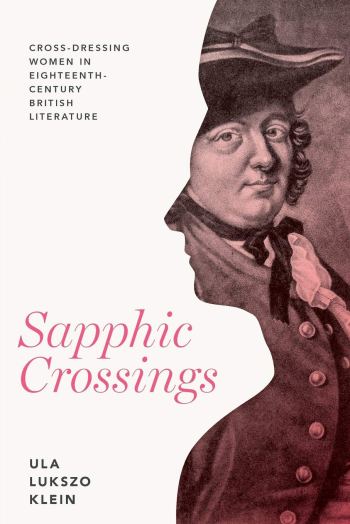 Across the eighteenth century in Britain, readers, writers, and theater-goers were fascinated by women who dressed in men’s clothing—from actresses on stage who showed their shapely legs to advantage in men’s breeches to stories of valiant female soldiers and ruthless female pirates. Spanning genres from plays, novels, and poetry to pamphlets and broadsides, the cross-dressing woman came to signal more than female independence or unconventional behaviors; she also came to signal an investment in female same-sex intimacies and sapphic desires. Sapphic Crossings reveals how various British texts from the period associate female cross-dressing with the exciting possibility of intimate, embodied same-sex relationships. Ula Lukszo Klein reconsiders the role of lesbian desires and their structuring through cross-gender embodiments as crucial not only to the history of sexuality but to the rise of modern concepts of gender, sexuality, and desire. She prompts readers to rethink the roots of lesbianism and transgender identities today and introduces new ways of thinking about embodied sexuality in the past.
Ula Lukszo Klein is Director of Women’s and Gender Studies at the University of Wisconsin–Oshkosh.
C O N T E N T S
Acknowledgments
Introduction: Imagining Sapphic Possibility
1 Eighteenth-Century Female Cross-Dressers and Their Beards
2 Sapphic Breasts and Bosom Friends
3 Pentetrating Discourse and Sapphic Dildos
4 Putting on Gender, One Leg at a Time
Coda: Future Crossings
Notes
Bibliography
Index
Online Conference | Reimagining the Court Portrait, 1500–1800
From CRASSH at Cambridge:
Dressing a Picture: Reimagining the Court Portrait, 1500–1800
Online, CRASSH, University of Cambridge, 6–7 May 2021
Organized by Ana Howie and Alessandro Nicola Malusà

Juan Pantoja de la Cruz, Portrait of Doña Ana de Velasco y Girón, Duchess of Braganza, 1603 (Alicia Koplowitz Collection).
As Ulinka Rublack asserts in Dressing Up, her seminal book on dress in early modern Europe, society was extremely dress-literate and nowhere more so than in the courtly environments that generated and fuelled fashion. Within these sartorially-minded elite communities, one was constantly on display. Capturing dressed sitters in paint for prosperity, portraiture was a unique vehicle for the inherent dialectic in clothing between subject and observer, and presentation and perception. As such, this conference will examine three themes surrounding early modern portraiture: the artist, the depicted material culture and the setting for its iconographic display, that is the court. We aim to examine these connections via the prism of the period’s intricate social stratification and complex gender power dynamics. To provide sufficient breadth, the conference will present papers dealing with material between 1500 and 1800.
Considering the interdisciplinary nature of our project—spanning history, dress studies, art theory, gender history, court studies and architectural history—we believe that our conference will generate exciting contributions from leading international scholars. This conference will meaningfully contribute to the wider scholarly debate on the significance of early modern portraiture as pivotal sources for numerous branches of historical research and not just art history. Our conference will both firmly enable this discussion and bring attention to this burgeoning field of interdisciplinary historical studies. Registration is available here»
Keynote Speakers
• Erin Griffey (University of Auckland)
• Karen Hearn (UCL)
• Katarzyna Kosior (Northumbria University)
• Mei Mei Rado (LACMA)
• Catherine Stearn (Kentucky University)
• Cordula van Wyhe (York University)
T H U R S D A Y , 6 M A Y 2 0 2 1
All times are BST.
13.00 Welcome and Opening Remarks
13.20 Panel 1: Materialising Courtly Bodies
Chair: Holly Fletcher (University of Sussex)
• Panel Keynote — Karen Hearn (UCL), ‘Richly apparelled, and her belly laid out …’: Signalling (or not Signalling) Pregnancy in 16th- and Early 17th-Century Court Portraits
• Ana Howie (University of Cambridge), ‘White Ruff and Red Cuffs, on a Black Dress. The Negro Dressed in Yellow’: Materialising Bodies in van Dyck’s Portrait of Elena Grimaldi-Cattaneo
• Lisa Nunn (East Anglia), ‘A Hundred Times Fitter for a Barn than a Palace’: A Gendered Analysis of the Protectorate Portraits of Elizabeth Cromwell and Her Daughters
14.50 Break
15.00 Panel 2: Negotiating Gender in Early Modern Portraiture
Chair: Sophie Pitman (Aalto University)
• Panel Keynote — Catherine Stearn (Kentucky University), Countess or Queen, Countess and Queen: How Dress and Portraiture Illuminate the Role of Elizabeth I’s Privy Chamber Women
• Vanessa de Cruz Medina (Independent Scholar, former Prado Museum & Villa I Tatti Fellow), Ladies-in-Waiting and Portrait Galleries: Identity, Family, and Power at Early Modern Habsburg Courts
• Alice Blow (University of Cambridge), Gender Ambiguity in The Cobbe Portrait of Henry Wriothesley, Third Earl of Southampton, c.1590–93
16.30 Break
16.40 Panel 3: The Court Portrait: Global Considerations
Chair: Giorgio Riello (European University Institute)
• Panel Keynote — Mei Mei Rado (LACMA), Qing Imperial Portraits and Europe
• Jessica Hower (Southwestern University), Drawing an Empire: Elizabeth I, The Armada Portrait, and the Creation of a British Atlantic World
• Marina Hopkins (Warburg Institute), The Portrait of María Luisa de Toledo with Her Indigenous Companion
• Alejandro M. Sanz Guillén (Universidad de Zaragoza), Shoguns and Emperors: Representations of the Japanese Court in Europe during the 18th Century
F R I D A Y , 7 M A Y 2 0 2 1
13.10 Panel 4: The Court: A Stage for Princely Society
Chair: Caroline van Eck
• Panel Keynote — Katarzyna Kosior (Northumbria University), Defining the Royal Court in Poland-Lithuania: Some Textual Evidence From Jan III Sobieski’s Lifetime (1629–1696)
• Martina Vyskupova (Slovak National Museum), Portrait Representation of Maria Theresa as a Queen of Hungary Seated on a Horse in the Context of Period Female Equestrian Portraits in the 18th Century
• Pedro Manuel Tavares (Centro de História de Arte — CHAIA), D. Joana de Áustria, Embodiment of Political/Religious Propaganda of the Habsburg Women, Beyond the Validos Power
• Anna Lisa Nicholson (University of Cambridge), The Transfiguration of Hortense Mancini: How the Vagabond Duchess Became the Patron Saint of Brides
15.20 Break
15.30 Panel 5: The Artist Behind the Portrait
Chair: Alexander Marr (University of Cambridge)
• Panel Keynote — Cordula van Wyhe (York University), Fashioning Displaced Identities: Anthony van Dyck as Portraitist of the French Exiles
• Sarah Emily Farkas (University of North Carolina at Chapel Hill), Sibylle of Cleves: Cranach, Convention, and Clothing Identity in Lutheran Saxony
• Alessandro Nicola Malusà (University of Cambridge), The Sitter as Artist: Depicting Mourning Dress and Negotiating Authority in the Regencies of Christine of France and Marie Jeanne Baptiste of Savoy-Nemours
17.00 Break
17.30 Featured Keynote Address
Chair: Ulinka Rublack (University of Cambridge)
• Erin Griffey (The University of Auckland), ‘Beauties Silken Livery’: Dressing the Face at the Early Modern Court
18.30 Final Remarks and Thanks
Call for Papers | Celebrating the Illustrious in Europe, 1580–1750
From ArtHist.net (which includes the Call for Papers in French). . .
Celebrating the Illustrious in Europe (1580–1750): Towards a New Paradigm?
La célébration des Illustres en Europe (1580–1750) : vers un nouveau paradigme?
Lausanne, 25–26 November 2021
Proposal due by 31 May 2021
Study day organized with the support of the Conférence universitaire de Suisse occidentale, University of Lausanne
In the preface to the second volume of his Hommes illustres qui ont paru en France pendant ce siècle, avec leurs portraits au naturel (1696–1700), Charles Perrault was compelled to justify one of the choices that he and his protector, Michel Bégon, had made. He was indeed criticized for “having mixed artisans with princes and cardinals,” that is, for having given the same glory to men of very different conditions. This criticism—and the author’s response, which invokes the canonical examples of Apelles and Phidias, whose names “placed after that of Alexander himself, do not bring shame to either Alexander or his century”—suggests that Perrault’s work departed from the encomiastic tradition which developed during the sixteenth century, in the wake of Plutarch’s Parallel Lives. According to this tradition, only the princes and the main servants of the state would deserve to be celebrated, and such a perspective naturally led to the exclusion of scholars, scientists and artists. Pictorial enterprises such as the Gallery of the Illustrious in the Château de Beauregard, decorated with 327 portraits around 1620, or the one in the Cardinal Palace in Paris commissioned in 1632 by Richelieu, were still part of this tradition. The same is true for engraved collections, such as the series of portraits by Thomas de Leu, or biographies of illustrious women, such as Les Harangues héroïques by Madeleine de Scudéry (1642–1644) or the Gallerie des femmes fortes by the Jesuit Pierre Le Moyne (1647), both being exclusively devoted to the leaders and great heroines of ancient history.
Scholars and artists could, of course, be the subject of autonomous lives or included in series devoted exclusively to them. Thus, in the seventeenth century, following Vasari’s Vite, artists were represented in various real or fictitious ‘galleries’, ranging from Leopold de Medici’s collection of artists’ self-portraits continued by the Grand Duke of Tuscany, Cosimo III, to biographical collections such as Cornelis de Bie’s Gulden Cabinet van de Vry Schilder-Const (1662). However, while such undertakings do testify the elevation of the status of painters and sculptors, they remain largely distinct from the practices of celebrating great statesmen. Thus, an implicit hierarchy clearly remained strong, as the criticism of Perrault’s project suggests.
However, in the following century, Voltaire could, on the contrary, affirm that those who “excelled in the useful or the pleasant,” that is to say the scholars and the artists, were the true exempla virtuti: they were then likely to surpass in merit the military heroes, and to count among the first of the great men. How did this paradigm shift—in which Perrault’s work seems central—take place between 1580 and 1750? The France of Louis XIV a priori appears as a catalyst, because of the renewal of the modes of celebration of the royal glory and, above all, because of the institutionalization of the worlds of the arts, sciences and letters under the ministry of Colbert, a phenomenon that gave rise to the elaboration of new structured social bodies, accompanied by new types of discourses which aimed to support their legitimacy. However, like André Thevet’s Vrais pourtraits et vies des hommes illustres (1584) or Van Dyck’s Icones Principum Virorum (1645), some undertakings prior to Perrault’s work were already bringing together scholars, artists and statesmen on the same level. These few examples should lead us to reconsider the pivotal role hitherto attributed to the reign of Louis XIV, in order to try to retrace in greater detail the evolution of the social and intellectual conditions that allowed the emergence of new types of discourse on the Illustrious.
Until now, the historiography has mainly focused on the issues of biography in the humanist context of the sixteenth century, which largely relied on the model of Plutarch (Dubois, 2001; Eichel-Lojkine, 2001), or conversely, on the development of the cult of great men after 1750 (Bonnet, 1998; Gaehtgens and Wedekind, dir., 2009). The aim of this study day is therefore to review all the biographical productions of a period that has been little considered until now, in order to better understand how the modes of celebrating the glory of illustrious men were transformed between 1580 and 1750, both in writing and in images, by taking into account various media such as books, prints, paintings, sculptures and even medals.
In addition to case studies, transversal proposals are encouraged, especially when they can be inscribed in one or more of the following themes, which do not exhaust the field of possibilities :
• The ideological, political or social aims of the constitution of ‘galleries’ of illustrious men and women
• The criteria for elevating the individual to the rank of an illustrious man or woman
• The modes of conception of projects of painted, sculpted, or engraved series of illustrious men and women and their actors (sponsors, artists, dedicatees)
• The practices of consumption of the different types of biographical series
• The place of women between ‘galleries of illustrious’ and ‘galleries of beauties’
• The criteria used by biographers to justify the writing of the eulogy of categories that were little represented before the seventeenth century, in particular artists, craftsmen, or scholars
• The impact of socio-epistemic transformations of scientific practices on the writing of biographies of natural philosophers and scholars
Papers may be presented in French or in English. Each paper will last a maximum of 30 minutes and will be followed by 15 minutes of discussion. Proposals of 300 words, accompanied by a brief curriculum vitae and a list of publications, should be sent before 31 May 2021 to Antoine Gallay (antoine.gallay@unige.ch). Depending on the evolution of the health situation, the study day may be held, in part or entirely, online.
Organizers
• Antoine Gallay (University of Geneva, Paris-Nanterre University)
• Carla Julie (University of Lausanne)
• Matthieu Lett (University of Burgundy/LIR3S)
Scientific Committee
• Jan Blanc (University of Geneva)
• Estelle Doudet (University of Lausanne)
• Christian Michel (University of Lausanne)
• Frédéric Tinguely (University of Geneva)
Selected Bibliography
• Barbe, Jean-Paul et Pigeaud, Jackie, Le culte des grands hommes au XVIIIe siècle, (Nantes, 1998).
• Bell, David A., The Cult of the Nation in France: Inventing Nationalism, 1680–1800, (Cambridge: MA, 2003).
• Bonnet, Jean-Claude, Naissance du Panthéon : essai sur le culte des grands hommes (Paris, 1998).
• Chaigne-Legouy, Marion et Salamon, Anne, “Les hommes illustres : introduction,” Questes: Revue pluridisciplinaire d’études médiévales 17 (2009): 5–23.
• Civil, Pierre, “Culture et histoire : galerie de portraits et ‘hommes illustres’ dans l’Espagne de la deuxième moitié du XVIe siècle,” Mélanges de la Casa de Velázquez, 26.2 (1990): 5–32.
• Costamagna, Philippe, “La constitution de la collection de portraits d’hommes illustres de Paolo Giovio et l’invention de la galerie historique,” in Mœnch, Esther, Primitifs italiens : le vrai, le faux, la fortune critique (Milan, 2012), 167–75.
• Culpin, David J., “Introduction” in Perrault, Charles, Les hommes illustres qui ont paru en France pendant ce siècle : avec leurs portraits au naturel (Tübingen, 2003).
Denk Claudia, Artiste, citoyen et philosophe : der Künstler und sein Bildnis im Zeitalter der französischen Aufklärung (Munich, 1998).
• Dubois, Claude-Gilbert, “L’individu comme moteur historiographique : formes de la biographie dans la période 1560–1600,” Nouvelle Revue du XVIe Siècle 19.1 (2001): 83–105.
• Eichel-Lojkine, Patricia, Le Siècle des Grands Hommes. Les recueils de Vies d’hommes illustres avec portraits du XVIe siècle (Louvain, 2001).
• Gaukroger, Stephen, “The Académie des Sciences and the Republic of Letters: Fontenelle’s Role in the Shaping of a New Natural‐Philosophical Persona, 1699–1734,” Intellectual History Review 18.3 (2008): 385–402.
• Gaehtgens, Thomas W. et Wedekind, Gregor [dir.], Le culte des grands hommes, 1750–1850 (Paris, 2009).
• Lhopiteau, Simon, “Les Tableaux Historiques (1652) de Pierre Daret, une entreprise audacieuse de célébration des grands hommes,” Bulletin de la Société de l’Histoire de l’Art Français (2009): 29–43.
• Michel, Christian, “Des Vite de Bellori à l’Abrégé de la vie des Peintres de Roger de Piles : un changement de perspective,” Studiolo 5 (2007): 193–201.
• Miller, Peter N., “The ‘Man of Learning’ Defended: Seventeenth-Century Biographies of Scholars and an Early Modern Ideal of Excellence”, in Coleman, Patrick J. [et al.], Representations of the Self from the Renaissance to Romanticism (Cambridge, 2000), 39–62.
New Book | Closed on Mondays
From Lund Humphries:
Dinah Casson, with a foreword by Christopher Frayling, Closed on Mondays: Behind the Scenes at the Museum (London: Lund Humphries: 2020), 208 pages, ISBN: 978-1848224346, £30 / $40.
 Dinah Casson, co-founder of Casson Mann, museum and exhibition designers for over 30 years, guides the inquisitive museum visitor through a series of questions and problems which confront museum curators, and their designers, behind closed doors.
The transformation of museums from the ‘dreary, dusty places’ they used to be to places that people want to be in, alongside objects they want to be near and ideas they want to understand and then share has been extraordinary. During the last twenty-five years, millions of pounds have been poured into our national museums in the UK: as a result, they are certainly brighter and fuller. It is against this background that Dinah Casson has opened the service entrance of the museum a little.
This book is not an explanation of what an exhibition designer does or how to do it. Instead, by means of a series of essays punctuated with comments from collaborators and visitors, it explores exhibition design and alerts the visitor’s eye to this invisible craft. It explores questions such as: why are most paintings in carved, gilded frames, regardless of artist, period or subject matter? Why do so few contemporary art galleries have windows? If a label text irritates us, what should it say instead? Why do facsimiles make some people so uncomfortable? Why do we keep all this stuff? What is it that visitors want from our museums? In doing so, it offers enjoyable insights, which will add depth to our future visits through the front door (which is usually closed on Mondays) and will make us question what is shown, why it’s shown where (and how) it is, what’s written about it and how the interaction between museums and their designers has encouraged each to change.
Since creating Casson Mann in 1984, Dinah Casson, together with her partner Roger Mann, been involved in some of the most interesting and complex of recent museum installations both in the UK and overseas; from the British Galleries at the V&A in London to the new facsimile at Lascaux in Perigueaux, the work of the award-winning practice has been widely published and it is recognized as one of the leading companies in the field.
Exhibition | In Sparkling Company: Glass and Social Life

Pair of covered green vases, ca. 1765 and a pair of vases, 1750–75, probably from the workshop of James Giles, London, gilded copper-green lead glass (Corning, New York: Corning Museum of Glass, 2003.2.4 A-B, 54.2.4 A-B).
◊ ◊ ◊ ◊ ◊
Notice of the exhibition appeared here in February 2020, but I note it again since the show is scheduled to open (with new dates) later this month. –CH
Press release (30 October 2019) for the exhibition:
In Sparkling Company: Glass and the Costs of Social Life in Britain during the 1700s
Corning Museum of Glass, Corning, New York, 22 May 2021 — 2 January 2022
Curated by Christopher Maxwell
The Museum’s spring exhibition, In Sparkling Company: Glass and Social Life in Britain during the 1700s, will open May 9, 2020. With exhibition design by Selldorf Architects, In Sparkling Company will present the glittering costume and jewelry, elaborate tableware, polished mirrors, and dazzling lighting devices that delighted the British elite, and helped define social rituals and cultural values of the period. Through a lens of glass, this exhibition will show visitors what it meant to be ‘modern’ in the 1700s, and what it cost.
The exhibition will also include a specially created virtual reality reconstruction of the remarkable and innovative spangled-glass drawing room completed in 1775 for Hugh Percy, 1st Duke of Northumberland (1714–1786), and designed by Robert Adam (1728–1792), one of the leading architects and designers in Britain at the time. An original section of the room (which was dismantled in the 1870s), on loan from the Victoria and Albert Museum in London, will be on view in North America for the first time as part of the exhibition. It will be accompanied by Adam’s original colored design drawings for the interior, on loan from the Sir John Soane’s Museum, London.
“One medium that is often overlooked in scholarly discussions of 18th-century art, design, and material culture is glass,” said Christopher L. Maxwell, Curator of European Glass at CMoG, who has organized the exhibition. “In Britain, developments in glass formulas and manufacturing techniques resulted in new and better types of glass, from windowpanes and mirrors to heavy, clear ‘crystal’ tableware, perfectly suited to the tastes and needs of Britain’s growing urban elite whose wealth derived from new enterprises in finance, manufacture, international trade and colonial expansion. In Sparkling Company will demonstrate the many functions and meanings of glass in the exuberant social life of the 1700s.”
The smooth, ‘polished’ and reflective properties of glass perfectly embodied 18th-century ideals of sociability, in what is considered by many as the ‘age of politeness.’ As urban centers grew in size and prosperity, sociability became ever more sophisticated. The terms ‘polite’ and ‘polished’ were often used interchangeably in the numerous etiquette manuals eagerly read by those wishing to take their place in the polite world. Examples of such literature will be displayed alongside fashionable glass of the period, including embroidered costume, mirrors, a chandelier, cut glass lighting and tableware, and paste jewelry that accessorized and defined the lives of the ‘polished’ elite.
In the 1700s Britain was a prosperous and commercial nation. Its growing cities were hubs of industry, scientific advancement, trade and finance, and its colonies were expanding. British merchants navigated the globe carrying a multitude of cargoes: consumable, material, and human. Underpinning Britain’s prosperity was a far-reaching economy of enslavement, the profits of which funded the pleasures and innovations of the fashionable world, among them luxury glass. Alongside the beauty and innovation of glass during this period, the exhibition will consider the role of the material as a witness to colonization and slavery. Using artifacts and documents relating to the slave trade, it will reveal a connection that permeated all levels of British society.
From glittering costume and elaborately presented confectionery, to polished mirrors and dazzling chandeliers, glass helped define the social rituals and cultural values of the period. While it delighted the eyes of the wealthy, glass also bore witness to the horrors of slavery. Glass beads were traded for human lives while elegant glass dishes, baskets and bowls held sweet delicacies made with sugar produced by enslaved labor.
In Sparkling Company: Glass and Social Life in Britain during the 1700s will include important examples of 18th-century British glass, including:
• Glass embroidered costume: a spectacular men’s coat intricately decorated with glass ‘jewels’ made around 1780; a pair of women’s shoes covered in glass beads; shoe buckles set with glass paste jewels; jewelry and other accessories.
• Cut glass lighting and tableware, all made possible through the perfection of British lead ‘crystal’ in the late 1600s and exported throughout Europe and the British colonies in America and beyond.
• A number of large mirrors, which became the tell-tale sign of a fashionable interior, and reverse-painted glass meticulously decorated in China for the British luxury market.
• Opulent glass dressing room accessories, including a magnificent gilded silver dressing table set, with a looking glass as its centerpiece, made in about 1700 for the 1st Countess of Portland; perfume bottles, patch boxes, a dazzling cut glass washing basin and pitcher and an exquisite blue glass casket richly mounted in gilded metal, used in the ‘toilette’ a semi-public ritual of dressing which was adopted from France for men and women alike and became a feature of British aristocratic life in the 18th century.

Robert Adam, Design for the end wall of the drawing room at Northumberland House, 1770–73, pen, pencil, and colored washes, including pink, verdigris, and Indian yellow on laid paper, 52 × 102 cm (London: Sir John Soane’s Museum, SM Adam, volume 39/7; photo by Ardon Bar Hama).
◊ ◊ ◊ ◊ ◊
Glass Drawing Room for the Duke of Northumberland
Over the course of the 18th century, domestic interiors were transformed by the increasing presence of clear and smooth plate glass. A remarkable example is the lavish drawing room designed by the celebrated British architect Robert Adam for Hugh Percy, 1st Duke of Northumberland (1714–1786) and his wife, the Duchess Elizabeth Percy (1716–1776), and completed in 1775. This unique room, measuring 36 by 22 feet, was paneled between dado rail and architrave with red glass panels sprinkled on the reverse with flakes of metal foil, like large-scale glitter. Similarly spangled green glass pilasters, large French looking glasses, and intricate neo-classical ornament in gilded lead completed the dazzling scheme. The room was altered in the 1820s and finally dismantled in the 1870s, when Northumberland House was demolished. Many of the panels were acquired by the V&A Museum in the 1950s, but their poor condition meant that they could only be partially displayed. The panels on display at The Corning Museum of Glass incorporate newly-conserved elements from the V&A’s stores.
In Sparkling Company will feature a virtual reality reconstruction of the drawing room, created by Irish production house Noho. Visitors to the exhibition will be transported into the interior, experiencing the original design scheme—last seen almost 200 years ago. This will be the first virtual-reality experience ever offered at CMoG. Visitors will also be able to see Robert Adam’s design drawings, on loan from the Sir John Soane’s Museum, London, and a section of the original Northumberland House Glass Drawing Room on loan from the V&A Museum, which has never been on view in North America.
In Sparkling Company: Glass and Social Life in Britain during the 1700s will include loans from the Victoria and Albert Museum; Sir John Soane’s Museum; the Museum of London; the Fashion Museum, Bath; Royal Museums Greenwich; Los Angeles County Museum of Art (LACMA); Penn State University Library; Cleveland Museum of Art; and The Museum of Fine Arts in Boston.
The exhibition is accompanied by a catalogue, In Sparkling Company: Reflections on Glass in the 18th-Century British World (The Corning Museum of Glass, 2020). Publication contributors include Marvin Bolt, Kimberly Chrisman Campbell, Jennifer Chuong, Melanie Doderer Winkler, Christopher Maxwell, Anna Moran, Marcia Pointon, and Kerry Sinanan.
◊ ◊ ◊ ◊ ◊
Note (added 16 September 2021) — The posting has been updated to include the revised title; the original title was In Sparkling Company: Glass and Social Life in Britain during the 1700s.
2019 Dissertation Listings from CAA
Very belated congratulations! I would expect the 2020 listing to be available in June or July. –CH
Each year, CAA publishes titles of dissertations in-progress and completed during the previous academic year by students at American and Canadian institutions.
The index for 2019 lists four ‘eighteenth-century art’ dissertations completed:
• Katherine Calvin, “Antiquity and Empire: The Construction of History in Western European Representations of the Ottoman Empire, 1650–1830” (The University of North Carolina at Chapel Hill, M. Sheriff and C. Johns)
• Bart Pushaw, “The Global Invention of Art: Race and Visual Sovereignity in the Colonial Baltic, 1860–1915” (University of Maryland, College Park, S. Mansbach)
• Leslie E. Todd, “Reconciling Colonial Contradictions: The Multiple Roles of Sculpture in Eighteenth-Century Quito” (University of Florida, M. Stanfield-Mazzi)
• Hye-shim Yi, “Art, Materiality, and Intermediality: The Multimedia Writing Practice of Chen Hongshou (1768–1822)” (UCLA, H. Lee)
◊ ◊ ◊ ◊ ◊
and fifteen ‘eighteenth-century art’ dissertations in progress, including:
• Jacob Leveton, “William Blake’s Radical Ecology” (Northwestern University, S. Eisenman)
• Kelsey Martin, “Graveuses en taille-douce: French Women Engravers from the Ancien Regime to the Napoleonic Empire (1660–1815)” (University of North Carolina, Chapel Hill, M. Hyde)
• Saylor, Miranda, “Sor María de Ágreda and Sacred Art in Eighteenth-Century Mexico” (UCLA, C. Villaseñor-Black)
2018 Dissertation Listings from CAA
Each year, CAA publishes titles of dissertations in-progress and completed during the previous academic year by students at American and Canadian institutions.
The index for 2018 lists six ‘eighteenth-century art’ dissertations completed:
• Alissa Adams, “French Depictions of Napoleon I’s Resurrection, 1821–1848” (The University of Iowa, D. Johnson)
• Kelsey Brosnan, ““Seductive Surfaces: The Still Life Paintings of Anne Vallayer-Coster (1744–1818)” (Rutgers University, S. Sidlauskas)
• Monica Hahn, “Go-Between Portraits and the Imperial Imagination, circa 1800” (Temple University, E. Pauwels)
• Laurel O. Peterson, “Making Spaces: Art and Politics in the Whig Country House, 1688–1745” (Yale University, T. Barringer)
• Mei Rado, “The Empire’s New Cloth: Western Textiles and Imperial Identity at the Eighteenth-Century Qing Court” (Bard Graduate Center, F. Louis)
• Sarah Sylvester Williams, “After Watteau: Nicolas Lancret and the Creation of the Hunt Luncheon” (University of Missouri, M. Yonan)
◊ ◊ ◊ ◊ ◊
and forty-five ‘eighteenth-century art’ dissertations in progress, including:
• Wenjie Su, “Machines of Time, Towers of Knowledge: Miniature Architectural Spaces and the Design of Timepieces in Sino-European Encounters, Seventeenth and Eighteenth Centuries” (Princeton, T. DaCosta Kaufmann)
• Emily K. Thames, “Enlightenment, Reform, and Identity in Late Eighteenth-Century Puerto Rico: The Art of José Campeche (1751–1809)” (Florida State University, P. Niell)










 Enfilade
leave a comment