Call for Papers | ASECS 2024, Toronto
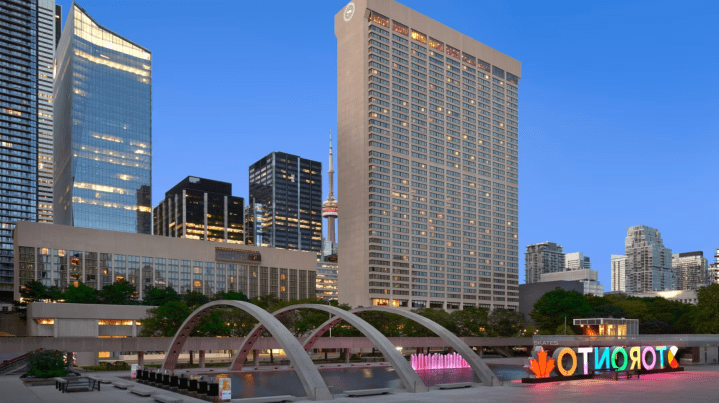
Many of the following sessions at next year’s ASECS conference will be of interest to readers, though I’m the first to admit the selection is subjective; so please have a look at the full list available here. Pay special attention to HECAA’s New Scholar Session, chaired in 2024 by Gauvin Alexander Bailey. Also, please note that while I’ve not listed any of the roundtables or project sessions, there are interesting offerings there as well—with the former addressing subjects ranging from “Butt Stuff,” to pedagogy, to museums and their colonials pasts, and the latter focusing on topics including creativity and Julie Park’s new book My Dark Room. There are, in other words, lots of things to look forward to in Toronto. –CH
2024 American Society for Eighteenth-Century Studies Conference
Sheraton Centre, Toronto, 4–6 April 2024
Proposals due by 15 September 2023
The American Society for Eighteenth-Century Studies (ASECS) is pleased to announce our Call for Papers for our 54th Annual Meeting, to be held 4–6 April 2024 at the Sheraton Centre in Toronto. The Society, established in 1969, is the foremost learned society in the United States for the study of all aspects of the period from the later seventeenth through the early nineteenth century. Round 3 is now open for submissions to panels, roundtables, and special sessions.
We are committed to fostering an inclusive and welcoming conference environment in which all members participate fully in the exchange of knowledge and ideas. We welcome scholars pursuing all aspects of eighteenth-century studies and in all careers and career stages: in graduate studies; in tenured, tenure track, or non-tenure track academic positions; in part-time or temporary positions in the academy; and colleagues in contexts beyond the academy including libraries, museums, publishing, and teaching, as well as independent scholars. Please join us whether you are a long-time member, or new to ASECS!
◊ ◊ ◊ ◊ ◊
Africans and Africa in Italy (Italian Caucus)
Chair: Irene Zanini-Cordi (Florida State University), izaninicordi@fsu.edu
This session is dedicated to the realities and representations of African peoples and their homelands in the various Italian States, be they economic, political, religious, artistic, social, educational, etc. Papers may examine the lived experiences of Africans in rural and city environments, among nobility and other classes, and in relation to a variety of public entities. Portrayals of Africa and Africans may come from literary, theatrical, figurative, ceremonial, academic, etc. sources. Examples include but are not limited to: Africans featured in portrait and other figurative arts genres, treatment of/reference to Africans in historical, scientific, medical, ethnographic, encyclopedic and travel narratives; Africa as protagonist and/or setting in fictional, scientific, poetic, or dramatic literature. Papers may also interpret ‘Africans in Italy’ in an indirect sense, i.e., to include the heated debates taking place in Italy (in person and in print) on the experiences of Africans outside of Italy. Chief among those discussion topics would be Africans’ subjection to the transatlantic slave trade and subsequent enslavement in the Americas.
◊ ◊ ◊ ◊ ◊
American Empires: Art, Vision, Race, and Power
Chairs: Kristi Peterson (Skidmore College), kpeters4@skidmore.edu and Emily Thames (Independent Scholar), ekthames@gmail.com
When discussing the Western hemisphere and its imperial relationships, a handful of national identities typically dominate the conversation and thereby reduce the continents’ complexities. In truth, the imposition of empires and their legacies is a complex tapestry of hybridity, synthesis, and negotiations that rarely remain stable in their semiotics. European colonizations of the hemisphere also do not represent the earliest American empires, and the conversation often ignores Indigenous responses and negotiations of changing power structures informed by their own histories and placemaking narratives. As both markers and makers of emic social systems, visual and material culture both reflect and sustain, fulfill and negotiate, imperial impositions and systems. This session is specifically interested in exploring and complicating this concept via the artistic production of the American hemisphere and its relationship to, and intersection with, the construction, maintenance, and transformations of vision and imperial structures in the eighteenth century. This session seeks papers that examine the questions of the intersection of art making and empires in the Americas across time and national boundaries that impact our understanding of the eighteenth century in the hemisphere and its legacies. We welcome submissions that examine issues related to vision, race, and power structures broadly defined. This includes, but is not limited to: indigenous responses and negotiations of empires, the mechanisms by which empires are built and maintained, how both local and imperial identities are negotiated through artmaking, and how visual culture is used to aid, negotiate, and even undermine/subvert imperial imposition.
◊ ◊ ◊ ◊ ◊
Anne Schroder New Scholars Session (Historians of Eighteenth-Century Art and Architecture)
Chair: Gauvin Alexander Bailey (Queen’s University), gauvin.bailey@queensu.ca
The Anne Schroder New Scholars Panel, sponsored by HECAA, seeks to promote scholarship that represents the future of eighteenth-century studies. We invite proposals from dissertating graduate students and early-career scholars working in the academy or museum. We welcome submissions that explore topics across the cultures, spaces, and materials that are related to art and architectural history over the long eighteenth century and around the globe. We especially encourage projects that reflect new approaches to both long-standing and under-studied issues and methods in eighteenth-century studies broadly, including but not limited to: critical race art history; Disability studies; ecocriticism and environmental studies; empire, colonization, and decolonial theory; gender and queer theory; global diasporic histories; Indigeneity; and material culture studies. Papers can be based on dissertations, book or article manuscripts in progress, Digital Humanities collaborations, or curatorial projects. We particularly encourage BIPOC scholars, contingent or independent scholars, and those working outside of North America to apply.
◊ ◊ ◊ ◊ ◊
Annotation across Media
Chairs: Jeanne Britton (University of South Carolina), jbritton@mailbox.sc.edu and Julie Park (Pennsylvania State University), julie8park@gmail.com
Eighteenth-century book use, reading practices, and multi-media objects suggest a long history of active engagement with aesthetic and material production that crosses lines between media, genres, and experiences, between print and script, image and text, and reading and looking. This panel is meant to take advantage of the interdisciplinary membership of ASECS by seeking papers from any and all disciplines and languages. It aims to contribute to the Annual Meeting a broad discussion about media and genre by looking at a range of annotated, multi-media, and reader-enhanced works from any linguistic, national, or generic tradition. Papers are invited that consider texts and images that bear the marks of annotation or use, whether by an artist, author, publisher, or reader: architectural or scientific illustrations with captions, philosophy with footnotes, poetry with marginalia, indexed commonplace books, and grangerized volumes. What is the relationship between word and image in an annotated illustration or illustrated text? What modes of reading and looking are at play in the production of marginalia in different media, from pencil scribblings and inked doodles to paint stains? Presentations on digital projects that make use of annotation are also invited.
◊ ◊ ◊ ◊ ◊
Between Pornography and Erotica: Materiality and Liminality in 18th-Century Visual Culture
Chairs: Alicia Caticha (Northwestern University), alicia.caticha@northwestern.edu and Agnieszka Ficek (Meadows Museum, SMU), aficek@gradcenter.cuny.edu
Sexually explicit images, objects, and texts were integral to the culture of libertinage that flourished in the eighteenth century. The visual cultures of sex, pornography, and erotica were not contained simply to the bedroom or boudoir, but seeped into political caricature, fine arts, and popular divertissement. Often associated with Enlightenment philosophy, science, and critiques on religious and political authority, scholarship on libertinage has largely focused on the literary contributions of figures such as Denis Diderot, Crebillon fils, and the Marquis de Sade. However, explicit materials inhabited multiple liminal spaces, suspended between public circulation and private enjoyment. Artists, writers, readers, and viewers actively navigated the contentious line between permissible and obscene. Taking up the liminal space between the erotic and the pornographic, this panel proposes to rethink and expand the definition of erotic visual culture of the eighteenth-century. How was sexually explicit imagery part of a more mainstream visual culture? How were such objects circulated, viewed, and stored? How did the gendered nature of political caricature respond to the culture of libertinage? How did artists employ materials to communicate erotic and explicit messages? How did evolving ideas of synesthesia and the senses shift how objects were viewed and henceforth eroticized? What was the relationship between libertinage and queer aesthetics? This session invites papers that take up visual culture across mediums, including but not limited to pastels, textiles, print, marble, bronze, porcelain, and painting, with a particular focus on materiality and the liminal space between the erotic and the pornographic.
◊ ◊ ◊ ◊ ◊
Between Space and Culture: The Urban Pillars of Enlightenment Europe
Chair: Chloe Edmondson (Stanford University), cmhse14@stanford.edu
This panel invites papers that examine the cultural, political, and literary histories of urban spaces in cities throughout Enlightenment Europe. What urban sites proved most central to the culture of a city and why? If one takes the example of Paris alone, the city is full of streets, monuments, buildings, neighborhoods, and institutions which defined the cultural and political history of France, from the Café Procope and the Comédie Française to the Bastille and the Place de La Concorde. How did physical sites organize the intellectual, mercantile, political, and/or social culture of entire eras for specific cities in Enlightenment Europe? Why did certain spaces become centers for artists and intellectuals, others for diplomats or the burgeoning merchant class, and still others for sex workers? How did urban sites permeate artistic productions, whether in literature or the visual arts throughout the long eighteenth century? Preference will be given to papers that focus on specific monuments, buildings, or neighborhoods from interdisciplinary perspectives, and the panel will aim to highlight different national traditions as well as transnational approaches.
◊ ◊ ◊ ◊ ◊
Caribbean Indigeneity and the Visual Archive (Early Caribbean Society)
Chair: Désha Osborne (University of Edinburgh), Desha.Osborne@hotmail.com
“Caribbean denotes an Indigeneity that is often ignored; it performs its own set of erasures and elisions,” writes Tao Leigh Goffe (The Other Windrush, 2021). Since the early days of colonization and settlement, Europeans have used paintings and engravings to identify and categorize the original inhabitants of the Caribbean islands. Likewise, narratives of indigenous replacement and erasure began as early as the introduction of enslaved Africans to the Caribbean not long after European arrival, and again with the introduction of South Asian indentured laborers in the nineteenth century. Different frameworks for indigeneity in the Caribbean reflect the ongoing call from island communities, artists and scholars like Sylvia Wynter’s invitation to reimagine the human and define a new indigeneity in the Caribbean. This panel specifically seeks to ask how Caribbean indigeneity can be defined and understood through the perspective of early visual cultures in the Americas. Part of the agendas of eighteenth-century artists like Agostino Brunias was to set unambiguous lines around who were considered Indigenous and who were African in the service of settler colonial myths of origin and European definitions of identity. For those who study the Caribbean visual archive, the argument that Blackness works somehow to erase Indigeneity and its relation to the colonial gaze is linked. How can we recover both erasure and resistance of hybrid Caribbean Indigeneity in the visual archive?
◊ ◊ ◊ ◊ ◊
‘Deprived of Force, but Pressed with Courage Still’: Interrogating Impotency
Chair: Jessica Floyd (University of Maryland, Baltimore County), jfloyd1@umbc.edu
Judith Mueller (1999) notes that “The label, impotent relentlessly signifies beyond the underperforming organ to the entire man—his mind, his character, his will, his very manhood.” Her work captures the Phallic energy inherent in eighteenth-century discourse and points to the undercurrent of anxiety that haunts the margins. The specific anxiety is tied to a recognition of the precarity of masculine performance and the lurking fear of being labeled a failed male. Male potency functioned both literally and symbolically, serving as the nexus of male power, agency, and virility. Indeed, a man’s ability to perform sexually, socially, and politically was bound up within this Phallic economy and spoke to his abilities and also his identity. Impotency, then, is diametrically opposed to expected Phallic energy and became, in the long eighteenth century, the subject of wide private and public dialogue. This panel seeks to engage scholars from multiple disciplines who critically investigate impotency in the long eighteenth century for how it functioned either literally or symbolically. Papers may investigate literature, medicine, history, art, print culture, court documents, or other avenues that serve as data-points to understand the broad range of contemporary discussions and representations of impotency. Impotency makes its way into a number of seemingly disparate places such as Pope’s poetry, court documents suing for sex, and even medical literature seeking to rectify the affliction and this panel encourages submissions that look at impotency from various disciplines and backgrounds in order to generate a distinctly interdisciplinary conversation.
◊ ◊ ◊ ◊ ◊
The Eccentric 18th Century (Queer and Trans Caucus)
Chairs: Smith Yarberry (Northwestern University), syarberry@u.northwestern.edu and Shelby Johnson (Oklahoma State University), shelby.l.johnson@okstate.edu
Who are the eccentric writers, artists, publishers, and thinkers of the queer and trans eighteenth century? Or what are the eccentric texts, the anonymous prints, the parenthetical materials (magazines, notebooks, letters, etc.) that mediated queer and trans voices? For this panel, we are looking for work that engages with these eccentric writers, artists, and materials of the eighteenth century that have either still received little critical attention or, perhaps, received little acclaim in their lifetimes but should be reconsidered now.
◊ ◊ ◊ ◊ ◊
The 18th Century Is Going Places! (Graduate Student and Early Career Scholars Caucus)
Chair: Allison Gibeily (Northwestern University), allisongibeily2025@u.northwestern.edu
Taking a cue from scholarship in Indigenous studies, this roundtable asks how place-based methods inform our research and teaching in the increasingly globalized field of eighteenth-century studies. Rather than imagining places figuratively or reading about them in the numerous travelogues churned out during the period, we are curious how ‘going places’ can stand as a unit of thinking and knowing in itself, and how physical presence in a place informs the projects we pursue. How does the immediate, participatory experience of being somewhere—or being from, returning to a place—affect our work? How can we honor embodied epistemologies within the confines of the western academy, with all of its colonial legacies? This roundtable welcomes submissions from across disciplines and, in the spirit of the topic and format at hand, especially encourages those attending to the practical. What activities have you developed that encourage students to learn about and participate in the communities in which they’re studying? What strategies have you used to secure funding for such projects, which can require increasingly expensive travel, language training, and other material resources? How have you taken this place-based knowledge and forged innovative career paths within and beyond the academy? What regional archives have you visited, and how have local people and epistemologies affected your understanding of and interaction with those archives? What are the ethics of making such archives and places increasingly legible? In short—what can we learn about eighteenth-century studies by going places, be they near or far?
◊ ◊ ◊ ◊ ◊
Enlightenment Exile: Spaniards Living and Working Abroad
Chairs: Karissa Bushman (Quinnipiac University), Karissa.bushman@quinnipiac.edu and Rebecca Haidt (The Ohio State University), r.haidt@gmail.com
During the long eighteenth century, numerous influential Spanish figures in the arts and literature left Spain for either a forced or self-imposed exile. Two famous examples were the artist Francisco de Goya and the author Leandro Fernández de Moratín. Recently more attention has been given to the topic of how exile effected Spanish writers, artists, and other cultural figures. From May to August 2022, the Prado Museum held an exhibition on the artwork of Luis Paret which focused heavily on his exile in Puerto Rico, and from July through September 2023 the Biblioteca Nacional de España is showcasing its exhibition El Exilio Intellectual Español en Puerto Rico. This panel would like to further explore the effects of exile in the arts, literature, and culture of Spain during the long eighteenth century. We welcome paper proposals from any discipline that examines this topic. We also encourage graduate students and those early within their careers to submit proposals for this panel.
◊ ◊ ◊ ◊ ◊
Furnishing the Sexual Imagination: Sexuality, Domesticity, and Luxury in 18th-Century Erotica
Chair: Joelle del Rose (College for Creative Studies), joelledelrose@gmail.com
During the long eighteenth century, the physical layout and social composition of the middle-class household in Britain and the Atlantic World underwent significant change, transforming domesticity and reordering the social sphere. The concurrent increase in the availability of erotic reading materials began to reflect these changes, utilizing newly created architectural spaces, furniture, and luxury goods within the context of erotic narratives and visual prints to telegraph messages about social class, privacy, and sexual skill. These books and prints, replete with highly specific details of the material world, created a liminal social space within the minds of readers that was first personal but over time became shorthand to signal a host of meanings. This panel seeks to explore the connections to objects associated with luxury and sexuality over the course of the long eighteenth century. We are particularly interested in the relationship between refined social settings and the setting of an erotic mood, in person and in print. Why did particular objects of the ‘polite’ world make their way into ‘vulgar’ texts? How did the inclusion of objects d’art and luxury goods within erotic contexts influence their perception in the physical world? The concept of the imagination itself was new in the eighteenth century, and the objects readers were prompted to envision and associate with private sexual reverie represent the first link in a cultural paradigm associating domestic privacy with illicit sexuality. We invite papers or presentations exploring one or several of these links; the social elements and material use is significant to our discussion, and the goods themselves can be extant or represented in print culture or texts. We hope for creative, diverse approaches to understanding, amongst other things, the context of women’s power and positive and pejorative associations with sexuality and luxury within particular social and spatial arenas.
◊ ◊ ◊ ◊ ◊
Gases (and Vapors, Aromas, and Volatilities, Too): A Little Bit More than Natural, A Little Bit Less than Supernatural (South Central Society for Eighteenth-Century Studies)
Chair: Kevin Cope, encope@lsu.edu
Enlightenment chemistry, meteorology, geology, literature, and art converged in the confusing but stimulating study of the third phase of matter: of the gases and other volant substances that invade every aspect of life, indeed that envelope our planet. Whether in the straightforward discovery of oxygen or in poet Edmund Waller’s suggestion that an artist “paint an east wind” or in the evaluation of toxic fumes from volcanoes or in the painting of storm scenes, the motion of unseen gases continuously attracted interdisciplinary attention. The invisibility and crypto-spirituality of air-like items upped the ante in the quest for ‘prodigies’ and ‘wonders’ along with the laws of nature. The sometimes fragrant characteristics of these otherwise unseen materials added interest while substracting sense. This panel is open to papers addressing an aspect of gases, vapors, aromas, or the like, whether in literature, art, science, philosophy, or even perfumery.
◊ ◊ ◊ ◊ ◊
Gesture and the Legibility of the 18th-Century Body
Chair: Denise Baxter (University of North Texas), denise.baxter@unt.edu
This session seeks contributions from a broad range of fields (including, but not limited to literature, performance, visual and material culture studies, etc.) that explore the embodiment or representation (textual, material, visual) of gesture across the long (and broad) eighteenth-century. Recognizing that the legibility of gestures is temporally and geographically situated and may be specific to cultural or social groups, this session seeks papers that variously investigate gestural expressions. Considerations of period gesture, relationships between gesture, dress, and etiquette, or reflections on the relationship between displayed bodily comportment and subjectivity are equally welcome. How, what, and to whom does the tilt of a head, the manipulation of an object or aspect of dress, or the extension of a leg communicate?
◊ ◊ ◊ ◊ ◊
Histories, Spaces, and the Classroom
Chair: Tristan Schweiger (University of Chicago), tschweiger@uchicago.edu
It’s the perennial question we face in this field—why teach the eighteenth century at all? In conceiving the historical present, Harry Harootunian challenges us to “begin the difficult labor of creating a discourse on modernity that speaks to the world, one centered principally in understanding the history of our present as the unity of uneven temporalizations … rather than merely affirming or cheering on a globalizing project that sees the world only as the true space of commodity relation.” We often explain the relevance of eighteenth-century studies to our students in echoing terms. Reading these texts that may initially feel so alien gives a vital window onto our present in all its diversity. The long eighteenth century allows us to better understand the rise of capital, empire, modern discourses of race, gender, sexuality, and class—but also the counter-discourses and resistances to hegemonies that are very much part of our present, too. Yet what does this historicist understanding actually mean for teaching this period, particularly as humanistic inquiry is deemphasized and defunded? This session welcomes presentations on any aspects of teaching and course design (readings, descriptions, assignments, and/or classroom strategies) that approach the eighteenth century not simply as the long prehistory of a unitary present but as lively and widely varied sites that help to better know our widely varied present(s). Presentations on teaching the eighteenth century as part of transhistorical syllabi/curricula and/or syllabi/curricula exploring multiple cultural contexts are especially welcome.
◊ ◊ ◊ ◊ ◊
Imperial Networks: Relations between European and Ottoman Realms
Chair: Daniel O’Quinn (University of Guelph), doquinn@uoguelph.ca
This panel seeks to bring together scholars from a range of disciplines who are actively attempting to untangle the complex weave of relations between Ottoman and European culture in the eighteenth century. The emphasis is on networks of communication and exchange, but this can be broadly interpreted. The movement of people, material goods, images, knowledges, and narratives has left extraordinary traces in both the archives and repertoires of European and Ottoman cultures. Papers that pay attention to the formal, material, and generic contours of these intercultural relations are especially welcome.
◊ ◊ ◊ ◊ ◊
Material Culture and Space
Chair: Chloe Wigston Smith (University of York), chloe.wigstonsmith@york.ac.uk
This panel invites papers that address the intersections between material culture and space, welcoming a range of disciplinary approaches. Space might be understood either as geographic or physical. What global materials from diverse regions and climates contributed to the production and trade in material objects, and their geographic circulation? How do material objects cross geographic boundaries? How did the spaces of empire shape material culture? How do specific objects imagine specific geographies or geographic thinking (or experiment with geographic space)? Or how does the physical space of material objects (their scale, dimensionality) alter our understanding of things in the eighteenth century? Which spaces (real and / or imagined) does material culture absorb or fill in? The panel invites contributions that address some or any of these questions, ideally in multidisciplinary ways, and welcomes submissions from emerging and contingent scholars, and scholars from under-represented groups at ASECS.
◊ ◊ ◊ ◊ ◊
The Material Culture of Walking
Chairs: Kate Frank (University of Toronto), kate.frank@mail.utoronto.ca and Alicia Kerfoot (SUNY Brockport), akerfoot@brockport.edu
From Gay’s Trivia (1716) to Austen’s Pride and Prejudice (1813), walking has been of concern to eighteenth-century authors and artists. In this session, we will focus on the intersection between materiality and representations of walking or other forms of physical movement. We welcome papers on the material culture of walking in the eighteenth-century from a variety of disciplinary approaches—literature, history, fashion history, art history, disability studies, etc. Proposals might address: walking accessories and costumes (footwear, clothing, umbrellas, walking sticks, braces, sun protection); representations of walking in visual art, craft, or drama; print and manuscript cultures (maps, guides, diaries, sketchbooks); the built or created environments of walking (paths, mazes, urban and rural garden design); or intersections between walking and the materiality of other types of physical movement like riding, races, and forms of travel.
◊ ◊ ◊ ◊ ◊
Material / Immaterial (Western Society for Eighteenth-Century Studies)
Chair: Kate Ozment (Cal Poly-Pomona), keozment@cpp.edu
This panel invites considerations of the material and immaterial, and their interrelations, in the long eighteenth century. How were these terms conceptualized in the period, and how do our methods highlight or complicate eighteenth-century ideas? Potential topics could include the new materialism, vitalism, objects and material culture, wonder and imagination, form and formalism, affect and emotion, race and racism, environments, architecture, political economy, empire and the global, bodies, matter, medicine, disability, sexuality, spirit and religion, among others.
◊ ◊ ◊ ◊ ◊
Motion Pictures before Cinema: Enlightenment Stagecraft (Theatre and Performance Caucus)
Chair: Joseph Roach (Yale University), joseph.roach@yale.edu
For Lessing, theatre was the dynamic meeting place for the otherwise incommensurable arts-in-time (music, poetry) and arts-in-space (painting, sculpture). For ASECS, it might also prove to be the meeting place for historians of visual culture, material culture, and performance, including dance and opera as well as drama. From 1660 to 1830, the development of Enlightenment stagecraft challenged rival producers and playwrights alike to compete in the creation of the whole stage picture. That included innovations in moveable scenery, machinery, lighting, special effects, pictorial compositions, expressive stage movements and gestures, and bespoke costuming. Until recently, this hybrid art form has been under-theorized and under-researched as the source of an ensemble of effects in service of dramatic action. That has remained so despite its overlap with well-established interests of ASECS and TAPS members. For instance, as stage designers turned their gaze on distant peoples and places, a number of their most ambitious efforts represented spectacles of empire and empire-to-be. And speaking of visual ideologies, the tragic actress—accessorized from high tête to bejeweled footwear, enveloped by paniers and brocaded mantua, and followed by train-and-parasol-bearing pages—made her show-stopping entrances like a gendered, classed, and oft-racialized float, leading her own intersectional parade. 2024 seems like it might be an auspicious moment to call together scholars working independently on different aspects of the whole stage picture to explore anew the storyboarded dramaturgy of Enlightenment stagecraft.
◊ ◊ ◊ ◊ ◊
Moving Mountains: Representations of the Alps
Chair: Philippe Sarrasin Robichaud (Université du Québec à Trois-Rivières), philippe.sarrasin.robichaud@gmail.com
Before the eighteenth century, alpine narratives depicted hostile lands inhabited by supernatural creatures, bandits, and heretics. Upon arriving in his lands in Ferney, Voltaire wrote an epistle in which the Alps were described as “mont affreux.” However, this attitude was destined to change in the span of a few decades: Rousseau’s Lettres de la montagne, for example, associated a radically different meaning with the idea of mountains. Thus, for romantic sensibilities, snow-capped peaks instead became “monts sublimes,” as previously noted by Claire-Éliane Engel. This newfound delight in the spectacle of nature was not solely passive; it also called for active exploration and the first expeditions dedicated to the scientific study of alpine geography, geology, and botany. Numa Broc’s work suggests that such scientific endeavors are intimately linked to the changes in cultural and artistic representations of mountains. The “Montagne” also became a marker of political and social significance during the Revolution, which was unthinkable in the previous century. As a direct heir to a change initiated during the Age of Enlightenment, the “l’esprit de l’alpinisme” (Moraldo 2021) continues to make the conquest of summits one of the “noblest passions” even today. This panel aims to study the complex transformations of the physical and metaphorical concept of mountains during the eighteenth century in France. We welcome approaches in French or English from literature, art history, philosophy, musicology, history of science, and other relevant fields.
◊ ◊ ◊ ◊ ◊
New Directions in 18th-Century Visual Culture
Chair: Michael Feinberg (Hamilton College), mfeinber@hamilton.edu
During a roundtable discussion (now published in Jounral18), scholars pointed out that visual culture emerged as a distinct methodology. Visual culture aims to problematize the Eurocentric, colonialist, racist, heteronormative, and patriarchal assumptions that enforced and continue to enforce the art historical discipline. This panel continues and expands these crucial conversations by exploring the relationship between art history and visual culture during the long eighteenth-century. In refusing to understand ‘Visual Culture’ as a mere synonym for ‘Art History’, this panel also resists the urge to take the ‘global eighteenth-century’ as an easy solution for addressing methodological complicities in perpetuating dominating cultural practices, universalizing assumptions, and imaginary imperial centers. How might visual culture afford new vantage points for thinking and writing about eighteenth-century art by drawing on intersectional feminism, ecocriticism, anti-racist tactics, contemporary artistic practices, or the digital humanities? What can visual culture do for thinkers who want to dismantle disciplinary boundaries, hierarchical mediums, and understandings of artworks as inherently static objects? This panel is particularly invested in contributions from interdisciplinary scholars outside of art history who want to interrogate the long standing art historical assumptions that developed during the eighteenth century.
◊ ◊ ◊ ◊ ◊
On Presence
Chair: Wolfram Schmidgen (Washington University in St. Louis), wschmidg@wustl.edu
Presence used to be bad. It couldn’t be trusted. Most likely, it relied for its shiny immediacy on malign hidden forces. That’s certainly what many practitioners of old-fashioned critique thought, for whom absence was the thing. For adherents of deconstruction, presence was even worse. It was the cardinal sin of western metaphysics, which constructed the world’s objects as being simply ‘there’—accessible and available for human appropriation. But in the age of postcritique, presence is once again a good thing. Postcritical scholars invite us to trust the texts we study, to focus on what is there, visible on the surface. Unsurprisingly, this return to presence has also reached eighteenth-century studies. There is, for example, the 2020 forum on the postcritical eighteenth century in Studies in Eighteenth-Century Culture. There is Ros Ballaster’s recent book Fictions of Presence (2020), which tracks the competition between theater and novels for what she calls presence effects. But there is also the fascinating work of such scholars as Sean Silver, Thomas Anderson, and Sarah Weston, whose knowledge projects rely on the painstaking reenactment of practices from the past—on the making sensually present again the feel and texture of forgotten procedures. At the same time, the pandemic has dramatized for all of us the profound pleasures and risks of presence. It’s an interesting time to think about presence, and this panel invites any and all contributions to the topic of presence, from the theoretical to the practical, research to teaching, content to form.
◊ ◊ ◊ ◊ ◊
Reuse in Art and Architecture
Chairs: Luis Gordo Peláez (California State University, Fresno), luisgordopelaez@csufresno.edu and Cody Barteet (University of Western Ontario), cbarteet@uwo.ca
Inspired by environmental and social concerns, in recent years there has been a marked increase in the reuse of materials, objects, and architectural spaces. However, such practices have occurred for centuries as canvases, sculptural materials, and buildings themselves have been reused. At different historical moments, these reuses have, at times, radically redefined the purpose and associated cultural meaning ascribed to objects and physical locations. These transformations are particularly relevant during the eighteenth and nineteenth centuries during the shifting cultural, economic, and political transformations affecting the colonial dominions of North America and much of the Southern Hemisphere. In this panel we document, explore, and consider the ramifications of these changes to locations and objects. We consider topics of the reuse of architectural forms and structures, the ephemeral nature of textiles, products, and other materials.
◊ ◊ ◊ ◊ ◊
The Rise of Banking and Its Role in the Globalization of Culture
Chair: Reva Wolf (State University of New York at New Paltz), wolfr@newpaltz.edu
The rise of modern banks and banking practices, beginning with the founding of the Bank of England in 1694, was intertwined in sometimes fascinating and other times disturbing ways with a range of social, artistic, scientific, and political activities. Portraits of bankers were commissioned to grace the walls of buildings. Artists were enlisted to design stock certificates and banknotes. Bank shares were exchanged across national borders. Architects were hired to design bank offices. Banks speculated on new scientific developments, such as the construction of canals using the latest engineering breakthroughs. At the same time, banks played roles in supporting their countries’ colonial activities. Banking practices were satirized in literature and printed images. This panel explores these and other aspects of the emerging modern bank in Europe and beyond, building on the notable number of recent studies that explore eighteenth-century banking practices, among them: 2328 reales de vellón: Goya y los orígenes de la Colección Banco de España (2021); Thea Goldring’s “The Greater Fool” (ECS 2020) and Nina Dubin, Meredith Martin, and Madeleine Viljoen’s Meltdown! (2020), both focused on imagery of the South Sea Bubble; Niccolò Valmori’s Banking and Politics in the Age of Democratic Revolution (2023); and Anne Murphy’s Virtuous Bankers: A Day in the Life of the Eighteenth-Century Bank of England (2023). Keeping in mind the question of why bank histories are proliferating now, this panel also seeks to highlight the less-considered aspect of international exchange in the cultural aspects of the history of eighteenth-century banking.
◊ ◊ ◊ ◊ ◊
Sectarianism in Art and Music Criticism
Chair: Edmund Goehring (The University of Western Ontario), egoehrin@uwo.ca
This panel welcomes papers, from across disciplines, on sectarianism in criticism of music and the arts, especially as it appears in ostensibly secular repertories. Possible areas of inquiry include, but need not be confined to, institutions (not just churches, but periodicals, universities, societies); schools of thought; or the place of sectarianism in intellectual history or in the history of aesthetics. Papers might also discuss particular works. Such language abounds in Mozart criticism, for example. One critic calls Don Giovanni “Jesuitical” for its fire-and-brimstone ending; another condemns a German translation of the Requiem as “barbaric,” which he uses as a cognate for “enlightened” and “Protestant.” Charles Rosen sees in the figure of the Queen of the Night an image of Baroque piety. Nicholas Till finds in Figaro “a truly Catholic sense of the everyday immanence of the spiritual in the material world.” Is such terminology there only as coloring, or does it bear deeper values about the perceived character and function of art? Papers are also welcome on the wider resonances of sectarianism. For example, earlier in the century, Rousseau began his anti-theatrical treatise with a discussion of Socinianism. Some objectors to Rousseau attracted theological controversy for suggesting that most humans were “ganz gut,” thereby undermining the doctrine of hereditary sin. On the other side of the century, Young Hegelians carried on polemics against Romanticism with sobriquets like “Catholic,” “obscurantist,” and “frivolous,” and they rained down these epithets not just on certain kinds of philosophers but also on artists who thought of themselves as geniuses.
◊ ◊ ◊ ◊ ◊
Sex: Where, When, How?
Chair: Kathleen Lubey (St. John’s University), kathleen.lubey@gmail.com
Where, when, and how did eighteenth-century culture account for sex, and to what end? Our field seems to acknowledge that sex was everywhere in our period—in the major works of Pope and Richardson, in the taverns and on the bridges of London, in the “china” brandished on stage—but we are as yet in the early stages of reconciling our own language and concepts for sex with those of the eighteenth century. Recent ASECS panels such as those on the history of transgender and on reproductive rights have brought to the fore our period’s precise ways of accounting for its sexual culture, and this panel seeks to participate in that work. We will explore the forms and techniques of sexual description and account richly, I hope, for the ways the eighteenth century self-consciously discussed or dramatized sex in a broad a range of media. “Sex,” of course, can mean many things, and papers are invited that approach it diversely—as acts, bodies, desires, genital attributes, and/or scientific categories in contexts of gender, race, class, commerce, and/or colonialism.
◊ ◊ ◊ ◊ ◊
The Sex Lives of Plants
Chair: Sarah Benharrech (University of Maryland), sbenharr@umd.edu
Thirty years after Londa Schiebinger’s Nature’s Body: Gender in the Making of Modern Science, this panel aims to reassess the gendering of nature by focusing on the sexuality of plants and the cultural and social relationships that botanists, practitioners, and amateurs alike attributed to plants. Sébastien Vaillant’s sexual metaphors, Linnaeus’ sexual system, and Erasmus Darwin’s poetic musings on plant love—to name but a few—all made plants’ sexual reproduction widely known. However, while gender norms were projected onto flowers and other vegetal life, plants could also embody relationship diversity and gender fluidity. Taking the sexuality of plants as a general point of reference, this panel will welcome papers exploring the gendering of botany and botanical practitioners, the erotic potential of botanical descriptions and calls for sexual freedom, and the numerous attempts to moralize nature. Topics may include, but are not limited to, women botanists working on sexual and/or asexual plants, subversive eroticism, queer botany, hermaphroditism, hyper-sexualization of exotic vegetal specimens, etc. This panel hopes to bring together researchers working in various disciplines and geographical areas. Please include a short bio with the abstract proposal in French or English.
◊ ◊ ◊ ◊ ◊
Sir Thomas Lawrence: New Scholarship
Chair: Andrew Graciano (University of South Carolina), graciano@mailbox.sc.edu
Thomas Lawrence’s life and career have been divisive among contemporaries and art historians alike. His work has often been artistically underappreciated, deemed puzzlingly inconsistent in quality, and, therefore, ignored by many scholars. When he has been considered, he has often been marginalized as a ‘society’ painter, one whose insistent painterliness risked formal failure. This panel seeks new scholarship on the artist, with a view towards re-evaluating his artistic contributions and historical significance, as well as influence on others, at the latter limits of the long eighteenth century. Of particular interest, for example, is Lawrence’s role in the Waterloo Chamber portraits at Windsor. NB: The chair’s interest stems from the relevant parts of Thomas Crow’s 2018 book Restoration (Princeton University Press).
◊ ◊ ◊ ◊ ◊
Spaces and Practices of Storage
Chair: Matthew Gin (University of North Carolina at Charlotte), mgin@charlotte.edu
The eighteenth century abounded with stuff. The Republic of Letters generated a profusion of printed texts and images while global networks afforded European consumers access to a bewildering array of goods from furs and exotic botanicals to porcelain, silver, and art objects of all kinds. In response to this profusion of things, new kinds of spaces and devices emerged to facilitate their storage—take, for instance, the bookshelves at Horace Walpole’s Strawberry Hill, the closets of aristocratic homes, and the warehouses that facilitated the circulation of both commodities as well as human beings reduced to commodities by the practice of chattel slavery. These spaces call attention both to questions of process but also, more generally, the material realities of life in the eighteenth century. This panel invites papers that address storage either directly or obliquely. Among the questions to be considered are: How did people reckon with the possibilities and material limitations of storage? How was storage as a technology deployed to guard against breakage, spoilage, or exposure? What overlooked histories of circulation and display might storage tell? How did artists and writers embrace storage as part of their creative practice? How did storage play into emerging notions of privacy? What does storage reveal about histories of empire, diplomacy, or commerce? Papers that take an interdisciplinary or global approach to these and other pertinent questions are especially welcome.
◊ ◊ ◊ ◊ ◊
Textiles as Texts: Histories in the Making
Chair: Anna Battigelli (SUNY Plattsburgh), battigaf@plattsburgh.edu
The image of a woman bent over her needlework became a conventional signifier of restrictive femininity. For Mary Wollstonecraft and others, needlework and related domestic accomplishments rightly signaled the diminished public range of women’s intellectual inquiry. Recent studies, however, provide more sympathetic explorations of the cultural, emotional, and political roles of needlework within women’s lives. Women’s needlework decorated homes and churches and helped build family and community feeling. It provided bedding, clothes, comfort, and gifts. It tempered the tedium of everyday life through creative self-expression. It taught young girls needed skills while fostering a commitment to virtue. Turning to needlework provided a psychological outlet for women during taxing social engagements and solace during life’s trials. At times, needlework could also be a subversive source of visual messaging. And it could both speak to the future and recall the past, as is evident in the stitched information on tokens left with abandoned children at the Foundling Museum, the many samplers that ask that viewer “remember” the stitcher, and quilts that commemorate the dead. This interdisciplinary panel invites proposals for papers that read needlework as an index to women’s experience during the long eighteenth century. Papers should focus on needlework as a lived activity within the home or community, or as an activity represented within texts.
◊ ◊ ◊ ◊ ◊
Triangulation: Collaborations and Conflicts among African, Indigenous, and European Knowledge in the Americas (Ibero-American Society for Eighteenth-Century Studies)
Chairs: Karen Stolley (Emory University), kstolle@emory.edu and Mariselle Meléndez (University of Illinois-Urbana Champaign), melendez@illinois.edu
This roundtable seeks to explore eighteenth-century knowledge production in the Spanish- and Portuguese-speaking Americas. Preconquest societies of the Americas celebrated sages such as the Nahua tlamatinime, and in the postconquest world, indigenous intellectuals were important actors in the creation of knowledge and the formation of epistemological networks, as Gabriela Ramos and Yanna Yannakakis have shown. With their arrival to the Americas in the 16th century and as they became part of diverse communities (diasporas) that fought to gain visibility, humanity, dignity and power in a society where they were perceived as inferior human beings, the experiences of African enslaved persons culturally shaped knowledge production. By the eighteenth century, knowledge production in the Americas reflected a complex process of collaboration and conflict among African, Indigenous, and European actors, both individual and collective. We understand this process as a kind of triangulation—that is, the deployment of multiple perspectives, multiple ways of knowing, and multiple instruments in order to move from the unknown to the known. Triangulation is an epistemological negotiation that challenges a binary opposition between empirical and conjectural knowledge and pushes back against the “zero-point hubris” explored by Santiago Castro-Gómez in his 2005 book (recently published in English translation). The roundtable aims to discuss examples of how this process of triangulation destabilized, contested or reinforced the colonial order. The organizers invite proposals from all disciplines (including but not limited to literature, law, history, art history, philosophy, religion) and interdisciplines.
◊ ◊ ◊ ◊ ◊
Women Writers and Painters on Posterity
Chairs: Andrew H. Clark (Fordham University), anclark@fordham.edu and Joanna Stalnaker, (Columbia University), jrs2052@columbia.edu
In his Heavenly City of the Eighteenth-Century Philosophers, Carl Becker argued that eighteenth-century philosophers replaced “the hope of immortality in another world [with that] of living in the memory of future generations.” In 1932, Becker’s main characters were all men: Voltaire, Hume, Diderot and Locke, among others. But what about the women of the eighteenth century? To cite just one example, the salonnière and, according to Voltaire, philosophe, Deffand, had no desire to be remembered by posterity. When asked to contribute the letters Voltaire addressed to her to an edition of his correspondence, she wrote to Walpole: “Je ne veux point donner celles que j’ai de lui, je ne veux donner aucune occasion de parler de moi” [I don’t want to give those I have from him, I don’t want to give any occasion at all to be talked about]. Yet Deffand did end up bequeathing her writings, including letters, portraits, occasional poems and a late-life journal, along with her dog, Tonton, to Walpole. And it is thanks to his careful preservation of her writings that we can read them today. This panel asks how our picture of eighteenth-century attitudes towards posterity might be different if we looked at women writers and painters. While as co-chairs our expertise is in French studies, we encourage those working in other languages and disciplines to send proposals.










 Enfilade
leave a comment