New Book | Drawn from Nature: The Flowering of Irish Botanical Art
The related exhibition was on view in Dublin at the National Gallery of Ireland in 2020. Forthcoming from ACC:
Patricia Butler, Drawn from Nature: The Flowering of Irish Botanical Art (Woodbridge: ACC Art Books, 2023), 256 pages, ISBN: 978-1788842365, £35 / $40.

For centuries, artists of all disciplines have expressed delight in nature through the highly skilled and captivating medium of botanical art. The distinguished contributions of Irish botanical artists include records of plants from 17th-century Ireland, early illustrated floras, and botanical art found in the field of design. Drawn from Nature: The Flowering of Irish Botanical Art also covers the importance of botanical art to the Ordnance Survey of Ireland during the 19th century, as well as the vital plant portraits produced by Irish women. These portraits assisted generations of botanists in understanding and describing the natural world but received scant recognition. Published for the first time, these outstanding examples of Irish botanical art, from both public and private collections, demonstrate a shared desire by botanical artists to observe, illuminate, and record Ireland’s unique flora. This book finally affords them the recognition they deserve.
Patricia Butler is an art historian and gardener. The author of Irish Botanical Illustrators & Flower Painters (2000), she curated the exhibition Drawn from Nature: Irish Botanical Art, on view in Dublin at the National Gallery of Ireland in 2020. She owns the historic garden at Dower House, Rossanagh, Ashford, Co Wicklow.
New Book | A Curious Herbal
From Abbeville Press (Lauren Moya Ford’s review of the book can be found at HyperAllergic). . . .
Marta McDowell and Janet Stiles Tyson, eds., A Curious Herbal: Elizabeth Blackwell’s Pioneering Masterpiece of Botanical Art (New York: Abbeville Press, 2023), 576 pages, ISBN: 978-0789214539, £60 / $75.
 A complete edition of the first herbal published by a woman artist—which has a remarkable backstory.
In the 1730s, Elizabeth Blackwell (1699–c. 1758) found herself penniless, with her ne’er-do-well husband confined to a London debtor’s prison. A talented artist, she came up with a unique and ambitious moneymaking scheme: the publication of a new illustrated guide to medicinal plants, including many New World species not depicted in earlier books. Blackwell’s Curious Herbal, published between 1737 and 1739, was hailed for its usefulness to doctors and apothecaries and met with considerable financial success. This magnificent volume—the first modern edition of Blackwell’s herbal—reproduces all five hundred of her exquisite plates. Blackwell not only made the drawings, but prepared the copper plates and personally hand-colored the prints. Her handwritten descriptions of the plants, which she creatively adapted (with permission) from Joseph Miller’s Botanicum Officinale, retain considerable interest. This book features a previously unknown preface by Blackwell, in which she reveals her passion for art and nature, and her vision for the herbal. Two introductory texts contextualize Blackwell’s achievement: the noted garden writer Marta McDowell explores the history of herbals as a genre and the state of botanical knowledge in Blackwell’s time, and the historian Janet Stiles Tyson relates the artist’s rather extraordinary biography.
Marta McDowell is a gardener, lecturer, and horticultural writer. Her books include All the Presidents’ Gardens (2016) and Beatrix Potter’s Gardening Life (2013), winner of the Gold Award from the Garden Writers Association.
Janet Stiles Tyson, an independent scholar, wrote her doctoral dissertation on Elizabeth Blackwell’s Curious Herbal.
Call for Papers | Visualizing Antiquity: Find and Display
From the Call for Papers and ArtHist.net (which includes the Call for Papers in German). . .
Visualizing Antiquity: On the Episteme of Early Modern Drawings and Prints — Part II: Find and Display / Fragment and Whole
Bildwerdung der Antike: Zur Episteme von Zeichnungen und Druckgrafiken der Frühen Neuzeit — II. Fund und Aufstellung / Fragment und Ganzes
Zentralinstitut für Kunstgeschichte Munich, 31 January 2024
Organized by Ulrich Pfisterer, Cristina Ruggero, and Timo Strauch
Proposals due by 1 September 2023

Francesco Moratti, Egyptian Queen or Princess, watercolor and gouache (Paris: BnF, Dép. des Estampes et de Photogrqphie, FB-19-PET FOL, Fol. 1; gallica.bnf.fr).
The academy project Antiquitatum Thesaurus: Antiquities in European Visual Sources from the Seventeenth and Eighteenth Centuries, hosted at the Berlin-Brandenburg Academy of Sciences and Humanities (thesaurus.bbaw.de) and the Zentralinstitut für Kunstgeschichte Munich (zikg.eu), are organizing a series of colloquia in 2023–2024 on the topic Visualizing Antiquity: On the Episteme of Drawings and Prints in the Early Modern Period.
The significance of drawings and prints for ideas, research, and the circulation of knowledge about ancient artifacts, architecture, and images in Europe and neighboring areas from the late Middle Ages to the advent of photography in the mid-19th century will be examined. The second colloquium will explore how the various states and contexts of ancient objects, in the broadest sense, between their discovery and their ‘final’ display, were captured and documented in images. This concerns representations of diggings as well as of archaeological sites and the beginnings of excavation documentation as well as efforts to record fragmented find states and reconstructions. For ancient architecture (and certain sculptures), some of which have always been visible, the problem arises of how to deal with additions, alterations, missing parts, and how to evoke the original state. Which image media and image modes were chosen to face these challenges? Which aspects should be documented? And how do these antiquarian representations relate to other subject areas and visualization intentions? Later study days will focus on “Fake News? Fantasy Antiquities” and “Collectors, Artists, Scholars: Knowledge and Will in Collection Catalogs.”
Solicited for the second colloquium are papers in English, French, German, or Italian, 20 minutes in length, ideally combining case study and larger perspective. Publication in extended form is planned. Travel and hotel expenses (economy-class flight or train; 2 nights’ accommodation) will be reimbursed according to the Federal Law on Travel Expenses (BRKG). Proposals (max. 400 words) can be submitted until 1 September 2023, together with a short CV (max. 150 words) to thesaurus@bbaw.de keyword “Episteme II.”
Call for Papers | CAA 2024, Chicago
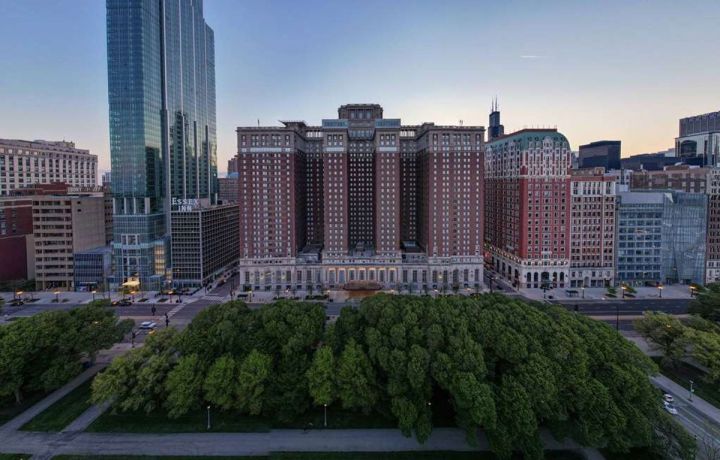
I’ve highlighted here a selection of panels potentially related to the eighteenth century; but please consult CAA’s website for additional possibilities, as well as directions for submitting proposals (also bear in mind that the linked listing does not include Complete Sessions or Composed Sessions (Individual submissions). –CH
112th Annual Conference of the College Art Association
Hilton Chicago, 14–17 February 2024
Proposal due by 31 August 2023
CAA’s 112th annual conference will be held 14–17 February 2024 at the Chicago Hilton. Most sessions will be held in person, and some will be convened virtually. The full conference schedule will be posted in early October 2023.
All sessions listed below are in-person, unless otherwise noted.
◊ ◊ ◊ ◊ ◊
‘La main outillée attaque. Elle a le geste hostile’: The Notion of Violence in Printmaking, Association of Print Scholars
Chairs: Anastasia Belyaeva (University of Geneva) and Roman Grigoryev (Hebrew University at Jerusalem)
This panel seeks to investigate the brutality of the printmaking process. Techniques such as engraving, drypoint, or woodcut, imply a battle with the matter by altering the matrix with sharp tools. Chemical processes in etching entail the danger of explosions and burns. Making changes on a metal plate requires burnishing out and leveling with a hammer. Pressure is required to drag a squeegee when making a screenprint. Force is required to manipulate a press. The very terminology of printmaking is aggressive: plates cut, scratched, impressions pulled, matrices cancelled and destroyed. This physical intensity on the edge of violence affects the working process and the work. Rembrandt’s The Three Crosses, for example, embodies both the aggressive treatment of the plate and the atmosphere of the Golgotha events. Or, Gaston Blachard’s analysis of Albert Flocon’s engravings led to his theory of printmaking as “combat anthropocosmique.” Taller de Gráfica Popular’s trademark of hands cutting a matrix with knifes refers both to their preference for linocut and woodcut techniques and the group’s self-representation as armed fighters. The panel invites papers that examine the impact that the brutality of printmaking methods have on the artists, the aesthetics, and the poetics, and on their perception by the public and scholars. We welcome papers studying the connection between violence and printmaking across all cultures and periods, and across a variety of approaches, including, but not limited to, material, conceptual, and methodological, both through a theoretical lens and through the lens of the creative practice.
◊ ◊ ◊ ◊ ◊
‘Women Artists?’ The Future of Art History and Gender, Historians of Eighteenth-Century Art and Architecture
Chair: Sarah Elisabeth Lund (Harvard University)
In 2022, Dobbs v. Jackson overturned the right to abortion, undermining bodily autonomy and privacy. Reproductive care has come continually under attack, as has the rights of free speech and healthcare of homosexual and transgender people. As black feminist and queer scholarship has shown, studies of gender must always be intersectional. How do discourses of intersectionality, sexuality, eroticism, and bodily autonomy shape our understanding of the nexus of art and gender? The long eighteenth century has been a key arena in the historiography of feminist art history, studies of gender, and research on women artists. This panel aims to ask a following question: “Why study ‘women artists’?” What are the productivities and shortcomings of a term like ‘women artists’ in 2024, and what is the future of art history and gender? This panel invites papers that explore the stakes, methodologies, limitations, and promises of research on gender and art history. Papers could focus on new approaches to study of (an) individual artist(s), analysis of images that complicate gender binaries, the gendering of materials, investigations of masculinity or femininity, concepts of the queer and queering, or a take a historiographical approach, amongst others. This panel welcomes papers that nuance gender as an identity, theoretical category, and methodological approach. The format of the panel will consist of three or four 15-minute presentations followed by Q&A that I hope will provoke a robust discussion. Kindly email sarahlund@g.harvard.edu with any questions.
◊ ◊ ◊ ◊ ◊
A Critical Globality: Transculturation and Potential Histories of Art (virtual session)
Chairs: Karin J. Zitzewitz (University of Maryland) and Birgit Hopfener
In Can Art History be Made Global? Meditations from the Periphery (2023), Monica Juneja argues that an understanding of “global art” as universally constituted through unbounded global exchanges and circulation processes “threatens to foreclose more nuanced explorations of the cultural field.” She advocates instead for “a critical globality” that can “empower a rethinking of the global in the domain of art, and its theorization as a new ‘cosmopolitics of resistance’, as a resource for countering the logic of neo-liberal capital and neo-nationalist cultural politics.” For Juneja, the keystone concept of transculturation grounds an art history not reliant on fixed frameworks, which instead examines histories of transcultural encounters and negotiations and accounts for complex structures of knowledge and power. Juneja intervenes equally decisively in art historiographical debates in Germany and those engaged with the Global South, by drawing on literatures from the early modern period to the present, particularly in her field of South Asian art. She ultimately seeks a “potential” art history, which she describes “as a way of bringing unasked questions about the past, suppressed or elided possibilities to the forefront of art-historical narratives.” This panel solicits papers that engage Juneja’s thought and/or explore the potentialities of transculturation as concept and method. Of particular interest are challenges to naturalized disciplinary assumptions and practices, to the discipline’s reliance upon national histories, to understandings of the global as an effect of global capitalism, to models of center and periphery, and to cultural or ethnic essentialisms.
◊ ◊ ◊ ◊ ◊
A Gestural Turn
Chair: Denise A. Baxter (University of North Texas)
In 2019 the Anti-Defamation League’s added to its Hate on DisplayTM Hate Symbols Database a hand gesture “in which the thumb and index finger touch while the other fingers of the hand are held outstretched.”[1] Having historically broadly communicated assent or ‘okay’, the gesture had recently been appropriated by white supremacists to communicate ‘white power’. What had previously been a clearly communicated embodied symbol had become contextually disrupted. Recognizing that the readability of gestures is temporally and geographically situated and may be specific to cultural or social groups, this session seeks papers that variously investigate represented gestural expressions. Considerations of period gesture, relationships between gesture, dress, and etiquette, or reflections on the relationship between displayed bodily comportment and subjectivity are equally welcome. How, what, and to whom does the tilt of a head, the manipulation of an object or aspect of dress, or the extension of a leg communicate? This session equally welcomes papers that explore these questions from the perspectives of archaeology, anthropology, art history, or performance art. [1] “Okay Hand Gesture,” ADL’s Hate on DisplayTM Hate Symbols Database, accessed April 24, 2023, https://www.adl.org/resources/hate-symbol/okay-hand-gesture.
◊ ◊ ◊ ◊ ◊
Activating Academic Art Museum and Gallery Relationships: Art Objects and Experiences in Institutional Collaborations, Museum Committee
Chairs: Monica Andrews (Harvard University Graduate School of Education) and Rex A. Koontz (University of Houston)
This session seeks to explore examples of deep collaborations between academic art museums & galleries and the audiences which they serve and engage. We seek case studies focusing on museum collaboration with one of three groups (universities, local communities, or creatives) that demonstrate the breadth of opportunities for academic art museums and galleries to further engage with campus and public audiences or stakeholders. Our goal is to cultivate a larger community discourse around the ways museums work together with other entities to broaden access to art historical studies and museology and serve as sites for interdisciplinary collaboration and exchange. To highlight multiple models and deepen the conversation, this session will use the round-table format where contributors offer brief 5-to-10-minute case study presentations, followed by a discussion and Q&A session with the other members of the round table and the audience. Case studies that explore collaboration as an opportunity for learning and training for the next generation of scholars/museum professionals, for use of collections and exhibitions in university pedagogy, or for rural/urban partnerships are particularly of interest to the Museum Committee.
Please note that this session will be accompanied by a workshop with the session chairs and presenters to further discuss and explore best practices and logistical considerations involved in collaborative planning processes.
◊ ◊ ◊ ◊ ◊
Art Collections of Academies of Sciences
Chair: Viktor Oliver Lorincz (Art Collection of the Hungarian Academy of Sciences)
While collections of academies of arts are rather well studied, less consciously, academies of sciences established art collections as well comprising portraits of the founders and members, emblems, allegories, collections bequeathed by former members, and also buildings with interior and exterior decoration. Some scientific collections may have artistic value as well. Sometimes belonging to the library of the academy, or to another organizational unit, these collections are less institutionalized and less studied. The Hungarian Academy of Sciences will celebrate its bicentenary in 2025 but the Art Collection of the Academy was founded only 30 years ago. Even if the Budapest headquarter inaugurated in 1865 already came with a huge exhibition area by Friedrich August Stüler, who gained experience on museum buildings (Alte Nationalgalerie and Neues Museum in Berlin, and Nationalmuseum in Stockholm). Shortly after the foundation of the Academy, Friedrich von Amerling painted the portrait of the founder, and Johann Nepomuk Ender finished the emblem or allegory of the Academy itself. On the occasion of the anniversaries, this panel seeks contributions on similar art collections of academies of sciences, including portrait galleries, emblems and other symbols, representations of the academies, internal and external decoration of the buildings including e.g. the allegories of sciences. Recently, scientific objects, instruments and collections with aesthetic or historical value also have been added to our collection, and we also welcome submissions dealing with similar special cases.
◊ ◊ ◊ ◊ ◊
Atlantic Slavery and the Arts
Chairs: Ana Lucia Araujo (Howard University) and Inês Barreiros (Universidade Nova de Lisboa)
Art historians, curators, and artists have demonstrated an increasing interest in the history of slavery and the Atlantic slave trade. This recent attention is motivated by the growing field of slavery studies and the protests challenging the ways these two human atrocities are memorialized in societies where slavery existed. This trend also responds to the recent developments in the discipline of art history in which European painting and sculpture have been overrepresented in scholarship. Considered the greatest forms of art, paintings and sculpture rarely represented enslaved peoples and when they did, bondspeople were frequently portrayed in submissive positions. More often, enslaved peoples were depicted in mediums considered minor arts such engravings and cartes-de-visite that neither deserved to be studied by art historians nor should occupy a visible place in art museums. But this landscape has changed. Artists such as Romuald Hazoumé, Grada Kilomba, Kara Walker, Rosana Paulino, Nona Faustine, Charles Fréger, and Jota Mombaça have been addressing slavery in their works. Curators have also embraced this vibrant production in exhibitions such as Afro-Atlantic Histories (Museu de Arte de São Paulo, 2018) that traveled to Washington DC, Houston and Los Angeles, and Slavery (Rijksmuseum, 2021). Likewise, museums such as the National Gallery in London started to gradually expose their own ties to transatlantic slavery. Drawing on this new dynamic scholarship, artworks, and exhibitions, this panel invites submissions focusing on visual representations and artworks engaging histories of slavery, as well as curatorial projects and museographies addressing slavery and the slave trade.
◊ ◊ ◊ ◊ ◊
Building a Legacy: Catherine Asher’s Boundary-Crossing Scholarship Remembered, American Council for Southern Asian Art
Chairs: Rebecca M. Brown (Johns Hopkins University) and Deborah S. Hutton (The College of New Jersey)
To honor the legacy of Professor Catherine E.B. Asher (1946–2023), we invite short engagements with a single object, building, or text that unfold questions of central concern in Asher’s own work. Asher published transformative interventions into the way we think about histories of inter- and cross-sectarian architectural collaboration and patronage, particularly focused on the Mughal era, but extending into the present. Her intellectual probity allowed us all to re-think spaces of Hindu and Jain temples, mosques, Sufi shrines, tombs, and chattris, mining their spatial forms, their decorative and inscriptional programs, and their patronage histories to find evidence of dynamic conversations across artificially constructed disciplinary boundaries. She sought out sites and works at the margins of the canon, sponsored by sub-imperial patrons, hidden behind nondescript façades, or sited in remote rural areas, and enabled us to see those patrons, works, and sites as also central to the retelling of South Asia’s art and architectural history. She also committed herself to gathering archival material for use by Indian researchers, and her lifelong engagement with questions of heritage and preservation has become particularly poignant in the face of the erasure of Mughal history in India’s own educational system. We welcome proposals for 6-minute presentations on an individual work, inclusive of all media, monuments, texts, and archives. Presenters may focus on South Asia or the wider Islamic world; we welcome proposals from artists as well as scholars. Collaborative and creative submissions also welcome. Please submit a title and 50–100 word abstract.
◊ ◊ ◊ ◊ ◊
Center and Periphery?: Mapping a Future for Research in Netherlandish Art, Historians of Netherlandish Art
Chairs: Stephanie Dickey (Queen’s University) and Suzanne van de Meerendonk (Queen’s University)
In recent years, academic scholarship on Netherlandish art has increasingly embraced decolonial and intersectional approaches to the study of visual culture. Meanwhile, museums continue to mount exhibitions and sponsor technical research focused around well-known artists such as Pieter Bruegel, Rubens, Rembrandt, and Vermeer. Easel painting remains the crowd-pleasing focal point of most large-scale art exhibitions even as new research illuminates alternative media ranging from glass engraving to textiles. Efforts to reinscribe those previously excluded from the ‘canon’, such as women artists, offer promise but must reckon with the problematics of canonicity itself. This session seeks papers that model a productive synthesis or dialogue between these trends, mapping pathways for future inquiry that reconcile divergent goals and prepare today’s emerging scholars for careers both within and beyond academe. Papers might situate works by familiar artists in unfamiliar terrain, for instance by examining them in relation to global trade, material culture, or through an intersectional lens. Others may offer critiques of the ‘center and periphery’ dichotomy by foregrounding historically marginalized topics and makers against the background of canonical art production. Analyses of innovative museum projects (recent and future) are also welcome, as is a frank assessment of the continuing value of connoisseurship as practice and methodology. Proposals from early-stage scholars are especially welcome.
◊ ◊ ◊ ◊ ◊
Contested Art Histories and the Archive in Britain and the British Empire, Historians of British Art
Chairs: Yuthika Sharma (Northwestern University) and Holly Shaffer (Brown University)
Art histories are shaped by the archives on which they are based; this panel asks us to question the history of British Art as a field as well as how the stories within it are told through or against archives. It asks for new methodologies and approaches that engage with and destabilize British archival histories to recover the agency of non-dominant artistic forms and ideas in shaping notions of British art. Are there subjugated art historical knowledges that emerged in relation to or in contestation with dominant archival narratives of individuals and institutions in Britain and the British colonial world, such as in relation to enslavement, class, ethnicity, gender, religion, materials, environments? How might they reveal the importance of ritualistic, performative, multilingual, multi-sensorial, and non-textual ways of archival thinking that informed perceptions of British art? At the same time as the panel seeks papers that reveal varied types of archival histories from diverse regions, the panel also calls for problematizing the archive’s canonical art histories that privileged a particular view of art over subaltern ways of knowing and creating art. We encourage participants to engage with new ways of thinking and conceptualizing the art historical archive as both material and imagined history that can question and reconfigure notions of British art during the age of empire.
◊ ◊ ◊ ◊ ◊
Decentering the North Atlantic in Global Discussions of Race: From Alejandro Malaspina to Lorgia García Peña and the Iberian/Ibero-American Experience, Society for Iberian Global Art
Chair: Ray Hernández-Durán (University of New Mexico)
Historian Jorge Cañizares-Esguerra recently stated, “neoclassical German theories of race did not gain any purchase in Spain…We need to go back to Malaspina’s own epistemological warning, expressed in his political axioms about America: We should quit applying northern-European models to the interpretation of stubbornly unyielding realities.” The realities he speaks of partly concern how difference was perceived, understood, and represented in the Iberian and Ibero-American world(s), where ideas about race developed along different lines than those upon which the theoretical frameworks dominating scholarly conversations today are based, most of which privilege a north Atlantic, primarily anglophone, perspective. This panel will feature new research that examines the visual and material record with an eye to an exploration of how questions of race, ethnicity, etc. unfolded in the Iberian global context, which included, Spain/Portugal, their imperial territories from the West/Southwest U.S. down through South America, including the Caribbean, the Philippines, and regions of Africa. Given the geographic location and history of the Iberian Peninsula, processes of ethnic and racial identification took on a different form than elsewhere in Europe. What were those differences and how did they shape peninsular racial formations? How did/do such ideas play out in the Americas? How were these racial dynamics registered in social practice and in visual or material culture? Papers could examine themes of historical peninsular migrations, feudal social structure, church and religion, royal and/or viceregal policy, imperial geographies, missionary activities, African and Indigenous American slavery, global commerce, medical/scientific developments, miscegenation, or modern national racial frameworks.
◊ ◊ ◊ ◊ ◊
Disaster! Trouble in Eighteenth-Century Art, American Society for Eighteenth-Century Studies
Chair: Monica Anke Hahn
In 1748 François-Vincent Toussaint advised the readers of his Les Mœrs… “Affect not an air of content before an afflicted person, who is lamenting over his disasters or losses. You may grieve in private for your own misfortunes: but do not go to fatigue, with your sad lamentations.” The long eighteenth century was rife with lamentable events, both big and small. The global population reckoned with violent rebellions, inter- and intra-national armed conflicts, natural disasters, shipwrecks, epidemics, fires. Problems on a more personal or minor scale could cause big trouble as well: epistolary miscommunication, marital infidelity, business conflict, illness, or household tension, to name a few. This panel seeks papers that examine the ways in which artists depicted or reflected calamities large and small in the global eighteenth century, and contributors who think capaciously about the concept of disaster, considering a broad range of media: painting, sculpture, architecture, decorative arts, printmaking, fiber arts. Especially encouraged are projects with interdisciplinary approaches, and those that consider wide geographical, social, and racial contexts. Proposals from scholars in and outside of academia, and at any stage in their program or career, and artists and curators who have a perspective on the relationship between art and disaster are welcome.
◊ ◊ ◊ ◊ ◊
Embedded Materiality: Decorative Inlay in Asian Lacquer
Chair: Helen Glaister
Lacquer has long been valued for its decorative sheen and glossy surface which elevated the status of objects, their functionality and aesthetic appeal across Asia and beyond, to the markets of Europe and the colonial world. While historical studies have focussed on the surface properties of lacquer, this panel seeks papers which explore the role of inlay—in shell, silver and gold wirework, coral, and other natural materials—in transmitting design innovations throughout Asia, reflecting patterns of intraregional trade, the movement of natural resources and the role of lacquer as a vehicle for design transfer. The materiality of inlaid lacquer, frequently incorporating precious and at times exotic materials, spoke of access to a diverse array of natural resources on land and sea, procured through a complex web of trade and diplomacy. As distinctive regional styles and specialisms emerged, so too did sophisticated methods of manufacture which drew upon long established and ancient traditions. Decorative themes and design compositions responded to and reflected contemporary trends in the pictorial arts, printing and book culture as well as ornamental patterns and motifs found in textiles, decorative carvings and metalwork, highlighting the intermediality of such objects. Luxury items were produced not only for elite use but can be found in Buddhist contexts, connecting religious communities and practise throughout the region. This panel welcomes papers which interrogate the role of inlaid lacquer from a range of interdisciplinary approaches. Proposals which emphasise inter-Asian connections are particularly welcome.
◊ ◊ ◊ ◊ ◊
Fashion: Tissue, Textile, Toile
Chairs: Leah Durner (Leah Durner Studio) and Jorella Andrews
“Where are we to put the limit between the body and the world since the world is flesh?” Maurice Merleau-Ponty in The Visible and the Invisible
Tissue is a word used for both the flesh of the human body and for cloth—the stuff in closest daily contact with us, touching, protecting, and adorning our bodies. The conceptual, linguistic, and material intertwining of the human body with fashion and textiles in all their layers will be the subject of this panel. Textiles are made by the action of human beings and then fabricated further into fashion—from ‘high’ to ‘low’—into a substrate for paintings onto which the image is applied and into tapestries in which the image and the weave are totally integrated. Toile (from the Latin ‘tela’ web and also ‘toil’) is the final stage before a garment goes into production—serving, in effect, as the garment’s sculptural cartoon—and also refers to painting on canvas huile sure toile. Human action—fashioning, making, and artifice—is a mark of the highest level of value and artistry in the highly skilled hand-sewing of haute couture, the hand-madeness of painting, the weaving of tapestries, and more. We invite panel participants to address fashion: tissue, textile toile and the wide-ranging, multi-layered relationship between the materiality and action of the human body, the linguistic overlapping of words referring to both body and fabric, and the materiality and making of fashion and art.
◊ ◊ ◊ ◊ ◊
Generalist Pedagogies: Strategies for Teaching beyond Specialization
Chairs: Kristen Carter (Florida Southern College) and Marisa C. Sanchez (Lycoming College)
With fewer tenure lines, dwindling funding, and shrinking departments, more educators are being asked to cover many bases and teach classes beyond their immediate specializations. This panel seeks to inspire discussion—and new perspectives and strategies—on generalist teaching. How might classes, assignments, and advising incorporate different approaches and skills that cross disciplinary, geographic, material, or temporal lines while still maintaining socio-political, historical, and theoretical specificity? How can educators foster more global, inclusive, and responsible content and methodologies despite relative—or initial—unfamiliarity with a certain topic, medium, or field? What are the values and potential pitfalls of generalist teaching, especially in view of disciplinary shifts away from nation-based, chronological, and/or canonical models of study? What should a generalist curriculum mean and look like, what should it offer, and how can we better equip students and educators for this new reality? This panel welcomes proposals from graduate students, artists, and educators across various fields, including art history, design, studio, and museum studies. It also welcomes perspectives, experiences, and insights from both junior and senior faculty across all types of institutions (SLAC, community, public, and otherwise).
◊ ◊ ◊ ◊ ◊
Hand and Glove: Art Market Studies and the History of Collecting, Society for the History of Collecting / The International Art Market Studies Association
Chairs: Blair Asbury Brooks and Natasha Degen
The Society of the History of Collecting launched in 2015; The International Art Market Studies Association followed a year later. The founding of both organizations, and their rapid growth since, evidences new scholarly interest in collecting, the art market, institutional histories, and the circulation and exchange of art more generally. Yet, despite their many points of intersection, the two subfields remain distinct. Hand and Glove explores the self-understanding of each subfield, their differences in subject matter and approach, as well as areas of overlap between the two. Relevant papers include those on Art Market Studies that have been influenced by the History of Collecting (and vice versa); those that illuminate the methodological differences between the two subfields (from quantitative or data-driven approaches to connoisseurship and art historical contextualization); those that examine gray areas (such as dealers-as-collectors or collectors’ art market influence); and those that discuss the variety of forms that research on collecting and the art market has taken, including recent exhibitions.
◊ ◊ ◊ ◊ ◊
Miniature Designs and Worldly Simulations: Questions of Scale in Early Modern Arts
Chairs: Wenjie Su (Princeton University) and Yizhou Wang
Amongst the growing scholarship on the global circulation and appropriation of early modern arts, the creative manipulation of sizes and scales is one absorbing visual dimension that has received little attention. This session proposes to chart a connected visual sensation centering around miniaturization. From netsuke to folding fans, snuff bottles to pocket watches, a diverse range of small-sized objects were transformed into elaborately crafted luxuries and desirable collectibles across the Eurasian sphere. The global export lives of these miniature arts often departed from the usages and implications in their original cultural contexts. In late Ming China, for example, folding fans functioned as a delicate site where courtesans transformed their self-portraits and sensuality into objects of intimacy ready for public gazes. Such strong connection between miniature portraiture and female subjects’ self-fashioning also resonated with cases in early modern Europe and beyond. Meanwhile, monumental structures from around the globe—ranging from the Church of the Holy Sepulcher, Chinese pagodas, to Greco-Roman ruins—were similarly reimagined on a miniature scale and collected as not only representations but also simulations of cultural ideas. These are a few examples showcasing how miniature designs might illuminate global networks of novel technologies and contested commodities, the transforming practices of privacy and intimacy, and transcultural visual simulations. By inviting papers that bring to light more objects and scenarios exemplifying thoughtful reinventions of scales, this session explores how miniature designs encompassed new meanings and mentalities that emerged in the rapidly transforming global dynamics of the early modern period.
◊ ◊ ◊ ◊ ◊
Open Session for Emerging Scholars: Latin American and Latinx Arts, Visual Cultures, and Material Cultures, Association for Latin American Art
Chairs: Gabriela Germana and Savannah Esquivel (University of California Riverside)
The aim of the ALAA-sponsored open session is to provide a platform at the annual conference to highlight work produced by advanced graduate students and recent PhDs who concentrate on the histories of Latin American and Latinx arts and/or visual and material cultures. Papers may focus on any region, period, or theme related to the Latin American and Latinx experience, including pre-Hispanic/Ancient American art, colonial/viceregal art, the art of the long nineteenth century, modern art, and contemporary art, in any of its forms and expressive manifestations from what is today Latin America, the Caribbean, and the U.S. In reviewing submissions and selecting the papers for the session, the co-chairs will be looking for strong proposals that cover a range of subjects across each of the noted areas. Co-chairs encourage papers that address issues related to underrepresented genders, ethnic groups, and social classes.
◊ ◊ ◊ ◊ ◊
Remedy and Remediation in Chinese Art
Chairs: Quincy Ngan (Yale University) and Aurelia Campbell
Jadeite carved in the shape of a bronze vessel, an ink rubbing of a stele preserving remarkable calligraphy, and a handscroll depicting craggy scholar’s rocks in lifelike detail. What these three instances have in common is remediation, or using one medium to represent a medially different art. Considering the linguistic root of the word, “remediation” is also a “remedy” for counteracting or eliminating the limitation of a medium. While a robe dyed with safflower will quickly lose its color due to sun exposure, a painter can use cinnabar, thanks to its lightfastness, to remediate and capture the allure of the scarlet textile. When writing out a poem, calligraphers employ the visual form and the semantic meaning of words to better express themselves, demonstrating the power of “imagetext.” To remedy the emperor-patron’s desire to convey limitless wealth and opulence, interior furnishings of tropical hardwoods, lacquer, mother-of-pearl, and marble are represented in an illusionistic manner on the imperial palace walls. In this case, pictorial illusion circumvents a material shortcoming in that the actual furniture is much more costly than painted representations of it. The aesthetics of these remedial practices are as much transmedial as political. They evince the visual and material intrigues of simulacra and call up the dictum “medium is the message.” We welcome papers that seek new understanding of the historical contexts, theoretical complexity, and material dimension of remediation in any period of Chinese art.
◊ ◊ ◊ ◊ ◊
Slavery and the Architecture of the United States
Chair: Rachel E. Stephens
Michele Obama’s declaration at the 2016 Democratic National Convention that, “I wake up every morning in a house that was built by slaves,” was a watershed moment in American history. From a national platform, her statement forced widespread consideration about the origins of the US built environment. For many African Americans however, this was not new information. Speaking of the central role of African Americans in the building of the country, AME Bishop Richard Allen declared in 1829 that, “we have enriched [America] with our blood and tears.” Drawing on Allen’s declaration, this session seeks to address the following simple question: In what ways did enslaved people help build the United States? Further, how have enslaved people been omitted from consideration of the US built environment, and how can architectural histories provide due credit? What does the archival record bear out regarding this history? This session invites papers that consider the role of enslaved people in the architecture of the United States (broadly conceived). In an effort to expand inclusive scholarship, this session seeks papers that have researched and identified the role of enslaved people in building projects. Studies that shed light on the origins of particular buildings, geographies, or city infrastructures are welcomed.
◊ ◊ ◊ ◊ ◊
The Art of Magic in the Afro-Iberian Atlantic World, 1400–Present
Chairs: Sophia Kitlinski (Yale University) and Nathalie Miraval
This panel explores the expressive cultures of magical practices in the Afro-Iberian Atlantic. Across time and space, institutions claiming moral authority—from the Inquisition to Central African colonial missions to contemporary police bureaus—have targeted magic for suppression. While often dismissed as superstitious, fraudulent, and fetishistic, magical practices remained central to the spiritual lives of millions from La Paz to Luanda. Its performances harnessed the heritage of diverse aesthetic traditions toward dynamic new ends; its materials served as spaces of correlation for trans-Atlantic systems of belief. And its practitioners continue to attract individuals from different racial, ethnic, and social backgrounds—a testament to magic’s enduring efficacy.
By interrogating the expressive dimensions of magic, this panel seeks to emphasize the fluid ontological nature of images, materials, rituals, and forms. Under the stewardship of African diasporic spiritual practitioners, images became relics, as occurred with a watercolor of Saint Martha in New Spain. Drawn seals, transcribed in trial records, summoned ancestors in Cuba. Meanwhile, in Central Africa, figures and vessels called minkisi authorized pacts between humans and spiritual forces. The panel uses these and other magical practices as a means to reframe art historical inquiries into the nature of Afro-Atlantic images and objects. What role do aesthetics play in magical practices? How do we contend with the plasticity of images and objects, and their resulting social and cultural meanings? How are images, objects, and materials invested with spiritual power? In taking magic seriously, this panel centers African diasporic epistemologies and experiences in the Iberian Atlantic.
◊ ◊ ◊ ◊ ◊
The Material Cultures of Landscape
Chairs: Manon Gaudet and Vanessa Nicholas (Concordia University)
In the past thirty years, numerous art historians have demonstrated that the North American landscape painting tradition projects Euro-American economic, epistemological, and cultural ideals onto Indigenous land, justifying territorial expansion and fostering national identities. Resource extraction has also become a topic of study as scholars trace the lifecycles of objects like silver soup tureens, taking an interest in the labor and raw materials developed into finished products. This panel seeks to bring together these parallel tracks, inviting papers that consider representations of North American land and landscapes beyond the picture plane and within the broader realm of material culture studies. We hope to receive papers that examine how settler colonial land relations are constituted, contested, and/or complicated by this object category. In thinking through the settler colonial and ecological dimensions of design and material culture, some key questions may include: How do settler colonial land relations figure on a printed textile, ceramic plate, chair, or quilt? How does the dramatic vista manifest in the small, the daily, and the portable? How does the notion of landscape shift or sediment in objects made for intimate use within the home? While the historical landscape painting tradition is largely the purview of white men, we hope that considering landscape more broadly as a cultural resource will invite new objects, narratives, and questions pertaining to race and gender. By bringing two revisionist art histories into dialogue with one another, this panel will consider the intersectionality of land, power, home, labor, and looking.
◊ ◊ ◊ ◊ ◊
The Objects of Art History: Material Challenges to Canonical Histories, National Committee for History of Art
Chairs: Anne Collins Goodyear (Bowdoin College Museum of Art) and Richard Meyer (Stanford University)
Rooted in the study of objects, the history of art has long grappled with the resistance of objects to the imposition of taxonomies and hermeneutics. This session, developed by the National Committee for the History of Art (NCHA) in conversation with the upcoming theme of the 36th Comité International d’Histoire de l’Art (CIHA) World Congress, Matter/Materiality, invites proposals that explore how grappling with objects—through their physical attributes, assertive presence, or propensity to decay and disintegrate, absence, theft or appropriation—can exert pressure on the canonical histories that have controlled or excluded them and the power structures embedded in these narratives. How might decolonial, feminist, or queer methodologies provide new tools for restoring lost meanings that may inhere within material objects? Conceived in a moment when trends in consumption such as ‘fast fashion’, social media, and born-digital texts and images encourage disposability and dematerialization, this session invites panelists to consider the future of historical inquiry and the fragility of the objects, records, archives, and the very notions of “history” we are constructing and deconstructing today. Proposals are invited from artists, art historians, archivists, curators, and other visual arts professionals.
◊ ◊ ◊ ◊ ◊
The Transcultural Circulation of Illustrated Books, 1500–1950, Bibliographical Society of America
Chairs: Fletcher Coleman (University of Texas, Arlington) and Gillian Zhang (Museum of Fine Arts, Boston)
This panel will address illustrated books that originated in Eurasia during the early modern and modern periods. It will focus on those that have been translated, visually as well as textually, for a reading public in a different language community than that for which it was originally produced, whether elsewhere in Eurasia or overseas. We are especially interested in the illustrated book because of the essential role that images play in cross-cultural contact. This panel aims to pose a range of questions, such as how paratext and its interpretation changed when illustrated books were retrofitted for their new audiences. How were illustrations also transformed and adapted as texts were translated and reprinted? To answer these questions, this panel broadly explores the movement of books as well as the ways knowledge and technology travel during production, circulation, and consumption in a cross-cultural context. This panel takes illustrated books as its central subject, with the goal of rethinking the translation of language, images, and, most importantly, the translation of culture. Proposals from a range of book formats, literary genres, and geographic regions are welcome.
◊ ◊ ◊ ◊ ◊
Transnational Collecting: Objects Crossing Borders, Objects Transformed (virtual session)
Chair: Julie Codell (Arizona State University)
What happens to objects when they cross borders and enter collections located beyond the cultures or nations in which they were produced? Objects don’t have fixed meanings, and collectors are a vital source of redefinitions and revaluations of objects they collect. Collectors translate and appropriate objects to their cultures, personal tastes, social milieux and ideologies. Objects crossing borders challenge notions that works have autonomy or transcend time and place, eliciting important questions about collectors’ roles in valuation and signification. Walter Benjamin described collecting as “the most profound relation that one can have to things.” In his view, collectors hide behind objects, glorify them, fetishize them and confer on objects “only a fancier’s value, rather than use-value,” turning objects into art (Charles Baudelaire, 168). Such comments raise important questions that panelists may consider:
• Why do collectors seek artworks or objects from other cultures, nations or time periods?
• What do collectors know or imagine about objects’ original meanings or cultural worth?
• How do collectors appropriate objects, translating, de-contextualizing and re-contextualizing them in new personal, national, cultural and even historical contexts?
• What affect, or memories, or imaginings, or valuations, or narratives or de/re-contextualizations are part of collectors’ glorification or fetishization of objects?
• What might it mean for collectors to hide behind objects in their collections?
• How do collectors transform transnational objects from commodities into art for objects that cross spatial or temporal borders and thus undergo displacement, re-signification and new aesthetic and economic values in cross-cultural exchanges across time, space and cultures?
◊ ◊ ◊ ◊ ◊
Unsettling Methodologies of Indigenous Art History
Chair: Yvonne N. Tiger (University of Lethbridge) and Noah Mapes (Cornell University)
In the 2023 publication White Sight: Visual Politics and Practices of Whiteness, Nicholas Mirzoeff alludes to the field of art history as the study of representations of whiteness, a conglomeration of ideologies undergirded by colonial, imperial, and racial violences. Contrary to the dominating practices of such an art history, this panel aims to further conversations regarding the advancement of Indigenous art historical methodologies. Specifically inspired by the work of Scott Lauria Morgensen, “Unsettling Methodologies of Indigenous Art History” rests on the foundation that Indigenous methodologies galvanize the knowledges of sovereign, decolonized peoples while simultaneously unsettling the ontology of enduring coloniality. This panel will bring together art historians, curators, and artists focused on Indigeneity to critically engage the visual and material cultures of global Indigenous Peoples through communities’ respective cultures, values, knowledges, languages, stories, modes of governance, ceremonies, and beyond. The intent of this panel is to take a reflexive look at the hegemonic, colonial modes of art historical scholarship and to demonstrate ways of terminating coloniality through the process of Indigenization and the enactment of decolonial and anti-colonial practices of researching, writing about, and publishing on Indigenous art.
◊ ◊ ◊ ◊ ◊
What Did Women See? Gender and Viewing Experience in Early Modern Italy
Chair: Sabrina De Turk (University of Maine)
In their homes, churches, and neighborhoods women in early modern Italy were surrounded with a rich and diverse visual and material culture. Yet, apart from studies of women as collectors and patrons of the visual arts, until recently relatively little scholarly attention has been paid to their experience as viewers. How did women encounter, interpret, and engage with the objects around them, whether altarpieces, portraits, public sculpture, devotional objects, or decorative household goods? How were those viewing experiences shaped by gender roles and expectations for female behavior? How were they influenced by viewing circumstances, including socio-economic status, age, geography, or religious identity? How have our interpretations of early modern Italian art been limited by an assumption of a primarily male audience, particularly for works displayed in the public sphere? This session welcomes contributions that consider how our understanding of the visual and material culture of early modern Italy can be expanded by foregrounding women’s viewing experiences. These may include analysis of specific works and their known audiences as well as more speculative explorations of the gendered viewing experience in the context of early modern Italy. Contributors are encouraged to consider both publicly and privately displayed works of art, architecture, prints, and printed books, and objects of material culture, including textiles, ceramics, and furniture. Papers that consider marginalized perspectives including those of older, working, low-income, or foreign-born women are especially encouraged.
◊ ◊ ◊ ◊ ◊
Women and Diplomatic Art
Chair: Silvia Tita (Michigan State University)
This panel intends to explore the multifaceted ways in which women have engaged with diplomatic art in various geographical and temporal contexts. As politics has been for long a domain dominated by men, women appeared publicly rather exceptionally as leaders or influencers. Although relegated to the margins in terms of visibility, women played crucial roles on the political arena in diverse capacities via diplomatic art. This panel seeks papers that employ methodologies at the intersection of feminist, gender, and women studies, on the one hand, and diplomatic art and gift studies, on the other hand, in order to bring to light women as creators, agents, and recipients of diplomatic art. Such particular cases should illuminate on how women internalized and negotiated politics as well as societal rules regardless of prescriptive limitations that coordinated patriarchal societies. Considering traditional definitions of diplomatic art, questions about the necessity to amend them to address women’s nuanced contribution will be posed. This panel is open to all geographical areas and time periods.
◊ ◊ ◊ ◊ ◊
Wood: Medium Specificity in the Global Early Modern Period
Chairs: Geraldine Johnson (University of Oxford) and Tatiana String (University of North Carolina, Chapel Hill)
Wood is one of the most readily available of materials, deployed in objects of everyday use and sacred veneration, for public purposes and private aesthetic pleasure. The present session takes wood—as a ground for panel paintings, sculptures, and woodblocks; a matrix for household objects and architectural structures; a subject of collecting, conservation, and eco-criticism; and a symbolic referent and global commodity—as its central focus. More than half a century ago, Michael Baxandall’s The Limewood Sculptors of Renaissance Germany became a landmark publication on medium specificity. We welcome papers that expand the consideration of wood beyond Baxandall’s temporal, geographic, and genre boundaries. We invite contributions that explore a much wider range of objects, functions, makers, and beholders and works produced not only in European contexts, but globally, from the fourteenth to the seventeenth centuries in order to reconsider wood’s significance as a medium. We encourage submissions that investigate wooden objects in artistic theory and practice, their original reception and uses, as well as their later collection, conservation, and long-term sustainability. Whether a life-sized statue or diminutive figurine, a mask for public performances or furniture for private spaces, a base from which a broadsheet was printed or on which an image was painted, a carved utensil or supporting beam, an object that highlights the grain or renders the underlying material invisible—we are interested in the role played by wood’s physical and metaphysical qualities in the making and meanings of objects in the global early modern period.
Word & Image, July 2023
The eighteenth-century in the latest issue of Word & Image:
Word & Image: A Journal of Verbal / Visual Enquiry 39.2 (2023)
• Kristoffer Neville, “Fischer von Erlach and the Habsburg Imperial Historians,” pp. 111–33.
The Entwurff einer historischen Architectur (Outline of an Historical Architecture, 1721), by Johann Bernhard Fischer von Erlach, architect to the Austrian imperial court, is often seen as a milestone in the literature of architecture, and as the first comparative and universal history of architecture. In part because it has been studied primarily as a work of architectural history, rather than imperial history, it has become relatively unmoored from a large body of earlier and contemporary histories of the Habsburgs and the imperial house. These works cumulatively established a distinct historiographical tradition that informs the content and narrative of Fischer’s book and aligns it closely with a deeply ideological narrative in which a historical line leads directly from the Old Testament patriarchs through Greco-Roman rulers to the Holy Roman Emperors, and from Jerusalem and Rome to modern Vienna. To a substantial degree, this historiography, rather than a nascent architectural canon, determined the contents and presentation of the Entwurff.
• Emma Barker, “Woman in a Turban: Domenichino’s Sibyl, Staël’s Corinne, and the Image of Female Genius,” pp. 235–59.

Angelica Kauffmann, after Domenichino, Sibyl, ca. 1763, oil on canvas, 98 × 75 cm (Washington, DC: National Museum of Women in the Arts).
The heroine of Germaine de Staël’s Corinne, or Italy (1807) makes her first appearance in the novel “dressed like Domenichino’s Sibyl,” wearing an Indian shawl wound into a turban. The aim of this essay is to highlight the contribution that the tradition of Sibylline iconography made to the characterization of the heroine of Corinne by locating Staël in a long line of artists, writers, and patrons, particularly female ones, who adapted and appropriated this iconography for their own purposes over the previous two centuries. A crucial breakthrough was made in the early seventeenth century by Domenichino, who provided the prototype for later generations of artists by painting a freestanding picture of a generic (not, as often said, the Cumaean) Sibyl wearing a turban. Domenichino’s composition nevertheless remained exceptional in its insistence on the primacy of Sibylline inspiration, which helps to account for its role in Corinne as well as for its appeal to other early nineteenth-century writers. Staël’s direct predecessors included the artists Angelica Kauffman and Élisabeth-Louise Vigée Le Brun, both of whom portrayed female sitters in more or less Sibylline guise, but the most important was Emma Hamilton, from whose famous Attitudes Staël almost certainly derived the motif of the turban fashioned out of an Indian shawl. Staël herself adopted the turban as her characteristic headdress, as did other literary and artistic women after her; its great advantage lay in the way it enabled them to lay claim to Sibylline authority whilst also disavowing any such intent.
Conference | Favorite Palace: Interior Decoration and Collections

Johann Michael Ludwig Rohrer, Favorite Palace (Schloss Favorite), Rastatt (12 km north of Baden-Baden), 1710–30. Located near the primary residential palace at Rastatt, Schloss Favorite was created as a ‘porcelain palace’ for Margravine Sibylla Augusta and used mainly in the summer months for festivities including concerts and banquets. Schloss Favorite now houses the world’s largest collection of early Meissen porcelain.
◊ ◊ ◊ ◊ ◊
From the conference programme:
Favorite Palace: Interior Decoration and Collections
Schloss Favorite: Ausstattung und Sammlungen
In person and online, Residenzschloss Rastatt, 17–19 September 2023
Registration due by 28 August 2023
Favorite Palace in Rastatt, built between 1710 and 1729 by Margravine Sibylla Augusta of Baden-Baden (1675–1733), is the only almost unchanged Baroque ‘porcelain palace’ in Germany. This conference will present recent scientific findings on the history of the palace, its interior decoration, and its collections. A special focus will be on the chinoiserie furnishings, as well as on Asian and European ceramics. The conference aims to honor the ensemble created by the builder and collector, Sibylla Augusta, in the context of early 18th-century European art.
 There is no conference fee, but advanced registration is essential (by 28 August 2023). The conference will be translated by interpreters and streamed online in German and English. Please indicate when registering whether you would like to attend in person or online. You will receive the participation link as well as information on hotels and parking spaces after registration.
s u n d a y , 1 7 s e p t e m b e r 2 0 2 3
10.00–1.00 Guided tours of Favorite Palace (optional, by appointment)
1.15 Reception Desk Open
2.00 Welcome by Patricia Alberth (Geschäftsführerin der Staatlichen Schlösser und Gärten Baden-Württemberg) and Anton Schweizer (Kyushu University, Japan)
2.15 Section 1 | Chinoiseries in the Decoration and Festive Culture of Sibylla Augusta
Moderation: Anton Schweizer (Kyushu University)
• ‘Dan die Chinesisch und Japanische Kajser würden selber in vergnügteste Entzückung gesezet werden’: Zur Chinoiserie in der Favorite — Ulrike Grimm (Oberkonservatorin a. D., Karlsruhe)
• Die japanischen Textilappliken im Schlafzimmer des Erbprinzen Ludwig Georg: Kontext und Bedeutung — Anton Schweizer (Kyushu University, Japan)
• ‘China-Mode’ and Court Culture in Early 18th-Century Europe: Sibylla Augusta’s Chinese Banquet in Ettlingen in 1729 — Kristel Smentek (MIT, Cambridge, Massachusetts)
• ‘Admirable Abzeichnungen’: Herstellung, Verbreitung und Überlieferung der Stichserie zum Chinesischen Fest 1729 in Ettlingen von Johann Christian Leopold — Christian Katschmanowski (SSG)
5.45 Refreshments
7.30 Evening Lecture
• Zwischen Botschaft und Typologie: Die Bildprogramme der Decken, Wände und Textilien — Ulrike Seeger (Universität Stuttgart / Ludwig-Maximilians-Universität München)
m o n d a y , 1 8 s e p t e m b e r 2 0 2 3
8.30 Reception Desk Open
9.00 Section 2 | Porcelain and Stoneware from Asia and Europe
Moderation: Ulrike Grimm (Oberkonservatorin a. D., Karlsruhe)
• Asian Art in the Collections of the Sachsen-Lauenburg Family in the Context of Inventories from Other Collections in the Czech Lands — Filip Suchomel (Regional Gallery, Liberec / UMPRUM, Prague)
• The Redwares of Sibylla Augusta of Baden-Baden and Their Global Context — Errol Manners (E & H Manners Ltd., London)
• Eine Eremitage in Blau: Ostasiatisches Porzellan, Exotismus und Weltflucht à la Chine in Schloss Favorite — Stephan Graf von der Schulenburg (Museum für Angewandte Kunst, Frankfurt)
• Meissen Porcelain in Schloss Favorite: Revisiting and Rethinking a Legendary Collection — Maureen Cassidy-Geiger (Independent Scholar and Curator, New York)
12.45 Lunch Break
2.00 Section 3 | Special Equipment Pieces in Focus
Moderation: Petra Pechaček (SSG)
• Baden-badische ‘Masquera- und Comodianten Kleyder’: Die Kostümbilder als Ausdruck fürstlichen Ranges und wirtschaftlicher Leistungskraft — Hertha Schwarz (Freie Historikerin, München)
• Mixed media und eine Welt von Bedeutungen: Die textile Ausstattung von Schloss Favorite — Birgitt Borkopp-Restle (Universität Bern)
• Licht ins Dunkel: Der böhmische Kronleuchter aus dem Schlafzimmer des Erbprinzen Ludwig Georg — Käthe Klappenbach (Kustodin a. D., SPSG, Potsdam)
5.00 Guided tour of the palace church accompanied by organ music — Sigrid Gensichen and Jürgen Ochs
t u e s d a y , 1 9 s e p t e m b e r 2 0 2 3
8.30 Reception Desk Open
9.00 Section 4 | The Palace and Its Collections after Sibylla Augusta
Moderation und Einführung: Sandra Eberle (SSG)
• Produkte der kurbayerischen Verwandtschaft: Ein Porzellangarten zur Hochzeit Ludwig Georgs 1755 und eine Parforcejagd aus Terracotta — Katharina Hantschmann (Bayerisches Nationalmuseum München)
• Das Straßburger Fayence-Service aus Schloss Favorite, 1748–1753 — Jacques Bastian (Antiquités Bastian, Straßburg)
10.30 Wrap-up
11.45 Shuttle to Favorite Palace
12.00 Lunch Snack at Favorite Palace
1.00 Tours of Favorite Palace (guided by speakers)
New Book | The Turkish Boudoir of Marie-Antoinette and Joséphine
From Éditions d’art Monelle Hayot:
Vincent Cochet and Alexia Lebeurre, The Turkish Boudoir of Marie-Antoinette and Joséphine at Fontainebleau / Le Boudoir Turc de Marie-Antoinette et Joséphine à Fontainebleau (Saint-Rémy-en-l’Eau: Éditions d’art Monelle Hayot, 2023), 208 pages, ISBN: 979-1096561384 (English) / ISBN: 979-1096561407 (French), €43.
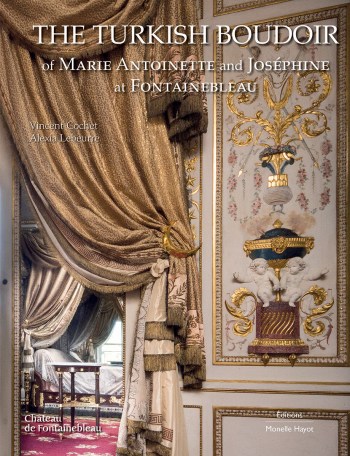 Within ten years, Marie-Antoinette ordered the achievement of two exquisite rooms in Fontainebleau: the Turkish Boudoir (1777) and the Silver Boudoir (1786). Two peaceful refuges allowing her to escape the laws of «Étiquette». When Joséphine became Empress, the craze for turqueries and chinoiseries, had not faded. Both a lover of Marie-Antoinette and of her style, she made hers the Turkish Boudoir emptied at the Revolution. She enhanced the luxury of the oriental atmosphere adding sumptuous and highly creative pieces of furniture by the finest artists of her time. Mahogany and gilt bronzes accompanied masterpieces of upholstery and curtains made of brocade, silk and gold. After a painstaking seven-year restoration completed in 2015, the graceful carved, painted, and gilded panelings of Marie Antoinette’s boudoir are once again the setting for Joséphine’s luxurious furniture in an environment of rewoven textiles.
Heritage curator Vincent Cochet devoted seven years to the restoration of the Turkish Boudoir. Alexia Lebeurre is Associate Professor in the History of Art Department at the Université Bordeaux Montaigne.
Exhibition | Seduction and Power

Now on view at Marly:
Séduction et Pouvoir: L’art de s’apprêter à la Cour
Musée du Domaine royal de Marly, 14 April — 27 August 2023
Curated by Anne Camilli and Karen Chastagnol
Une exposition consacrée à l’art du paraître aux 17e et 18e siècles.
Se vêtir et accessoiriser sa tenue révèle les usages sociaux et politiques des élites. Si l’usage de la parure et l’envie d’embellir le corps sont présents dans toutes les sociétés et à toutes les époques, il s’accompagne sous Louis XIV d’une véritable stratégie d’affirmation du pouvoir motivée par la centralisation politique. Le règne du Roi-Soleil se caractérise par un souci de l’apparence et de la représentation. L’accessoire, tout comme le vêtement, contribue à la nécessité de paraitre et de tenir son rang.
Qu’on les appelle ornements ou encore parures, les accessoires du vêtement, de la coiffure et de la beauté deviennent les outils d’une communication non verbale entre les individus et le lieu d’un investissement symbolique. Ces ornements et ces parures reflètent les courants de la mode mais témoignent également des valeurs et des préférences de la société française de l’époque.
 Chaque accessoire, chaque geste, chaque attitude répond à des normes, à des codes qui ne cessent d’évoluer attestant ainsi des changements de modes et de mœurs. Cette construction de l’apparence requiert de connaître les usages et les règles et de s’y conformer pour bénéficier de la faveur royale et attester de son identité sociale.
Aussi, cette culture du paraître s’accompagne d’une parfaite maîtrise de soi et des expressions du visage : fards, poudres, mouches et parfums concourent à une monotonie d’apparence. L’impératif de séduction s’inscrit dans un double mouvement : un mimétisme envers le roi et le pouvoir d’une part, et la nécessité de s’en affranchir pour se faire remarquer et mieux révéler son rang d’autre part. Le corps se pare alors de divers artifices : perruques, maquillage, bijoux, parfums, dentelles, et objets de poche et de galanterie. Les costumes sont complétés par différents atours : broderies, dentelles, rubans qui rivalisent de sophistication et de raffinement.
Objets luxueux, réalisés par des métiers d’art, ces accessoires subliment le vêtement, deviennent des objets de distinction et s’accompagnent pour certains d’une gestuelle propre qui révèle un langage codifié et marquent le corps modifiant la posture, le déplacement, la prestance du courtisan. Qu’elles soient rhétoriques ou esthétiques, ces armes de séduction servent l’esprit d’une société élitiste où se mêlent des enjeux amoureux, politiques et religieux.
L’exposition vous emmène à la découverte de ces objets qui participent à ce jeu de la séduction et du pouvoir à la cour. Éléments de la mise en scène du théâtre de la cour, les accessoires de mode, les produits de beauté et l’art du parfum révèlent les attentes des femmes et des hommes nobles tout au long des XVIIe et XVIIIe siècles. Le visiteur découvre les œuvres dans un parcours qui évoque de la tête au pied les différents objets auquel recourt le courtisan et reflète les évolutions de ces accessoires au cours des règnes successifs de Louis XIV, Louis XV et Louis XVI, période d’activité du château de Marly, instrument de la politique royale.
Anne Camilli and Karen Chastagnol, eds., with additional contributions by Alice Camus, Georgina Letourmy-Bordier, Grégory Maugain, and Corinne Thépaut-Cabasset, Séduction & Pouvoir: L’art de s’apprêter à la Cour (Fine éditions d’art, 2023), 104 pages, ISBN: 978-2382031179, €25.
Entre les règnes de Louis XIV et de Louis XVI, Versailles puis Paris se disputent le titre de capitale de la mode. Entre désir de séduction, affirmation du pouvoir et désir de signifier un statut social, les accessoires de mode et de beauté viennent appuyer sous l’Ancien Régime une nouvelle mise en scène de soi. Chaque parure, chaque geste, chaque attitude répond à des codes qui ne cessent d’évoluer et accompagnent ainsi les modes et les mœurs. Le corps est paré de divers artifices qui rivalisent d’audace et de distinction. Quels rôles jouent ces ornements dans le contexte de la cour ? L’exposition du Musée du Domaine royal de Marly retrace les usages de ces objets, de la tête aux pieds : coiffes, perruques, maquillage, parfums, ornements du vêtement, bijoux, objets de galanterie, chaussures.
s o m m a i r e
• Introduction — Être et paraître : Accessoires de mode, parures & ornements — Karen Chastagnol
• Boucles, dentelles, bonnets et édifices de la mode capillaire — Corinne Thépaut-Cabasset
• Mouche et rouge : Les attributs de la mode et de la beauté — Corinne Thépaut-Cabasset
• L’apparat olfactif du courtisan — Alice Camus
• Orner le vêtement et ses accessoires à la cour : Dentelles, broderies et boutons — Géraldine Bidault
• Le bijou et la montre pour briller à la cour — Anne Camilli et Grégory Maugain
• La galanterie de poche — Anne Camilli et Georgina Letourmy-Bordier
• Le soulier et ses parures — Anne Camilli
Annexes
Notices des œuvres exposées
Sources & bibliographie
Crédits photographiques
New Book | Jane Austen’s Wardrobe
From Yale UP:
Hilary Davidson, Jane Austen’s Wardrobe (New Haven: Yale University Press, 2023), 240 Pages, ISBN: 978-0300263602, $35.
 What did Jane Austen wear? Acclaimed dress historian and Austen expert Hilary Davidson reveals, for the first time, the wardrobe of one of the world’s most celebrated authors. Despite her acknowledged brilliance on the page, Jane Austen has all too often been accused of dowdiness in her appearance. Drawing on Austen’s 161 known letters, as well as her own surviving garments and accessories, this book assembles examples of the variety of clothes she would have possessed—from gowns and coats to shoes and undergarments—to tell a very different story. The Jane Austen Hilary Davidson discovers is alert to fashion trends but thrifty and eager to reuse and repurpose clothing. Her renowned irony and wit peppers her letters, describing clothes, shopping, and taste. Jane Austen’s Wardrobe offers the rare pleasure of a glimpse inside the closet of a stylish dresser and perpetually fascinating writer.
Hilary Davidson is associate professor and chair of MA Fashion and Textile Studies at the Fashion Institute of Technology, New York. She has curated, lectured, broadcast, and published extensively in her field and is author of Dress in the Age of Jane Austen: Regency Fashion.
2-Day Course | Reynolds and His Circle
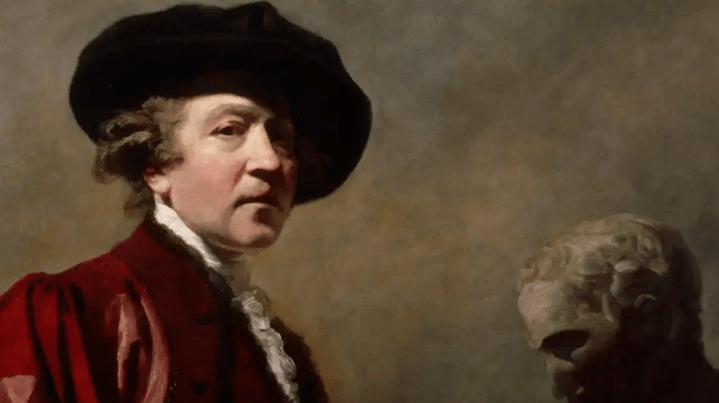
Joshua Reynolds, Self-Portrait of Sir Joshua Reynolds, PRA, detail, ca. 1780, oil on panel, 127 × 102 cm
(London: Royal Academy of Arts, 03/1394)
◊ ◊ ◊ ◊ ◊
This fall at the RA in London:
Reynolds and His Circle: A Weekend Course
Royal Academy of Arts, London, 30 September and 1 October 2023, 10.00–5.00 each day
2023 is the 300th anniversary of the birth of the Royal Academy’s first President, Sir Joshua Reynolds (1723–1792). This two-day art history weekend explores the life and work of one of Britain’s most important artists. The course offers participants an in-depth insight into Sir Joshua Reynolds and his work—via lectures, talks, and archive visits with leading art historians and experts.
The weekend will contextualise the many paintings and prints of Reynolds, looking at his work through various prisms: from the importance of portraiture and the rise of celebrity culture, to questions of Britishness and empire. We will explore what it meant to be Britain’s leading artist at the end of the eighteenth century and learn about his intrinsic role in the creation of the Royal Academy of Arts. The course will also address Reynolds’s artistic contemporaries and followers including Thomas Gainsborough, Angelica Kauffman, and Sir Thomas Lawrence. As well as providing a snapshot of the artistic life of eighteenth-century society, the course takes an object-based approach—looking at some of Reynolds’s most famous works in depth, along with a visit to the RA archive to see ephemera related to the artist and the founding of the RA.
No prior knowledge is required and debate and discussion are encouraged. The course fee of £420 includes light refreshments and a wine reception at the end of the first day.










 Enfilade
leave a comment