Call for Papers | Creating the Museum, 1600–2025
From ArtHist.net:
Creating the Museum: Exploring the Museum Impulse in Local, Regional, and National Contexts
Conference of the National Gallery and the Museums and Galleries History Group
London, 26–27 September 2025 (dates still to be confirmed)
Proposals due by 14 March 2025
While the birth of the concept of the museum has attracted lots of scholarly attention and the desire to create new museums is now a global phenomenon, the question of how individual museums, their collections, buildings, and personnel come into being has not been widely considered. As complex organisations, museums have been created through multifaceted sets of initiatives, practices, and activities—raising money, sourcing or commissioning buildings and storage, assembling, organising and interpreting collections, developing expertise, engaging communities, fulfilling a purpose which some groups were more able to prosecute than others. Various periods have seen the flourishing of local, regional, national museums, of large or smaller scale, and of different specialisms and audiences, with varying models of governance. Some passionately wished for museums ultimately stalled, and some proposed museums never quite appeared. Some museums were created for particular audiences, at particular moments, while others evolved from earlier forms of collecting; some required particular buildings in order to begin; some have taken up residence like hermit crabs in whichever spaces were available.
To develop our understanding of the reasons for creating museums and to coincide with the 200th anniversary of the creation of the National Gallery in London, we invite proposals for a conference hosted by the National Gallery and the Museums C Galleries History Group (MGHG). The conference will focus on why and how galleries and museums internationally/globally have emerged and evolved. It will explore the different ways in which museums and public art galleries come into existence and the impulses, rationales, and objectives for ‘creating’ museums, foregrounding the wide range and variety of museum creation and exploring core questions of purpose, meaning, and context, whilst also drawing attention to the specificity of the National Gallery, reflecting on the contexts for its founding impulses and exploring the future roles, purpose, and functions of (inter)national galleries.
We seek papers covering any aspect of museum creation between about 1600 and the present day, for any type of museum, anywhere in the world. Papers should be 15–20 minutes in length; we invite individual proposals as well as proposals for a panel of papers (maximum 4 papers for a panel).
Papers may respond to these questions:
• What impulses led to the creation of museums?
• Under what circumstances have completely new types of museum been created?
• What can museums that never quite came into being, or museums that came and went, tell us?
• What role do collections (if any) play in the creation of museums?
• What role do museum buildings play in acts of creating the museum, or how has the need for physical space of various kinds impacted on the creation of museums?
• What has it taken to create a museum from public funds such as local or national taxes?
• Which individuals have created museums, out of philanthropy, passion, memorialisation or other motivations, and how?
• Is the creation of museums distinctive by specialism (natural history, art gallery, social history, etc)?
• How has the orientation of museums towards particular audiences promoted museum creation in particular ways?
• How do museums’ links with other organisations such as libraries impact on their creation?
• Are there museums whose creation is inexplicable?
• How has the National Gallery positioned itself in relation to other London, UK, and international museums in the past?
• What are the aims and objectives, benefits and drawbacks of branch museums emerging from the ‘centre’ (e.g. VCA, Tate, Guggenheim)?
• How have partnerships developed and what have been the fruits of such partnerships in diverse areas of museum life including Research, Conservation, and Education/Learning?
• What are the funding models currently available which ensure openness and parity within the sector which are worth highlighting for future reference?
• Are there any historical or actual international collaborations which offer particularly positive models for current and future practice (e.g. ICOM)?
• How should an institution like the National Gallery relate to other institutions today?
• How and in what ways is a museum like the National Gallery representative of ‘national’ art?
Please send proposals (200–300 words) with an indication of affiliation and job title to contact@mghg.info by Friday, 14 March 2025. Successful proposals will be informed by 30 April 2025. We welcome proposals from researchers at all career stages. As the conference will be exclusively ‘in person’, please note that successful speakers will be responsible for their own expenses. We gratefully acknowledge the support of the Paul Mellon Centre for Studies in British Art.
New Book | The Revolutionary Self
From Norton:
Lynn Hunt, The Revolutionary Self: Social Change and the Emergence of the Modern Individual, 1770–1800 (New York: W. W. Norton & Company, 2025), 208 pages, ISBN: 978-1324079033, $35.
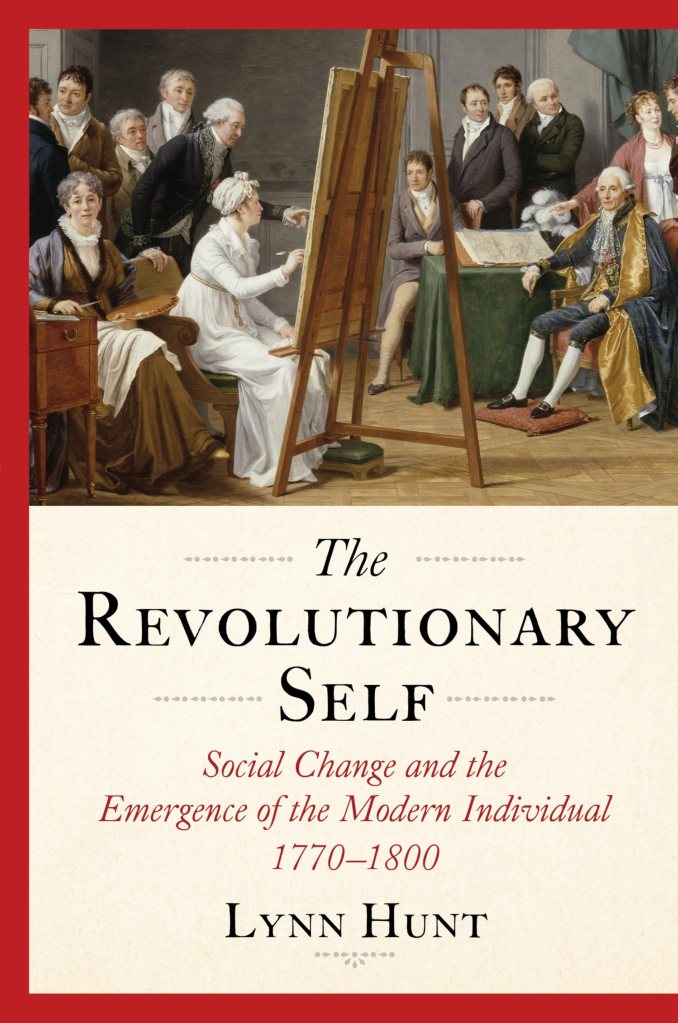
An illuminating exploration of the tensions between self and society in the age of revolutions.
The eighteenth century was a time of cultural friction: individuals began to assert greater independence and there was a new emphasis on social equality. In this surprising history, Lynn Hunt examines women’s expanding societal roles, such as using tea to facilitate conversation between the sexes in Britain. In France, women also pushed boundaries by becoming artists, and printmakers’ satiric takes on the elite gave the lower classes a chance to laugh at the upper classes and imagine the potential of political upheaval. Hunt also explores how promotion in French revolutionary armies was based on men’s singular capabilities, rather than noble blood, and how the invention of financial instruments such as life insurance and national debt related to a changing idea of national identity. Wide-ranging and thought-provoking, The Revolutionary Self is a fascinating exploration of the conflict between individualism and the group ties that continues to shape our lives today.
Lynn Hunt is Distinguished Research Professor at the University of California, Los Angeles. The author of numerous works, including Inventing Human Rights and Writing History in the Global Era and former president of the American Historical Association, she lives in Los Angeles.
c o n t e n t s
Introduction: How the Smallest Things Lead to Big Changes
1 Tea and How Women Became ‘Civilized’
2 Revolutionary Imagery and the Uncovering of Society
3 Art, Fashion, and One Woman’s Experience
4 Revolutionary Armies and the Strategies of War
5 Money, Self-Interest, and Making a Republic
Epilogue: Self Society and Equality
Acknowledgments
Notes
Index










 Enfilade
leave a comment