Exhibition | The Roman Drawings of José de Madrazo
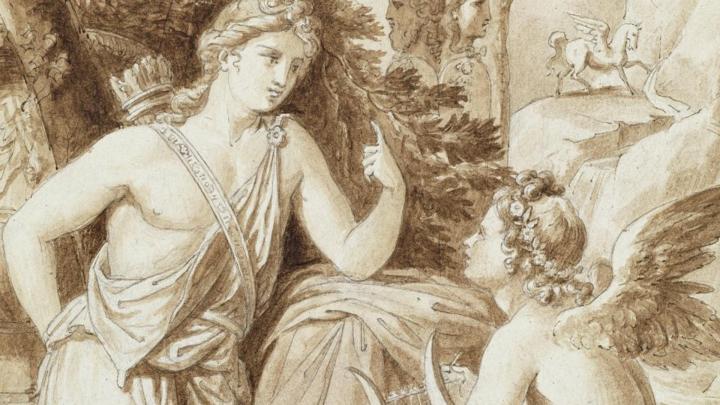
José de Madrazo y Agudo, The Dispute between Apollo and Cupid, detail, ca. 1812, pencil and grey-brown wash on wove paper, 29 × 22 cm
(Madrid: Prado, D006523)
◊ ◊ ◊ ◊ ◊
From press release for the exhibition:
Changing Forms: Myth & Metamorphosis in the Roman Drawings of José de Madrazo
Cambio de forma: Mito y metamorfosis en los dibujos romanos de José de Madrazo
Museo Nacional del Prado, Madrid, 10 March — 22 June 2025
Changing Forms: Myth and Metamorphosis in the Roman Drawings of José de Madrazo showcases the intriguing works of José de Madrazo y Agudo (1781–1859), the first artistic director of the Museo Nacional del Prado. The exhibition offers a unique glimpse into Madrazo’s fascination with classical mythology and its reflection of a turbulent era. During a time when Europe was reshaped by Napoleon and Goya captured the horrors of war, Madrazo, then in exile in Rome, explored the transformative power of myth.
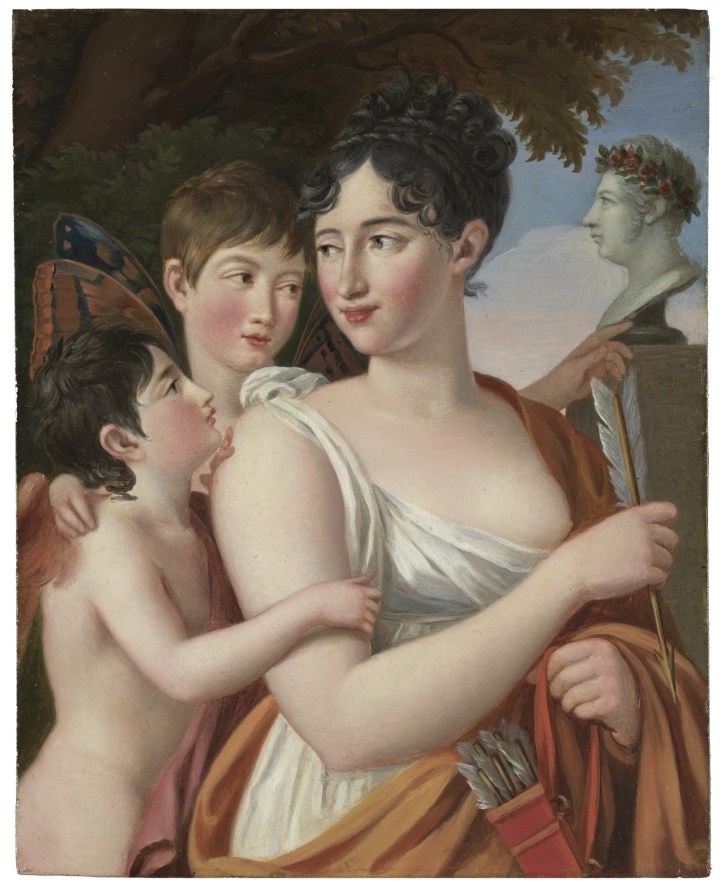
José de Madrazo y Agudo, Josefa Tudó with Her Sons Manuel and Luis Godoy, in a Garden, ca. 1812, oil on panel 20 × 16 cm (Madrid: Prado).
The exhibition features a collection of drawings and portraits from the Daza-Madrazo collection, acquired by the Prado in 2006, highlighting Madrazo’s ability to interpret ancient stories through a contemporary lens. The exhibition is structured around two distinct sets of works, prompting questions about their original purpose. One set appears to be preparatory sketches for engravings, while the other, semicircular compositions, suggests they were intended for decorative purposes, possibly for the exiled court of Charles IV in Rome. Themes like the contest between Apollo and Cupid are prominent, revealing Madrazo’s personal and scholarly approach to myth.
A notable inclusion is Madrazo’s Portrait of Josefa Tudó and Her Children, where they are depicted as mythological figures. This highlights how Madrazo incorporated mythological symbolism into his portraiture, adding layers of meaning to his works. The exhibition also delves into Madrazo’s self-representation, featuring his silhouette, a lithographic portrait, and a photograph, demonstrating his interest in evolving artistic technologies. These pieces span different periods of his life, showcasing his experimental nature.
Changing Forms goes beyond a simple display of technical skill, inviting visitors to consider the historical context in which Madrazo worked, a period marked by significant change. The exhibition emphasizes how Madrazo’s exploration of metamorphosis was not just a theme in his art, but a reflection of his own ability to adapt and reinvent himself. The Daza-Madrazo collection, a key resource for understanding Madrazo’s drawing practice, is central to the exhibition. It reveals his creative process, aesthetic choices, and the complexities of his Roman period.
Madrazo’s deep engagement with classical texts and art history is evident in his detailed drawings. He combined diverse sources to enrich his narratives, demonstrating a rigorous study of both past and present artistic trends. The exhibition aims to provide a deeper understanding of José de Madrazo’s artistic vision and his ability to navigate a time of significant historical and artistic change. Visitors are encouraged to explore the connection between myth, transformation, and the artist’s own journey.










 Enfilade
leave a comment