Call for Papers | Body Hair in Early Modern Visual Culture
From ArtHist.net and NIKI:
Hirsute, Downy, Hairless:
Meanings and Forms of Body Hair in Early Modern Visual Culture
Nederlands Interuniversitair Kunsthistorisch Instituut, Florence, 24–25 October 2025
Organized by Mathilda Blanquet, Michael Kwakkelstein, and Mandy Richter
Proposals due by 1 April 2025
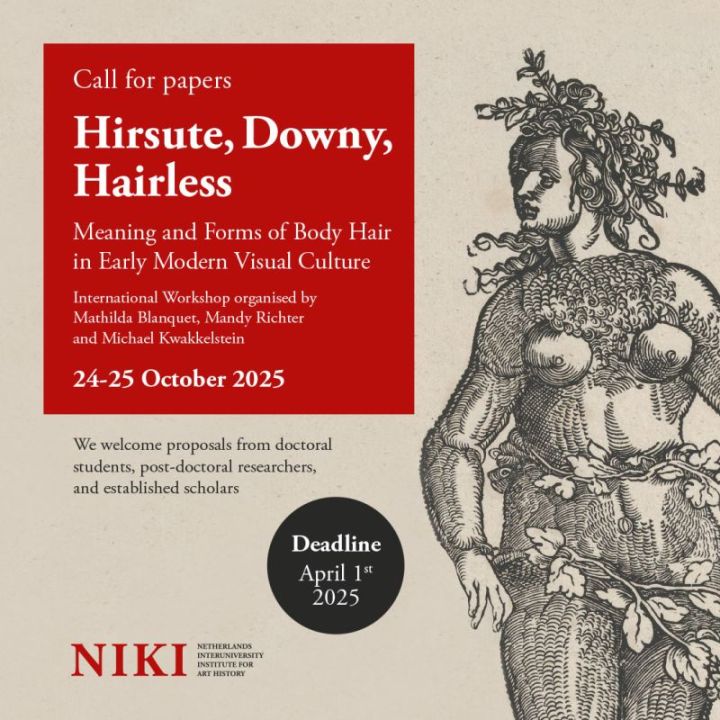 While long overlooked in art historical studies, over the past two decades body hair has emerged as a significant field of research, offering new perspectives on early modern visual culture. The presence or absence of body hair serves as an indicator of aesthetic (or artistic) preferences and prevailing social norms specific to certain periods and locations, revealing complex intersections between art and real life.
In profane art, the representation of male body hair tends to be quite common. It often points to idealized virility, strength, or even a natural state of being. However, its excess or misplacement might indicate mockery, degradation, or even alienation of the depicted subject. In comparison, female hirsuteness appears less frequently in artworks from the early modern period due to different canons of beauty associated with the female body. These rare instances of representation thus hold particular interest for this workshop.
In religious art, hair in general is of notable importance and this significance extends to body hair as well. Various iconographies of saints include these distinct features, raising questions not only about visual traditions in different cultural contexts but also querying particular hermeneutic meanings, such as notions of humanity, carnality, and spiritual transformation. In some cases, there could be a connection to preserved body hair relics of specific saints, which has never been part of a broader study thus far.
Technical challenges in representing hair are another point of interest. Artists and art theorists addressed these challenges across different media throughout the early modern period, as evidenced in theoretical treatises, anatomical studies, and workshop practices. Not only does this include the question of how to differentiate between human and animal hair but extends as well to artistic experiments in finding new and creative ways of treating or even avoiding body hair.
This two-day workshop aims to explore the multiple dimensions of body hair in visual culture through an interdisciplinary approach. Contributions may address, but are not limited to, the following themes:
1 Gender and Social Norms
• Male vs. female body hair in art
• Social and cultural implications of hair presence or absence
• Body hair as an indicator of social status and cultural norms
2 Religious and Symbolic Dimensions
• Hair in religious iconography
• Symbolic meanings in sacred versus profane contexts
• The role of body hair in representing humanity versus divinity
3 Artistic Theory and Practice
• Technical challenges in depicting body hair across different media
• Body hair in artistic treatises and anatomical studies
• Relationships between artistic theory and artistic practice
4 Cultural and Geographic Variations
• Comparative studies across European regions
• Cross-cultural perspectives on body hair representation
We welcome proposals from doctoral students, post-doctoral researchers, and established scholars. Papers may be presented in English or Italian. Please submit an abstract (300–500 words), a brief biographical note (150 words), your current institutional affiliation, and contact information to m.blanquet@udk-berlin.de and richter@khi.fi.it by 1 April 2025. Acceptance notifications should arrive by 15 April 2025.
Selected papers will be considered for publication in a peer-reviewed volume following the workshop. The workshop will be held at the Nederlands Interuniversitair Kunsthistorisch Instituut in Florence (NIKI). Accommodation and travel information will be provided to accepted participants. For any queries, please contact m.blanquet@hotmail.fr and richter@khi.fi.it.
Organizers
• Mathilda Blanquet, Universität der Künste in Berlin, Université Fédérale de Toulouse, Universität Hamburg
• Dr. Michael W. Kwakkelstein, Dutch University Institute for Art History in Florence (NIKI) – Utrecht University
• Dr. Mandy Richter, Kunsthistorisches Institut in Florenz – Max-Planck-Institut
New Book | Adventures in the Louvre
From Norton:
Elaine Sciolino, Adventures in the Louvre: How to Fall in Love with the World’s Greatest Museum (New York: W. W. Norton, 2025), 384 pages, ISBN: 978-1324021407, $30.
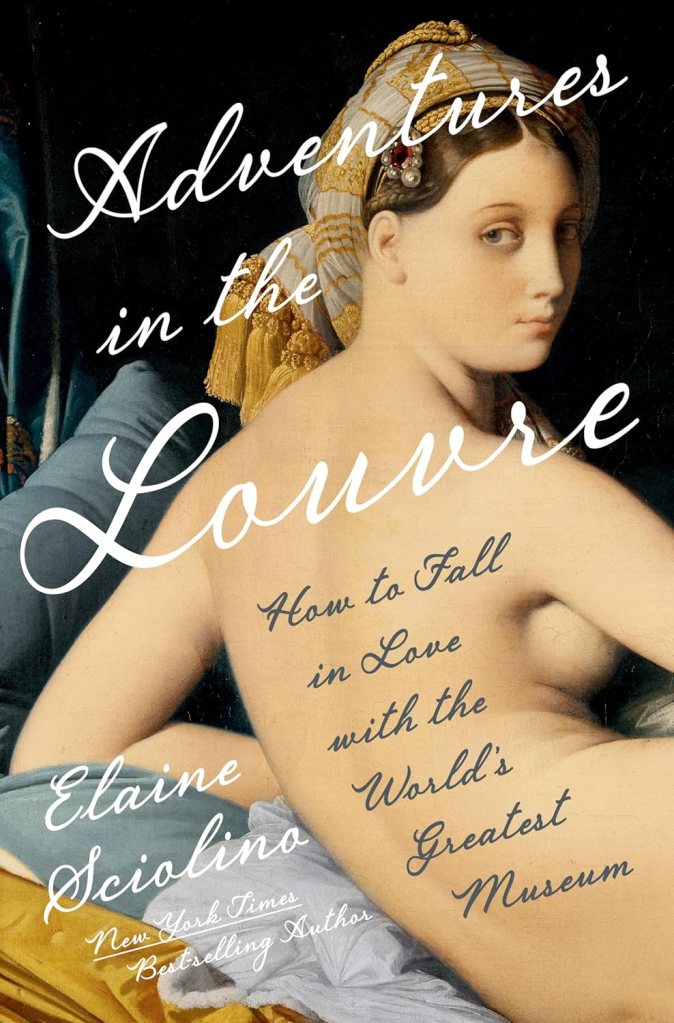 A former New York Times Paris bureau chief explores the Louvre, offering an intimate journey of discovery and revelation.
The Louvre is the most famous museum in the world, attracting millions of visitors every year with its masterpieces. In Adventures in the Louvre, Elaine Sciolino immerses herself in this magical space and helps us fall in love with what was once a forbidding fortress. Exploring galleries, basements, rooftops, and gardens, Sciolino demystifies the Louvre, introducing us to her favorite artworks, both legendary and overlooked, and to the people who are the museum’s lifeblood: the curators, the artisans producing frames and engravings, the builders overseeing restorations, the firefighters protecting the aging structure. Blending investigative journalism, travelogue, history, and memoir, Sciolino walks her readers through the museum’s front gates and immerses them in its irresistible, engrossing world of beauty and culture. Adventures in the Louvre reveals the secrets of this grand monument of Paris and basks in its timeless, seductive power.
Elaine Sciolino, contributing writer and former Paris bureau chief for The New York Times, is the author of The New York Times bestseller The Only Street in Paris, as well as The Seine and La Seduction. She lives in Paris.
Metropolitan Museum Journal 2024
The latest issue of The Met’s journal, with a reminder that digital copies are free! This year’s due date for submissions is 15 September; guidelines are available here.
Metropolitan Museum Journal 59 (2024)
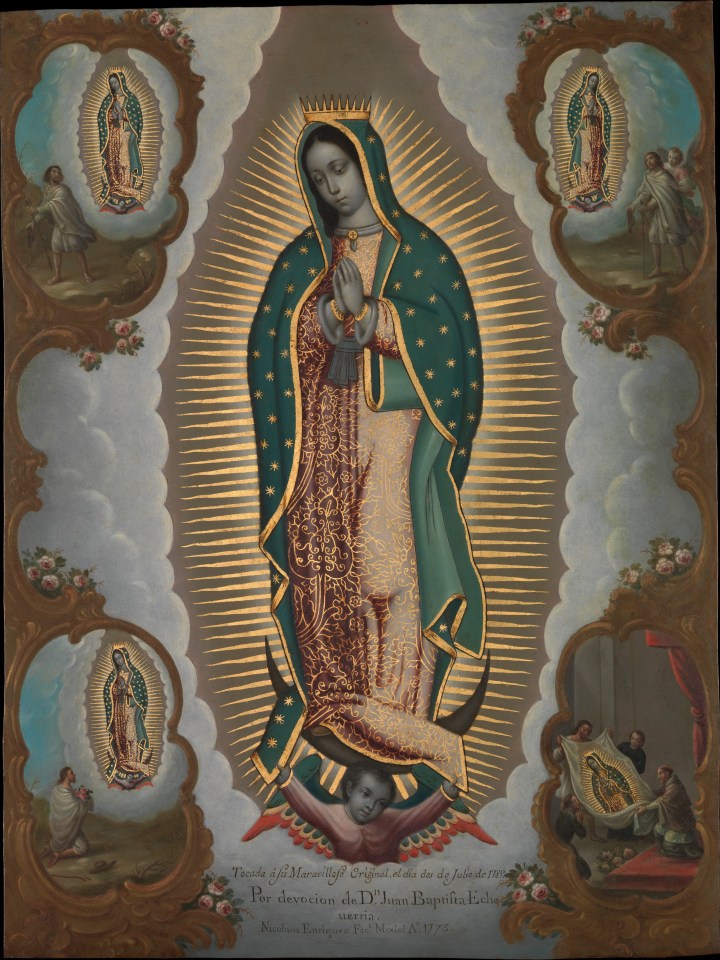
Nicolás Enríquez, The Virgin of Guadalupe with the Four Apparitions, 1773, oil on copper, 56.5 × 41.9 cm (New York: The Metropolitan Museum of Art, 2014.173).
a r t i c l e s
• Ally Kateusz, “Women at the Altar of Jesus’s Tomb in the Anastasis,” pp. 8–25.
• Melanie Holcomb, “The Architecture of ‘Playe’: Henry Hamlyn’s House in Tudor Exeter,” pp. 26–42.
• Ayşe AldemIr, “Ottoman Tastemaker Robert-Sadia Pardo and a Sixteenth-Century Prayer Rug in The Met,” pp. 43–57.
• Kelly Presutti, “Wood and Stone: Bernard Palissy’s Environmental Legacy,” pp. 58–72.
• Kristel Smentek and Christian Katschmanowski, “Oysters, Sauerkraut, and Pagods: Sibylla Augusta’s Chinese Banquet of 1729,” pp. 73–93.
• Ronda Kasl, “For the Devotion of Juan Bautista de Echeverría: Piety and Identity in Paintings by Nicolás Enríquez,” pp. 94–111.
• Nader Sayadi, “Imperial Threads: Kashmiri Shawls in Nineteenth-Century Iran,” pp. 113–29.
r e s e a r c h n o t e
• Rachel Lackner, Shirin Fozi, and Kisook Suh, “Julius Caesar from the Heroes Tapestries at The Met Cloisters: Dye Analysis and Molecular Insights,” 130–43.










 Enfilade
leave a comment