Exhibition | Return to Turtle Island
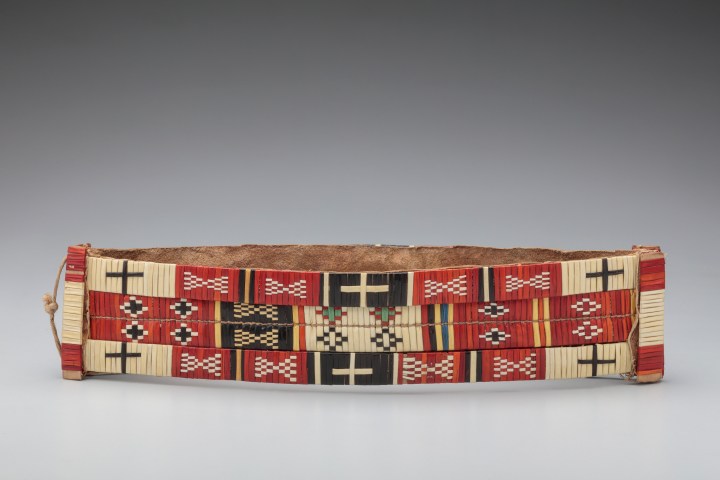
Ancestral Great Lakes artist, Quilled headband, mid-18th century; hide, birchbark, porcupine quills, natural dyes, and linen thread; 6 × 32 × 9 cm (Toledo Museum of Art, purchased with funds from The Joseph and Kathleen Magliochetti Fund, 2023.375).
◊ ◊ ◊ ◊ ◊
From the press release for the exhibition (the Rachel Ruysch show will also be on view at TMA starting April 12). . .
Return to Turtle Island: Indigenous Nation-Building in the Eighteenth Century
Toledo Museum of Art, 1 March — 29 June 2025
Curated by Johanna Minich, with the Great Lakes Research Alliance at the University of Toronto
The Toledo Museum of Art is pleased to present Return to Turtle Island: Indigenous Nation-Building in the Eighteenth Century, an exhibition that showcases recently acquired Eastern Woodlands objects and offers a rare exploration of early Indigenous artistry and diplomacy. This will be the first time these works, acquired by TMA in 2023, will be shown together by a public institution. The exhibition honors the remarkable journey of these cultural emissaries and welcomes them home.
Turtle Island, a name given to the North American continent by Anishinaabe, Haudenosaunee, and other Indigenous peoples, references the origin story of a landmass built on the back of a great turtle, symbolizing the interconnectedness of land and life.
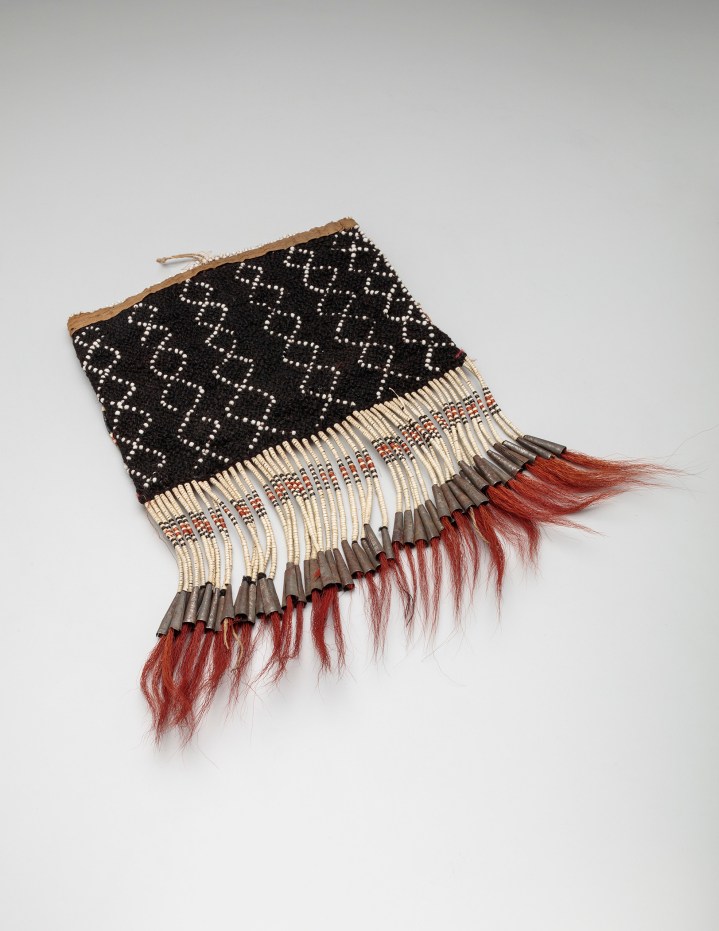
Ancestral Great Lakes artist, Quilled and beaded finger-woven pouch, mid-18th century; wool, birchbark, glass beads, silk, porcupine quills, natural dyes, tin, deer fur, and hide, 38 × 38 × 1 cm (Toledo Museum of Art, purchased with funds from the Florence Scott Libbey Bequest in Memory of her Father, Maurice A. Scott, 2023.357).
“Return to Turtle Island offers a unique window into a period of dynamic interaction between Indigenous and European communities in North America,” said Johanna Minich, the museum’s consulting curator of Native American art. “These objects represent far more than material goods—they serve as symbols of artistic knowledge, cultural exchange, and diplomacy that shaped early American history.”
Featuring 24 objects, including quillwork, beadwork, moosehair embroidery, and birchbark artforms acquired by TMA in 2023, this exhibition examines how Indigenous nations used these objects as tools of cultural expression, political alliance, and commerce during a time of dynamic interaction with European settlers.
“This exhibition exemplifies the Toledo Museum of Art’s strategy: That a relentless commitment to quality results in global and inclusive art history.” said Adam Levine, Edward Drummond and Florence Scott Libbey Director, President, and CEO. “By showcasing these extraordinary objects, we are fostering a deeper understanding of the interconnectedness of cultures and their enduring contributions to our shared history.”
The exhibition highlights the artistic skills of women and how their creative output was an integral part of nation-building, diplomacy, and economic sustainability. Indigenous leaders exchanged gifts and knowledge with their French and English allies during the sixteenth through eighteenth centuries, which had lasting implications for both Native and European communities.
Highlights include
• A quilled and beaded finger-woven pouch, a testament to the artistry of its makers.
• Beaded and quilled fingerwoven pictorial garter pendants, symbolizing the significance of proper attire when forming alliances.
• A birchbark model canoe and three dolls with assorted equipment, showcasing the cross-cultural artistic exchanges of the era.
The objects were originally collected through gift exchanges and purchases during the 18th century by Scottish officer Alexander Farquharson during his military travels through New York and Canada. For centuries, they remained in his family estate in Scotland before returning to North America in the early 2000s. TMA acquired the collection in late 2023.
To ensure the ethical conservation and presentation of these objects, TMA is collaborating with the Great Lakes Research Alliance (GRASAC) at the University of Toronto. Drawing on a network of Indigenous scholars and knowledge keepers, GRASAC provides guidance on the care and contextual display of these significant artworks.
“This collaboration with GRASAC ensures that the legacy of these objects is preserved with the utmost respect,” Minich added. “By working with descendants of their makers, we honor the original purpose of these works: sharing knowledge and strengthening relationships.”
Return to Turtle Island: Indigenous Nation-Building in the Eighteenth Century is made possible with the generous support of Presenting Sponsors Susan and Tom Palmer; Season Sponsors Taylor Automotive Family and the Rita Barbour Kern Foundation; Platinum Sponsor AGC of Northwest Ohio; and additional funding from the Ohio Arts Council, which receives support from the State of Ohio and the National Endowment for the Arts.










 Enfilade
leave a comment