Exhibition | Brenet: Painter to the King
As noted at Art History News, from the press materials for the exhibition:
Brenet: Un peintre du roi à Douai au 18e siècle
Musée de la Chartreuse, Douai, 19 March — 23 June 2025
Curated by Pierre Bonnaure and Marie Fournier
 Le musée de la Chartreuse de Douai présente la première exposition jamais consacrée au peintre Nicolas-Guy Brenet (Paris, 1728–1792), l’un des rénovateurs de la peinture d’Histoire à la veille de la Révolution.
Formé auprès des plus grands maîtres de la première moitié du 18e siècle (Charles Antoine Coypel, François Boucher et Carle Vanloo), puis à l’Académie de France à Rome, Nicolas-Guy Brenet est reçu à l’Académie royale de peinture et de sculpture en 1769, l’année même où il exécute de grands décors pour Douai. Il conçoit un cycle de six peintures allégoriques toujours en place au sein de l’actuel palais de justice, l’ancien parlement de Flandre. Il travaille également au décor de la collégiale Saint-Pierre en peignant un spectaculaire Triomphe de la Vierge, encore visible à son emplacement d’origine, dans la chapelle du Dôme. À Paris, il honore tout au long de sa carrière de prestigieuses commandes destinées principalement à l’Église, ainsi qu’aux rois Louis XV et Louis XVI.
Cette première exposition consacrée à Nicolas-Guy Brenet permet de découvrir à travers une sélection de tableaux, d’esquisses et de dessins, un artiste emblématique du renouveau de la peinture d’Histoire de la seconde moitié du siècle des Lumières et d’apprécier la richesse de la vie artistique douaisienne au temps des parlementaires de Flandre.
• 42 œuvres exposées dans la salle capitulaire du musée de la Chartreuse
• 37 prêteurs (particuliers et institutions), dont le musée du Louvre et le château de Versailles, les musées de Compiègne, Quimper, Dunkerque, Orléans, Strasbourg, Blois etc.
Information about Marie Fournier’s 2023 monograph on Brenet is available here»
The full exhibition brochure is available here»
Tavitian Foundation Donates 331 Works and $45millon to The Clark
A belated posting for a major announcement from October:
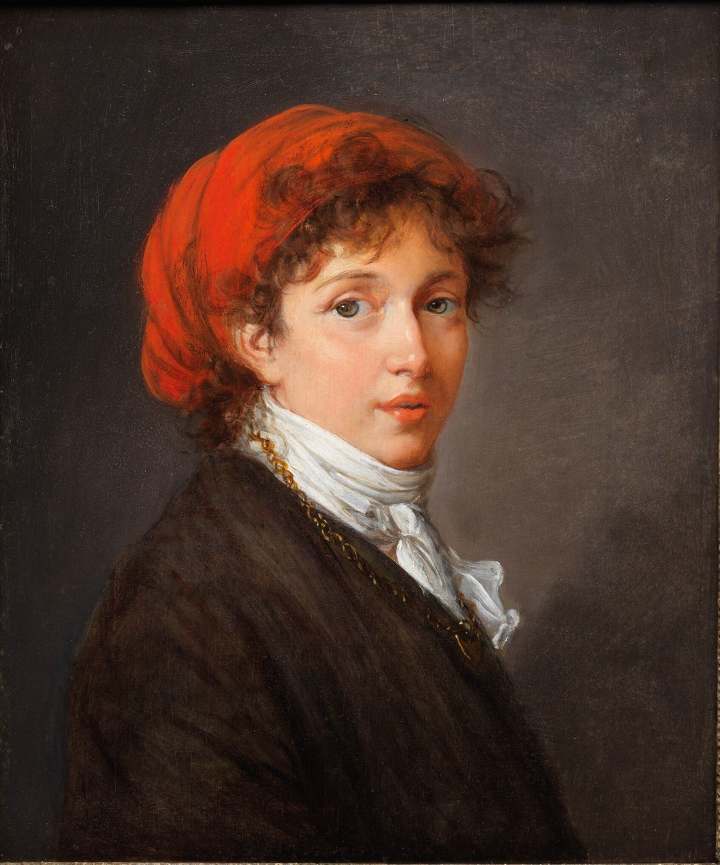
Élisabeth Louise Vigée Le Brun, Self Portrait in Studio Costume, ca. 1800 (Williamstown, Massachusetts: Clark Art Institute).
The Clark Art Institute has received one of the largest gifts in its history from the foundation of the late philanthropist Aso O. Tavitian. The gift includes 331 works of art from Mr. Tavitian’s personal collection and more than $45 million to endow a curatorial position to oversee the collection, provide necessary support for the collection’s long-term care, and fund construction of a new Aso O. Tavitian Wing at the Clark.
“It is an incredible honor to receive this transformational gift,” said Olivier Meslay, Hardymon Director of the Clark Art Institute. “During his lifetime, Aso Tavitian was a wonderful friend to the Clark and a generous supporter who provided us with exceptional leadership and dedication. We are deeply moved by his decision to place the heart of his collection in our trust and immensely grateful to the Trustees of his Foundation for their generosity in ensuring that we can fulfill his desire to share these treasures with the world through the addition of the new Aso O. Tavitian Wing that will house these remarkable works of art.”
Mr. Tavitian, who had homes in New York City and Stockbridge, Massachusetts, died in 2020. He served on the Clark’s Board of Trustees from 2006 to 2012 and remained engaged with the Clark throughout his lifetime. In 2011, Mr. Tavitian loaned thirty paintings and one sculpture from his collection to the Clark for the exhibition Eye to Eye: European Portraits, 1450–1850. Prior to his death, Mr. Tavitian made the decision to gift a significant portion of his collection to the Clark and had numerous conversations with the Institute’s leadership about his intentions.
The 331 works of art in the gift include 132 paintings, 130 sculptures, thirty-nine drawings, and thirty decorative arts objects, creating an important addition to the Clark’s holdings. The entirety of the Tavitian gift will be on view when the new Aso O. Tavitian Wing opens. Following an introductory presentation at the time of the new wing’s opening, the works on paper included in the gift will be made available for study purposes and be presented in periodic displays. The majority of paintings, sculpture, and decorative arts objects will be shown on a continual basis, both in the new Tavitian Wing and in the Clark’s permanent collection galleries.
The Tavitian gift is particularly rich in portraiture, including important works by Parmigianino, Peter Paul Rubens, Elizabeth Vigée Lebrun, Jean-Honoré Fragonard, and Jacques- Louis David, among others. Also included in the collection are landscapes by Hubert Robert, Claude-Joseph Vernet, and others, as well as religious paintings by artists including Jan van Eyck and Agnolo Bronzino. Sculpture is a great strength of the Tavitian Collection, with works in bronze, plaster, terracotta, marble, and other materials dating from the Renaissance through the late nineteenth-century by artists including Gian Lorenzo Bernini, Andrea della Robbia, Gil de Siloé, Clodion (Claude Michel), and Jean-Baptiste Carpeaux.
“Aso Tavitian’s collection of Early Modern paintings, sculpture, decorative arts, and drawings is truly one of the finest in the world,” said Esther Bell, Deputy Director and Robert and Martha Berman Lipp Chief Curator of the Clark. “In making this tremendous gift to the Clark, Aso ensured that the public will have access to these beautiful objects for future generations. We are eagerly anticipating the opportunity to share these works with our visitors.”
The Clark’s existing collection of paintings and sculpture ranges from the Renaissance to the end of the nineteenth century, with strengths in the second half of this period, and greater strength in paintings than in sculpture. The Tavitian gift covers the same period, but with strengths in the earlier periods, and with greater balance between paintings and sculpture. As such, this collection forms a perfect complement and addition to the Clark’s current holdings.
“Aso Tavitian was committed to creating a home for a significant part of his collection at the Clark, where the works that brought him such deep pleasure could be shared with the public,” said Candace Beinecke, President of the Aso O. Tavitian Foundation. “The trustees of the Tavitian Foundation are thrilled to see Aso’s wishes come to life in new galleries that will provide a glorious setting for his magnificent collection and a fitting tribute to this remarkable man’s legacy.”
In addition to the works of art and funding for a new addition, the gift creates an endowment for a new curatorial position, the Aso O. Tavitian Curator of Early Modern European Painting and Sculpture, as well as additional staffing to ensure continuous oversight of the works included in the collection. The gift also supports the publication of a catalogue documenting the collection, as well as the ongoing care and maintenance of the Tavitian Collection and the new facility.
The Aso O. Tavitian Wing
The Clark and the Trustees of the Tavitian Foundation jointly selected Selldorf Architects to design the new Aso O. Tavitian Wing that will be constructed on the Clark’s campus. The new facility will be positioned between the existing Museum Building and the Manton Research Center, creating a completely reconceived and more meaningful link between the two buildings and replacing the ‘bridge’ that was originally created during the 1973 addition designed by Pietro Belluschi and The Architects Collaborative, Cambridge, Massachusetts.
Annabelle Selldorf leads the design team on the project, marking her third major engagement with the Clark. Selldorf previously oversaw the 2014 renovation of the Museum Building and the 2016 renovation of the Manton Research Center’s public spaces and galleries. Completion of the new building is anticipated for some time between 2027 and 2028.
Highlights of the Tavitian Collection at The Clark
Beginning in 2004 and continuing until his death, Mr. Tavitian assembled one of the most important private groupings of Early Modern art amassed in this generation. Mr. Tavitian’s collection reflected his personal taste, his extraordinary eye, and his belief that seeing these works displayed together further illuminated each object.
Following Mr. Tavitian’s death, his foundation gifted two paintings from his collection to The Metropolitan Museum of Art (Francesco Salviati’s Bindo Altoviti, ca.1545) and The Frick Collection (Giovanni Battista Moroni’s Portrait of a Woman, ca.1575). These paintings featured prominently in exhibitions that were presented at these institutions in recent years. The gift to the Clark honors Mr. Tavitian’s wishes to keep a significant portion of his art collection intact so that the artworks could be displayed together.
The collection includes major works by many noted artists. Among the many important works included in the Tavitian gift are:
• Jan van Eyck (Netherlandish, ca. 1390–1441) and workshop, Madonna of the Fountain, ca. 1440, oil on panel. This rare panel is one of several period versions of one of Van Eyck’s last paintings, dated to 1439 and in the Koninklijk Museum voor Schone Kunsten in Antwerp.
• Andrea della Robbia (Italian, 1435–1525/1528), Portrait of a Youth, ca. 1470–80, glazed terracotta. This exceptional work by Ieading Italian Renaissance sculptor della Robbia is modeled in deep relief, with the head and neck set off against a simple roundel glazed in blue, resulting in a sculpture that is remarkably lifelike and modern.
• Gil de Siloé (Spanish, active 1486, died ca. 1501), Saint Cecile, ca. 1500, marble. This rare, delicately carved, sculpture was made by one of the leading Late Gothic artists of fifteenth-century northern Spain, likely as an object of private devotion.
• Jacopo da Pontormo (Italian, 1494–1557), Portrait of a Boy, ca. 1535–40 or later, oil on fired tile. This sensitive, Mannerist depiction of an unknown boy, possibly a studio assistant, is rendered on the unusual support of a thick terracotta tile.
• Peter Paul Rubens (Flemish, 1577–1640), Portrait of a Young Man, ca. 1613–15, oil on panel. While the identity of the sitter is no longer known, this portrait—made following the artist’s return from Rome in what is arguably his most fertile period—is a superb example of Rubens’s ability to capture the subtleties of character.
• Gian Lorenzo Bernini (Italian, 1598–1680), Countess Matilda of Canossa, ca. 1630–39, bronze. This small-scale bronze figure is a reduction of the over life-size marble Bernini made for the tomb of Countess Matilda in St. Peter’s Basilica, Rome. The Tavitian gift also includes a rare painting by Bernini, thought to be a portrait of his brother Luigi.
• Hubert Robert (French, 1733–1808), Colonnade and Gardens at the Villa Medici, ca. 1759, oil on canvas. The collection includes three landscapes by Hubert Robert, including this monumental plein air vista of gentlemen sketching on the grounds of the French Academy in Rome.
• Jean-Antoine Houdon (French, 1741–1828), Little Lise, 1775, marble. The delicate carving of the hair, ribbon, and face of a young woman demonstrates Houdon’s unparalleled artistic refinement.
• Elizabeth Louise Vigée-Lebrun (French, 1755–1842), Self-Portrait in Studio Costume, ca. 1800, oil on panel. Several works by women artists are included in the collection, including eighteenth-century portrait painter Vigée-Lebrun, who is represented by this confident self-portrait.
• Jacques Louis David (French, 1748–1825), Portrait of Dominique-Vincent Ramel de Nogaret, 1820, oil on canvas. The artist painted the former finance minister of France during a period when both men were in exile in Brussels following the final abdication of Napoleon in 1815. The gift also includes two other portraits by David, including the pendant portrait of Ramel de Nogaret’s wife, Ange-Pauline-Charlotte Ramel de Nogaret and the portrait of the artist’s son, Jules.
New Book | Imagined Neighbors: Visions of China in Japanese Art
I’m sorry for not posting earlier news of the exhibition, which was on view in Washington at the National Museum of Asian Art from 16 March until 15 September 2024. Fortunately, the catalogue is still available. –CH
Frank Feltens, ed., with additional contributions by Paul Berry and Michiyo Morioka, Imagined Neighbors: Visions of China in Japanese Art, 1680–1980 (Munich: Hirmer Publishers, 2024), 304 pages, ISBN: 978-3777442662, $65.
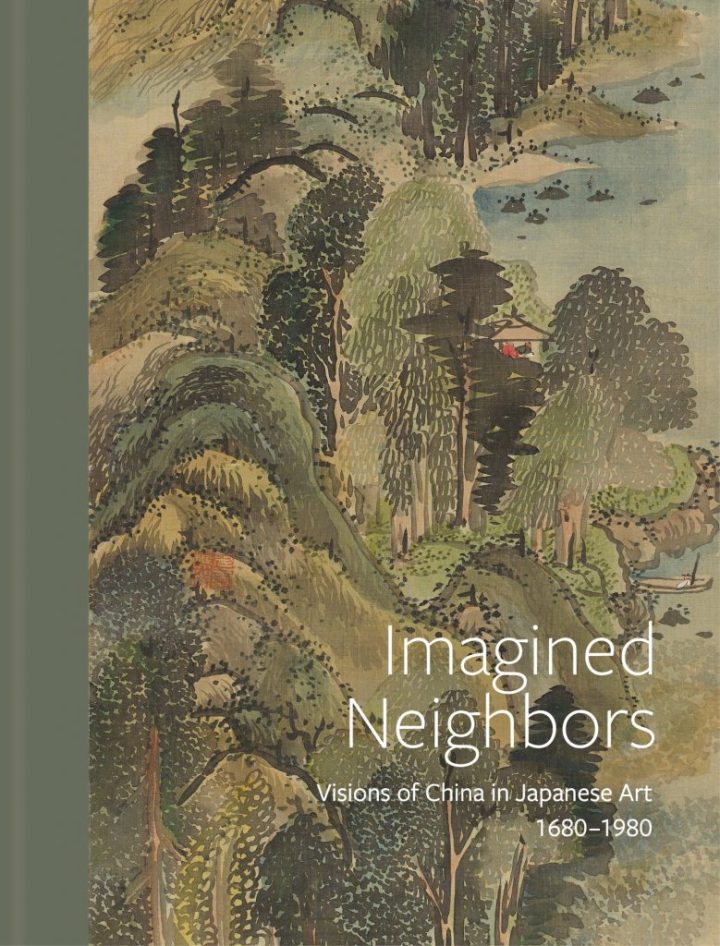 Imagined Neighbors: Visions of China in Japanese Art examines Japanese artistic understanding of China from the late 1600s, Japan’s period of seclusion, to its age of modernization after the mid-nineteenth century. It focuses on ways Japanese painters from the late 1600s to the twentieth century pictured China, both as a real place and as an imagined promised land. It features three essays by renowned Japanese art historians in addition to more than fifty catalog entries highlighting unusual artworks revealing Japanese artists’ complex responses to Chinese art, history, and culture. In recent years, a handful of scholarly studies have tried to push against the established narrative of an exclusively Western-inspired modern Japan. Imagined Neighbors challenges the established narrative of an exclusively Western-inspired modern Japan by offering a more nuanced approach to understanding the country’s struggle with reconciling the old with the new as it reinvented itself into a modern nation-state.
Frank Feltens is curator of Japanese art at the Smithsonian’s National Museum of Asian Art.
Paul Berry is an independent scholar of Japanese art and cinema who has taught at the University of Michigan, the University of Washington, and Kansai Gaidai University.
Michiyo Morioka is an independent scholar of Japanese art based in Seattle.
Norton Museum Names Shawn Yuan Curator of Asian Art
From the press release (via Art Daily) . . .
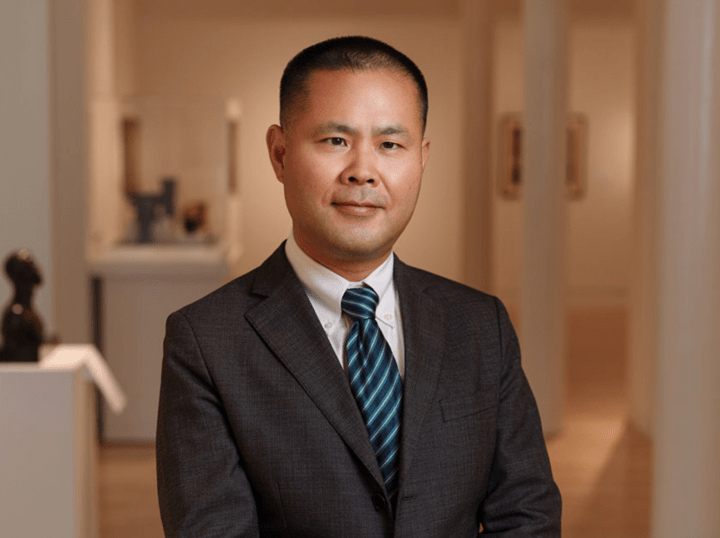
Portrait of Shawn Yuan, courtesy of the San Antonio Museum of Art.
The Norton Museum of Art, in West Palm Beach, has appointed Shawn Yuan as the Elizabeth B. McGraw Senior Curator of Asian Art. The Norton, Florida’s largest art museum, is internationally known for its Collection of Contemporary art, Early European art, Modern art, and Photography, as well as Chinese art. Yuan will oversee the Asian Collection, which primarily focuses on Chinese art. In his new role, Yuan also will focus on works created by artists of other Asian cultures. His tenure at the Museum will begin April 7.
Yuan joins the Norton from the World Heritage Center in San Antonio, Texas. Prior to his role at the World Heritage Center, he held positions at the San Antonio Museum of Art, the Oklahoma State University Museum of Art, and the Crow Museum of Asian Art at the University of Texas, Dallas.
At the Norton, Yuan will be responsible for developing, growing, and interpreting the Museum’s Asian Collection, encompassing more than 700 objects, including bronzes, ceramics, decorative arts, glass, jades, porcelain, and works of various other mediums. The Norton’s Asian Art Collection was an early addition to the Museum’s holdings, which began in 1942 under the Museum’s founder, Ralph Hubbard Norton, just one year after the Museum opened. The Museum’s earliest acquisitions for this area of the Collection consisted of Chinese jade and bronzes, and expanded over the years to include ceramics, lacquer, export and import porcelain, and most recently, paintings. Yuan’s hiring marks the Norton’s broadening scope of collecting to more robustly include other Asian cultures such as Japan, Korea, and India.
“We are impressed by Shawn’s enthusiasm for our collections, and his passion for making these venerable works of art relatable to modern audiences,” said Ghislain d’Humières, Kenneth C. Griffin Director and CEO. “I look forward to working with him and collaborating on the development of innovative, original exhibition programming that expands the Norton’s storied Chinese holdings and welcomes new audiences through the focused inclusion of work from diverse Asian cultures.”
Yuan has curated several original exhibitions, including Samurai Spirit: Swords, Accessories, and Paintings; Creative Splendor: Japanese Bamboo Baskets from the Thomas Collection; Elegant Pursuits: The Arts of China’s Educated Elite, 1400–1900; Korean Ceramics from the San Antonio Museum of Art Collection; Radiant Wisdom: Tibetan and Indian Buddhist and Hindu Art from the John Hendry Collection; Texas Collects Asia; and Tending the Afterlife: Chinese Tomb Art from the Neolithic Period to the Ming Dynasty.
“I have long admired the Norton’s exceptional collection of Asian art, particularly its remarkable holdings of Chinese art,” Yuan said. “Thanks to visionary acquisitions throughout the Museum’s history, the Collection features outstanding examples across all major categories, spanning more than 3,000 years of Chinese history.”
Yuan fills a position that will soon be vacated by Laurie Barnes, who is retiring after 19 years as the Elizabeth B. McGraw Senior Curator of Chinese Art. During her tenure, Barnes expanded the Collection, leading the Norton to acquire several rare and noteworthy works, such as a 10th-century ‘Secret Color’ Yue stoneware box and a set of paintings depicting a late Ming dynasty (1368–1644) Lantern Festival celebration in the city of Nanjing. She also was a contributing author to Chinese Ceramics: From the Paleolithic Period through the Qing Dynasty, a bilingual encyclopedic survey published by Yale University in collaboration with the Beijing Foreign Languages Press and curated the critically acclaimed 2015 exhibition High Tea: Glorious Manifestations East and West, a wide-ranging exploration of the art and culture of tea. Barnes leaves a lasting impact on the Norton’s community and is thrilled to observe the direction that Yuan takes the Museum’s expanded Asian Art department.
“It will truly be an honor to work with this esteemed Collection and contribute to its continued growth,” Yuan said. “I also look forward to collaborating with the Norton team to create exhibitions that serve as a gateway to Asian cultures while enriching the vibrant and diverse cultural landscape of South Florida.”
Exhibition | A Movable Feast: Food and Drink in China

Ding Guanpeng (active 1726–1770), A Night Banquet at the Peach and Plum Garden, Qing dynasty (1644–1911), handscroll, ink, and colour on paper
(Beijing: The Palace Museum)
◊ ◊ ◊ ◊ ◊
From the press release and the general exhibition description:
A Movable Feast: The Culture of Food and Drink in China
Hong Kong Palace Museum, 19 March — 18 June 2025
A Movable Feast: The Culture of Food and Drink in China offers a fresh perspective centred on the concept of ‘mobility’, connecting significant aspects of Chinese food culture. Over 110 exquisite artefacts have been meticulously selected to explore the evolution of food vessels, eating practices, and related traditions, comprehensively illustrating the rich culinary culture and lifestyle throughout the history of China. Food culture encompasses the sourcing and utilisation of ingredients, the preparation and processing of food, and the consumption of food as well as the customs, etiquette, and ideologies developed around eating and drinking. It touches nearly every aspect of our material and spiritual life. According to anthropological archaeologist Kwang-chih Chang, “one of the best ways of getting to a culture’s heart would be through its stomach.”
Food culture is naturally an important element of the Chinese civilisation. This exhibition invites visitors to enjoy a multicourse feast spanning five thousand years of Chinese history. The first part, “Crossing from Life to Death”, features a ceremonial meal for the deceased. Showcasing ritual and burial objects related to food and drink dated from the Neolithic period (about 10000–2000 BCE) to the Han dynasty (206 BCE–220 CE), this section demonstrates the importance of transferring food and drink to the afterlife in Chinese beliefs. The second section “Crossing Cultures” presents a multicultural banquet, focusing on eating and drinking vessels from the Tang (618–907) to Song (960–1279) periods, such as platters and ewers introduced to China through the Silk Routes. It reveals how China and Central and West Asia embraced each other’s eating practices. The next section “Crossing Mountains and Lakes” exhibits famous scenes of literati gatherings and picnic sets produced in the Ming (1368–1644) and Qing (1644–1911) dynasties, which demonstrates the important role food and drink played at elegant gatherings and excursions. Finally, at the “Crossing Time” multimedia table, visitors are encouraged to find out more about the past and present lives of modern eating and drinking vessels.
Accompanying the exhibition is the publication A Movable Feast: The Culture of Food and Drink in China, available in both Traditional Chinese and English. The book features six chapters written by a team of scholars and experts from the Hong Kong Palace Museum and around the world—addressing how people have traversed the culinary landscape with food and eating utensils for 5,000 years, examining preparations for the afterlife, adaptations to foreign culinary practices from other regions, and the enjoyment of outdoor picnics. The catalogue will be available at the Hong Kong Museum and later from major bookstores in Hong Kong.
Crossing from Life to Death: Feeding the Spirits
The first section features food and drink vessels used in rituals and burials from the Neolithic period to the Han dynasty (206 BCE–220 CE). Key objects on display include the zun (wine vessel) for Father Ding and the jue (wine vessel) of Marquis of Lu from the Palace Museum’s collection, dating back to the Western Zhou dynasty (about 1100–771 BCE). These bronze ritual vessels were used for making offerings and served as a medium between people and spirits.
A dou (food vessel) with cord pattern from the Warring States period (475–221 BCE) was a container for pickles, preserved vegetables, meat sauce, gravy, and more. In a first-century Chinese dictionary, the character feng, meaning abundance, is explained by a pictograph of a dou filled with food, while some scholars further interpret it as depicting two skewers of meat on a dou. The Chinese character li, meaning ritual, also has a component of feng, a further indicator of the significance of food and food vessels in Chinese culture.
During the mid-to late Western Han dynasty (206 BCE–8 CE), earthenware burial objects in the shape of granaries, wells, stoves, pigsties, and chicken coops were prevalent, not only mirroring the way of life and the flourishing food culture of the time but also signifying people’s desire for an abundant afterlife. A model of a brazier with cicadas, from the Hong Kong Museum of Art, was fired using low-temperature lead glaze, resulting in striking colours. The roasting rack with two rows of cicadas illustrates the custom of eating cicadas during this period.
Crossing Cultures: Nomadic Eating Practices
The second section presents the intersection and integration of culinary customs between China and Central and West Asia during the Tang (618–907), Song (960–1279), and Yuan (1271–1368) dynasties, demonstrating how the richness and evolution of ‘tradition’ develops over time. The introduction of new ingredients, utensils, and tall furniture to the Central Plains via the Silk Routes significantly transformed the region’s food culture. Foods from Central Asia were given the prefix hu (roughly indicates regions beyond the Central Plains of China), as seen in terms like hujiao (black pepper), hutao (walnuts), and huma (sesame), which remain widely used today
Among the exhibits in this section is a quatrefoil cup from the Tang Dynasty (877), which traces its origins back to the Sassanian Empire (present-day Iran). Scholars believe it is associated with the term ‘poluo’, a foreign term that frequently appeared in Tang and Song poetry, referring to a drinking vessel for alcoholic drinks. The renowned poet Li Bai (701–762) wrote about it, saying “Grape wine, gold poluo, a hu girl aged 15 years was carried by a fine horse.” To this day, the term ‘gold poluo’ is used in Cantonese to describe a greatly cherished child. Another key exhibit, a phoenix-head ewer, which features a handle and spout. This vessel exemplifies how the nomadic drinking custom of pouring wine from ewers gradually replaced the tradition of spooning wine from a jar with a ladle in the Central Plains.
With the introduction of hu foods to the Central Plains, large platters emerged during the Tang dynasty to accommodate nomadic foods such as hubing (hu flatbread) and sushan (shaved ice-like dessert). By the Yuan and Ming (1368–1644) periods, large platters produced in China had become important export commodities, enjoying popularity in the Middle East. Historical records from the Ottoman Empire indicate that porcelain was frequently used for banquet serving ware during significant ceremonies, such as the sultan’s accession, birthdays, and weddings. One of the exhibits, a dish with chrysanthemum and lotus scrolls from the Ming dynasty closely resembles a 15th-century blue-and-white platter in the collection of the Ardabil Shrine in Iran, exemplifying the multidirectional nature of cultural exchange.
Crossing Mountains and Lakes: Packing the Perfect Picnic
The third section showcases the mobility of food and drink across different landscapes by presenting artworks and picnic sets of the Ming and Qing dynasties. Historically significant excursions and picnics have become a source of inspiration for numerous calligraphies, paintings, and other works of art. For example, A Night Banquet at the Peach and Plum Garden by the renowned Qing court painter, Ding Guanpeng (active 1726–1770), portrays the famous Tang poet Li Bai (701–762) and his cousins enjoying a banquet amidst a garden filled with peach blossoms.
During the Ming and Qing dynasties, the custom of dining on pleasure boats became a particularly popular activity along the lower reaches of the Yangtze River. Late Ming literati considered that an elegant pleasure boat should accommodate “six hosts and guests and four attendants” and allow them to brew tea during the excursion. A notable exhibit, an ivory boat from the British Museum’s Qing dynasty collection, vividly captures a leisurely outing on the water: two bearded men enjoy a chat over tea under the canopy of the boat, while others carry a food container and net freshwater fish from the lake.
The design of the paraphernalia used for these excursions was intended to keep objects organised, preventing them from colliding, and ensuring that the objects remained safe and accessible during travel. The Qing imperial court later adopted these organisational boxes to manage and store cultural artefacts accumulated in the palaces. The exhibition features a box of curiosities assembled during the Qing dynasty, intricately designed to hold a variety of antiques crafted from different materials, transforming it into a curated collection of treasures.
Crossing Time: The Heritage
The final section features multimedia interactive installations that blend ancient and modern scenes and artefacts, inviting the audience to enjoy a virtual feast that transcends time and space. Visitors can simulate ordering food at a virtual dining table while observing the cooking processes of various dishes, allowing them to discover diverse cooking techniques associated with these utensils.
The exhibition is jointly organised by the Hong Kong Palace Museum and The Palace Museum. The exhibits mainly come from The Palace Museum and the Hong Kong Palace Museum. The British Museum, the Asian Art Museum of San Francisco, the Cleveland Museum of Art, the Hong Kong Museum of Art, and the Hong Kong Flagstaff House Museum of Tea Ware have also provided a number of loans. The Robert Chang Art Education Charitable Foundation is the exhibition’s Supporting Sponsor.
Call for Papers | Visual Culture of Gastronomy, 16th–20th Century
From the full Call for Papers, which includes the French Appel à communication) . . .
Visual Culture of Gastronomy, 16th–20th Century
La culture visuelle de la gastronomie, XVIe–XXe siècles
Galerie Colbert, Paris, 18–19 December 2025
Organized by Frédérique Desbuissons and Ryan Whyte
Proposals due by 1 June 2025
This international conference addresses the visual dimension of gastronomy, whose study surpasses traditional disciplinary limits for historical research (Allen Weiss, Déborah L. Krohn, Marcia Reed). In contrast to the logocentric definition that prevails in most of the work on gastronomy of the last century (Jean-Louis Flandrin, Pascal Ory, Priscilla Ferguson, Jean-Robert Pitte), we propose to consider gastronony as a qualitative relationship to food (Julia Csergo) constituted not least by images in their sensory and material manifestation. Whether as visual perception or material representation in the visual arts, printed matter, consumer goods such as games and toys, or popular and mass culture more broadly, images have played an active role in the construction and experience of the “art of eating well” [art de bien-manger] (Brillat-Savarin). Due to their quantity and ubiquity, such images, whether traditional or more often “popular,” are as essential to gastronomy as those of the fine arts, usually more difficult to access due to their socially restricted sites, relative rarity, and elite visual language. Visual culture, far from being subordinated to or dependant on text as mere illustration, commentary or archival record, immediately and directly defines “eating well.” D’abord l’à bord [first of all the on (the) bo(a)rd(er)], in the formula of Jacques Derrida, the very immediacy of gastronomic images defines the perimeters of gastronomy, thereby to furnish foundational models of experience and desire. In this way images, inseparable from other forms of signification, testify to the composite nature of gastronomy.
In the early modern period, the culture of the table began to free itself from both the rules of dietetics and the religious morality stigmatizing sensual pleasures that Louis de Jaucourt, in the Encyclopédie, evoked in defining cuisine as “lust for good food” [cette luxure de bonne chere dont on fait tant de cas], perpetuating its denigration by Michel de Montaigne as the “science of the gullet” [science de gueule] two centuries earlier. Meanwhile, banquets abandoned the ostentatious symbolism that prevailed before the Renaissance. Cuisine became a product of intellectual exchange in which images played a key role, including frontispieces and other images for cookbooks, reference books and other works relating to domestic economy. In urban spaces, images of consumer products were disseminated in the form of shopsigns, window displays, and trade cards. In France, on the eve of the Revolution, “eating well” no longer necessarily meant eating to maintain physical and moral health according to the precepts of medicine and religion, but also eating good things, with the right table setting, in an appropriate environment, and in good company. All these dimensions of table culture are described, not without irony, in the poem of Joseph de Berchoux, “Gastronomy: Or the Rural Philosopher Dines” [La gastronomie, ou l’homme des champs à table] (1801), whose title would furnish the term for the “art of good cheer” finally accepted by the Académie française in its Dictionary of 1835.
Like the various prints published in successive editions of Berchoux’s poem, images participated in the diffusion of the knowledge, practice, and social imaginary of gastronomy well beyond the narrow social and geographic limits of the table culture of the Old Regime. The multiplication of images and print technologies in the nineteenth century emancipated gastronomy from the houses and restaurants accessible only to those capable of employing the services of great chefs, consuming luxury products, and frequenting good tables. In addition to the fine grocery stores, caterers, and restaurants emblematic of the urban spectacularization of food from the nineteenth century, representations disseminated in books, journals, and posters revealed the labour, implements, stagings, uses, and forms of conviviality once inaccessible to most people.
If images established a new visual regime of gastronomy, they also fixed and standardized norms transcending local and regional variations and facilitating their broader recontextualization. This is why this conference will focus on developments in Europe in the early modern period and following the French Revolution, as well as on other gastronomic cultures and geographies, whether in themselves or operating in the context of colonial empires and other forms of globalization of food products, standards, and practices. How, in particular, may one describe and conceptualize qualitative relationships to food in non-European cultures using emic images and terms rather than the etic discourses of European gastronomy? And how can subaltern communities create visual cultures as vectors of resistance and emancipation, as in the exemplary case of Soul Food? We invite proposals from all disciplines on the visual dimensions of gastronomy, whether international or local, elite or popular. Possible themes include, but are not limited to:
Physiology, psychology
• Food synesthesias
• Ephemeral consumption and visual memory
Presentation, representation, conservation
• Representing taste
• Staging the table
• Gastronomical exhibitions (displays, markets, shop windows, museums and galleries …)
• Museums and heritage
Media and technologies
• Print culture and gastronomy: almanacs, newspapers, magazines, posters, pamphlets, etc.
• Design, packaging, labels
• Food and image technologies
Geographies, spaces, sites
• Perimeters and geographies of the gastronomic image
• Sites of production and consumption: kitchen, pantry, dining room, restaurant
• Empire and gastronomy
Values, customs, ideologies
• Images, egos, personifications: eaters, chefs, critics, gastronomes, servants, merchants
• Moralities of food
• Political and gastronomic economies
• Gastronomic laughter: satire, burlesque, comedy
Please submit proposals in French or English, including an abstract of maximum 700 words and a brief curriculum vitae by 1 June 2025 to frederique.desbuissons@univ-reims.fr and rwhyte@ocadu.ca.
Université Paris 1 Panthéon-Sorbonne / OCAD University, Toronto) / Bibliothèque des Arts Décoratifs
Frédérique Desbuissons (université de Reims) & Ryan Whyte (OCAD University, Toronto)
Scientific Committee
James Benn, McMaster University, Hamilton
Valérie Boudier, université de Lille
Gwenhael Cavanna-Kernemp, Les Arts Décoratifs, Paris
Julia Csergo, Université du Québec à Montréal
Michael Garval, North Carolina State University
Jérémie Koering, Université de Fribourg
Camille Paulhan, École nationale supérieure des Beaux-Arts de Lyon
Bibliographie indicative / Preliminary Bibliography
L’Art de manger. Rites et traditions en Afrique, Insulinde et Océanie, exh. cat. Paris, musée Dapper, 2014–2015.
L’Art gourmand, exh. cat. Bruxelles, Galerie du Crédit communal, 1996–1997.
Atelier + Küche = Labore der Sinne, cat. exp. Hertford, Marta Herford, 2012.
Victoria Avery (ed.), Feast & Fast: The Art of Food in Europe, 1500–1800, exh. cat. Cambridge, Fitzwilliam Museum, 2019
Sylvette Babin (ed.), Eating the Universe : vom Essen in der Kunst, exh. cat. Kunsthalle Düsseldorf, 2009–2011
Kate Baldwin, The Racial Imaginary of the Cold War Kitchen: From Sokol’niki Park to Chicago’s South Side, Chicago, Dartmouth College Press, 2015
Judith A. Barter (ed.), Art and Appetite: American Painting, Culture, and Cuisine, exh. cat. Chicago, Art Institute, 2013–2014.
Daniel Bender (ed.), Food Mobilities: Making World Cuisines, Toronto, University of Toronto Press, 2024
Diane Bodart and Valérie Boudier (ed.), Le banquet de la Renaissance : images et usages, Prédella. Journal of Visual Arts, n° 33, 2013.
Nicolas Bourriaud (ed.), Cookbook. Quand l’art passe à table, exh. cat. Paris, Palais des Beaux-Arts, 2013–2014.
Susan Bright, Feast for the eye. The Story of Food in Photography, New York, Aperture, 2017.
Germano Celant (ed.), Arts & Foods. Rituali da 1851, exh. cat. Milano, Triennale di Milano, 2015.
Germano Celant (ed.), Cucine & Ultracorpi, exh. cat. Milano, Triennale design Museum, 2015.
Julia Csergo, La gastronomie est-elle une marchandise culturelle comme une autre ?, Chartres, Menu fretin, 2016.
Julia Csergo and Frédérique Desbuissons (eds), Le cuisinier et l’art. Art du cuisinier et cuisine d’artiste (XVIe-XXIe siècle), Chartes, Menu Fretin ; Paris, Institut national d’histoire de l’art, 2018.
Jörg Dürrschmidt and York Kautt (eds.), Globalized Eating Cultures: Mediation and Mediatization, Cham (Switzerland), Palgrave Macmillan, 2019.
Zilkia Janer, The Coloniality of Modern Taste: A Critique of Gastronomic Thought, London, Routledge, 2023.
Shana Klein, The Fruits of Empire: Art, Food, and the Politics of Race in the Age of American Expansion, Oakland, University of California Press, 2020.
Jonatan Leer and Karen Klitgaard Povlsen (eds), Food and Media: Practices, Distinctions, and Heterotopias, London, Routledge, 2016.
Nina Levent and Irina D. Mihalache (eds), Food and Museums, London [etc.], Bloomsbury, 2017.
Deborah Lupton and Zeena Feldman (eds) Digital Food Cultures, New York, Routledge, 2020.
Simeon Magliveras (ed.), Odysseys of Plates and Palates: Food, Society, and Sociability, Oxford, Inter-Disciplinary Press, 2015
Marcia Reed (ed.), The Edible Monument: The Art of Food for Festivals, exh. cat.. Los Angeles, The Getty Research Institute, 2015.
Jérémie Koering, Les iconophages, une histoire de l’ingestion des images, Arles, Actes Sud, 2021.
Deborah L. Krohn, Food and Knowledge in Renaissance Italy: Bartolomeo Scappi’s Paper Kitchens, London and New York, Ashgate Publishing, 2015.
Linda Roodenburg, Food is fictie verhalen over voedsel en vormgevin / Food is fiction. Stories about food and design, Rotterdam, nai010 Publisher, 2018.
Nancy K. Stalker (ed.), Devouring Japan: Global Perspectives on Japanese Culinary Identity, New York, Oxford University Press, 2018.
Nelleke Steughels and Peter Scholliers (eds), A Taste of Progress: Food at International and World Exhibitions in the Nineteenth and Twentieth Centuries, London, Ashgate, 2017.
John Varriano, Tastes and Temptations: Food and Art in Renaissance Italy, Oakland, University of California Press, 2009.
Kim M. Williams and Warwick Frost, Gastronomy, Tourism, and the Media, Bristol, Channel View Publications, 2016.
Call for Papers | SAVAH 2025: Practices of Entanglement
From ArtHist.net and the Call for Papers:
Practices of Entanglement
38th Annual Conference of the South African Visual Arts Historians
University of KwaZulu-Natal, Pietermaritzburg, 25–27 September 2025
Proposals due by 11 April 2025
The term entanglement has been widely used in academic discourse across multiple disciplines—postcolonial studies, anthropology, philosophy, art history, physics and beyond. It often refers to the complexity of relationships between histories, cultures, and identities, with Karen Barad extending these ideas to apply to what she calls agential realism, where concepts of entanglement (or intra-action) describe how entities emerge through relationships with other entities, challenging traditional distinctions between subject/object, human/nonhuman.
Nicolas Bourriaud applies entanglement to contemporary art, arguing that artists navigate and intertwine multiple cultural and historical references, making art a process of relational engagement rather than fixed meaning. Achille Mbembe, on the other hand, applies notions of entanglement to postcolonial and decolonial thought, as a means to demonstrate how Africa’s colonial past and present are inextricably linked, producing complex subjectivities and overlapping temporalities. Conceptualisations such as these challenge linear narratives of history and explore how colonial and postcolonial conditions are mutually constitutive.
The concept of entanglement has gained traction in art history, especially in relation to postcolonial theory, global art histories, material culture, and the decolonial turn. Okwui Enwezor’s curatorial work, such as Documenta 11 (2002), foregrounded the idea of art as a site of entangled histories, where space and meaning are in constant negotiation. Mieke Bal proposes that the interplay between visuality and textuality is a fundamental aspect of interdisciplinarity, and this dualism is also central to the discipline of art history, which at its core involves writing about visual things. The tension produced through the entanglement of verbal and visual languages has also been foregrounded since the Practice Turn insisted on the ability of creative practice to produce original knowledge.
The 2025 SAVAH conference aims to pull at these entangled threads and connections in order to begin an untangling that might reveal the richness of the layers in between. In the spirit of creative curiosity, we ask that submissions focus on the many possible questions rather than the conclusions. We welcome provisional research in progress and hope that the conference will be a platform for knowledge sharing and exchange. We also, therefore, welcome submissions that think through some of these webs across disciplines, and are interested in novel research of any kind that extends beyond the themes outlined below.
Abstract submissions could focus on (but are not limited to) the following topics:
• Visual and verbal entanglements: language, image, and knowledge production
• Postcolonial and decolonial art histories
• Materiality and entangled objects
• Entangled histories and temporalities
• Materiality and the making of tntanglements
• Entangled objects, archives, and memory
• Decolonial entanglements and the politics of space
• Curatorial entanglements: exhibitions, practice, and knowledge sharing
• Entangled performances of self and society
• Other novel research and experimental approaches to entanglement
We invite papers and visual presentations from scholars, researchers, and post‐graduate students. Practice-led research is particularly welcome. We also invite contributions from SAVAH members on current research that engages topics not included in this call for papers. Please submit an abstract of 300–400 words via the savah.org.za website by 11 April 2025. Successful applicants will be notified by 30 April 2025. For any queries, please contact conference@savah.org.za.
Graduate Student Seminar | Caricature and the Grotesque
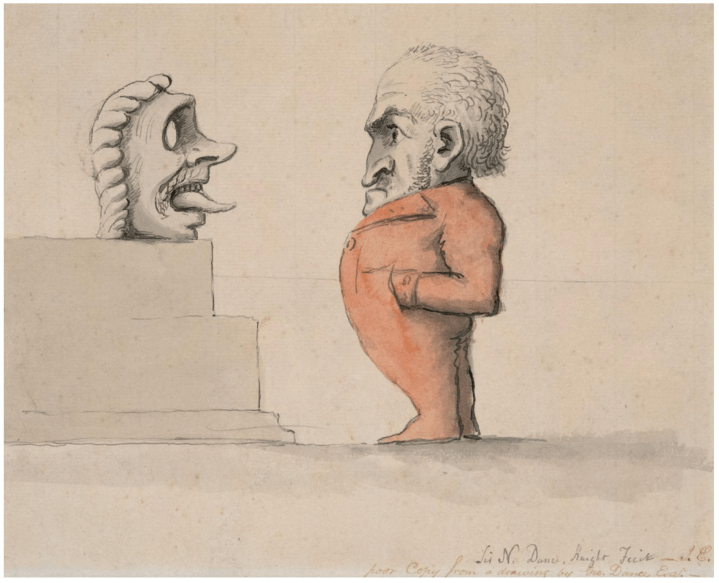
Nathaniel Dance, The Antiquarian, ca.1800, pen, ink, and watercolor.
◊ ◊ ◊ ◊ ◊
The application form is available here:
Caricature and the Grotesque: Early Modern Prints and Politics
Graduate Student Seminar led by Peter Parshall, with Cynthia Roman and Freyda Spira
The Lewis Walpole Library and Yale University Art Gallery, 21–22 May 2025
Applications accepted until 12 May 2025 (with rolling acceptance)
Distortion takes many different forms and plays a role in all artistic traditions. In one sense or another the pictorial response to the world has always shown an inclination to turn things inside out. Our task in this two-day graduate seminar will be to consider this phenomenon as it evolves in the graphic arts from the Renaissance into the early nineteenth century. In this admittedly broad setting we shall concentrate specifically on the use of distortion in political and social contexts, especially in printmaking where the wide and efficient distribution of texts and pictures first became possible. How does the use of caricature, satire, and the grotesque inflect the message of an image? What lies behind its preference for the artist and its appeal to the viewer? Does a potentially ‘popular’ medium like printing inevitably lead to the embrace of the grotesque and a conscious degradation of pictorial rhetoric?
We shall approach these questions through a discussion of original works of art, primarily works available in the Yale University Art Gallery and the Lewis Walpole Library. The main areas of study will be: Renaissance prints and the transformation of the grotesque; the invention of modern caricature with particular attention to anti-Semitism; the flourishing of British caricature in the eighteenth century; William Hogarth and social satire as political argument; and last, Francisco Goya and the relation between realism and fantasy. There will be short readings for each of four sessions held over two consecutive days. The emphasis will be on group discussion conducted as an open forum and inviting all manner of inquiry pertinent to the questions being addressed and the objects at hand.
With space limited to 10 participants, this program is open by application. Applications will be reviewed and successful applicants notified on a rolling basis until 12 May 2025, or until enrollment is filled. This seminar is sponsored by the Lewis Walpole Library, Yale University. Please contact cynthia.roman@yale.edu with questions.
• Peter Parshall, former Jane Neuberger Goodsell Professor of Art and Humanities at Reed College and Curator of Old Master Prints at the National Gallery of Art
• Cynthia Roman, Curator of Prints, Drawings, and Paintings, the Lewis Walpole Library, Yale University
• Freyda Spira, Robert L. Solley Curator of Prints and Drawings, Yale University Art Gallery
Peter Parshall has written and lectured widely on early modern art with special emphasis on the history of prints, the history and the organization of collecting, and Renaissance art theory. He co-authored with David Landau The Renaissance Print (1994), recipient of the Mitchell Prize. Among exhibitions curated are: The Unfinished Print (2001); Origins of European Printmaking (2005) with Rainer Schoch; and The Darker Side of Light: Arts of Privacy, 1850–1900 (2008). Since formal retirement he has pursued several topics of current interest and is presently writing a book on art and politics.
Call for Panels | CAA in Chicago, 2026
From CAA:
114th Annual Conference of the College Art Association
Hilton Chicago, 18–21 February 2026
Panel Proposals due by 25 April 2025
The CAA Annual Conference is the largest convening of art historians, artists, designers, curators, and visual arts professionals. Each year we offer sessions submitted by our members, committees, and affiliated societies that deliver a wide range of program content. The 114th Annual Conference will take place at the Hilton Chicago, 18–21 February 2026. The conference will be held in person with a selection of hybrid sessions and events. CAA leadership, in collaboration with the Annual Conference Committee, is reviewing participant and attendee feedback from the 113th Annual Conference to determine any format adjustments needed for the 2026 program. Please check back regularly for updates and see this page for important information.
t i m e l i n e
March 15: Call for Proposals period begins; submission forms open
April 25: Deadline for CAA114 session, workshop, and presentation submissions
Mid-July: Submitters notified of acceptance or rejection
July: Affiliated Society Business Meeting & Reunion or Reception request forms open
Late July: Call for Participation (CFP) opens
Late August: Deadline for CFP submissions
Mid September: Deadline for chairs of sessions soliciting contributors to make decisions and add to session entry
Early October: Registration opens and conference schedule is announced
December 5: Access accommodation requests for in-person and/or remote participants due to CAA.
February 18–21: Annual Conference
New Book | Jewish Country Houses
From Brandeis UP:
Juliet Carey and Abigail Green, eds., with photography by Hélène Binet, Jewish Country Houses (Waltham, MA: Brandeis University Press, 2024), 300 pages, ISBN: 978-1684582204, $60. Part of the Tauber Institute Series for the Study of European Jewry.
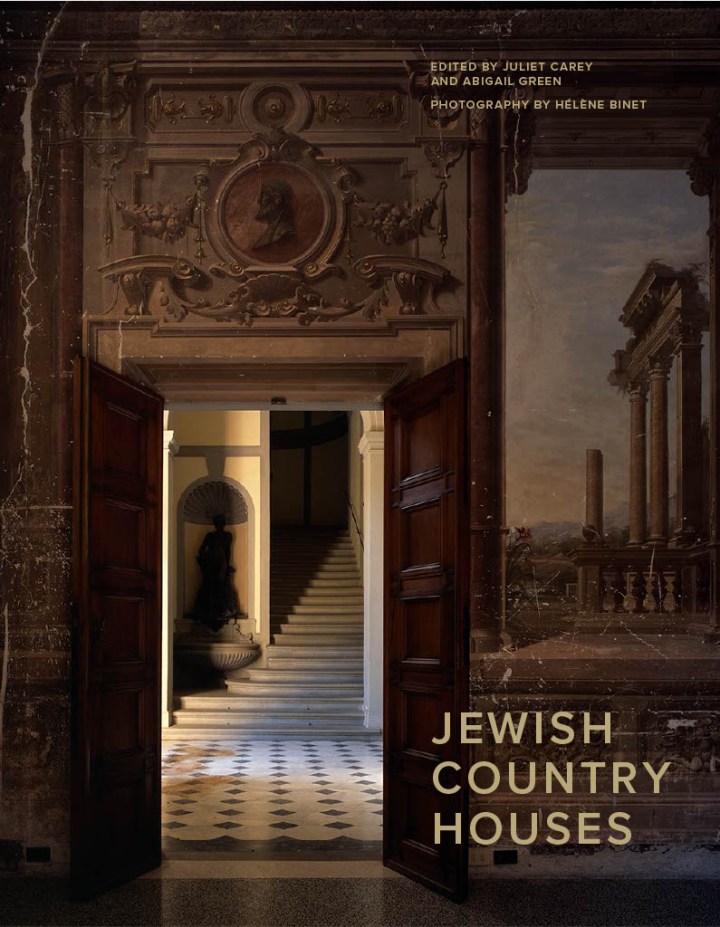 Country houses are powerful symbols of national identity, evoking the glamorous world of the landowning aristocracy. Jewish country houses—properties that were owned, built, or renewed by Jews—tell a more complex story of prejudice and integration, difference and connection. Many had spectacular art collections and gardens. Some were stages for lavish entertaining, while others inspired the European avant-garde. A few are now museums of international importance, many more are hidden treasures, and all were beloved homes that bear witness to the remarkable achievements of newly emancipated Jews across Europe—and to a dream of belonging that mostly came to a brutal end with the Holocaust. Lavishly illustrated with historical images and a new body of work by the celebrated photographer Hélène Binet, this book is the first to tell their story, from the playful historicism of the National Trust’s Waddesdon Manor in Buckinghamshire to the modernist masterpiece that is the Villa Tugendhat in the Czech city of Brno—and across the pond to the United States, where American Jews infused the European country house tradition with their own distinctive concerns and experiences. This book emerges from a four-year research project funded by the UK Arts and Humanities Research Council that aims to establish Jewish country houses as a focus for research, a site of European memory, and a significant aspect of European Jewish heritage and material culture.
Juliet Carey is senior curator at Waddesdon Manor. Abigail Green is an Oxford historian and author of the award-winning Moses Montefiore: Jewish Liberator, Imperial Hero.
◊ ◊ ◊ ◊ ◊
A conversation with the authors will take place at Yale on Monday:
Juliet Carey and Abigail Green | Jewish Country Houses
Yale University, New Haven, 24 March 2025, 4pm
Juliet Carey and Abigail Green will discuss their new book, Jewish Country Houses, which explores these remarkable houses, their architecture and collections, and the lives of the extraordinary men and women who created and transformed them. Moderated by Laurel O. Peterson, Assistant Curator of Prints and Drawings, Yale Center for British Art; the event is cosponsored by the Yale Center for British Art and Yale Jewish Studies Program.










 Enfilade
leave a comment