Call for Papers | Staging the Heroine, 1350–1800
From ArtHist.net:
Staging the Heroine: The Construction and Performance of Female Heroism in
Literature, the Visual Arts, and Theatre, 1350–1800
Leiden University, 3–5 June 2026
Proposals due by 1 September 2025
In early modern culture, heroines are almost omnipresent: they play an important role in narrative fiction and poetry, are described in biographies and collections of epigrams, are depicted in paintings and engravings, rendered in sculptures, and staged in tragedies, melodramas, pastorals, and in the early modern opera. Our conference/project aims at mapping the presence, representation, adaptation, and evaluation of female heroines in literature as well as in the visual and performative arts.
The fundamental aim of the project is to understand how literary, rhetorical, pictorial, and performance-related devices were used to stage heroines across different media. Rhetoric is here understood in a broader sense, e.g., including the literary techniques of heroic characterization and the narratological strategies used to turn actions by women into acts of female heroism. We also include here the conceptualisations of heroic (normally tragic) female characters, as they were prescribed in early modern artes poeticae, often in explicit or implicit dialogue with Aristotle’s influential Poetics. We are further interested in pictorial devices, such as the ability of visual artists to express emotions through the body language and facial expressions of the protagonists, and through the creation of a mis-en-scene. We especially encourage participants to investigate possible cross-fertilisation between artistic fields: how did textual rhetoric influence the visual and performative arts—and vice versa, what role did pictorial rhetoric play in the composition of literary texts, theater plays, or opera? Was there a theatrical manner of staging heroines in painting? We are also interested in the influence of performance practices on the conceptualisation of female heroism: how did the then current embodied techniques that actors and singers used to express emotions influence the construction of the heroine? Were there specific performance guidelines for male actors portraying female characters?
Closely related to this set of questions is another major area of interest to the project, which regards the role that exemplary heroines from classical antiquity and the biblical tradition played in the formation of early modern heroines. What textual and pictorial sources were used by early modern artists and writers, how did they interpret, appropriate, adapt, reshape, and apply them? How do female heroic figures acquire a new configuration or greater heuristic complexity in the translation of sources into another medium, language, or historical or cultural context? How do artworks redefine female heroism in this process of transmission and reception? The project especially encourages cross-medial and/or diachronic analyses of the representation of prominent heroines (e.g., Judith, Dido, Medea). What points of continuity and discontinuity can be discerned in different interpretations and representational strategies of the female heroism of such well-known figures in literature, the visual arts and on the stage? How do differences relate to specific historical circumstances and institutions, and to ongoing philosophical debates about female virtuosity, religious beliefs, intellectual practices, and political developments?
From this perspective, we particularly welcome source-oriented contributions tracing the reception or afterlife of specific textual models. What exactly was the impact of formative models such as the tragedies of Seneca or Ovid’s Epistulae heroidum on the early modern construction of heroines? And what was the role of early modern textual models such as Boccaccio’s 14th-century mythographical works De mulieribus claris and Genealogia deorum gentilium? De mulieribus claris was one of the most successful works of the period, appearing in numerous translations and editions. It would be interesting to map its reception between c. 1360 and c. 1700 and to tease out the role it played in the formation of the early modern heroine. The same is true for other modern models: how did, e.g., the great female figures of vernacular epics like Ariosto’s Orlando furioso or Tasso’s Gerusalemme liberata impact representations of and discourse on female heroism?
Since the project aims at yielding new insights into early modern approaches to female virtue and heroism, literary, rhetorical, and visual analyses should be based on fundamental, culturally grounded questions such as: is there a specific set of female virtues and vices that recur in heroines, and if there is, how does it relate to traditional catalogues of male virtues and male exemplarity? Is mental complexity ascribed to those female characters who were generally portrayed as negative, destructive, or sinful (like Medea or Cleopatra), or rather to those who were positively evaluated for displaying a kind of moral behaviour that was in line with current Christian values? Was it specifically the violation of current moral values that fuelled the early modern fascination with heroines? Was the attention paid to female heroism (and anti-heroism) part of the emerging interest in cultural criticism, e.g. by humanists and other early modern intellectuals? Was it also part of the moral education of males who were taught not to fall victim of so-called destructive women?
We invite proposals that engage with the approaches and questions outlined above. Abstracts (of max. 250 words) should be sent to Christoph Pieper (c.pieper@hum.leidenuniv.nl) by 1 September 2025. We plan to publish the results of the conference as an edited volume in the series Intersections (Brill/De Gruyter) in 2027.
Karl Enenkel (Münster)
Emma Grootveld (Leiden)
Christoph Pieper (Leiden)
Jed Wentz (Leiden)
The Burlington Magazine, April 2025
The long 18th century in the April issue of The Burlington:
The Burlington Magazine 167 (April 2025) | Art in Britain
e d i t o r i a l
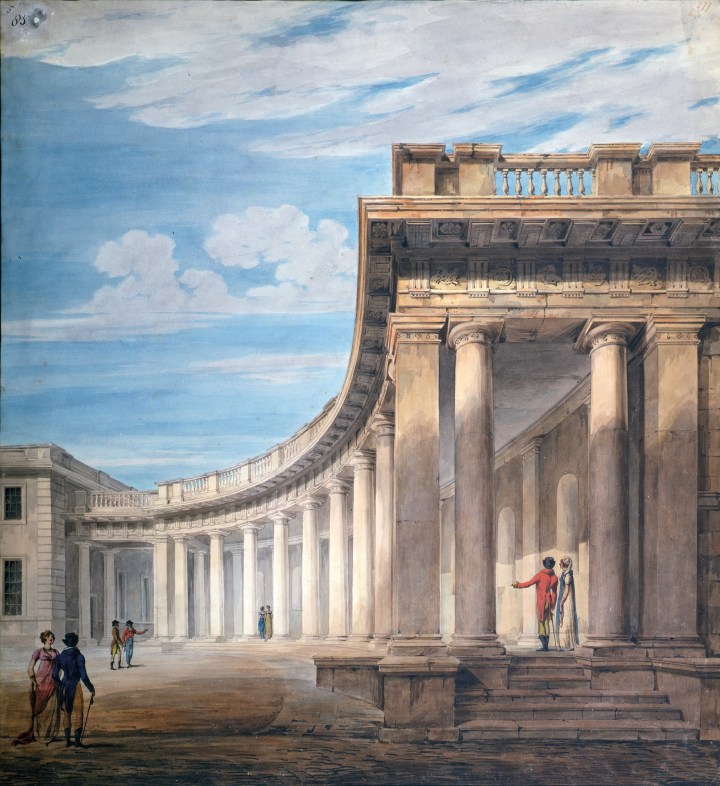
RA Lecture Illustration of the Colonnade at Burlington House, produced by the Soane Office. ca.1806–17, pen, pencil, wash and coloured washes on wove paper, 72 × 67 cm (London: Sir John Soane’s Museum).
• “Boughton’s Heavenly Visions,” pp. 327–29.
Boughton in Northamptonshire is an improbable dream of a house. It is an essay in restrained French Classicism that was gently set into the English countryside in the late seventeenth century, encasing an older building. The house was chiefly the creation of the francophile Ralph, 1st Duke of Montagu (1638–1709), who served as Charles II’s ambassador to the court of Louis XIV. Its most splendid internal feature is the so-called Grand Apartment, which consists of a parade of impressive state rooms.
a r t i c l e s
• William Aslet, “The Discovery of James Gibbs’s Designs for the Façade of Burlington House,” pp. 354–67.
A reassessment of drawings by Gibbs in the Ashmolean Museum, Oxford, demonstrates that, as well as the stables and service wings and celebrated colonnade, the architect provided an unexecuted design for the façade of Burlington House, London—an aspect of the project with which he has hitherto not been connected. This discovery deepens our understanding of one of the most important townhouse commissions of eighteenth-century Britain and the evolving taste of Lord Burlington.
• Adriana Concin, “A Serendipitous Discovery: A Lost Italian Portrait from Horace Walpole’s Miniature Cabinet,” pp. 368–75.
Among the portraits in Horace Walpole’s renowned collection at Strawberry Hill were a number of images of Bianca Cappello, a Medici grand duchess of some notoriety. Here the rediscovery of a late sixteenth-century Italian miniature once displayed in Walpole’s cabinet is discussed; long thought to depict Cappello, it is now attributed to Lavinia Fontana.
• Edward Town and Jessica David, “The Portraits of Alice Spencer, Countess of Derby, and Her Family by Paul van Somer,” pp. 376–85.
Research into a portrait at the Yale Center for British Art, New Haven, has revealed the identities of twelve Jacobean portraits attributed to the Flemish painter Paul van Somer. The portraits were probably commissioned by Alice Spencer, Countess of Derby, and create a potent illustration of her dynastic heritage. [The research depends in part upon the eighteenth-century provenance of these portraits.]
r e v i e w s
• Anna Koldeweij, Review of the exhibition Rachel Ruysch: Nature into Art (Alte Pinakothek, Munich, 2024–25; Toledo Museum of Art, 2025; MFA, Boston 2025), pp. 393–96.
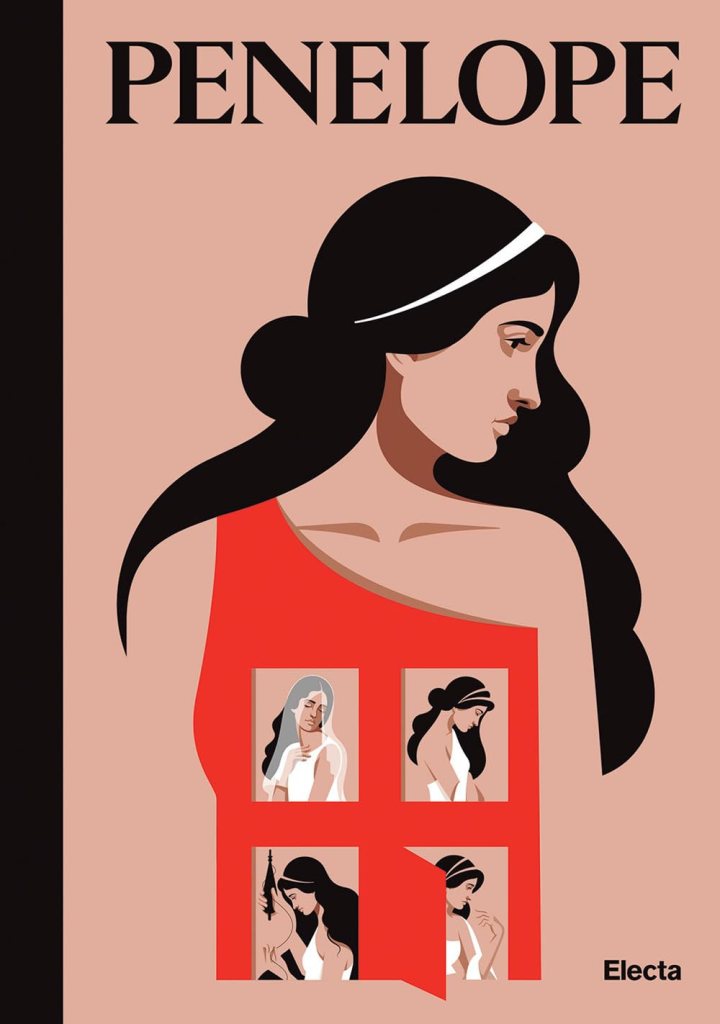
• Christine Gardner-Dseagu, Review of the exhibition catalogue Penelope, ed. by Alessandra Sarchi and Claudio Franzoni (Electa, 2024), pp. 404–07.
• Andreina D’Agliano, Review of the exhibition catalogue, Magnificence of Rococo: Kaendler’s Meissen Porcelain Figures, ed. by Alfredo Reyes and Claudia Bodinek (Arnoldsche, 2024), pp. 412–14.
• Stephen Lloyd, Review of Susan Sloman, British Portrait Miniatures from the Thomson Collection (Ad Ilissum, 2024), pp. 418–19.
• Natalie Rudd, Review of Discovering Women Sculptors, ed. by Marjorie Trusted and Joanna Barnes (PSSA Publishing, 2023), pp. 422–23.










leave a comment