New Book | Fragmentary Forms: A New History of Collage
From Princeton UP (with most books now 50% off, until May 31 with code BLOOM50) . . .
Freya Gowrley, Fragmentary Forms: A New History of Collage (Princeton: Princeton University Press, 2024), 400 pages, ISBN: 978-0691253749, £50 / $60.
 A beautifully illustrated global history of collage from the origins of paper to today
While the emergence of collage is frequently placed in the twentieth century when it was a favored medium of modern artists, its earliest beginnings are tied to the invention of paper in China around 200 BCE. Subsequent forms occurred in twelfth-century Japan with illuminated manuscripts that combined calligraphic poetry with torn colored papers. In early modern Europe, collage was used to document and organize herbaria, plant specimens, and other systems of knowledge. In the eighteenth and nineteenth centuries, collage became firmly associated with the expression of intimate relations and familial affections. Fragmentary Forms offers a new, global perspective on one of the world’s oldest and most enduring means of cultural expression, tracing the rich history of collage from its ancient origins to its uses today as a powerful tool for storytelling and explorations of identity.
Presenting an expansive approach to collage and the history of art, Freya Gowrley explores what happens when overlapping fragmentary forms are in conversation with one another. She looks at everything from volumes of pilgrims’ religious relics and Victorian seaweed albums to modernist papiers collés by Pablo Picasso and Georges Braque and quilts by Faith Ringgold exploring African-American identity. Gowrley examines the work of anonymous and unknown artists whose names have been lost to history, either by accident or through exclusion. Featuring hundreds of beautiful images, Fragmentary Forms demonstrates how the use of found objects is an important characteristic of this unique art form and shows how collage is an inclusive medium that has given voice to marginalized communities and artists across centuries and cultures.
Freya Gowrley is a leading scholar of the cultural lives of images and objects. She is based at the University of Bristol, where she writes about the relationship between art and identity from the early modern period to the present day. She is the author of Domestic Space in Britain, 1750–1840: Materiality, Sociability, and Emotion.
c o n t e n t s
Introduction
1 New Material Possibilities
2 Divine Collections
3 Knowledge and Owning the World
4 Material Proliferations
5 Desire and Devotion
6 Craft into Canon
7 Objects of Modernity
8 Radical Possibilities
Conclusion
Bibliography
Index
Acknowledgments
Credits
Penn Dry Goods Market Textile Lecture Series
From the Schwenkfelder Library & Heritage Center, as noted by The Decorative Arts Trust:
Penn Dry Goods Market Textile Lecture Series
Schwenkfelder Library & Heritage Center, Pennsburg, Pennsylvania, 16–17 May 2025
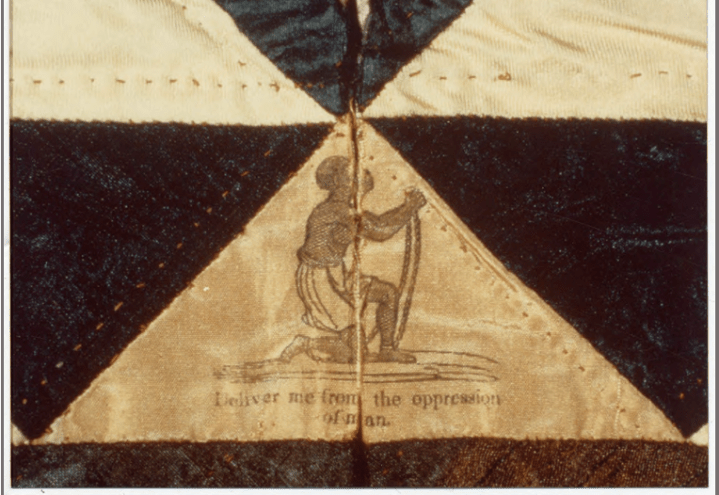
Image: Deborah Simmons Coates quilt detail, 1840s–1850s, Lancaster History — to be discussed in Mariah Kupfner’s talk.
The Penn Dry Goods Market Textile Lecture Series offers a chance to hear nationally recognized authorities in textile history on a broad range of topics—from embroidered hand towels to Appalachian weaving, from quilts to samplers, and from Scandinavian American and African American traditions. All lectures require a ticket ($25/lecture prepaid or $30 at door). Each ticket also provides access to the Penn Dry Goods Market antique show.
f r i d a y , 1 6 m a y
8.45am ‘This is the Way I Pass My Time’: Mennonite Hand Towels from Eastern Pennsylvania — Joel Alderfer (Collections Manager, Mennonite Heritage Center)
10.00 Colonialism, Power, and Identity: Fashion in American Portraits, 1670–1840 — Lynne Bassett (Independent scholar, curator, and author)
12.45 Heritage Craft, Community, and Continuity among Scandinavian Americans — Josh Brown (Skwierczynski University Fellow, University of Wisconsin-Eau Claire, and folk weaver)
2.00 Pennsylvania German Quilt Turning: 40 Examples from Both Sides of the Susquehanna — Debby Cooney (Independent quilt scholar)
3.15 Hidden in Plain Sight: Uncovering the Samplers of Black Girls — Lynne Anderson (President of the Sampler Consortium and Director of the Sampler Archive Project)
s a t u r d a y , 1 7 m a y
8.45am A Usable Past: American Hand-Weaving Revival in Appalachia, 1892–1940 — Matthew Monk (Linda Eaton Associate Curator of Textiles, Winterthur)
10.00 Pennsylvania German Quilt Turning: 40 Examples from Both Sides of the Susquehanna — Debby Cooney (Independent quilt scholar)
11.15 ‘So Intimately Are We Connected’: Antislavery Textiles and the Weight of Cotton — Mariah Kupfner (Assistant Professor of American Studies and Public Heritage, School of Humanities, Penn State Harrisburg)
12.45 The Joys of Tape Weaving as Viewed through the Eleanor Bittle Collection — Johannes Zinzendorf and Zephram de Colebi (The Mahantongo Heritage Center at the Hermitage)
2.00 A Legacy in Thread: Schoolgirl Needlework and Female Education in Dutchess County, New York — Stacy Whittaker (Independent needlework scholar)
3.15 The Quilt That Never Was: Solving the Mystery of the Inscribed Great Valley Quilt Blocks — Charlene Bongiorno Stephens and William Stephens (Independent quilt scholars)










 Enfilade
leave a comment