Haughton Seminar | Treasures: Creation, Emulation, and Imitation

Gold Box with Hanau marks for Les Frères Toussaint, ca. 1780
(Nuremberg: Germanisches Nationalmuseum, HG13559)
◊ ◊ ◊ ◊ ◊
This year’s Haughton International Seminar:
Treasures: Creation, Emulation, and Imitation
The British Academy, 11 Carlton House Terrace, London, 25–26 June 2025
Each year the Haughton International Seminar draws together a group of eminent international speakers to share their knowledge and passion with an appreciative audience. This year’s seminar, Treasures: Creation, Emulation, and Imitation—dedicated to the memory of Dame Rosalind Savill—will take place in London at The British Academy on Wednesday, 25th and Thursday, 26th June.
From the earliest cave painters to the stars of today, artists have balanced invention with imitation. Imitation looks to nature—the human form or the shape of a flower—but artists also imitate each other. In some cases imitation is loose and a point of departure; in others it is exact but made as honest copies; and in yet others it is done to impersonate and to deceive. Addressing a wide range of media—including the 18th-century ‘Porcelain Fever’ of Augustus the Strong, the 19th-century Arts & Crafts movement, royal sculptural collections, gold boxes, and more—the seminar will explore the extent to which the works were creations, emulations, or imitations. More information about the 2025 seminar, along with previous years’ offerings, can be found at the event website, where one can also purchase tickets. Booking in advance is essential due to limited numbers.
p r e s e n t a t i o n s
• Adriano Aymonino — Media Transfer: Creating, Emulating, and Imitating the Antique in Early Modern Europe
• Emerson Bowyer — Canova: Sketching in Clay
• Tobias Capwell — The Helmschmids of Augsburg: German Renaissance Masters of the Art of Armour
• Angela Caròla-Perrotti — Del Vecchio, Giustiniani, Mollica, or Colonnese? A Preliminary Approach to Differentiating Vases ‘all’Etrusca’ Produced in Naples between 1800 and 1850
• Ivan Day — The Surtout de Table: From Trionfi da Tavola to Gilt Bronze
• Katharina Hantschmann — The Best Teachers: Role Models for Porcelain Production and a Virtuoso in Nymphenburg
• J. V. G Mallet and Elisa Sani — Italian Maiolica in the Rothschild Collection at Waddesdon Manor
• Jonathan Marsden — Changing Seasons: Sculptural Metamorphoses from the Royal Collection
• Roger Massey — Ingenuity and Plagiarism: The Concept of Originality in 18th-Century English Pottery and Porcelain Figures
• Stacey Pierson — Archaism as Imitation: Recreating the Past in Chinese Porcelain
• Justin Raccanello — From Imitation to Modernity: Margaret and Flavia Cantagalli and the Art Nouveau
• Linda Roth — Ceramicist Taxile Doat (1851–1938): Imitation to Innovation
• Timothy Schroder — All the Glitters is Not Gold: Perception and Deception in the World of Goldsmithery
• Heike Zech — Made in Paris? So-called poinçons de prestige on 18th-Century Goldboxes
Call for Papers | Staging the Heroine, 1350–1800
From ArtHist.net:
Staging the Heroine: The Construction and Performance of Female Heroism in
Literature, the Visual Arts, and Theatre, 1350–1800
Leiden University, 3–5 June 2026
Proposals due by 1 September 2025
In early modern culture, heroines are almost omnipresent: they play an important role in narrative fiction and poetry, are described in biographies and collections of epigrams, are depicted in paintings and engravings, rendered in sculptures, and staged in tragedies, melodramas, pastorals, and in the early modern opera. Our conference/project aims at mapping the presence, representation, adaptation, and evaluation of female heroines in literature as well as in the visual and performative arts.
The fundamental aim of the project is to understand how literary, rhetorical, pictorial, and performance-related devices were used to stage heroines across different media. Rhetoric is here understood in a broader sense, e.g., including the literary techniques of heroic characterization and the narratological strategies used to turn actions by women into acts of female heroism. We also include here the conceptualisations of heroic (normally tragic) female characters, as they were prescribed in early modern artes poeticae, often in explicit or implicit dialogue with Aristotle’s influential Poetics. We are further interested in pictorial devices, such as the ability of visual artists to express emotions through the body language and facial expressions of the protagonists, and through the creation of a mis-en-scene. We especially encourage participants to investigate possible cross-fertilisation between artistic fields: how did textual rhetoric influence the visual and performative arts—and vice versa, what role did pictorial rhetoric play in the composition of literary texts, theater plays, or opera? Was there a theatrical manner of staging heroines in painting? We are also interested in the influence of performance practices on the conceptualisation of female heroism: how did the then current embodied techniques that actors and singers used to express emotions influence the construction of the heroine? Were there specific performance guidelines for male actors portraying female characters?
Closely related to this set of questions is another major area of interest to the project, which regards the role that exemplary heroines from classical antiquity and the biblical tradition played in the formation of early modern heroines. What textual and pictorial sources were used by early modern artists and writers, how did they interpret, appropriate, adapt, reshape, and apply them? How do female heroic figures acquire a new configuration or greater heuristic complexity in the translation of sources into another medium, language, or historical or cultural context? How do artworks redefine female heroism in this process of transmission and reception? The project especially encourages cross-medial and/or diachronic analyses of the representation of prominent heroines (e.g., Judith, Dido, Medea). What points of continuity and discontinuity can be discerned in different interpretations and representational strategies of the female heroism of such well-known figures in literature, the visual arts and on the stage? How do differences relate to specific historical circumstances and institutions, and to ongoing philosophical debates about female virtuosity, religious beliefs, intellectual practices, and political developments?
From this perspective, we particularly welcome source-oriented contributions tracing the reception or afterlife of specific textual models. What exactly was the impact of formative models such as the tragedies of Seneca or Ovid’s Epistulae heroidum on the early modern construction of heroines? And what was the role of early modern textual models such as Boccaccio’s 14th-century mythographical works De mulieribus claris and Genealogia deorum gentilium? De mulieribus claris was one of the most successful works of the period, appearing in numerous translations and editions. It would be interesting to map its reception between c. 1360 and c. 1700 and to tease out the role it played in the formation of the early modern heroine. The same is true for other modern models: how did, e.g., the great female figures of vernacular epics like Ariosto’s Orlando furioso or Tasso’s Gerusalemme liberata impact representations of and discourse on female heroism?
Since the project aims at yielding new insights into early modern approaches to female virtue and heroism, literary, rhetorical, and visual analyses should be based on fundamental, culturally grounded questions such as: is there a specific set of female virtues and vices that recur in heroines, and if there is, how does it relate to traditional catalogues of male virtues and male exemplarity? Is mental complexity ascribed to those female characters who were generally portrayed as negative, destructive, or sinful (like Medea or Cleopatra), or rather to those who were positively evaluated for displaying a kind of moral behaviour that was in line with current Christian values? Was it specifically the violation of current moral values that fuelled the early modern fascination with heroines? Was the attention paid to female heroism (and anti-heroism) part of the emerging interest in cultural criticism, e.g. by humanists and other early modern intellectuals? Was it also part of the moral education of males who were taught not to fall victim of so-called destructive women?
We invite proposals that engage with the approaches and questions outlined above. Abstracts (of max. 250 words) should be sent to Christoph Pieper (c.pieper@hum.leidenuniv.nl) by 1 September 2025. We plan to publish the results of the conference as an edited volume in the series Intersections (Brill/De Gruyter) in 2027.
Karl Enenkel (Münster)
Emma Grootveld (Leiden)
Christoph Pieper (Leiden)
Jed Wentz (Leiden)
The Burlington Magazine, April 2025
The long 18th century in the April issue of The Burlington:
The Burlington Magazine 167 (April 2025) | Art in Britain
e d i t o r i a l
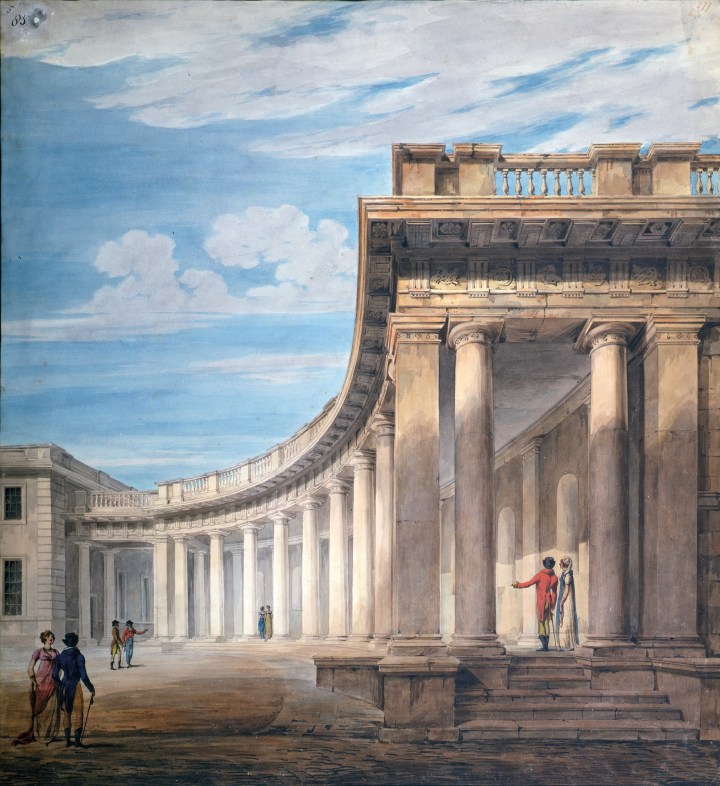
RA Lecture Illustration of the Colonnade at Burlington House, produced by the Soane Office. ca.1806–17, pen, pencil, wash and coloured washes on wove paper, 72 × 67 cm (London: Sir John Soane’s Museum).
• “Boughton’s Heavenly Visions,” pp. 327–29.
Boughton in Northamptonshire is an improbable dream of a house. It is an essay in restrained French Classicism that was gently set into the English countryside in the late seventeenth century, encasing an older building. The house was chiefly the creation of the francophile Ralph, 1st Duke of Montagu (1638–1709), who served as Charles II’s ambassador to the court of Louis XIV. Its most splendid internal feature is the so-called Grand Apartment, which consists of a parade of impressive state rooms.
a r t i c l e s
• William Aslet, “The Discovery of James Gibbs’s Designs for the Façade of Burlington House,” pp. 354–67.
A reassessment of drawings by Gibbs in the Ashmolean Museum, Oxford, demonstrates that, as well as the stables and service wings and celebrated colonnade, the architect provided an unexecuted design for the façade of Burlington House, London—an aspect of the project with which he has hitherto not been connected. This discovery deepens our understanding of one of the most important townhouse commissions of eighteenth-century Britain and the evolving taste of Lord Burlington.
• Adriana Concin, “A Serendipitous Discovery: A Lost Italian Portrait from Horace Walpole’s Miniature Cabinet,” pp. 368–75.
Among the portraits in Horace Walpole’s renowned collection at Strawberry Hill were a number of images of Bianca Cappello, a Medici grand duchess of some notoriety. Here the rediscovery of a late sixteenth-century Italian miniature once displayed in Walpole’s cabinet is discussed; long thought to depict Cappello, it is now attributed to Lavinia Fontana.
• Edward Town and Jessica David, “The Portraits of Alice Spencer, Countess of Derby, and Her Family by Paul van Somer,” pp. 376–85.
Research into a portrait at the Yale Center for British Art, New Haven, has revealed the identities of twelve Jacobean portraits attributed to the Flemish painter Paul van Somer. The portraits were probably commissioned by Alice Spencer, Countess of Derby, and create a potent illustration of her dynastic heritage. [The research depends in part upon the eighteenth-century provenance of these portraits.]
r e v i e w s
• Anna Koldeweij, Review of the exhibition Rachel Ruysch: Nature into Art (Alte Pinakothek, Munich, 2024–25; Toledo Museum of Art, 2025; MFA, Boston 2025), pp. 393–96.
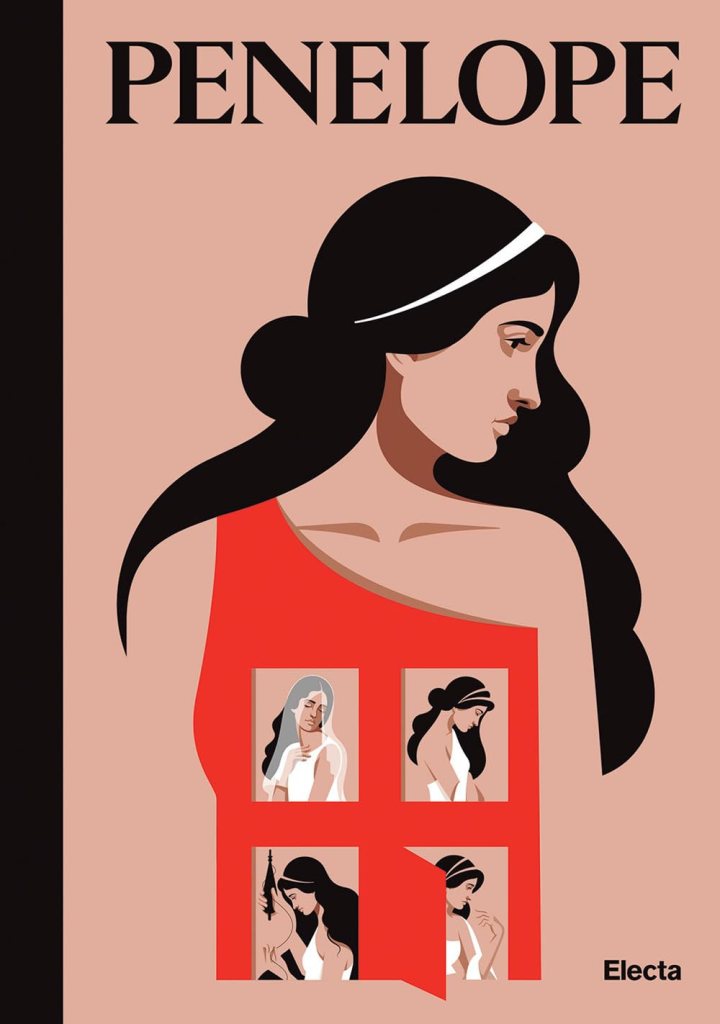
• Christine Gardner-Dseagu, Review of the exhibition catalogue Penelope, ed. by Alessandra Sarchi and Claudio Franzoni (Electa, 2024), pp. 404–07.
• Andreina D’Agliano, Review of the exhibition catalogue, Magnificence of Rococo: Kaendler’s Meissen Porcelain Figures, ed. by Alfredo Reyes and Claudia Bodinek (Arnoldsche, 2024), pp. 412–14.
• Stephen Lloyd, Review of Susan Sloman, British Portrait Miniatures from the Thomson Collection (Ad Ilissum, 2024), pp. 418–19.
• Natalie Rudd, Review of Discovering Women Sculptors, ed. by Marjorie Trusted and Joanna Barnes (PSSA Publishing, 2023), pp. 422–23.
New Book | Life in the Georgian Parsonage
From Bloomsbury:
Jon Stobart, Life in the Georgian Parsonage: Morals, Material Goods, and the English Clergy (London: Bloomsbury Visual Arts, 2025), 392 pages, ISBN: 978-1350382084 (hardback), $115 / ISBN: 9781350382077 (paperback), $38.
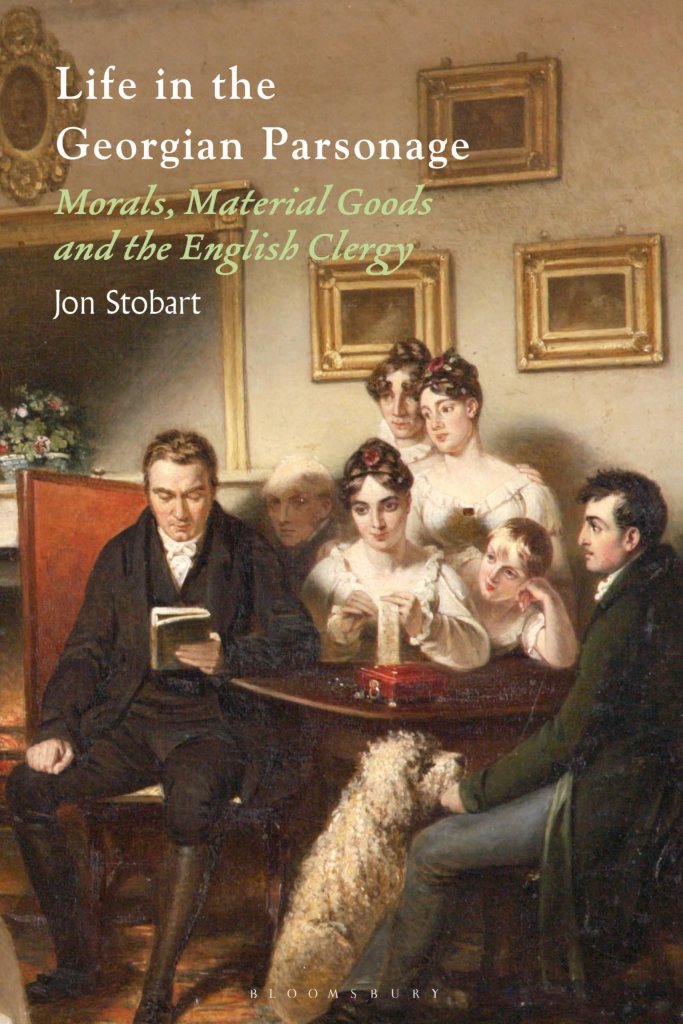
An innovative approach in the field of material culture and consumption studies, Life in the Georgian Parsonage looks at the houses, consumption, and lifestyle of Church of England clergy in the long 18th century, linking moral debates and popular representations of the clergy to the material culture of their houses and their motivations as consumers. By focusing on ethical and moral dimensions of consumer practices, it challenges established readings of consumption in the long 18th century as an essentially secular process in which goods were markers of wealth, status, and taste, by bringing the clergyman into the frame—their lives, their habits, and their homes.
Cross-disciplinary in its approach, combining material culture and religious and social history and sitting at the intersection of these fields, Life in the Georgian Parsonage fills a significant gap, enhancing in important ways our knowledge of this group as a crucial but understudied set of 18th-century consumers, while also contributing to understanding the parish clergy of England in the context of 18th-century society and culture. Bringing together a wide range of source material—from probate inventories to personal account books, satirical prints to sermons, diaries to designs for parsonages—the author reconstructs the material lives and household arrangements of the Georgian clergy in glorious detail. Examining the parish clergy over this period of profound social and religious change through the lens of consumption, and consumption through the lives of these clergymen, has a transformative impact both on these areas of enquiry and on our understanding of English society in the 18th century.
Jon Stobart, FRHS, is Professor of History at Manchester Metropolitan University, and the editor of The Comforts of Home in Western Europe, 1700–1900 (Bloomsbury, 2020), A Taste for Luxury (Bloomsbury, 2017) with Johanna Ilmakunnas, General Editor of A Cultural History of Shopping, 6 volumes (Bloomsbury, 2022), and co-editor, with Christopher Berry, of A Cultural History of Luxury in the Age of Enlightenment (Bloomsbury, forthcoming). He is also editor of Global Goods and the Country House (2023), author of Comfort and the Eighteenth-Century Country House (2022) and co-author of Consumption and the Country House (2016).
c o n t e n t s
Introduction
1 Representations of the Clergy: Critiquing Incomes, Worldliness, and Pretension
2 The Worldliness Problem: Sermons on luxury, Moderation, and Dignity
3 The Changing Nature of the Parsonage: Improvement, Convenience, and Status
4 A World of Goods: Buying and Locating Household Belongings
5 At Home with the Clergy: Practicing Politeness and Hospitality
6 Communities of Interest: Family, Parish, and Neighbourhood
7 Personal Perspectives on Consumption: Religion, Morality, and Duty
Conclusions
Bibliography
New Book | Detailing Worlds
From Bloomsbury Publishing:
Eric Bellin, Detailing Worlds: A Conceptual History of Architectural Detail (London: Bloomsbury Visual Arts, 2025), 376 pages, ISBN: 978-1350204379, $115.
 In the 21st century, the word ‘detail’ appears constantly in discussions of building, and we use it in many different ways-yet just over 250 years ago, ‘detail’ meant nothing at all particular to the work of architects, engineers, or builders. Detailing Worlds is the first book to examine the origins and evolution of ‘detail’ as a concept with meanings specific to practices of building. By exploring how past meanings and roles were ascribed to detail in different ‘worlds of practice’—those of academics, technicians, students, engineers, and architects—Detailing Worlds looks to the future, illuminating the ways disciplinary knowledge and the concepts on which it is based evolve and change over time. It is a story about how such concepts are slowly but constantly reconceived, redefined, and transformed by individuals as they interact with one another, and how this process is shaped by the ever-changing sociocultural and technological dimensions of the world around us. Richly illustrated with more than 200 images—including figures from rare texts, archival student drawings, and practitioners’ construction documents from the 18th through 20th centuries—Detailing Worlds ventures to tell the history of a disciplinary-specific idea and offer insights about how we think and speak about the practice of building today.
Eric Bellin is an Assistant Professor at Thomas Jefferson University’s College of Architecture and the Built Environment in Philadelphia, where he teaches courses in design, representation, and history. In addition to his PhD from the University of Pennsylvania, he holds March and MS in Architectural Pedagogy degrees from the University of Florida.
c o n t e n t s
1 Introduction: The Question of Detail
2 The Academic
3 The Technician
4 The Student
5 The Engineer
6 The Architect
7 Conclusion: On the Practice of Detailing
Index
Symposium | Opus Architectonicum
From ArtHist.net:
Opus Architectonicum: A Symposium Honoring Joseph Connors
Online and in-person, Notre Dame Rome, Roma, 12 May 2025
Organized by Silvia Dall’Olio and Susan Klaiber
This international symposium marks the eightieth birthday of the distinguished architectural historian Joseph Connors and his retirement from active teaching. Currently the Michael C. Duda Visiting Professor at the University of Notre Dame School of Architecture, Connors has shaped the study of Baroque art, architecture, and urbanism—particularly of Borromini and the city of Rome—as a scholar, teacher, and mentor for half a century. In his role as a visionary institutional leader, Connors has fostered innovative work in early modern Italian studies, the wider humanities, and the visual and performing arts.
The symposium gathers European colleagues and former students to celebrate this cherished friend. Presentations will explore issues in the history of art and architecture, their methodologies, and historiography, all using Joe’s personal ‘Opus Architectonicum’ as a point of departure. Attendance is free, but registration required at this link. The symposium will also be live streamed; those interested in following the symposium online should register at the same link on the symposium webpage, checking the box for the video link rather than in-person attendance.
p r o g r a m
9.00 Welcome — Silvia Dall’Olio (Director, Notre Dame Rome), David Mayernik (Notre Dame Architecture), and Susan Klaiber (co-organizer)
9.20 Session 1 | Celebrating Joseph Connors
Chair: Susan Klaiber (independent, Switzerland)
• Ingrid D. Rowland (University of Notre Dame) — Laudatio
• Barbara Jatta (Musei Vaticani) — Lievin Cruyl and the Rome of Alexander VII
10.30 Coffee
11.00 Session 2 | The Rome of Borromini
Chair: Sabina de Cavi (Universidade Nova, Lisboa)
• Augusto Roca De Amicis (Università di Roma La Sapienza) —Rivedendo i Santi Luca e Martina: Architettura come sintassi
• Alberto Bianco (Archivio della Congregazione dell’Oratorio di San Filippo Neri) — Virgilio Spada: Il progetto della Casa dei Filippini e l’identità oratoriana
• Fabio Barry (Warburg Institute) — St. Teresa in Ecstasy: Sacred or Profane Love?
12.45 Lunch break
14.00 Session 3 | Encounters with Joe and Borromini
Chair: Heather Hyde Minor (University of Notre Dame)
• Helen Hills (University of York) — Meeting Joe, via video
• Susan Klaiber (independent, Switzerland) — Borromini and Guarini: Master and Pupil?
• Sabina de Cavi (Universidade Nova, Lisboa) — ‘Borrominismi’ a Lisbona: Osservazioni preliminari sull’impatto dell’Opus Architectonicum in Portogallo
15.45 Break
16.15 Session 4 | Oltre Borromini
Chair: Fabio Barry (Warburg Institute)
• Elisabeth Kieven (Bibliotheca Hertziana) — About a Drawing by Carlo Marchionni: Delight and Despair
• Heather Hyde Minor (University of Notre Dame) — Piranesi’s Imaginary Prisons
• Susanna Pasquali (Università di Roma La Sapienza) — Qualche domanda intorno a un caffè preso nel bar nel Cortile della Biblioteca, Palazzo del Belvedere Vaticano
18.00 Reception
Conference | Watercolour and Weather, 1750–1850
From ArtHist.net:
Watercolour and Weather, 1750–1850
Musée cantonal des Beaux-Arts de Lausanne, Switzerland, 4–6 June 2025
Organized by Bérangère Poulain and Desmond Kraege
Registration due by 3 June 2025
Simultaneously with a resurgence of landscape painting, the period 1750–1850 in European art witnessed an increased interest in the weather, not only as concerns its momentary states (clouded skies, lightning), but also the broader study of meteorological phenomena and of their unfolding over time. Besides the more radical events—such as storms—that were frequently represented, this period thus developed a keen observation of subtle moments of changing weather, allowing artists to combine varied effects of light. This is true not only of the most famous British painters (Joseph Mallord William Turner, John Constable, Alexander and John Robert Cozens) but also of figures from further afield, such as Giovanni Battista Lusieri, Caspar David Friedrich, and Abraham Louis Rodolphe Ducros.
In close connection to this artistic evolution, the period under scrutiny also witnessed the development of meteorology and climatology as scientific disciplines. This led both to Luke Howard’s classification of clouds (1804) that remains in use to this day, and to the theorisation of the greenhouse effect by Joseph Fourier in 1824. A new consciousness of the atmosphere and of its complexities, leading directly to present concerns regarding climate change, can thus be traced back to this cultural environment.
This conference forms part of a broader research and teaching project at the Universities of Lausanne and Geneva concerning Swiss watercolor artist Abraham Louis Rodolphe Ducros, whose personal collection forms the original nucleus of the Lausanne MCBA Museum. The conference will include a viewing of a selection of his works. Please register for this free event by 3 June 2025 by emailing berangere.poulain@unige.ch.
w e d n e s d a y , 4 j u n e
14.00 Institutional Greetings — Juri Steiner (MCBA)
14.15 Introduction — Bérangère Poulain (Université de Genève) and Desmond Kraege (Université de Lausanne)
14.45 Session 1 | Prelude
• Ulrike Gehring (Universität Trier)
15.15 Session 2 | Discovering Weather
Chair: Camille Lévêque-Claudet
• John Robert Cozens: The ‘man of clouds’ — Timothy Wilcox (Independent Curator, Oxford; Former Curator, British Museum and Victoria & Albert Museum)
• The Depiction of Atmospheric Changes in Piedmontese Watercolour Painting between the 18th and 19th Centuries: Artists, Approaches, and Techniques — Matteo Cappellotto (PhD Student, Università degli Studi di Siena)
16.15 Pause
16.45 Session 3 | Architecture and Weather
Chair: Basile Baudez
• Water, Weather, and Colour in the Roman Architectural Academy — Tracy Ehrlich (Parsons School of Design/The New School, New York)
• Le tonnerre et le pinceau: à propos de quelques orages dans les projets d’architecture de l’Académie royale de Paris — Adrián Fernández Almoguera (Universidad Nacional de Educación a Distancia)
t h u r s d a y , 5 j u n e
10.15 Session 4 | Watercolour and Other Media
Chair: Philippe Kaenel
• Painting the Sky in Hand-Coloured Prints — Basile Baudez (Princeton University)
• The Theatre and the Easel: The Depiction of Meteorological Effects in Watercolour Painting and Stage Productions in Georgian England — Segundo J. Fernandez (Independent Scholar and Curator, Tallahassee, Florida)
11.15 Session 5 | Abraham-Louis-Rodolphe Ducros
Chair: Christian Michel
• Viewing of a selection of watercolours by A.L.R. Ducros from the MCBA
• Clouds in the Sea: A.L.R. Ducros, Weather, and Pictorial Texture — Bérangère Poulain (Université de Genève) and Desmond Kraege (Université de Lausanne)
12:30 Lunch
14.00 Session 6 | Charting Colonial Weather
Chair: Nicolas Bock
• Verdant Landscapes: Art, Observation, and Sustainability — Mari-Tere Álvarez (J. Paul Getty Museum, Los Angeles)
• Atmosphères des contrées canadiennes 1790–1820: De l’esquisse à l’œuvre achevée, l’art de dépeindre les horizons nouveaux par quelques amateurs britanniques — Marie-Claude Beaulieu (Independent Scholar, Montréal; Associate Researcher, CRIHAM – Université de Poitiers)
• Watercolour and the ‘melancholy darkness’ of Caribbean Weather in the 18th Century — Joseph D. Litts (PhD Student, Princeton University)
• Ciels en scène: Les aquarelles brésiliennes d’Hercule Florence (autour de 1830) — Martine Tabeaud (Université Paris I Panthéon Sorbonne)
16:30 Pause
16:45 Doctoral workshop
f r i d a y , 6 j u n e
10.15 Session 7 | Watercolour and Science
Chair: Nathalie Dietschy
• Les planches de Luke Howard: l’eau et les « modifications » des nuages — Anouchka Vasak (Université de Poitiers)
• Ecology and Aesthetics in Carus and Friedrich: Two Approaches to Meteorology — Elisabeth Ansel (Friedrich-Schiller-Universität Jena)
• Can Colours in Watercolour Paintings be Considered a Quantitative Climate Archive? — Christian von Savigny (Institute of Physics, Universität Greifswald)
• Volcanic Weather, 1816–1818: Tambora, Turner, and Friedrich — Dewey Hall (California State Polytechnic University, Pomona)
• Painting the Invisible: Representations of Wind Force in Watercolour — Nicola Moorby (Tate Britain, London)
13:00 Lunch
14.15 Session 8 | Revisiting the Masters
Chair: Jan Blanc
• J.M.W. Turner: Storm Chaser — Ian Warrell (Independent Curator, Brighton; Former Curator, Tate Britain)
• ‘A view unequalled in Europe’: John Constable’s Watercolours of Skies Looking over London Painted from his House in Well Walk, Hampstead in the Early 1830s — Anne Lyles (Independent Curator, London; Former Curator, Tate Britain)
Exhibition | Pastoral on Paper

Thomas Gainsborough, Landscape with Figures, Herdsman and Cattle at a Pool, and Distant Church, mid- to late 1780s, watercolor and gouache with lead white on beige laid paper, fixed with gum, varnished with mastic (The Clark, gift of the Manton Art Foundation in memory of Sir Edwin and Lady Manton, 2007.8.76).
◊ ◊ ◊ ◊ ◊
From the press release for the exhibition:
Pastoral on Paper
The Clark Art Institute, Williamstown, Massachusetts, 8 March — 15 June 2025
Curated by William Satloff, with Anne Leonard
The idyllic tranquility of the lives of shepherds became a prominent subject in literature, music, and the visual arts during the seventeenth and eighteenth centuries. A new exhibition at the Clark Art Institute, Pastoral on Paper, explores artistic depictions of rural life by considering their representations of the people and animals who inhabited the landscapes. The exhibition is on view in the Eugene V. Thaw Gallery for Works on Paper in the Clark’s Manton Research Center from March 8 until June 15, 2025.
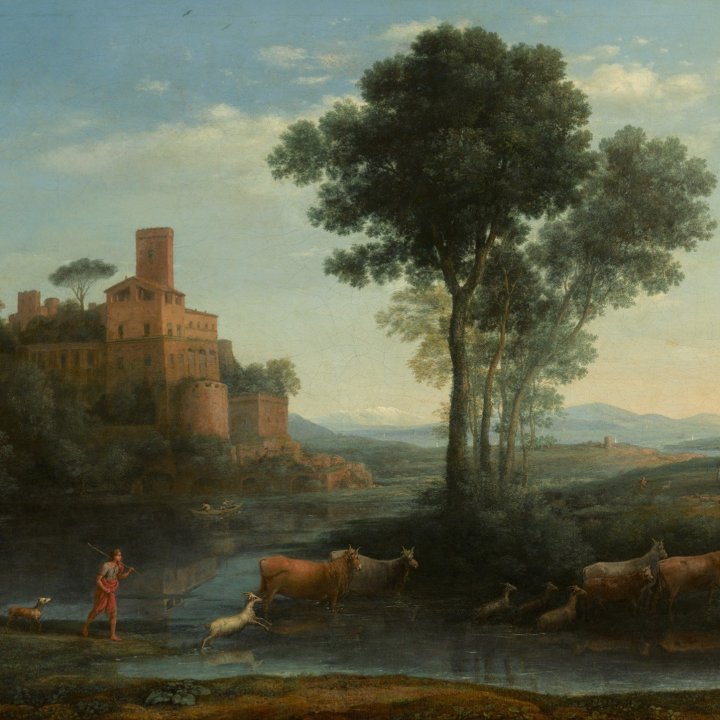
Claude Lorrain, Landscape with the Voyage of Jacob, 1677, oil on canvas (The Clark, 1955.42).
“The Clark’s works on paper collection is rich with beautiful drawings, etchings, and watercolors depicting these pastoral scenes,” said Olivier Meslay, Hardymon Director of the Clark. “We were delighted when our graduate student intern William Satloff proposed the concept of an exhibition that would give us the opportunity to share so many of these exceptional works of art together. Many of the objects in this presentation have not been on view in quite some time, so it will be a wonderful opportunity for our visitors.”
Satloff, a member of the Class of 2025 in the Williams College/Clark Graduate Program in the History of Art, curated the exhibition under the direction of Anne Leonard, the Clark’s Manton Curator of Prints, Drawings, and Photographs. Satloff has served as a curatorial intern at the Clark since 2023.
“In the Berkshires, we are fortunate to be surrounded by rolling hills, grazing cows, meandering streams, and picturesque barns,” said Satloff. “Moved by these same features, early modern artists created pastoral landscapes. The exquisite works in this exhibition offer an opportunity for us to reflect on our relationship with land both in art and in the world around us.”
Selected primarily from the Clark’s strong holdings of drawings by Claude Lorrain (French, 1604/5–1682) and Thomas Gainsborough (English, 1727–1788) and supplemented with select loans of Dutch Italianate artworks, the exhibition analyzes pastoral imagery to examine how artists construct their own visions of an idealized landscape. This exhibition features thirty-eight works, including nine drawings, three etchings, and one painting by Claude (Lorrain is typically referred to by his first name) and ten Gainsborough drawings.
Claude perfected the genre of idealized landscape, consolidating the developments of sixteenth-century Italian landscape painters and fusing a sensitive observation of nature with the lofty nobility of classical values. He lived and worked in Rome from the 1620s until his death; there, he influenced the Dutch Italianates—northern European artists who traveled to Italy and embraced the local style of landscape painting. A century later Thomas Gainsborough developed a new kind of nostalgic, pastoral landscape, inflecting the naturalism of Claude and the Italianates with a yearning for the bygone days of a simpler country life.
a c c e s s i n g a r c a d i a
The term ‘Arcadia’ derives from the mountainous Greek province of the same name, and according to myth, it was the domain of Pan, the half-man, half-goat satyr who was revered as the god of pastures and woodlands. In antiquity, Arcadia was known for its population of pastoralists—cowherds, goatherds, shepherds, swineherds—who were celebrated across the ancient world for the skillful singing they did while tending their flocks. The Latin poet Virgil wrote an immensely influential set of ten poems, the Eclogues, about the herdsmen of Arcadia.

Agostino Carracci, Omnia Vincit Amor, 1599, engraving on paper (The Clark, gift of Mary Carswell, 2017.11.1).
During the Renaissance, the intellectual movement known as humanism brought renewed interest in the culture—and particularly the poetry—of ancient Greece and Rome. Although Renaissance humanism waned in the sixteenth century, Virgil’s pastoral poetry continued to inspire artists and writers through the nineteenth century and beyond. Over time, ‘Arcadia’ developed into a general term for an idealized vision of rural life.
Agostino Carracci’s (Italian, 1557–1602) engraving, Omnia vincit Amor (1599), is a visual pun derived from a famous line in Virgil’s tenth Eclogue: “Love conquers all.” Amor is the Latin name for Cupid, the god of desire and erotic love. Pan is both the Greek name of Faunus, the shepherd-god of pastures and woodlands, and the Greek word for “all,” which in Latin is “omnia.” Taken together, Cupid’s victorious combat with the goat-legged god becomes a visual translation of Virgil’s poetry.

Nicolaes Berchem, The Cows at the Watering Place (The Cow Drinking), 1680, etching on paper (The Clark, 2023.15).
In The Cows at the Watering Place (The Cow Drinking) (1680), Nicolaes Berchem (Dutch, 1620–1683) conjures a timeless scene of rural life, full of tranquility and contentment. A shepherd has brought his cows and goats to drink from a stream on a warm, bright day. The animals wade and drink in the water, and a group of people lounge leisurely along the bank. The shepherd, recognizable by his long pole, talks with a seated man who has come to fill his jug, while a woman washes her feet in the stream. An overgrown ruin occupies the midground. At the top of this structure, beneath the vines, is a shadowy relief carving of a knight on horseback slaying a monster—an ambiguous reference to a gallant past.
Christoffel Jegher (Flemish, 1596–1652/53) collaborated with the celebrated Baroque artist Peter Paul Rubens (Flemish, 1577–1640) to produce the monumental woodcut Rest on the Flight into Egypt (after 1632), which corresponds closely to the right side of Rubens’s oil painting Rest on the Flight to Egypt with Saints (1632–35). Jegher presents the Christ Child sleeping contentedly in the Virgin Mary’s arms at the edge of a dense forest. Two putti, or cherubs, wrestle with a lamb, while a third motions them to be quiet. In the background, Joseph slumbers at the base of a twisting tree while the donkey drinks from a brook.
With its winding river, elegant trees, and grand Romanesque castle, the scene in Landscape with the Voyage of Jacob (1677) is an idealized vision of the countryside near Rome, where Claude spent most of his career. The tiny camels hint at a biblical story, perhaps Jacob’s journey into Canaan, but the other figures scattered across the landscape, such as the herdsman, cows, sheep, dog, and fishermen, give way to another revelation—that the painting is essentially a poetic celebration of the bounty of the natural world.
i d e a l i z e d l a n d s c a p e
Claude and Gainsborough were known to draw landscapes en plein air—meaning that they worked outdoors, directly from the natural environment. Though both artists studied natural features for inspiration, their approach to landscapes varied considerably. Claude’s idealized drawings featured a diffuse light and airy atmosphere aligned with the sensibilities of the Italian countryside. Gainsborough observed nature through a different lens, focusing on the English countryside. Still, each artist endeavored to draw a more pleasing, idealized landscape. Claude often added figures or trees in the foreground to create the illusion of deeper pictorial space. Gainsborough, too, would sometimes make adjustments to the observed landscape—for example, drawing a cluster of trees to one side to balance out the composition.
Claude was fascinated by how ancient and modern Rome melded in the landscape. The early Christian church of Sant’Agnese Fuori le Mura (ca. 300s–600s) attracted Claude on more than one occasion. By the seventeenth century, it was surrounded by farms and open pastures. In A View of Sant’ Agnese Fuori le Mura (1650–55), instead of showing the church surrounded by grazing animals, Claude used hills and trees to obscure any sense of historical specificity. While the identifiable architecture indicates the place from where the artist sketched, the building’s late-antique style imparts a temporal mystique evocative of Arcadia.

Thomas Gainsborough, Extensive Wooded Landscape with a Bridge over a Gorge, Distant Village and Hills, ca. 1786, black and white chalks with stumping on beige laid paper, fixed with skim milk and/or gum (The Clark, 2007.8.75).
Claude often went on sketching expeditions around the Roman countryside in the company of fellow artists. On several occasions, he traveled west from Rome along the Tiber River to the town of Tivoli. Nestled in the Sabine Mountains, Tivoli had long been admired for its ancient ruins and scenic vistas. The German painter Joachim von Sandrart (1606–1688) recounted an excursion he and Claude made to Tivoli: “we began to paint entirely from nature […] the mountains, the grottoes, valleys, and deserted places, the terrible cascades of the Tiber, the temple of Sibyl, and the like.” The Cascades of Tivoli (ca. 1640), on view in this section of the exhibition, depicts such a scene.
Gainsborough usually sketched the English landscape outdoors directly from nature, such as with Extensive Wooded Landscape with a Bridge over a Gorge, Distant Village and Hills (ca. 1786). This practice prompted artist Sir Joshua Reynolds (English, 1723–1792) to remark that Gainsborough, his bitter rival, “did not look at nature with a poet’s eye.” As such he went against the prevalent tendency in eighteenth-century England, where most artists derived their landscapes from Virgil’s Eclogues and Claude’s idyllic Italian scenes. Fashionable collectors displayed paintings and prints of idealized Mediterranean landscapes in their homes, setting the trend of “Italian light on English walls.”
r u i n s a n d c o t t a g e s
In pastoral works, architecture is often placed in the midground or background to suggest human habitation of a landscape. In the seventeenth century, pastoral architecture took the form of ruins, indicating that ancient people once held dominion over the land. These ruined buildings—surrounded by overgrown trees and shrubbery—invite viewers to reflect on the greatness of past civilizations, the transience of their glory, and the sublime power of time and nature. In the eighteenth century, pastoral landscapes also came to include cottages, barns, and shacks. By including architectural features within pastoral landscapes, artists may sometimes be making moral, social, and political statements about rural life and land management.

Jean Jacques de Boissieu, The Entrance to a Forest with a Cottage on the Right, 1772, etching and drypoint on laid paper (The Clark, 1993.3).
In A Wooded Landscape with a Classical Temple (ca. 1645), Claude constructs an imaginary landscape by placing ancient-looking architecture amid dense foliage and rolling hills. Although the bridge visible in the background has been identified as Rome’s famous Milvian Bridge (completed in 109 BCE), there are no clear referents for either the fortress pictured behind the bridge or the classical temple on the left.
Bartholomeus Breenbergh’s (Dutch, 1598–1657) Ruins in a Landscape (ca. 1620s) is an early example of Northern European artists’ fascination with ancient architecture. In the shadow of the cavernous ruin, the figures look tiny. Trees grow atop the ruin, juxtaposing the persistence of nature with the ephemerality of Rome’s greatness. Breenbergh moved to Rome in 1619, where he helped found the Roman Society of Dutch and Flemish Painters called the Bentvueghels (active ca. 1620–1720). This intellectual and social group, famous for its drunken initiation rituals, included several prominent Italianate landscape painters, such as Jan Asselijn (Dutch, 1610–1652) and Karel Dujardin (Dutch, 1626–1678).
In Dujardin’s The Ruins of a Temple, in the Foreground Two Men and a Dog (1658), two figures overlook a ruin-strewn landscape from a distance, allowing viewers to insert themselves within the pastoral scene rather than observing it as a spectacle. One of the foreground figures sits with a notebook and a writing instrument in his hand, suggestive of the sketching tours that seventeenth-century artists took throughout the countryside around Rome. Though the figure is representative of the common practice of working outdoors, Dujardin actually created this etching in his studio in the Hague.
Pastoral on Paper is organized by the Clark Art Institute and curated by William Satloff, Class of 2025, Williams Graduate Program in the History of Art.
Exhibition | Japanese Poetry, Calligraphy, and Painting
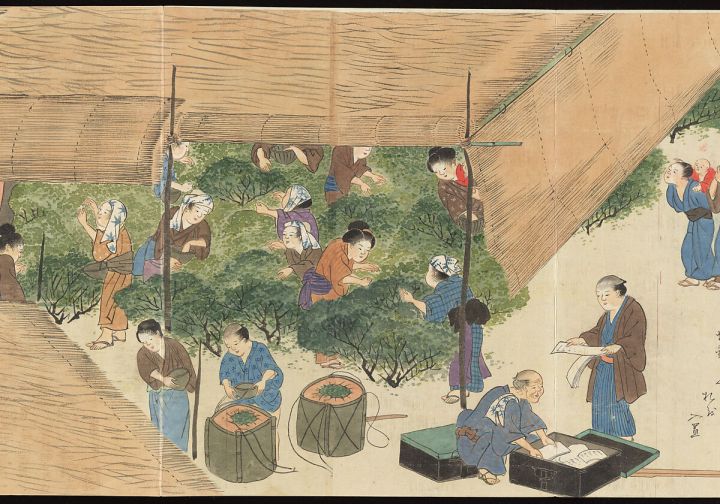
Saitō Motonari, Illustrations of Uji Tea Production, 1803, Edo period (1615–1868), handscroll (57 feet) of thirty-two sheets reformatted as a folding album (New York: The Metropolitan Museum of Art, 2023.237).
◊ ◊ ◊ ◊ ◊
Now on view at The Met:
The Three Perfections: Japanese Poetry, Calligraphy, and
Painting from the Mary and Cheney Cowles Collection
The Metropolitan Museum of Art, New York, 10 August 2024 — 3 August 2025
Curated by John Carpenter
In East Asian cultures, the arts of poetry, calligraphy, and painting are traditionally referred to as the ‘Three Perfections’. This exhibition presents over 160 rare and precious works—all created in Japan over the course of nearly a millennium—that showcase the power and complexity of the three forms of art. Examples include folding screens with poems brushed on sumptuous decorated papers, dynamic calligraphy by Zen monks of medieval Kyoto, hanging scrolls with paintings and inscriptions alluding to Chinese and Japanese literary classics, ceramics used for tea gatherings, and much more. The majority of the works are among the more than 250 examples of Japanese painting and calligraphy donated or promised to The Met by Mary and Cheney Cowles, whose collection is one of the finest and most comprehensive assemblages of Japanese art outside Japan.
The exhibition is made possible by The Miriam and Ira D. Wallach Foundation Fund.
Information on the objects exhibited can be found here»
◊ ◊ ◊ ◊ ◊
The catalogue is distributed by Yale UP:
John Carpenter, with Tim Zhang, The Three Perfections: Japanese Poetry, Calligraphy, and Painting (New York: The Metropolitan Museum of Art, 2025), 320 pages, ISBN: 978-1588397805, $65.
 In East Asian cultures, the integration of poetry, painting, and calligraphy, known as the ‘Three Perfections’, is considered the apex of artistic expression. This sumptuous book explores 1,000 years of Japanese art through more than 100 works—hanging scrolls, folding screens, handscrolls, and albums—from the Mary and Cheney Cowles Collection at The Metropolitan Museum of Art. John T. Carpenter provides an engaging history of these interrelated disciplines and shows evidence of intellectual exchange between Chinese and Japanese artists in works with poetry in both languages, calligraphies in Chinese brushed by Japanese Zen monks, and examples of Japanese paintings pictorializing scenes from Chinese literature and legend. Many of the works featured, including Japanese poetic forms, Chinese verses, and Zen Buddhist sayings, are deciphered and translated here for the first time, providing readers with a better understanding of each work’s rich and layered meaning. Highlighting the talents of such masters as Musō Soseki, Sesson Shūkei, Jiun Onkō, Ryōkan Taigu, Ike no Taiga, and Yosa Buson, this book celebrates the power of brush-written calligraphy and its complex visual synergy with painted images.
John T. Carpenter is the Mary Griggs Burke Curator of Japanese Art in the Department of Asian Art at The Metropolitan Museum of Art. He has been with The Met since 2011. From 1999 to 2011, he taught the history of Japanese art at the School of Oriental and African Studies (SOAS), University of London, and served as head of the London office of the Sainsbury Institute for the Study of Japanese Arts and Cultures. He has published widely on Japanese art, especially in the areas of calligraphy, painting, and woodblock prints, and has helped organize numerous exhibitions at the Museum, including Designing Nature (2012–13), Brush Writing in the Arts of Japan (2013–14), Celebrating the Arts of Japan (2015–17), The Poetry of Nature (2018–2019), and The Tale of Genji: A Japanese Classic Illuminated (2019).
Tim T. Zhang is Research Associate of Asian Art at The Metropolitan Museum of Art.
c o n t e n t s
Director’s Foreword
Preface
Becoming a Collector of Japanese Art — Cheney Cowles
Acknowledgments
Note to the Reader
Introduction
Inscribing and Painting Poetry: The Three Perfections in Japanese Art — John T. Carpenter
Catalogue
1 Courtly Calligraphy Styles: Transcribing Poetry in the Heian Palace
Entries 1–13
2 Spiritual Traces of Ink: Calligraphies by Medieval Zen Monks
Entries 14–31
3 Reinvigorating Classical Poetry: Brush Writing in Early Modern Times
Entries 32–59
4 Poems of Enlightenment: Edo-Period Zen Calligraphy
Entries 60–84
5 China-Themed Paintings: Literati Art of Later Edo Japan
Entries 85–111
Notes
Bibliography
Index
Credits










 Enfilade
leave a comment