New Book | The China Question
From Cambridge UP:
Ho-fung Hung, The China Question: Eight Centuries of Fantasy and Fear (Cambridge: Cambridge University Press, 2026), 336 pages, ISBN: 978-1009559775, £30 / $40.
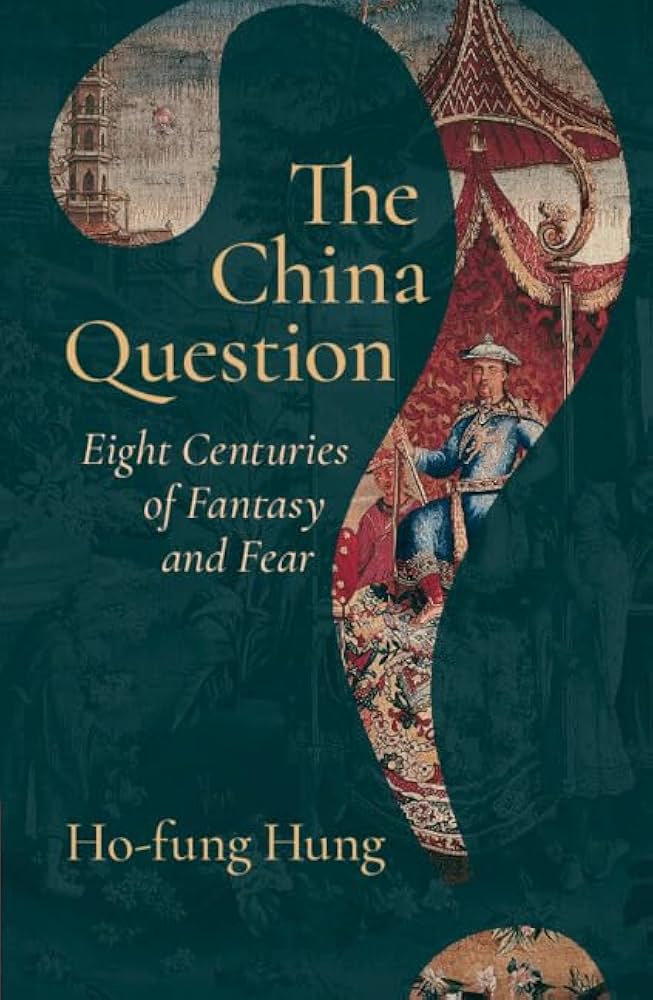 For centuries, Western scholars portrayed China either as a land of superior morality, economy, and governance or as a formidable country of pagans that posed a global threat to Western values. Idealized images of China were used to shame rulers for their incompetence, while China was demonized as an external threat to cover up domestic political failures. In the twentieth century, the geopolitics of global capitalism have facilitated more nuanced perspectives, but the diversifying of knowledge about China is far from complete. In this thought-provoking study, Ho-fung Hung finds that both Western elites and China’s authoritarian regime today continue to promote many Orientalist stereotypes to advance their economic interests and political projects. He shows how big-picture historical, social, and economic changes are inextricably linked to fluctuations in the realm of ideas. Only open debate can overcome extremes of fantasy and fear.
Ho-fung Hung is Henry M. and Elizabeth P. Wiesenfeld Professor in Political Economy in the Department of Sociology and Nitze School of Advanced International Studies, Johns Hopkins University.
c o n t e n t s
Figures
Preface
Introduction: Orientalism in the Longue Durée
I | Catholic Scholarship
1 From Pax Mongolica to the Long Sixteenth Century
2 The Seventeenth-Century Crisis and the Rise of Sinophilia
II | Enlightenment Philosophy
3 Early Enlightenment Sinophilia
4 Late Enlightenment Sinophobia
III | Institutionalized Orientalism
5 Romantic Sinology after the French Revolution
6 Scientific-Racist Sinology in the Age of Empire
IV | Cold War Area Studies
7 From Sinology to China Studies
8 The ‘Asiatic Mode of Production’ Myth
V | Self-Orientalism
9 Self-Orientalizing Nation Building
10 Contested Confucianism
Conclusion: De-Orientalizing Triumph, Re-Orientalizing Perils
References
Index










 Enfilade
leave a comment