Exhibition | Microhistories of the Andes
From the press release for the exhibition:
Microhistories of the Andes
San Antonio Museum of Art, 24 May 2026 — 23 May 2027
Curated by Kristopher Driggers
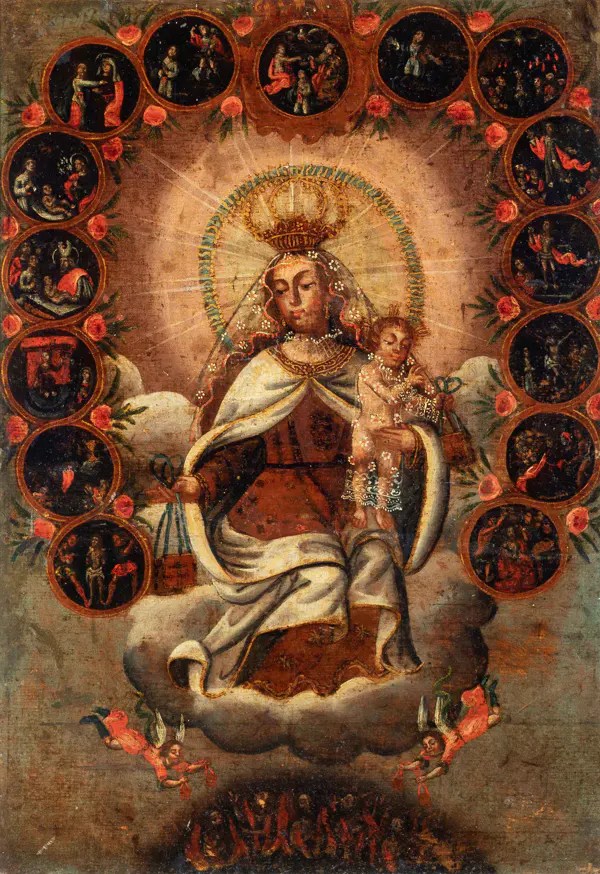
Our Lady of Mount Carmel, Peru, late 18th century, oil on canvas, 45 × 31 cm (San Antonio Museum of Art, 2003.45).
Named one of the must-see shows this spring by The New York Times, the San Antonio Museum of Art (SAMA) presents Microhistories of the Andes, an exhibition that closely examines individual objects to draw out larger stories about their culture of origin. Curated by Kristopher Driggers, Curator of Latin American Art, Microhistories of the Andes will be on view in the Golden Gallery from 24 May 2026 to 23 May 2027. The exhibition explores Andean cosmologies, cultural conceptions of agricultural practices, objects of devotion and spirituality, and the histories of materials across land and time.
Microhistories of the Andes highlights textiles, ceramic sculptures, paintings, metalwork, and feather arts from the Andean region, including recent acquisitions, such as a gift from Hank Lee in memory of Margie M. Shackelford, and gifts from prominent collectors such as Lindsay and Lucy Duff.
“Microhistories of the Andes poses a question to our visitors: How do singular objects become the starting point for telling broader stories about the past?” Driggers said. “At art museums, we are used to thinking of artworks as exemplifying broader narratives. With its framing, this exhibition brings our attention to the way we move from objects to the larger human stories behind them, with SAMA’s collection as the starting point—including recent gifts to the collection and works that have not been seen in many years.”
Featuring ancient objects from as early as the first millennium AD to more recent objects from the twentieth century, this exhibition examines the cultural context in which they were created. Additionally, highlighting objects from different countries across the Andean region provides a comprehensive look at the region’s diverse history and landscapes, including mountainous, desert, and tropical areas.
New Book | Bookbindings: An Illustrated History
Distributed by The University of Chicago Press:
David Pearson, Bookbindings: An Illustrated History (Oxford: Bodleian Library Publishing, 2026), 240 pages, ISBN: 978-1851246458, £50 / $75.
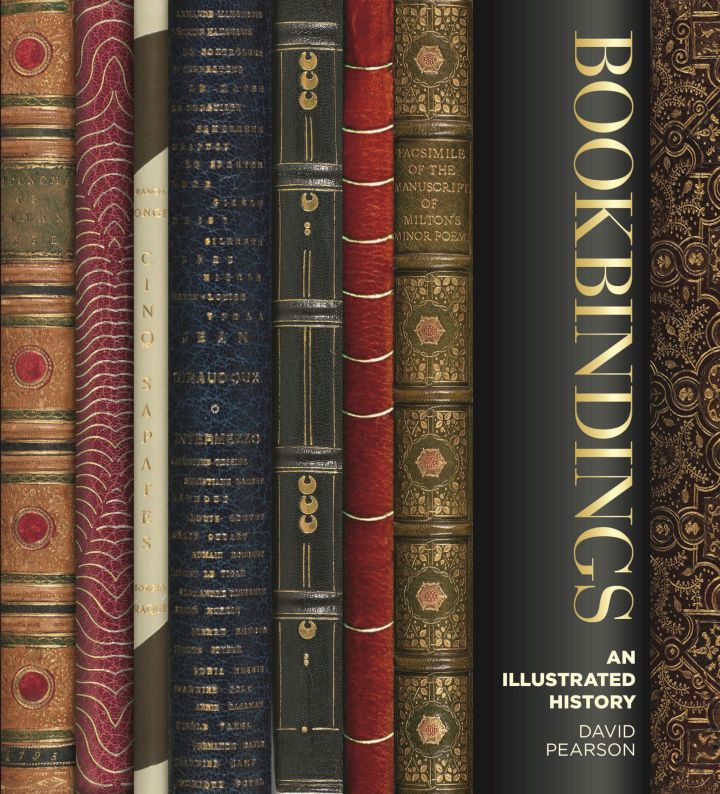 An extravagantly illustrated history of the development of bookbindings, from antiquity to modern day.
Bindings have been an essential—and often beautiful—component of books since the codex form was invented 2,000 years ago. They make books work, but they also provide an opportunity for binders to display their skills. Until book trade processes were industrialized in the nineteenth century, every binding was a unique handcrafted object, no matter how simple or elaborate. Bindings have been made of all kinds of materials—calfskin, parchment, vellum, ivory, even silver—and embellished using many different techniques to satisfy the wishes of owners, ranging from students to kings. How they were produced and decorated has evolved, and many countries have their own distinctive traditions. Bindings may testify to the taste and social status of wealthy connoisseurs, or to the economic necessities of ordinary households. Because they can often be dated and localized, they also give us information about the histories of individual volumes. This lavishly illustrated book provides a fascinating history of the development of bookbindings from Roman times to the present day. Almost all the examples are chosen from the shelves of the Bodleian Library, showcasing the outstanding collection of historic bindings to be found there.
David Pearson is a leading authority on the history of books. His previous books include Provenance Research in Book History and Speaking Volumes: Books with Histories also published by Bodleian Library Publishing.
c o n t e n t s
Birth of the Codex to Medieval Traditions
New Ideas in a World of Print
Craftsmanship & Innovation
Nineteenth-Century Transformations
The Rebirth of Craft Binding
Bindings with a Purpose
Materials & Techniques
Decorative Themes
Exhibition | William Blake: The Age of Romantic Fantasy
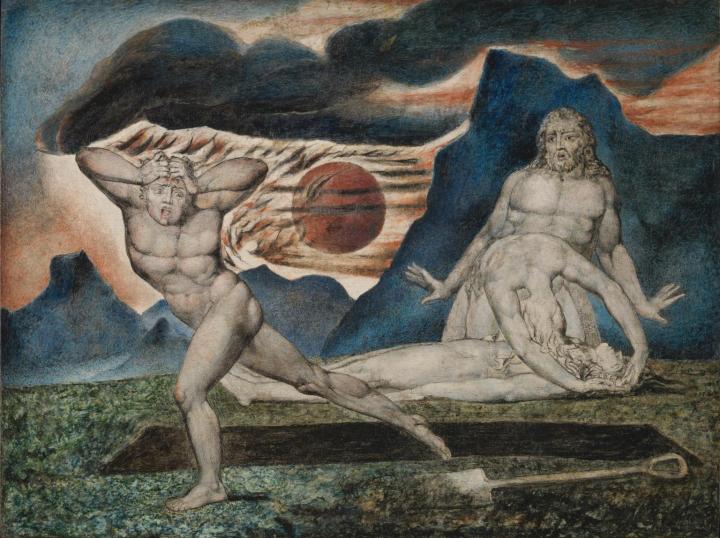
William Blake, The Body of Abel Found by Adam and Eve, ca. 1826, ink, tempera, and gold on mahogany
(London: Tate, N05888).
◊ ◊ ◊ ◊ ◊
From the press release for the exhibition:
William Blake: The Age of Romantic Fantasy
National Gallery of Ireland, Dublin, 16 April — 19 July 2026
Curated by Alice Insley and Anne Hodge
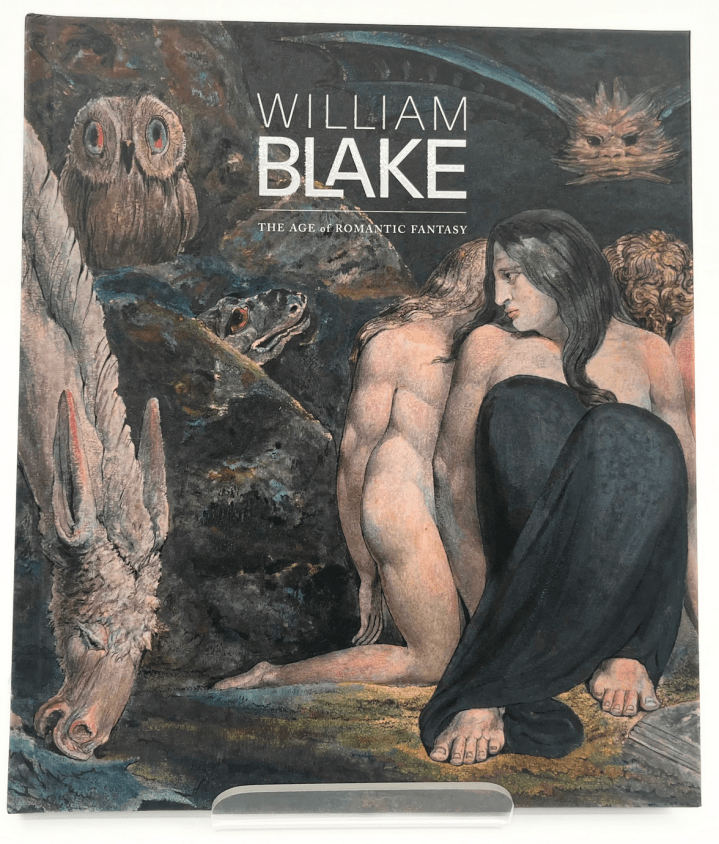
The National Gallery of Ireland is presenting a new major exhibition William Blake: The Age of Romantic Fantasy. This loan exhibition from Tate, curated in partnership with the National Gallery of Ireland, presents a selection of Blake’s most iconic works of art, alongside paintings and drawings by his contemporaries. It offers a rare opportunity to encounter one of the most visionary figures in art and literature.
William Blake (1757–1827) is a singular force in the history of art. Poet, painter, and printmaker, he created a visionary universe of mythic beings and prophetic scenes, exploring heaven and hell through a language entirely his own. In a world shaped by revolution and social upheaval, Blake and his peers pushed art into bold new territories using the power of the creative imagination.
 Wildly unconventional in terms of both technique and thought, Blake developed a distinctive visual language to explore opposing forces of creation and destruction, reason and imagination. His inventive works have resonated far beyond his own era. Blake’s influence continues to echo through contemporary culture, inspiring musicians such as U2, Bob Dylan, and Patti Smith; filmmakers including Ridley Scott and Martin Scorsese; writers from J.G. Ballard to Allen Ginsberg; and designers such as Una Burke, whose work features in a special three-piece collaboration accompanying the exhibition in the Gallery’s gift shop.
Opening with a selection of Blake’s iconic large colour prints, William Blake: The Age of Romantic Fantasy immediately immerses visitors in the drama and visionary intensity that defines his work. These striking images introduce the exhibition’s central themes, which unfold across a series of sections that place key works by Blake alongside paintings and drawings by the artists he admired and those who were inspired by him. By placing Blake in a wider context of originality and experimentation, the exhibition offers a compelling insight into a transformative moment in European art. It provides a window into uniquely imaginative works of art that address many topics that are as urgent and relevant today as they were during the Romantic period. . . .
Speaking on the opening of the exhibition, Dr Caroline Campbell, Director of the National Gallery of Ireland, said: “It is very exciting to continue our partnership with our colleagues at Tate and present the work of William Blake alongside his contemporaries in this major exhibition. The impact that Blake and the era of Romanticism have had on Western art cannot be overstated. William Blake: The Age of Romantic Fantasy allows our visitors to explore a familiar name in much greater depth. We hope that it will inspire and delight all who visit the National Gallery of Ireland during spring-summer 2026. I also take this opportunity to thank our Partners at Tate, the supporters of our William Blake Giving Circle and the Department of Culture, Communications and Sport for their ongoing support.”
Anne Hodge, Curator of Prints and Drawings at the National Gallery of Ireland said: “William Blake is such an iconic figure in art and literature. I am delighted that our visitors will be able to enjoy a selection of his work in context, alongside that of his fellow artists. Many people are aware that he wrote the poem The Tyger, but know little else about him. This exhibition will provide a window into the richness of Blake’s imagination and his innovation as an artist.”
Alice Insley, Curator British Art, 1730–1850 at Tate, said: “William Blake is today celebrated for the great originality and vision of his art and poetry. Yet he was not alone in giving his imagination free rein. This exhibition shows Blake’s extraordinary works alongside paintings and drawings by his contemporaries—those who he admired and those who he inspired—to reveal how British art was taken in exciting new directions in this moment. We are delighted to be able to share these works from Tate’s collection with visitors to the National Gallery of Ireland and hope that they will continue to inspire across the centuries.”
Alice Insley, Anne Hodge, and Christina Morin, William Blake: The Age of Romantic Fantasy (Dublin: The National Gallery of Ireland, 2026), 144 pages, ISBN: 978-1911716129, €40.
New Book | City of the Gallows
Published by the PMC and distributed by Yale UP:
Meredith Gamer, City of the Gallows: Art and Execution in Eighteenth-Century London (London: Paul Mellon Centre for Studies in British Art, 2026), 208 pages, ISBN: 978-1913107529, $45.
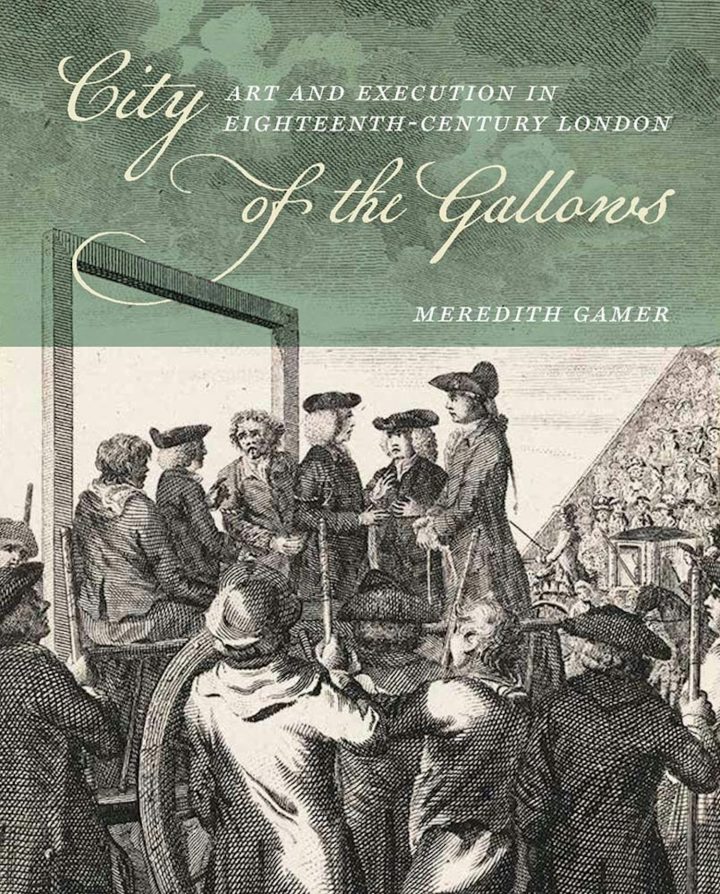 The macabre, interwoven histories of art and punishment in eighteenth-century London
Over the course of the eighteenth century, the visual arts in Britain flourished as never before. The nation’s first art academies were founded; its first exhibitions of contemporary art were staged; and a vastly expanded public for the arts began to form. This book demonstrates that these developments were intimately linked to another, darker kind of art: the spectacle of capital punishment. Between 1680 and 1820, the number of crimes punishable by death under British law rose dramatically—from roughly fifty to more than two hundred—and at Tyburn, London’s main execution ground, dozens of people were hanged each year before thousands of spectators.
City of the Gallows uncovers the complex and often unexpected connections between eighteenth-century London’s sites of punishment and its spaces of art-making, instruction, and display. Drawing together a wide range of images, objects, and texts—from popular woodcuts and anatomical sculptures to moral tracts and dictionaries of slang—it offers new readings of works by major artists, such as William Hogarth, Johan Zoffany, and Joseph Wright of Derby, and shines a light on others that traditional accounts of the period have overlooked or ignored. In doing so, this book shows how state violence shaped the art and visual culture of this era, whose legacies persist to this day.
Meredith Gamer is associate professor in the Department of Art History and Archaeology at Columbia University, where she specialises in the art and visual culture of eighteenth-century Britain and the Atlantic world.
◊ ◊ ◊ ◊ ◊
Note (added 5 June 2026) — The original posting mistakenly listed Yale UP as the publisher. In fact, the Paul Mellon Centre is the publisher.
Exhibition | Three Rare Treasures of Imperial China
From the press release for the exhibition:
In Focus: Three Rare Treasures of Imperial China
Im Fokus: Drei seltene Schätze des Kaiserlichen China
Sponsel Room, Residenzschloss, Dresden, 1 April — 29 June 2026
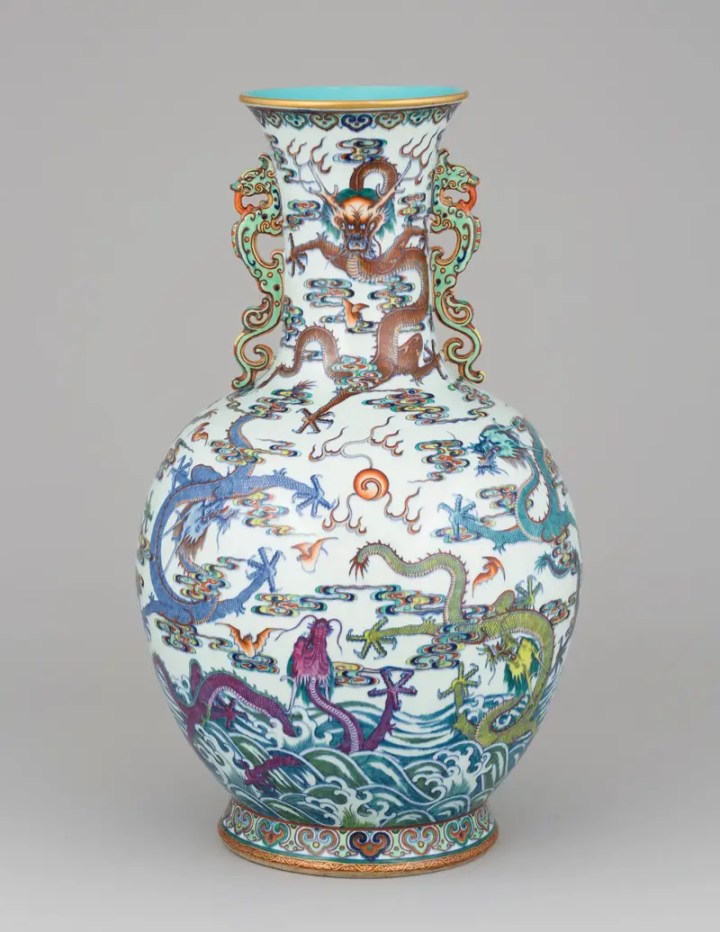
Dragon Vase with Imperial Seal Mark, China, 1735–96 (Dresden: SKD).
The exhibition In Focus: Three Rare Treasures of Imperial China presents objects from different imperial dynasties from among the holdings of the Grünes Gewölbe (Green Vault) and the Porzellansammlung (Porcelain Collection) of the Staatliche Kunstsammlungen Dresden. The Ru Bowl, the so-called Dragon Vase, and a tiny snuff bottle (barely five centimetres tall) exemplify the aesthetics and exceptional craftsmanship of their respective eras. The items from the Porzellansammlung have attracted a lot of media attention in recent weeks. The public will now be given the opportunity to discover what makes them so special.
The Porzellansammlung of the SKD holds the largest collection of early modern porcelain from China and Japan outside of Asia. It preserves a cross-section of that which was collected in Europe in the late 17th and early 18th centuries. From the mid-19th century onwards, the Electoral and Royal collection amassed by August the Strong and August III—the historical core of the museum—was expanded, by means of exchanges and purchases, to include ceramics from all over the world, including the Ru Bowl and the Dragon Vase.
Originally created exclusively for the Chinese imperial court, these are outstanding examples of Chinese ceramic art, the likes of which were unknown in Dresden during the Augustan period. It was only in the early 20th century that such imperial pieces became available to European collectors. The Ru bowl, in particular, is regarded as one of the most beautiful and extremely rare ceramic products of the Song Dynasty (960–1279) and the crowning glory of any collection of Chinese art. In exhibiting these two objects along with the snuff bottle from the Grünes Gewölbe, the SKD are presenting three exceptionally rare and precious Chinese imperial artefacts from different dynasties. The small snuff bottle is an original from the imperial workshops of the Chinese Qing Dynasty, where European influence led to the development of new enamelling techniques and such vessels became highly sought-after luxury objects. These outstanding pieces are exemplary of the aesthetics and exceptional craftsmanship of their time.
In a recent agreement signed with the Hong Kong Palace Museum, the SKD have committed to conducting more in-depth research into their holdings of East Asian art in collaboration with experts from the Palace Museums in Hong Kong and Beijing. The exhibition In Focus: Three Rare Treasures of Imperial China highlights how mutual respect, as well as the pursuit of precision both in art and in scholarly research, form a strong bond between China and Germany.
The Ru Bowl
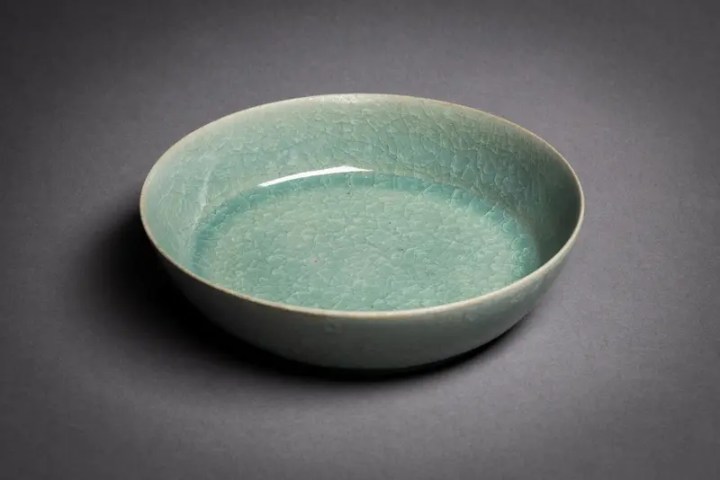
Ru Bowl, Brush Washer, China, 1100–25 (Dresden: SKD).
This small, glazed stoneware bowl from the Northern Song Dynasty (960–1127), which at first glance appears unremarkable, is one of the rarest and most precious objects of Chinese ceramic art. The vessel, which is around 900 years old, was used as a brush-washing bowl and is one of only 89 known Ru wares in the world; it is also the only specimen of its kind in Germany. It was part of a private collection acquired by the Porzellansammlung in the 1920s. These first ceramics made exclusively for the Chinese imperial court are named after their place of origin, the Ru Prefecture in the northern province of Henan. The production of imperial Ru wares went on for only a little more than 20 years, ending when the Northern Song Dynasty was driven south in 1126. The few pieces that were produced and salvaged soon became mythologised as reminders of the empire’s former grandeur and are now considered the pinnacle of any collection of Chinese ceramics. This perfectly preserved Dresden bowl is striking in its exceptionally simple elegance. With its gently shimmering, delicately crackled glaze in a particularly beautiful bluish-green hue, it is reminiscent of winter colours and brittle ice.
The Dragon Vase
The so-called Dragon Vase was commissioned for the court of Emperor Qianlong (reigned 1735–1795). Painted with nine brightly coloured dragons soaring across the sea and sky, this monumental piece is one of the rarest masterpieces of imperial porcelain art from the Qing Dynasty. Its dynamic decoration combines technical perfection with rich symbolic meaning and reflects the splendour and political ideals of the court under Emperor Qianlong. In Chinese culture, the number nine (jiu) also signifies ‘eternity,’ whilst the dragon is the most important symbol of imperial power. The motif of nine dragons therefore reflects the desire for eternal imperial rule. On this vase, the dragons appear amidst waves and clouds, two elements traditionally associated with these mythical creatures. Flying amongst the clouds are red bats. In Chinese, the word for bat (fu) sounds the same as the word for ‘luck’ or ‘blessing.’ Along the foot and beneath the rim runs a band of heart-shaped ruyi heads; these derive from the ruyi sceptre and the lingzhi mushroom. According to Daoist beliefs, these symbols represent immortality and the fulfilment of wishes. Vessels of this kind, adorned with imperial symbols, were often given as precious gifts to high-ranking dignitaries. Like the Ru Bowl, the Dragon Vase also found its way into the Porzellansammlung during the 20th century.
The Snuff Bottle
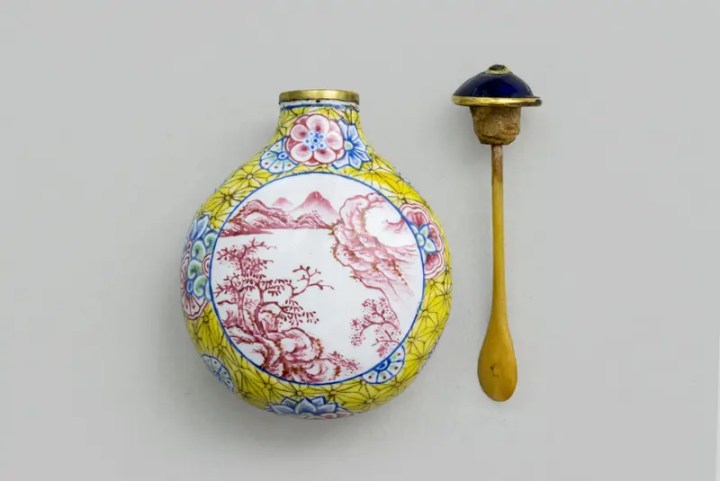
Snuff Bottle, China, 1661–1722 (Dresden: SKD).
For a long time, this delicate snuff bottle was regarded as a European piece in the chinoiserie style. It was not until 2013 that it was recognised as a rare and early example of Chinese enamel art from the Qing Dynasty. It has been possible to trace its origins to the imperial palace workshops in Beijing, where only works of the highest quality were produced for the imperial court.
Under the emperors Kangxi (r. 1661–1722) and his son Yongzheng (r. 1723–1735), the imperial workshops saw a period of significant artistic and technological innovation. Since the end of the 17th century, Jesuits had been bringing enamel objects from Europe as gifts to the imperial court, where they were greatly admired. The art-loving Emperor Kangxi subsequently took steps to recruit European artists who were familiar with the techniques, thereby promoting their further development in China.
The use of snuff, which was believed to have healing properties, had been introduced to China by European missionaries, envoys, and traders. Since the large snuff boxes commonly used in Europe proved impractical in China’s more humid climate, the use of small, tightly sealable vials soon became predominant. Particularly during the reign of Emperor Qianlong (r. 1735–1796), they were manufactured in a wide variety of shapes and designs and became sought-after collectors’ items.
New Book | The Country House Dining Room
From Yale UP:
Amy Boyington, The Country House Dining Room: A History of Georgian Feasting (New Haven: Yale University Press, 2026), 208 pages, ISBN: 978-0300276923, $40.
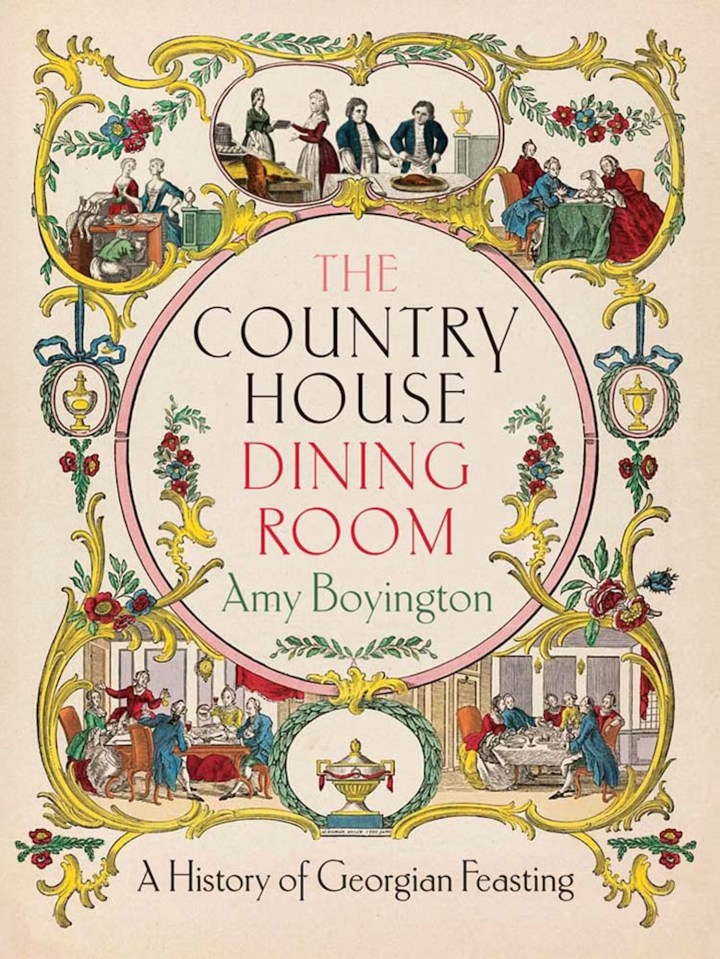 The country house dining room was an elaborate theatre for Georgian elites to entertain their guests and, more importantly, show-off their wealth, power and social status. Every detail was carefully orchestrated, usually by the lady of the house, from the decor and tableware to the food and drink served. Decorated with fine art, antique sculptures, and lavish furnishings, the dining room was governed by strict dining etiquette and social rituals. It was expected for guests to eat and drink to excess, so it is perhaps unsurprising that in the Georgian era we see the development of supposed miracle cures for obesity, alcoholism, and related illnesses. Drawing on previously unpublished contemporary accounts of feasts at Holkham Hall, Hardwick Hall, and Blenheim Palace, among others, Amy Boyington brings the Georgian dining experience to life and charts how the dining room encapsulated the intricate cultural and political dynamics of the 18th century.
Amy Boyington is a public historian and popular social media historian (@history_with_amy). Her past roles have included Senior Properties Historian at English Heritage, Trust Director at The Lutyens Trust, and Post-Doctoral Researcher at both Kensington Palace and Queens’ College, Cambridge. She is the author of Hidden Patrons: Women and Architectural Patronage in Georgian Britain.
Exhibition | Amazons! Horsewomen and Fashion Icons
Now on view at the Musée de la Mode et du Costume in Arles:
Amazons! Horsewomen and Fashion Icons
Musée de la Mode et du Costume, Arles, 22 May — 20 September 2026
Curated by Valerio Zanetti and Clément Trouche
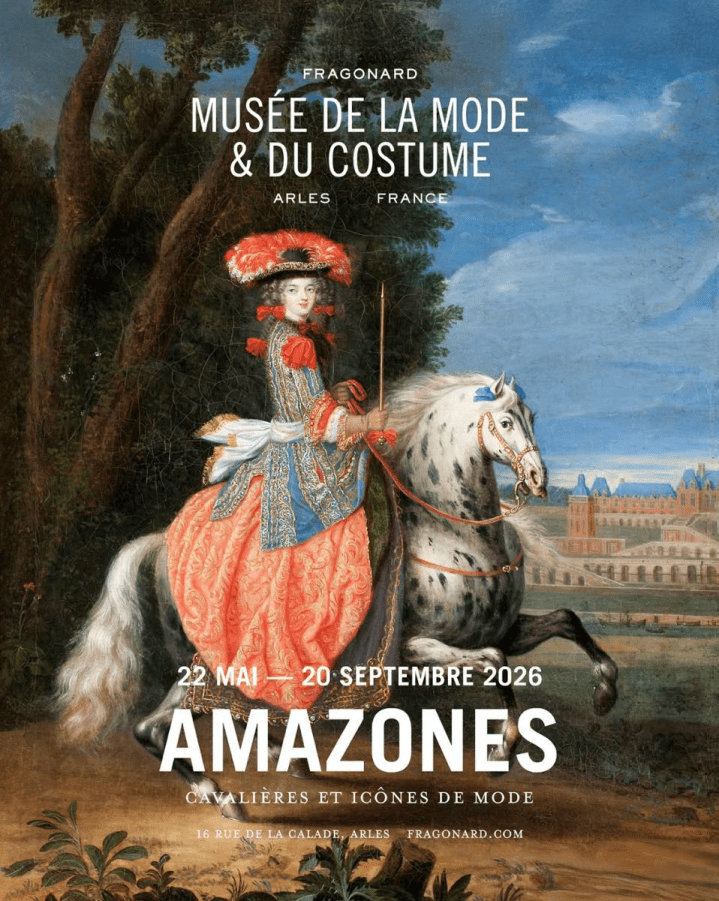 Historically, horsemanship has played a crucial role in women’s emancipation. Since the Renaissance, specific costumes have been designed for each equestrian discipline, the consequences of which extend beyond purely visual and symbolic dimensions. Both the borrowing of elements from men’s wardrobes and the creation of new forms of dress prompted those who would soon be called ‘Amazons’ to question their position in society. The public is here invited to discover the history of these women, whose strength and beauty have often been as much fantasized as misunderstood.
The exhibition brings together over a hundred works, spanning a period from the Renaissance to the Revolution, from the Empire to the contemporary fashion runways. It showcases the evolution of Amazonian fashions, revealing how they allowed female riders and huntresses—as well as female politicians, strollers, and professional equestrians—to engage with and contribute to revolutionizing their identity, sometimes even making it a true raison d’être. Initially considered a challenge to traditional dress conventions, the Amazonian costume was gradually transformed into an essential element of the elegant woman’s wardrobe.
The 17th-century saddle of Queen Christina of Sweden, known as the ‘Amazon of the North’ or the ‘Gothic Amazon’, sits alongside equestrian portraits of illustrious women from the court of Louis XIV, reunited for the first time in almost 350 years. Portraits of La Grande Mademoiselle riding sidesaddle, of Marie Leszczynska in front of the Château de Fontainebleau, and, from the 19th century, drawings by Degas and Constantin Guys, all face the clothing of the Amazons of their time. Among these portraits, some depict one of the most famous Amazons of her era: the Empress of the French, Eugénie.
The exhibition includes loans from iconic national institutions. Among the Parisian institutions are the Petit Palais, the Bibliothèque nationale de France, the Musée Condé, the Musée d’Orsay, the Musée Carnavalet, and the Musée des Arts Décoratifs, as well as the Musée National de la Renaissance in Écouen, the châteaux of Compiègne and Cadillac, the Musée des Beaux-Arts in Orléans, Pau, Le Mans, Sceaux, and Libourne, and the Mucem and the Muséon Arlaten. Several British museums have also contributed, including the Fashion Museum of Bath, the Royal Albert Memorial Museum, the Glove Collection Trust, Herfordshire Museum, and Norwich Museum. Equestrian practices play a vital role in British culture. Pieces from Swedish museums with significant collections complete the exhibition.
Amazones! Cavalières et icônes de mode (Milan: Silvana Editoriale, 2026), 160 pages, ISBN: 978-8836664689, €30.
New Book | The Masquerade
From Yale UP:
Meghan Kobza, The Masquerade: A History of Extravagance and Intrigue (New Haven: Yale University Press, 2026), 368 pages, ISBN: 978-0300276213, $35.
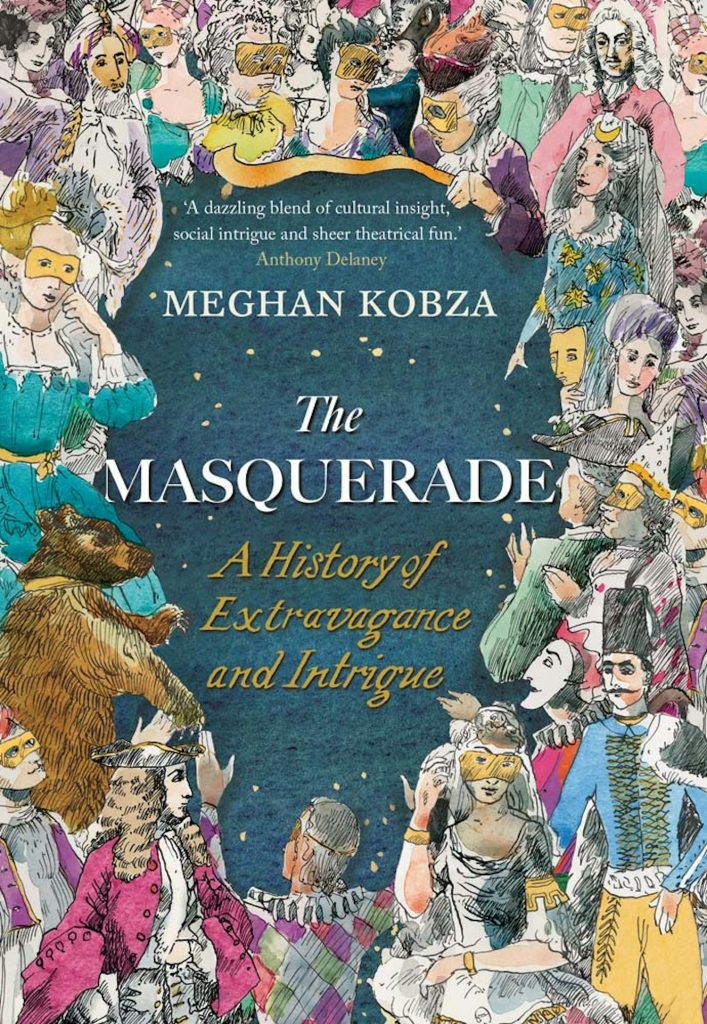 The first full history of an extraordinary eighteenth-century British entertainment
Glittering masquerades, held at the most fashionable London venues, dominated the calendars of the Georgian elite. A thrilling opportunity to gather, flirt, and consume, hosts such as ‘Empress of Pleasure’ Teresa Cornelys welcomed the great and the good in elaborate costumes—including bear suits, harlequin outfits, or, in the case of Elizabeth Chudleigh, very little at all. The masquerade was a place of make-believe and revelry, and a party like no other. Meghan Kobza invites us into these dazzling gatherings, and shows how they became a wider cultural obsession. Organised by wealthy impresarios, the masquerade allowed the aristocracy to flaunt their status and enjoy themselves behind the closed doors of opulent ballrooms, theatres, and gardens, dressed by an industry of ever more inventive habit makers. For the rest of society, the masquerade was notorious for mischief and misbehaviour, and a focus for voracious gossip.
Meghan Kobza is a historian of leisure in the eighteenth and nineteenth centuries, and particularly Georgian costume, fancy dress, and material culture. She is the author of The Domino and the Eighteenth-Century London Masquerade.
Decorative Arts Trust Prize for Excellence and Innovation
From The Decorative Arts Trust:
Decorative Arts Trust Prize for Excellence and Innovation, $100,000
Application due by 30 June 2026
The nomination deadline for the 2026 Decorative Arts Trust Prize for Excellence and Innovation is June 30. This $100,000 award funds outstanding projects that advance public appreciation of decorative art, fine art, architecture, or landscape. The Prize is awarded to a nonprofit organization in the United States for a scholarly endeavor, such as a museum exhibition, print or digital publication, a conservation or preservation project, or an online database.
Recent recipients include the Custard Institute for Spanish Art and Culture at Southern Methodist University’s Meadows Museum and the Edith O’Donnell Institute of Art History at the University of Texas at Dallas for The Digital Porcelain Rooms Project (2025); Drayton Hall’s plaster ceiling projects (2024); Concord Museum’s Whose Revolution exhibition (2023); the Cooper Hewitt, Smithsonian Design Museum’s Dorothy Liebes exhibition (2022); the Black Craftspeople Digital Archive (2021); and Craft in America’s Craft Video Dictionary (2020).
For more information, visit decorativeartstrust.org/prize or email grants@decorativeartstrust.org.
New Book | Gabriel François Doyen (1726–1806)
From Arthena press:
Benjamin Salama, Gabriel François Doyen (1726–1806): Un Peintre d’Histoire dans l’Europe des Lumières, (Paris: Arthena, 2026), 304 pages, ISBN: 978-2903239770, €85.
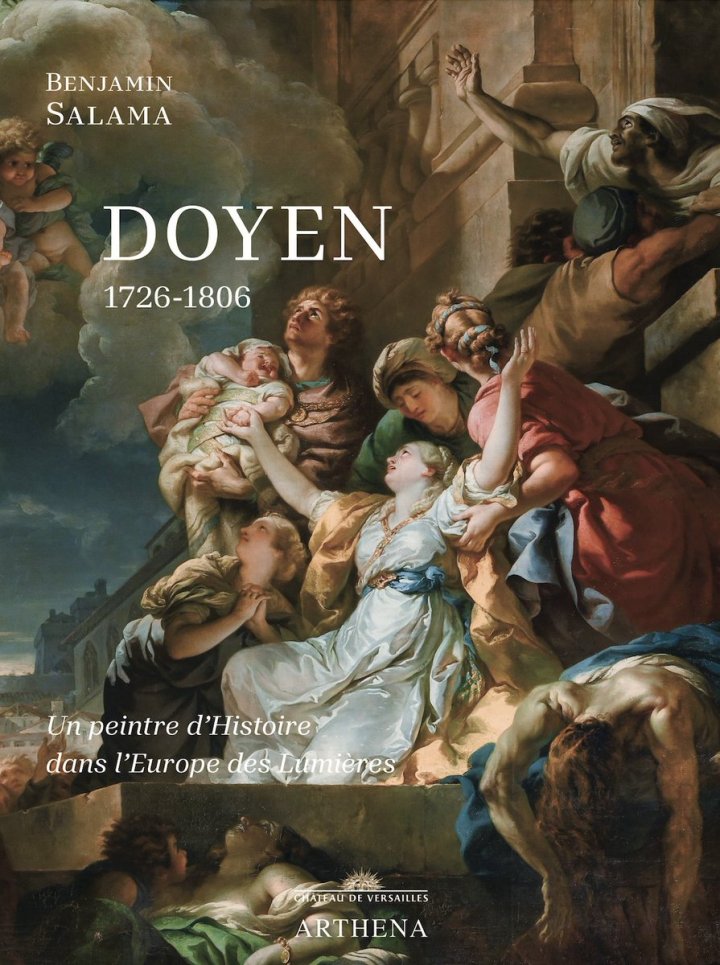 Figure pionnière et pourtant méconnue du mouvement de régénération de la peinture d’Histoire dans la seconde moitié du XVIIIe siècle, Gabriel François Doyen s’imposa à Paris dès son retour de l’Académie de France à Rome avec La Mort de Virginie exposé au Salon de 1759. La critique vit en lui l’un des espoirs du renouveau de la peinture française au point qu’à la mort de son maître Carle Vanloo, il fut jugé digne d’achever son célèbre Cycle de saint Grégoire à l’église des Invalides. Sa gloire culmina avec Le Miracle des Ardents peint pour l’église Saint-Roch à Paris, chef-d’œuvre qui influença jusqu’à Géricault.
Sous la Révolution, délaissé au profit des peintres de la génération de David, il remplit d’importantes fonctions au sein de la Commission des monuments et œuvra pour la préservation du patrimoine français aux côtés de son ancien élève Alexandre Lenoir. En 1792, il choisit de partir pour la Russie où il enseigna à l’Académie impériale des beaux-arts de Saint-Pétersbourg, et peignit de grands décors pour l’impératrice Catherine II puis pour son fils Paul Ier. Des sources inédites et un catalogue renouvelé permettent de redécouvrir l’ambition tumultueuse de son œuvre.
Diplômé de l’École du Louvre et de Sorbonne-Université, Benjamin Salama est docteur en histoire de l’art. Il a été chargé d’enseignement à l’École du Louvre, à Paris I Panthéon Sorbonne et à Sorbonne-Université de 2008 à 2021. Il est actuellement collaborateur scientifique au château de Versailles. Ses recherches portent essentiellement sur la peinture française des XVIIe et XVIIIe siècles.










leave a comment