Call for Papers | Art and Audience under the Spanish Crown
From H-ArtHist:
Wider Worlds: Art and Audience under the Spanish Crown
The Frick Collection, New York, 5 April 2018
Proposals due by 12 December 2017
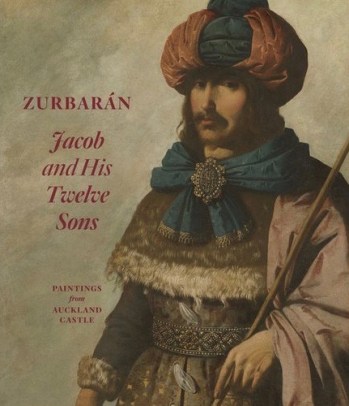 The Frick Collection is pleased to invite submissions for Wider Worlds: Art and Audience under the Spanish Crown, a public symposium inspired by the special exhibition Zurbarán: Jacob and His Twelve Sons, Paintings from Auckland Castle (on view at The Frick from 31 January to 22 April 2018). Co-organized with the Meadows Museum, in Dallas, where the paintings are currently on view, this exhibition marks the first time that Francisco de Zurbarán’s set of thirteen monumental canvases depicting the family of the biblical prophet Jacob will be displayed in the Americas.
Zurbarán’s paintings were probably commissioned in the 1640s for a monastery in colonial Spanish Peru, where the popularity of this particular iconography drew on histories positing the indigenous inhabitants of the Americas as ‘lost descendants’ of the twelve tribes of Israel. The works traveled to England and, in 1756, entered the collection of the bishop Richard Trevor, an advocate for the rights of Jewish people. This history, as well as the apocryphal story of the paintings’ seizure by pirates, prompts us to think seriously about the afterlives of objects, anticipated versus accidental receptions, and art’s capacity for generating multivalent, sometimes competing, interpretations. For Jacob and His Twelve Sons, those interpretations range from justifying the enterprises of one colonial empire to serving as symbols of religious tolerance in another.
We welcome proposals for twenty-minute papers on the status of the art object and the circulation of objects and ideas in the early modern Hispanic world. Please send a CV and 250-word abstract by Tuesday, 12 December 2017, to academic@frick.org. Submissions from emerging scholars, including early career university and museum professionals and advanced doctoral students, are particularly encouraged. Possible lines of inquiry include:
• How artists, patrons, and audiences dealt with anxieties around distance, delay, and the conveyance of meaning in the diverse and multilingual early modern Hispanic world
• Re-signification and/or halted trajectories in the biographies of objects, especially in a global context
• The imaging of origin myths and master narratives
• How Iberia’s Jewish and Islamic pasts were interrogated and reinterpreted in Catholic image practices
• The issue of workshops, masters, and authorship and their relationship to global markets
• The global and material turns in art-historical scholarship
Wider Worlds: Art and Audience under the Spanish Crown is convened by Caitlin Henningsen (The Frick Collection) and Adam Jasienski (Southern Methodist University). Susan Grace Galassi (Senior Curator, The Frick Collection) will preside.
Exhibition | El Greco to Goya: Masterpieces from The Bowes Museum
Now on view at The Wallace Collection:
El Greco to Goya: Spanish Masterpieces from The Bowes Museum
The Wallace Collection, London, 27 September 2017 — 7 January 2018

Claudio Coello, Portrait of Mariana of Austria, Queen of Spain, 1683–93 (County Durham: The Bowes Museum).
The Wallace Collection presents El Greco to Goya: Spanish Masterpieces from The Bowes Museum, the first London exhibition of Spanish art from The Bowes Museum in County Durham, including works by Goya and El Greco. This collaborative exhibition between the Wallace Collection and The Bowes Museum celebrates the partnership between these two great museums. Like the Wallace Collection, The Bowes Museum is the product of one family’s obsession with collecting great works of art. John Bowes and Richard Wallace—both illegitimate sons of aristocratic fathers—bequeathed collections of international significance to the nation.
The exhibition spans three centuries and explores one of the largest collections of Spanish art in Britain. On display are El Greco’s The Tears of Saint Peter, thought to be the artist’s earliest interpretation of this subject, Goya’s psychologically penetrating Portrait of Juan Antonio Meléndez Valdés and disturbing Interior of a Prison, plus perhaps less well known but outstanding works such as Antonio de Pereda’s, Tobias Restoring His Father’s Sight. The works chosen explore a period of huge social, religious, and political upheaval in Spain, providing a microcosm of the changes in style and subject matter during this period. The paintings complement works by Velázquez and Murillo on permanent display at the Wallace Collection.
Xavier Bray, Wallace Collection Director: “El Greco to Goya is not only an unprecedented opportunity to see Spanish art of extraordinary power and significance in London, but also the beginning of an exciting relationship between the Wallace Collection and The Bowes Museum. Both institutions share a commitment to making great art accessible to wider audiences and we are looking forward to working closely together to develop a long term connection between London and the North East.”
◊ ◊ ◊ ◊ ◊
Symposium: El Greco to Goya
The Wallace Collection, London, 25 November 2017
This major international, one-day symposium on Spanish painting, accompanies the exhibition El Greco to Goya: Spanish Masterpieces from The Bowes Museum. The aim of the symposium is to explore in greater depth the remarkable collection of Spanish paintings on loan from The Bowes, our regional partner, which is outstanding in both its quality and range. Speakers include Xavier Bray, Peter Cherry, Edward Payne, María Cruz de Carlos Varona, Bernadette Petti, Juliet Wilson Bareau, and Véronique Gerard Powell. Tickets are £25 (£10 for students) and can be purchased by following this link.

Francisco de Goya, Interior of a Prison, 1793–94 (County Durham: The Bowes Museum).
P R O G R A M M E
9:30 Registration
9:50 Welcome
10:00 Morning Session
• Bernadette Petti (Assistant Curator of Fine Art, The Bowes Museum), An Overview of Four Centuries of Spanish Art in The Bowes Museum
• Véronique Gerard-Powell (Senior lecturer, University of Paris, Sorbonne), A Reluctant Purchase: El Greco’s Tears of St Peter
• Peter Cherry (Lecturer, Trinity College Dublin), Foreign Food: Spanish Still Life in the British Isles
• María Cruz de Carlos Varona (Lecturer, Universidad Autónoma de Madrid), Claudio Coello’s Portrait of Mariana of Austria
1:00 Lunch Break
2:00 Afternoon Session
• Xavier Bray (Director, The Wallace Collection), Goya and Religion: Early Works for the Spanish Church
• Juliet Wilson-Bareau (Independent Academic), Goya’s Prisons: Of the State, of the Church, and of the Mind
• Edward Payne (Head Curator: Spanish Art, The Auckland Project), A Museum in the Making: The Spanish Gallery in Bishop Auckland
4:30 Close
New Book | Livre de Croquis de Gabriel de Saint-Aubin
From Musée du Louvre Éditions:
Xavier Salmon, Livre de Croquis de Gabriel de Saint-Aubin Peintre, 1760–1778 (Milan: Officina Libraria, 2017), 2 vols., 196 pages, ISBN: 978 889976 5385, £40 / €45.
 En 1783, soit trois années après la mort de Gabriel de Saint-Aubin, Pahin de la Blancherie indiquait que l’on n’avait jamais rencontré l’artiste « qu’un crayon à la main, dessinant tout ce qui se présentait à ses yeux ». Cependant, malgré cette passion du dessin, le chroniqueur de la vie parisienne fut bien vite oublié et il fallut attendre les Goncourt à la fin du XIXème siècle pour le redécouvrir. Chacun, dès lors, goûta l’art de Saint-Aubin et rechercha ses œuvres. Grand collectionneur du XVIIIe siècle français, Camille Groult entra en possession d’un exceptionnel carnet réunissant plus d’une centaine de pages sur lesquelles le maître avait griffonné son quotidien. Longtemps ce rarissime témoignage de l’art de Saint-Aubin demeura jalousement gardé. Edmond de Goncourt ne put en donner qu’un dépouillement incomplet. Quelques années après, Emile Dacier, grand spécialiste de l’artiste, ajouta quelques éléments nouveaux mais sans avoir obtenu de pouvoir examiner en détail le carnet. Le 20 novembre 1941, le Louvre en faisait l’acquisition. L’œuvre livrait enfin tous ses secrets. Dacier en reprit l’étude et publia en 1943 un opuscule de quarante planches.
Aujourd’hui, c’est l’ensemble du carnet qui est pour la première fois reproduit à l’échelle réelle et étudié de manière exhaustive. De petites dimensions (18 x 12,5 cm), et réunissant 108 pages dont 103 illustrées et annotées entre 1759 et 1778, l’ouvrage est un document inestimable. L’artiste nous invite à parcourir les rues de Paris, à découvrir certains de ses monuments, à partager avec lui quelques événements marquants ou bien encore à vivre le quotidien de son petit monde peuplé de si nombreuses jeunes femmes toutes occupées à la lecture, à la musique ou aux travaux d’aiguille. De sa fine écriture souvent si difficile à lire, il a couvert de jour comme de nuit les pages de nombreuses annotations, noms de collectionneurs, prix de denrées, maximes ou bien encore localisations. Pour qui aime le Paris du XVIIIe siècle, pour qui cherche à mieux connaître l’art de Saint-Aubin, le carnet du Louvre invite indéniablement à la plus passionnante des découvertes.
Distributed by ACC Publishing:
Gabriel de Saint-Aubin (Paris, 1724–1780) was “never seen without a pencil in his hand, intent in sketching all that appeared in front of his eyes.” His Livre de Croquis (sketchbook) is a veritable chronicle of Parisian life in the 18th century. Compiled between 1760 and 1778, it contains views of the streets and monuments of the ville lumière, scenes at the theatre or of a grand ball, portraits of young workers writing, sewing or playing an instrument. Saint-Aubin’s minute annotations are deciphered and explained in the commentary volume. The sketchbook, acquired from the heirs of Saint-Aubin, was guarded jealously in a private collection—and was, therefore, almost unknown—until 1941 when it was acquired by the Louvre. It has never before been reproduced in its entirety. Text in French.
Xavier Salmon is the director of the Prints and Drawings Department at the Musée du Louvre. He has curated many exhibitions and edited their catalogues. His book Fontainebleau: Le temps des Italiens was awarded the ‘grand prix de l’Académie Française’ in 2014.
Volume 1: Reproduction
Same size as the Louvre’s album containing the drawings
Volume 2: Commentary
• Introduction: Across Paris Accompanied by Gabriel de Saint-Aubin
• Description of the Sketchbook
• Bibliography
2018–19 James Smithson Fellowship: History, Memory, and Authenticity
2018–19 James Smithson Fellowship: History, Memory, and Authenticity
Applications due by 15 January 2018
The Smithsonian Institution invites applications for the 2018–19 James Smithson Fellowship. The theme for this coming year is “History, Memory, and Authenticity.”
After hearing the Declaration of Independence read aloud on the night of July 9, 1776, a group of American colonists proceeded to Lower Manhattan, tied ropes around an equestrian statue of King George III, and pulled it down. Although debate about public symbols and what they represent is as old as our nation itself, recently the volume of public discourse attempting to reconcile meaning attached to historic people, objects, and places has increased. As discussion about history’s ‘authenticity’ in social media and modern society has surged, so too has dialogue about the meaning of scientific research and its uses in public life.
This public desire for modern life to be better informed by history and science presents an opportunity for researchers to engage in a number of pressing conversations on the national and global level.
The James Smithson Fellowship is open to post-doctoral students in the fields of science, the humanities, and the arts. The James Smithson Fellowship Program was created to offer early career opportunities for post-doctoral researchers interested in gaining a better understanding about the interplay between scholarship and public policy through a Smithsonian lens. While this fellowship provides an immersion experience working with Smithsonian researchers and relevant collections, it also affords fellows a hands-on opportunity to explore relationships between research and public policy through direct interaction with Smithsonian leaders, and with policy leaders throughout the Washington, DC network.
The program is designed for a new generation of leaders, who seek a experience that leverages both scholarly and practical expertise in an environment of innovation like no other. Among the goals of the James Smithson Fellowship are to provide fellows with the opportunity to
• Conduct scholarly research at the Smithsonian
• Strengthen understanding of the interplay between research and public policy
• Gain skills at leveraging research to inform conversations about public policy
To support independent research and study, the fellowship includes a base stipend of $53,000. In addition to this base stipend, allowances may also be provided to help cover relocation, health insurance, and research expenses.
Additional information is available here»
Strawberry Hill Study Day | Portraits, Authenticity, and Copies
From the conference programme and flyer:
Portraits, Authenticity, and Copies in the 17th and 18th Centuries
Strawberry Hill, Twickenham, 2 November 2017
‘Truth is the sole merit of most antiquities; and when we cannot discover the truth, what value is there in dogmatic error about things that have no intrinsic value?—and such were all our pictures before Holbein, and infinitely the greater part of our pictures since!’
–Horace Walpole to Sir John Fenn, in response to a query about a historic portrait, 17 September 1774
 Horace Walpole’s Strawberry Hill was famously full of portraits, many of them collected as part of the broader antiquarian effort to form a narrative of British and European history. In this, as in other fields of painting, there was much less emphasis on the ‘original’ than there is today. But, as a historian, Walpole was greatly exercised by questions of authenticity, although his own collection of portraits included many later copies, both specially commissioned and unrecognized, as well as misdescriptions and deliberate fakes.
This study day will focus on issues and practices around meaning and authenticity in portraits in the 17th and 18th centuries. It is linked to the recent installation in the Holbein Chamber of digital facsimiles, made by Factum Arte, of George Vertue’s accurate copies, made in 1743, of 33 of Holbein’s famous drawings of the court of Henry VIII. Their acquisition in 1758 prompted Walpole to create the Holbein Chamber, inspired by Queen Caroline’s closet at Kensington Palace, where the original drawings were shown.
Refreshments including a light lunch will be provided; price £60.
Booking information is available here»
Queries: please email claire.leighton@strawberryhillhouse.org
P R O G R A M M E
9.30 Coffee
9.50 Welcome
10.00 Morning Session
• Michael Snodin (Strawberry Hill), Copies and Copying at Strawberry Hill
• Charlotte Bolland (National Portrait Gallery), Copying Portraits in the 16th and 17th Centuries
• Victoria Button (V&A), Holbein and Vertue: Materials, Techniques, and the Art of Copying
• Silvia Davoli (Strawberry Hill), Walpole, George Vertue, and Holbein
12.15 Lunch and tours of the house including a curator’s tour of the Holbeins
2.10 Afternoon Session
• Kate Retford (Birkbeck College), Copies and Connections: Portrait Practice in Eighteenth-Century Britain
• Stephen Lloyd (Derby Collection, Knowsley Hall), Copy or Authentic Likeness? Horace Walpole’s Collecting of Portrait Miniatures and Drawings at Strawberry Hill
• David Alexander (Fitzwilliam Museum), The Work of the Harding Family
3.45 Tea
New Book | Highland Retreats
From Rizzoli:
Mary Miers, Highland Retreats: The Architecture and Interiors of Scotland’s Romantic North (New York: Rizzoli, 2017), 288 pages, ISBN: 978 08478 44760, $65.
 Featuring breathtaking photographs of some of Scotland’s most remarkable and little-known houses, this book tells the story of how incomers adopted the North of Scotland as a recreational paradise and left an astonishing legacy of architecture and decoration inspired by the romanticized image of the Highlands. Known as shooting lodges because they were designed principally to accommodate the parties of guests that flocked north for the annual sporting season, these houses range from Picturesque cottages ornées and Scotch Baronial castles to Arts and Crafts mansions and modern eco-lodges. While their designs respond to some of Britain’s wildest and most stirring landscapes, inside many were equipped with the latest domestic technology and boasted opulent decoration and furnishings from the smartest London and Parisian firms. A good number survive little altered in their original state, and some are still owned by descendants of the families that built them.
Images from the famous Country Life Picture Library and specially commissioned photographs evoke the dramatic settings and arresting detail of these houses, making the book as appealing to decorators and architectural historians as it is to travelers and sportsmen.
Mary Miers commutes between her home in the Scottish Highlands and the London offices of Country Life magazine, where she works as fine arts and books editor. Her books include American Houses: The Architecture of Fairfax & Sammons and The English Country House.
Paul Barker was one of England’s premier interior and architectural photographers, whose books included English Country House Interiors, The Drawing Room, and English Ruins.
New Book | Travel and the British Country House
From Oxford UP:
Jon Stobart, ed., Travel and the British Country House: Cultures, Critiques, and Consumption in the Long Eighteenth Century (Manchester: Manchester University Press, 2017), 272 pages, ISBN: 978 15261 10329, $115.
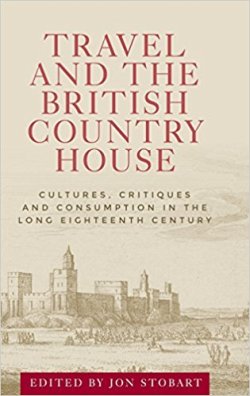 Travel and the British Country House explores the ways in which travel by owners, visitors, and material objects shaped country houses during the long eighteenth century. It provides a richer and more nuanced understanding of this relationship and how it varied according to the identity of the traveller and the geography of their journeys. The essays explore how travel on the Grand Tour, and further afield, formed an inspiration to build or remodel houses and gardens, the importance of country house visiting in shaping taste amongst British and European elites, and the practical aspects of travel, including the expenditure involved. Suitable for a scholarly audience, including postgraduate and undergraduate students, but also accessible to the general reader, Travel and the British Country House offers a series of fascinating studies of the country house that serve to animate the country house with flows of people, goods and ideas.
Jon Stobart is Professor of History at Manchester Metropolitan University.
C O N T E N T S
1 Introduction: Travel and the British Country House, Jon Stobart
2 From Rome to Stourhead and Thence to Rome Again: The Phenomenon of the Eighteenth-Century English Landscape Garden, John Harrison
3 Virtual Travel and Virtuous Objects: Chinoiserie and the Country House, Emile de Bruijn
4 Gentlemen Tourists in the Early Eighteenth Century: The Travel Journals of William Hanbury and John Scattergood, Rosie MacArthur
5 A Foreign Appreciation of English Country Houses and Castles: Dutch Travel Accounts on Proto Museums Visited en Route, 1683–1855, Hanneke Ronnes and Renske Koster
6 ‘Worth Viewing by Travellers’: Arthur Young and Country House Picture Collections in the Late Eighteenth Century, Jocelyn Anderson
7 ‘Enjoying Country Life to the Full—Only the English Know How To Do That!’: Appreciation of the British Country House by Hungarian Aristocratic Travellers, Kristof Fatsar
8 Magnificent and Mundane: Transporting People and Goods to the Country House, c. 1730–1800, Jon Stobart
9 On the Road (and the Thames) with William Cavendish, 1st Earl of Devonshire 1597–1623, Peter Edwards
10 ‘No Lady Could Do This’: Navigating Gender and Collecting Objects in India and Scotland, c. 1810–50, Ellen Filor
Index
Call for Manuscripts | Costume Society of America Book Series
Costume Society of America Book Series
Series Editor: Kimberly Chrisman-Campbell
The Costume Society of America book series has a new home at Kent State University Press. Inquiries and proposals for works on all subjects relating to the history and conservation of costume and adornment are welcome. Books chosen to be published range from scholarly to general interest and vary widely in format, from primarily textual to highly illustrated.
Although all titles must pass a rigorous review in terms of substance, not all must be scholarly. The Series also considers books that address or embrace a general readership. Titles in this category must be well written and focused on their specific subjects as well as carefully researched and substantiated, but they cannot become too deeply entrenched in theory or jargon for the average reader.
To request consideration of your proposed or completed manuscript, please send a query letter or brief prospectus to Series Editor Kimberly Chrisman-Campbell at kchrismancampbell@hotmail.com. Full details and a list of previous books in the series can be found here.
Research Seminar | Greg Smith on Thomas Girtin
From the Paul Mellon Centre:
Gregory Smith | Thomas Girtin: An Online Catalogue, Archive, and Introduction to the Artist
Paul Mellon Centre, London, 8 November 2017

Thomas Girtin, Lindisfarne Castle, Holy Island, Northumberland, 1796–97, watercolor, 38 × 52 cm (The Metropolitan Museum of Art).
I will begin by outlining the scope at the outset of a major project to produce an online catalogue covering the drawings, watercolours, and prints by, and after, the short lived but highly productive artist, Thomas Girtin (1775–1802). There are three categories of his works which pose a particular challenge to any cataloguer: the many hundreds of watercolours that he made in collaboration with fellow practitioners; the numerous copies or creative variations that Girtin produced after the works of contemporary artists, both professional and amateur, and after earlier landscape and topographical prints; and, finally, watercolours where the ostensible topographical subject has been lost or effaced as a result of Girtin’s ambitions to transcend the status of his chosen medium. Each of the three categories of problem works pose different challenges, which I will explore through a series of case studies before concluding that, despite the new research opportunities opened up by online searches and the mass digitisation of works on paper, a Girtin catalogue must, by necessity, admit a healthy degree of uncertainty and a fluidity at its margins. 8 November 2017, 6:00–8:00pm.
Greg Smith is an independent art historian who has published extensively on the history of British watercolours and watercolourists, as well as landscape artists working in Italy. He has also worked as a curator at the Whitworth Art Gallery, Manchester, the Design Museum, London, and the Barber Institute of Fine Art, Birmingham. He has organised exhibitions on the work of Thomas Girtin (Tate Britain), Thomas Jones (National Gallery of Wales), and Thomas Fearnley (Barber Institute of Fine Art). As Senior Research Fellow at the Paul Mellon Centre for Studies in British Art, Greg is developing a major online project: Thomas Girtin (1775–1802): An Online Catalogue, Archive and Introduction to the Artist.
New Book | William Hunter
From Routledge:
Helen McCormack, William Hunter and His Eighteenth-Century Cultural Worlds: The Anatomist and the Fine Arts (New York: Routledge, 2017), 208 pages, ISBN: 978 14724 24426, $150.
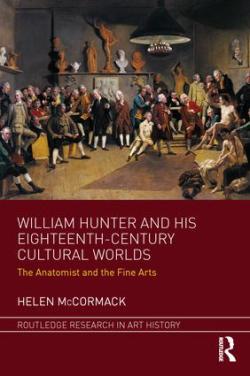 The eminent physician and anatomist Dr William Hunter (1718–1783) made an important and significant contribution to the history of collecting and the promotion of the fine arts in Britain in the eighteenth century. Born at the family home in East Calderwood, he matriculated at the University of Glasgow in 1731 and was greatly influenced by some of the most important philosophers of the Scottish Enlightenment, including Francis Hutcheson (1694–1746). Hunter quickly abandoned his studies in theology for Medicine and, in 1740, left Scotland for London where he steadily acquired a reputation as an energetic and astute practitioner; he combined his working life as an anatomist successfully with a wide range of interests in natural history, including mineralogy, conchology, botany, and ornithology; and in antiquities, books, medals, and artefacts; in the fine arts, he worked with artists and dealers and came to own a number of beautiful oil paintings and volumes of extremely fine prints. He built an impressive school of anatomy and a museum which housed these substantial and important collections. William Hunter’s life and work is the subject of this book, a cultural-anthropological account of his influence and legacy as an anatomist, physician, collector, teacher, and demonstrator. Combining Hunter’s lectures to students of anatomy with his teaching at the St Martin’s Lane Academy, his patronage of artists, such as Robert Edge Pine, George Stubbs, and Johan Zoffany, and his associations with artists at the Royal Academy of Arts, the book positions Hunter at the very centre of artistic, scientific, and cultural life in London during the period, presenting a sustained and critical account of the relationship between anatomy and artists over the course of the long eighteenth century.
Helen McCormack is a Lecturer in Art, Design, History and Theory at Glasgow School of Art. She studied Art History at Birkbeck College, University of London, and the History of Design and Material Culture at the Victoria and Albert Museum and Royal College of Art, London. She was the David Carritt Scholar in the History of Art at the University of Glasgow where she completed her PhD on the subject of William Hunter as a collector of the fine arts.
C O N T E N T S
List of Figures
Acknowledgements
Introduction: Art, Science, Curiosity and Commerce
1 Forming the Museum: Context and Chronology
2 The Great Windmill Street Anatomy School and Museum
3 Patronage and Patriots: Hunter and a National School of Artists
4 Collecting Ambitions (1770–83) The Grand Tour Paintings
5 Pursuing the Imitation of Nature in and beyond the Royal Academy of Arts
Conclusion
Bibliography
Index










 Enfilade
leave a comment