Enfilade

Exhibition | British Baroque: Power and Illusion

Posted in books, catalogues, exhibitions by Editor on February 11, 2020

John James Baker, The Whig Junto, 1710, oil on canvas, 319 × 365 (London: Tate, from the collection of Richard and Patricia, Baron and Baroness Sandys, accepted by HM Government in Lieu of inheritance tax and allocated to Tate in 2018, T15046).

◊  ◊  ◊  ◊  ◊

From the press release (3 February 2020) for the exhibition:

British Baroque: Power and Illusion
Tate Britain, London, 4 February — 19 April 2020

Curated by Tabitha Barber, with David Taylor and Tim Batchelor

British Baroque: Power and Illusion is the first ever exhibition to focus on baroque culture in Britain. From the Restoration of Charles II in 1660 to the death of Queen Anne in 1714, the exhibition explores the rich connections between art and power in this often-overlooked era. The show includes many new discoveries and works displayed in public for the first time, many on loan from the stately homes for which they were originally made.

The baroque is usually associated with the pomp and glory of European courts, epitomised by that of Louis XIV, but baroque visual culture also thrived in Britain under very different circumstances. From the royal court’s heyday as the brilliant epicentre of the nation’s cultural life, to the dramatic shift in power that saw the dominance of party politics, this exhibition shows how magnificence was used to express status and influence. As well as outstanding paintings by the leading artists of the day, including Sir Peter Lely, Sir Godfrey Kneller and Sir James Thornhill, the show also uncovers pivotal works by lesser known names.
British Baroque begins by exploring art’s role in the construction of a renewed vision of monarchy, including portraits of Charles II and idealised representations of his power. It looks at the splendour, colour and vivacity of the Restoration court, as well as the critiques of its tone and morals. Portraits by Lely, including Barbara Villiers, Duchess of Cleveland with her son, as the Virgin and Child 1664, were used to illustrate the important position held by royal mistresses while works by Jacob Huysmans, such as Catherine of Braganza c.1662–64, shaped the independent visual identity of the Queen consort.

The visual and devotional differences between Protestant and Catholic worship are examined in the religious art of the period. Emotionally charged altarpieces from the contentious Catholic chapels of Mary of Modena and James II are on show, as well as beautiful carvings by Grinling Gibbons and Thornhill’s designs for the painted dome of St Paul’s Cathedral. Another theme explored is the wonder and artifice of still life and perspective trompe l’oeil, including works by Samuel van Hoogstraten collected by members of the Royal Society, Chatsworth’s famous violin painted as if hanging on the back of a door, and the hyper-real flower paintings of Simon Verelst which looked so real that they fooled the diarist Samuel Pepys.

Godfrey Kneller, Portrait of Matthew Prior, 1700 (Cambridge, Trinity College).

The profound visual impact and drama of baroque architecture is represented with works by the great architects of the age: Wren, Hawksmoor, and Vanbrugh. Architectural designs, lavish prints, and wooden models relating to the significant buildings of the age, such as St Paul’s Cathedral, Hampton Court Palace, and Blenheim Palace, are shown alongside vast painted birds-eye views of estates. As well as architecture, the exhibition looks at the awe-inspiring illusion of painted baroque interiors. Mythological mural paintings, which frequently carried contemporary political messages, were designed to overwhelm spectators and impress upon them the power, taste, and leadership of their owners.

War and politics dominated the reigns of William III and Anne. The exhibition includes heroic equestrian portraiture, panoramic battle scenes, and accompanying propaganda. Victories such as Blenheim celebrated individuals such as the Duke of Marlborough, but they also embodied the might of the nation on a European stage. The show concludes with the dignified grandeur of portraiture made in the last two decades of the Stuart period, when party politics offered an alternative avenue to power. As well as imposing portraits of courtiers and aristocrats, the new political elite is seen in Kneller’s depiction of the Whig Kit-Cat Club and John James Baker’s enormous group portrait The Whig Junto from 1710.

British Baroque: Power and Illusion is curated by Tabitha Barber, Curator, British Art 1550–1750, Tate Britain, with David Taylor, Curator of Pictures and Sculpture, National Trust, and Tim Batchelor, Assistant Curator, British Art 1550–1750, Tate Britain. It is accompanied by a fully illustrated catalogue and a programme of talks and events in the gallery.

Tabitha Barber and Tim Bachelor, British Baroque: Power and Illusion (London: Tate Publishing, 2020), 176 pages, ISBN 978-1849766814, £25 / $35.

New Book | The Age of Undress

Posted in books by Editor on February 7, 2020

From Yale UP:

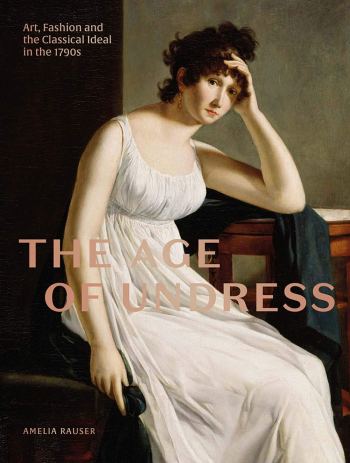
Amelia Rauser, The Age of Undress: Art, Fashion, and the Classical Ideal in the 1790s (New Haven: Yale University Press, 2020), 216 pages, ISBN: 9780300241204, $50.

Neoclassicism recast as a feminine, progressive movement through the lens of empire-style fashion, as well as related art and literature

The Age of Undress explores the emergence and meaning of neoclassical dress in the 1790s, tracing its evolution from Naples to London and Paris over the course of a single decade. The neoclassical style of clothing—often referred to as robe à la grecque, empire style, or ‘undress’—is marked by a sheer, white, high-waisted muslin dress worn with minimal undergarments, often accessorized with a cashmere shawl. This style represented a dramatic departure from that of previous decades and was short lived: by the 1820s, corsets, silks, and hoop skirts were back in fashion.

Amelia Rauser investigates this sudden transformation and argues that women styled themselves as living statues, artworks come to life, an aesthetic and philosophical choice intertwined with the experiments and innovations of artists working in other media during the same period. Although neoclassicism is often considered a cold, rational, and masculine movement, Rauser’s analysis shows that it was actually deeply passionate, with women at its core—as ideals and allegories, as artistic agents, and as important patrons.

Amelia Rauser is professor of art history at Franklin and Marshall College.

New Book | Built in Chelsea

Posted in books by Editor on February 1, 2020

Distributed in the USA and Canada by The University of Chicago Press:

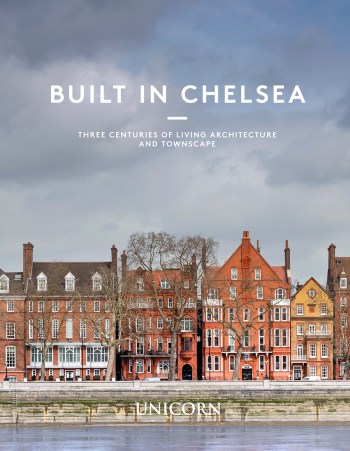
Dan Cruickshank, Built in Chelsea: Three Centuries of Living Architecture and Townscape (London: Unicorn Publishing, 2020), 128 pages, ISBN: 978-1911604969, $30.

Among the myriad London districts, Chelsea has always held a special charm for residents and visitors alike. Spacious and gracious, with the River Thames as its dramatic background, it has played host to a unique history of artists, bohemians, and related civil causes.

Over the course of twelve chapters, Built in Chelsea: Three Centuries of Living Architecture and Townscape offers readers an opportunity to learn about key episodes of the area’s history. By using the region’s buildings and structures to mark the stages of change, it connects what can be physically seen on the street with the more hidden histories of the architects, patrons, and people who have made their lives in the area.

Author and architectural historian Dan Cruickshank points to the most crucial Chelsea locales—ranging from churches to military establishments, theaters to restaurants, and housing and shops—allowing readers to feel virtually at home. Cruickshank also notes how the spaces between buildings can be just as important as the buildings themselves. He shows how in recent years some exemplary regeneration projects have taken shape because Chelsea has had the benefit of landowners with long-term interests. Due to their unobtrusive management, Chelsea’s proprietors have improved the experiences of both residents and visitors, creating a model for districts elsewhere in London and beyond.

Dan Cruickshank is an honorary fellow of the Royal Institute of British Architects. The author of many books on British architecture, he has also made numerous well-received programs for the BBC, including Around the World in 80 Treasures, Adventures in Architecture, Britain’s Best Buildings, The Country House Revealed: The Intimate Histories of Britain’s Private Palaces, and Bridges That Built London.

New Book | Fringe, Frog, and Tassel

Posted in books by Editor on January 30, 2020

From Bloomsbury:

Annabel Westman, Fringe, Frog, and Tassel: The Art of the Trimmings-Maker (London: Philip Wilson Publishers, 2020), 288 pages, ISBN: 978-1781300756, $70.

The first survey of the history, design, and use of trimmings in the historic interior in Britain and Ireland which will become the standard work on the subject.
Trimmings are often overlooked as mere details of a furnished interior, but in the past they were seen as vital and costly elements in the decoration of a room. They were used not only on curtains and beds but also on wall hangings, upholstered seat furniture, and cushions, providing a visual feast for the eye with their colour and intricate detail. Sometimes more expensive than the rich fabrics they enhanced, trimmings are often the only surviving evidence of a lost decorative scheme, reapplied to replacement textiles or found as fragments in the attic.

This book, the first of its kind, traces their history in Britain and Ireland from 1320 to 1970, examining the design and usage of tassels, fringe, braid (woven lace), gimp, and cord and their dependence on French fashion. Lavishly illustrated with new photography, the substantial text links surviving items in historic houses and museums to written evidence, paintings, drawings, and other primary sources to provide a firm framework for dating pieces of less-certain provenance. The importance of the ‘laceman’, the maker of these trimmings, is also examined within an economic and social context, together with the relationship to the upholsterer and interior decorator in the creation of a fashionable room.

Annabel Westman is an independent textile historian and consultant and is the Executive Director of The Attingham Trust. Since 1980 she has specialized in the restoration of historic interiors for heritage bodies (including the National Trust, English Heritage, Historic Royal Palaces, museums and historic house trusts), researching original furnishing schemes and advising on their implementation. Over the years, she has worked on a broad range of projects, has lectured widely, and has published many articles on furnishing textiles in some of the leading art history publications. She is a trustee and member of the interiors working group for the Stowe House Preservation Trust and was appointed a Fellow of the Society of Antiquaries in 1997.

C O N T E N T S

1  The Role of the Silkwoman, 1320–1550
2  The Role of the Silkman, 1550–1660
3  Baroque Exuberance, 1660–1690
4  Baroque Embellishment, 1690–1715
5  Palladian Restraint, 1715–1760
6  Neoclassical Interlude, 1760–1790
7  Regency Excess, 1790–1830
8  Victorian Extravagance, 1830–1880
9  Retrospection and Restraint, 1880–1970

Exhibition | The Cloth that Changed the World

Posted in books, catalogues, exhibitions by Editor on January 29, 2020

Opening in April at the ROM:

The Cloth that Changed the World: India’s Painted and Printed Cottons
Royal Ontario Museum, Toronto, 4 April — 27 September 2020

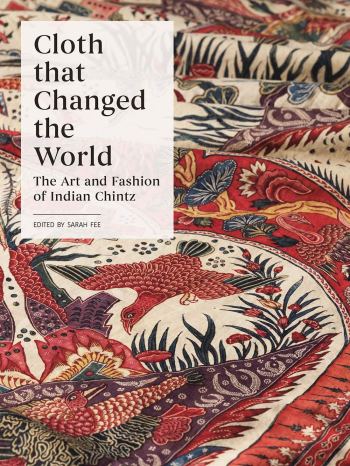
Made with novel cotton, vivid colours and exuberant design, the painted and printed cottons of India changed human history; they revolutionized art, fashion, and science wherever they went around the globe. Featuring pieces from the Museum’s world-renowned collection and several important international loans, this ROM original exhibition explores how over thousands of years India’s artisans have created, perfected, and innovated these printed and painted multicoloured cotton fabrics to fashion the body, honour divinities, and beautify palaces and homes.

Exploring the fascinating stories behind the making and trade of these glorious pieces past and present, The Cloth that Changed the World considers India’s textile innovations and their influences on fashion, trade, and industry around the world in places as far as Cairo, Japan, Sumatra, London, and Ottawa. They were the luxury fabric of their day, coveted by all, and one of the great inventions that drew foreigners to India’s shores hungry for more. Discover how through trade-routes, encounters, and exchange, these cloths connected cultures, inspired imitation and, quite literally, changed the world. Experience how India’s designers and makers today are innovating for new times and audiences.

Sarah Fee, ed., with a preface by Sven Beckert, Cloth that Changed the World: The Art and Fashion of Indian Chintz (New Haven: Yale University Press, 2020), 312 pages, ISBN: 978-0300246797, $50.

◊   ◊   ◊   ◊   ◊

This ROM blog posting from 6 July 2018 looks back to the museum’s 1970 exhibition:

The Origins of Chintz
Royal Ontario Museum, Toronto, 8 April — 28 May 1970

“Chintz… the exotic fabric from India that caught Europe’s fancy… So popular it was banned in England and France… Revolutionized Europe’s textile printing industry.”

Thus exclaimed the brochure that accompanied the ROM’s landmark exhibition, The Origins of Chintz, which opened in April, 1970, now nearly fifty years ago. Occupying the whole of the central ground gallery, known today as Currelly’s Court, the exhibition displayed nearly 100 towering examples of Indian ‘chintz’. . . .

Half of the one hundred objects displayed in the ROM exhibition Origins of Chintz came from the ROM’s own great holdings, particularly the 1934 donation from the estate of Harry Wearne (1852–1929), a British-born textile and wall paper designer. London’s Victoria & Albert (V&A) museum loaned almost forty treasures, including its unique ‘Garrick bed’: these Indian chintz bed coverings are famous both for their grandeur and for the impassioned letters that Mr. Garrick sent to customs officials in London begging for their return; the fabrics had been impounded during the aforementioned import ban on Indian chintz, meant to protect local British silk and linen weavers. A few additional masterpieces—including a seventeenth-century hanging from a Deccan Indian court palace—came on loan from the Metropolitan Museum of Art, the Cooper Hewitt Design Museum, and Austrian Decorative Art Museum of Vienna. . . .

The full posting is available here»

Exhibition | Ukiyo-e Prints from the Mary Ainsworth Collection

Posted in books, catalogues, exhibitions by Editor on January 27, 2020

Katsushika Hokusai (Japanese, 1760–1849), Fuji in Clear Weather (Red Fuji), from the series Thirty-six Views of Mt. Fuji, early 1830s
(Allen Memorial Art Museum, Oberlin College, Ainsworth Bequest, 1950.711)

◊   ◊   ◊   ◊   ◊

Press release for the exhibition (via Art Daily). . .

Ukiyo-e Prints from the Mary Ainsworth Collection
Chiba City Museum of Art, 13 April — 26 May 2019
Shizuoka City Museum of Art, 8 June — 28 July 2019
Osaka City Museum of Fine Arts, 10 August to 29 September 2019
Allen Memorial Art Museum, Oberlin College, Ohio, 14 January — 14 June 2020

Curated by Kevin Greenwood

In 1950, the Allen Memorial Art Museum received a surprise gift of more than 1,500 Japanese woodblock prints featuring actors, courtesans, and landscapes of the ‘floating world’ of 17th- to 19th-century Japan. This bequest became a cornerstone of the Allen’s renowned Asian art collection, and 200 of the works traveled back to Japan last year for a tour of museums in Chiba (near Tokyo), Shizuoka, and Osaka. Now more than 100 of these prints are on view in Ukiyo-e Prints from the Mary Ainsworth Collection, an Oberlin exhibition that runs through June 14, 2020.

Mary Andrews Ainsworth (1867–1950) graduated from Oberlin College in 1889 and made her first sea voyage to Japan in 1906. The country had recently emerged from centuries of isolation and was beginning a period of rapid industrial development. Ainsworth, however, was attracted to an earlier Japan: that of the Edo period (1603–1868). In this more peaceful era, a world of entertainment arose—ephemeral pursuits made even more popular through the wide distribution of color woodblock prints known as ukiyo-e, or ‘pictures of the floating world’.

“The Ainsworth collection represents the history and evolution of Japanese woodblock printmaking, with high-quality examples of the major subjects, styles, and artists of ukiyo-e. Together, they convey much of the richness and complexity of Japan’s print tradition,” said Kevin R. E. Greenwood, the Allen’s Joan L. Danforth Curator of Asian Art. “We were approached by one of Japan’s leading ukiyo-e scholars to do this exhibition, which confirms the importance of Ainsworth’s collection,” he said. “In the process of working together, we discovered some impressions not known in any other collections.”

Ukiyo-e Prints from the Mary Ainsworth Collection is presented in four sections that span the history of the medium. Early prints (1680–1770) were monochrome, often with hand-coloring added; the carbon-black ink was made from pine soot. Around 1745, with the invention of a way to register, or align, wooden blocks, artists such as Ishikawa Toyonobu began printing in two colors: red and green. These benizuri-e prints, or ‘crimson-printed pictures’, sometimes included a third color, yellow, brown, or indigo. In the 1760s, Suzuki Harunobu was the first major producer of prints using more than three blocks.

The second part of the show, Beauties and Actors (1770–1800), includes works by Kitagawa Utamaro, Chobunsai Eishi, and other artists who helped to popularize the many theaters, tea houses, and celebrities of the pleasure district in Edo (now Tokyo). Ukiyo-e artists not only made prints for sale to Japan’s growing merchant class, but also were hired to produce posters and advertisements for theatrical performances.

The third section, Hokusai and Kuniyoshi (1780–1850), highlights the rise of landscapes in Japanese printmaking, which was due in part to the introduction of a chemical pigment called Prussian blue. Six prints from Katsushika Hokusai’s series Thirty-six Views of Mt. Fuji are included, along with Utagawa Kuniyoshi’s prints of bridges, ferries, and heroes from history and legend.

The final section (1830–1858) is devoted to prints by Utagawa Hiroshige I. Works by this prolific artist comprise more than half of the Ainsworth collection. The exhibition presents thirty-six works by Hiroshige I, including nine from his 1830s series Fifty-three Stations of the Tōkaidō and thirteen from his 1857 series One Hundred Famous Views of Edo—prime examples of some of the finest woodblock prints ever produced in Japan.

“This extensive exhibition and its accompanying catalogue have been years in coming to fruition,” said Andria Derstine, John G. W. Cowles Director of the Allen. “We are thrilled to present, for the first time in decades, such a large portion of our Ainsworth collection, both at the Allen and to enthusiastic audiences in Japan.”

Organized by Kevin R. E. Greenwood, Joan L. Danforth Curator of Asian Art, with Masako Tanabe and Marie Matsuoka, Chiba City Museum of Art; Saori Oishi, Shizuoka City Museum of Art; Eri Yoshida, Weikado Bunko Art Museum; Tatsuya Akita and Yasuko Kikuchi, Osaka City Museum of Fine Arts; Hiromi Sone, Mangosteen, Inc.; and Luoying Sheng ’20, AMAM curatorial assistant in Asian art education.

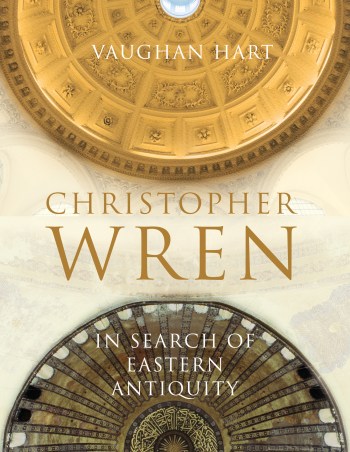
New Book | Christopher Wren: In Search of Eastern Antiquity

Posted in books by Editor on January 25, 2020

From Yale UP:

Vaughan Hart, Christopher Wren: In Search of Eastern Antiquity (London: Paul Mellon Centre for Studies in British Art, 2020), 240 pages, ISBN: 978-1913107079, £45 / $60.

In this revelatory study of one of the great architects in British history, Vaughan Hart considers Christopher Wren’s (1632–1723) interest in Eastern antiquity and Ottoman architecture, an interest that would animate much of his theory and practice. As the early modern understanding of antiquity broadened to include new discoveries at Palmyra and Persepolis, Wren disputed common assumptions about the European origins of Classical and Gothic architecture, tracing these building traditions not to the Greeks or Germans but to the stonemasons of the biblical East. In a deft analysis, Hart contextualizes Wren’s use of classical elements—columns, domes, and cross plans—within his enthusiasm for the East and the broader Anglican interest in the Eastern church. A careful study of diary records reappraises Wren’s working relationship with Robert Hooke (1635–1703), who shared in many of Wren’s theoretical commitments. The result is a new, deepened understanding of Wren’s work.

Vaughan Hart is a professor of architecture at the University of Bath.

New Book | The Tile Book

Posted in books by Editor on January 24, 2020

From Thames & Hudson:

Here Design, with an introduction by Terry Bloxham, The Tile Book: History, Pattern, Design (London: Thames & Hudson, 2019), 304 pages, ISBN: 9780500480250, £20 / $30.

This striking book gathers together an extensive collection of ceramic tiles from around the world and explores their rich history, purpose, and decorative qualities. For centuries, tiles have been used for both functional and aesthetic purposes on the façades and interiors of buildings. Found in a multitude of shapes, sizes, colors, and designs—ranging from complex geometrical Islamic patterns to figurative seventeenth-century delftware—tiles are among the most varied ceramic products. This luxurious source book, curated by the award-winning studio Here Design, is organized chronologically and features tiles in every variety of shape, displaying each individual tile type and its overall laid pattern in vivid color. Tiles are also shown in situ around the world and at different periods in their remarkable history. The Tile Book is a dazzling mosaic, with colors and patterns that will uplift and inspire.

Here Design is a multiaward-winning design studio in London. Their books include An Anarchy of Chilies, Herbarium, The Grammar of Spice, and Spectrum: Heritage Patterns and Colors.
Terry Bloxham is Assistant Curator of Ceramics and Glass at the Victoria and Albert Museum.

HBA 2020 Book Prizes Announced

Posted in books by Editor on January 22, 2020

From the most recent issue of the HBA Newsletter, edited by Caitlin Silberman. Congratulations to this year’s winners! CH

The Historians of British Art Book Prize Committee for 2020 is pleased to announce the Book Award winners for publications from 2018. The winners were chosen from a nominating list of seventy books from thirty different presses. Awards are granted in four different categories. This year’s committee of readers consisted of Matthew Reeve, Stacey Sloboda, Eric Stryker, and Alison Syme.

Before 1600
• John Blair, Building Anglo-Saxon England (Princeton: Princeton University Press, 2018).

Before 1600 (highly commended)
• Sonja Drimmer, The Art of Allusion: Illuminators and the Making of English Literature, 1403–1476 (Philadelphia: University of Pennsylvania Press, 2018).

Between 1600 and 1800
• Cheryl Finley, Committed to Memory: The Art of the Slave Ship Icon (Princeton: Princeton University Press, 2018).

After 1800
• Deborah Sugg Ryan, Ideal Homes, 1918–39: Domestic Design and Suburban Modernism (Manchester: Manchester University Press, 2018).

Multi-Authored Book
• Steven Brindle, et al., Windsor Castle: A Thousand Years of a Royal Palace (London: Royal Collection Trust, 2018).

Short List for the Period between 1600 and 1800
• Jocelyn Anderson, Touring and Publicizing England’s Country Houses in the Long Eighteenth Century (London: Bloomsbury, 2018).
• Jill Francis, Gardens and Gardening in Early Modern England and Wales (New Haven and London: Paul Mellon Centre for Studies in British Art for Yale University Press, 2018).
• Conor Lucey, Building Reputations: Architecture and the Artisan, 1750–1830 (Manchester: Manchester University Press, 2018).
• Clare Taylor, The Design, Production, and Reception of Eighteenth-Century Wallpaper in Britain (London: Routledge, 2018).


Exhibition | Life Cut Short

Posted in books, exhibitions by Editor on January 21, 2020

Mourning ring containing lock of Alexander Hamilton’s hair presented to Nathaniel Pendleton by Elizabeth Hamilton, 1805, gold and hair
(New-York Historical Society, Gift of Mr. B. Pendleton Rogers, 1961.5a)

◊   ◊   ◊   ◊   ◊

From the press release for the exhibition now on view at the New-York Historical Society:

Life Cut Short: Hamilton’s Hair and the Art of Mourning Jewelry
New-York Historical Society, 20 December 2019 — 10 May 2020

Curated by Debra Schmidt Bach

This special installation looks at the history of hair and other mourning jewelry through a display of approximately 30 bracelets, earrings, brooches, and other accessories drawn from New-York Historical’s collection by Curator of Decorative Arts Dr. Debra Schmidt Bach. Because hair decomposes slowly, miniatures and other jewelry decorated with hair became symbolic of mourning. These personal mementos provided solace while also being fashionable and socially appropriate. The objects on display illustrate the fascinating history of hair jewelry, with a particular focus on its manufacture and use in New York.

John Ramage, Back of a miniature case containing a portrait of Elizabeth Pintard (1765–1838), 1787, watercolor on ivory, gold, hair (New-York Historical Society, Gift of George Hancock Servoss, 1906.3).

Highlights of the installation are a gold mourning ring containing a lock of founding father Alexander Hamilton’s hair, clipped by his wife, Elizabeth, as a keepsake while he was on his deathbed; and a Tiffany & Co. mourning bracelet featuring hair, gold, silver, and diamonds (ca. 1854), one of many mourning items sold by the famed New York City jeweler. Also on display is artist and naturalist John James Audubon’s facial hair, given to New-York Historical by his widow, Lucy Bakewell Audubon.

Miniaturist John Ramage’s hair-working tools and ivory sample cards with selections of hair designs point to the rising popularity of mourning jewelry in late 18th-century America. Active in New York from 1777 to 1794, Ramage created many miniatures that incorporated ‘hair painting’ or curled or woven locks of hair secured under glass within elaborate gold cases. Also featured in the display are period advertisements, instruction and etiquette books, and illustrations of hair-braiding patterns.

◊   ◊   ◊   ◊   ◊

In connection with the exhibition, the museum also notes this book, though it’s something else altogether:

Robert McCracken Peck, with photographs by Rosamond Purcell, Specimens of Hair: The Curious Collection of Peter A. Browne (New York: Blast Boosk, 2018), 176 pages, ISBN: 978-0922233496, $40.

To a nineteenth-century amateur naturalist named Peter A. Browne, hair was of paramount importance: he believed it was the single physical attribute that could unravel the mystery of human evolution. Thirty years before Charles Darwin revolutionized understanding of the descent of man, Browne vigorously collected for study what he called the ‘pile’ (from the Latin word for hair, pilus) of as wide a variety of humans (and animals) as possible in his quest to account for the differences and similarities between groups of humans. The result of his diligent, obsessive work is a fastidious, artfully assembled twelve-volume archive of mammalian diversity. Browne’s growing quest for knowledge became an all-consuming specimen-collecting passion. By the time of his death in 1860, Browne had assembled samples from innumerable wild and domestic animals, as well as the largest known study collection of human hair. He obtained hair from people from all parts of the globe and all walks of life: artists, scientists, abolitionist ministers, doctors, writers, politicians, financiers, military leaders, and even prisoners, sideshow performers, and lunatics. His crowning achievement was a gathering of hair from thirteen of the first fourteen presidents of the United States. The pages of his albums, some spare, some ornately decorated, many printed ducit amor patriae―’led by love of country’―are distinctly idiosyncratic, captivating, and powerfully evocative of a vanished world. Browne’s albums have been sequestered in the archives of the Academy of Natural Sciences in Philadelphia to which Brown bequeathed them, narrowly escaping destruction in the 1970s. They are a unique manifestation of the avid collecting instinct in nineteenth-century scientific endeavors to explain the mysteries of the natural world.

Robert McCracken Peck is a naturalist, writer, and historian with a special interest in the intersection of science, history, and art. As Senior Fellow of the Academy of Natural Sciences of Philadelphia (now part of Drexel University), he has chronicled historical and contemporary scientific research expeditions. Among Peck’s most recent books are The Natural History of Edward Lear and A ­Glorious Enterprise: The Academy of Natural Sciences of ­Philadelphia, co-authored with Patricia Stroud.