Award Winning Exhibition | Spaces of Wonder, Wonder of Spaces
Recently announced by the Association of College and Research Libraries, with a full list of winners here. Congratulations, Christina Smylitopoulos! More information on the Bachinski / Chu Print Study Collection is available here.
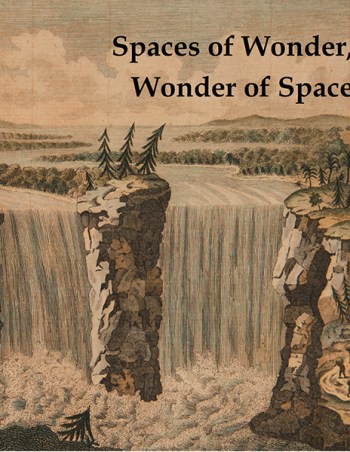
The exhibition catalogue Spaces of Wonder, Wonder of Space: Encountering the Eighteenth Century in Image, Object, and Text, edited by Christina Smylitopoulos, has been selected as a winner of the Katharine Kyes Leab & Daniel J. Leab Exhibition Award (Division Three) by the Association of College and Research Libraries (ACRL), Rare Books and Manuscripts Section (RBMS). This collaborative, multi-venue show was developed in conjunction with the 2018 Société canadienne d’étude du dix-huitième siècle / Canadian Society for Eighteenth-Century Studies conference held in Niagara Falls, Ontario, which was organized jointly by Mount Allison University (MAU; Sackville, New Brunswick) and the University of Guelph (Guelph, Ontario).
The show, which featured works from the Bachinski / Chu Print Study Collection and objects from the McLaughlin Library’s Archival & Special Collections and the Barker Museum of Veterinary History (October 2018 – April 2019) was funded by the Social Science and Humanities Research Council of Canada project Wonder in the Eighteenth Century (Christina Ionescu / Christina Smylitopoulos) and reflects the work of undergraduate students pursuing experiential learning opportunities, graduate students in Art/History, and faculty and curatorial colleagues from Mount Allison University the UofG’s College of Arts.
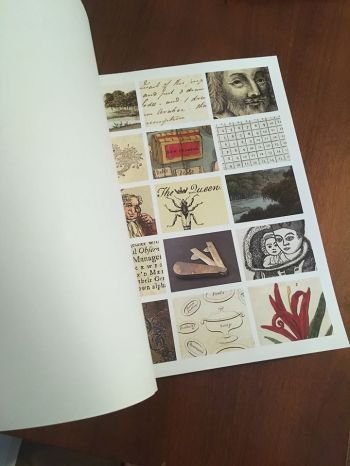 “The content and conceit of this publication is commendable. The central thesis concatenating the objects was compelling and original, offering a discussion not just of objects but also how they are perceived. The committee appreciated the collaborative approach to this topic, which gave space to a wide range of voices and approaches from students to faculty.” –Leab Awards Committee
New Book | The English Folly: The Edifice Complex
From Historic England and Liverpool UP:
Gwyn Headley and Wim Meulenkamp, The English Folly: The Edifice Complex (Historic England, 2020), 260 pages, ISBN: 978-1789621976 (hardcover), £60 / ISBN: 978-1789622126 (paperback), £30.
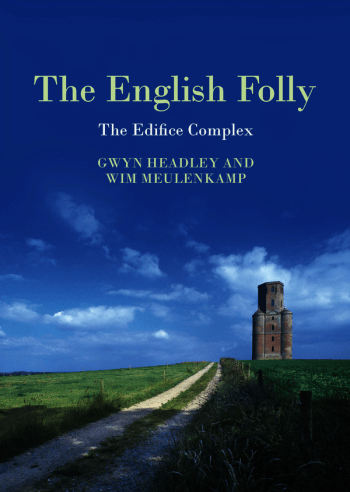 If this were a novel, the tales of astounding wealth, sexual perversion, murder, munificence, rape, insanity, brutality, slavery, religious mania, selfishness, snobbery, charity, suicide, generosity, theft, madness, wickedness, failure, and eccentricity which unfold in these pages would be too concentrated to allow for the willing suspension of disbelief. All these sins and virtues, and more, are displayed by the characters in this book, some exhibiting several of them simultaneously. Folly builders were not as we are. They never built what we now call follies. They built for beauty, utility, improvement; it is only we, struggling after them with our imperfect understanding, who dismiss their prodigious constructions as follies. Follies can be found around the world, but England is their spiritual home. Having written the definitive books on follies in Great Britain, Benelux, and the USA, Headley and Meulenkamp have turned their attention to the folly builders themselves, people so blinded by fashion or driven by some nameless ideology that they expended great fortunes on making their point in brick, stone and flint. Most follies are simply misunderstood buildings, and this book studies the motives, characters, decisions and delusions of their builders. If there was madness in their building, fortunately there was no method in it.
Gwyn Headley is Publisher at Heritage Ebooks, Managing Director at fotoLibra and Co-founder of The Folly Fellowship. Wim Meulenkamp is President of The DonderbergGroup: Foundation for Follies, Garden Ornaments and the Architecture of Amusement.
New Book | Making the Modern Artist
Forthcoming this fall from the Paul Mellon Centre and Yale UP:
Martin Myrone, Making the Modern Artist: Culture, Class, and Art-Educational Opportunity in Romantic Britain (London: Paul Mellon Centre for Studies in British Art, 2020), 288 pages, ISBN: 978-1913107154, £45 / $60.
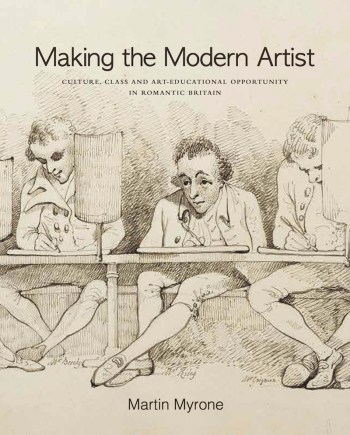 The artist has been a privileged figure in the modern age, embodying ideals of personal and political freedom and self-fulfillment. Does it matter who gets to be an artist? And do our deeply held beliefs stand up to scrutiny? Making the Modern Artist gets to the root of these questions by exploring the historical genesis of the figure of the artist. Based on an unprecedented biographical survey of almost 1,800 students at the Royal Academy of Arts in London between 1769 and 1830, the book reveals hidden stories about family origins, personal networks, and patterns of opportunity and social mobility. Locating the emergence of the ‘modern artist’ in the crucible of Romantic Britain, rather than in 19th-century Paris or 20th-century New York, it reconnects the story of art with the advance of capitalism and demonstrates surprising continuities between liberal individualism and state formation, our dreams of personal freedom, and the social suffering characteristic of the modern era.
Martin Myrone is senior curator of pre-1800 British art at Tate Britain, London.
New Book | Ugliness and Judgment: On Architecture in the Public Eye
From Princeton UP:
Timothy Hyde, Ugliness and Judgment: On Architecture in the Public Eye (Princeton: Princeton University Press, 2019), 232 pages, ISBN: 978-0691179162, $35 / £30.
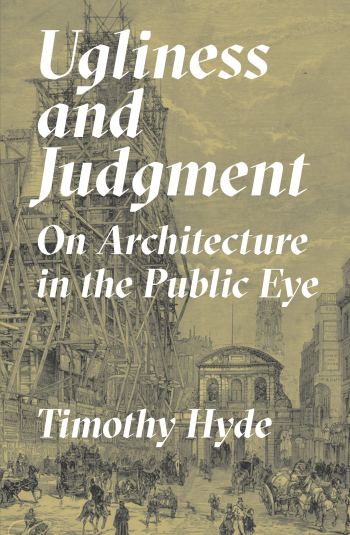 When buildings are deemed ugly, what are the consequences? In Ugliness and Judgment, Timothy Hyde considers the role of aesthetic judgment—and its concern for ugliness—in architectural debates and their resulting social effects across three centuries of British architectural history. From eighteenth-century ideas about Stonehenge to Prince Charles’s opinions about the National Gallery, Hyde uncovers a new story of aesthetic judgment, where arguments about architectural ugliness do not pertain solely to buildings or assessments of style, but intrude into other spheres of civil society.
Hyde explores how accidental and willful conditions of ugliness—including the gothic revival Houses of Parliament, the brutalist concrete of the South Bank, and the historicist novelty of Number One Poultry—have been debated in parliamentary committees, courtrooms, and public inquiries. He recounts how architects such as Christopher Wren, John Soane, James Stirling, and Ludwig Mies van der Rohe have been summoned by tribunals of aesthetic judgment. With his novel scrutiny of lawsuits for libel, changing paradigms of nuisance law, and conventions of monarchical privilege, he shows how aesthetic judgments have become entangled in wider assessments of art, science, religion, political economy, and the state. Moving beyond superficialities of taste in order to see how architectural improprieties enable architecture to participate in social transformations, Ugliness and Judgment sheds new light on the role of aesthetic measurement in our world.
Timothy Hyde is associate professor in the history and theory of architecture at the Massachusetts Institute of Technology. He is the author of Constitutional Modernism: Architecture and Civil Society in Cuba, 1933–1959.
New Book | Beyond Aesthetics
From Yale UP:
Wole Soyinka, Beyond Aesthetics: Use, Abuse, and Dissonance in African Art Traditions (New Haven: Yale University Press in association with the Hutchins Center for African & African American Research, 2020), 160 pages, ISBN: 978-0300247626, $25.
 An intimate reflection on culture and tradition, creativity and power, that draws on a lifetime’s commitment to aesthetic encounter.
The playwright, poet, essayist, novelist, and Nobel Laureate Wole Soyinka is also a longtime art collector. This book of essays offers a glimpse into the motivations of the collector, as well as a highly personal look at the politics of aesthetics and collecting. Detailing moments of first encounter with objects that drew him in and continue to affect him, Soyinka describes a world of mortals, muses, and deities that imbue the artworks with history and meaning.
Beyond Aesthetics is a passionate discussion of the role of identity, tradition, and originality in making, collecting, and exhibiting African art today. Soyinka considers objects that have stirred controversy, and he decries dogmatic efforts—whether colonial or religious—to suppress Africa’s artistic traditions. By turns poetic, provocative, and humorous, Soyinka affirms the power of collecting to reclaim tradition. He urges African artists, filmmakers, collectors, and curators to engage with their aesthetic and cultural histories.
Wole Soyinka is a Nigerian playwright, poet, and political activist. He was awarded the Nobel Prize for Literature in 1986. His many publications include You Must Set Forth at Dawn and Of Africa.
New Book | The Classical Body in Romantic Britain
Distributed by Yale UP:
Cora Gilroy-Ware, The Classical Body in Romantic Britain (London: Paul Mellon Centre for Studies in British Art , 2020), 320 pages, ISBN: 978-1913107062, $50.
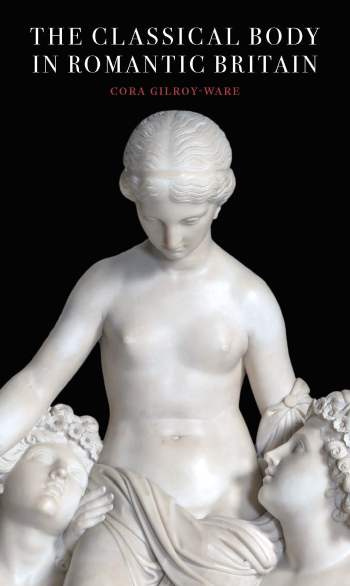 For many, the term ‘neoclassicism’ has come to imply discipline, order, restraint, and a certain myopia. Leaving the term behind, this book radically challenges enduring assumptions about the art produced from the late 18th century to the early Victorian period, casting new light on appropriations of the classical body by British artists. It is the first to foreground the intersections of gender, race, and class in discussions of British visual classicism, laying bare artists’ alternately politicizing and emphatically sensual engagements with Greco-Roman art. Rather than rely exclusively on subsequent scholarship, the book takes up the poet John Keats (1795–1821) as a theoretical framework. Eschewing the ‘Golden Age’ narrative, which sees J. M. W. Turner (1775–1851) as the pinnacle of the period’s artistic achievement, the book examines overlooked artists, such as Henry Howard (1769–1847) and John Graham Lough (1798–1876). The result is a fresh account of underappreciated works of British painting and sculpture.
Cora Gilroy-Ware is a scholar, artist, and curator currently working with Isaac Julien CBE RA.
Exhibition | Japan: Courts and Culture
Press release (12 November 2019) for the exhibition from the Royal Collection Trust:
Japan: Courts and Culture
The Queen’s Gallery, Buckingham Palace, London, 8 April 2022 — 26 February 2023
Curated by Rachel Peat
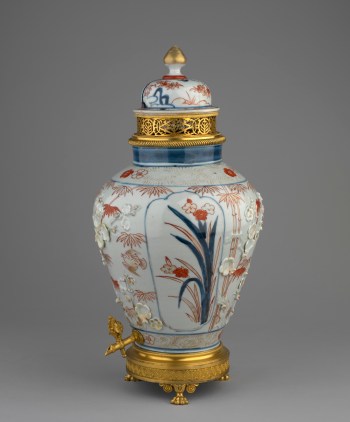
Arita, Hizen Province (Japan), Jar and Cover, 1690–1720, porcelain with moulded relief decoration and painted in underglaze blue, overglaze enamel, and gold; French mounts, 1780–1820, gilt bronze; 42.5 cm high, purchased for George IV in 1820 (Royal Collection Trust, RCIN 39239).
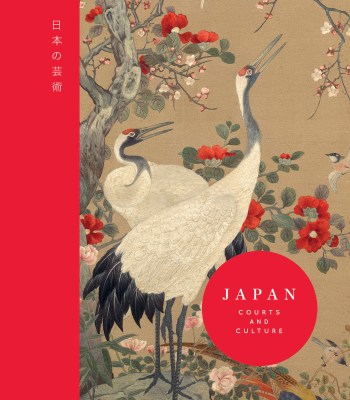
The Royal Collection contains one of the finest holdings of Japanese works of art in the Western world, significant for both the unique provenance and exceptional quality of the objects. Now, for the first time, highlights from the collection are brought together in the exhibition Japan: Courts and Culture, which tells the story of the diplomatic, artistic, and cultural exchanges between Britain and Japan from the reigns of James I to Queen Elizabeth II. Including rare examples of porcelain, lacquer, armour and embroidered screens, the exhibition offers a unique insight into the relationship between the imperial and royal courts over a period of 300 years.
The formation of the East India Company in 1600 paved the way for direct contact between Japan and England. In 1613, the first English ship to reach Japanese shores was captained by John Saris, who brought with him letters and gifts from James I for Shōgun Tokugawa Ieyasu, the military leader who governed Japan on behalf of the imperial family. Saris returned with a letter granting the English permission to live and trade in Japan, and with gifts for the King. These included a samurai armour, the earliest to arrive in Britain and the first surviving non-European work of art to enter the Royal Collection.
This first contact between England and Japan was short-lived. From the 1630s, for some 220 years, Japan closed to the West in an attempt to regulate foreign influence. During this time, the Dutch were the only Europeans permitted to trade directly with Japan through one small enclave at Nagasaki. Demand for exotic East Asian wares remained high in Europe, where the secrets of porcelain and lacquer manufacture were yet to be discovered.
The British royal family led the way in collecting highly prized examples of Japanese lacquer, porcelain, and textiles—much of which was produced specifically for the export market. In the 17th century, Mary II displayed Japanese porcelain in her apartments at Kensington Palace and Hampton Court Palace. In the 18th century, Queen Caroline, consort of George II, formed a significant collection of Japanese lacquer. A century later, George IV incorporated Japanese porcelain into the opulent decorative schemes at Carlton House in London and the Royal Pavilion, Brighton. Many of the pieces acquired by the King were given new functions through the addition of elaborate gilt-bronze mounts, turning a simple jar into a pot-pourri vase and animal figures into incense burners.
 When Japan reopened to the West in the 1850s, goods began to flow freely, and diplomatic and political links were re-established. Queen Victoria’s son, Prince Alfred, Duke of Edinburgh, was the first member of a European royal family to visit Japan when he arrived there in 1869 during a world naval tour. The Prince met the Emperor Meiji at the Imperial Palace, where an exchange of gifts took place, and was presented with samurai armour, including a helmet dating from 1537. In a letter to his mother, Alfred wrote: “To give you any account of this country, I feel quite at a loss. Every thing is so new & so quaint that I am quite bewildered.”
The next members of the British royal family to visit Japan were Queen Victoria’s grandsons Prince George of Wales (the future King George V) and his brother, Prince Albert Victor. In 1881, the teenage Princes were serving as midshipmen aboard HMS Bacchante and were granted shore leave to meet the Emperor Meiji and Empress Shōken. They returned with presents for their family, including a teapot and cups for their father, Albert Edward, Prince of Wales, and with diplomatic gifts from the Emperor. According to the official diary of the tour, compiled by their tutor, the Reverend John Dalton, the Princes had their arms tattooed during their visit to Japan—Albert Victor with ‘a couple of storks’ and George with a dragon and a tiger, a combination said to signify East and West.
In the early 20th century, a defensive Anglo-Japanese Alliance was formed to secure both nations’ interests in the Pacific. This was also a period of growing artistic exchange. The most significant cultural event was the 1910 Japan-British Exhibition in London, which included demonstrations of Japanese crafts, music, sports, and entertainments. More than eight million people visited the exhibition, including Queen Mary, consort of King George V, who was an enthusiastic collector of East Asian art.
The relationship between the Japanese and British imperial and royal families has continued to flourish through reciprocal royal visits, attendance at coronations, and the exchange of gifts. In 1902, Prince Komatsu Akihito attended the coronation of King Edward VII on behalf of the Emperor Meiji and presented the King with an embroidered folding screen of the four seasons. In 1911, Queen Mary received a coronation gift of a miniature cabinet bearing the imperial chrysanthemum crest, created by Akatsuka Jitoku, one of the most accomplished lacquerers of his generation. On the occasion of the coronation of Queen Elizabeth II in 1953, the Emperor Shōwa (Hirohito) sent Her Majesty a cosmetic box decorated with a heron by the great lacquer artist Shirayama Shōsai.
◊ ◊ ◊ ◊ ◊
In the United States and Canada, the catalogue is distributed by The University of Chicago Press:
Rachel Peat, ed., Japan: Courts and Culture (London: Royal Collection Trust, 2020), 320 pages, ISBN: 978-1909741683, $70.
Japan: Courts and Culture tells the story of three centuries of British royal contact with Japan, from 1603 to c.1937, when the exchange of exquisite works of art was central to both diplomatic relations and cultural communication. With discussions of courtly rituals, trade relationships, treaties, and other matters of concern between the two nations, this book provides important historical and political context in addition to granting a new look at the works of art in question. Featuring new research on previously unpublished works, including porcelain, lacquer, armor, embroidery, metalwork, and works on paper, this book showcases the unparalleled craftsmanship of these objects, and the local materials, techniques, and traditions behind them. Japan: Courts and Culture is published to accompany a spectacular exhibition of the same name, which opens at The Queen’s Gallery, Buckingham Palace, in June 2020. The book’s stunning photography, contextual essays, and historical insights offer a highly visual record of a royal narrative and history that has not yet been widely documented.
Rachel Peat is assistant curator of non-European works of art at Royal Collection Trust.
C O N T E N T S
Foreword, HRH The Prince of Wales and Princess Akiko of Mikasa
British and Japanese Royal Family Trees
Map of Japan
1 Introduction, Rachel Peat
2 First Encounters, 1600–1639, Rachel Peat
3 Trade, 1639–1854, Rachel Peat
4 Porcelain, Melanie Wilson and Rachel Peat
5 Lacquer, Rachel Peat
6 Travel, 1854–1901, Rachel Peat
7 Samurai, Arms and Armour, Gregory Irvine
8 Metalwork, Kathryn Jones
9 Treaty, 1901–1937, Rachel Peat
10 Artistic Exchange, Kathryn Jones
11 Courtly Ritual, Caroline de Guitaut
12 Coda, Rachel Peat
13 Appendix: The Model of the Taitokuin Mausoleum, William H. Coaldrake
Glossary
Timeline of Key Events
Bibliography
Acknowledgements
Index
◊ ◊ ◊ ◊ ◊
Note (added 8 April 2022) — The posting has been updated to indicate the revised dates of the exhibition, which was originally scheduled to be on view from 12 June until 8 November 2020.
New Book | Aesthetic Science
From The University of Chicago Press:
Alexander Wragge-Morley, Aesthetic Science: Representing Nature in the Royal Society of London, 1650–1720 (Chicago: The University of Chicago Press, 2020), 272 pages, ISBN: 978-0226680729 (hardcover), $120 / ISBN: 978-0226680866 (paper), $40. E-books are also available.
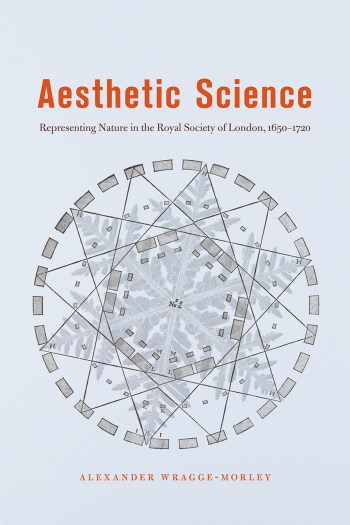 The scientists affiliated with the early Royal Society of London have long been regarded as forerunners of modern empiricism, rejecting the symbolic and moral goals of Renaissance natural history in favor of plainly representing the world as it really was. In Aesthetic Science, Alexander Wragge-Morley challenges this interpretation by arguing that key figures such as John Ray, Robert Boyle, Nehemiah Grew, Robert Hooke, and Thomas Willis saw the study of nature as an aesthetic project.
To show how early modern naturalists conceived of the interplay between sensory experience and the production of knowledge, Aesthetic Science explores natural-historical and anatomical works of the Royal Society through the lens of the aesthetic. By underscoring the importance of subjective experience to the communication of knowledge about nature, Wragge-Morley offers a groundbreaking reconsideration of scientific representation in the early modern period and brings to light the hitherto overlooked role of aesthetic experience in the history of the empirical sciences.
Alexander Wragge-Morley is clinical assistant professor of liberal studies and history at New York University.
C O N T E N T S
Introduction
1 Physico-Theology, Natural Philosophy, and Sensory Experience
2 An Empiricism of Imperceptible Entities
3 In Search of Lost Designs
4 Verbal Picturing
5 Natural Philosophy and the Cultivation of Taste
Conclusion: Embodied Aesthetics
Acknowledgments
Notes
Bibliography
Index
New Book | Art of the United States, 1750–2000
Distributed by The University of Chicago Press:
John Davis and Michael Leja and edited by Francesca Rose, Art of the United States, 1750–2000 (Chicago: Terra Foundation for American Art, 2020), 544 pages, ISBN: 978-0932171689, $39.
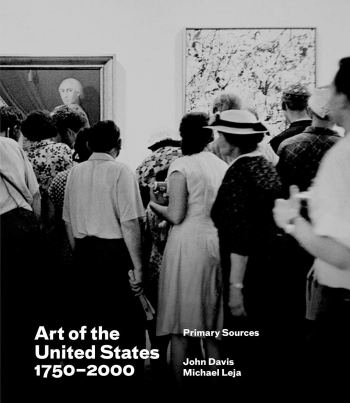 Art of the United States is a landmark volume that presents three centuries of US art through a broad array of historical texts, including writings by artists, critics, patrons, literary figures, and other commentators. Combining a wide-ranging selection of texts with high-quality reproductions of artworks, it offers a resource for the study and understanding of the visual arts of the United States. With contextual essays, explanatory headnotes, a chronology of US historical landmarks, maps, and full-color illustrations of key artworks, the volume will appeal to national and international audiences ranging from undergraduates and museum visitors to art historians and other scholars. Texts by a range of artists and cultural figures—including John Adams, Thomas Cole, Frederick Douglass, Mary Cassatt, Edward Hopper, Clement Greenberg, and Cindy Sherman—are grouped according to historical era alongside additional featured artists.
A sourcebook of unprecedented breadth and depth, Art of the United States brings together multiple voices throughout the ages to provide a framework for learning and critical thinking on US art.
John Davis is the provost and under secretary for museums, education, and research at the Smithsonian Institution and the author or coauthor of numerous catalogs and books, including, with Sarah Burns, the comprehensive volume American Art to 1900. Michael Leja is the James and Nan Wagner Farquhar Professor of History of Art at the University of Pennsylvania and the author of numerous catalogs and books, including Reframing Abstract Expressionism: Subjectivity and Painting in the 1940s and Looking Askance: Skepticism and American Art from Eakins to Duchamp. Francesca Rose is the program director for publications at the Terra Foundation for American Art.
New Book | The Edinburgh History of Reading
Spread across the volumes are essays addressing the long eighteenth century, including topics of illustrations and visual culture. From Edinburgh UP:
Mary Hammond and Jonathan Rose, eds., The Edinburgh History of Reading, 4 volumes (Edinburgh: Edinburgh University Press, 2020), 1512 pages, 978-1474478717, £350. [Each volume is also sold individually.]
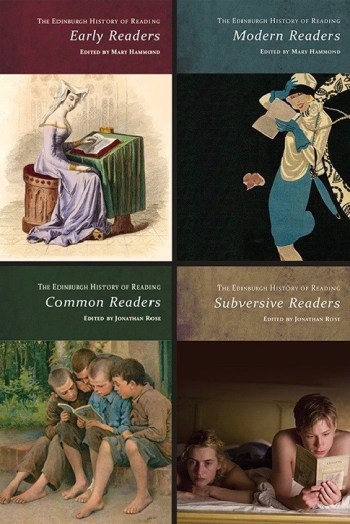 Bringing together the latest scholarship from all over the world on topics ranging from reading practices in ancient China to the workings of the twenty-first-century reading brain, the 4 volumes of The Edinburgh History of Reading demonstrate that reading is a deeply imbricated, socio-political practice, at once personal and public, defiant, and obedient. It is often materially ephemeral, but it can also be emotionally and intellectually enduring.
Volume Titles
Early Readers, edited by Mary Hammond, with contents listed here.
Early Readers presents a number of innovative ways through which we might capture or infer traces of readers in cultures where most evidence has been lost. It begins by investigating what a close analysis of extant texts from 6th-century BCE China can tell us about contemporary reading practices, explores the reading of medieval European women and their male medical practitioner counterparts, traces readers across New Spain, Peru, the Ottoman Empire and the Iberian world between 1500 and 1800, and ends with an analysis of the surprisingly enduring practice of reading aloud.
Modern Readers, edited by Mary Hammond, with contents listed here.
Modern Readers explores the myriad places and spaces in which reading has typically taken place since the eighteenth century, from the bedrooms of the English upper classes, through large parts of nineteenth-century Africa and on-board ships and trains travelling the world, to twenty-first-century reading groups. It encompasses a range of genres from to science fiction, music and self-help to Government propaganda.
Common Readers, edited by Jonathan Rose, with contents listed here.
Common Readers casts a fascinating light on the literary experiences of ordinary people: miners in Scotland, churchgoers in Victorian London, workers in Czarist Russia, schoolgirls in rural Australia, farmers in Republican China, and forward to today’s online book discussion groups. Chapters in this volume explore what they read, and how books changed their lives.
Subversive Readers, edited by Jonathan Rose, with contents listed here.
Subversive Readers explores the strategies used by readers to question authority, challenge convention, resist oppression, assert their independence and imagine a better world. This kind of insurgent reading may be found everywhere: in revolutionary France and Nazi Germany, in Eastern Europe under Communism and in Australian and Iranian prisons, among eighteenth-century women reading history and nineteenth-century men reading erotica, among postcolonial Africans, the blind, and pioneering transgender activists.










leave a comment