New Book | Luca Giordano: Catalogue Raisonné
The English edition of the text is available from Artbooks.com:
Andrés Úbeda de los Cobos, Luca Giordano: Catalogue Raisonné (Madrid: Museo Nacional del Prado, 2018), 400 pages, $65.
 In spite of the huge number of paintings by this artist in the Prado, Luca Giordano (Naples, 1634–1705) is seldom studied and is therefore little known to the public, who often do not see beyond the cliché of his prodigious speed of execution. The present volume sets out to remedy this lack of knowledge. It begins with three introductory essays that set the Prado paintings in the context of Giordano’s life, survey the painter’s critical fortunes from his own time to the present day, and provide information on his Spanish period, which lasted from 1692 to 1702. These initial texts also look into specific issues, among them Giordano’s relationship with his dealers, and more controversial aspects such as the commercial strategies he used to disseminate his work.
The second part of the book—the catalogue raisonné proper—consists of entries for each of the paintings studied, including information on their provenance, condition, restoration history, related literature, iconography, visual sources and critical fortunes. It features a total of 99 paintings executed on different supports and in various media which span all the stages of his production except the period following his return to Naples in 1702.
Andres Ubeda de los Cobos, Deputy Director for Conservation and Research at the Museo del Prado. He is a specialist on Luca Giordano and has published various articles and books on the artist’s oeuvre, such as a study on the fresco of the Apotheosis of the Spanish Monarchy in the Casón del Buen Retiro in 2008—a project which, in a sense, has been brought to a successful completion by this book.
New Book | Orient et ornement
Published by Éditions de la Maison des sciences de l’homme, as noted at GRHAM:
Isabelle Tillerot, Orient et ornement: L’espace à l’œuvre ou le lieu de la peinture (Paris, Éditions de la Maison des sciences de l’homme et DFK Paris, 2018), 370 pages, ISBN: 978 2735124169, 48€.
Tout tableau est un fragment. Mais qui, du cadre ou du mur, construit le lieu de la peinture ? Que s’est-il passé lorsque cette énigme occidentale fut confrontée à l’époque moderne à une autre représentation du monde ? Si l’Europe des Lumières est souvent caractérisée par les chinoiseries et l’ornement rocaille, c’est un nouveau regard sur l’Extrême-Orient qui est analysé ici, celui qui lie l’histoire du tableau à une idée de l’espace transmise par les décors des objets venus d’Asie. Dans quelle mesure la présence réelle ou fantasmée de l’Orient a-t-elle modifié le rapport de la peinture au support qui la donne à voir ? Tel est l’objet de ce livre qui présente le changement de paradigme dans la construction du goût suscité par les notions orientales de paysage, de lointain et de vide, pour que le sort de la peinture se transforme. D’où vient la place particulière qu’elle acquiert au XVIIIe siècle ? De quelle façon fut bouleversée son exposition pour qu’elle devienne le tableau que nous connaissons aujourd’hui ?
 T A B L E D E S M A T I È R E S
Préface
Introduction
1 Les lieux de la peinture
Décorer ou la matérialité des décors
L’usage du décor
Les espaces impartis à la peinture
2 Le temps du décor
Les lointains de la peinture
Tableaux en amont
Le décor comme écrin
3 L’arabesque d’un ornement
L’arabesque peinte
L’arabesque à l’entour du tableau
Le tableau arabesque
4 L’orient des décorations
Rêve de chinoiserie
Rêve de matières
Rêve de couleurs
5 L’idée orientale du goût
De l’objet d’Orient à l’objet de goût
Lieux chinois d’Europe
Le blanc des jardins d’Asie
6 Un autre mode de représentation du monde
Un système non mimétique
Dissoudre le support architectural ou la surface repensée
Le décor reconnu comme oeuvre d’art
Conclusion – Le caprice de l’orient ou faire du tableau une île
Bibliographie
Sources anciennes
Sources anciennes éditées après le XVIIIe siècle
Études modernes
Catalogues d’expositions
New Book | British Women and Cultural Practices of Empire
From Bloomsbury:
Rosie Dias and Kate Smith, eds., British Women and Cultural Practices of Empire, 1770–1940 (London: Bloomsbury Visual Arts, 2018), 256 pages, ISBN: 9781501332173, £90.
 Correspondence, travel writing, diary writing, painting, scrapbooking, curating, collecting, and house interiors allowed British women scope to express their responses to imperial sites and experiences in the 18th, 19th, and 20th centuries. Taking these productions as its archive, British Women and Cultural Practices of Empire, 1775–1930 includes a collection of essays from different disciplines that consider the role of British women’s cultural practices and productions in conceptualising empire. While such productions have started to receive greater scholarly attention, this volume uses a more self-conscious lens of gender to question whether female cultural work demonstrates that colonial women engaged with the spaces and places of empire in distinctive ways. By working across disciplines, centuries and different colonial geographies, the volume makes an important contribution to the field by demonstrating the diverse ways in which European women shaped constructions of empire in the modern period.
Rosie Dias is Associate Professor in the History of Art, University of Warwick. Kate Smith is Senior Lecturer in Eighteenth-Century History, University of Birmingham.
C O N T E N T S
List of Illustrations
Contributors
Acknowledgments
Abbreviations
Introduction — Rosie Dias and Kate Smith
Part I | Travel
1 The Travelling Eye: British Women in Early 19th-Century India — David Arnold
2 Paper Trails of Imperial Trav(a)ils: Janet Schaw’s Journal of a Journey from Scotland to the West Indies, North Carolina, and Portugal, 1774–1776 — Viccy Coltman
3 Sketches from the Gendered Frontier: Colonial Women’s Images of Encounters with Aboriginal People in Australia, 1830s–1860s — Caroline Jordan
Part II | Collecting
4 ‘Of Manly Enterprise, and Female Taste!’: Mina Malcolm’s Cottage as Imperial Exhibition, c. 1790s–1970s — Ellen Filor
5 A Lily of the Murray: Cultivating the Colonial Landscape through Album Assemblage — Molly Duggins
6 Collecting the ‘East’: Women Travellers New on the New ‘Grand Tour’ — Amy Miller
Part III | Identities
7 Agents of Affect: Queen Victoria’s Indian Gifts — Rosie Dias
8 ‘Prime Minister in the Home Department’: Female Gendered Identity in 19th-Century Upper Canada — Rosie Spooner
9 Reconstructing the Lives of Professional Women in 1930s Zanzibar through Image, Object, and Text — Sarah Longair
Bibliography
Index
Exhibition | Black Out: Silhouettes Then and Now
From the National Portrait Gallery:
Black Out: Silhouettes Then and Now
Smithsonian National Portrait Gallery, Washington, D.C., 11 May 2018 — 10 March 2019
Mississippi Museum of Art, Jackson, 27 April — 25 August 2019
Curated by Asma Naeem
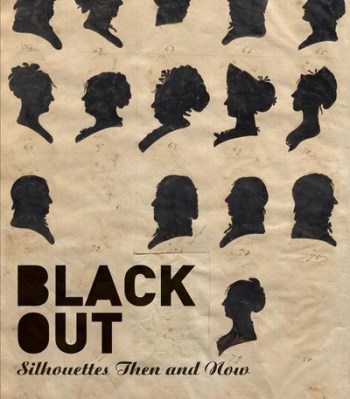 Silhouettes—cut paper profiles—were a hugely popular and democratic form of portraiture in the 19th century, offering virtually instantaneous likenesses of everyone from presidents to those who were enslaved. The exhibition Black Out: Silhouettes Then and Now explores this relatively unstudied art form by examining its rich historical roots and considering its forceful contemporary presence. The show features works from the Portrait Gallery’s extensive collection of silhouettes, such as those by Auguste Edouart, who captured the likenesses of such notable figures as John Quincy Adams and Lydia Maria Child, and at the same time, the exhibition reveals how contemporary artists are reimagining silhouettes in bold and unforgettable ways.
Highlights of the historical objects include a double-silhouette portrait of a same-sex couple and a rarely seen life-size silhouette of a nineteen-year-old enslaved girl, along with the bill of her sale from 1796. The featured contemporary artists are Kara Walker, who makes panoramic silhouettes of plantation life and African American history; Canadian artist Kristi Malakoff, who cuts paper to make life-size sculptures depicting a children’s Maypole dance; MacArthur-prize-winner Camille Utterback, who will present an interactive digital work that reacts to visitors’ shadows and movements; and Kumi Yamashita, who ‘sculpts’ light and shadow with objects to create mixed-media profiles of people who are not there. With both historical and contemporary explorations into the silhouette, Black Out reveals new pathways between our past and present, particularly with regard to how we can reassess notions of race, power, individualism, and even, our digital selves.
This exhibition is curated by Portrait Gallery Curator of Prints, Drawings and Media Arts, Asma Naeem.
Asma Naeem, Black Out: Silhouettes Then and Now (Princeton University Press, 2018), 192 pages, ISBN: 978 0691180588, $45.
◊ ◊ ◊ ◊ ◊
Note (added 27 April 2019) — The posting was updated to include the Mississippi Museum of Art as a second venue.
New Book | Commedia dell’Arte in Context
From Cambridge UP:
Christopher Balme, Piermario Vescovo, and Daniele Vianello, eds., Commedia dell’Arte in Context (New York: Cambridge University Press, 2018), 377 pages, ISBN: 9781139236331, $120.
 The commedia dell’arte, the improvised Italian theatre that dominated the European stage from 1550 to 1750, is arguably the most famous theatre tradition to emerge from Europe in the early modern period. Its celebrated masks have come to symbolize theatre itself and have become part of the European cultural imagination. Over the past twenty years a revolution in commedia dell’arte scholarship has taken place, generated mainly by a number of distinguished Italian scholars. Their work, in which they have radically separated out the myth from the history of the phenomenon remains, however, largely untranslated into English (or any other language). The present volume gathers together these Italian and English-speaking scholars to synthesize for the first time this research for both specialist and non-specialist readers. The book is structured around key topics that span both the early modern period and the twentieth-century reinvention of the commedia dell’arte.
New Book | Image, Identity, and John Wesley
From Routledge:
Peter Forsaith, Image, Identity, and John Wesley: A Study in Portraiture (London: Routledge, 2018), 210 pages, ISBN: 9781138207899, $140.
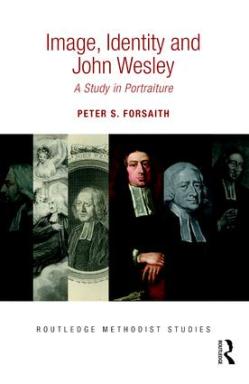 The face of John Wesley (1703–1791), the Methodist leader, became one of the most familiar images in the English-speaking and transatlantic worlds through the late eighteenth and nineteenth centuries. After the dozen or so painted portraits made during his lifetime came numbers of posthumous portraits and moralising ‘scene paintings’, and hundreds of variations of prints. It was calculated that six million copies were produced of one print alone—an 1827 portrait by John Jackson R.A. as frontispiece for a hymn book.
Illustrated by nearly one hundred images, many in colour, with a comprehensive appendix listing known Wesley images, this book offers a much-needed comprehensive and critical survey of one of the most influential religious and public figures of eighteenth-century Britain. Besides chapters on portraits from the life and after, scene paintings and prints, it explores aspects of Wesley’s (and Methodism’s) attitudes to art and the personality cult which gathered around Wesley as Methodism expanded globally.
Peter S. Forsaith is a historian of religion, culture and society in eighteenth-century Britain. He is Research Fellow of the Oxford Centre for Methodism and Church History, Oxford Brookes University, UK, and has written and lectured on many aspects of Methodist history. He gained his Ph.D. in 2003 for a scholarly edition of Rev. John Fletcher’s letters to Rev. Charles Wesley, later expanded and published as Unexampled Labours (2008). He is a Fellow of the Royal Historical Society.
C O N T E N T S
Introduction
1 ‘A Far Greater Genius than Sir Joshua’: Some Issues and Complexities around the Portraiture
2 ‘This Melancholy Employment’: Portraits from the Life to 1780
3 ‘I Yielded to Importunity’: Portraits from the Life, 1781–91
4 Prints and Posthumous Portraits: Spreading and Selling the Image
5 Scene Paintings
6 Pottery and Sculpture: A Note
7 No Striking Likeness? Images and Ambiguities
8 ‘The Pious Preacher’: Satire
9 ‘Of Pictures I Do Not Pretend To Be a Judge’: John Wesley and Art
10 Image, Identity, and Institution: Constructing a Canon
11 Conclusions: Visualising Mr. Wesley
Plates
Appendix A: Iconography of Principal Paintings of John Wesley, with Selected Prints
Appendix B: References in John Wesley’s Journal and Diaries to Portraits and Painters
Exhibition | Zurbarán’s Jacob and His Twelve Sons
I’m late with this posting, having only recently come to understand that the eighteenth-century provenance of the paintings (of which we have no knowledge until they appeared at auction in England in the 1720s) makes the series potentially relevant for issues of collecting and the South Sea Company, Jewish civil rights in the eighteenth century, and, of course, the reception of the Spanish Golden Age. –CH
From The Frick:
Zurbarán’s Jacob and His Twelve Sons: Paintings from Auckland Castle
The Meadows Museum, SMU, Dallas, 17 September 2017 — 7 January 2018
The Frick Collection, New York, 31 January — 22 April 2018
Curated by Susan Grace Galassi, Mark Roglán, Amanda Dotseth, and Edward Payne
 In collaboration with the Meadows Museum, Dallas, Texas, and The Auckland Project, County Durham, England, The Frick Collection has organized an exhibition of Jacob and His Twelve Sons, an ambitious series of thirteen paintings that depict over life-size figures from the Old Testament. On loan from Auckland Castle, the works by the Spanish Golden Age master Francisco de Zurbaran (1598–1664) have never before traveled to the United States. They were first presented at the Meadows Museum in the fall of 2017, and are on view at The Frick Collection from January 31 through April 22, 2018. In preparation for this American tour, these important seventeenth-century Spanish paintings, dating from the 1640s, have undergone a year-long in-depth technical analysis in the conservation department at the Kimbell Art Museum, Fort Worth, the most extensive study of the series to date.
The iconography of Zurbarán’s remarkable series is derived from the ‘Blessings of Jacob’ in Chapter 49 of the Book of Genesis, a poem that has significance for Jews, Christians, and Muslims. On his deathbed, Jacob called together his sons, who would become the founders of the Twelve Tribes of Israel. He bestowed on each a blessing, which foretold their destinies and those of their tribes. Jacob’s prophecies provide the basis for the manner in which the figures are represented in Zurbarán’s series. For his compositions, the artist drew inspiration from northern European prints.
The series was likely intended for export to the New World. In seventeenth-century Spain, it was commonly believed that indigenous peoples of the Americas were descended from the so-called ‘lost tribes of Israel’. The paintings, however, did not come to light until the 1720s in England when they appeared at auction and were purchased by a Jewish merchant. In 1756 they were acquired by Richard Trevor, Bishop of Durham, a supporter of Jewish rights. Trevor hung them in the dining room at Auckland Castle, where they have remained for over 250 years. A two-year restoration of Auckland Castle presents this extraordinary study and exhibition opportunity.
Comments Frick Director Ian Wardropper, “We are thrilled to collaborate with Auckland Castle and the Meadows Museum on the first North American showing of Francisco de Zurbarán’s extraordinary series Jacob and His Twelve Sons. The technical analysis carried out at the Kimbell has greatly enriched our understanding of the master’s methods, while catalogue essays commissioned for the show explore the works in historical, cultural, and religious contexts. The sheer visual power and rich narrative content of this series will draw visitors in and will be beautifully complemented by the Frick’s strong holdings in Spanish art, which include paintings by Velázquez and Murillo—Zurbarán’s Sevillian contemporaries—as well as by El Greco and Goya.”
Zurbarán’s Jacob and His Twelve Sons: Paintings from Auckland Castle has been organized by Susan Grace Galassi, Senior Curator, The Frick Collection; Mark A. Roglan, Director of the Meadows Museum; Amanda Dotseth, Meadows/Mellon/Prado Fellow at the Meadows Museum; and Edward Payne, Senior Curator, Spanish Art, The Auckland Project, County Durham, England.
Susan Grace Galassi, Edward Payne, and Mark Roglán, eds., Zurbarán: Jacob and His Twelve Sons, Paintings from Auckland Castle (Seattle: Lucia Marquand, 2017), 136 pages, ISBN: 978 0998093024, $45.
The Burlington Magazine, March 2018
The eighteenth century in The Burlington:
The Burlington Magazine 160 (March 2018)

Portrait of a Consul, identified by Lucy Whitaker as a portrait of Joseph Smith, pencil and watercolour on paper, 28.6 × 20 cm; page from Giovanni Grevembroch: Gli abiti de’ veneziani di quasi ogni età con diligenza raccoliti e dipinti nel secolo XVIII (Venice: Biblioteca del Museo Correr, MS Gradenigo-Dolfin 49, II, fol.125.2).
A R T I C L E S
• Lucy Whitaker, “A Portrait of Consul Smith,” pp. 214–16. A watercolour in Giovanni Grevembroch’s Gli abiti de’ veneziani, compiled ca. 1754–59, can probably be identified as the only surviving portrait of the celebrated art collector and art dealer Joseph Smith, British consul in Venice from 1744 to 1760.
• Esmé Whittaker, “‘Almost Her Creation’: Georgiana, Duchess of Devonshire, and the Decoration of Chiswick House,” pp. 217–25. Letters, inventories and contemporary prints and drawings help paint a clearer picture of the extensions made to Chiswick House, London, in 1790–92 and the role that Georgiana, Duchess of Devonshire, played in their execution and furnishing.
R E V I E W S
• Duncan Robinson, Review of the exhibition Casanova: The Seduction of Europe (Kimbell Art Museum, Fort Worth, 2017; The Legion of Honor, San Francisco, 2018; and Museum of Fine Arts, Boston, 2018), pp. 241–43.
• David Pullins, Review of the exhibition Shockingly Mad: Henry Fuseli and the Art of Drawing (Art Institute of Chicago, 2018), pp. 243–44.
New Book | Rethinking Lessing’s Laocoon
From Oxford UP:
Avi Lifschitz and Michael Squire, eds., Rethinking Lessing’s Laocoon: Antiquity, Enlightenment, and the ‘Limits’ of Painting and Poetry (Oxford: Oxford University Press, 2017), 480 pages, ISBN: 978-0198802228, $110.
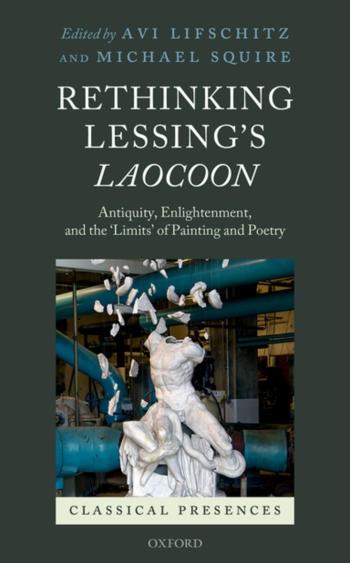 Gotthold Ephraim Lessing first published Laokoon, oder uber die Grenzen der Mahlerey und Poesie (Laocoon, or on the Limits of Painting and Poetry) in 1766. Over the last 250 years, Lessing’s essay has exerted an incalculable influence on western critical thinking. Not only has it directed the history of post-Enlightenment aesthetics, it has also shaped the very practices of ‘poetry’ and ‘painting’ in a myriad of different ways.
In this anthology of specially commissioned chapters—comprising the first ever edited book on the Laocoon in English—a range of leading critical voices has been brought together to reassess Lessing’s essay on its 250th anniversary. Combining perspectives from multiple disciplines (including classics, intellectual history, philosophy, aesthetics, media studies, comparative literature, and art history), the book explores the Laocoon from a plethora of critical angles. Chapters discuss Lessing’s interpretation of ancient art and poetry, the cultural backdrops of the eighteenth century, and the validity of the Laocoon‘s observations in the fields of aesthetics, semiotics, and philosophy. The volume shows how the Laocoon exploits Greek and Roman models to sketch the proper spatial and temporal ‘limits’ (Grenzen) of what Lessing called ‘poetry’ and ‘painting’; at the same time it demonstrates how Lessing’s essay is embedded within Enlightenment theories of art, perception, and historical interpretation, as well as within nascent eighteenth-century ideas about the ‘scientific’ study of Classical antiquity (Altertumswissenschaft). To engage critically with the Laocoon, and to make sense of its legacy over the last 250 years, consequently involves excavating various ‘classical presences’: by looking back to the Graeco-Roman past, the volume demonstrates, Lessing forged a whole new tradition of modern aesthetics.
Avi Lifschitz is Associate Professor of European History and Fellow of Magdalen College at the University of Oxford. Among his publications are Language and Enlightenment: The Berlin Debates of the Eighteenth Century and the edited volumes Engaging with Rousseau and Epicurus in the Enlightenment (the latter co-edited with Neven Leddy). Michael Squire is Reader in Classical Art at King’s College London. His books include The Iliad in a Nutshell: Visualizing Epic on the Tabulae Iliacae and The Art of the Body: Antiquity and Its Legacy.
C O N T E N T S
List of Illustrations
List of Tables
Note on Laocoon Editions
Foreword: Why Lessing’s Laocoon Still Matters, W. J. T. Mitchell
1 Introduction: Rethinking Lessings Laocoon from across the Humanities, Avi Lifschitz and Michael Squire
2 Laocoon Today: On the Conceptual Infrastructure of Lessing’s Treatise, David Wellbery
3 Laocoon among the Gods, or: On the Theological Limits of Lessing’s Grenzen, Michael Squire
4 Lessing’s Laocoon as Analytical Instrument: The Perspectives of a Classical Archaeologist, Luca Giuliani
5 Sympathy, Tragedy, and the Morality of Sentiment in Lessing’s Laocoon, Katherine Harloe
6 Mendelssohn’s Critique of Lessing’s Laocoon, Frederick Beiser
7 Naturalizing the Arbitrary: Lessing’s Laocoon and Enlightenment Semiotics, Avi Lifschitz
8 Temporalizationa Lessing’s Laocoon and the Problem of Narration in Eighteenth-Century Historiography, Daniel Fulda, translated from the German by Steven Tester
9 Criticism as Poetry? Lessing’s Laocoon and the Limits of Critique, Élisabeth Décultot, translated from the German by Steven Tester
10 Suffering in Art: Laocoon between Lessing and Goethe, Ritchie Robertson
11 Transparency and Imaginative Engagement: Material as Medium in Lessing’s Laocoon, Jason Gaiger
12 Lessing’s Laocoon and the ‘As-If’ of Aesthetic Experience, Jonas Grethlein
13 Art and Necessity: Rethinking Lessing’s Critical Practice, Paul Kottman
14 Image and Text in Lessing’s Laocoon: From Friendly Semiotic Neighbours to Articulatory Twins, Jurgen Trabant
15 Envoi: The Two-Fold Liminality of Lessing’s Laocoon, Hans Ulrich Gumbrecht
Notes on Contributors
Bibliography
Index
Exhibition | Heavenly Bodies: Fashion and the Catholic Imagination
Press release (9 March 2018) from The Met:
Heavenly Bodies: Fashion and the Catholic Imagination
The Metropolitan Museum of Art and The Met Cloisters, New York, 10 May — 8 October 2018
Curated by Andrew Bolton, with C. Griffith Mann, Barbara Drake Boehm, Helen Evans, and Melanie Holcomb
The Costume Institute’s spring 2018 exhibition, Heavenly Bodies: Fashion and the Catholic Imagination, on view from May 10 through October 8, 2018 (preceded on May 7 by The Costume Institute Benefit) will be presented in two Metropolitan Museum of Art locations: at The Met Fifth Avenue—in the medieval galleries, Mary and Michael Jaharis Galleries for Byzantine Art, part of The Robert Lehman Wing, and the Anna Wintour Costume Center—and uptown at The Met Cloisters. The thematic exhibition will feature a dialogue between fashion and masterworks of medieval art in The Met collection to examine fashion’s ongoing engagement with the devotional practices and traditions of Catholicism. A group of papal robes and accessories from the Vatican will travel to the United States to serve as the cornerstone of the exhibition, highlighting the enduring influence of liturgical vestments on designers.
“The Catholic imagination is rooted in and sustained by artistic practice, and fashion’s embrace of sacred images, objects, and customs continues the ever-evolving relationship between art and religion,” said Daniel H. Weiss, President and CEO of The Met. “The Museum’s collection of Byzantine and western medieval art, in combination with the architecture and galleries that house these collections at The Met, provide the perfect context for these remarkable fashions.”
In celebration of the opening, the Museum’s Costume Institute Benefit, also known as The Met Gala, will take place on Monday, May 7, 2018. The evening’s co-chairs will be Amal Clooney, Rihanna, Donatella Versace, and Anna Wintour. Christine and Stephen A. Schwarzman will serve as Honorary Chairs. The event is The Costume Institute’s main source of annual funding for exhibitions, publications, acquisitions, and capital improvements.
“Fashion and religion have long been intertwined, mutually inspiring and informing one another,” said Andrew Bolton, Curator in Charge of The Costume Institute. “Although this relationship has been complex and sometimes contested, it has produced some of the most inventive and innovative creations in the history of fashion.”
The exhibition will feature approximately 40 ecclesiastical masterworks from the Sistine Chapel sacristy, many of which have never been seen outside the Vatican. These will be on view in the Anna Wintour Costume Center galleries and will include papal vestments and accessories, such as rings and tiaras, from the 18th to the early 21st century, encompassing more than 15 papacies. The last time the Vatican sent a loan of this magnitude to The Met was in 1983, for The Vatican Collections exhibition, which is the Museum’s third most-visited show.
In addition, more than 150 ensembles, primarily womenswear, from the early 20th century to the present will be shown in the Byzantine and medieval galleries, part of the Robert Lehman Wing, and at The Met Cloisters alongside medieval art from The Met collection, providing an interpretative context for fashion’s engagement with Catholicism. The presentation situates these designs within the broader context of religious artistic production to analyze their connection to the historiography of material Christianity and their contribution to the construction of the Catholic imagination.
Designers in the exhibition will include A.F.Vandevorst, Azzedine Alaïa, Cristobal Balenciaga, Geoffrey Beene, Marc Bohan (for House of Dior), Thom Browne, Roberto Capucci, Jean Charles de Castelbajac, Gabrielle “Coco” Chanel, Ann Demeulemeester, Sorelle Fontana, Domenico Dolce and Stefano Gabbana (for Dolce & Gabbana), John Galliano (for House of Dior), Gattinoni, Jean Paul Gaultier, Craig Green, Madame Grès (Alix Barton), Demna Gvasalia (for Balenciaga), Rosella Jardini (for Moschino), Stephen Jones, Christopher Kane, Christian Lacroix, Karl Lagerfeld (for House of Chanel), Jeanne Lanvin, Shaun Leane, Claire McCardell, Mariuccia Mandelli (for Krizia), Laura and Kate Mulleavy (for Rodarte), Thierry Mugler, Rick Owens, Carli Pearson (for Cimone), Maria Grazia Chiuri and Pierpaolo Piccioli (for Valentino), Pierpaolo Piccioli (for Valentino), Stefano Pilati (for Saint Laurent), Gareth Pugh, Simone Rocha, Yves Saint Laurent, Elsa Schiaparelli, Raf Simons (for his own label and House of Dior), Viktor Horsting and Rolf Snoeren (for Viktor & Rolf), Olivier Theyskens, Josephus Thimister, Riccardo Tisci, Jun Takahashi (for Undercover), Philip Treacy, Donatella Versace (for Versace), Gianni Versace, Valentina, and Madeleine Vionnet.
The exhibition—a collaboration between The Costume Institute and the Department of Medieval Art and The Cloisters—is organized by Andrew Bolton, Curator in Charge of The Costume Institute, working together with colleagues in The Met’s Medieval department: C. Griffith Mann, Michel David-Weill Curator in Charge of the Department of Medieval Art and The Cloisters; Barbara Drake Boehm, Paul and Jill Ruddock Senior Curator for The Met Cloisters; Helen C. Evans, Mary and Michael Jaharis Curator of Byzantine Art; and Melanie Holcomb, Curator. The interdisciplinary architecture and design firm Diller Scofidio + Renfro (DS+R) will create the exhibition design with The Met’s Design Department. Raul Avila will produce the gala décor, which he has done since 2007.
A publication by Andrew Bolton will accompany the exhibition and will include texts by Barbara Drake Boehm, Marzia Cataldi Gallo, C. Griffith Mann, David Morgan, Gianfranco Cardinal Ravasi, and David Tracy in addition to new images by Katerina Jebb. It will be published by The Metropolitan Museum of Art and distributed by Yale University Press.
Andrew Bolton, ed., Heavenly Bodies: Fashion and the Catholic Imagination (New York: The Metropolitan Museum of Art, 2018), 336 pages, ISBN: 978 1588396457, $65.










 Enfilade
2 comments