New Book | Cultivating Commerce: Cultures of Botany
From Cambridge UP:
Sarah Easterby-Smith, Cultivating Commerce: Cultures of Botany in Britain and France, 1760–1815 (New York: Cambridge University Press, 2017), 252 pages, ISBN: 978-1107126848, $99.
 Sarah Easterby-Smith rewrites the histories of botany and horticulture from the perspectives of plant merchants who sold botanical specimens in the decades around 1800. These merchants were not professional botanists, nor were they the social equals of refined amateurs of botany. Nevertheless, they participated in Enlightenment scholarly networks, acting as intermediaries who communicated information and specimens. Thanks to their practical expertise, they also became sources of new knowledge in their own right. Cultivating Commerce argues that these merchants made essential contributions to botanical history, although their relatively humble status means that their contributions have received little sustained attention to date. Exploring how the expert nurseryman emerged as a new social figure in Britain and France, and examining what happened to the elitist, masculine culture of amateur botany when confronted by expanding public participation, Easterby-Smith sheds fresh light on the evolution of transnational Enlightenment networks during the Age of Revolutions.
C O N T E N T S
Figures
Maps
Acknowledgements
Note on the Text
Abbreviations
Introduction: Cultivating Commerce
1 Plant Traders and Expertise
2 Science, Commerce, and Culture
3 Amateur Botany
4 Social Status and the Communication of Knowledge
5 Commerce and Cosmopolitanism
6 Cosmopolitanism under Pressure
Conclusion: Commerce and Cultivation
Bibliography
Index
New Book | Piranesi: Studies in Honor of John Wilton-Ely
As noted in Salon, the newsletter of the Society of Antiquaries of London, issue 402 (6 March 2018) . . .
On 31 January John Wilton-Ely FSA was presented with a festschrift at a ceremony at the Instituto Centrale per la Grafica, Palazzo Poli, Rome, in recognition of his services to scholarship on the life and works of Giovanni Battista Piranesi, FSA (elected 1757). The publication is volume 32 of the art historical journal, Studi sul Settecento Romano (Sapienza Università di Roma), entitled Giovanni Battista Piranesi, predecessori, contemporanei e successori: Studi in onore di John Wilton-Ely. The papers were formally delivered in 2016 at a special conference arranged by the Royal Swedish Academy in the Royal Palace at Stockholm, which contains a significant collection of Piranesi’s imaginatively restored classical antiquities, acquired by Gustav III from the artist’s former museo in Rome.
From Arbor Sapientiae:
Francesco Nevola, ed., Giovanni Battista Piranesi, Predecessori, contemporanei e successori: Studi in onore di John Wilton-Ely, Studi sul Settecento Romano, volume 32 (Rome: Sapienza Università di Roma, 2016), 400 pages, ISBN: 978-8871407432, 60€.
 • Francesco Nevola, John Wilton-Ely: Una vita con Piranesi
• Jörg Garms, Il rococò in Italia e la vicenda di Piranesi
• Lola Kantor-Kazovsky, On the Eve of the Graeco-Roman Controversy: Pierre Jean Mariette and Bouchardon’s Fountain of the Four Seasons
• Francesco Nevola, Giovanni Battista Piranesi’s Origins as a Vedutista: The impact of Canaletto and Bellotto
• Myra Nan Rosenfeld, Piranesi’s Grotteschi: A Visual Expression of the Literary Aims of the Accademia degli Arcadi
• Silvia Gavuzzo-Stewart, Irony in Piranesi’s Carceri and Lettere di Giustificazione
• Frank Salmon, Piranesi and the Accademia di San Luca in Rome
• Susanna Pasquali, Piranesi’s Campo Marzio as described in 1757
• Elisa Debenedetti, Piranesi, Marchionni e il mito di Diogene
• Mario Bevilacqua, Piranesi’s Ironies and the Egyptian and Etruscan Dreams of Margherita Gentili Boccapaduli
• Georg Kabierske, Vasi, urne, cinerarie, altari e candelabri: Newly Identified Drawings for Piranesi’s Antiquities and Sculptural Compositions at the Staatliche Kunsthalle Karlsruhe
• Heather Hyde Minor and John Pinto, ‘Marcher sur les traces de son père’: The Piranesi Enterprise between Rome and Paris
• Pier Luigi Panza, Il Museo Piranesi: Un censimento e osservazioni su attribuzioni, vendite e uso dei pezzi in architettura
• Raffaella Bosso, Per un catalogo dei marmi piranesiani del Museo Gustavo III di Stoccolma: Il caso di studio del candelabro con uccelli
• Alvar Gonzalez-Palacios, Il Nilo in bigio del Museo Gregoriano Egizio
• Anne-Marie Leander Touati, Piranesi’s Grande Cheminée, Virtually Recreated for John Wilton-Ely
• Cesare de Seta, Roma al tempo di Giovan Battista Piranesi e i suoi eredi nell’arte del paesaggio nel Settecento europeo
Indice dei nomi
Print Quarterly, March 2018

J. R. Smith after John Francis Rigaud, Group Portrait of Agostino Carlini, Fransescho Bartolozzi, Giovani Battista Cipriani, 1778, mezzotint, 44.4 × 504 cm (London: The British Museum).
◊ ◊ ◊ ◊ ◊
The eighteenth century in the current issue of Print Quarterly:
Print Quarterly 35.1 (March 2018)
 A R T I C L E S
• David Alexander, “A Cosmopolitan Engraver in London: Francesco Bartolozzi’s Studio, 1763–1802,” pp. 6–26.
S H O R T E R N O T I C E S
• Daan van Heesch, “The Graphic Source for Rajput Images of Fools,” pp. 50–53.
N O T E S A N D R E V I E W S
• Ellis Tinios, Review of the exhibition catalogue T. June Li and Suzanne Wright, Gardens, Art, and Commerce in Chinese Woodblock Prints (The Huntington Library, Art Collections, and Botanical Gardens, 2016), pp. 63–65.
• David Pullins, Review of W. McAllister Johnson, The Rise and Fall of the Fine Art Print in Eighteenth-Century France (University of Toronto Press, 2016), pp. 65–66.
• Naomi Lebens, Review of the exhibition catalogue The Royal Game of the Goose: 400 Years of Printed Board Games (Grolier Club, 2016), pp. 66–70.
• Brendan Cassidy, Note on William Woollett’s Ring, pp. 70–71.
• Ellis Tinios, Review of the exhibition catalogue A Third Gender: Beautiful Youths in Japanese Prints (Royal Ontario Museum, 2016), pp. 72–74.
• Martin Hopkinson, Review of Gill Saunders, Eclectic: The Julie and Robert Breckman Collections at the Victoria and Albert Museum (V&A Publishing, 2016), pp. 74–75.
• Jesusa Vega, Review of Juliet Wilson-Bareau and Leah Lehmbeck, Goya in the Norton Simon Museum (Norton Simon Museum, 2016), pp. 75–77.
• Mark McDonald, Review of Antonio G. Moreno Garrido, La Estampa de devoción en la España de los siglos XVIII y XIX (Editorial Universidad de Granada, 2015), pp. 77–78.
• Jean Michel Massing, Review of Juan Pimentel, The Rhinoceros and the Megatherium: An Essay in Natural History, translated by Peter Mason (Harvard University Press, 2017), pp. 78–79.
• Stephan Bann, Review of Antony Griffiths, The Print before Photography: An Introduction to European Printmaking, 1550–1820 (The British Museum Press, 2016), pp. 94–97.
• Bozena Anna Kowalczyk, Review of Michael Matile with Alberto Craievich and Isabelle Scheck, Della Grafica Veneziana: Das Zeitalter Anton Maria Zanettis (1680–1767) (Michael Imhof Verlag, 2016), pp. 98–101.
New Book | Giambettino Cignaroli: Memoire
Soon available from Artbooks.com:
Bruno Chiappa and Andrea Tomezzoli, Giambettino Cignaroli: Memoire (Verona: Scripta, 2017), 368 pages, ISBN: 9788898877966, $68.
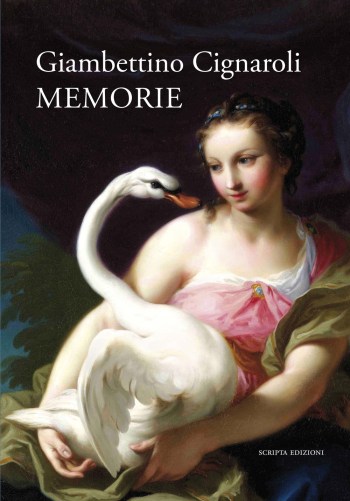 Tanti, innumerevoli sono i protagonisti di trentasei carte di un piccolo taccuino manoscritto: il principe di Chablais, il ministro plenipotenziario Carlo Firmian, l’imperatore Giuseppe II, Bartolomeo Cavaceppi, Angelica Kauffman, il giovanissimo Mozart, Kirill Grigorievich Razumovski grande atamano dei cosacchi… E ancora: ambasciatori, nunzi apostolici, letterati, esploratori, ufficiali o semplici militari, vescovi e abati, nobiluomini e nobildonne italiani e foresti… Tutti passano—tra marzo 1754 e ottobre 1770— dallo studio del più accreditato pittore veronese di quei decenni: Giambettino Cignaroli (1706–1770). E Cignaroli li registra minuziosamente con una scrittura che talvolta fa trasparire in filigrana dinamiche di mercato, ma anche legami professionalie amicali. Il volume ne offre trascrizione commentata, nel tentativo di allacciare fi li rossi tra il caleidoscopio di personaggi che si avvicendano nell’atelier dell’artista e la città di Verona, che emerge da queste pagine come vero e proprio crocevia del Settecento europeo.
New Book | Dutch Drawings in Swedish Public Collections
Published by Hatje Cantz and available from ArtBooks.com:
Börje Magnusson, Dutch Drawings in Swedish Public Collections (Stuttgart: Hatje Cantz, 2018), 336 pages, ISBN: 9783775743259, 60€ / $85.
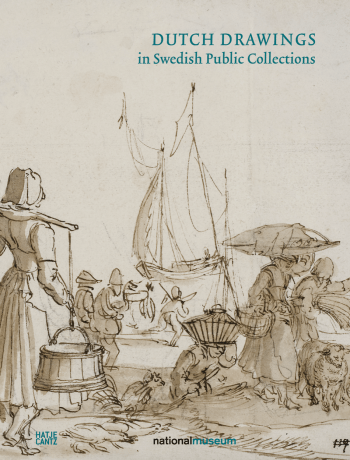 The Nationalmuseum, Stockholm, holds the most extensive collection of Dutch master drawings in Sweden. It comprises important works by Rembrandt and his pupils, as well as drawings by Abraham Bloemart, Jan van Goyen, Herman Saftleven, Willem van de Velde, and many other artists. Although trade contacts between the Netherlands and Sweden were lively in the seventeenth century, they account for only a small part of the collection. The bulk of the drawings was acquired by Swedish collectors in the eighteenth and nineteenth centuries. Foremost among them was Count Carl Gustaf Tessin, whose acquisitions at the 1741 Paris sale of the financier Pierre Crozat make up the core of the collection. This catalogue, the result of a long-term research project, includes almost 600 drawings, of which approximately 130 are previously unpublished. Besides the Nationalmuseum, it draws on the collections of the Royal Academy of Fine Arts in Stockholm, The Gothenburg Museum of Art, the Uppsala University Library, and other institutions.
New Book | Captain Cook and the Pacific
From Yale UP, in association with the National Maritime Museum:
John McAleer and Nigel Rigby, Captain Cook and the Pacific: Art, Exploration and Empire (New Haven: Yale University Press, 2017), 256 pages, ISBN: 9780300207248, $45.
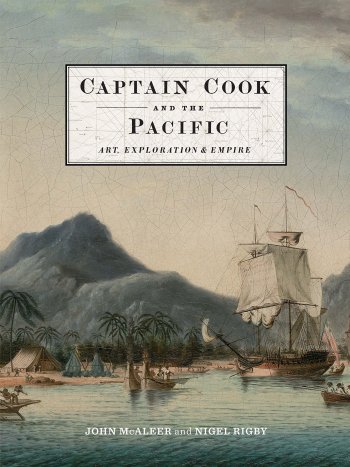 British Royal Navy Captain James Cook’s voyages of exploration across and around the Pacific Ocean were a marvel of maritime achievement and provided the first accurate map of the Pacific. The expeditions answered key scientific, economic, and geographic questions and inspired some of the most influential images of the Pacific made by Europeans. Now readers can immerse themselves in the adventure through the collections of London’s National Maritime Museum, which illuminate every aspect of the voyages: oil paintings of lush landscapes, scientific and navigational instruments, ship plans, globes, charts and maps, rare books and manuscripts, coins and medals, ethnographic material, and personal effects. Each artifact holds a story that sheds light on Captain Cook, the crews he commanded, and the effort’s impact on world history. Showcasing one of the richest resources of Cook-related material in the world, this publication invites readers to engage with the extraordinary voyages—manifested in material culture—and their continuing significance today.
John McAleer is a lecturer in history at the University of Southampton, and former curator of imperial and maritime history at the National Maritime Museum, Greenwich. Nigel Rigby is curator of exploration at the National Maritime Museum, Greenwich.
New Book | The Country House Library
From Yale UP:
Mark Purcell, The Country House Library (New Haven: Yale University Press, in association with the National Trust, 2017), 352 pages, ISBN: 978 0300227406, $55.
 Beginning with new evidence that cites the presence of books in Roman villas and concluding with present day vicissitudes of collecting, this generously illustrated book presents a complete survey of British and Irish country house libraries. Replete with engaging anecdotes about owners and librarians, the book features fascinating information on acquisition bordering on obsession, the process of designing library architecture, and the care (and neglect) of collections. The author also disputes the notion that these libraries were merely for show, arguing that many of them were profoundly scholarly, assembled with meticulous care, and frequently used for intellectual pursuits. For those who love books and the libraries in which they are collected and stored, The Country House Library is an essential volume to own.
Mark Purcell is deputy director of Cambridge University Library and was the former libraries curator to the National Trust.
Conference | The Properly Dressed Window
From Winterthur:
The Properly Dressed Window: Curtain Design Over Time
Winterthur, Wilmington, Delaware, 15–16 May 2018
Join Winterthur staff, visiting scholars, designers, and fellow ‘textilians’ for a two-day program of lectures and hands-on workshops. For information and registration, please call 800.448.3883. Registration opens on February 6, 2018. Read The Journal of Antiques and Collectibles article on curtains at Winterthur.
Sandy Brown, with an introduction by Linda Eaton and a foreword by Thomas Jayne, The Well-Dressed Window: Curtains at Winterthur (New York: The Monacelli Press, 2017), 208 pages, ISBN: 9781580934589, $50.
 Today Henry Francis du Pont, the force behind the transformation of Winterthur from a family house to the premier museum of American decorative arts, is recognized, along with Henry Davis Sleeper and Elsie de Wolfe, as one of the early leaders of interior design in this country.
Working with architects, curators, and antiques dealers, du Pont created some 175 room settings within the house. He assembled his rooms using architectural elements from historic houses along the East Coast and filled them with an extraordinary collection of American furniture and decorative arts. Du Pont’s unique talent was his ability to arrange historically related objects in a beautiful way, in settings that enhanced their shape and form through the choice of color, textiles, and style.
Du Pont paid particular attention to the design of the curtains, and The Well-Dressed Window surveys his achievement, explaining how the fabrics were selected as well as their relationship to the architecture and other decorative elements in the rooms. Forty rooms are presented, each specially photographed to show the overall space in addition to details of fabric and trim. A series of stereoviews taken in the 1930s as well as other period photographs reveal the evolution of the window treatments and upholstery over nearly sixty years. Of particular interest is du Pont’s seasonal changing of the curtains, which were rotated throughout the year as the lighting and colors in the surrounding garden shifted.
Exhibition | Peacock in the Desert: The Royal Arts of Jodhpur
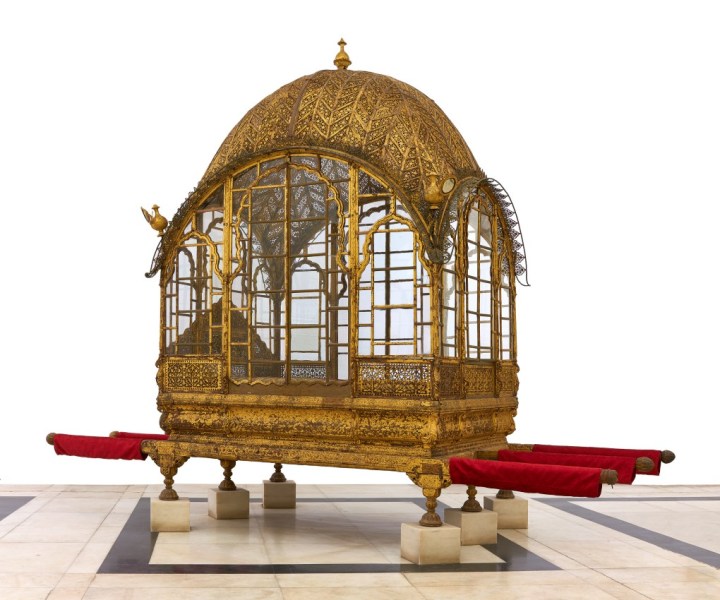
Palanquin (Mahadol), Gujarat, ca. 1700–30, gilded wood, glass, copper and ferrous alloy (Mehrangarh Museum Trust; photograph by Neil Greentree).
◊ ◊ ◊ ◊ ◊
Press release (8 January 2018) from the MFAH:
Peacock in the Desert: The Royal Arts of Jodhpur, India
Museum of Fine Arts, Houston, 4 March — 19 August 2018
Seattle Art Museum, 18 October 2018 — 21 January 2019
Royal Ontario Museum, Toronto, 9 March — 2 September 2019
Curated by Mahrukh Tarapor, Karni Singh Jasol, Martand Singh, and Angma Dey Jhala
A major collaboration brings a groundbreaking exhibition of royal treasures from India to Houston in March. Organized by the Museum of Fine Arts, Houston, in partnership with the Mehrangarh Museum Trust of Jodhpur, Peacock in the Desert: The Royal Arts of Jodhpur, India showcases nearly four centuries of artistic creation from the kingdom of Marwar-Jodhpur, one of the largest princely states in India, in the northwestern state of Rajasthan.
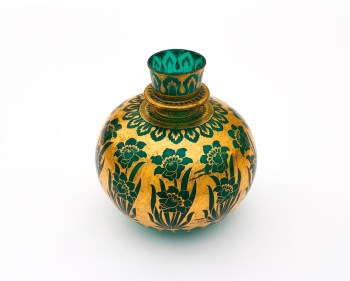
Mughal, Huqqa Vase, early 18th century, glass and gold paint (Umaid Bhawan Palace; photograph by Neil Greentree).
Through lavishly made ceremonial objects, finely crafted arms and armor, sumptuous jewels, intricately carved furnishings, and more, the exhibition outlines the dynamic history of the Marwar-Jodhpur region and the Rathore dynasty that ruled it for over seven centuries. Established in the 15th century, the city of Jodhpur was once the powerful capital of Marwar, a vast desert kingdom ruled by the Rathores, who were descendants of a hereditary social caste of Hindu warriors and kings (known as ‘kshatriyas’). Over the course of several centuries, the prosperity of Jodhpur attracted the attention of two successive empires who ruled India: the Mughals and the British. Both encounters reshaped Jodhpur’s cultural landscape, introducing objects, artists, languages, architectural styles and systems of administration that influenced the royal identity of the Rathore dynasty. Through some 250 objects from Indian courtly life, most never before seen outside of Jodphur, the exhibition illuminates how the Rathores acquired and commissioned objects amidst these cross-cultural exchanges to leverage patronage, diplomacy, matrimonial alliances, trade, and conquest.
Drawn primarily from the collections of the Mehrangarh Museum Trust and the private collections of the royal family of Jodhpur, the exhibition marks the first time that most of these treasures—including paintings, decorative arts and furniture, tents, canopies, carpets, textiles, and weapons—will be seen outside of their palace setting at Mehrangarh Fort and the first time they will travel abroad. The foundations of the Fort, carved out of a rocky hillside 400 feet above Jodhpur, were laid by the Rathores in 1459 as a military stronghold. The Fort, famously described by Rudyard Kipling as “a palace that might have been built by Titans and colored by the morning sun,” has been the seat of the Rathore dynasty since then, serving as a royal residence, a center of cultural patronage, and a place of worship for the royal clan. Today, it houses the collection of the Mehrangarh Museum Trust, which was established in 1972 by the current dynastic head of the Rathore clan, His Highness Maharaja GajSingh II of Marwar-Jodhpur, and remains one of the most important and best-preserved collections of fine and applied arts from the Mughal period of Indian history. A handful of carefully chosen objects from other notable collections, including The al-Sabah Collection, Kuwait, complete the presentation, while large-scale photomurals will evoke the stunning setting of the Mehrangarh Museum, where H. H. Maharaja Gaj Singh II continues to preserve the living heritage of Jodhpur.
“Peacock in the Desert is the result of a landmark partnership, marking the first time the Mehrangarh Museum Trust has shared so many of the treasured objects of their collection,” commented Gary Tinterow, MFAH director. “We are deeply honored and grateful to be the first U.S. organization to present this show, and for the opportunity to provide visitors this unprecedented experience of India’s rich cultural history.”
“The fort of Jodhpur-Mehrangarh has been preserved as a record of the lives and legacy of the Rathores,” added His Highness Maharaja GajSingh II. “I look forward to sharing the artistic and cultural heritage of my country, India, and the city of Jodhpur and its people, with new audiences across North America.”
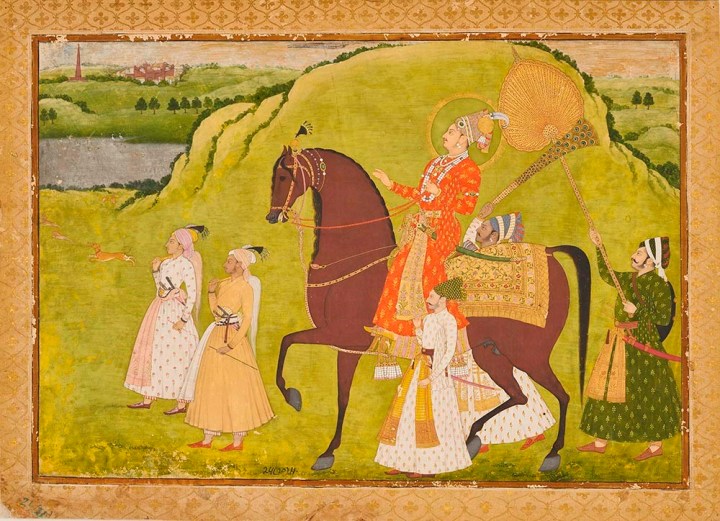
Dalchand, Maharaja Abhai Singh on Horseback, Jodhpur, ca. 1725, opaque watercolor and gold on paper (Mehrangarh Museum Trust; photograph by Neil Greentree).
◊ ◊ ◊ ◊ ◊
Three central, underlying themes woven throughout Peacock in the Desert build upon recent and emerging scholarship to deepen visitors’ understanding of the multifaceted character of a traditional Indian kingdom:
• Interconnections: The relationships between palace and town, urban and rural, central empire and subsidiary kingdom, as well as those that resulted from migratory trade routes, marital alliances, and military partnerships/confrontations, all led to a dynamic crosspollination of new ideas and belief systems, which found brilliant expression in fine and decorative arts, architecture, design, performing arts, and more.
• The role of women and artisans: Contrary to the popular assumption that royal women were quietly hidden away, the exhibition explores the crucial role they played as agents of cultural change and patrons of the arts, showcasing how the gender roles, social etiquette, and aesthetic practices employed by women influenced the identity of Indian courts.
• Royal patronage and the continuity of tradition: An exploration of the royal courts and the ways they were able to preserve India’s cultural traditions, while at the same time absorbing and incorporating external influences.
These themes offer a new perspective on the cosmopolitan culture of the royal courts of the Marwar–Jodhpur region, communicated through the careful juxtaposition of objects, interpretive materials, and immersive installation within the exhibition’s six interlinked sections.
Tradition and Continuity: The Royal Wedding Procession
The exhibition opens with a dramatic recreation of a royal wedding procession with video projections of actual footage from royal weddings performed in the 20th century. Featuring elephant howdahs (seats), horse and elephant mannequins adorned with traditional wedding regalia, and royal insignia, this immersive environment introduces visitors to the role that marital alliances played in the lives of the citizens of Marwar-Jodhpur and in the development of the region’s aesthetic traditions.
The Rathores of Marwar
This section introduces the desert landscape of Marwar-Jodhpur, its diverse peoples, and the exhibition’s central protagonists: the Rathore clan that ruled the region from the 13th to the mid-20th century. Highlights include illuminated manuscript pages that illustrate the scenery of the region and detail the history of the dynasty; an exquisite wood and glass Mahadol (palanquin); textiles, such as turbans worn by various members of the desert community; and a model of the Mehrangarh Fort, in silver.
Conquest and Alliance: The Rathores and the Mughals
The arrival of, and eventual takeover by, the Mughal Empire in 1561 began centuries of political and military alliances brokered between the Mughals and the Rathore clan. This section examines the movement of objects throughout these alliances in the 16th and 17th centuries, presenting ornate sabers, daggers, and rifles alongside 17th- and 18th-century paintings and illustrations of court and war scenes. The section culminates in the extraordinary 17th-century Lal Dera tent, one of the oldest, if not the only, intact Indian court tent of its time.
Zenana: Cross-cultural Encounters
In this section, paintings, carpets, textiles, jewelry, along with intricately-carved sandstone jalis (screens), from behind which women viewed courtly activities, evoke the setting of a royal zenana, the womens’ wing of a Rathore palace. Here, the zenana is explored as a dynamic cosmopolitan space that not only housed women and objects, but also functioned as a preserver of intangible cultural traditions through the propagation of heirlooms, rituals, and dress throughout the centuries. Among the furnishings shown in this section is an exceptional wood baradari (pavilion).
Durbar: The Rathore Court
As Mughal influence began to decline in the late 18th century, the Rathore durbar (royal reception) capitalized on its diminished power by attracting artists and craftsmen from their weakened court. This, in addition to the growing trend of exchanging artworks as gifts, led to a period of intense creativity in artistic and decorative production and a cross-fertilization of Mughal and Rathore styles, as indicated by the woven canopy and textiles, finely crafted arms and armor, and 18th- and 19th-century paintings on view.
The Raj
Extravagant, large-scale objects immediately convey the tone of the last section of the exhibition, which explores the most dramatic period of transformation in Jodhpur’s history, triggered by the arrival of the British in 1818. Garments, paintings, decorative arts, and a 1944 Stinson L-5 Sentinel aircraft illustrate the influence of the British on the region and the unprecedented scale on which Jodhpur royalty began to embrace modernity and western culture as the movement for Indian independence—eventually granted in 1947—gained traction.
Peacock in the Desert is curated by a team of scholars and professionals from India: Dr. Mahrukh Tarapor, senior advisor for international initiatives at the Museum of Fine Arts, Houston; Dr. Karni Singh Jasol, director of the Mehrangarh Museum Trust, Jodhpur; the late Martand Singh, chief consultant from the Mehrangarh Museum Trust; and Dr. Angma Dey Jhala, associate professor at Bentley University, who serves as project advisor and volume editor for the accompanying catalogue.
Distributed by Yale UP:
Karni Jasol, with contributions by Peter Alford Andrews, Robert Elgood, Catherine Glynn, Karni Jasol, Angma Jhala, Shailka Mishra, and Giles Tillotson, and edited by Angma D. Jhala, Peacock in the Desert: The Royal Arts of Jodhpur, India (Houston: Museum of Fine Arts, Houston, 2018), 296 pages, ISBN: 9780300232967, $85.
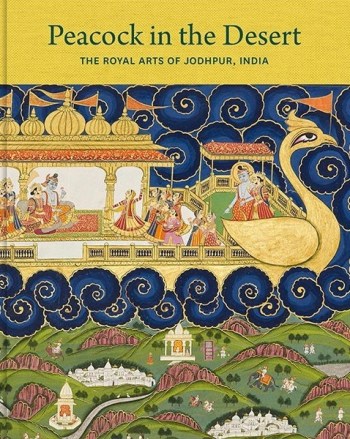 Peacock in the Desert traces the evolution of royal identity in the kingdom of Marwar-Jodhpur in southwestern Rajasthan from the 17th century to the establishment of independence after 1947, presenting the area as a microcosm of India’s extraordinarily vibrant culture. An international team of contributors has contextualized these regional narratives in relation to external—and even global—forces. The book thus offers a new perspective on the acquisition and commissioning of objects through patronage, diplomacy, matrimonial alliances, trade, and conquest. It sheds fresh light on the influential role of women at the royal courts and examines monarchies as lenses onto cross-cultural relationships, the unrecognized roles of groups marginalized in earlier accounts, cultural heterodoxy, and large-scale multicultural exchange. Exploring these webs of connection, Peacock in the Desert makes a transformative contribution to scholarship. Its multidisciplinary approach to artistic and cultural exchange offers pathbreaking insights, adding crucial chapters to the story of India’s royal visual splendor.
Exhibition | Goya and the Enlightenment Court

Antonio Carnicero Mancio, The Ascent of a Montgolfier Balloon at Aranjuez, ca. 1784, oil on canvas, 169 × 280 cm
(Madrid: Prado)
◊ ◊ ◊ ◊ ◊
Now on view at the Bilbao Fine Arts Museum:
Goya and the Enlightenment Court / Goya y la corte ilustrada
CaixaForum, Zaragoza, 28 September 2017 — 21 January 2018
Bilbao Fine Arts Museum, 14 February — 28 May 2018
Curated by Manuela Mena and Gudrún Maurer
Having studied in Italy, Francisco de Goya (Fuendetodos, Zaragoza, 1746 – Bordeaux, 1828) moved to Madrid in 1775 and was first employed at the court of Charles III to work on the production of tapestry cartoons on hunting themes for El Escorial. Goya achieved recognition some years later when he was first appointed painter to the King (1786) then First Court Painter (1799). Despite this success at court, Goya maintained his connections with his native Zaragoza, and his correspondence with his childhood friend Martín Zapater offers proof of this ongoing relationship with his circle of friends and relatives while also providing crucial information on the progress of his career. The Prado’s exceptional loan of 13 original letters offers the documentary counterpoint to Goya as court painter and this is in fact the essential argument of the exhibition, which moves between Goya’s success at the courts of Charles III and Charles IV and the persistent echoes of his origins through his continuing contact with those closest to him.
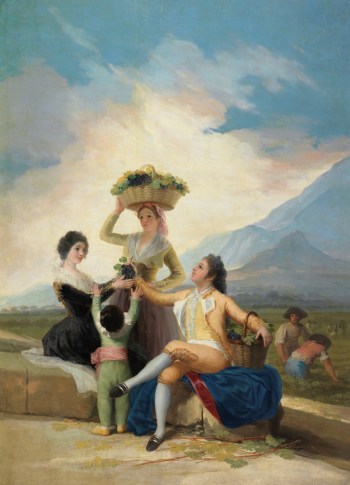
Francisco de Goya y Lucientes, The Grape Harvest, or Autumn, 1786, oil on canvas, 268 × 191 cm (Madrid: Prado).
Co-organised by the Museo Nacional del Prado, Fundación Bancaria “la Caixa” and the Bilbao Fine Arts Museum, Goya and the Enlightenment Court will be on display from 14 February until 28 May 2018, having previously been on view at the CaixaForum, Zaragoza. Curated by Manuela B. Mena and Gudrun Maurer, Chief Curator and Curator in the Department of 18th-century Painting and Goya at the Museo del Prado respectively, the exhibition brings together 96 works, many of which (71, of which 52 are oil paintings and the rest documents and examples of the decorative arts) come from the Museo del Prado. The remaining works on display comprise 9 paintings from the Bilbao Fine Arts Museum’s own collection and further loans from the Museo de Arte de Ponce, Puerto Rico, the Museo de Zaragoza, the Fundación Colección Ibercaja, the Sociedad Ecónomica Aragonesa de Amigos del País and a number of private collections.
In addition to the core group of canvases and cartoons by Goya, the exhibition also features works by other important 18th-century artists such as Luis Paret, Mariano Maella, José del Castillo, Luis Meléndez, Antonio Carnicero and Lorenzo Tiepolo, which together provide a context and also reveal the remarkable originality of Goya’s work. Finally, the exhibition includes examples of the above-mentioned correspondence with Martín Zapater, in addition to miniatures, prints and examples of the decorative arts.
Along with extensive restoration carried out for to this exhibition, the research undertaken has revealed new information, reflected, for example, in the presentation of a new portrait and a miniature of Martín Zapater painted by Goya and by Francisca Ifigenia Meléndez respectively, as well as the attribution to Agustín Esteve of a copy of Goya’s lost portrait of Ramón Pignatelli. Other new discoveries to be seen in Bilbao include the recently restored portrait of Pantaleón Pérez de Nenín and the presentation in context of Luis Paret’s remarkable View of Bermeo, a work recently acquired by the Bilbao Fine Arts Museum.
Major sections of the exhibition address
1 ‘Zaragoza, my heart, Zaragoza, Zaragoza’
2 Goya and Madrid, 1775: Hunting
3 The Enlightenment Court: Meeting Points
4 Friendship and Success
5 Female Refinement in the 18th Century
6 Portraits of Basques and Navarrans
Manuela B. Mena Marqués, Gudrun Maurer, and Virginia Albarrán, Goya y la corte ilustrada (Madrid: Prado, 2018), 216 pages, ISBN: 978 849900 1944, 39€.










 Enfilade
leave a comment