Exhibition | Visitors to Versailles, 1682–1789

Press release for the exhibition:
Visiteurs de Versailles, 1682–1789
Château de Versailles, 24 October 2017 — 25 February 2018
The Metropolitan Museum of Art, New York, 16 April — 29 July 2018
Curated by Bertrand Rondot and Daniëlle Kisluk-Grosheide
With nearly 10 million visitors per year, Versailles is one of the most visited historic sites in the world. The palace and gardens of Versailles have attracted visitors ever since the small hunting lodge built by Louis XIII was transformed by Louis XIV into one of the most stunning residences in Europe, open to everyone according to the King’s will.
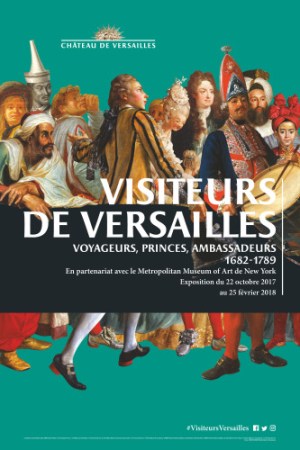 Cosmopolitan Versailles has welcomed French and foreign travellers, princes, ambassadors, artists, writers, and philosophers, architects, scholars, tourists on the ‘Grand Tour’, and day trippers from near and far. While some came to Versailles to see the King or win his favour, others were received officially by the Sovereign in the Palace, a place of intensive diplomatic activity. From the ambassadors of Siam in 1686 to the ambassadors of the Indian Kingdom of Mysore in 1788, representatives from almost every continent came to Versailles. Each visit was an opportunity to discover beautiful national dress and the originality of the gifts visitors brought with them. Gazettes, literary journals, and official memoires bore testimony to the most important visitors and the parties held in their honour.
The exhibition is the first on this subject and will turn the spotlight on these visitors through more than 300 works from the late 17th century to the French Revolution. With portraits and sculptures, court attire, travel guides, tapestries, Sevres and Meissen porcelain, display weapons and snuffboxes, the exhibition will reveal what visitors discovered upon arriving at Versailles, the sort of welcome awaiting them, what they saw and their impressions, the gifts or memories they left with. Visitors today will discover the palace through the eyes of those who have gone before them over the course of history.
Curators
Bertrand Rondot, Head Curator at the Palace of Versailles, in charge of furniture and objets d’art
Daniëlle Kisluk-Grosheide, Curator at the European Sculpture and Decorative Arts Department of The Metropolitan Museum of Art
◊ ◊ ◊ ◊ ◊
Note (added 28 October 2017) — Relevant to the exhibition is this collection of essays, which grew out of a 2013 conference:
Caroline zum Kolk, Jean Boutier, Bernd Klesmann, and François Moureau, eds., Voyageurs étrangers à la cour de France, 1589–1789: regards croisés (Rennes: Presses universitaires de Rennes, 2014), 392 pages, ISBN: 978 27535 34834, 22€.
◊ ◊ ◊ ◊ ◊
Note (added 12 April 2018) — The original posting listed the start date for the exhibition at The Met as April 9. More information on the latter venue is available here.
New Book | The Cinematic Eighteenth Century
From Routledge:
Srividhya Swaminathan and Steven Thomas, eds., The Cinematic Eighteenth Century: History, Culture, and Adaptation (New York: Routledge, 2018), 196 pages, ISBN: 978 11386 33995, $150.
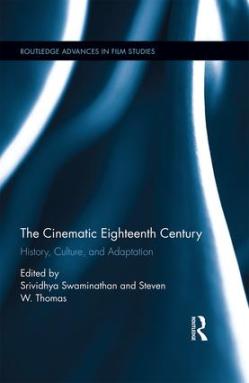 This collection explores how film and television depict the complex and diverse milieu of the eighteenth century as a literary, historical, and cultural space. Topics range from adaptations of Austen’s Sense and Sensibility and Defoe’s Robinson Crusoe (The Martian) to historical fiction on the subjects of slavery (Belle), piracy (Crossbones and Black Sails), monarchy (The Madness of King George and The Libertine), print culture (Blackadder and National Treasure), and the role of women (Marie Antoinette, The Duchess, and Outlander). This interdisciplinary collection draws from film theory and literary theory to discuss how film and television allows for critical re-visioning as well as revising of the cultural concepts in literary and extra-literary writing about the historical period.
Srividhya Swaminathan is Professor of English at LIU Brooklyn in New York. Her primary field of research is the rhetoric of eighteenth-century slavery studies and social movements. Her monograph, Debating the Slave Trade (Ashgate 2009), and co-edited collection, Invoking Slavery in the Eighteenth-Century British Imagination (Ashgate 2013), engage with slavery in a transatlantic context.
Steven W. Thomas is Associate Professor of English at Wagner College in New York, where he teaches American literature, theory, and film studies. He has published several scholarly essays about the transatlantic eighteenth century and in 2016, he was a Fulbright Scholar in the graduate film program at Addis Ababa University in Ethiopia.
C O N T E N T S
List of Figures
Acknowledgments
Srividhya Swaminathan and Steven Thomas, Introduction: Representing and Repositioning the Eighteenth Century on Screen
1 Ula Lukszo Klein, Fashionable Failures: Ghosting Female Desires on the Big Screen
2 Dorothée Polanz, Portrait of the Queen as a Celebrity: Marie Antoinette on Screen, a Disappearing Act, 1934–2012
3 Elizabeth Kraft, The King on the Screen
4 Jennifer Preston Wilson, ‘I Have You in My Eye, Sir’: The Spectacle of Kingship in The Madness of King George
5 Sarah B. Stein and Robert Vork, Blackadder: Satirizing the Century of Satire
6 Colin Ramsey, Disney’s National Treasure, the Declaration of Independence, and the Erasure of Print from the American Revolution
7 Courtney A. Hoffman, How to Be a Woman in the Highlands: A Feminist Portrayal of Scotland in Outlander
8 Kyle Pivetti, The King of Mars: The Martian’s Scientific Empire and Robinson Crusoe
9 Srividhya Swaminathan, The New Cinematic Piracy: Crossbones and Black Sails
10 Jodi L. Wyett, Sex, Sisterhood, and the Cinema: Sense and Sensibility(s) in Conversation
11 Steven W. Thomas, Cinematic Slavery and the Romance of Belle
List of Contributors
Index
New Book | The Building Site in Eighteenth-Century Ireland
From Four Courts Press:
Arthur Gibney, The Building Site in Eighteenth-Century Ireland, edited by Livia Hurley and Edward McParland (Dublin: Four Courts Press, 2017), 368 pages, ISBN: 978 184682 6382, €35.
 This study by the late Arthur Gibney takes you among labourers, craftspeople, contractors, builders, and designers as they populate the building sites of eighteenth-century Ireland. Gibney tells a story that has never been told so comprehensively before. What kind of contracts bound those involved? How much did it cost to bring a cargo of oak to the Dublin docks from Riga or Shillelagh—or of fir from Trondheim—and what kind of roof trusses or floor framing was it used for? What was distinctively Irish about these structural features? What did plumbers do? How did roofers choose between slates and shingles and pantiles, and how did this choice affect the profile of a roof? Based on extensive documentary research and on a lifetime of experience of building and conservation, Gibney takes the interested layperson, the student, the architect, and the conservationist behind the facades to give us an understanding of paint colours such as Venetian red and Spanish brown, the manufacture of stucco, the variations of Irish, English, and French glass, the composition of masonry walls, and much more, in our great legacy of Georgian buildings.
Arthur Gibney was one of Ireland’s most notable twentieth-century architects. Livia Hurley is an architect and architectural historian in private practice in Dublin. She is one of five editors and principal authors of Architecture, 1600–2000, volume IV of Art and Architecture of Ireland (2014), and she teaches at the School of Architecture, UCD. Edward McParland is a fellow emeritus of TCD. His publications include James Gandon, Vitruvius Hibernicus (1985) and Public Architecture in Ireland, 1680–1760 (2001).
Exhibition | Monochrome: Painting in Black and White
Press release (August 2017) from The National Gallery:
Monochrome: Painting in Black and White
The National Gallery, London, 30 October 2017 – 18 February 2018
Museum Kunstpalast, Düsseldorf, 21 March — 15 July 2018
Curated by Lelia Packer and Jennifer Sliwka
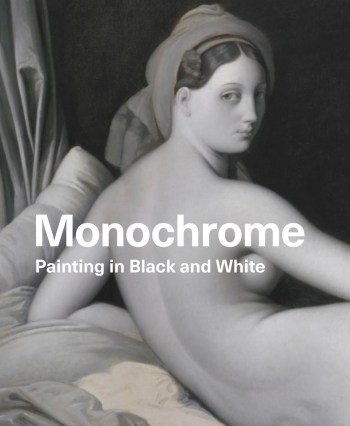 At the National Gallery this autumn, journey through a world of shadow and light. With more than fifty painted objects created over 700 years, Monochrome: Painting in Black and White is a radical new look at what happens when artists cast aside the colour spectrum and focus on the visual power of black, white, and everything in between.
Paintings by Old Masters such as Jan van Eyck, Albrecht Dürer, Rembrandt van Rijn, and Jean-Auguste-Dominique Ingres appear alongside works by some of the most exciting contemporary artists working today including Gerhard Richter, Chuck Close, and Bridget Riley. Olafur Eliasson‘s immersive light installation Room for One Colour (1997) brings a suitably mind-altering coda to the exhibition. With major loans from around the world and works from the National Gallery’s Collection, Monochrome reveals fresh insights into the use of colour as a choice rather than a necessity.
As Lelia Packer and Jennifer Sliwka, curators of Monochrome: Painting in Black and White, explain: “Painters reduce their colour palette for many reasons but mainly as a way of focusing the viewer’s attention on a particular subject, concept, or technique. It can be very freeing—without the complexities of working in colour, you can experiment with form, texture, mark making, and symbolic meaning.”
Monochrome: Painting in Black and White guides visitors through seven rooms, each addressing a different aspect of painting in black, white and grey, also known as grisaille.
Sacred Subjects
The earliest surviving works of Western art made in grisaille were created in the Middle Ages for devotional purposes, to eliminate distractions and focus the mind. As colour pervades daily life, black and white can signal a shift to an otherworldly or spiritual context. For some, colour was the forbidden fruit and prohibited by religious orders practising a form of aesthetic asceticism. Grisaille stained glass, for example, was created by Cistercian monks in the 12th century as an alternative to vibrant church windows, with its translucent greyish panels sometimes painted with images in black and yellow. Light and elegant in appearance, grisaille glass such as this window panel made for the Royal Abbey of Saint-Denis, Paris (1320–24, Victoria and Albert Museum, London) gained popularity outside the order and eventually became de rigueur in many French churches.
Studies in Light and Shadow
From the 15th century onward artists made painted studies in black and white to work through challenges posed by their subjects and compositions. Eliminating colour allows artists to concentrate on the way light and shadow fall across the surface of a figure, object or scene before committing to a full-colour canvas. The beautiful Drapery Study (possibly study for Saint Matthew and an Angel), (about 1477, Kupferstichkabinett, Staatliche Museen zu Berlin) attributed to Domenico Ghirlandaio is a template work which an artist could reuse in multiple finished colour paintings. This particular motif for example reappeared in a frescoed vault in San Gimignano, Italy.
Independent Paintings in Grisaille
Increasingly, paintings in grisaille were made as independent works of art, complete unto themselves. This section explores the inspiration and desire for such paintings, prized for their demonstration of artistic skill, for the insights they provide into the artist’s craft, and for their profound consideration of a particular subject.
Jan van Eyck’s Saint Barbara (1437, Royal Museum of Fine Arts Antwerp) is the earliest known example of a monochrome work on panel, drawn in metalpoint, India ink, and oil on a prepared ground. Although there has been ongoing debate as to whether a master colourist such as van Eyck intended Saint Barbara as a sketch in preparation for a painting in colour or a as a finished drawing, the panel was admired and collected as early as the 16th century suggesting that a taste for independent monochrome pictures existed from an early date.
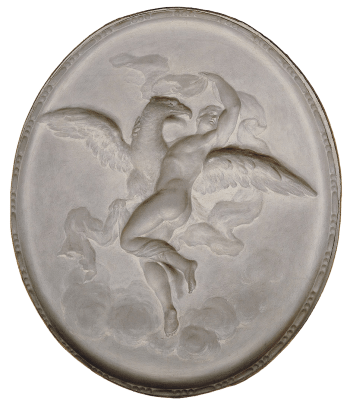
Jacob de Wit, Jupiter and Ganymede, 1739 (Hull: Ferens Art Gallery).
Monochrome Painting and Sculpture
For centuries artists have challenged themselves to mimic the appearance of stone sculpture in painting. In Northern Europe, a taste for illusionistic decorative elements—such as decorative wall painting and sculpted stucco—may have helped give rise to stunning works of trompe l’oeil painted on panel or canvas. Jacob de Wit excelled at this practice and his Jupiter and Ganymede (1739, Ferens Art Gallery, Hull) could easily be mistaken for a three-dimensional wall relief.
Monochrome Painting and Printmaking
Beginning in the 16th century, painters developed ingenious ways to compete with new developments in printmaking. An exceptionally rare grisaille work by Hendrik Goltzius, Without Ceres and Bacchus, Venus Would Freeze (1606, the State Hermitage Museum, St Petersburg) for example, dazzled viewers who could not fathom how it was made, as it very much looks like a print but was drawn by hand on prepared canvas.
Black-and-White Painting in the Age of Photography and Film
Similarly, the invention of photography in 1839, and that of film much later, prompted painters to imitate the effects of these media, in order to respond to, or compete with their particular qualities. Gerhard Richter employed a press photograph of a prostitute who had been brutally murdered as the foundation of his painting Helga Matura with Her Fiancé (1966, Museum Kunstpalast, Düsseldorf). The grey palette—for Richter, “the ideal colour for indifference”—removes any sentimentality about Helga’s murder. By deliberately blurring the photograph, the artist makes the viewer aware that this is an altered image, contrasting with the crispness and apparent objectivity of the original.
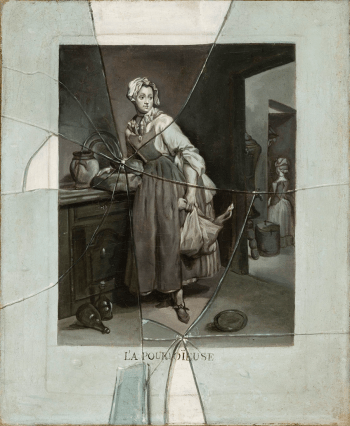
Étienne Moulinneuf, after Jean-Siméon Chardin, Back from the Market (La Pourvoyeuse), ca. 1770, oil on canvas, 46 × 38 cm (Los Angeles: LACMA).
Abstraction
Abstract and installation artists have often been drawn to black and white. When artists have ready access to every possible hue, the absence of colour can be all the more shocking or thought-provoking. In 1915, Kiev-born artist Kazimir Malevich painted the first version of his revolutionary work, Black Square (in the exhibition is the 1929 version from the State Tretyakov Gallery, Moscow)—an eponymous black square floating within a white painted frame—and declared it to be the beginning of a new kind of non-representational art. Works by Josef Albers, Ellsworth Kelly, Frank Stella, and Cy Twombly all exemplify the use of minimal colour for maximum impact.
Artists intrigued by colour theory and the psychological effects of colour (or its absence) manipulate light, space, and hue to trigger a particular response from the viewer. In this way, Olafur Eliasson brings the exhibition to a close with his large-scale, immersive light installation, Room for One Colour (1997). In a room illuminated with sodium yellow monofrequency lamps, all other light frequencies are suppressed and visitors are transported to a monochrome world.
National Gallery Director, Dr Gabriele Finaldi, says: “Artists choose to use black and white for aesthetic, emotional, and sometimes even for moral reasons. The historical continuity and diversity of monochrome from the Middle Ages to today demonstrate how crucial a theme it is in Western art.”
Exhibition organised by The National Gallery in collaboration with Museum Kunstpalast, Dusseldorf.
Lelia Packer and Jennifer Sliwka, Monochrome: Painting in Black and White (London: The National Gallery, 2017), 240 pages, ISBN: 978 18570 96132 (hardback), £35 / ISBN: 978 18570 96132 (paperback), £20.
Lelia Packer is Acting Curator of Paintings, Watercolours, Miniatures, and Manuscripts (excluding France) at the Wallace Collection, London. She was formerly McCrindle Curatorial Assistant at The National Gallery.
Jennifer Sliwka is Deputy Director of the Visual Commentary on Scripture Project and Senior Research Fellow, King’s College London. She was formerly Ahmanson Curator of Art and Religion at The National Gallery.
New Book | Consumptive Chic
From Bloomsbury Academic:
Carolyn Day, Consumptive Chic: A History of Beauty, Fashion, and Disease (London: Bloomsbury Academic, 2017), 208 pages, ISBN: 978 135000 9387 (hardcover), $94 / ISBN: 978 135000 9370 (paperback), $32.
 During the late 18th and early 19th centuries, there was a tubercular ‘moment’ in which perceptions of the consumptive disease became inextricably tied to contemporary concepts of beauty, playing out in the clothing fashions of the day. With the ravages of the illness widely regarded as conferring beauty on the sufferer, it became commonplace to regard tuberculosis as a positive affliction, one to be emulated in both beauty practices and dress. While medical writers of the time believed that the fashionable way of life of many women actually rendered them susceptible to the disease, Carolyn Day investigates the deliberate and widespread flouting of admonitions against these fashion practices in the pursuit of beauty.
Through an exploration of contemporary social trends and medical advice revealed in medical writing, literature, and personal papers, Consumptive Chic uncovers the intimate relationship between fashionable women’s clothing and medical understandings of the illness. Illustrated with over 40 full color fashion plates, caricatures, medical images, and photographs of original garments, this is a compelling story of the intimate relationship between the body, beauty, and disease—and the rise of ‘tubercular chic’.
Carolyn A. Day is Assistant Professor at Furman University where she teaches British History and the History of Medicine. She received a BA in History and a BSc in Microbiology from Louisiana State University, an MPhil in History and Philosophy of Science from Cambridge University, and a PhD from Tulane University in British history.
C O N T E N T S
Introduction
1 The Approach to Illness
2 The Curious Case of Consumption: A Family Affair
3 Exciting Consumption: The Causes and Culture of an Illness
4 Morality, Mortality, and Romanticizing Death
5 The Angel of Death in the Household
6 Tragedy and Tuberculosis: The Siddons Story
7 Dying to Be Beautiful: The Consumptive Chic
8 The Agony of Conceit: Clothing and Consumption
Epilogue: The End of Consumptive Chic
Conclusion
Bibliography
Index
Exhibition | Exchanging Gazes: Between China and Europe

Chinese Ladies Playing a Board Game, Qing Dynasty, Qianlong Period (1736–1795), 2nd half of the 18th century, watercolour and opaque watercolour on silk (Museum für Völkerkunde Hamburg)
◊ ◊ ◊ ◊ ◊
Press release from the Berlin State Museums:
Exchanging Gazes: Between China and Europe, 1669–1907
Kunstbibliothek, Staatliche Museen zu Berlin, 29 September 2017 — 7 January 2018
China and Europe are linked by a long tradition of reciprocal cultural exchange. These transactions were particularly intensive during the Qing Dynasty (1644–1911), which is regarded as one of the key phases of Chinese cultural and political history. Exquisite gifts were exchanged. European envoys attempted to establish official trade relations with China. But their efforts were in vain, as the Chinese established trade barriers, with the exception of the port of Canton—although they were very much interested in European science, art, and culture.
The exhibition illustrates the richly varied nature of this mutual fascination in objects ranging in date between 1669 and 1907. Many of the almost one hundred pieces could be classified as Chinoiserie or so-called Europerie: they provide us with information about early modern European images of China and also allow us to trace the predominant images of Europe in China. Highlights of the exhibition include impressive paintings, exquisite porcelain objects, a door from a wood-paneled room, as well as large-format photographs and copper engravings. The photographs and engravings show the ‘European palaces’ which Emperor Qianlong, who reigned from 1736 to 1795, had built in one of his parks. Today, only their ruins exist: British and French troops burned down the palaces and destroyed the extensive gardens during their 1860 Chinese campaign. Surprisingly, however, in this way they created a visual subject that was much-loved by European photographers after 1870.
 Until now, the reciprocity—and sheer variety—of cultural exchange between China and Europe has hardly been appreciated or shown in an exhibition setting. The chosen objects offer impressive testimony to a long- lived and mutual interest between the two cultures. In addition, they can help us understand how Europe’s conception of China and China’s conception of Europe changed over the course of 250 years.
Particularly in the 18th century, it was not only Europe looking to China’s art production but also China looking to that of Europe. The fact that these exchanging gazes are to be taken quite literally and that they were cast back and forth now and again is demonstrated by the Chinese production of porcelain: around 1700, European missionaries living at the imperial court contributed to the development of the so-called foreign colours (yangcai). The chinaware that was subsequently decorated with the new shades of red and pink (famille rose) became so popular that it developed into an export hit and hence also had a lasting impact on European dining culture.
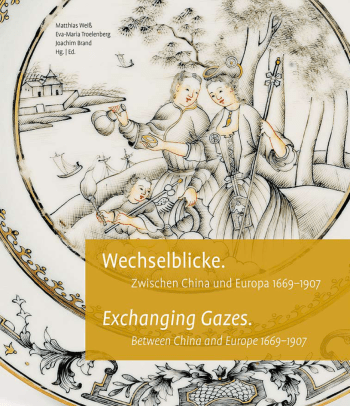
An exported plate, which was produced in China and shows two pilgrims on their way to Cythera, the island of love, allows the term ‘exchange of gazes’ to be connected more closely to the 18th century. In the European love discourse of that time, this term is connected with the concept of the love of souls. This type of love enables an encounter between lovers at eye level; yet it also involves the danger of unilateral self-reflection. Certainly this metaphor of love cannot be transferred unmitigatedly to the cooperation of cultures. Nevertheless, it points at two contradictory foundations of cultural exchange: such an exchange is only possible if, apart from differences, common features are recognized, for instance in the characteristics of systems of rule or in courtly cultures. At the same time, ‘exchange of gazes’ can allude to the fact that it is first and foremost one’s own self-interest that is respected in these constellations.
Due to political and economic changes, China and Europe had to repeatedly reconsider themselves, which means they had to come to a kind of self-understanding as well as set themselves in relation to each other. This becomes particularly evident when looking at objects called Chinoiseries, as they reflect the European image of China prevalent throughout the 18th century. Chinoiseries can be juxtaposed with the so-called Europeries, which were produced in China and give insight into the Chinese image of Europe. In order to present the foreign as alien, it had to be at least partially adapted to the familiar, which is why the objects exhibited here can be aesthetically classed in-between China and Europe. Many objects can additionally be found ‘between’ China and Europe because they circulated as export goods, diplomatic gifts or as possessions acquired abroad, all in order to develop an altered effect in their respective new repositories. It is furthermore evident that motifs and techniques migrated not only between these cultures but also between genres and materials. Prints, for example, became built architecture and vice versa. The exhibition, moreover, offers the rare occasion to simultaneously view Chinoseries and Europeries, which are usually stored in different collections. This therefore allows the gaze to wander back and forth and, in so doing, to comprehend that China and Europe share a common history.
Even though there are hardly definite dates that mark the history of exchange between China and Europe, the years in the exhibition’s title indicate two important stages in the European production of images of China. In 1669, Johan Nieuhof’s travelogue was published. Nieuhof had joined the first Dutch delegation of the United East India Company travelling to China in order to intensify the trade relationship with the empire that increasingly isolated itself—a venture which failed. From a historic point of view, the journey’s true success was Nieuhof’s richly illustrated travelogue that was published in large numbers and became one of the most important sources for European knowledge about China.
1907, on the other hand, marks the creation of four architectural photographs by Ernst Boerschmann, who travelled China as an architectural historian and re-established Western knowledge on Chinese architecture. This had become possible only because the major European powers had gradually forced the opening of China beginning in the second half of the 19th century. The objects exhibited here render not only the changing relationship between China and Europe from the late 17th to the early 20th century comprehensible—how and why it shifted in the direction of colonial policy—but also the traditional tendencies which persisted through these changes. Boerschmann, for instance, perpetuated the myth that porcelain was used as construction material, even though this was not his personal view.
A special exhibition of the Kunstbibliothek – Staatliche Museen zu Berlin, in cooperation with the Max Planck Research Group ‘Objects in the Contact Zone: The Cross-Cultural Lives of Things’ at the Kunsthistorisches Institut in Florence – Max Planck Institute.
Curatorial concept: Professor Dr. Matthias Weiß
From Michael Imhof Verlag:
Matthias Weiß, Eva-Maria Troelenberg, and Joachim Brand, eds., Wechselblicke: Zwischen China und Europa 1669–1907 / Exchanging Gazes: Between China and Europe 1669–1907 (Petersberg: Michael Imhof Verlag, 2017), 352 pages, ISBN: 9783731905738, $70.
New Book | The Mercantile Effect
Distributed by The University of Chicago Press:
Sussan Babaie and Melanie Gibson, eds., The Mercantile Effect: Art and Exchange in the Islamicate World during the 17th and 18th Centuries (London: Ginko Library, 2017), 160 pages, ISBN: 978 190994 2103, $60.
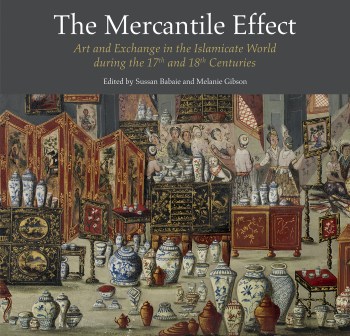 With Contributions by Anna Ballian, Nicole Kancal Ferrari, Frederica Gigante, Francesco Gusella, Negar Habibi, Sinem Erdoğan Işkorkutan, Gul Kale, Dipti Khera, William Kynan-Wilson, Suet May Lam, Amy Landau, George Manginis, Zaheen Maqbool, Christos Merantzas, Alexandra Roy, and Nancy Um
This lavishly illustrated book collects papers delivered at the third Gingko conference The Mercantile Effect: On Art and Exchange in the Islamicate World During 17th–18th Centuries. Held in Berlin, this meeting brought together a group of established and early-career scholars to discuss how the movement of Armenian, Indian, Chinese, Persian, Turkish, and European merchants and their trade goods spread new ideas and new technologies across Western Asia in the early modern era. Through the newly-established Dutch, English, and French East India companies, as well as much older mercantile networks, prestigious exotic commodities—silk, ivory, books, glazed porcelains—were transported east and west. The collected essays in this volume introduce a fascinating array of not only trade objects but also customs and traditions that bring this period of intense cultural interplay to life.
Sussan Babaie is the Andrew W. Mellon Reader in the Arts of Iran and Islam at the Courtauld Institute of Art, University of London. Melanie Gibson is the senior editor of the Gingko Library Arts Series.
Exhibition | Canova, Hayez, and Cicognara: The Last Glory of Venice
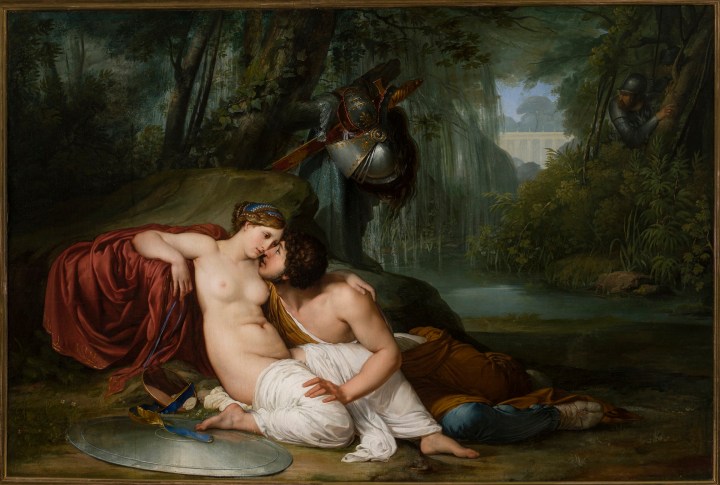
Francesco Hayez, Rinaldo and Armida, 1812–13, oil on canvas
(Venice: Museo Nazionale Gallerie dell’Accademia)
◊ ◊ ◊ ◊ ◊
From Et Electa:
Canova, Hayez, and Cicognara: The Last Glory of Venice
Gallerie dell’Accademia, Venice, 29 September 2017 — 2 April 2018
Curated by Paola Marini, Fernando Mazzocca, and Roberto De Feo
In the year of the bicentennial celebrations of the opening of the Gallerie dell’Accademia—an international institution first founded to compensate for the loss of so many masterpieces removed during the suppression of schools and religious institutions—the exhibition Canova, Hayez, Cicognara: L’ultima gloria di Venezia pays homage to a unique moment in the artistic history of the Serenissima, its cultural revival initiated in 1815 when the Four Horses of Saint Mark, the iconic symbol of the city, were returned from Paris.
The acknowledged leader of this revival was the intellectual Count Leopoldo Cicognara, President of the Accademia di Belle Arti, who together with his friend Antonio Canova, the guiding spirit of the project, and Francesco Hayez, worked to create a museum on an international scale, a worthy setting for Venice’s unrivaled art heritage, yet one also suitable for promoting contemporary art.
The exhibition includes 100 major works, arranged in nine thematic sections, including a series of artefacts known as ‘The Homage of the Venetian Provinces’ sent to the imperial court of Vienna in 1818 to mark the fourth marriage of Emperor Francis I, reunited and returning to their native city for the first time in 200 years.
Highlights of the exhibition also include the opening section dedicated to the return of the Four Horses of St Mark and the cameo depicting Jupiter the Shield Bearer, a masterpiece whose beauty was hymned by Canova, and further on the commemoration of the acquisition of a series of drawings by Leonardo da Vinci and Raphael from Canova and Cicognara’s mutual friend Giuseppe Bossi, a purchase which significantly enriched the Academy’s collection.
Fernando Mazzocca et al., Canova, Hayez, Cicognara: L’ultima Gloria di Venezia (Venice: Marsilio, 2017), 352 pages, ISBN: 9788831728225, $65.
New Book | Messerschmidt’s Character Heads
Now available from Routledge:
Michael Yonan, Messerschmidt’s Character Heads: Maddening Sculpture and the Writing of Art History (New York: Routledge, 2018), 194 pages, ISBN: 978 113821 3432 (hardcover), $150 / ISBN: 978 131544 8404 (ebook), $55.
 This book examines a famous series of sculptures by the German artist Franz Xaver Messerschmidt (1736–1783) known as his ‘Character Heads’. These are busts of human heads, highly unconventional for their time, representing strange, often inexplicable facial expressions. Scholars have struggled to explain these works of art. Some have said that Messerschmidt was insane, while others suggested that he tried to illustrate some sort of intellectual system. Michael Yonan argues that these sculptures are simultaneously explorations of art’s power and also critiques of the aesthetic limits that would be placed on that power.
Michael Yonan is associate professor of art history at the University of Missouri–Columbia. He is a specialist in eighteenth-century European art and material culture.
C O N T E N T S
List of Figures
Acknowledgments
Introduction
I Writing the Artist’s Mind
Introduction to Part I
1 Nicolai’s Dreamer
2 Kris’s Psychotic
II Writing the Artist’s Context
Introduction to Part II
3 Mesmer’s Acolyte
4 Lichtenberg’s Ally
III Writing the Artist’s Project
Introduction to Part III
5 The Game of Making
6 The Envy of the Gods
Conclusion
Bibliography
Index
Exhibition | Chaekgeori: Korean Painted Screens
In terms of objects, it is a nineteenth-century exhibition, but this fascinating genre dates to the late eighteenth century. From SUNY Press:
Chaekgeori: Pleasure of Possessions in Korean Painted Screens
Charles B. Wang Center, Stony Brook University, 29 September — 23 December 2016
Spencer Museum of Art, The University of Kansas, 15 April — 11 June 2017
The Cleveland Museum of Art, 5 August — 5 November 2017
 Chaekgeori explores the genre of Korean still-life painting known as chaekgeori (loosely translated as ‘books and things’). Encouraged and popularized by King Jeongjo (1752–1800, r. 1776–1800) as a political tool to promote societal conservatism against an influx of ideas from abroad, chaekgeori was one of the most enduring and prolific art forms of Korea’s Joseon dynasty (1392–1910). It depicts books and other material commodities as symbolic embodiments of knowledge, power, and social reform.
Chaekgeori has maintained its popularity in Korea for more than two centuries, and remains a force in Korean art to this day. No other genre or medium in the entirety of Korean art, including both court and folk paintings, has so engaged and documented the image of books and collectable commodities and their place in an ever-evolving Korean society. When it transitioned into folk-style painting, unexpected and creative visual elements emerged. Folk versions of chaekgeori from the eighteenth and nineteenth centuries often show an exquisite fusion of Korean and Western composition that feels modern to our contemporary eyes. Not only books but many other commodities are depicted to represent the commoner’s desire for higher social status, wealth, and knowledge.
The first large-scale traveling exhibition of its kind to be published, The Power and Pleasure of Possessions in Korean Painted Screens is made possible by generous grants from the Korea Foundation and the Gallery Hyundai.
Byungmo Chung and Sunglim Kim, eds., Chaekgeori: The Power and Pleasure of Possessions in Korean Painted Screens (Albany: State University of New York Press, 2017), 250 pages, ISBN: 978 14384 68112, $60.
Byungmo Chung is Professor in the Department of Cultural Assets at Gyeongju University, Korea. He was a visiting scholar in the Department of Asian Cultures and Languages at Rutgers University and President of the Korean Folk Painting Society. His scholarship focuses on the genre paintings and Minhwa—the folk painting of Korea. He has organized several Minhwa exhibitions in Korea and written numerous articles and books about Korean folk and genre paintings, including Chaesaekhwa: Polychrome Paintings of Korea.
Sunglim Kim is Assistant Professor of Korean Art History in the Department of Art History and the Asian and Middle Eastern Studies Program, Dartmouth College. Her scholarship focuses on premodern and early twentieth-century Korean art and culture, including the rise of consumer culture and the role of professional nouveau riche in late Joseon Korea, Japanese colonial photographs of Korea, and Korean women artists. She has curated several exhibitions in the United States and written numerous publications on Korean art.










 Enfilade
leave a comment