New Book | Young Mr. Turner: The First Forty Years, 1775–1815
From Yale UP:
Eric Shanes, Young Mr. Turner: The First Forty Years, 1775–1815 (New Haven: Yale University Press, 2016), 552 pages, ISBN: 978-0300140651, $150.
 A complex figure, and divisive during his lifetime, Joseph Mallord William Turner (1775–1851) has long been considered Britain’s greatest painter. An artist of phenomenal invention, complexity, and industry, Turner is now one of the world’s most popular painters. This comprehensive new account of his early life draws together recent scholarship, corrects errors in the existing literature, and presents a wealth of new findings. In doing so, it furnishes a more detailed understanding than ever before of the connections between Turner’s life and art.
Taking a strictly chronological approach, Eric Shanes addresses Turner’s intellectual complexity and depth, his technical virtuosity, his personal contradictions, and his intricate social and cultural relations. Shanes draws on decades of familiarity with his subject, as well as newly discovered source material, such as the artist’s principal bank records, which shed significant light on his patronage and sales. The result, written in a warm, engaging style, is a comprehensive and magnificently illustrated volume which will fundamentally shape the future of Turner studies.
Eric Shanes is a professional painter, independent art historian, and lecturer. He is a leading expert on Turner, a vice president of the Turner Society, and the author of many books on the artist, including Turner’s England (1990) and Turner’s Watercolour Explorations (1997).
New Book | China and the Church: Chinoiserie in Global Context
From the University of California Press:
Christopher M. S. Johns, China and the Church: Chinoiserie in Global Context, Franklin D. Murphy Lectures (Los Angeses: University of California Press, 2016), 206 pages, ISBN: 978-0520284654, $50 / £35.
 This groundbreaking study examines decorative Chinese works of art and visual culture, known as chinoiserie, in the context of church and state politics, with a particular focus on the Catholic missions’ impact on Western attitudes toward China and the Chinese. Art-historical examinations of chinoiserie have largely ignored the role of the Church and its conversion efforts in Asia. Johns, however, demonstrates that the emperor’s 1722 prohibition against Catholic evangelization, which occurred after almost a century and a half of tolerance, prompted a remarkable change in European visualizations of China in Roman Catholic countries. China and the Church considers the progress of Christianity in China during the late Ming and early Qing dynasties, examines authentic works of Chinese art available to the European artists who produced chinoiserie, and explains how the East Asian male body in Western art changed from ‘normative’ depictions to whimsical, feminized grotesques after the collapse of the missionary efforts during the 1720s.
Christopher M. S. Johns is Norman and Roselea Goldberg Professor of History of Art at Vanderbilt University. He is author of Papal Art and Cultural Politics: Rome in the Age of Clement XI, Antonio Canova and the Politics of Patronage in Revolutionary and Napoleonic Europe, and The Visual Culture of Catholic Enlightenment.
New Book | Companion to Glitterati: Portraits and Jewelry
The exhibition, which opened in December 2014, is on view through November 2016. The catalogue has just been published by the University of Oklahoma Press:
Donna Pierce and Julie Wilson Frick, Companion to Glitterati: Portraits and Jewelry from Colonial Latin America at the Denver Art Museum (Norman: University of Oklahoma Press, 2016), 96 pages, ISBN: 978-0914738756, $15.
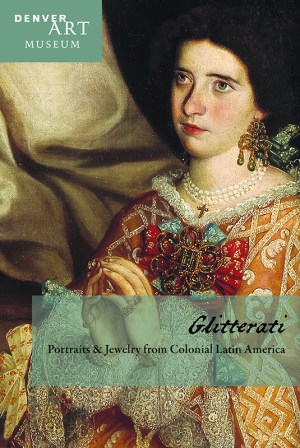 During the Spanish Colonial period in Latin America (1521–1850), precious gold and silver were crafted into elegant jewelry, then embellished with emeralds from Colombia, coral from Mexico, and pearls from Venezuela. To demonstrate their wealth and status, people were painted wearing their finest dress and elaborate jewelry. Selecting from its permanent collection, the Denver Art Museum installed the long-running exhibition Glitterati: Portraits and Jewelry in Colonial Latin America in its Spanish Colonial galleries in December 2014. This lavishly illustrated publication serves as a companion to the Glitterati exhibition and, on a larger scale, to the collection of Spanish Colonial jewelry and portraiture at the museum.
The Spanish Colonial collection at the Denver Art Museum is the most comprehensive of its kind in the United States and one of the best in the world with outstanding examples of painting, sculpture, furniture, decorative arts, silver and goldwork, and jewelry from all over Latin America during the time of the Spanish colonies. The Stapleton Foundation of Latin American Colonial Art, made possible by the Renchard family, gifted art acquired by the intrepid Daniel C. Stapleton between 1895 and 1914, when he worked in Ecuador, Colombia, and Venezuela overseeing plantations and emerald mines. Frederick and Jan Mayer worked closely with museum curators to build a collection of Mexican colonial art rich in many subjects and media, notably portrait paintings. Examples from both of these major collections are augmented by other pieces of jewelry and portraiture from the museum’s permanent collection in the Glitterati exhibition and in this volume.
Donna Pierce is Frederick and Jan Mayer Curator of Spanish Colonial Art at the Denver Art Museum and Head of the New World Department.
Julie Wilson Frick is the Mayer Center Program Coordinator and Junior Scholar in the New World Department at the Denver Art Museum.
New Book | Picture Titles
From Princeton UP:
Ruth Bernard Yeazell, Picture Titles: How and Why Western Paintings Acquired Their Names (Princeton: Princeton University Press, 2015), 352 pages, ISBN: 9780691165271, $35 / £25.
 A picture’s title is often our first guide to understanding the image. Yet paintings didn’t always have titles, and many canvases acquired their names from curators, dealers, and printmakers—not the artists. Taking an original, historical look at how Western paintings were named, Picture Titles shows how the practice developed in response to the conditions of the modern art world and how titles have shaped the reception of artwork from the time of Bruegel and Rembrandt to the present.
Ruth Bernard Yeazell begins the story with the decline of patronage and the rise of the art market in the seventeenth and eighteenth centuries, as the increasing circulation of pictures and the democratization of the viewing public generated the need for a shorthand by which to identify works at a far remove from their creation. The spread of literacy both encouraged the practice of titling pictures and aroused new anxieties about relations between word and image, including fears that reading was taking the place of looking. Yeazell demonstrates that most titles composed before the nineteenth century were the work of middlemen, and even today many artists rely on others to name their pictures. A painter who wants a title to stick, Yeazell argues, must engage in an act of aggressive authorship. She investigates prominent cases, such as David’s Oath of the Horatii and works by Turner, Courbet, Whistler, Magritte, and Jasper Johns. Examining Western painting from the Renaissance to the present day, Picture Titles sheds new light on the ways that we interpret and appreciate visual art.
Ruth Bernard Yeazell is the Chace Family Professor of English and director of The Lewis Walpole Library at Yale University. Her books include Harems of the Mind: Passages of Western Art and Literature and Art of the Everyday: Dutch Painting and the Realist Novel (Princeton).
◊ ◊ ◊ ◊ ◊
C O N T E N T S
List of Illustrations
Prologue (This is not a title)
I Naming and Circulating: Middlemen
1 Before Titles
2 Dealers and Notaries
3 Early Cataloguers
4 Academies
5 Printmakers
6 Curators, Critics, Friends—and More Dealers
II Reading and Interpreting: Viewers
7 Reading by the Title
8 The Power of a Name
9 Many Can Read Print
10 Reading against the Title
III Authoring as well as Painting: Artists
11 The Force of David’s Oath
12 Turner’s Poetic Fallacies
13 Courbet’s Studio as Manifesto
14 Whistler’s Symphonies and Other Instructive Arrangements
15 Magritte and The Use of Words
16 Johns’s No and the Painted Word
Acknowledgments
Notes
Index
HBA Book Award Winners for 2014 Publications
From HBA:
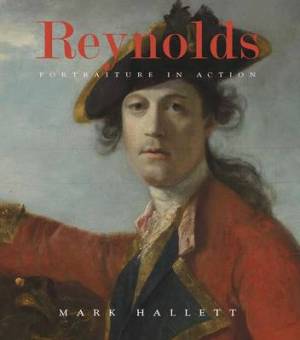 The Historians of British Art is pleased to announce Book Award winners for publications from 2014. The winners were chosen from a nominating list of over eighty books from more than twenty different presses. Awards are granted in three different categories, and this year two books share the award for single-author books dealing with a subject before 1800. Paul Binski’s Gothic Wonders: Art, Artifice, and the Decorated Style, 1290–1350 sets a major and understudied episode in medieval art in conversation with its Continental neighbors, dramatically enlivening both in the process. Mark Hallett’s Reynolds: Portraiture in Action breathes new life into one of Britain’s most thoroughly studied portraitists by tracing his work from studio conception to exhibition and beyond. John Potvin is the winner of the post-1800 single-author category for Bachelors of a Different Sort: Queer Aesthetics, Material Culture and the Modern Interior in Britain, a book that expands the scope of interior design and the insights that it can yield for British modern culture. Finally, British Art in the Nuclear Age, edited by Catherine Jolivette, is the winner of the multi-author category. Drawing on a wide array of artists and materials, this volume offers a subtle and surprising take on Britain’s cultural position during, and in relation to, the Cold War.
More information is available here»
New Book | Transatlantic Romanticism, 1790–1860
From the U of Massachusets Press:
Andrew Hemingway and Alan Wallach, eds., Transatlantic Romanticism: British and American Art and Literature, 1790–1860 (Amherst: University of Massachusetts Press, 2015), 336 pages, ISBN: 978-1625341143, $30.
 That the Romantic movement was an international phenomenon is a commonplace, yet to date, historical study of the movement has tended to focus primarily on its national manifestations. This volume offers a new perspective. In thirteen chapters devoted to artists and writers of the late eighteenth and early nineteenth centuries, leading scholars of the period examine the international exchanges that were crucial for the rise of Romanticism in England and the United States.
In the book’s introduction, Andrew Hemingway—building on the theoretical work of Michael Lowy and Robert Sayre—proposes that we need to remobilize the concept of Weltanschauung, or comprehensive worldview, in order to develop the kind of synthetic history of arts and ideas the phenomenon of Romanticism demands. The essays that follow focus on the London and New York art worlds and such key figures as Benjamin West, Thomas Bewick, John Vanderlyn, Washington Allston, John Martin, J. M. W. Turner, Thomas Cole, James Fenimore Cooper, George Catlin, Edgar Allan Poe, Harriet Beecher Stowe, and Herman Melville. Taken together, these essays plot the rise of a romantic anti-capitalist Weltanschauung as well as the dialectic between Romanticism’s national and international manifestations.
In addition to the volume editors, contributors include Matthew Beaumont, David Bindman, Leo Costello, Nicholas Grindle, Wayne Franklin, Janet Koenig, William Pressly, Robert Sayre, William Truettner, Dell Upton, and William Vaughan.
Andrew Hemingway is professor emeritus of art history, University College London, and author of The Mysticism of Money: Precisionist Painting and Machine Age America.
Alan Wallach is professor emeritus of art and art history, The College of William and Mary, and author of Exhibiting Contradiction: Essays on the Art Museum in the United States (University of Massachusetts Press, 1998).
◊ ◊ ◊ ◊ ◊
C O N T E N T S
Acknowledgments
Introduction: Capitalism, Nationalism, and the Romantic Weltanschauung, Andrew Hemingway
I The City
1 ‘The pit of modern art’: Practice and Ambition in the London Art World, William Vaughan
2 The Urban Ecology of Art in Antebellum New York, Dell Upton
3 Urban Convalescence in Lamb, Poe, and Baudelaire, Matthew Beaumont
II History
4 Sublime and Fall: Benjamin West and the Politics of the Sublime in Early Nineteenth-Century Marylebone, Nicholas Grindle
5 Benjamin West’s Royal Chapel at Windsor: Who’s in Charge, the Patron or the Painter?, William Pressly
6 The Politics of Style; Allston’s and Martin’s Belshazzars Compared, Andrew Hemingway
7 James Fenimore Coooper and American Artists in Europe: Art, Religion, and Politics, Wayne Franklin
III Landscape
8 John Martin, Thomas Cole, and Deep Time, David Bindman
9 ‘Gorgeous, but altogether false”: Turner, Cole, and Transatlantic Ideas of Decline, Leo Costello
10 Thomas Cole and Transatlantic Romanticism, Allan Wallach
IV Race
11 Picturing the Murder of Jane McCrea: A Critical Moment in Transatlantic Romanticism, William H. Truettner
12 The Romantic Indian Commodified: Text and Image in George Catlin’s Letters and Notes (1841), Robert Woods Sayre
13 Romantic Racialism and the Antislavery Novels of Stowe, Hildreth, and Melville, Janet Koenig
Notes on Contributors
Index
New Book | Architecture at the End of the Earth
From Duke UP:
William Craft Brumfield, Architecture at the End of the Earth: Photographing the Russian North (Duke University Press, 2015), 256 pages, ISBN: 978-0822359067, $40.
 Carpeted in boreal forests, dotted with lakes, cut by rivers, and straddling the Arctic Circle, the region surrounding the White Sea, which is known as the Russian North, is sparsely populated and immensely isolated. It is also the home to architectural marvels, as many of the original wooden and brick churches and homes in the region’s ancient villages and towns still stand. Featuring nearly two hundred full color photographs of these beautiful centuries-old structures, Architecture at the End of the Earth is the most recent addition to William Craft Brumfield’s ongoing project to photographically document all aspects of Russian architecture.
The architectural masterpieces Brumfield photographed are diverse: they range from humble chapels to grand cathedrals, buildings that are either dilapidated or well cared for, and structures repurposed during the Soviet era. Included are onion-domed wooden churches such as the Church of the Dormition, built in 1674 in Varzuga; the massive walled Transfiguration Monastery on Great Solovetsky Island, which dates to the mid-1550s; the Ferapontov-Nativity Monastery’s frescoes, painted in 1502 by Dionisy, one of Russia’s greatest medieval painters; nineteenth-century log houses, both rustic and ornate; and the Cathedral of St. Sophia in Vologda, which was commissioned by Ivan the Terrible in the 1560s. The text that introduces the photographs outlines the region’s significance to Russian history and culture.
Brumfield is challenged by the immense difficulty of accessing the Russian North, and recounts traversing sketchy roads, crossing silt-clogged rivers on barges and ferries, improvising travel arrangements, being delayed by severe snowstorms, and seeing the region from the air aboard the small planes he needs to reach remote areas.
The buildings Brumfield photographed, some of which lie in near ruin, are at constant risk due to local indifference and vandalism, a lack of maintenance funds, clumsy restorations, or changes in local and national priorities. Brumfield is concerned with their futures and hopes that the region’s beautiful and vulnerable achievements of master Russian carpenters will be preserved. Architecture at the End of the Earth is at once an art book, a travel guide, and a personal document about the discovery of this bleak but beautiful region of Russia that most readers will see here for the first time.
William Craft Brumfield is Professor of Slavic Studies at Tulane University. Brumfield, who began photographing Russia in 1970, is the foremost authority in the West on Russian architecture. He is the author, editor, and photographer of numerous books, including Lost Russia: Photographing the Ruins of Russian Architecture, also published by Duke University Press. Brumfield is the recipient of a John Simon Guggenheim Memorial Fellowship and was a Fellow at the National Humanities Center. In 2002 he was elected to the State Russian Academy of Architecture and Construction Sciences, and in 2006 he was elected to the Russian Academy of Fine Arts. He is also the 2014 recipient of the D. S. Likhachev Prize for Outstanding Contributions to the Preservation of the Cultural Heritage of Russia. Brumfield’s photographs of Russian architecture have been exhibited at numerous galleries and museums and are part of the Image Collections at the National Gallery of Art in Washington, D.C.
Exhibition | The Power of Prints: The Legacy of Ivins and Mayor

Paul-César Helleu, Madame Helleu Looking at the Watteau Drawings in the Louvre, ca. 1896, drypoint, 38.8 × 51 cm (New York: The Metropolitan Museum of Art, The Elisha Whittelsey Collection, 59.599.19)
◊ ◊ ◊ ◊ ◊
Goya is the the important eighteenth-century offering here: Ivins was responsible for those acquisitions. Press release (21 January 2016) from The Met:
The Power of Prints: The Legacy of William M. Ivins and A. Hyatt Mayor
The Metropolitan Museum of Art, New York, 26 January 26 — 22 May 2016
Curated by Freyda Spira
The history of the Metropolitan Museum’s collection of works of art on paper—now one of the most important and most comprehensive in the world—began 100 years ago with the unlikely and astonishing story of its first two curators, neither of whom was trained as an art historian. Together, they challenged convention, engaged the public, and revolutionized the study of these works. Organized to commemorate the department’s centennial, the exhibition The Power of Prints: The Legacy of William M. Ivins and A. Hyatt Mayor sheds light on the fascinating careers of its founding curators and reveals how, from the very beginning, they artfully composed the print collection as a visual library: a corpus of works of art on paper—from the exceptional to the everyday. The story of this great American collection will be told through prints by Andrea Mantegna, Albrecht Dürer, Marcantonio Raimondi, Jacques Callot, Rembrandt van Rijn, Francisco de Goya y Lucientes, Honoré Daumier, James McNeill Whistler, Henri de Toulouse-Lautrec, Mary Cassatt, Edward Penfield, and Edward Hopper, among others.

Francisco de Goya y Lucientes, The Garroted Man (El agarrotado), ca. 1778–80, etching, 32.7 x 21.4 cm (New York: The Metropolitan Museum of Art, Rogers Fund, 1920, 20.22)
In 1916, William Mills Ivins (1881–1961) abandoned a successful law career to accept the job of founding curator of the Met’s Department of Prints. Although he was hired specifically to acquire the works of well-known 19th-century artists and old masters, Ivins set out instead to amass examples of technical, social, and historical interest as well. Notably, he championed the works of Goya, whose challenging and sometimes gruesome imagery was not appreciated in America at that time. Ivins first encountered these works as a student in Paris; the brutal images of war affected him profoundly and, in time, changed the course of his life. Almost all of the Met’s collection of nearly 300 Goya prints—one of the largest anywhere—was acquired by Ivins.
Before joining the Museum in 1932, Alpheus Hyatt Mayor (1901–1980) had studied modern languages, literature, and poetry, and worked as an arts critic, teacher, and occasional actor. Like Ivins, he was also an avid bibliophile with wide-ranging interests, a voracity for knowledge, and passion for social history. Brought on to assist Ivins and, eventually, to continue his legacy, Mayor expanded on Ivins’s foundational work by adding a new focus on lithography and popular prints. Pushing the boundaries of what had traditionally been collected as printed matter, he acquired for the Museum some of the most renowned American collections of popular prints. To Mayor, these items had value, because of the information they contained about all aspects of culture. He also recognized their future potential for research in diverse fields, from anthropology to urban planning.
As a result of Ivins’s and Mayor’s prescient collecting, the department now houses innumerable unique masterpieces, lauded for their exceptional artistry, as well as popular prints such as posters and trade cards that were printed in large numbers and never intended to last. By employing a conversational and colloquial tone in texts they drafted to describe these works, Ivins and Mayor transformed the way information about art objects was written. Excerpts from the writings of Ivins and Mayor will be included on labels throughout the exhibition.
To a certain extent, the history of the department is also the history of a series of extraordinary gifts and purchases of works of art. The gift of some 3,500 prints by paper manufacturer Harris Brisbane Dick led to the hiring of Ivins, to oversee them. An early gift of 10 prints by the artist Mary Cassatt came from Ivins’s friend Paul J. Sachs, assistant director at the Fogg Museum at Harvard University. (Sachs’s brother—also a friend of Ivins—gave an additional seven.) Engravings, woodcuts, and two woodblocks by Dürer entered the collection through gift and purchase from Junius Spencer Morgan, a noted collector of the artist’s works. Between 1949 and 1962, Mayor purchased more than 16,000 engravings, woodcuts, and mezzotints from Franz Joseph II, prince of Liechtenstein. The American sculptor Bessie Potter Vonnoh donated her entire collection of French and American posters of the 1890s. From Jefferson R. Burdick, the Museum received 300,000 examples of printed ephemera from the late 19th to the mid-20th century.
Just as Ivins and Mayor did, the exhibition will consider printed matter as the entrée to the information age, recognizing prints as functional objects that spread information to an ever-expanding audience and reflect a changing society. In the age of digital photography and the Internet, the power of prints, or the ability to disseminate images in identical form to a mass market, has special relevance to how we see, understand, and engage with works of art.
Arranged thematically and by technique, the exhibition has four parts. In the first section, the idea of taste is addressed in terms of Harris Brisbane Dick’s foundational gift of French, British, and American etchings and how it affected the collecting of etchings by the likes of Rembrandt and Goya. The second section considers engravings, amassed from the beginning with a focus on Renaissance artists such as Mantegna and Dürer. The third section shows the use of printed images in the spread of knowledge. Several rare early books, illustrated by woodcuts will be displayed. The books represent firsts of their kind on topics as diverse as costume, anatomy, and architecture. The final section features examples by Daumier, Toulouse-Lautrec, and other 19th-century artists whose works entered a truly mass market in the form of lithographs. Also in this section will be selected popular prints and ephemera from the late 19th and early 20th centuries.
The Power of Prints: The Legacy of William M. Ivins and A. Hyatt Mayor is organized by Freyda Spira, Associate Curator in the Metropolitan Museum’s Department of Drawings and Prints. Exhibition design is by Zoe Alexandra Florence, Exhibition Designer; graphics are by Ria Roberts, Graphic Designer; and lighting is by Clint Ross Coller and Richard Lichte, Lighting Design Managers, all of the Museum’s Design Department.
An illustrated checklist is available here»
◊ ◊ ◊ ◊ ◊
The catalogue is distributed by Yale UP:
Freyda Spira and Peter Parshall, The Power of Prints: The Legacy of William M. Ivins and A. Hyatt Mayor (New York: The Metropolitan Museum of Art, 2016), 192 pages, ISBN: 978-1588395856, $35 / £25.
 Metropolitan Museum curators William M. Ivins and his protégé A. Hyatt Mayor not only assembled a vast collection of prints, from Renaissance masterworks to ephemeral works, but also expanded the appreciation of prints as aesthetic objects, socio-historical documents, and tools of communication. More radically, by discussing these prints in accessible language, they changed our notions of how art reaches the wider public. Drawing on previously unpublished material, including personal letters and departmental records, this is the first comprehensive exploration of the lives, careers, theories, and influence of Ivins and Mayor. Also included are 120 exceptional prints that represent the breadth and depth of their acquisitions, including works by Dürer, Rembrandt, Callot, Goya, Whistler, Cassatt, and Toulouse-Lautrec.
Freyda Spira is associate curator in the Department of Drawings and Prints, The Metropolitan Museum of Art. Peter Parshall was formerly the Jane Neuberger Goodsell Professor of Art History and the Humanities at Reed College and curator and head of the Department of Old Master Prints at the National Gallery of Art, Washington, D.C.
New Book | Histories of Ornament: From Global to Local
From Princeton UP:
Gülru Necipoğlu & Alina Payne, eds., Histories of Ornament: From Global to Local (Princeton: Princeton University Press, 2016), 464 pages, ISBN: 978-0691167282, $60 / £42.
 This lavishly illustrated volume is the first major global history of ornament from the Middle Ages to today. Crossing historical and geographical boundaries in unprecedented ways and considering the role of ornament in both art and architecture, Histories of Ornament offers a nuanced examination that integrates medieval, Renaissance, baroque, and modern Euroamerican traditions with their Islamic, Indian, Chinese, and Mesoamerican counterparts. At a time when ornament has re-emerged in architectural practice and is a topic of growing interest to art and architectural historians, the book reveals how the long history of ornament illuminates its global resurgence today.
Organized by thematic sections on the significance, influence, and role of ornament, the book addresses ornament’s current revival in architecture, its historiography and theories, its transcontinental mobility in medieval and early modern Europe and the Middle East, and its place in the context of industrialization and modernism. Throughout, Histories of Ornament emphasizes the portability and politics of ornament, figuration versus abstraction, cross-cultural dialogues, and the constant negotiation of local and global traditions.
Featuring original essays by more than two dozen scholars from around the world, this authoritative and wide-ranging book provides an indispensable reference on the histories of ornament in a global context. Contributors include: Michele Bacci (Fribourg University); Anna Contadini (University of London); Thomas B. F. Cummins (Harvard); Chanchal Dadlani (Wake Forest); Daniela del Pesco (Universita degli Studi Roma Tre); Vittoria Di Palma (USC); Anne Dunlop (University of Melbourne); Marzia Faietti (University of Bologna); María Judith Feliciano (independent scholar); Finbarr Barry Flood (NYU); Jonathan Hay (NYU); Christopher P. Heuer (Clark Art); Rémi Labrusse (Université Paris Ouest Nanterre la Défense); Gülru Necipoğlu (Harvard); Marco Rosario Nobile (University of Palermo); Oya Pancaroğlu (Bosphorus University); Spyros Papapetros (Princeton); Alina Payne (Harvard); Antoine Picon (Harvard); David Pullins (Harvard); Jennifer L. Roberts (Harvard); David J. Roxburgh (Harvard); Hashim Sarkis (MIT); Robin Schuldenfrei (Courtauld); Avinoam Shalem (Columbia); and Gerhard Wolf (KHI, Florence).
Gülru Necipoglu is the Aga Khan Professor of Islamic Art and director of the Aga Khan Program for Islamic Architecture at Harvard University. She is the author of The Age of Sinan: Architectural Culture in the Ottoman Empire (Princeton) and The Topkapi Scroll: Geometry and Ornament in Islamic Architecture. Alina Payne is the Alexander P. Misheff Professor of History of Art and Architecture at Harvard University and Paul E. Geier Director of Villa I Tatti, The Harvard Center for Italian Renaissance Studies at Villa I Tatti in Florence. She is the author of The Architectural Treatise in the Italian Renaissance and From Ornament to Object: Genealogies of Architectural Modernism.
Exhibition | Hubert Robert, 1733–1808

◊ ◊ ◊ ◊ ◊
From the National Gallery of Art:
Hubert Robert (1733–1808), un peintre visionnaire
Musée du Louvre, Paris, 7 March — 30 May 2016
National Gallery of Art, Washington, D.C., 6 June — 2 October 2016
Known fondly as ‘Robert des ruines’ because of his penchant for painting ancient ruins, Hubert Robert was regarded during his lifetime as one of France’s most successful and prominent artists. In the first monographic exhibition showcasing Robert’s full achievement as a draftsman and painter, some 50 paintings and 50 drawings will chart his development in Rome and subsequent high level of accomplishment after his return to Paris. The exhibition will also focus on Robert’s lasting contribution to French visual culture and the fundamental role he played in promoting the architectural capriccio (caprice or fantasy), an art form in which famous monuments of antiquity and modernity were imaginatively combined to create striking and novel city scenes and landscapes.
◊ ◊ ◊ ◊ ◊
The English edition catalogue is published by Lund Humphries:
Margaret Morgan Grasselli with contributions from Yuriko Jackall, Guillaume Faroult and Catherine Voiriot, Hubert Robert (London: Lund Humphries, 2016), 288 pages, ISBN: 978-1848221918, £45.
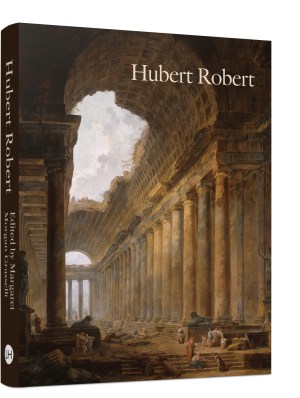 Known fondly as ‘Robert des ruines’ because of his penchant for painting ancient ruins, Hubert Robert (1733–1808) was one of France’s most successful and prominent artists during his lifetime. This outstanding publication, which accompanies the first monographic exhibition of his work, illuminates Robert’s remarkable artistic achievements and his lasting contributions to French visual culture.
Robert’s skills were manifold—he enjoyed great success as a painter, draftsman, interior decorator and garden architect. During his time in Rome, he fostered close professional bonds with artists such as Piranesi, Panini and Fragonard, while in Paris he flourished under the patronage of several wealthy French supporters including the Marquis de Marigny, brother of the famed Madame de Pompadour. Robert’s work later addressed the demise of this glittering society through both ominous scenes of disaster and representations of vandalized royalist monuments. Upon his own release from imprisonment following the French Revolution, Robert completed a series of meditative variations on the Grande Galerie of the Musée du Louvre, of which he had been appointed curator in 1784.
◊ ◊ ◊ ◊ ◊
The French edition catalogue is published by Somogy:
Guillaume Faroult, ed., Hubert Robert (1733–1808) : un peintre visionnaire (Paris: Somogy, 2016), 544 pages, ISBN: 978-2757210642, 49€.
 Hubert Robert fut l’un des créateurs les plus séduisants du siècle des Lumières. Artisan de cet art de vivre poli, galant et souriant qui paraît l’une des quintessences de l’esprit français au XVIIIe siècle, l’artiste attire d’emblée la sympathie. Il parvint à s’introduire dans les cercles les plus brillants de son temps, édifiant une carrière exemplaire dans la France de l’Ancien Régime jusqu’au règne de Napoléon.
Formé à Rome vers le milieu du siècle, en pleine fièvre antiquaire, Robert s’impose dès son retour à Paris comme « peintre d’architecture ». Le philosophe Denis Diderot célèbre aussitôt la «poétique des ruines » du jeune artiste. La production de Robert fait preuve au cours de sa carrière d’une exceptionnelle dynamique d’amplification: les œuvres, les projets, les charges y atteignent une dimension considérable. L’artiste devient très recherché pour la production de vastes ensembles de décors peints. Il se lance enfin avec succès dans une forme d’« art total » en tant que créateur de jardins, dont le parc de Méréville (de 1786 à 1793) fut sans doute le chef-d’œuvre.
Frappé par le bouleversement historique de la Révolution française, il en consigne les premières manifestations en représentant, dès l’été 1789, La Bastille dans les premiers jours de sa démolition. En 1795, il réintègre sa fonction de conservateur du «Muséum national », c’est-à-dire du musée du Louvre qui vient d’ouvrir ses portes, et dont il avait préparé activement la création. Sans aucun doute, l’œuvre de Robert est parcourue par un sens de l’écoulement inexorable du temps et, par-delà, par une conscience de la marche de l’histoire, tour à tour triomphante ou déplorable, qui en constitue l’impressionnante grandeur.










 Enfilade
leave a comment