Skin this Summer (exhibition and conference at the Wellcome)
The Wellcome Collection in London currently hosts an exhibition on Skin that includes various anatomical images from the eighteenth century (and a fine online component). Next week, there will be a symposium on the topic of Skin Exposed. While the latter is far-ranging in period and approach, it does raise the question of what a conference focused entirely on skin in the eighteenth-century might look like.
Skin
Wellcome Collection, London, 10 June — 26 September 2010

A suspended lower arm from which the skin and fatty layer has been removed to reveal the muscles. Next to it is a knife and a surgical instrument case with its lid. Gérard de Lairesse after Govard Bidloo and William Cowper, 1739 (Wellcome Library)
The Skin exhibition invites you to re-evaluate the largest and probably most overlooked human organ. We consider the changing importance of skin, from anatomical thought in the 16th century through to contemporary artistic exploration. Covering four themes (Objects, Marks, Impressions and Afterlives), Skin takes a philosophical approach. It begins by looking at the skin as a frontier between the inside and the outside of the body. Early anatomists saw it as having little value and sought to flay it to reveal the workings of the body beneath.
The exhibition then moves to look at the skin as a living document: with tattoos, scars, wrinkles or various pathologies, our skin tells a story of our life so far. Finally, the skin is considered as a sensory organ of touch and as a delicate threshold between life and death.
Skin Lab, which features artistic responses to cutting-edge research and technological developments in skin science from the mid-20th century onwards, will complement the exhibition.
◊ ◊ ◊ ◊ ◊
Symposium — Skin: Exposed
Wellcome Collection, London, 16-17 July 2010
 Nudity is an intimate state, perceived differently across times and cultures. For some it is a taboo, for others something to be celebrated. Join us for this special two-part ‘skin-posium’ to explore nakedness in all its guises.
Friday: Literary reading, 19.00-21.00
Bask in words of literary masterminds Milton, Keats, Tennyson and others. The evening includes a drinks reception so you can get to know your fellow guests.
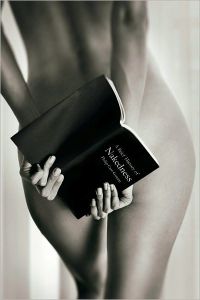
Philip Carr-Gomm, "A Brief History of Nakedness" (May 2010), $30
Saturday: Talks and discussions, 10.30-17.00
Experts from the worlds of history of art, evolutionary science and more will explore how bare skin is understood in different cultures, how nudity makes us feel and how our ancestors evolved to reveal their bare skin in the first place.
Our multidisciplinary speakers include ‘Skin’ curator Javier Moscoso; fashion historian Rebecca Arnold; geneticist Walter Bodmer; historian of art Jill Burke; author of A Brief History of Nakedness, Philip Carr-Gomm; human geographer Glenn Smith; and anthropologist and film-maker Michael Yorke. Friday evening is curated by Steven Connor, author of The Book of Skin.
Tickets must be booked in advance. £30 full price/£20 concession for both days, including drinks on Friday evening and lunch, tea and coffee on Saturday. Please call 020 7611 2222 to book.
Recently Reviewed: Books on Houdon, Tiepolo, and the Dilettanti
 It’s been exciting to see the recent expansion of The Art History Newsletter, as Jon Lackman has been joined by a number of contributors. On July 5th, Lackman himself reports on catching up on “The Glorious 18th Century,” with pieces from The New York Review of Books: Willibald Sauerländer on the Houdon exhibition at Montpellier (April 8 issue) and Ingrid Rowland on Roberto Calasso’s Tiepolo Pink (March 11 issue).
Meanwhile the June 24 issue of the London Review of Books includes a review of Jason Kelly’s book The Society of Dilettanti: Archaeology and Identity in the British Enlightenment by Rosemary Hill.
Later this Year: Exhibition on Johann Christian Wentzinger
Freiburg Baroque: Johann Christian Wentzinger und seine Zeit
Augustinermuseum, Freiburg, 27 November 2010 — 6 March 2011
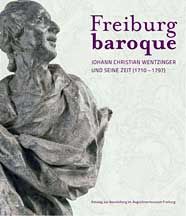
ISBN: 9783422070394, $53.50 (available in December 2010)
This exhibition at the Augustinermuseum in Freiburg, commemorates the 300th birthday of Johann Christian Wentzinger (1710-1797). A Baroque sculptor, painter and architect, Wentzinger may be counted among the most important eighteenth-century artists in southern Germany.
◊ ◊ ◊ ◊ ◊
A full description (in German) of the artist and the upcoming exhibition from the Badische Zeitung is available here»
The London Town House
From Apollo Magazine:
Rachel Stewart, The Town House in Georgian London (New Haven: Yale University Press, 2009), ISBN 9780300152777, $65.
Reviewed by Conor Lucey, the editor of Irish Architectural and Decorative Studies.
On 16 May 1775, a notice in The Public Advertiser advised its readers that ‘the Right Hon. the Earl Temple is again much indisposed with an inflammatory Disorder in his Bowels, at his house in Pall Mall’. As a means of identifying the singular association between Britain’s aristocracy and their London residences, this very public announcement of the Earl Temple’s unfortunate medical circumstances, and the crucial specificity of location, represents a decisive example of the significance of West End property within the Georgian social arena. Deftly synthesising such illuminating anecdotal evidence with documentary fact, Rachel Stewart’s study of the 18th-century London town house provides valuable new description and interpretive analysis of this representative building type.
Critical of how architectural historiographies have underestimated both the practical and conceptual importance of town residences for the owner/occupier, Stewart’s narrative sets out to examine and, indeed, complicate the role, function and meaning of the city dwelling for those ‘who may have had some choice as to whether or not to take a town house, rather than the London-based middling classes whose town home was their principal and most often sole residence’. . . .
The full review can be found here»
Forthcoming Title
William H. Truettner, Painting Indians and Building Empires in North America, 1710–1840 (Berkeley: University of California Press, 2010), 160 pages, ISBN: 9780520266315, $39.95, £27.95 (available in August)
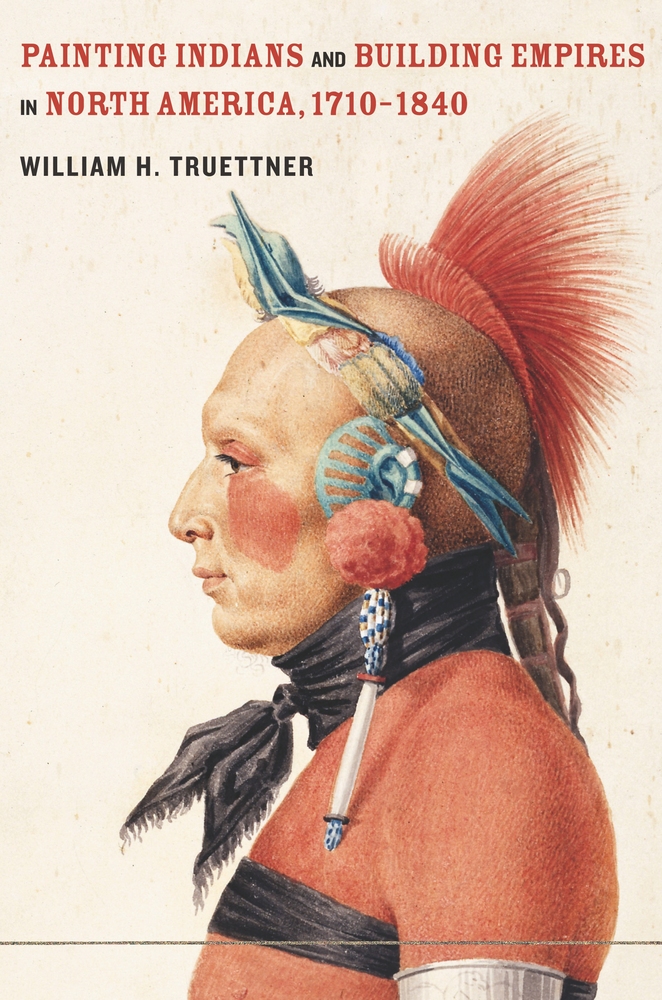 Shortly after the first encounters between the Europeans who first explored and settled North America and the indigenous people, the Europeans began a visual record of their neighbors. Fascinated by these New World inhabitants, Euro-American artists expanded this enterprise, slowly at first but with increasing momentum in the years before and especially after the American Revolution. By the mid-nineteenth century, as this study reveals, a remarkable survey of Indian life in North America east of the Rocky Mountains had been compiled. Yet the purpose of these images has never been fully explored. Were they simply a historical record of the young nation moving westward—of native peoples seen at the end of their heyday, when their tribal homelands were slowly being overrun by white settlers? Or did images of Indian life fulfill other objectives for those who commissioned or painted them? In this book William H. Truettner argues that these images often discreetly encouraged efforts, first by the British and them by the Americans, to expand white hegemony across North America. Truettner’s informed, accessible readings of paintings by artists such as Benjamin West, Gilbert Stuart, Charles Bird King, and George Catlin relate these images to social and political events of the time and tell us much about how North American tribes would fare as they fought to survive during the second half of the nineteenth century.
More on Meissen — Chance to Win at Apollo Magazine
Apollo Magazine’s weekly competition:
 We are pleased to announce that our new competition prize is The Arnhold Collection of Meissen Porcelain 1710–50 by Cassidy-Geiger, Sebastian Kuhn and Heike Biedermann (The Frick Collection, $275), to coincide with our just published July/August issue, which celebrates the 300th anniversary of the Meissen manufactury’s foundation. The Arnhold porcelain collection is one of the most important great prewar Meissen collections to have survived intact. Uniquely, most of the pieces date from the first decades of the royal factory, established by August II, Elector of Saxony and King of Poland, in 1710. The collection features a broad range of early work – much of it experimental, including table and chocolate services; figures; European porcelains and Asian ceramics.
For your chance to win, simply answer the following question:
In what year did Johann Joachim Kändler become Modellmeister at the Meissen factory?
Email your answers to offers@apollomag.com using ‘Meissen’ as the subject of your email. Only answers received before midday on 7th July will be entered into the competition draw.
Good luck!
Meissen Part II: The Larger European Context
The Fascination of Fragility: Masterpieces of European Porcelain
Ephraim-Palais, Berlin, 9 May — 29 August 2010
 This unique exhibition paints a vivid picture of 18th-century European porcelain. The entire spectrum of European porcelain is on show, from elegant French court porcelain and English wares to German and Italian porcelains with their bright colours and bold forms. For this exceptional show the Ephraim-Palais has been turned into a magical ‘Porcelain Palace’. When presented in such an international context, the collected masterpieces of the most famous Berlin manufactory, the KPM, also develop their own special charisma.
This special exhibition in Berlin is part of the Staatliche Kunstsammlungen Dresden’s tercentenary celebrations commemorating the invention of European hard-paste porcelain. The exhibition – organised in association with the Stiftung Stadtmuseum Berlin – encompasses around 500 objects, including about a hundred porcelains from the holdings of the Porzellansammlung of the Staatliche Kunstsammlungen Dresden. Porcelain wares from the Königliche Porzellan-Manufaktur Berlin held in the Stadtmuseum Berlin as well as items on loan from the Rijksmuseum Amsterdam, the Hermitage in St. Petersburg and the Musée national du Céramique in Sèvres complete the exhibition.
The exhibition places Meissen Porcelain within the context of European porcelain culture. Particular attention is therefore paid to masterpieces from other European manufactories . Outstanding objects are on display from each of the approximately 50 manufactories. The exhibition focuses on the specific features of the products of each manufactory, as well as showing the shared elements which gave rise to a common tradition. Both the influence of Meissen por-celain on the wares produced by other manufactories and the effect of other Euro-pean manufactories on the Saxon products is clearly illustrated.
Exactly 300 years ago, August the Strong established the first European hard-paste porcelain manufactory in Meissen. Thereafter, Meissen porcelain swiftly became an indispensable status symbol for the European aristocracy. Until the middle of the 18th century, the Meissen manufactory was the leading force in porcelain design, setting standards for table and dining culture and laying down the entire repertoire of forms and styles of decor. From the mid-18th century onwards, there was a boom in the production of porcelain. Newly established manufactories entered into serious competition with Meissen. They emancipated themselves from the dominance of Meissen and introduced their own innovations. Meissen gradually lost the upper hand to Berlin and Sèvres, which now took over the leading role in Europe.
The exhibition is accompanied by a catalogue published by E. A. Seemann Verlag Leipzig: The Fascination of Fragility. Masterpieces of European Porcelain by Ulrich Pietsch and Theresa Witting (eds.). Price: 49.90 Euro.
Meissen Turns 300
Triumph of the Blue Swords: Meissen Porcelain for Aristocracy and Bourgeoisie, 1710-1815
Staatliche Kunstammlungen, Dresden, 8 May — 29 August 2010
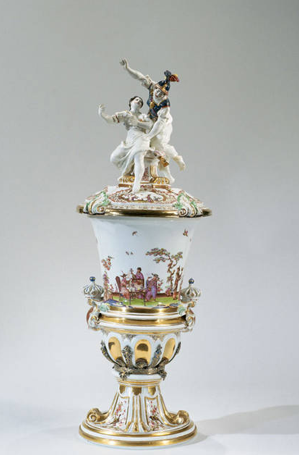
Meissen beaker and cover, 1727 (Amsterdam: Rijkmuseum)
The exhibition presents a comprehensive overview of Meissen Porcelain art from the Baroque to the Biedermeier era. Meissener Porzellan (Meissen Porcelain) has never before been displayed in this context alongside works of art on loan from all around the world. The Staatliche Kunstsammlungen Dresden are taking the anniversary of the invention of European porcelain as an opportunity to exhibit Meissen Porcelain for the first time in the building which August the Strong dedicated to the presentation of the royal porcelain treasures from the Far East and from Meissen – the Japanisches Palais.
In 1710 August the Strong established the first European porcelain manufactory in Meissen. Thereafter, Meissen Porcelain swiftly became an indispensable status symbol for the European aristocracy. Today, it continues to be the epitome of sophisticated table culture and luxurious room décor. In order to create an appropriate setting in which to indulge his ‘maladie de porcelaine’, the Elector planned to convert the Japanisches Palais into a Porcelain Palace. This project, however, was never completed.
 The exhibition Triumph of the Blue Swords encompasses a total of around 800 porcelain items, including a large number of the holdings of the Dresden collection that are not normally on public display. They are complemented by a wide range of items on loan from museums and collections around the world in places as diverse as California, Moscow, New York, London, Paris, Prague and Budapest. The development and manufacture of porcelain, which has previously only been demonstrated with reference to a small number of specimens, will be presented in detail, drawing upon the latest research findings.
The exhibition focuses on the period up to 1815, during which Meissen developed the whole spectrum of possibilities that would thereafter be open to European porcelain. In these first hundred years, Meissen was the epitome of European porcelain art, long defying the competition from the newly founded manufactories and even managing to survive the crises of the Seven Years War and the Napoleonic Wars, right down to the present day. Until 1756 Meissen was the predominant manufactory in Europe; after that, the leading role was taken over by Sèvres, and Meissen had to reposition itself. Unlike previous presentations, this exhibition consciously integrates the concept of crisis and new beginnings.
The exhibition pays particular attention to the table service. For one thing because, as the most important product of the Meissen Manufactory, it has had a profound influence on table culture in general. For another, because it especially underlines the importance of Meissen Porcelain for diplomatic gifts. Among the items on display are two table services commissioned by the Prussian King Friedrich II: a service designed on a Prussian/musical theme with a green scale-pattern rim, and the set known as the “Möllendorff” service, which was a gift for the Prussian General Möllendorff. Both services are opulently displayed on a dinner table. The Meissen Manufactory was the first to produce a table service made of porcelain.
The exhibition is accompanied by a catalogue published by E. A. Seemann Verlag Leipzig: Triumph of the Blue Swords: Meissen Porcelain for Aristocracy and Bourgeoisie 1710-1815 by Ulrich Pietsch and Claudia Banz (eds.)
◊ ◊ ◊ ◊ ◊
In Apollo Magazine, Louise Nicholson profiles two of the collectors who have offered loans for the exhibition, Kurt and Jutta Salfeld, whose porcelain birds are among the rarest of all Meissen production.
Ricci Exhibition to Mark His 350th Birthday
Sebastiano Ricci: Il trionfo dell’invenzione nel Settecento veneziano
Fondazione Giorgio Cini, Venice, 24 April — 11 July 2010
 This exhibition is the principal event in the programme of celebrations for the 350th anniversary of the birth of Sebastiano Ricci, promoted by the Veneto Region and the Giorgio Cini Foundation through a specially created regional committee. On show will be paintings, sculptures and drawings connected to the problematic issue of the bozzetto (models for sculptures, and painted sketches and drawings for larger works). The exhibition will, thus, provide an opportunity to explore an original aspect of the multifaceted talent of the artist from Belluno. Specialist studies agree in attributing a key role to Sebastiano Ricci as a precursor and modern interpreter of the Rococo in Italy and the rest of Europe. In fact, thanks to his wide-ranging activities in European courts and centres of culture, he was able to develop his skills and an accomplished virtuoso language that catered to
changes in taste in the early 18th century.
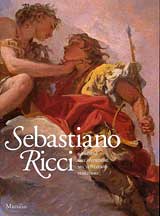
Catalogue edited by Giuseppe Pavanello ISBN: 9788831706377, $65
The main section of the exhibition will be dedicated to the art of the bozzetto and the modelletto (an initial small version of a proposed large work for presentation to patrons), in which Sebastiano Ricci was not only a supreme master, but also an ingenious innovator. Sebastiano’s letter to Giacomo Tassi of 14 November 1731 is usually considered to mark the starting point for a reversal of values that saw the aesthetic preeminence of the work of art pass from its “finished” version, conceived for public display, to the bozzetto, the preliminary work usually destined to remain in the studio. Sebastiano’s last sentence in the letter addressed to his patron – “moreover, this small work is the original and the altarpiece is the copy” – ushered in a view that was eventually so successful that it even influenced most 20th-century critics.
The exhibition will also provide the opportunity for comparisons with the bozzetti of other major artists in the Venetian school. These artists include Antonio Pellegrini, the young Giambattista Tiepolo, Gaspare Diziani, Giambattista Pittoni and Jacopo Amigoni. There will also be a special focus on Ricci’s graphic works, now mainly kept in the Drawing and Prints Cabinet of the Accademia, Venice, and in the royal collections of Windsor Castle. Ricci’s swirling exploratory graphic technique lends itself to precise comparisons with his own modelletti and with the work of the sculptor Giovanni Maria Morlaiter. In fact, the exhibition will also include some terracotta models and bozzetti from the workshop “remainders” of Giovanni Maria Morlaiter – Sebastiano Ricci’s alter ego in sculpture – now in storage in the Ca’ Rezzonico Museum of Eighteenth-Century Venetian Art, Venice.
Jean Barbault Exhibition in Strasbourg
Jean Barbault: Le théâtre de la vie italienne / The Theater of Italian Life
Strasbourg, Musée des Beaux-Arts, 22 May — 22 August 2010

Catalogue by Pierre Rosenberg et al. (ISBN: 9782351250815)
This year the Musée des Beaux-Arts, Strasbourg will present an exhibition focused around the painter Jean Barbault (Val-d’Oise, 1718 — Rome, 1762). This seemed an opportune moment to spotlight such an enticing artist since the museum acquired one of his masterpieces just a few short months ago. The exhibition thus unveils a complete, eloquent panorama of his work. Barbault is renowned for whimsical figures painted with virtuosity and refined color as well as canvases treating “Mascarades” organized by residents at the Academy of France in Rome. He also signed landscapes of ruins and considered himself a “painter of History.” As an added feature the exhibition is showing a series representing his French contemporaries working in Rome at the same period, including Fragonard, who, like him were deeply attracted to Ancient (fascinating) and modern (picturesque) Rome and dazzled by Italian light.
Last year the Musée des Beaux-Arts further enriched its collection (thanks to a purchase made possible by the City of Strasbourg and by the Fonds Régional d’Acquisition des Musées / Regional Fund for Museum Acquisitions) with a major painting entitled Neapolitan Shepard and Buffalo Cow Leaving the Grotto by Jean Barbault. This is one of the mid-18th century’s most attractive works of French (and Italian) painting. Its subject matter and spiritual treatment personify the very essence of the Age of Enlightenment. The painting is a masterpiece done in Italy circa 1750 by an artist who largely remains in the shadows despite exhibitions previously shown at the Museums of Beauvais, Angers and Valence, 1974-1975.
The exhibit – and its catalog – gives an overview of his painted work. Barbault settled in Rome in 1747, remaining in this fascinating city and fully integrating himself into Italian life until his death. He was an original artist, the author of characters in typical Italian costume and exotic figures for Mascarade, who also undertook the register of ruins. Despite a rather dramatic existence, he considered himself an artist-in-full. Besides an extraordinary collection of engravings by the Italian Piranesi, the exhibition also exposes the unique milieu of residents at the Academy of France in Rome. Barbault was the contemporary of Jean-Honoré Fragonard and belonged to an exciting generation, between Boucher and David, Rocaille and Neo-Classicism.
Catalogue: Pierre Rosenberg et al., Jean Barbault: Le théâtre de la vie italienne (Strasbourg: Editions des Musées de la Ville de Strasbourg, 2010), 160 pages (ISBN: 9782351250815), $53.50, available at artbooks.com.
◊ ◊ ◊ ◊ ◊
Didier Rykner’s review of the exhibition for La Tribune de l’Art (5 June 2010) can be found here»










 Enfilade
leave a comment