New Book | The Dominion of Flowers
From Yale UP:
Mark Laird, The Dominion of Flowers: Botanical Art and Global Plant Relations (London: Paul Mellon Centre for Studies in British Art, 2024), 277 pages, ISBN: 978-1913107451, £35 / $50.
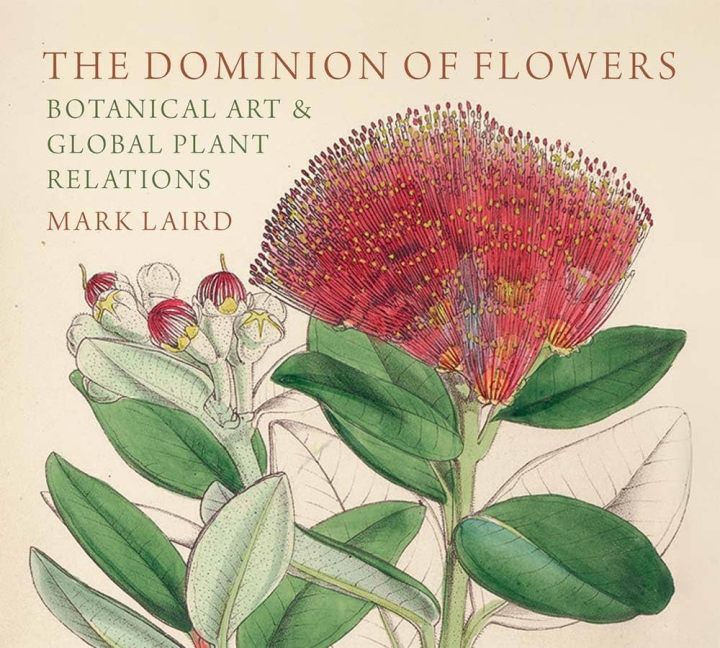 How a wave of exotic botanical imports from across Britain’s empire shaped its gardens and psyche
Between 1760 and 1840, exotic plants were imported from across Britain’s empire and were lavishly depicted in periodicals and scientific treatises as specimens collected alongside other objects of natural history. Mark Laird’s provocative new book—part art history, part polemic—weaves fine art, botanical illustration, and previously unpublished archival material into a political and ethical account of Britain’s heritage, showing how plants were not only integral to English gardens of the Georgian and Victorian eras but also to British culture more broadly. The Dominion of Flowers shines with captivating cross-cultural plant stories. The book opens with the Seymers’ exotic Butterflies and Plants and Pulteney’s catalogue of Dorset’s native wildflowers. It then moves to the German artist John Miller and his illustrations for Lord Bute’s Botanical Tables and concludes by tracing Britain’s fascination with New Zealand’s unique flora, first depicted in Mary Delany’s collages. Copiously illustrated with almost two hundred works, and drawing on Laird’s genealogical research into his own family’s colonial past, this volume foregrounds Indigenous ideas about ‘plant relations’ in a study that brings the trans-oceanic movement of plants and people alive.
Mark Laird is professor emeritus at the University of Toronto and former faculty member at Harvard University. He is the author of The Flowering of the Landscape Garden and A Natural History of English Gardening—recipient of an Elisabeth Blair MacDougall Award. He has been historic planting consultant to Painshill Park Trust, English Heritage, and Strawberry Hill Trust.
New Book | Carlo Maratta Catalogue Raisonné
From Ugo Bozzi Editore (as noted at Art History News) . . .
Stella Rudolph and Simonetta Prosperi Valenti Rodinò, Carlo Maratti (1625–1713) tra la magnificenza del Barocco e il sogno d’Arcadia. Dipinti e disegni (Rome: Ugo Bozzi Editore, 2024), 2 volumes, 1260 pages, ISBN: 978-8870030693, €480.
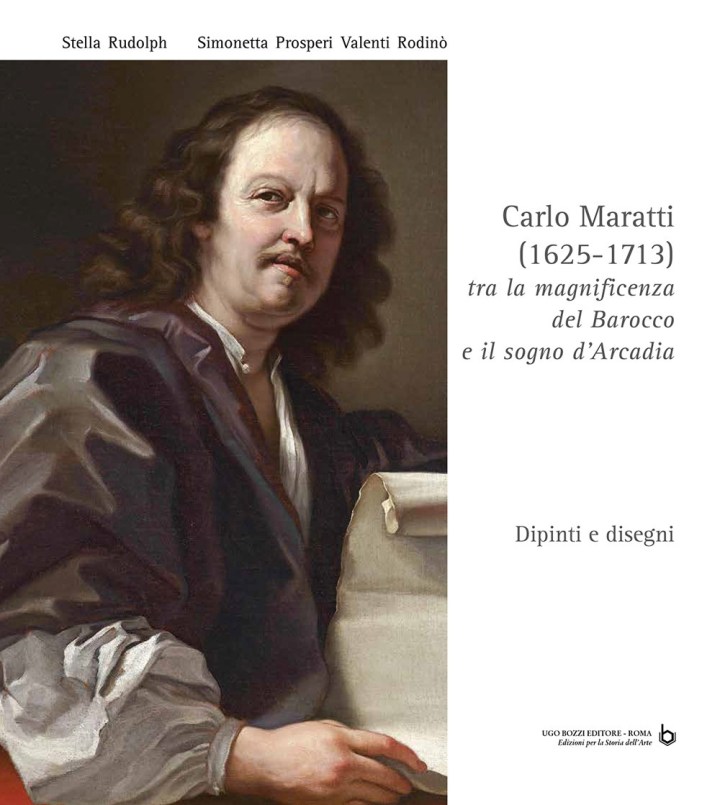 Il noto pittore Carlo Maratti (1625–1713), attivo a Roma per più di 60 anni, raggiunse una grande fama in vita, conteso da papi, cardinali, mecenati, collezionisti, milord venuti in Italia per il Grand tour e regnanti di tutt’Europa. Di contro a questa notorietà, gli studi storico-artistici a lui dedicati sono oggi limitati ad alcuni articoli e a due convegni, tenutisi a Roma nel 2013 e 2014 in occasione della ricorrenza della morte. La monografia a lui dedicata, qui presentata ed avviata da anni, restituisce la posizione di leader raggiunta dal pittore a Roma nella seconda metà del Seicento, mettendo a fuoco il ruolo fondamentale da lui svolto nell’ambiente artistico della città, divenendone protagonista assoluto dopo la scomparsa di Cortona (1669) e Bernini (1680). Artista prediletto di ben sette papi, Maratti fornì numerose pale d’altare in varie chiese romane, affreschi nei palazzi Altieri e del Quirinale, e quadri di soggetto sacro e mitologico inviati in tutta Italia e all’estero su commissione dei re di Francia, di Spagna e degli Absburgo. Maratti fu anche un assiduo ed elegante disegnatore, ne è prova la sua ricchissima produzione grafica, che ammonta a più di duemila fogli autografi, divisi nei nuclei più consistenti nel Kunstpalast di Düssseldorf, nella Real Academia di Madrid, nella Royal Library di Windsor e in molti altri.
In seguito a quattro anni di intenso lavoro, la Redazione della Ugo Bozzi Editore è dunque lieta di annunciare la pubblicazione in due volumi della tanto attesa monografia sull’artista, curata dalle due maggiori esperte sull’argomento, Stella Rudolph per i dipinti e Simonetta Prosperi Valenti Rodinò per i disegni. Oltre 1.000 riproduzioni di cui oltre 900 a colori, oltre 1250 pagine.
Il lavoro di Stella Rudolph, nota studiosa inglese scomparsa nel maggio 2020, che ha dedicato 30 anni a questo progetto senza riuscire a completarlo, ma producendo numerosi saggi su Maratti, è stato ultimato e aggiornato da Simonetta Prosperi Valenti Rodinò, cui si deve la catalogazione dei disegni afferenti ai dipinti e la redazione di ulteriori sezioni sull’attività di Maratti come progettista di statue, oggetti di argenteria, ritratti e caricature, illustrate da disegni di grande qualità esecutiva.
New Book | Academic Writing as if Readers Matter
From Princeton UP:
Leonard Cassuto, Academic Writing as if Readers Matter (Princeton: Princeton University Press, 2024), 224 pages, ISBN: 978-0691195797 £19 / $23.
 If you want people to read your writing, it has to be readable. In Academic Writing as if Readers Matter, Leonard Cassuto offers academic writers a direct, practical prescription for writing that will be read and understood: Take care of your reader. With a wealth of examples from the arts and sciences, this short, witty book provides invaluable advice to writers at all levels, in all fields, on how to write better for both specialized and broad audiences. Good academic writing depends on connecting with readers, earning their time and attention. Cassuto offers tips and advice on how to sharpen arguments and make complex ideas compelling. He addresses the workings of introductions and conclusions, transitions, signposts, paragraphs, and sentences—all the building blocks of academic writing. He also shows how storytelling and metaphor can make your prose more engaging than you thought possible. And he explains the proper use of that most dangerous of tools: jargon.
This book can make any academic writer—including you—into a better writer. That means becoming a better communicator of the ideas and discoveries you want the world to grasp. For the sake of readers inside the academy and beyond it, Academic Writing as if Readers Matter shows how and why you have to make your writing connect with the people you’re writing for.
Leonard Cassuto is professor of English at Fordham University. He writes a regular column, “The Graduate Adviser,” for The Chronicle of Higher Education, and his many books include The New PhD: How to Build a Better Graduate Education.
New Book | The Bookshop
From Penguin Random House (Friss starts his story with Benjamin Franklin’s printing house) . . .
Evan Friss, The Bookshop: A History of the American Bookstore (New York: Viking, 2024), 416 pages, ISBN 978-0593299920, $30.
 An affectionate and engaging history of the American bookstore and its central place in American cultural life, from department stores to indies, from highbrow dealers trading in first editions to sidewalk vendors, and from chains to special-interest community destinations
Bookstores have always been unlike any other kind of store, shaping readers and writers, and influencing our tastes, thoughts, and politics. They nurture local communities while creating new ones of their own. Bookshops are powerful spaces, but they are also endangered ones. In The Bookshop, we see the stakes: what has been, and what might be lost. Evan Friss’s history of the bookshop draws on oral histories, archival collections, municipal records, diaries, letters, and interviews with leading booksellers to offer a fascinating look at this institution beloved by so many. The story begins with Benjamin Franklin’s first bookstore in Philadelphia and takes us to a range of booksellers including the Strand, Chicago’s Marshall Field & Company, the Gotham Book Mart, specialty stores like Oscar Wilde and Drum and Spear, sidewalk sellers of used books, Barnes & Noble, Amazon Books, and Parnassus. The Bookshop is also a history of the leading figures in American bookselling, often impassioned eccentrics, and a history of how books have been marketed and sold over the course of more than two centuries—including, for example, a 3,000-pound elephant who signed books at Marshall Field’s in 1944.
The Bookshop is a love letter to bookstores, a charming chronicle for anyone who cherishes these sanctuaries of literature, and essential reading to understand how these vital institutions have shaped American life—and why we still need them.
Evan Friss is a professor of history at James Madison University and the author of two other books: The Cycling City: Bicycles and Urban America in the 1890s and On Bicycles: A 200-Year History of Cycling in New York City. He lives with his wife (a bookseller) and two children (occasional booksellers) in Harrisonburg, Virginia.
Exhibition | Paris, 1793–1794
Opening at the Musée Carnavalet:
Paris, 1793–1794: A Revolutionary Year
Musée Carnavalet, Paris, 16 October 2024 — 16 February 2025
Musée de la Révolution française, Vizille, 27 June — 23 November 2025
Curated by Valérie Guillaume, Philippe Charnotet, and Anne Zazzo
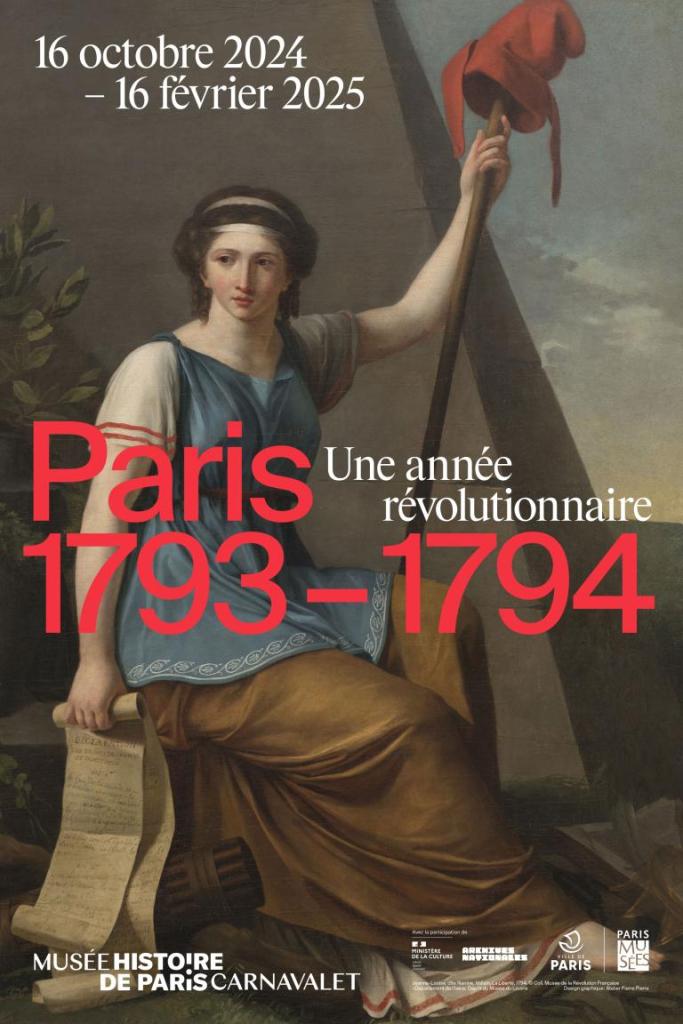 For the first time, the Musée Carnavalet – Histoire de Paris, renowned for its collections on the French Revolution, will single out one key year in the revolution—without a doubt the most complex: ‘Year II’ of the Republican calendar, covering the period from 22 September 1793 to 21 September 1794.
1789, the year of the Storming of the Bastille and The Declaration of the Rights of Man and of the Citizen, is often considered to be the glorious year of the Revolution and even to embody the French Revolution in its entirety. It is the year during which Paris established itself as the capital of the Enlightenment and Revolutions. But compared to the clarity of ’89’, ’93’ appears much darker and thornier. As it was just coming to an end, this long political year spanning from the spring of 1793 to the summer of 1794 had already found a name: the ‘Terror’. Fabricated for political reasons, the word points to the authoritarian transition that the republican regime had undergone. And yet, the years 1793–94 are also the years that some, confident in their ability to reinvent history, called ‘Year II’: a year defined by its breaking with the past and its revitalising of revolutionary utopias. The exhibition is a collection of more than 250 works of all kinds: paintings, sculptures, objects of decorative arts, historical and memorial objects, wallpaper, posters, pieces of furniture… And all translate collective histories and incredible individual fates. These varied objects reveal a context imbued with collective fears and state violence, but also with extraordinary daily activities, feasts, and celebrations.
Paris, 1793–1794: Une année révolutionnaire (Paris Musées, 2024), 224 pages, ISBN: 978-2759605903, €39.
Scientific commission
• Valérie Guillaume, director of the Musée Carnavalet – Histoire de Paris
• Philippe Charnotet, assistant curator and head of the numismatic collection at the Musée Carnavalet
• Anne Zazzo, chief curator, head of the historical and memorial objects collection at the Musée Carnavalet
Scientific committee
• Jean-Clément Martin, professor emeritus of History of the French Revolution at the University Paris I
– Panthéon-Sorbonne
• Alain Chevalier, director of the Musée de la Révolution Française – Domaine de Vizille
• Aurélien Larné, archivist at the Ministry of Justice – Department of the Archives, Documentation and Cultural Heritage
• Marisa Linton, professor of Modern History at the University of Kingston – London
• Guillaume Mazeau, senior lecturer of Modern History at the Université Paris I – Panthéon-Sorbonne
• Allan Potofsky, professor of Modern History at the Université Paris-Cité
• Charles Eloi Vial, curator of the Libraries for the Department of Manuscripts at the Bibliothèque Nationale de France
◊ ◊ ◊ ◊ ◊
Note (added 7 July 2025)— The posting was updated to include the second venue, the Musée de la Révolution française, where the exhibition is titled 1793–1794: Un Tourbillon Révolutionnaire.
Exhibition | Figures of the Fool
Opening next month at the Louvre:
Figures of the Fool: From the Middle Ages to the Romantics
Musée du Louvre, Paris, 16 October 2024 — 3 February 2025
Curated by Élisabeth Antoine-König and Pierre-Yves Le Pogam
 Fools are everywhere. But are the fools of today the same as the fools of yesteryear? This fall, the Musée du Louvre is dedicating an unprecedented exhibition to the myriad figures of the fool, which permeated the pictorial landscape of the 13th to the 16th centuries. Over the course of the Middle Ages and the Renaissance, the fool came to occupy every available artistic space, insinuating himself into illuminated manuscripts, printed books and engravings, tapestries, paintings, sculptures, and all manner of objects both precious and mundane. His fascinating, perplexing and subversive figure loomed large in the turmoil of an era not so different from our own.
The exhibition examines the omnipresence of fools in Western art and culture at the end of the Middle Ages, and attempts to parse the meaning of these figures, who would seem to play a key role in the advent of modernity. The fool may make us laugh, with his abundance of frivolous antics, but he also harbours a wealth of hidden facets of an erotic, scatological, tragic or violent nature. Capable of the best and of the worst, the fool entertains, warns or denounces; he turns societal values on their head and may even overthrow the established order.

Francisco José de Goya y Lucientes, Yard with Madmen, 1794 (Dallas: Meadows Museum).
Within the newly renovated Hall Napoléon, this exhibition, which brings together over 300 works from 90 French, European and American institutions, brings us on a one-of-a-kind journey through Northern European art (English, Flemish, Germanic, and above all French), illuminating the profane aspects of the Middle Ages and revealing a fascinating era of surprising complexity. The exhibition explores the disappearance of the figure of the fool with the Enlightenment and the triumph of reason, and its resurgence at the end of the 18th century and all throughout the 19th. The fool then became a figure with which artists identified, wondering: ‘What if I were the fool?’
The exhibition is curated by Élisabeth Antoine-König, Senior Curator in the Department of Decorative Arts, and Pierre-Yves Le Pogam, Senior Curator in the Department of Sculptures, Musée du Louvre.
With the support of the Cercle des Mécènes du Louvre, the Fondation Etrillard and the New York Medieval Society.
Élisabeth Antoine-König and Pierre-Yves Le Pogam, eds., Figures du Fou: Du Moyen Âge aux Romantiques (Paris: Musée du Louvre éditions / Gallimard, 2024), 448 pages, ISBN: 978-2073073037, €45.
Exhibition | An Actor with No Lines — Pierrot

Watteau, Pierrot, also known as Gilles, detail, ca. 1718–19, oil on canvas, 1.84 × 1.56 meters
(Paris: Musée du Louvre).
◊ ◊ ◊ ◊ ◊
This exhibition opens in October at The Louvre in conjunction with the The Fool . . .
A New Look at Watteau: An Actor with No Lines — Pierrot, Known as Gilles
Musée du Louvre, Paris, 16 October 2024 — 3 February 2025
Curated by Guillaume Faroult
Watteau’s Pierrot, formerly known as Gilles, is one of the most famous masterpieces in the Louvre’s collection. This enigmatic work, which has long raised questions for art historians, is currently undergoing conservation treatment at the Centre for Research and Restoration of the Museums of France, after which time it will be the focus of a spotlight exhibition.

Louis Crépy after Antoine Watteau, Self-Portrait (Paris: Bibliothèque nationale de France).
Nothing is known about the painting before it was discovered by the artist and collector Dominique Vivant Denon (1747–1825), Director of the Louvre under Napoleon. It soon came to be regarded as a Watteau masterpiece and garnered praise from renowned writers and art historians. It has often been seen as reflecting a certain image of the 18th century—mischievous, cynical, or melancholy, depending on the author and the era. Its fame boosted the return to favour of 18th-century art in the age of Manet and Nadar.
The exhibition will present the findings of the conservation project, approaching this wholly original work—whose attribution to Watteau has sometimes been questioned—both as part of the artist’s oeuvre and in the cultural and artistic context of the time. Alongside many other paintings and drawings by Watteau, there will be works by his contemporaries: painters, draughtsmen, engravers (Claude Gillot, Antoine Joseph Pater, Nicolas Lancret, Jean Baptiste Oudry, Jean Honoré Fragonard, etc.), and writers (Pierre de Marivaux, Alain-René Lesage, JeanFrançois Regnard, Evaristo Gherardi), with special emphasis on the rich theatrical repertoire of the time.
As soon as the painting entered the Louvre in 1869, via the bequest of Louis La Caze (1798–1869), it became a favourite with generations of viewers. Its powerful appeal is partly due to its outstanding quality, but also to its originality for the period and to the mystery surrounding its production.
The exhibition will also explore the painting’s rich and varied critical reception and its far-reaching artistic legacy. This powerful, enigmatic image has greatly inspired French writers, including Théophile Gautier, Charles Baudelaire, Paul Verlaine, George Sand, the Goncourt brothers, and Jacques Prévert. The painting has also influenced photographers, filmmakers, and musicians (Nadar, Marcel Carné, Arnold Schoenberg), as well as visual artists (Edouard Manet, Gustave Courbet, Pablo Picasso, André Derain, Juan Gris, James Ensor, Georges Rouault, and Jean-Michel Alberola), driving them to new creative heights.
The show will explore the fascinating conversations between these great creative minds and Watteau’s enigmatic painting, even as it resonates harmoniously with the Figures of the Fool exhibition scheduled for the same dates in the Hall Napoléon.
Guillaume Faroult, Revoir Watteau: Un comédien sans réplique. Pierrot, dit le Gilles (Musée du Louvre Éditions and Liénart Éditions, 2024), 240 pages, €40.
Exhibition | André Charles Boulle
Closing soon at the Musée Condé:
André Charles Boulle
Musée Condé, Château de Chantilly, 8 June — 6 October 2024
Curated by Mathieu Deldicque, with Sébastien Evain and William Iselin

Writing Table of the Prince of Condé, long-term lease from the Château de Versailles to the Condé Museum (RMN-Grand Palais / A. Didierjean)
The collection of the Condé Museum in Chantilly features two desks by one of the greatest French cabinetmakers of all time, André Charles Boulle. From June to October 2024, the Grands Appartements of the Princes of Condé at the Château de Chantilly will host the first-ever exhibition in France to explore Boulle’s life and work.
The show brings together this ingenious designer’s most significant pieces, commissioned by the most illustrious patrons in France—the King, the Grand Dauphin, the Prince of Condé, and the Duchess of Burgundy—in a celebration of French furniture-making excellence, its techniques, and unrivalled grace. The life and long career of André Charles Boulle (1642–1732) need little introduction. Cabinetmaker, artist, and artisan, Boulle worked for the Bâtiments du roi, the department of the King’s Household responsible for building works, for more than half a century, and he and his workshop produced pieces for the Royal Family and the French nobility. He achieved high technical perfection, particularly in metal-and-tortoiseshell marquetry, which he raised to new heights. An ingenious bronzesmith, Boulle established the use of gilt-bronze in furniture and gave his creations a unique look. He was also a curious collector and a talented draughtsman who took pains to bring his production to a broader audience, notably through engravings. Synonymous with the sumptuousness of French art under Louis XIV, he achieved recognition in his lifetime, and his name has been celebrated ever since.
André Charles Boulle was a leading figure in the development of French furniture in the late 17th and early 18th centuries. Besides the commode, one of his most influential designs at the end of Louis XIV’s reign was the flat-topped writing table (bureau plat). Besides producing desks on six legs and desks with several drawers on each side supported by eight legs, Boulle invented a new type of desk, with a single row of three drawers in the frieze, resting on four legs. This flat writing table made his reputation, and brass-and-tortoiseshell marquetry, rich gilt-bronze mounts, and slender, curved shapes became the hallmark of elegance in furniture and the ultimate symbol of power. They were produced in increasingly large numbers from the second decade of the eighteenth century until the early years of the Régence. The innovations made by Boulle defined the shape of the French writing table for more than half a century.
The exhibition charts developments in desk design, shape, and decoration through a large and varied display of desks by Boulle, each with a long-established provenance. Furniture with ‘part’ and ‘counterpart’ marquetry is presented side by side in a way that reveals their beauty and helps visitors learn more about them. Key pieces produced by the same workshop will complete this fascinating survey and put this unparalleled production into its broader context. Bookcases, consoles, stands, torchères, caskets, chandeliers, medal cabinets, and bookbindings—all of illustrious provenance—remind us of this ingenious artist’s versatile talent and creativity.
The exhibition is curated by Mathieu Deldicque, Lead Heritage Conservator, Director of the Conde museum, in collaboration with Sébastien Evain, conservator and independent expert, a specialist in French 18th-century furniture and objets d’art, and William Iselin, an expert in French 18th-century furniture and objets d’art. In partnership with the Château de Versailles, the Château de Vaux-le-Vicomte, and the Bibliothèque nationale de France.
Mathieu Deldicque, ed., André Charles Boulle (Saint-Rémy-en-l’Eau: Éditions d’art Monelle Hayot, 2024), 304 pages, ISBN: 979-1096561452, €39.
New Book | Réseaux et académies d’art au Siècle des lumières en province
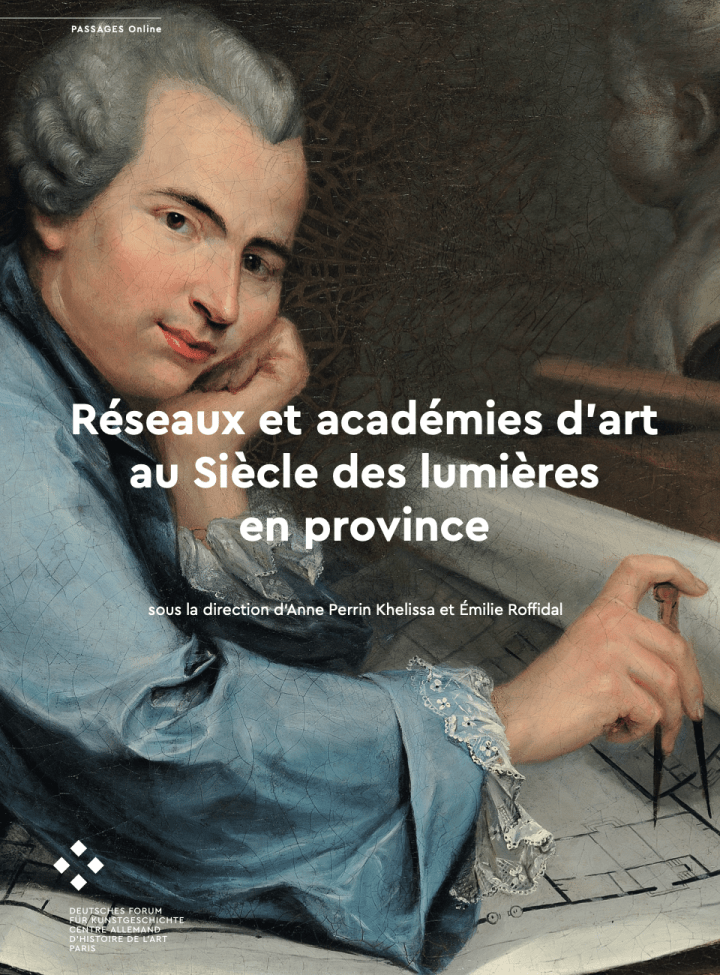
We are delighted to announce the publication of Réseaux et académies d’art au Siècle des lumières en province by Editions de l’Université d’Heidelberg, a partnership between the Université de Toulouse Jean Jaurès and the Deutsches Forum für Kunstgeschichte. The book is the result of seven years of research conducted by the ACA-RES program (Les académies d’art et leurs réseaux dans la France préindustrielle), giving rise to several study days and publications, a vast archival and digital survey, a virtual exhibition, and a concluding colloquium on the theme of circulations, as well as numerous collaborations between universities, museums, and researchers from diverse horizons. To celebrate, there will be a presentation of the book followed by a drinks reception on Wednesday, October 16, starting at 6pm at the Centre allemand d’histoire de l’art (45 rue des Petits Champs).
–Anne Perrin Khelissa and Émilie Roffidal
The full volume is available for free here»
Anne Perrin Khelissa and Émilie Roffidal, eds., Réseaux et académies d’art au Siècle des lumières en province (Heidelberg: arthistoricum.net-ART-Books, 2024), 428 pages, ISBN: 978-3985010790 (hardcover) / ISBN: 978-3985010783 (PDF).
c o n t e n t s
Remerciements
 Introduction générale
• Anne Perrin Khelissa, Émilie Roffidal — Le progrès par les arts : l’émergence du phénomène académique
Partie I | Dynamique des réseaux interpersonnels et interinstitutionnels
• Anne Perrin Khelissa, Émilie Roffidal — Introduction
• Lesley Miller — L’École gratuite de dessin et la production textile à Lyon au XVIIIe siècle : réévaluer l’utilité et l’application d’un enseignement
• Hélène Rousteau-Chambon — L’école de dessin de Nantes, un creuset pour les architectes ?
• Stéphanie Trouvé — Les cercles académiques bordelais dans la trajectoire du peintre Pierre Lacour (1745–1814)
• Catherine Voiriot — Les femmes académiciennes en province : l’exemple de l’Académie de peinture et de sculpture de Marseille
• Joëlle Raineau-Lehuédé — Nicolas Ponce (1746–1831) : la trajectoire d’un graveur au sein des académies de province
• Maël Tauziède-Espariat — Les artistes de Paris et les écoles de dessin provinciales au XVIII e siècle : les cas de Bordeaux, Reims et Rouen
• Gaëtane Maës — Enseignement du dessin et perspectives transnationales : réflexions à partir du cas de Jean-Baptiste Descamps (1715–1791)
Partie II | Mobilité des collections et des savoirs artistiques
• Anne Perrin Khelissa, Émilie Roffidal — Introduction
• Flore César — Les collections des écoles de dessin et des académies d’art en province : entre intentions et institutionnalisation
• Pierre Marty — Expositions de peintures et académies artistiques provinciales : vers une structuration du marché de l’art
• Nelly Vi-Tong — Les collections pédagogiques des établissements de Reims, Valenciennes et Dijon
• Tara Cruzol — Le traité de sculpture d’Antoine-Michel Perrache (1726–1779) à Lyon, ou la culture d’un professeur
• Fabienne Sartre — Le « ciseau statuaire » et la sculpture académique à l’épreuve du terrain. L’expérience montpelliéraine (1770-1800)
• Catherine Isaac — Le rôle des académies des sciences et des arts dans la création et l’essor du corps des ingénieurs du Languedoc
• Marion Amblard — Des arts manufacturés aux beaux- arts : l’importance des modèles romains et français dans le développement des académies écossaises
• Anne Perrin Khelissa, Émilie Roffidal — Conclusion générale | Entre utopie et réalité des arts : de l’échelle régionale à l’échelle mondiale
• Pierre-Yves Beaurepaire — Ouverture | Historiographie et linéaments des sociabilités des Lumières
Notices historiques des académies d’art
Carte des principales villes avec une école de dessin ou une académie d’art
Sources manuscrites, imprimées et visuelles des académies d’art
Liste des publications ACA-RES
Bibliographie générale
Index
Crédits photographiques
◊ ◊ ◊ ◊ ◊
Note (added 11 September 2024) — The original posting mistakenly gave the reception date as Thursday, October 17. It has been corrected above as Wednesday, October 16.
Print Quarterly, September 2024
The long eighteenth century in the latest issue of Print Quarterly:
Print Quarterly 41.3 (September 2024)
a r t i c l e s
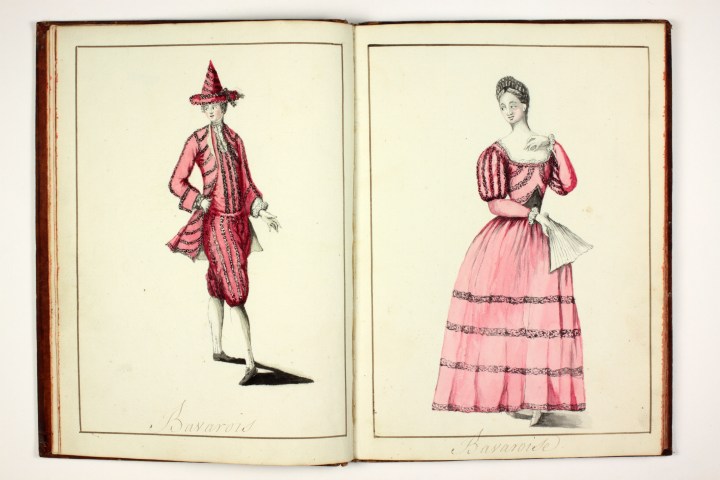
Anonymous artist, A Bavarian Man and A Bavarian Woman, ca. 1759, watercolour, 269 × 190 mm (Welbeck, Nottinghamshire: Welbeck Abbey).
• Derek Adlam and Maureen Cassidy-Geiger, “The Duke of Portland’s Album of Masquerade Costumes Worn in Warsaw in 1759”, pp. 268–84.
This article examines an album of watercolours in the library of the Dukes of Portland at Welbeck Abbey near Worksop, Nottinghamshire, depicting costumed figures and the print sources that inspired them. Seemingly related to the Polish masked balls and banquets mounted in Warsaw on 26 and 27 February 1759 by Jerzy August Mniszech (1715–78), King August III, the album is closely related to imagery seen in Abraham a Sancta Clara’s Neu-eröffnete Welt-Galleria (Nuremberg, 1703), among others, listed in an Appendix at the end of the article. Its commission and creator remain unknown.
n o t e s a n d r e v i e w s
• Daniel Godfrey, Review of Anna Marie Roos, Martin Lister and his Remarkable Daughters: The Art of Science in the Seventeenth Century (Bodleian Library, 2019), pp. 313–16.
• Antoinette Friedenthal, Review of Erminia Gentile Ortona, Le Lettere di Pierre-Jean Mariette ‘Eccellente nella Intelligenza delle Tre Arti’ a Giovanni Gaetano Bottari. Il Codice 1606 (32-E-27) della Biblioteca dell’Accademia Nazionale dei Lincei e Corsiniana (Bardi Edizioni and Accademia Nazionale dei Lincei, 2022), pp. 316–19.

Letitia Byrne, Title-Page to the series ‘Animals’, 1795, etching, 145 × 181 mm (London: British Museum).
• Andaleeb Badiee Banta, Review of Artemis Alexiou and Rose Roberto, eds., Women in Print 1: Design and Identities (Peter Lang, 2022) and Caroline Archer-Parré, Christine Moog and John Hinks, eds., Women in Print 2: Production, Distribution and Consumption (Peter Lang, 2022), pp. 319–20.
• Antony Griffiths, Review of Nigel Tattersfield, Dealing in Deceit: Edwin Pearson of the ‘Bewick Repository Bookshop’, 1838–1901 (The Bewick Society, 2020), pp. 320–21.
• Suzanne Boorsch, Review of Arianna Quaglio, Linda Schädler and Patrizia Keller, eds., From Albrecht Dürer to Andy Warhol: Masterpieces from the Graphische Sammlung ETH Zürich (MASI Lugano and Graphische Sammlung ETH Zürich, 2023) and Elizabeth Nogrady and Alyx Raz, eds., Making & Meaning: The Frances Lehman Loeb Art Center / Vassar College (Hirmer, 2023), pp. 327–30.
• Rena Hoisington, Review of Edouard Kopp, Elizabeth Rudy and Kristel Smentek, eds., Dare to Know: Prints and Drawings in the Age of the Enlightenment (Harvard Art Museums, 2022), pp. 346–50.
• Tim Clayton, Review of Allison Stagg, Prints of a New Kind: Political Caricature in the United States, 1789–1828 (Pennsylvania State University Press, 2023), pp. 351–54; recipient of Ewell L. Newman Book Award from the American Historical Print Collectors Society.
b o o k s r e c e i v e d
• Clarissa von Spee and Yiwen Liu, eds., China’s Southern Paradise: Treasures from the Lower Yangzi Delta (Cleveland Museum of Art, 2024), pp, 340–41.
• Iris Brahms, ed., Marginale Zeichentechniken: Pause, Abklatsch, Cut&Paste als ästhetische Strategien in der Vormoderne (De Gruyter, 2022), p. 341. The book explores ‘marginal drawing practices’ through a collection of essays focusing on works on paper from the sixteenth to eighteenth centuries.










 Enfilade
leave a comment