Courtly Frames in Munich
From The Art Newspaper:
The Art of the Frame: Exploring the Holdings of the Alte Pinakothek
Alte Pinakothek, Munich, 28 January — 18 April 2010

Johann Christian Sperling, "Markgraf Karl Wilhelm Friedrich von Brandenburg-Ansbach as a 13-year-old Boy," 1726, frame by Cuvilliés, 1755
The Alte Pinakothek was a pioneer in exhibitions devoted to picture frames and framing when it showed Italian Frames from the 14th to the 18th Centuries in 1976. Now the museum resumes its investigations with this more closely focused exhibition that presents ‘court’ frames dating from between 1600 and 1850. In the baroque period, frames were made by cabinetmakers rather than woodcarvers or sculptors as was the case elsewhere.
The majority of frames were made of ebony or ebonised wood with wave and ripple ornaments referred to as flammleisten—flame moulding—alluding to the effect caused by the flickerings of candlelight on the broad, black surfaces. The most significant change came with the return of the Elector Maximilian II Emanuel from exile in the Netherlands and France in 1715, with his architect Joseph Effner. Vast, three-dimensional sculptural frames with a range of gold leaf were used for the display of ceremonial scenes, portraits and old masters.
Effner was succeeded as court architect by François de Cuvilliés, the central figure in Munich of the pan-German enthusiasm for the rococo, the taste for which lasted up to 1780 (shown here, Johann Christian Sperling, Markgraf Karl Wilhelm Friedrich von Brandenburg-Ansbach as a 13-year-old Boy, 1726; frame by Cuvilliés, 1755).
 In 1779 Carl Albert von Lespilliez was commissioned to frame the Electoral picture collection in the Hofgarten Galerie which he did using the up-to-date neo-classical frame, with leaf, frieze, beading and scotia. The Napoleonic wars spelled the end of the craftsman-made frame along with other luxury items, and the Industrial Revolution ushered in the period of mass-produced products. . .
For the full article click here»
◊ ◊ ◊ ◊ ◊
As noted in a press release for the exhibition, there is an accompanying catalogue, edited by the show’s curator, Helge Siefert, Rahmenkunst: Auf Spurensuche in der Alten Pinakothek (Munich: Prestel, 2010), ISBN: 9783775726061
New Book on the Dilettanti
Jason Kelly, The Society of Dilettanti: Archaeology and Identity in the British Enlightenment (London: Paul Mellon Centre for Studies in British Art, 2010), 9780300152197, $75.
 In 1732, a group of elite young men, calling themselves the Society of Dilettanti, held their first meeting in London. The qualification for membership was travel to Italy where the original members had met each other on the grand tour. These noblemen’s youthful indulgences while on the Continent and upon their return to London were often topics of public discussion, and ribald and licentious tales about the group circulated in the press. Originally formed as a convivial dining society, by the middle of the eighteenth century the Dilettanti took on an influential role in cultural matters. It was the first European organization fully to subsidize an archaeological expedition to the lands of classical Greece, and its members were important sponsors of new institutions such as the Royal Academy and the British Museum. The Society of Dilettanti became one of the most prominent and influential societies of the British Enlightenment. This lively and illuminating account, based on extensive archival research, is the most detailed analysis of the early Society of Dilettanti to date. Not simply an institutional biography, three themes dominate this history of the Dilettanti: eighteenth-century debates over social identity; the relationships between aesthetics and archeology; and the meanings of natural philosophy. Connecting the world of the grand tour to the sociable masculinity of London’s taverns, this book reveals that the trajectory of British classical archeology was as much a consequence of shifting notions of politeness as it was a product of antiquarian discoveries and elite tastes. The book places the Society of Dilettanti at the complex intersection of international and national discourses that shaped the British Enlightenment, and, thus, it sheds new light on eighteenth-century grand tourism, elite masculinity, sociability, aesthetics, architecture and archeology.
Note: — The book is not available in the U.S. until February, but I saw a copy a few days ago while browsing in Galignani, just across the street from the Louvre (I’m here in Paris, teaching a two-week January term). I’m glad to report that it’s stunning — and high on my wish list (I’m afraid I’m already returning with too many books to fit this one into my suitcase, and the pre-order price at Barnes & Noble or Amazon is especially attractive). –C.H.
Built by Numbers
This exhibition was on view at Oxford’s Museum of the History of Science last summer; it opens at the YCBA in February. The following description comes from the latter’s website:
Compass & Rule: Architecture as Mathematical Practice in England, 1500-1750
Museum of the History of Science, Oxford, 16 June — 6 September 2009
Yale Center for British Art, New Haven, 18 February — 30 May 2010

Catalogue edited by Anthony Gerbino and Stephen Johnston (New Haven: Yale University Press, 2009)
The spread of Renaissance culture in England coincided with the birth of architecture as a profession. Identified as a branch of practical mathematics, architecture became the most artistic of the sciences and the most scientific of the arts. During this time, new concepts of design based on geometry changed how architects worked and what they built, as well as the intellectual status and social standing of their discipline.
Compass & Rule examines the role of mathematics in architectural design and building technology, highlighting the dramatic transformation of English architecture between the sixteenth and eighteenth centuries. The exhibition brings together some of the finest architectural and scientific material from the early modern period, including drawings of St. Paul’s Cathedral, an astrolabe commissioned for Queen Elizabeth I, and architectural drawings by King George III. Also on view will be nearly one hundred drawings, paintings, printed books and manuscripts, maps, and other unique mathematical instruments that illustrate the changing role of both the architect and the profession 1500 to 1750.
An illustrated catalogue edited by exhibition curators Anthony Gerbino, architectural historian and Senior Research Fellow of Worcester College, University of Oxford, and Stephen Johnston, Assistant Keeper at the Museum of the History of Science, University of Oxford, will accompany the exhibition.
In the Latest ‘Art Bulletin’
The December issue of The Art Bulletin 91 (2009) includes the following items addressing the eighteenth century:
Emma Barker, “Imaging Childhood in Eighteenth-Century France: Greuze’s Little Girl with a Dog,” pp. 426-45.
Author’s Abstract: “During the artist’s lifetime, A Child Playing with a Dog was one of Jean-Baptiste Greuze’s most admired and best-known works. The painting represent the physical, instinctual nature of the child in a manner unprecedented in French art. The image of childhood that it offers has close parallels in the scientific and medical discourse of the later eighteenth century. Like many contemporary commentators, Greuze evokes not simply the innocence of children but also their vulnerability, above all, that of little girls. He thereby implicates the viewer in the child’s fate, both for good and ill.”
Meredith Martin, review of Diplomatic Tours in the Gardens of Versailles under Louis XVI by Robert Berger and Thomas Hedin (University of Pennsylvania Press, 2008)) and Carmontelle’s Landscape Transparencies: Cinema of the Enlightenment by Laurence Chatel de Brancion (J. Paul Getty Museum, 2008), pp. 511-15.

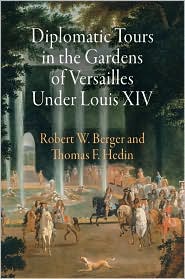 “Both Diplomatic Tours and Carmontelle’s Landscape Transparencies attempt to shed light on an underexplored aspect of French gardens and how they were portrayed in the ancien régime. As in a growing number of garden history books, the authors foreground questions of reception and use and treat these landscapes as a dynamic field of social relations — in other words, as a contested terrain. Both books also share an inclination to animate the garden as a kinetic experience by way of descriptive texts and visual images. . .” (512).
Canaletto’s Venice
From the Ringling Museum website:
Venice in the Age of Canaletto
John and Marble Ringling Museum of Art, Sarasota, 8 October 2009 — 10 January 2010
Brooks Museum of Art, Memphis, February 14 — 9 May 2010
Curated by Stanton Thomas and Alexandra Libby

Edited by Alexandra Libby and Stanton Thomas (Prestel) ISBN: 978-3791380001, $60
Venice in the Age of Canaletto is a collaborative project between The John and Mable Ringling Museum of Art and the Memphis Brooks Museum of Art that will consider Giovanni Antonio Canal, called Canaletto in a Venetian context. In particular, it focuses upon the contrast between the artist’s paintings and the works of his contemporaries also active in the city. Canaletto’s vedute, or view paintings, were arguably the most familiar artistic products of eighteenth-century Venice; yet, for all their ability to reproduce immediately recognizable views of the city, they are curiously devoid of the exuberance, sensuality, and rich coloring of most Venetian art of the period. When Canaletto’s paintings are compared with the works of Giambattista Tiepolo, Francesco Guardi, and Sebastiano Ricci, they are revealed as beautiful but rather anomalous creations. The exhibition explores the strange tension that exists between Canaletto’s austere, seemingly realistic cityscapes and the exuberant, pastelline fantasies, religious pictures, and historical dramas of the Venetian Rococo.
Venice in the Age of Canaletto considers a span of approximately 100 years, beginning in 1697, the year of the artist’s birth, and ending in 1797, the year that Napoleon invaded the city and brought the Venetian Republic to an end. This period captures the fascinating social, religious, political, and artistic evolution that precipitated the end of the Republic. The exhibition focuses upon a time when Venice, perhaps more than any other European city, cultivated an elusive civic image of pleasure, fantasy, and escapism. (more…)
Forthcoming: Book on the Met’s Wrightsman Galleries
A book detailing the Met’s recently renovated Wrightsman Galleries for French Decorative Arts is scheduled to appear this spring from Yale University Press:
Daniëlle Kisluk-Grosheide and Jeffrey Munger, The Wrightsman Galleries for French Decorative Arts (New Haven: Yale University Press, April 2010), 228 pages, ISBN: 9780300155204, $50

Photo from the blog, 'Marie Antoinette's Gossip Guide to the 18th Century' (click to visit)
The Metropolitan’s holdings of late 17th- and 18th-century French decorative arts, unrivaled outside Europe, are on display in nine magnificent paneled period rooms and three galleries. This suite of spaces is named for Mr. and Mrs. Charles Wrightsman, whose extraordinary generosity made the installations possible and who also donated many of the furnishings from their own celebrated collection. The first book on the Wrightsman Galleries since 1979, this beautifully illustrated volume presents detailed descriptions of the period rooms and 116 of the most important artworks on view, including wood paneling and furniture, chimneypieces and fireplace furnishings, textiles and leather, portraits, gilt bronze, porcelain, silver, and decorative boxes, many of which have a royal provenance. The text incorporates the results of recent research and conveys the illuminating comments of contemporaries as expressed in diaries, travel guides, craft manuals, and correspondence.
Daniëlle Kisluk-Grosheide and Jeffrey Munger are curators in the Metropolitan Museum’s Department of European Sculpture and Decorative Arts. (more…)
A Christamas Toast: To Handel

Ed. by Donald Burrows and Rosemary Dunhill (Oxford University Press, 2002)
‘I was much pleased this year with our exhibitions, and though I fear we shall never overtake Italy, ‘tis some praise that we begin to think, that, both in painting and in music, tis worth following’.
–James Harris in Salisbury to William Hamilton in Naples, 15 September 1774 (BL Add MS 42069, folios 94-5)
I’m not sure about the specific items included in the exhibition now on display at the Handel House Museum in London, but the book detailing the Harris collection of manuscripts is certainly fascinating. In assessing the volume for the English Historical Review 118 (April 2003): 446-48, William Weber suggests that
the letters and diaries of James Harris, his family and friends, between 1732 and 1780 take us close into the life of England’s elites, from theatres and assembly rooms in Salisbury, to concerts at Almack’s or the King’s Theatre in Westminster, and to court life in Spain, Germany, and Poland as seen through a diplomat’s eyes. Browsing through the 1068 pages of carefully annotated documents instils a highly nuanced sense of how such
people lived, and what music meant to them.

Handel House Museum, 25 Brook Street (Photo: Wikimedia Commons)
◊ ◊ ◊ ◊ ◊
From the museum’s website:
Mr Handel’s Friends
Handel House Museum, London, 10 November 2009 — 28 February 2010
Curated by Donald Burrows and Rosemary Dunhill
Handel had many friends and admirers in London who collected, played and promoted his music, entertained him in their homes, and supported him in difficult times. Through the private letters and diaries of the Harris family this exhibition explores these relationships and shows the many sides of the famous composer’s character and fortunes.
◊ ◊ ◊ ◊ ◊
And if the holiday season has the Messiah running through your head, then you might enjoy Jonathan Kandell’s profile in The Smithsonian Magazine. In
the eighteenth century, the oratorio wasn’t tied to Christmas but was a feature
of the annual concerts held to benefit the Foundling Hospital (another
outstanding small museum in London). 2009 marks the 250th anniversary of
Handel’s death.
–Craig Hanson
A Glimpse of Sun for the French Winter
From the website of Versailles:
Louis XIV: The Man and the King
Château de Versailles, 20 October 2009 — 7 February 2010
Curated by Nicolas Milovanovic and Alexandre Maral
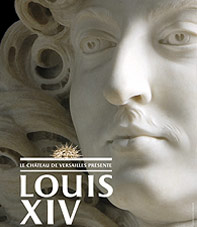 For the first time, a major exhibition is devoted to Louis XIV, the king’s personality, his personal tastes. This exhibition, Louis XIV: The Man and the King, brings together more than 300 exceptional works coming from collections all over the world and never shown together before. Paintings, sculptures, objets d’art and furniture will be exhibited. These masterpieces, some of which have never been presented in France since the days of the Ancien Régime, will enable visitors to get to know the famous monarch better in both his personal tastes and through his public image.
The King’s Public Image
The richness of the image of Louis XIV has no precedent in history: Louis XIV is the Sun King, i.e. Apollo as the sun god. Fashioned by the king himself and his counsellors, this image constantly evolved to convey emblematic figures of the royal power: the king of war leading his troops, the patron king and protector of the arts, the very Christian king and Defender of the Church, the king of glory, an image constructed for posterity. This visible glory, given mythical proportions, which was constructed during his lifetime, took shape thanks to the excellence of the artists chosen, such as Bernini, Girardon, Rigaud, Cucci, Gole, Van der Meulen and Coysevox who set out to sublimate the royal portrait, which the exhibition allows the visitors to rediscover.
The King’s Taste
He saw himself as a king who was the protector of the arts and a collector, competing with other sovereigns of Europe who were also genuine connoisseurs. Benefiting from the example of Mazarin, Louis XIV formed his taste in direct contact with artists, and through the personal relations that he established with them: Le Brun and Mignard in painting, Le Vau and Hardouin-Mansart in architecture, Le Nôtre in the art of gardens, Lully in music, and Molière in theatre. By assembling the works appreciated by the king, a genuine portrait emerges of a passionate lover of the arts and a man of good taste through the jewels, cameos, medals, miniatures and objets d’art, as well as the paintings and sculptures that he loved to surround himself within the Petit Appartement in Versailles.
Accompanying the show is a tapestry exhibition, Royal Pomp, Louis XIV’s Tapestry Collection, at the Gobelins Gallery in Paris.
◊ ◊ ◊ ◊ ◊
Reviews and notices of the exhibition can be found at Newsweek, the Telegraph, and The New York Times. The catalogue, Louis XIV, l’homme et le roi (Skira-Flammarion, 2009; ISBN: 9782081228108) is available through Michael Shamansky’s artbooks.com.
New & Forthcoming Books
Here’s a selection of new titles from the December 15th issue of the Michael Shamansky catalogue. Shamansky – online as artbooks.com – specializes in monographs, guides, and exhibition catalogues imported from European publishers.
◊ ◊ ◊ ◊ ◊
 Item #104324 – Mary Sheriff, ed., Cultural Contact and the Making of European Art since the Age of Exploration (Chapel Hill: University of North Carolina Press, 2010), ISBN: 9780807833667, $35.
Art historians have long been accustomed to thinking about art and artists in terms of national traditions. This volume takes a different approach, suggesting instead that a history of art based on national divisions often obscures the processes of cultural appropriation and global exchange that shaped the visual arts of Europe in fundamental ways between 1492 and the early twentieth century. Essays here analyze distinct zones of contact–between various European states, between Asia and Europe, or between Europe and so-called primitive cultures in Africa, the Americas, and the South Pacific–focusing mainly but not exclusively on painting, drawing, or the decorative arts. Each case foregrounds the centrality of international borrowings or colonial appropriations and counters conceptions of European art as a “pure” tradition uninfluenced by the artistic forms of other cultures. The contributors analyze the social, cultural, commercial, and political conditions of cultural contact–including tourism, colonialism, religious pilgrimage, trade missions, and scientific voyages–that enabled these exchanges well before the modern age of globalization. Contributors include: Claire Farago, Elisabeth A. Fraser, Julie Hochstrasser, Christopher Johns, Carol Mavor, Mary D. Sheriff, and Lyneise E. Williams.
◊ ◊ ◊ ◊ ◊
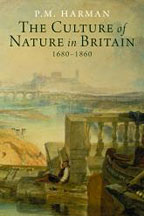 Item #100864 – P. M. Harman, The Culture of Nature in Britain, 1680-1860 (New Haven: Yale University Press, 2009), ISBN: 9780300151978, $65.
This wide-ranging book investigates the emergence of modern ideas about the natural world in Britain from 1680–1860 through an examination of the cultural values common to the sciences, art, literature, and natural theology. During this critical period, spanned by Newtonian science, natural theology, Darwin’s Origin of Species, and Ruskin’s Modern Painters, the fundamental conception of nature and humanity’s place within it changed. P. M. Harman calls for a new understanding of the varied ways in which the British comprehended natural beauty, from the perception of nature as a “design” flowing from God’s creative power to the Darwinian naturalistic aesthetic. Harman connects a variety of differing views of nature deriving from religion, science, visual art, philosophy, and literature to developments in agriculture, manufacturing, and the daily lives of individuals. This ambitious and accessible book represents intellectual history at its best.
◊ ◊ ◊ ◊ ◊
 Item #104097 – Giuseppe Pavanello, ed., Rosalba Carriera, 1673-1757: Atti del convegno 26-28 aprile 2007, Fondazione Cini, Venezia (Verona: Scripta, 2009), ISBN: 9788896162088, $75.
Thanks to the initiatives promoted by the Veneto Region and the Giorgio Cini Foundation through the Regional Committee for the celebrations of the 250th anniversary of the death of Rosalba Carriera (1757-2007), it was possible to render due homage to a painter who rose to be a leading artist on the European scene. This prominent role, highlighted by the exhibition Rosalba Carriera: prima pittrice de l’Europa held in the Palazzo Cini in 2007, has now been emphasised again with the publication of the proceedings of the Conference held at the Giorgio Cini Foundation and in Chioggia in the spring of the same year. The papers in the book cast new light on Rosalba’s activities in the Venetian art world and on the European scene. One specific enquiry was focused on the topic of collecting Rosalba Carriera works, which was dealt with in a conference session and also finds a place in the proceedings. For the first time (and in Italian) the remarkable Dresden collection has been examined and illustrated with exhaustive images as never before. One gem from the Dresden museum, the Portrait of Giambattista Recanati in Abbot’s Dress, was chosen for the cover of the book: the sitter is depicted immersed in thought with a hand over his chest, an allusion to his heart. This ‘portrait in grey’ is a forerunner of the celebrated masterpieces of the late 18th century painted in a single colour tone.
◊ ◊ ◊ ◊ ◊
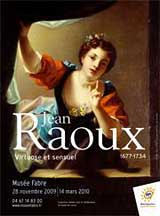 Item #104119 – Jean Raoux, 1677-1734, exhibition catalogue (Paris: Somogy, 2009), ISBN: 9782757202876, $58.95.
Jean Raoux (1677-1734) is, along with Sébastien Bourdon, Joseph-Marie Vien, François-Xavier Fabre and Frédéric Bazille, one of the great French artists born in Languedoc. The painter, a contemporary of Antoine Watteau, actively participated in the revival of French painting during the Regency. Virtuoso, sensual, elegant, Jean Raoux truly merits that his home town dedicates a major exhibition to him. This first-ever retrospective reunites the artist’s most beautiful masterpieces, on loan from the great French museums as well as from collections in Germany, Austria, Italy, Britain, America and Russia. Rarely shown and with prestigious provenance, the paintings in this exhibition reveal the extent of his talent as portraitist of the aristocracy, of the world of performance, of historical and religious subjects, as well as a painter of genre scenes in the Dutch style. His artistry exalts the beauty of women, whether as a mythological heroine or a coquettish woman going about her everyday occupations. This selection highlights the multiple facets of Raoux, famous in his time and highly esteemed by Voltaire.
◊ ◊ ◊ ◊ ◊
 Item #104322 – Philip Conisbee, ed., French Paintings of the Fifteenth through the Eighteenth Century: The Collections of the National Gallery of Art Systematic Catalogue (Princeton: Princeton University Press, 2010), ISBN: 9780691145358, $99.
Georges de La Tour’s haunting depiction of a repentant Mary Magdalen gazing into a mirror by candlelight; Jean Siméon Chardin’s perfectly balanced image of a young boy making a house of cards; Jean Honoré Fragonard’s monumental suite of landscapes showing aristocrats at play in picturesque gardens–these are among the familiar and beloved masterpieces in the National Gallery of Art, which houses one of the most important collections of French old master paintings outside France. This lavishly illustrated book, written by leading scholars and the result of years of research and technical analysis, catalogues nearly one hundred paintings, from works by François Clouet in the sixteenth century to paintings by Élisabeth Louise Vigée Le Brun in the eighteenth. French art before the revolution is characterized by an astonishing variety of styles and themes and by a consistently high quality of production, the result of an efficient training system developed by the traditional guilds and the Royal Academy of Painting and Sculpture, founded in 1648 by King Louis XIV. The National Gallery collection reflects this quality and diversity, featuring excellent examples by all the leading painters: ideal landscapes by Claude Lorrain and biblical subjects by Nicolas Poussin, two artists who spent most of their careers in Rome; deeply moving religious works by La Tour, Sébastien Bourdon, and Simon Vouet; portraits of the grandest format (Philippe de Champaigne’s Omer Talon) and the most intimate (Nicolas de Largillierre’s Elizabeth Throckmorton); and familiar scenes of daily life by the Le Nain brothers in the seventeenth century and Chardin in the eighteenth. The Gallery’s collection is especially notable for its holdings of eighteenth-century painting, from Jean Antoine Watteau to Hubert Robert, and including marvelous suites of paintings by François Boucher and Fragonard. All these works are explored in detailed, readable entries that will appeal as much to the general art lover as to the specialist.
◊ ◊ ◊ ◊ ◊
 Item #104006 — Les Cahiers d’Histoire de l’Art, n.7 (2009), ISBN: 9782953301410, $58.50. Includes:
- S. Gopin / M. Eidelberg, “Jean Baptiste Vanmour 1671-1737 ‘Peintre ordinaire du Roy et en Levant'”
- Y. Jackall “Recovering the work of Marie-Genevieve Bouliar 1763-1825: The invention of self in Revolutionary France”
- M. T. Caracciolo “Jean Baptiste Wicar (Lille, 1762 – Rome, 1834) – Catalogue raisonné des peintures, Premiere partie: peintures historiques et religieuses,” etc.
◊ ◊ ◊ ◊ ◊
Item # 102894 – Edmond and Jules Goncourt, L’Art du XVIIIe siècle, edited and annotated by Jean-Louis Cabanès, 2 vols. (Tusson: De Lerot, 2007), ISBN: 9782355480089, $160.
- Volume I: Watteau, Chardin, Boucher, La Tour, Greuze, Les Saint-Aubin
- Volume II: Gravelot, Cochin, Eisen, Moreau, Debucourt, Fragonard, Prudhon
◊ ◊ ◊ ◊ ◊
Item Number: 104080 — Elena Marenghi, Ignazio Stern: (1679-1748), l’opera di un pittore tedesco in Romagna (Imola: Associazione culturale San Macario, 2007), $77.50.
Tracing Ownership at the British Library
Provenance Research in the British Library
British Library, London, Monday, 25 January 2010, 2:15 pm
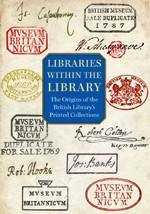 Launch event for the publication of Libraries within the Library: The Origins of the British Library’s Printed Collections, edited by Giles Mandelbrote and Barry Taylor (London: British Library, 2009).
Dispersed along the shelves of the British Library today are many volumes that once stood side by side in private libraries. Libraries within the Library explores some of the most important printed collections which have been brought together within the British Museum Library since its foundation in 1753, casting new light on the individuals whose personal interests and taste they reflect. The launch of this volume will provide an opportunity to hear papers on recent developments in the field.
2.15 Welcome
2.30 David Pearson, “Learning from Collections”
3.00 Alison Walker, “Halfway There? An Update on the Sloane Printed Books Catalogue”
3.20 Phil Harris, “The Old Royal Library and Legal Deposit in the Eighteenth Century”
3.40 Discussion
4.00 Tea
4.30 Stephen Parkin, “Finding and Losing: The Provenance of an Italian Polybius in the British Library”
4.50 John Goldfinch, “A Group of Incunables Collected in the Eighteenth Century”
5.10 David McKitterick, “A View from Cambridge”
5.40 Discussion
6.00 Reception
Attendance is free, but please register your name with Teresa Harrington at the British Library; email: teresa.harrington@bl.uk.










 Enfilade
leave a comment