New Book | Billy Waters is Dancing
From Yale UP:
Mary Shannon, Billy Waters is Dancing: Or, How a Black Sailor Found Fame in Regency Britain (New Haven: Yale University Press, 2024), 384 pages, ISBN: 978-0300267686, $38.
 The story of William Waters, Black street performer in Regency London, and how his huge celebrity took on a life of its own
Every child in Regency London knew Billy Waters, the celebrated ‘King of the Beggars’. Likely born into enslavement in 1770s New York, he became a Royal Navy sailor. After losing his leg in a fall from the rigging, the talented and irrepressible Waters became London’s most famous street performer. His extravagantly costumed image blazed across the stage and in print to an unprecedented degree. For all his contemporary renown, Waters died destitute in 1823—but his legend would live on for decades. Mary L. Shannon’s biography draws together surviving traces of Waters’ life to bring us closer to the historical figure underlying them. Considering Waters’ influence on the London stage and his echoing resonances in visual art, and writing by Douglass, Dickens, and Thackeray, Shannon asks us to reconsider Black presences in nineteenth-century popular culture. This is a vital attempt to recover a life from historical obscurity—and a fascinating account of what it meant to find fame in the Regency metropolis.
Mary L. Shannon is a writer, broadcaster, and senior lecturer in English literature at the University of Roehampton, where her research focuses on nineteenth-century literature and culture. She is author of the award-winning Dickens, Reynolds, and Mayhew on Wellington Street.
Exhibition | The Legacy of Vesuvius
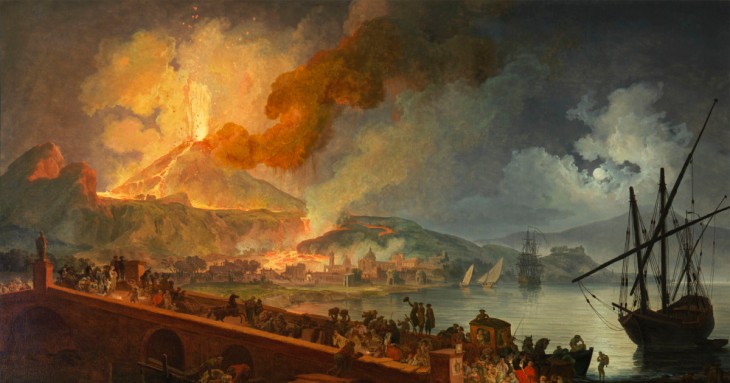
Pierre-Jacques Volaire, Eruption of Mount Vesuvius on the Ponte della Maddalena, 1782, oil on canvas, 129 × 260 cm
(Naples: Museo e Real Bosco di Capodimonte)
◊ ◊ ◊ ◊ ◊
From the press release (8 May) for the exhibition opening this fall:
The Legacy of Vesuvius: Bourbon Discoveries on the Bay of Naples
The Meadows Museum, SMU, Dallas, 15 September 2024 — 5 January 2025
Curated by Michael Thomas, with Heather Bowling and P. Gregory Warden
Set during one of the most dynamic moments in Western history, The Legacy of Vesuvius: Bourbon Discoveries on the Bay of Naples looks at the groundbreaking archaeological excavations sponsored by the Bourbon King Charles VII of Naples—the future king of Spain—and his wife, Maria Amalia, and continued by his son and successor Ferdinand IV, and demonstrates their formative influence on art and thought in the Age of Enlightenment. Comprised of nearly 50 objects, the exhibition’s unique combination of Roman archaeological material from the excavations at Pompeii, Herculaneum, and other sites, mingled with 18th-century paintings, porcelain, and prints—including major loans from Museo e Real Bosco di Capodimonte, Museo Archeologico Nazionale di Napoli, The Metropolitan Museum of Art, and the Wellcome Collection—will provide an exciting introduction to the archaeological treasures of this period and their formative influence on contemporary artistic production. The Meadows Museum, SMU, is the sole venue for the exhibition, which will open on 15 September 2024 and run through 5 January 2025.
“When Mount Vesuvius erupted in 79 CE, in a near instant it preserved the art and material culture of the thriving Roman cities around the Bay of Naples. While these archaeological sites were known in the early modern period, it was thanks to the patronage of the Bourbon monarchs in the 18th century that their systematic excavation was undertaken. The result was nothing short of ‘Roman-mania’ as recently unearthed objects inspired contemporary artistic production, from fashion to furniture, and cemented the Bourbon tastemakers as the force behind Neoclassicism” said Amanda W. Dotseth, the Linda P. and William A. Custard Director of the Meadows Museum. “Upon assuming the throne as Charles III of Spain, the Bourbon monarchs brought their taste, and crucially, their artists with them to Madrid where the archaeological discoveries of Herculaneum and Pompeii inspired new styles and forms in Spanish art, changing it forever. By bringing together ancient artifacts and the 18th-century objects they inspired, this exhibition celebrates the lasting impact of visionary patrons—a fitting subject given the Meadows Museum was itself founded by such a collector with a vision, Algur H. Meadows.”
“We are excited to introduce Dallas to Naples, its connection to Spain, and the profound impact the Bourbon excavations had on the cultural and artistic landscape of 18th- century Europe,” said Michael Thomas, professor and director of the Edith O’Donnell Institute of Art History at The University of Texas at Dallas and the exhibition’s curator. “At its core, this exhibition celebrates the discovery of what is arguably the world’s most famous archaeological site, Pompeii, as well as other ancient sites destroyed by the eruption of Vesuvius in 79 CE. The exhibition captures the innovative vision of Charles and Maria Amalia in the years just before they assumed the Spanish throne. The reigns of Charles and his successor Ferdinand define the ‘Golden Age’ of Naples when the city rose to the forefront of artistic production and cultural influence.”
The Legacy of Vesuvius will unfold across several galleries that define different topics. The exhibition begins with an overview of key historical personalities from the period, emphasizing the royal family’s significant role. Featured prominently in this room are depictions of Charles VII and Maria Amalia, by Francesco Liani, an esteemed Neapolitan artist. A depiction of a youthful Ferdinand by Bourbon court painter Anton Raphael Mengs captures the 8-year old monarch on the occasion of his accession to the throne. Antonio Joli’s landscape painting The Royal Procession of Piedigrotta, seen from the West documents a royal procession that includes Charles and Ferdinand in a gilded carriage set against a panoramic view of the city of Naples, the city at the center of this exhibition.
The next section will showcase finds discovered near the royal palace at Portici which included the ancient city of Herculaneum. These finds include Roman wall paintings, documents cataloging Bourbon finds, as well as 18th-century renditions of ancient artifacts in biscuit porcelain, and 19th-century copies of the famous bronzes from the Villa of the Papyri at Herculaneum. Additionally, a copy of Karl Jakob Weber’s detailed plan of the Villa’s walls, excavation tunnels, and ‘find-spots’, along with excerpts from the Bourbon-commissioned work Le Antichità di Ercolano Esposte (The Antiquities of Herculaneum Exhibited) will be on display.

Flora, from the Villa Arianna, Stabiae, early first century CE, pigment on plaster, 38 × 32 cm (Naples: Museo Archeologico Nazionale de Napoli; photo by Giorgio Albano).
In the next gallery, visitors will see a selection of frescoes that were recovered from both public and private contexts from Pompeii and Stabiae, including a wall painting from a lararium (household shrine) in Pompeii; a fresco and gladiator helmet from the gladiator barracks in Pompeii; and frescoes from the Villa Arianna, Stabiae. Also in this gallery are several objects from Temple of Isis in Pompeii, excavated during the reigns of both Charles and Ferdinand. This temple served as a center for the worship of the Egyptian goddess Isis and documents the influence of Egyptian culture in Roman religious practices. On display will be ancient artifacts unearthed during the Bourbon- led archaeological efforts at the temple, including frescoes depicting sacred landscapes alongside imagery of priests conducting rituals. Among the other notable items will be a bronze sistrum, an instrument used in ceremonies by the priests of Isis.
The next section will highlight the Bourbon court’s fascination with Naples’ picturesque landscapes. Antonio Joli’s pair of evocative paintings depicting King Charles’ departure to Spain provides perspectives from both the maritime and coastal vantage points. Another work by Joli captures Ferdinand’s hunting party in front of the Capodimonte palace with the city of Naples as the backdrop. Jakob Philipp Hackert’s work depicts Ferdinand in his favorite pastime, hunting, while also capturing the natural beauty of the Neapolitan coastline. Élisabeth Vigée Le Brun’s portrait of a young Francis of Bourbon features Mount Vesuvius in the background, further underscoring the connection between the landscape and the Bourbon court. A nighttime scene of the Eruption of Mount Vesuvius on the Ponte della Maddalena (1782) by French artist Pierre-Jacque Volaire emphasizes the sublime beauty and terror of the volcano.
Looming over much of this history were the many eruptions of Mount Vesuvius itself, which will be explored by the prints of Pietro Fabris in the next room. Sir William Hamilton commissioned Fabris to record the scientific properties of Vesuvian eruptions in his publication, Campi Phlegraei: Observations on the Volcanos of the Two Sicilies (1776). Hamilton, a British diplomat, archaeologist, and volcanologist served as the British Ambassador to the Kingdom of Naples from 1764 to 1800. His tenure in Naples provided him the opportunity to indulge in his passion for classical antiquities and led to significant contributions to the fields of archaeology and volcanology.
Lastly, the exhibition demonstrates the influence of these discoveries on the art of the Bourbon court and the enduring impact it had on the artistic production associated with the Grand Tour. This room includes examples of royal furniture and porcelain from the famed factories at Capodimonte. The exhibition concludes with a first look at Royal Power, Exoticism, and Technology, a digital heritage collaboration between the Meadows’s Custard Institute for Spanish Art and Culture and the Edith O’Donnell Institute of Art History that is creating digital models of the two Bourbon porcelain rooms at the royal palaces of Portici and Aranjuez.
The Legacy of Vesuvius: Bourbon Discoveries on the Bay of Naples is a collaboration between the Meadows Museum, SMU, and the Edith O’Donnell Institute of Art History at The University of Texas at Dallas. The exhibition is curated by UTD Professor Michael Thomas, PhD, Director of the O’Donnell Institute, with support from Heather Bowling, Research Coordinator at the O’Donnell Institute, and P. Gregory Warden, PhD, the Mark A. Roglán Director of the Custard Institute for Spanish Art and Culture at the Meadows Museum.
A fully illustrated, hardcover catalogue published by Scala Arts & Heritage Publishers—and sponsored by The Custard Institute for Spanish Art and Culture—will accompany the exhibition, with essays by Michael Thomas, P. Gregory Warden, Robin Thomas, Eric M. Moormann, Carmine Romano, and Agnieszka Anna Ficek. Essay topics include multiple aspects of the Bourbon Court and Vesuvian archaeology. Each object will have a catalogue entry, written by Heather Bowling, Domenico Pino, and Lynley McAlpine.
Michael L. Thomas, ed., The Legacy of Vesuvius: Bourbon Discoveries on the Bay of Naples (London: Scala Arts Publishers, 2024), 192 pages, ISBN: 978-1785515736.
Exhibition | Colonial Memory in the Thyssen-Bornemisza Collections
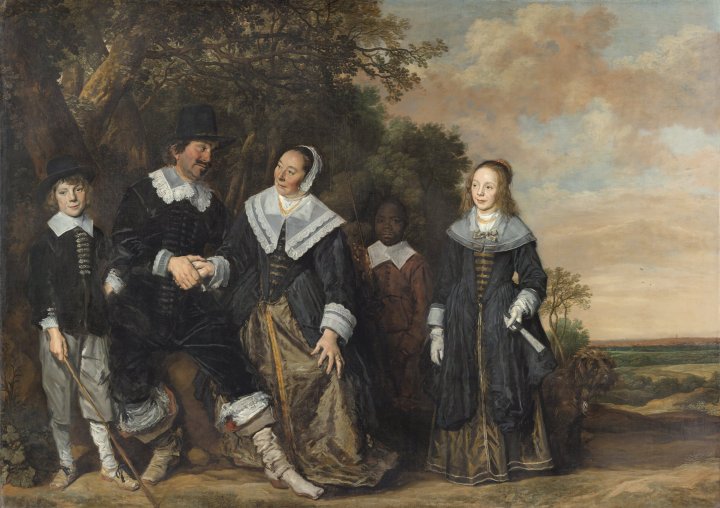
Frans Hals, Family Group in a Landscape, ca.1645–48, oil on canvas, 202 × 285 cm
(Madrid: Museo Nacional Thyssen-Bornemisza)
◊ ◊ ◊ ◊ ◊
Opening this week at the Thyssen:
Colonial Memory in the Thyssen-Bornemisza Collections
Museo Thyssen-Bornemisza, Madrid, 25 June — 20 October 2024
The colonial system lies at the origins of modern western society while its legacy continues to affect human and geopolitical relations around the world. As Europe advanced in the conquest of liberties, it simultaneously imposed a regime of extractivism and physical domination on its territories across the globe.

Circle of Sir Joshua Reynolds (?), Portrait of a Man from the Island of Dominica (?), ca. 1770s, oil on canvas, 76 × 64 cm (Madrid: Museo Nacional Thyssen-Bornemisza).
This exhibition sets out to decipher the elements of colonial power within the iconography of certain works in the Thyssen-Bornemisza collections. A selection of paintings will reveal ‘invisibilised’ stories of racial domination, marronage, and the civil rights struggle, as well as the introduction of the modern mercantile system based on European military control, the use of enslaved African workers, and the appropriation of firstly Latin American and later Asian and African land and raw materials. Visitors will be introduced to fictitious representations of new Arcadias and will witness the western projection of its unsatisfied desires in the form of the ‘Orient’ and the construction of the ‘other’ as barbarian or primitive.
With the aim of rethinking the future through the parameters of cultural diversity, the exhibition benefits from a curatorial team comprising Juan Ángel López (curator at the museum and director of this project), Alba Campo Rosillo (art historian), Andrea Pacheco González (independent curator and artistic director of the space ‘FelipaManuela’), and Yeison F. García López (director of the ‘Espacio Afro’ cultural centre).
La memoria colonial en las colecciones Thyssen-Bornemisza (Madrid: Fundación Thyssen-Bornemisza, 2024), 232 pages, ISBN: 978-8417173906, €42.
Exhibition | Miguel Cabrera (1695–1768)
Now on view at Madrid’s Museo de América:
Miguel Cabrera: Las reglas del arte de un pintor novohispano
Museo de América, Madrid, 31 May — 13 October 2024
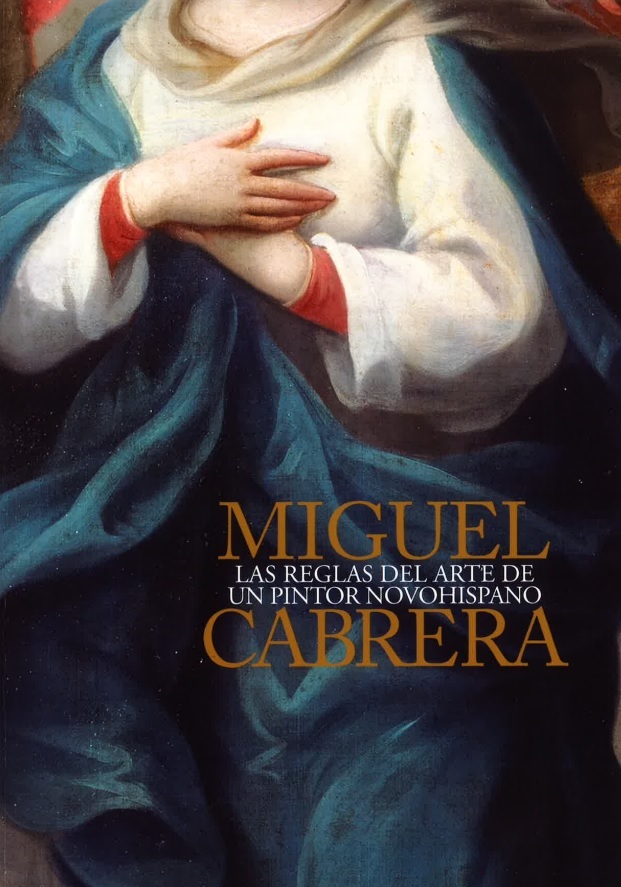 Desde 2019 el Museo de América ha liderado el proyecto Estudio y conservación de la serie La vida de la Virgen, de Miguel Cabrera. El proyecto integró numerosos profesionales de diferentes instituciones museísticas y académicas españolas y latinoamericanas. Sus trabajos han aportado importantes avances en el conocimiento de la pintura barroca novohispana y la conservación de la pintura sobre lienzo. Como resultado del extenso trabajo llevado a cabo se presenta esta magna exposición para cerrar con broche de oro este proyecto: La primera exposición en España dedicada a uno de los pintores más importantes del México Virreinal: Miguel Cabrera, a su vida, obra y el estudio técnico de su pintura. El discurso museográfico se sustenta en veintitrés obras pictóricas pertenecientes principalmente a las colecciones del Museo de América, así como préstamos bibliográficos de la Biblioteca Nacional de España.
Objetivos de la exposición
• Dar a conocer en España la obra y técnica de Miguel Cabrera, maestro de la pintura novohispana
• Presentar la magnífica serie de cuadros de La vida de la Virgen, su historia y su llegada a España en el siglo XVIII
• Mostrar al público los trabajos de conservación y de investigación técnica realizados en torno a estas obras
• Poner en valor el trabajo de conservación y restauración del patrimonio histórico-artístico llevado a cabo en los museos e instituciones museísticas
Miguel Cabrera: Las reglas del arte de un pintor novohispano (Madrid: S.G. Museos Estatales, 2024), 296 pages, ISBN: 978-8481818611, €21.
The Decorative Arts Trust Announces Recipients of Publishing Grants
From the press release (13 June 2024) . . .
The Decorative Arts Trust congratulates the inaugural recipients of their new Publishing Grants. The Hispanic Society Museum and Library; the Philadelphia Museum of Art; and The Huntington Library, Art Museum, and Botanical Gardens received Publishing Grants for Collections, Exhibitions, and Conferences, and Dr. Joseph Larnerd from Drexel University received a Publishing Grant for Dissertations and First-Time Authors.
In November 2024, the Hispanic Society Museum and Library in New York City’s Washington Heights will publish A Room of Her Own: The Estrados of Viceregal Spain to accompany their landmark exhibition of the same name. Guest Curator Alexandra Frantischek Rodriguez-Jack and Deputy Director and Head of Collections Margaret Connors McQuade will lead this examination of the estrado, defined in the early 18th-century treatise Diccionario de Autoridades as the “set of furniture used to cover and decorate the place or room where the ladies sit to receive visitors.” The estrado was a remarkable space where a diverse group of women engaged in elaborate social practices and displayed their collections of valuable objects from the Americas, Asia, and Europe. Decorative arts, paintings, rare books, and engravings from the Hispanic Society Museum and Library’s collection will be presented in an entirely new light, with many to be exhibited for the first time.
The Huntington Library, Art Museum, and Botanical Gardens in San Marino, California plans to release a comprehensive publication about an influential Los Angeles-based ceramics artist in fall 2026. Although additional details cannot be announced at this time, the book will complement an exhibition led by Lauren Cross, PhD, the Gail-Oxford Associate Curator of American Decorative Arts.
The Philadelphia Museum of Art is publishing Art, Industry, and Reform in Philadelphia, 1876–1926, accompanying the museum’s spring 2026 exhibition of the same name. David Barquist, The H. Richard Dietrich, Jr., Curator of American Decorative Arts, and Colin Fanning, Assistant Curator of European Decorative Arts, lead the exhibition and publication, which will focus on Philadelphia artisans and architects who drew on a range of inspirations—from the British Arts and Crafts movement to masterworks at the World’s Fairs—to address challenges of urban industrialization. Their investigation will be among PMA’s offerings during the nation’s 250th commemoration, which is also the museum’s 150th anniversary year.
Dr. Joseph Larnerd received the inaugural Publishing Grant for Dissertations and First-Time Authors. Larnerd, an Assistant Professor of Design History at Drexel University in Philadelphia, will publish Undercut: Cut Glass in Working-Class Life during the Long Gilded Age with the University of Delaware Press in fall 2025. This publication offers an original history of cut glass refracted through the labors required to make and maintain the glistening wares. Larnerd will show how popular representations of the medium and these widely discussed labors undercut how working-class peoples imagined and enacted social class, privilege, and mobility.
The deadline to apply for Decorative Arts Trust Publishing Grants is March 31 annually. For more information, visit decorativeartstrust.org.
New Book | Parenting Advice to Ignore in Art and Life
From Chronicle Books:
Nicole Tersigni, Parenting Advice to Ignore in Art and Life (New York: Chronicle Books, 2023), 96 pages, ISBN: 978-1797222172, $15.
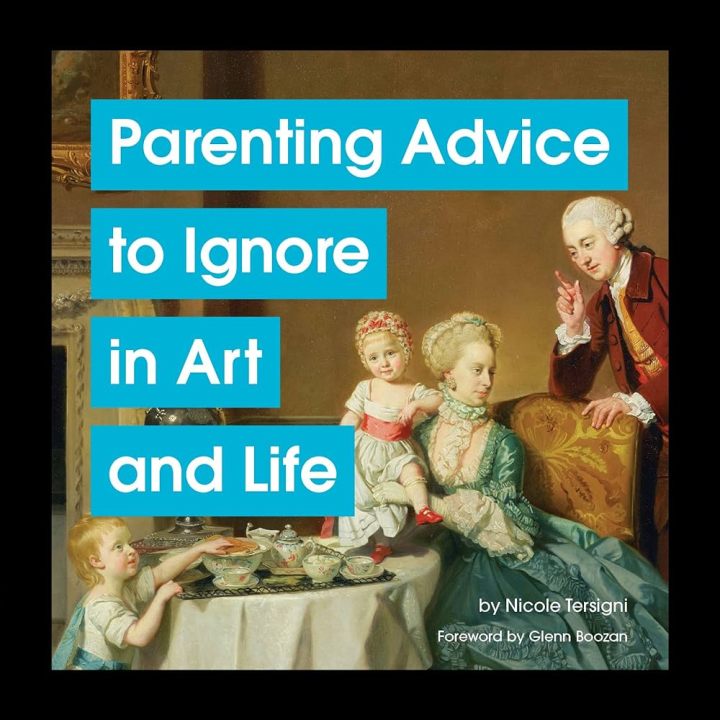 From the author of the hit Men to Avoid in Art and Life and Friends to Keep in Art and Life comes a collection of all-too-familiar unsolicited advice parents receive on the daily.
From in-laws and other parents to complete strangers and even your own kids—when it comes to parenting, everyone’s a critic. Against the classic backdrop of fine art, bestselling author Nicole Tersigni’s Parenting Advice to Ignore in Art and Life pokes fun at the many ‘experts’ who think they know more than you about your own children. Utterly (and unfortunately) relatable and hilarious as ever, Tersigni’s spot-on captions provide a much-needed laugh for anyone who has had the pleasure of parenting and the pain of having a stranger tell you to put a hat on your baby.
Nicole Tersigni is a comedic writer experienced in improv comedy and women’s advocacy. She lives in Metro Detroit with her husband, daughter, and two dogs.
Print Quarterly, June 2024
The long eighteenth century in the latest issue of Print Quarterly:
Print Quarterly 41.2 (June 2024)
a r t i c l e s
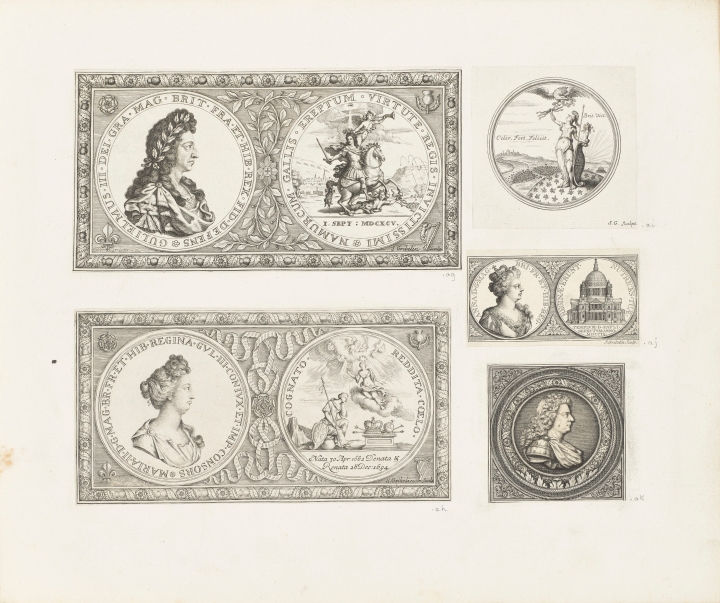
Simon Gribelin, A Medal of William III Commemorating the Fall of Namur, 1695 and other engravings, in the Works of Gribelin album, sheet 311 × 372 mm (Windsor Castle, Royal Collection. Image Royal Collection Trust / © His Majesty King Charles III 2023).
• Rhian Wong, “Simon Gribelin’s Presentation Albums,” pp. 157–71.
The article examines two previously unpublished presentation albums in the Royal Collection, compiled by the engraver Simon Gribelin (1661–1733). The Works of Gribelin album was compiled in 1715 for George II (when Prince of Wales), while an album of prints of the ceiling of the Banqueting House, London was presented around 1720 to George I. A consideration of the contents of the Works of Gribelin album reveals that Gribelin followed a deliberate programme for the arrangement of its contents. The article looks at the purpose of the albums and places their creation in the context of four other albums known to have been assembled by Gribelin.
n o t e s a n d r e v i e w s
• Galina Mardilovich, Review of Julia Khodko, Peterburg Mikhaila Makhaeva. Grafika I zhivopis’ vtoroi poloviny XVIII veka (The State Russian Museum, 2022), pp. 183–85. This is the catalogue for an exhibition addressing the drawings (and resulting prints) of St Petersburg made by Mikhail Makhaev (1717–1770).
• Shijia Yu, Review of The Art of the Deal (Daniel Crouch Rare Books, 2023), pp. 185–87. This is catalogue of the playing card collection assembled by the Dutch collector Frank van den Bergh.
• Thea Goldring, Review of Esther Bell, Sarah Grandin, Corinne Le Bitouzé, and Anne Leonard, Promenades on Paper: Eighteenth-Century French Drawings from the Bibliothèque National de France (Yale University Press, 2022), pp. 188–90.
• Joanna Sheers Seidenstein, Review of Amy Golahny, Rembrandt’s Hundred Guilder Print (Lund Humphries, 2021), pp. 221–26. Includes the reception history of the print, and the section on William Baillie’s restrikes in the 1770s is relevant.
New Book | The Book-Makers
Several chapters address 18th-century topics, including extra-illustration, as seen through the work of Alexander and Charlotte Sutherland. From Hachette Book Group:
Adam Smyth, The Book-Makers: A History of the Book in Eighteen Lives (New York: Basic Books, 2024), 400 pages, ISBN: 978-1541605640, £25 / $32.
 A scholar and bookmaker “breathes both books-as-objects and their creators back into life” (Financial Times) in this five-hundred-year history of printed books, told through the people who created them
Books tell all kinds of stories—romances, tragedies, comedies—but if we learn to read the signs correctly, they can tell us the story of their own making too. The Book-Makers offers a new way into the story of Western culture’s most important object, the book, through dynamic portraits of eighteen individuals who helped to define it. Books have transformed humankind by enabling authors to create, document, and entertain. Yet we know little about the individuals who brought these fascinating objects into existence and of those who first experimented in the art of printing, design, and binding. Who were the renegade book-makers who changed the course of history? From Wynkyn de Worde’s printing of fifteenth-century bestsellers to Nancy Cunard’s avant-garde pamphlets produced on her small press in Normandy, this is a celebration of the book with the people put back in.
Adam Smyth is professor of English literature and the history of the book at Balliol College, University of Oxford. He is a regular contributor to the London Review of Books and the TLS. He also runs the 39 Steps Press, a small printing press, which he keeps in a barn in Oxfordshire, England.
New Book | The Library: A Fragile History
First published in hardcover in 2021, it was released in paperback last fall. From Hachette Book Group:
Andrew Pettegree and Arthur der Weduwen, The Library: A Fragile History (New York: Basic Books, 2021), 528 pages, ISBN: 978-1541600775 (hardcover), $35 / ISBN: 978-1541603721 (paperback), $22.
 The ‘engaging’ and ‘ambitious’ (Washington Post) history of libraries and the people who built them, from the ancient world to the digital age
The history of the library is rich, varied, and stuffed full of incident. In The Library, historians Andrew Pettegree and Arthur der Weduwen introduce us to the antiquarians and philanthropists who shaped the world’s great collections, trace the rise and fall of literary tastes, and reveal the high crimes and misdemeanors committed in pursuit of rare manuscripts. In doing so, they reveal that while collections themselves are fragile, often falling into ruin within a few decades, the idea of the library has been remarkably resilient as each generation makes—and remakes—the institution anew.
Andrew Pettegree is professor of modern history at the University of St. Andrews and a leading expert on the history of book and media transformations.
Arthur der Weduwen is a British Academy postdoctoral fellow at the University of St. Andrews.
New Book | Ingenious Italians
From Brepols:
Katherine Jean McHale, Ingenious Italians: Immigrant Artists in Eighteenth-Century Britain (Turnhout: Brepols, 2024), 344 pages, ISBN: 978-1915487179, €175.
 Explores the lives of the nearly two hundred Italian artists who made the arduous journey to Britain, adapting to a foreign culture while using their renowned skills and entrepreneurial abilities, inspiring and instructing indigenous artists as they enriched the culture of their new country
This book fills a significant gap in the literature on eighteenth-century art in Britain. Although immigrant Italian artists played a crucial role in the development of Britain’s expanding art world over the course of that century, they have been largely overlooked in books on both British and Italian art. When mentioned in works on eighteenth-century British art, Italian artists are regarded as bit players who were tangential to the art world. Ingenious Italians seeks to correct this view, demonstrating the critical role played by immigrants who brought their skills and talents to a new country. In Britain, they established networks of Italian and British colleagues, cultivated new patrons, and created innovative works for a growing market. In doing so, they influenced the development of art in British society. This little-explored facet of art history in Britain presents readers with a new perspective from which to consider the art of the era, highlighting the important work contributed by Italian artists in Britain. The book also contains an appendix of biographical information on the Italian artists working in Britain throughout the eighteenth century.
Katherine Jean McHale received her PhD from the University of St Andrews in 2018, after a thirty-year career as a lawyer. Her thesis, the basis for this book, continued her masters’ research at Hunter College, New York City, exploring the intersection between eighteenth-century Italian and British art. Her articles have been published in Master Drawings, Dieciocho, The British Art Journal, and The Georgian Group Journal.










leave a comment