Exhibition | ‘Fruit of Friendship’: Portraits by Mary Beale
From Philip Mould & Co:
‘Fruit of Friendship’: Portraits by Mary Beale
Philip Mould & Company, London, 25 April — 19 July 2024
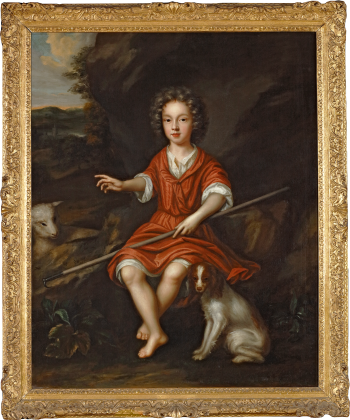
Mary Beale, Portrait of a Young Boy Seated in a Landscape, 1680s, oil on canvas, 127 × 102 cm.
Mary Beale (1633–1699) was one of Britain’s first professional woman artists. Philip Mould & Company’s forthcoming exhibition ‘Fruit of Friendship’: Portraits by Mary Beale, opening this spring, will feature twenty-five of her works from public and private collections, spanning her entire career and including self-portraits, portraits of her family and friends, and formal commissions.
The exhibition will also shed light on Beale’s studio practice and highlight its radical reversal of conventional gender roles for the period. Beale’s husband Charles dedicated himself to his wife’s career and supported her studio diligently by priming canvases, manufacturing pigments, and recording business in a series of notebooks. The exhibition will present three works not seen in public before, including an early re-discovered portrait of the artist’s husband and a portrait of Anne Sotheby, which will be displayed in the gallery for two weeks before it is exhibited in Tate Britain’s upcoming exhibition Now You See Us: Women Artists in Britain, 1520–1920.
The exhibition will be complemented by an openly available online catalogue. In anticipation of a comprehensive printed publication scheduled for summer 2024, this online resource will be an accessible guide to her works and their significance.
Ellie Smith and Lawrence Hendra, Fruit of Friendship: Portraits by Mary Beale (London: Paul Holberton Publishing, 2024), 160 pages, ISBN: 978-1913645748, £25.
◊ ◊ ◊ ◊ ◊
Note (added 4 September 2024) — The posting was updated to include the hardback catalogue.
New Book | Glorious Qing: Decorative Arts in China, 1644–1911
From the University of Washington Press:
Claudia Brown, Glorious Qing: Decorative Arts in China, 1644–1911 (Seattle: University of Washington Press, 2024), 336 pages, ISBN: 978-0295751917, $70.

With over 250 color illustrations, this companion volume to Claudia Brown’s Great Qing: Painting in China, 1644–1911 covers an array of superbly crafted objects of art produced during China’s last dynasty. It features ceramics, metalwork, textiles, lacquer, glass, jade, and works of bamboo selected from collections in North America, Europe, China, and Taiwan. Art historian Brown probes the materials, motivations, technologies, and skills of Qing period artists, along with trends in art patronage and collecting. She considers objects of private patronage, including snuff bottles and instruments for the scholar’s desk, alongside imperial commissions, palace furnishings, and pieces made for export in the flourishing East-West trade market. Moving chronologically from one emperor’s reign to the next, Glorious Qing offers a comprehensive survey of Qing decorative arts that will delight experts and novices alike, from collectors to students of art history.
Claudia Brown is professor of art history at Arizona State University and research curator for Asian art at the Phoenix Art Museum. She is author of Great Qing: Painting in China, 1644–1911.
New Book | The Ghost in the City: Luo Ping and the Craft of Painting
From the University of Washington Press:
Michele Matteini, The Ghost in the City: Luo Ping and the Craft of Painting in Eighteenth-Century China (Seattle: University of Washington Press, 2023), 248 pages, ISBN: 978-0295750958, $65.
 In 1771 the artist Luo Ping (1733–1799) left his native Yangzhou to relocate to the burgeoning hub of Beijing’s Southern City. Over two decades, he became the favored artist of a cosmopolitan community of scholars and officials who were at the forefront of the cultural life of the Qing-dynasty (1644–1911). From his spectacular ghost paintings to his later work exploring the city’s complex history, compressed spatial layout, and unique social rituals, Luo Ping captured the pleasures and concerns of a changing world at the end of the Qing’s ‘Prosperous Age’. This study takes the reader into the vibrant artistic and literary cultures of Beijing outside the court and to the networks of scholars, artists, and entertainers that turned the Southern City into a place like no other in the Qing empire. At the center of this narrative lie Luo Ping’s layered reflections on the medium of painting and its histories and formal conventions. Close reading of the work of Luo Ping and his contemporaries reveals how this generation of experimental artists sought to reform ink painting, paving the way for further developments in the nineteenth and twentieth centuries. Drawing on a vast range of textual and visual sources, The Ghost in the City shares groundbreaking research that will transform our understanding of the evolution of modern ink painting.
Michele Matteini is assistant professor of art history at New York University and associate faculty at the Institute of Fine Arts.
c o n t e n t s
Acknowledgments
Note on Romanization
Introduction
1 The Dream of the Southern City
2 Luo Ping from Yangzhou
3 Textures of Samsara
4 Landscapes of Culture
Epilogue Luo Ping’s Returning Home
Dramatis Personae
Glossary of Chinese Characters
Notes
Bibliography
Index
New Book | Carel de Moor (1655–1738), His Life and Work
From Primavera Pers:
Pamela Fowler and Piet Bakker, Carel de Moor (1655–1738), His Life and Work: A Catalogue Raisonné (Leiden: Primavera Pers, 2024), 352 pages, ISBN: 978-9059973930, €89.
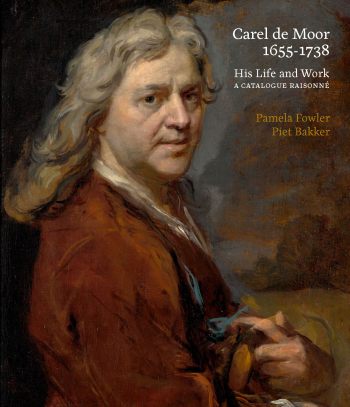 Carel de Moor (1655–1738), His Life and Work, a monograph and œuvre catalogue, is the first scholarly study of one of the most important Dutch portrait painters of his time. The book includes a comprehensive biography, which explores Carel de Moor’s life and multi-faceted career within the context of the economic, political, and social history of the Dutch Republic. As a result of the authors’ thorough investigation of De Moor’s client networks, several hitherto unknown sitters have now been identified, and other sitters have been provided with new identities. The catalogue raisonné—arranged chronologically within the categories of portraits, history, pastoral scenes, genre, and still life— allows us to view De Moor’s œuvre in its totality, to compare his work with that of his predecessors and contemporaries, and to evaluate the development of his artistic style. Given that De Moor’s career mostly took place in the eighteenth century, this publication also adds significantly to the corpus of studies of Netherlandish art produced between 1680 and 1750—a period largely ignored by art historians. As De Moor’s work convincingly demonstrates, this lack of interest is entirely unjustified.
New Book | Gerard Melder (1693–1754)
From Primavera Pers:
Charles Dumas, Gerard Melder (1693–1754): Eertijds beroemd, thans vrijwel vergeten (Leiden: Primavera Pers, 2023), 160 pages, ISBN: ISBN 978-9059973985, €30.
 De in Amsterdam geboren Gerard Melder (1693–1754) behoort tot een groepje kunstenaars die in de achttiende eeuw alom werd geprezen en tot over de landsgrenzen beroemd was, maar die later zo goed als geheel werd vergeten. Melder was werkzaam als miniaturist, schilder, tekenaar, en graveur. Hij was autodidact, leerde zichzelf tekenen en schilderen door oude prenten te bestuderen en na te tekenen.
Van Melder is geen omvangrijk oeuvre bewaard gebleven. Het merendeel van zijn werken is eclectisch: hij absorbeerde elementen uit het werk van voorgangers en maakte zich die eigen. Zijn arcadische landschappen zijn in de stijl van Isaac de Moucheron en zijn Rijngezichten in die van Herman Saftleven. Voor de stoffering ervan ontleende hij motieven aan bijvoorbeeld Jan van der Meer de Jonge en Abraham Rademaker. Het meest bijzonder binnen zijn oeuvre is een reeks van twaalf etsen, die wel ‘Het leven der bacchanten’ wordt genoemd. Met hun expliciet erotische karakter vormen deze landschappen, rijkelijk gestoffeerd met naakte mannen, nimfen, saters en kinderen, een grote uitzondering binnen de nogal brave Nederlandse prentkunst van de achttiende eeuw. Bacchanalen werden toen wel vaker afgebeeld, maar de wellustige handelingen werden slechts gesuggereerd en niet zoals bij Melder onverbloemd uitgebeeld.
Gerard Melder was een veelzijdig kunstenaar, die zich veel moeite had getroost om zichzelf als schilder, tekenaar en graveur te ontwikkelen. Hoewel hij beslist geen originele of vernieuwende geest kan worden toegedicht, werd hij in zijn tijd, vooral als miniatuurschilder, hogelijk gewaardeerd, totdat hij vanaf de tweede helft van de negentiende eeuw geheel in vergetelheid raakte. In dit boek wordt voor het eerst een overzicht van zijn oeuvre gepresenteerd.
New Books | Recent Historical Fiction
From Harper Collins:
Anne Eekhout, Mary and the Birth of Frankenstein: A Novel, translated by Laura Watkinson (New York: HarperVia, 2023), 320 pages, ISBN: 978-0063256743, $30.
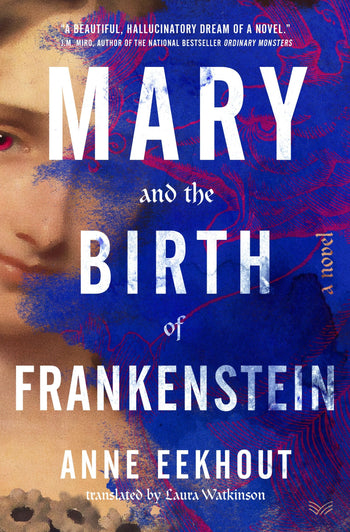 Switzerland, 1816. A volcanic eruption in Indonesia envelopes the whole of Europe in ash and cloud. Amid this ‘year without a summer’, eighteen-year-old Mary Shelley and her lover Percy Bysshe Shelley arrive at Lake Geneva to visit Lord Byron and his companion John Polidori. Anguished by the recent loss of her child, Mary spends her days in strife. But come nightfall, the friends while away rainy wine-soaked evenings gathered around the fireplace, exchanging stories. One famous evening, Byron issues a challenge to write the best ghost story. Contemplating what to write, Mary recalls another summer, when she was fourteen…
Scotland, 1812. A guest of the Baxter family, Mary arrives in Dundee, befriending young Isabella Baxter. The girls soon spend hours together wandering through fields and forests, concocting tales about mythical Scottish creatures, ghosts and monsters roaming the lowlands. As their bond deepens, Mary and Isabella’s feelings for each other intensify. But someone has been watching them—the charismatic and vaguely sinister Mr. Booth, Isabella’s older brother-in-law, who may not be as benevolent as he purports to be…
With gripping mastery and verve, Anne Eekhout brings to life a defining moment in Mary Shelley’s youth: the creative wellspring for one of the most original, thrilling, and timeless pieces of literature ever written. Provocative, wonderfully atmospheric and pulsing with emotion, Mary and the Birth of Frankenstein is a hypnotic ode to the power of imagination.
Translated from the Dutch by Laura Watkinson.
Anne Eekhout is the author of the novels Dogma, which was nominated for the Bronzen Uil Prize for best debut; One Night, which was nominated for the BNG Literature Prize; and Nicolas and the Disappearance of the World, which was selected as the Best Book for Young Adults. She lives in the Netherlands.
◊ ◊ ◊ ◊ ◊
From Macmillan:
Katherine Howe, A True Account: Hannah Masury’s Sojourn Amongst the Pyrates, Written by Herself (New York: Henry Holt and Co., 2023, 2023), 288 pages, ISBN: 978-1250304889, $29.
 From New York Times bestselling author Katherine Howe comes a daring first-hand account of one young woman’s unbelievable adventure as one of the most terrifying sea rovers of all time.
In Boston, as the Golden Age of Piracy comes to a bloody close, Hannah Masury—bound out to service at a waterfront inn since childhood—is ready to take her life into her own hands. When a man is hanged for piracy in the town square and whispers of a treasure in the Caribbean spread, Hannah is forced to flee for her life, disguising herself as a cabin boy in the pitiless crew of the notorious pirate Edward ‘Ned’ Low. To earn the freedom to choose a path for herself, Hannah must hunt down the treasure and change the tides. Meanwhile, professor Marian Beresford pieces Hannah’s story together in 1930, seeing her own lack of freedom reflected back at her as she watches Hannah’s transformation. At the center of Hannah Masury’s account, however, lies a centuries-old mystery that Marian is determined to solve, just as Hannah may have been determined to take it to her grave. A True Account tells the unforgettable story of two women in different worlds, both shattering the rules of their own society and daring to risk everything to go out on their own account.
Katherine Howe is the author of The Daughters of Temperance Hobbs and the New York Times bestsellers The Physick Book of Deliverance Dane and The House of Velvet and Glass, as well as the young adult novels Conversion and The Appearance of Annie van Sinderen. She served as editor of The Penguin Book of Witches, and her fiction has been translated into over twenty languages. Descended from three women who were tried for witchcraft in Salem, she and her family live in New England and New York City.
◊ ◊ ◊ ◊ ◊
From Simon & Schuster:
Emily Howes, The Painter’s Daughters: A Novel (New York: Simon & Schuster, 2024), 352 pages, ISBN: 978-1668021385, $28.
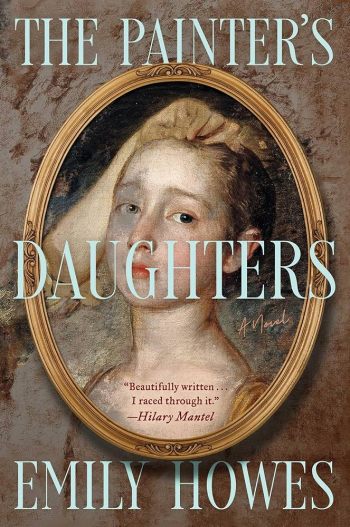 A “beautifully written” (Hilary Mantel) story of love, madness, sisterly devotion, and control, about the two beloved daughters of renowned 1700s English painter Thomas Gainsborough, who struggle to live up to the perfect image the world so admired in their portraits.
Peggy and Molly Gainsborough—the daughters of one of England’s most famous portrait artists of the 1700s and the frequent subject of his work—are best friends. They spy on their father as he paints, rankle their mother as she manages the household, and run barefoot through the muddy fields that surround their home. But there is another reason they are inseparable: from a young age, Molly periodically experiences bouts of mental confusion, even forgetting who she is, and Peggy instinctively knows she must help cover up her sister’s condition.
When the family moves to Bath, it’s not so easy to hide Molly’s slip-ups. There, the sisters are thrown into the whirlwind of polite society, where the codes of behavior are crystal clear. Molly dreams of a normal life but slides deeper and more publicly into her delusions. By now, Peggy knows the shadow of an asylum looms for women like Molly, and she goes to greater lengths to protect her sister’s secret. But when Peggy unexpectedly falls in love with her father’s friend, the charming composer Johann Fischer, the sisters’ precarious situation is thrown catastrophically off course. Her burgeoning love for Johann sparks the bitterest of betrayals, forcing Peggy to question all she has done for Molly, and whether any one person can truly change the fate of another.
A tense and tender examination of the blurred lines between protection and control, The Painter’s Daughters is a searing portrait of the real girls behind the canvas. Emily Howes’s debut is a stunning exploration of devotion, control, and individuality; it is a love song to sisterhood, to the many hues of life, and to being looked at but never really seen.
Emily Howes is the author of numerous short stories that have been shortlisted for the Bridport Prize, the Bath Short Story Award, and the New Scottish Writing Award. Her debut novel, The Painter’s Daughters, was the winner of the 2021 Mslexia Novel Prize for unpublished manuscripts. In addition to writing fiction, Emily has been a theater director and performer. She works as a psychotherapist in private practice and is completing a masters in existential psychotherapy.
New Book | Teaching the Eighteenth Century Now
From De Gruyter:
Kate Parker and Miriam Wallace, eds., Teaching the Eighteenth Century Now: Pedagogy as Ethical Engagement (Lewisburg, PA: Bucknell University Press, 2024), 196 pages, ISBN: 978-1684485048 (hardcover) / ISBN: 978-1684485031 (paperback), $38.
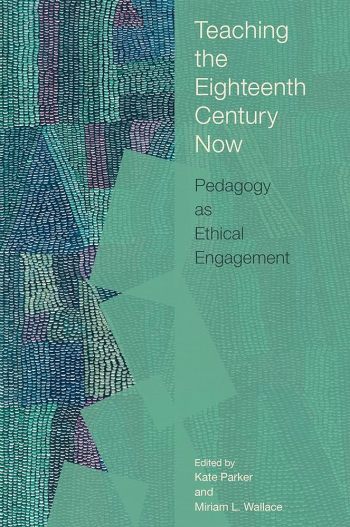 In this timely collection, teacher-scholars of ‘the long eighteenth century’, a Eurocentric time frame from about 1680 to 1832, consider what teaching means in this historical moment: one of attacks on education, a global contagion, and a reckoning with centuries of trauma experienced by Black, Indigenous, and immigrant peoples. Taking up this challenge, each essay highlights the intellectual labor of the classroom, linking textual and cultural materials that fascinate us as researchers with pedagogical approaches that engage contemporary students. Some essays offer practical models for teaching through editing, sensory experience, dialogue, or collaborative projects. Others reframe familiar texts and topics through contemporary approaches, such as the health humanities, disability studies, and decolonial teaching. Throughout, authors reflect on what it is that we do when we teach—how our pedagogies can be more meaningful, more impactful, and more relevant.
Kate Parker, professor and chair of English, teaches pre-1800 English and European cultural studies and feminism and sexuality studies at the University of Wisconsin–La Crosse, a regional comprehensive university in the University of Wisconsin System.
Miriam L. Wallace, formerly professor of English and gender studies at New College of Florida, is dean of the College of Liberal Arts and Social Sciences at the University of Illinois-Springfield.
c o n t e n t s
Introduction: Situating Teaching in/about/around the Eighteenth Century — Kate Parker and Miriam L. Wallace
1 Creating Teaching Editions, Teaching through Editing — Tiffany Potter
2 Performing against History: Teaching Behn’s The Widdow Ranter — Ziona Kocher
3 Let’s Talk about (Early Modern) Sex . . . Online — Kate Parker
4 The Chocolate Project: Recontextualizing Eighteenth-Century Studies in a Time of Downsizing — Teri Doerksen
5 Enlightened Exchanges: An Interdisciplinary Approach to Teaching the Scottish Enlightenment — Christine D. Myers
6 Design, Pedagogy, and Pandemic Teaching Tools in an Interdisciplinary History of Science Course — Diana Epelbaum
7 It Was Sickness and Poverty Together: Teaching Inequality and Health Humanities in Austen’s Emma — Matthew L. Reznicek
8 Teaching Hurts — Travis Chi Wing Lau
9 Anticolonial Approaches to Teaching Colonial Art Histories — Emily C. Casey
Coda: Teaching (in) the Eighteenth(-)Century Now — Eugenia Zuroski
Acknowledgments
Bibliography
Notes on Contributors
Index
New Book | Pen, Print, and Communication in the Eighteenth Century
Newly available in paperback from Liverpool UP:
Caroline Archer-Parré and Malcolm Dick, eds., Pen, Print, and Communication in the Eighteenth Century (Liverpool: Liverpool University Press, 2020), 256 pages, ISBN: 978-1789622300 (hardcover), $150 / ISBN: 978-1802078800 (paperback), $50.
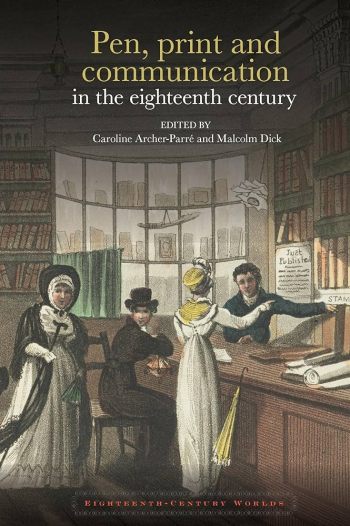 During the eighteenth century there was a growing interest in recording, listing, and documenting the world, whether for personal interest and private consumption, or general record and the greater good. Such documentation was done through both the written and printed word. Each genre had its own material conventions and spawned industries which supported these practices. This volume considers writing and printing in parallel: it highlights the intersections between the two methods of communication; discusses the medium and materiality of the message; considers how writing and printing were deployed in the construction of personal and cultural identities; and explores the different dimensions surrounding the production, distribution, and consumption of private and public letters, words, and texts during the eighteenth-century. In combination the chapters in this volume consider how the processes of both writing and printing contributed to the creation of cultural identity and taste, assisted in the spread of knowledge and furthered personal, political, economic, social, and cultural change in Britain and the wider-world. This volume provides an original narrative on the nature of communication and brings a fresh perspective on printing history, print culture, and the literate society of the Enlightenment.
Caroline Archer-Parré is Professor of Typography at Birmingham City University, Director of the Centre for Printing History & Culture, and Chairman of the Baskerville Society. She is the author of The Kynoch Press, 1876–1982: The Anatomy of a Printing House (British Library, 2000); Paris Underground (MBP, 2004); and Tart Cards: London’s Illicit Advertising Art (MBP, 2003). Caroline is currently co-investigator on the AHRC-funded project Letterpress Printing: Past, Present, Future.
Malcolm Dick is Director of the Centre for West Midlands History at the University of Birmingham. He directed two history projects in Birmingham between 2000 and 2004: the Millennibrum Project, which created a multi-media archive of post-1945 Birmingham history, and Revolutionary Players, which produced an online resource of the history of the West Midlands region. Malcolm has published books on Joseph Priestley, Matthew Boulton, and the history of Birmingham. He co-directs the Centre for Printing History & Culture.
c o n t e n t s
List of Illustrations
Acknowledgements
Introduction — Caroline Archer-Parré and Malcolm Dick
1 The Growth of Copperplate Script: Joseph Champion and The Universal Penman — Nicolas Barker
2 Authorship in Script and Print: The Example of Engraved Handwriting Manuals of the Eighteenth Century — Giles Bergel
3 Writing and the Preservation of Cultural Identity: The Penmanship Manuals of Zaharija Orfelin — Persida Lazarević Di Giacomo
4 ‘The Most Beautiful Hand’: John Byrom and the Aesthetics of Shorthand — Timothy Underhill
5 An Archaeology of the Letter Writing: The Correspondence of Aristocratic Women in Late Eighteenth- and Early Nineteenth-Century England — Ruth Larsen
6 Private Pleasures and Portable Presses: Do-It-Yourself Printers in the Eighteenth Century — Caroline Archer-Parré
7 Performance and Print Culture: Two Eighteenth-Century Actresses and Their Image Control — Joanna Jarvis
8 Script, Print, and the Public/Private Divide: Sir David Ochterlony’s Dying Words — Callie Wilkinson
9 Identity, Enigma, Assemblage: John Baskerville’s Vocabulary, or Pocket Dictionary — Lynda Muggleston
10 Marigolds Not Manufacturing: Plants, Print, and Commerce in Eighteenth-Century Birmingham — Elaine Mitchell
11 Tourist Experience and the Manufacturing Town: James Bisset’s Magnificent Directory of Birmingham — Jenni Dixon
12 Forging an Identity on the Periphery of the Enlightenment: Malta in Print in the Eighteenth-Century — Robert Thake
13 Perceptions of England: The Production and Reception of English Theatrical Publications in Germany and the Netherlands during the Eighteenth Century — Emil Rybczak
14 Print Culture and Distribution: Circulating the Federalist Papers in Post-Revolutionary America — Peter Pellizzari
15 The Serif-less Letters of John Soane — Jon Melton
Notes on the Contributors
Index
New Book | Female Printmakers, Printsellers, and Print Publishers
From Cambridge UP:
Cristina Martinez and Cynthia Roman, eds., Female Printmakers, Printsellers, and Print Publishers in the Eighteenth Century: The Imprint of Women, c. 1700–1830 (Cambridge: Cambridge University Press, 2024), 292, pages, ISBN: 978-1108844772 (hardcover), $110 / ISBN: 978-1108953535 (online).
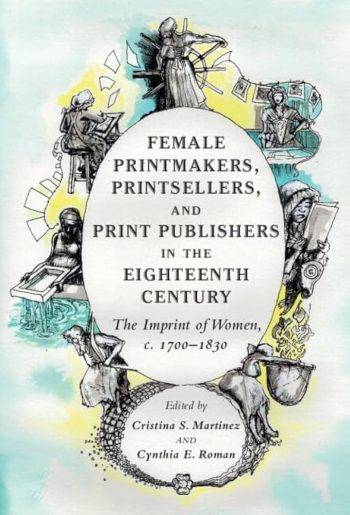 A ground-breaking contribution that broadens our understanding of the history of prints, this edited volume assembles international senior and rising scholars and showcases an array of exciting new research that reassesses the history of women in the graphic arts c. 1700 to 1830. Sixteen essays present archival findings and insightful analyses that tell compelling stories about women across social classes and nations who persevered against the obstacles of their gender to make vital contributions as creative and skilled graphic artists, astute entrepreneurs, and savvy negotiators of copyright law in Britain, France, Germany, Holland, Italy, and the United States. The book is a valuable resource for both students and instructors, offers important new perspectives for print scholars and aims to provide impetus for further research. This title is part of the Flip it Open Programme and may also be available Open Access. Check our website Cambridge Core for details.
Cristina S. Martinez is an art historian at the University of Ottawa, specialising in British eighteenth-century art and copyright history. She is the author of the entry on Jane Hogarth in the Oxford Dictionary of National Biography and has received several awards including a Bodleian Library fellowship.
Cynthia E. Roman is Curator of Prints, Drawings and Paintings at the Lewis Walpole Library, Yale University. She is an active and widely published scholar of British art of the eighteenth century. Her work focuses on the history of prints and print collecting, and the work of women and amateur artists.
c o n t e n t s
List of Figures
List of Contributors
Acknowledgments
Frontispiece Figure
Introduction: Hidden Legacies — Cristina S. Martinez and Cynthia E. Roman
Part I | Self-Presentation and Self-Promotion
1 Show-offs: Women’s Self-Portrait Prints, c. 1700 — Madeleine C. Viljoen
2 Maria Hadfield Cosway’s ‘Genius’ for Print: A Didactic, Commercial, and Professional Path — Paris A. Spies-Gans
3 Caroline Watson and the Theatre of Printmaking — Heather McPherson
4 ‘Talent and Untiring Diligence’: The Print Legacy of Angelika Kauffmann, Marie Ellenrieder, and Maria Katharina Prestel — F. Carlo Schmid
Part II | Spaces of Production
5 ‘Living in the Bosom of a Numerous and Worthy Family’: Women Printmakers Learning to Engrave in Late Eighteenth-Century London — Hannah Lyons
6 Divine Secrets of a Printmaking Sisterhood: The Professional and Familial Networks of the Horthemels and Hémery Sisters — Kelsey. D. Martin
7 Yielding an Impression of Women Printmakers in Eighteenth-Century France — Rena M. Hoisington
8 Laura Piranesi ‘Incise’: A Woman Printmaker Following in Her Father’s Footsteps — Rita Bernini
9 Etchings by Ladies, ‘Not Artists’ — Cynthia E. Roman
Part III | Competing in the Market: Acumen in Business and Law
10 Mary Darly, Fun Merchant and Caricaturist — Sheila O’Connell
11 A Changing Industry: Women Publishing and Selling Prints in London, 1740–1800 — Amy Torbert
12 Jane Hogarth: A Printseller’s Imprint on Copyright Law — Cristina S. Martinez
13 Shells to Satire: The Career of Hannah Humphrey (1750–1818) — Tim Clayton
14 Encouraging Rowlandson – The Women Who Mattered — Nicholas JS Knowles
15 Female Printmakers and Printsellers in the Early American Republic: Eliza Cox Akin and Mary Graham Charles — Allison M. Stagg
Index
Book Cover Image: Lou McKeever, 2023, inspired by the title page from Darly’s Comic-Prints of Characters, Caricatures, Macaronies, &c, 1776.
New Book | The Wealth of a Nation
Part of the Princeton Economic History of the Western World, from Princeton UP:
Geoffrey Hodgson, The Wealth of a Nation: Institutional Foundations of English Capitalism (Princeton: Princeton University Press, 2023), 304 pages, ISBN: 978-0691247014, £35 / $40.
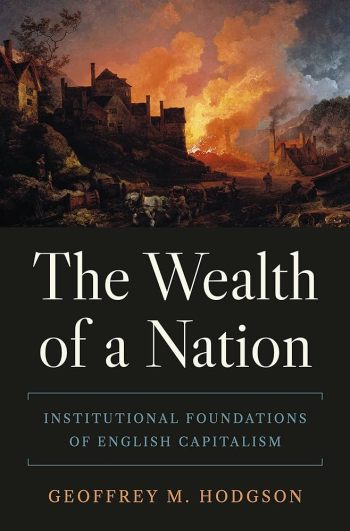 How the development of legal and financial institutions transformed Britain into the world’s first capitalist country
Modern capitalism emerged in England in the eighteenth century and ushered in the Industrial Revolution, though scholars have long debated why. Some attribute the causes to technological change while others point to the Protestant ethic, liberal ideas, and cultural change. The Wealth of a Nation reveals the crucial developments in legal and financial institutions in the seventeenth and eighteenth centuries that help to explain this dramatic transformation.
Offering new perspectives on the early history of capitalism, Geoffrey Hodgson describes how, for the emerging British economy, pressures from without were as important as evolution from within. He shows how intensive military conflicts overseas forced the state to undertake major financial, administrative, legal, and political reforms. The resulting institutional changes not only bolstered the British war machine—they fostered the Industrial Revolution. Hodgson traces how Britain’s war capitalism led to an expansion of its empire and a staggering increase in the slave trade, and how the institutional innovations that radically transformed the British economy were copied and adapted by countries around the world. A landmark work of scholarship, The Wealth of a Nation sheds light on how external factors such as war gave rise to institutional arrangements that facilitated finance, banking, and investment, and offers a conceptual framework for further research into the origins and consolidation of capitalism in England.
Geoffrey M. Hodgson is professor emeritus in management at Loughborough University London and editor-in-chief of the Journal of Institutional Economics. His many books include Liberal Solidarity, Conceptualizing Capitalism, and Darwin’s Conjecture.










 Enfilade
leave a comment