Exhibition | Amber: Treasures from the Baltic Sea
On view at Galerie Kugel:
Amber: Treasures from the Baltic Sea, 16th–18th Century
Galerie Kugel, Paris, 18 October — 16 December 2023
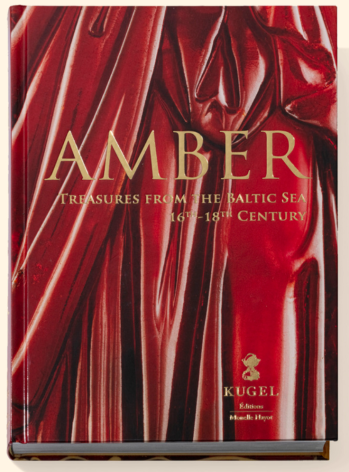 From Roman times to the 18th century, many recognised the inherent value of amber and hypothesised its origin, some assuming it to be whale sperm, others, solidified lynx urine. Its mystery endowed it with medicinal virtues. Amber was recommended as a powder to cure melancholy, toothache, and epilepsy, among other ailments, and as a love filter. The occasional inclusions of insects and small animals found trapped in amber have also made it a symbol of immortality. Pliny the Elder was the first to unveil its nature as the result of plant resin, but it wasn’t until 1757 that the Russian scientist Mikhail Lomonossov determined its true origin.
Amber is a fossilised resin originating, in the case of the objects exhibited, from a prehistoric forest dating back to some 30 to 40 million years, located under the Baltic Sea, between the towns of Danzig (today Gdansk in Poland) and Königsberg (today Kaliningrad in Russia), then, in East Prussia. In the 16th century, Grand Master Albert of Brandenburg-Ansbach (1490–1568) converted to Protestantism and transformed the territories of the Order of the Teutonic Knights in the Duchy of Prussia. This marked the beginning of a tremendous expansion in the trade and production of amber works of art. They became Prussia’s diplomatic gifts par excellence and were sought after to adorn the ‘Kunstkammern’ of Europe’s sovereigns and princes. It took nearly 20 years to collect the fifty pieces on display in this exhibition. Combining sculptures, caskets, tankards, and game boards, the wide variety of objects presented illustrate the fascination for amber through the 16th, 17th, and 18th centuries.
Alexis Kugel and Rahul Kulka, Amber: Treasures from the Baltic Sea, 16th to 18th Century / Ambre: Trésors de la mer Baltique du XVI au XVIIIe siècle (Saint-Remy-en-l’Eau: Éditions Monelle Hayot, 2023), 376 pages, €85. Available in French and English.
Exhibition | Drawing on Blue
Opening in January at The Getty:
Drawing on Blue
Getty Center, Los Angeles, 30 January — 28 April 2024
Curated by Edina Adam and Michelle Sullivan
Made from blue rags, blue paper has fascinated European artists from its earliest use in Renaissance Italy to Enlightenment France and beyond. Through new technical examination of drawings in the Getty’s collection, this exhibition offers fresh insight into the physical properties of blue paper and its unique contribution to artistic practice from the 15th through 18th centuries.
◊ ◊ ◊ ◊ ◊
From Getty Publications:
Edina Adam and Michelle Sullivan, eds., Drawing on Blue: European Drawings on Blue Paper, 1400s–1700s (Los Angeles: J. Paul Getty Museum, 2024), 160 pages, ISBN: 978-1606068670, $35. With contributions by Mari-Tere Álvarez, Thea Burns, Marie-Noelle Grison, Camilla Pietrabissa, and Leila Sauvage.
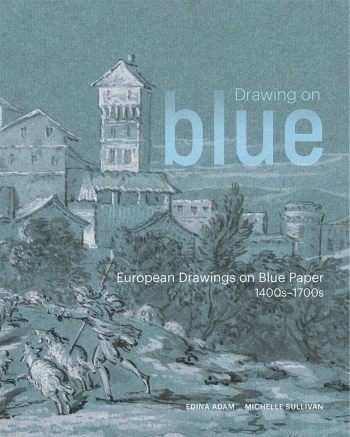 This engaging book highlights the role of blue paper in the history of drawing. The rich history of blue paper, from the late fifteenth to the mid-eighteenth centuries, illuminates themes of transcultural interchange, international trade, and global reach. Through the examination of significant works, this volume investigates considerations of supply, use, economics, and innovative creative practice. How did the materials necessary for the production of blue paper reach artistic centers? How were these materials produced and used in various regions? Why did they appeal to artists, and how did they impact artistic practice and come to be associated with regional artistic identities? How did commercial, political, and cultural relations, and the mobility of artists, enable the dispersion of these materials and related techniques? Bringing together the work of the world’s leading specialists, this striking publication is destined to become essential reading on the history, materials, and techniques of drawings executed on blue paper.
Edina Adam is assistant curator of drawings at the J. Paul Getty Museum. Michelle Sullivan is associate conservator of drawings at the J. Paul Getty Museum.
New Book | Four Centuries of Blue and White
Published by Paul Holberton and distributed by The University of Chicago Press:
Becky MacGuire, with essays by William Sargent and Angela Howard, Four Centuries of Blue and White: The Frelinghuysen Collection of Chinese and Japanese Export Porcelain (London: Ad Ilissvm, 2023), 432 pages, ISBN: 978-1915401090, £90 / $110.
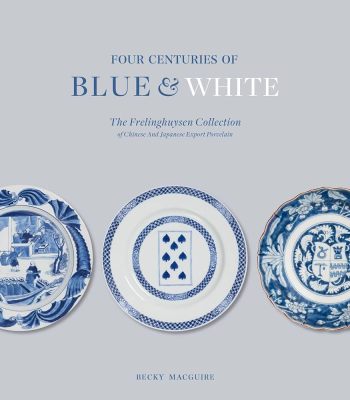 This beautifully illustrated book presents the Frelinghuysen Collection of Chinese and Japanese export porcelain. It is the first major publication to consider Chinese and Japanese blue and white together.
This extraordinary collection, assembled carefully over fifty years, features an exceptionally wide array of Asian blue and white porcelain—the most ubiquitous and influential of all ceramics. Ranging from Chinese pieces specially made for Portuguese traders in the sixteenth century to late nineteenth-century commissions for the Thai royal court, the collection also includes numerous Chinese classics from the era of the European trading companies and a notable selection of Japanese export porcelain. In its vast scope, it speaks of the diverse impulses and historical forces that propelled the trade in Asian porcelain and provides a lens to view the interaction of East and West from the early modern age to the dawn of the twentieth century. More than 300 pieces from the collection are illustrated and discussed in full and another 250 are illustrated in a compendium, all divided into thematic chapters that reflect the many ways Chinese and Japanese porcelain has been traded, collected, and used around the world.
Essays by William R. Sargent, former Curator of Asian Export Art at the Peabody Essex Museum, and noted armorial porcelain authority Angela Howard, precede the thirteen chapters, which include Faith, Identity, For the Table, To European Design, and Made in Japan. Great rarities are featured alongside small, amusing pieces and the many export porcelains made to elevate the practices of daily life.
With its strict adherence to blue and white porcelain, the collection intensifies our focus on forms, patterns, and designs, gathering together wares that are often considered only separately for study while also covering areas of little recent scholarship, such as the Thai market material. The specialized reader will find references to the latest research while the more general reader will appreciate a comprehensive overview of Asian export porcelain. There has not been a significant survey of either Chinese or Japanese blue and white since the 1990s, and they have never been considered together in a major publication.
Becky MacGuire is a graduate of the University of California at Berkeley and the Study Centre for the Fine & Decorative Arts at the Victoria & Albert Museum. She was the longtime Asian export art specialist at international auction house Christie’s.
New Book | Decay and Afterlife
From The University of Chicago Press:
Aleksandra Prica, Decay and Afterlife: Form, Time, and the Textuality of Ruins, 1100 to 1900 (Chicago: The University of Chicago Press, 2022), 304 pages, ISBN: 978-0226811314 (hardcover), $105 / ISBN: 978-0226811598, $35. Also available as a PDF.
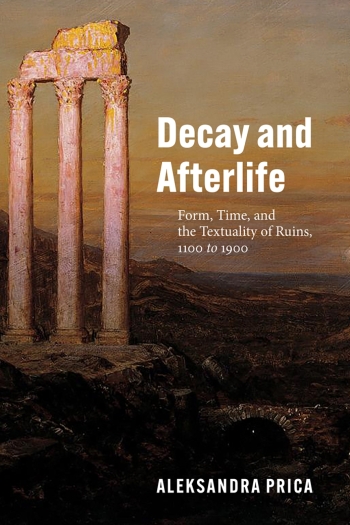 Covering 800 years of intellectual and literary history, Prica considers the textual forms of ruins.
Western ruins have long been understood as objects riddled with temporal contradictions, whether they appear in baroque poetry and drama, Romanticism’s nostalgic view of history, eighteenth-century paintings of classical subjects, or even recent photographic histories of the ruins of postindustrial Detroit. Decay and Afterlife pivots away from our immediate, visual fascination with ruins, focusing instead on the textuality of ruins in works about disintegration and survival. Combining an impressive array of literary, philosophical, and historiographical works both canonical and neglected, and encompassing Latin, Italian, French, German, and English sources, Aleksandra Prica addresses ruins as textual forms, examining them in their extraordinary geographical and temporal breadth, highlighting their variability and reflexivity, and uncovering new lines of aesthetic and intellectual affinity. Through close readings, she traverses eight hundred years of intellectual and literary history, from Seneca and Petrarch to Hegel, Goethe, and Georg Simmel. She tracks European discourses on ruins as they metamorphose over time, identifying surprising resemblances and resonances, ignored contrasts and tensions, as well as the shared apprehensions and ideas that come to light in the excavation of these discourses.
Aleksandra Prica is associate professor of German literature at the University of North Carolina at Chapel Hill.
c o n t e n t s
List of Figures
List of Abbreviations
Introduction
I | Foundations
1 Among Ruins: Martin Heidegger and Sigmund Freud
2 Afterlife: Hans Blumenberg and Walter Benjamin
II | The Propitious Moment
3 Petrarch and the View of Rome
4 Poliphilo and the Dream of Ruins
III | Living On
5 Ferdinand Gregorovius, Hildebert of Lavardin, and the Rupture of Continuity
6 Lucius Annaeus Seneca, Martin Opitz, and the Overcoming of Vanity
IV | The Battleground of Time
7 Johann Jacob Breitinger, Andreas Gryphius, and the Reconsideration of Allegory
8 Thomas Burnet, Georg Wilhelm Friedrich Hegel, and the Realignment of Discourses
V | Futures and Ruins
9 Johann Wolfgang von Goethe, Georg Simmel, and the Provisionality of Forms
Epilogue
Acknowledgments
Bibliography
Index
New Book | Staging ‘The Mysterious Mother’
From Yale UP:
Cynthia Roman, Jill Campbell, and Jonathan Kramnick, eds., Staging ‘The Mysterious Mother’ (New Haven: Yale University Press, 2023), 376 pages, ISBN: 978-0300263657, $65.
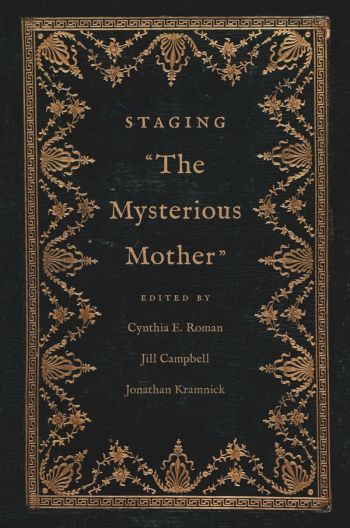 Horace Walpole’s five-act tragedy The Mysterious Mother (1768), a sensational tale of incest and intrigue, was initially circulated only among the author’s friends. Walpole never permitted it to be performed during his lifetime except as a private theatrical. He described his play as a “delicious entertainment for the closet” and claimed that he “did not think it would do for the stage.” Yet the essays in this volume trace a history of private readings, amateur theatricals, and even early public performances, demonstrating that the play was read and performed more than Walpole’s protests suggest. Exploring a wide variety of topics—including the play’s crypto-Catholicism, its treatments of incest, guilt, motherhood, orphans, and scientific spectacle, and the complex relations between print and performance—the essays demonstrate the rich relevance of The Mysterious Mother to current critical discussions. The volume includes the proceedings of a mini-conference hosted at Yale University in 2018 on the occasion of a staged reading of the play. Also included are the director’s reflections, an abridged script, a facsimile of Walpole’s own copy of the full-length play, and reproductions of the illustrations he commissioned from Lady Diana Beauclerk.
Cynthia E. Roman is curator of prints, drawings, and paintings at the Lewis Walpole Library. Jill Campbell is professor of English and affiliated faculty in the Women’s, Gender, and Sexuality Studies Program at Yale University. Jonathan Kramnick is the Maynard Mack Professor of English at Yale University and the director of the Lewis Walpole Library.
The Burlington Magazine, October 2023
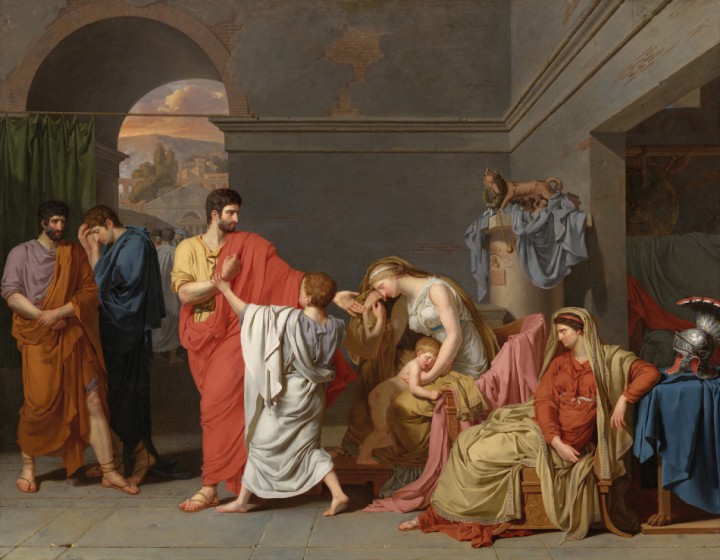
Anne-Louis Girodet de Roussy-Trioson, Coriolanus Taking Leave of His Family, 1786, oil on canvas, 114 × 146 cm
(National Gallery of Art, Washington)
◊ ◊ ◊ ◊ ◊
The eighteenth century in the October issue of The Burlington:
The Burlington Magazine 165 (October 2023)
a r t i c l e
• Aaron Wile, “Girodet’s Coriolanus Taking Leave of His Family Rediscovered,” pp. 1094–1105.
In 2019 Girodet’s lost entry for the 1786 Grand prix de peinture came to light and was acquired by the National Gallery of Art, Washington. The painting, which depicts a rarely represented incident from the story of Coriolanus—a subject that may have had contemporary political relevance—was not awarded the prize, probably because Girodet was regarded as being too close to Jacques-Louis David, a relationship to which the work may allude.
s h o r t e r n o t i c e
• Antoinette Friedenthal, “Image of a Connoisseur: An Unknown Portrait of Pierre Jean Mariette,” pp. 1106–10.
Among the unpublished miniatures in the Victoria & Albert Museum, London (V&A), is an eighteenth-century bust-length portrait of a middle-aged gentleman. A basic unillustrated inventory sheet for this work appeared in 2020 on the museum’s website. It stated that the portrait represents Pierre Jean Mariette (1694–1774) but gave no reasons for this identification and did not provide any information on the object’s provenance. It will be argued here that a combination of visual and documentary evidence confirms the identification.
r e v i e w s
 • Mark Bill, Review of the exhibition Reframing Reynolds: A Celebration (The Box, Plymouth, 2023), pp. 1124–27.
• Stephen Lloyd, Review of the refurbished Medieval, Renaissance, and Baroque galleries at the Walker Art Gallery, Liverpool, pp. 1130–33.
• Beth McKillop, Review of the exhibition China’s Hidden Century (The British Museum, London, 2023), pp. 1136–38.
• Satish Padiyar, Review of the exhibition Sade: Freedom or Evil (CCCB, Barcelona, 2023), pp. 1143–46.
• Malcolm McNeill, Review of Anne Farrer and Kevin McLoughlin, eds., Handbook of the Colour Print in China, 1600–1800 (Brill, 2022), pp. 1150–52.
• Edward Cooke, Review of Elisa Ambrosio, Francine Giese, Alina Martimyanova, and Hans Bjarne Thomsen, eds., China and the West: Reconsidering Chinese Reverse Glass Painting (De Gruyter, 2022), pp. 1152–53.
• David Ekserdjian, Review of the catalogue, Denise Allen, Linda Borsch, James David Draper, Jeffrey Fraiman, and Richard Stone, eds., Italian Renaissance and Baroque Bronzes in the Metropolitan Museum of Art (The Metropolitan Museum of Art, 2022), pp. 1156–58. The book is available as a free PDF The Met’s website.
• Rowan Watson, Review of Christopher de Hamel, The Posthumous Papers of the Manuscripts Club (Allen Lane, 2022), pp. 1160–62.
• Stefan Albl, Review of Francesco Lofano, Un pittore conteso nella Napoli del Settecento: L’epistolario e gli affari di Francesco de Mura (Istituto Italiano Studi Filosofici, 2022), pp. 1163–64.
New Book | David Rittenhouse
Distributed by Yale University Press:
Donald Fennimore and Frank Hohmann, David Rittenhouse: Philosopher-Mechanick of Colonial Philadelphia and His Famous Clocks (Winterthur, Delaware: Winterthur Museum, Garden & Library, 2023), 272 pages, ISBN: 978-0300272956, $75.
 A lush and in-depth celebration of the clocks of David Rittenhouse, one of eighteenth-century America’s greatest scientists and engineers.
David Rittenhouse: Philosopher-Mechanick of Colonial Philadelphia and His Famous Clocks brings a completely new focus on the life and works of the American astronomer, mathematician, surveyor, and inventor David Rittenhouse (1732–1796). A brilliant autodidact who would become the first director of the United States Mint, Rittenhouse was a pivotal figure of the cultural scene in Colonial Philadelphia. This publication expands the body of knowledge surrounding Rittenhouse and his brother Benjamin, as well as the era in which they lived. His masterful clocks are the principal subject matter, but the book also addresses Rittenhouse’s broader works, such as orreries, telescopes, surveying compasses, and other scientific equipment. These objects are all lushly illustrated with new photography, including rarely seen pieces in private collections. Providing a more complete and accurate view of Rittenhouse’s genius, this volume highlights the breadth of his talent and importance to both science and art in early America.
Donald L. Fennimore, curator emeritus, served as metalwork specialist at Winterthur Museum, Garden & Library in Delaware for 34 years. Frank L. Hohmann, a retired Wall Street executive, is a collector of eighteenth-century furniture, with a concentration on brass dial clocks.
New Book | Shirts, Shifts, and Sheets of Fine Linen
From Bloomsbury:
Pam Inder, Shirts, Shifts, and Sheets of Fine Linen: British Seamstresses from the 17th to the 19th Centuries (London: Bloomsbury Visual Arts, 2024), 328 pages, ISBN: 978-1350252967, $115.
 In the 17th and early 18th centuries, seamstressing was a trade for women who worked in linen and cotton, making men’s shirts, women’s chemises, underwear and baby linen; some of these seamstresses were consummate craftswomen, able to sew with stitches almost invisible to the naked eye. Few examples of their work survive, but those that do attest to their skill. However, as the ready-to-wear trade expanded in the 18th century, women who assembled these garments were also known as seamstresses, and by the 1840s, most seamstresses were outworkers for companies or entrepreneurs, paid unbelievably low rates per dozen for the garments they produced, notorious examples of downtrodden, exploited womenfolk. Drawing on a range of original and hitherto unpublished sources, including business diaries, letters, and bills, Shirts, Shifts, and Sheets of Fine Linen explores the seamstress’s change of status in the 19th century and the reasons for it, hinting at the resurgence of the trade today given so few women today are skilled at repairing and altering clothes. Illustrated with 60 images, the book brings seamstresses into focus as real people, granting new insights into working class life in 18th- and 19th-century Britain.
Pam Inder is an independent scholar and was formerly Curator of Applied Arts at first Exeter and then Leicestershire Museums (specialising in dress history), after being an Assistant Curator at Birmingham City Art Gallery. She has also taught at Staffordshire and De Montfort Universities.
c o n t e n t s
List of Plates
List of Illustrations
List of Tables
Acknowledgements
Introduction
1 ‘The Art and Mystery of Simistry’ in the 17th and 18th Centuries
2 ‘Well-handed Needlewomen’
3 The Development of Ready-to-Wear
4 ‘Linnen Drapery at Reasonable Rates’, 1720–1820
5 Slops and Slop-sellers
6 ‘Seam and Gusset and Band’
7 ‘Society Came and Shuddered’
8 Bespoke Needlework
9 Real Lives
10 The Seamstress in Art and Literature
Conclusion
New Book | The Modern Venus
From Bloomsbury:
Elisabeth Gernerd, The Modern Venus: Dress, Underwear, and Accessories in the Late 18th-Century Atlantic World (London: Bloomsbury Visual Arts, 2023), 280 pages, ISBN: 978-1350293380 (hardback), £85 ($115) / ISBN: 978-1350293373 (paperback), £28 ($38).
From rumps and stays to muffs and handkerchiefs, underwear and accessories were critical components of the 18th-century woman’s wardrobe. They not only created her shape, but expressed her character, sociability, fashionability, and even political allegiances. These so-called ephemeral flights of fashion were not peripheral and supplementary, but highly charged artefacts, acting as cultural currency in contemporary society.
 The Modern Venus highlights the significance of these elements of a woman’s wardrobe in 1770s and 1780s Britain and the Atlantic World, and shows how they played their part in transforming fashionable dress when this was expanding to new heights and volumes. Dissecting the female silhouette into regions of the body and types of dress and shifting away from a broad-sweeping stylistic evolution, this book explores these potent players within the woman’s armoury. Marrying material, archival and visual approaches to dress history, and drawing on a rich range of sources—including painted portraiture, satirical prints, diaries, memoirs—The Modern Venus unpacks dress as a medium and mediator in women’s lives. It demonstrates the importance of these overlooked garments in defining not just a woman’s silhouette, but also her social and cultural situation, and thereby shapes our understanding of late 18th-century life. With over 125 color images, The Modern Venus is a remarkable resource for scholars, students, and costume lovers alike.
Elisabeth Gernerd is a historian of 18th-century dress, art, and material culture. She is a lecturer in design cultures at De Montfort University, and a former postdoctoral fellow at Historic Royal Palaces, UCLA, and the Paul Mellon Centre for Studies in British Art.
c o n t e n t s
List of Figures
Acknowledgements
List of Abbreviations
Introduction: Fashioning the Modern Venus
1. Head First: Brimmed Hats and Calashes on the Tides of Fashion
2 ‘Let Us Examine Their Tails’: The Material and Satirical Lifecycles of Cork Rumps and Bums
3 By Hand: Silk and Fur Muffs
4 Tight Lacing: The Motifs and Materiality of Stays
Conclusion: ‘The Fickle Goddess’
Bibliography
Index
◊ ◊ ◊ ◊ ◊
Note (added 27 October 2023) — This posting originally appeared on October 27, it was moved to October 24 to align with other related postings from that day.
Cultural Heritage Magazine, October 2023

Detail from one of a pair of Spanish-colonial screens depicting a landscape in the Japanese style, possibly made in Mexico City, perhaps 1660s, pigments on paper embellished with embossed and gilded clouds and arches, each screen 249 × 340 cm (Ham House, Surrey, NT 1139576, photograph by Leah Ban).
◊ ◊ ◊ ◊ ◊
Cultural Heritage Magazine is published twice each year, in May and October by the National Trust:
Cultural Heritage Magazine, issue 3 (October 2023)
4 Welcome — John Orna-Ornstein, the National Trust’s Director of Curation and Experience, introduces the autumn issue
6 Briefing: News, events, and publications, plus research and conservation round-ups
Taking the plunge | Archaeological excavations in the basement below Bath Assembly Rooms have revealed the remains of a rare 18th-century cold bath. It is thought to be the only one of its kind located in a historic assembly room, which in the 18th and 19th centuries was a popular place of entertainment, conversation, dancing, and gambling in fashionable towns. In the 18th century, medical practitioners recommended cold bathing as beneficial for various physical and mental ailments, including gout. As a result, plunge pools and cold baths surged in popularity . . . (7).
14 In Conversation — James Rothwell talks to John Benjamin about the National Trust’s under-explored jewellery collections
24 Textile Transmissions — James Clark and Emma Slocombe on repurposing church vestments in the Reformation

Nostell, West Yorkshire, neo-classical lodge, designed by Robert Adam, 1776–77, sandstone ashlar (purchased with HLF funds, 2002). Included in 60 Remarkable Buildings of the National Trust.
34 Set in Stone — George Clarke and Elizabeth Green discuss their shared love of built heritage
Preview of Green’s 60 Remarkable Buildings of the National Trust (National Trust Cultural Heritage Publishing, 2023), which includes an introduction by Clarke.
42 Modern Lives — John Chu and Sean Ketteringham on new research into 20th-century art collections
50 Election Threads — Helen Antrobus on dress, domesticity, and politics
60 Borrowing a Landscape — Emile de Bruijn on a Japanese-style folding screen at Ham House
Preview of de Bruijn’s Borrowed Landscapes: China and Japan in the Historic Houses and Gardens of Britain and Ireland (National Trust and Bloomsbury, 2023).
68 Acquisitions: Selected highlights, 2022–23
Acquisition of an important group of items historically associated with Chirk Castle, Wrexham (acquired by purchase, 2023) . . . The acquisition includes four important early 18th-century landscape paintings depicting the Chirk estate, three by the artist Pieter Tillemans (1684–1734) and one by John Wootton (c.1682–1764); family portraits by artists including Sir Godfrey Kneller and Sir Peter Lely; rare 17th-century furniture in the Servants’ Hall; estate documents including a manuscript of 1563 that shows the first known depiction of Chirk; Neo-classical furniture by Ince and Mayhew; and historic artefacts including items associated with the English Civil War and a rare 17th-century Puritan hat (69).
74 Meet the Expert, Heather Caven, Head of Collections Management and Care










leave a comment