New Book | Burning the Big House
From Yale UP:
Terence Dooley, Burning the Big House: The Story of the Irish Country House in a Time of War and Revolution (New Haven: Yale University Press, 2022), 368 pages, ISBN: 978-0300260748, $35.
 During the Irish Revolution nearly three hundred country houses were burned to the ground. These ‘Big Houses’ were powerful symbols of conquest, plantation, and colonial oppression, and were caught up in the struggle for independence and the conflict between the aristocracy and those demanding access to more land. Stripped of their most important artifacts, most of the houses were never rebuilt and ruins such as Summerhill stood like ghostly figures for generations to come. Terence Dooley offers a unique perspective on the Irish Revolution, exploring the struggles over land, the impact of the Great War, and why the country mansions of the landed class became such a symbolic target for republicans throughout the period. Dooley details the shockingly sudden acts of occupation and destruction—including soldiers using a Rembrandt as a dart board—and evokes the exhilaration felt by the revolutionaries at seizing these grand houses and visibly overturning the established order.
Terence Dooley is professor of history at Maynooth University and director at the Centre for the Study of Historic Irish Houses and Estates. He is the author of numerous books including The Decline of the Big House in Ireland.
New Book | The Jewish Eighteenth Century: A European Biography
To those observing Rosh Hashanah, very warm wishes for the year ahead! –CH
And a book that I should have posted much earlier, from Indiana UP:
Shmuel Feiner, The Jewish Eighteenth Century: A European Biography, 1700–1750, translated by Jeffrey Green (Bloomington: Indiana University Press, 2020), 560 pages, ISBN: 978-0253049452 (hardcover), $95 / ISBN: 978-0253049469 (paperback), $40.
 The eighteenth century was the Jews’ first modern century. The deep changes that took place during its course shaped the following generations, and its most prominent voices still reverberate today. In this first volume of his magisterial work, Shmuel Feiner charts the twisting and fascinating world of the first half of the 18th century from the viewpoint of the Jews of Europe. Paying careful attention to life stories, to bright and dark experiences, to voices of protest, to aspirations of reform, and to strivings for personal and general happiness, Feiner identifies the tectonic changes that were taking place in Europe and their unprecedented effects on and among Jews. From the religious and cultural revolution of the Haskalah (Jewish Enlightenment) to the question of whether Jews could be citizens of any nation, Feiner presents a broad view of how this century of upheaval altered the map of Europe and the Jews who called it home.
Shmuel Feiner is Professor of Modern Jewish History at Bar-Ilan University and Chairman of the Historical Society of Israel. He is author of Haskalah and History; The Emergence of a Modern Jewish Historical Consciousness; The Jewish Enlightenment; Moses Mendelssohn, Sage of Modernity; and The Origins of Jewish Secularization. Jeffrey M. Green is a professional writer and translator who lives and works in Jerusalem. He is author of Thinking through Translation and Largest Island in the Sea.
C O N T E N T S
Preface
Acknowledgments
Introduction: Happy Times? The First Century in the Modern Age
I. 1700
1 Pictures from Married Life: Glikl the daughter of Leib between Hamburg and Metz
2 ‘Rise up and Succeed’: Absolutism and Court Jews in Baroque Culture
3 Jews in the News: The Angry Masses, a Holy Society, and ‘Judaism Unmasked’
4 Between Enlightened Thought and an Imaginary Universe
II. 1701–1725
5 ‘Everyone Wants to be Happy’: Dangers and Amusements
6 ‘Our Miserable Brethren’: Jews in Time of War
7 Melancholy, Career, and Travels: Five Life Stories
8 Christians versus Jews: Bitter and Violent Relations
9 From London to Jerusalem: Confrontations and Disputes
10 The Challenge of Sabbateanism: The Storm over the ‘Hypocritical Serpent’
11 Competition over the Picture of the World: Witches and Human Knowledge
III. 1725–1750
12 To Silence the ‘Fellow from Padua’: Moses Haim Luzzatto and the Great Awakening
13 Criticism and Ambition: From Gulliver to the Baal Shem Tov and Jew Süss
14 Contradictory Tendencies: Hostility, Violence, and ‘True Happiness’
15 ‘An Indelible Stain’: War and Expulsion
16 A Vision of the Future: Ascent of the Soul, a Path for the Just, and a Teacher of the Perplexed
17 Toward Mid-Century: The Awakening of Shame
Index
The Art Bulletin, September 2022
The long eighteenth century in the latest issue of The Art Bulletin 104 (September 2022) . . .
A R T I C L E S
• Tomasz Grusiecki, “Doublethink: Polish Carpets in Transcultural Contexts,” pp. 29–54.
A group of carpets termed tapis polonais (French for “Polish carpets”) were mistakenly given this name in the nineteenth century, despite their Persian provenience. Today, these artifacts are often described as “so-called Polish carpets,” emphasizing the historical confusion which led to coining the phrase. Evidence from both early modern and modern archival and literary sources suggests, however, that to fully understand the significance of tapis polonais we must embrace their transcultural contexts. Embedded in ongoing cycles of recontextualization and reappropriation, tapis polonais effectively challenge outdated assumptions that cultural forms can be simply assigned to a single cultural region and its historical traditions.

Vincennes Manufactory, after Pierre Blondeau, after François Boucher, La Danseuse (Dancer), ca. 1752, soft-paste biscuit porcelain, 22 × 14 × 8 cm (Cleveland Museum of Art).
• Susan M. Wager, Boucher’s Spirit: Authorship, Invention, and the Force of Porcelain,” pp. 55–83.
Deemed “ridiculous dolls” by Johann Joachim Winckelmann, porcelain figurines have long resided on the outskirts of art history. The exceptional case of biscuit porcelain figurines, invented in France in the 1750s, has been folded into an anachronistic story of stylistic change. This essay disentangles the history of porcelain figurines from the history of Neoclassicism. Through a close reading of the abbé Jean-Bernard Le Blanc’s (1707–1781) art criticism and analysis of a 1761 set of reproductive prints, it shows that biscuit figurines designed by the quintessentially rococo painter François Boucher defied assumptions about porcelain’s irreducible materiality, complicating fundamental eighteenth-century ideas about authorship.
R E V I E W S
• Kirsten Pai Buick, Review of Aston Gonzalez, Visualizing Equality: African American Rights and Visual Culture in the Nineteenth Century (University of North Carolina Press, 2020); Paul Kaplan, Contraband Guides: Race, Transatlantic Culture, and the Arts in the Civil War Era (Penn State University Press, 2020); and Teresa Goddu, Selling Antislavery: Abolition and Mass Media in Antebellum America (University of Pennsylvania Press, 2020), pp. 150–57.
• Atreyee Gupta, Review of Niharika Dinkar, Empires of Light: Vision, Visibility and Power in Colonial India (University of Manchester Press, 2019), pp. 158–60.
• Alina Payne, Review of Fabio Barry, Painting in Stone: Architecture and the Poetics of Marble from Antiquity to the Enlightenment (Yale University Press, 2020), pp. 160–63.
New Book | India: A Story through 100 Objects
From ACC Art Books:
Vidya Dehejia, India: A Story Through 100 Objects (New Delhi: Roli Books, 2021), 280 pages, ISBN: 978-8194969174, $40.
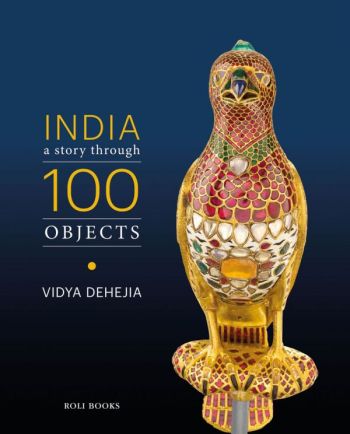 We are constantly surrounded by objects, by ‘things’ that channel and dictate our everyday life, ‘things’ that we take for granted. But these objects speak to us, and speak about us. They have a story to tell that reflects our values and aspirations, our achievements and dreams, and reveal more about us than we realize! This richly illustrated book focuses on 100 objects to tell a story of India that unravels in a series of thematic sections that allow the objects to take center-stage. The stories that some objects tell will be new to readers; at other times, the objects themselves may be familiar but the story they tell may not be obvious. The 100 objects shed light on the varying priorities and the differing strands of achievement that arose over time to create the rich multi-cultural medley that is today’s India.
Vidya Dehejia is the Barbara Stoler Miller Professor of Indian and South Asian Art at Columbia University in New York, and the recipient of a Padma Bhushan conferred on her by the President of India in 2012 for achievement in Art and Education. Over the past 40 years, she has combined research with teaching and exhibition-related activities around the world. Her work has ranged from Buddhist art of the centuries BCE to the esoteric temples of North India, and from the sacred bronzes of South India to art under the British Raj. This comprehensive scope is evident from her books: The Thief Who Stole My Heart: The Material Life of Sacred Bronzes from Chola India, 855–1280 to Discourse in Early Buddhist Art: Visual Narratives of India; from The Unfinished: Stone Carvers at Work on the Indian Subcontinent to The Body Adorned: Dissolving Boundaries between Sacred and Profane in India’s Art; and from Delight in Design: Indian Silver for the Raj to Devi, The Great Goddess: Female Divinity in South Asian Art. Management and curatorial experience at the Smithsonian’s Freer and Sackler Galleries in Washington DC, combined with her interest and pleasure in teaching first-year undergraduates, provided her with a broad mandate to convey the excitement of her field to non-specialist audiences. India: A Story through 100 Objects is a result of this priority.
C O N T E N T S
What’s in a Name
Into History
Idealized Body, Human and Divine
Urge to Adorn
Inter-Cultural Encounters
Written Word
Scientific Insights
Rise of Temple Culture
Kingship and Courtly Culture
Indian Ocean Networks
Art of the Illustrated Book
Art of Contest
Connoisseurship, Luxury, and Brilliance
Mobility and Cosmopolitanism
Sensorium
Mappling Place and Space
India through British Eyes
Deshi Expressions, Deep Traditions
Ideals of Womanhood
Early Twentieth Century
Into the Present
Further Reading
New Book | India: A History in Objects
From The British Museum and Thames & Hudson:
T. Richard Blurton, India: A History in Objects (New York: Thames & Hudson, 2022), 320 pages, ISBN: 978-0500480649, £30 / $45.
 An authoritative visual history of India, one of the world’s oldest and most vibrant cultures, drawing on South Asian art and artifacts from prehistory to the present.
India: A History in Objects presents a beautiful collection of material culture from South Asia and traces its history through a huge variety of art and artifacts, both religious and secular.
Arranged chronologically, and abundantly illustrated with expertly selected objects, this superb new overview connects today’s South Asia with its past. Early chapters describe prehistoric objects from 1.5 million years ago, examine artifacts from the Indus Civilization, and follow the emergence of Buddhism, Jainism, Hinduism, Sikhism, Islam, and Christianity. The collection outlines the rise of the Mughals, the greatest Muslim dynasty of India, who made India a leading economic power. The distinct Mughal style is traced through paintings, architecture, hardstone carving, metalwork, and jewelry. This volume also explores the early trade industry to Europe via examples of spice pots, textiles, and other luxury goods. Finally, modernism and political independence in the 20th century are examined through Indian culture such as popular prints, contemporary photography, and the performing arts.
This volume presents a vast panoply, from the urban splendor of dynastic empires to the rural life of the subcontinent. A compelling visual history of rich and diverse cultures, this book will inspire and inform anyone interested in India and material culture.
T. Richard Blurton was the Head of the South and Southeast Asia section at the British Museum. Trained as an archaeologist, he has worked all over South Asia. His publications include Krishna in the Garden of Assam, Bengali Myths, and Hindu Art.
Exhibition | A Splendid Land: Paintings from Royal Udaipur

Sunrise in Udaipur, ca. 1722–23, detail (Udaipur: The City Palace Museum, The Maharana of Mewar Charitable Foundation, 2012.20.0015).
◊ ◊ ◊ ◊ ◊
From the press release (29 August) for the exhibition:
A Splendid Land: Paintings from Royal Udaipur
Sackler Gallery, National Museum of Asian Art, Washington DC, 19 November 2022 — 14 May 2023
Cleveland Museum of Art, 11 June — 10 September 2023
Curated by Debra Diamond and Dipti Khera
The National Museum of Asian Art, in collaboration with The City Palace Museum in Udaipur, presents A Splendid Land: Paintings from Royal Udaipur, an exhibition that brings together 63 works on paper, cotton, and scrolls from collections across the world to reveal how artists sought to convey the sensory and lived experience of the lake city of Udaipur in Rajasthan, India. Many of the paintings have never been publicly exhibited or published. Curated by Debra Diamond (Elizabeth Moynihan Curator for South Asian and Southeast Asian Art at the National Museum of Asian Art) and Dipti Khera (associate professor at New York University), A Splendid Land will be on view in the museum’s Arthur M. Sackler Gallery. It is the first in a series of exhibitions that celebrate the National Museum of Asian Art’s centennial in 2023.
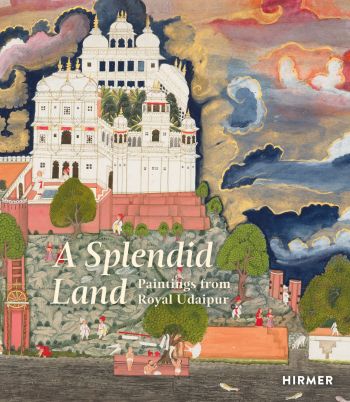 In the 18th century, the artists of Udaipur shifted their focus from small poetic manuscripts to large-scale paintings of the city’s palaces, lakes, mountains, and seasons. They sought to convey the bhava, the emotional tenor and sensorial experiences, that make places and times memorable. This was unlike anything else in Indian art. The paintings express themes of belonging and prosperous futures that are universal. A Splendid Land explores the environmental, political, and emotional contexts in which the new genre emerged. Udaipur’s economy depended on annual monsoons, extensive water harvesting, and securing the loyalty of nobles and allies. By celebrating regional abundance and courtly refinement, the paintings strengthened friendships in the changing political landscapes of early modern South Asia.
“The National Museum of Asian Art has a rich history of connecting visitors with South Asian arts and cultures,” said Chase Robinson, Dame Jillian Sackler Director of the Arthur M. Sackler Gallery and Freer Gallery of Art. “Built upon a long-standing collaboration with Indian colleagues, the exhibition will allow the museum to bring extraordinary but little-known pieces to a global audience, enriching its understanding of a fascinating moment in India’s past.”
The National Museum of Asian Art has more than 1,200 objects in its South Asian collections. Sculpture, paintings, and manuscripts illuminate the subcontinent’s many religious and courtly traditions; photography is at the center of the contemporary Indian holdings. A Splendid Land includes 13 paintings from the National Museum of Asian Art; paintings from Udaipur are a strength of the collection.
The artworks featured in the exhibition reveal how painters developed a new genre centered upon the lived experience of local landscapes, lake systems, and palaces. The atelier became an incubator; over some 200 years, artists found ever-new ways to evoke ambience, trigger memories, and create feelings of connection. This departure in subject matter differs from the body-focused visual traditions of Indian art over two millennia. A Splendid Land is the first exhibition to examine closely this shift and how it expands people’s understanding of emotions and sensorial experience, as well as climate and natural resource management, in early modern India.
A Splendid Land is organized as a journey that begins at Udaipur’s center and continues outward: first the lakes and lake palaces, then to the city, the countryside, and finally to the cosmos. An ambient soundscape by the renowned experimental filmmaker Amit Dutta (b. 1977, Jammu, India) underscores the sensorial elements in the paintings, inviting contemporary audiences to sense—and not just see—the moods of these extraordinary places and paintings. The installation will include 51 works on paper (roughly 3 feet by 4 feet), five monumental works on cotton (ranging in height from 5 feet to 10 feet), one scroll (9 feet in length) from the 17th through 19th centuries, and six photographs from the 19th and 20th centuries.
“The exhibition structure directly responds to the visuality of the paintings and the historical goals of the artists,” said Diamond, who is a specialist in Indian court painting. “Each gallery centers upon the emotions engendered by a particular place or season. The sequence of immersive moods will heighten the sensorial experience of place for museum visitors. I am grateful to the City Palace Museum for their partnership on this exciting project that allows our visitors to get a sense of Udaipur and its cultural heritage, and to co-curator Dipti Khera, whose groundbreaking work on historical emotions is central to the exhibition.”
Debra Diamond has curated numerous exhibitions with the National Museum of Asian Art, including Garden & Cosmos (2008–09), Yoga: The Art of Transformation (2013–14), and Body Image: Arts from the Indian Subcontinent, currently on view in the museum’s Freer Gallery of Art. Dipti Khera, associate professor in New York University’s Department of Art History and Institute of Fine Arts, has published extensively, foregrounding art that challenges colonial perspectives and global histories of the 18th and 19th centuries.
A Splendid Land will be accompanied by a robust program of public events, most notably a public symposium on the monsoon, past and present, and the ways that art reveals cultural attitudes towards natural resources and speaks to climate crises in South Asia that will bring perspectives of the past together with insights of the future. Additionally, the traditional Rajasthani music band Raitila Rajasthan will present Music of Splendid Land, featuring songs inspired from themes of Udaipur paintings showcased at the exhibition.
A Splendid Land: Paintings from Royal Udaipur is organized by the Smithsonian’s National Museum of Asian Art in collaboration with The City Palace Museum, Udaipur administered by The Maharana of Mewar Charitable Foundation.
Debra Diamond and Dipti Khera, eds., A Splendid Land: Paintings from Royal Udaipur (Munich: Hirmer Verlag, 2022), 400 pages, ISBN: 978-3777439440, $60.
Research Seminar | Greg Smith on Girtin and the Artist Catalogue
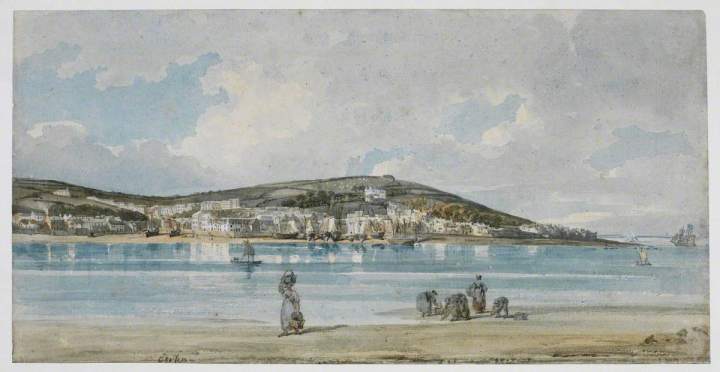
Thomas Girtin, Appledore, from Instow Sands, ca. 1800, graphite and watercolour on laid paper, 25 × 47 cm
(London: The Courtauld, D.1952.RW.846)
◊ ◊ ◊ ◊ ◊
From PMC:
Greg Smith | Rethinking the Artist Catalogue for the Online Age: Thomas Girtin (1775–1802)
Paul Mellon Centre, London, 5 October 2022, 6pm
This lecture relates to the publication Thomas Girtin (1775–1802): An Online Catalogue, Archive, and Introduction to the Artist, due to be released on 4 October.
I will begin by outlining the scope of the project and my thinking behind the site’s tri-partite structure and title: An Online Catalogue, Archive, and Introduction to the Artist. Particular attention will be paid to two challenges: how to make a free-to-access site straightforward to use for a non-specialist audience; and then, how best to ensure the future of the site as an academic resource that can develop through the incorporation of new material and research. I will then move on to consider the different sections of the site, beginning with the approximately 1550 catalogue entries that form its core. Emphasis will be placed on the features that distinguish the site from a conventionally published catalogue and why it is that I have studiously avoided using the term catalogue raisonné. I will then look at each of the sections of the Archive, focusing first on the challenge of relating the material to the rest of the site, and then summarising their current status in relation to my ambition to produce a comprehensive if not definitive record of sales, exhibitions and publications, together with extensive transcriptions of all the early biographical accounts and related manuscript material. I will conclude my introduction to the site by looking at some of its inevitable limitations, not least as a challenge to my audience to use it as a resource for the investigation of themes beyond the project’s scope. Book tickets»
Greg Smith is an independent art historian, who has published extensively on the history of British watercolours and watercolourists, as well as landscape artists working in Italy. He has also worked as a curator at the Whitworth Art Gallery, Manchester, the Design Museum, London, and the Barber Institute of Fine Art, Birmingham, and has organised exhibitions on the work of Thomas Girtin (Tate Britain), Thomas Jones (National Gallery of Wales), and Thomas Fearnley (Barber Institute of Fine Art). As Senior Research Fellow at the Paul Mellon Centre for Studies in British Art, Greg Smith is developing a major online project: Thomas Girtin (1775–1802): An Online Catalogue, Archive and Introduction to the Artist.
New Book | Dinner with Joseph Johnson
Marking Banned Books Week (18–24 September 2022), with an 18th-century reminder of publishing’s power. From Princeton UP (the British cover is, I think, more exciting –CH).
Daisy Hay, Dinner with Joseph Johnson: Books and Friendship in a Revolutionary Age (Princeton: Princeton University Press, 2022), 536 pages, ISBN: 978-0691243962, $40.
 Once a week, in late eighteenth-century London, writers of contrasting politics and personalities gathered around a dining table. The veal and boiled vegetables may have been unappetising, but the company was convivial and the conversation brilliant and unpredictable. The host was Joseph Johnson, publisher and bookseller: a man at the heart of literary life. In this book, Daisy Hay paints a remarkable portrait of a revolutionary age through the connected stories of the men and women who wrote it into being, and whose ideas still influence us today.
Johnson’s years as a publisher, 1760 to 1809, witnessed profound political, social, cultural, and religious changes—from the American and French revolutions to birth of the Romantic age—and many of his dinner guests and authors were at the center of events. The shifting constellation of extraordinary people at Johnson’s table included William Blake, William Wordsworth, Samuel Taylor Coleridge, Benjamin Franklin, the scientist Joseph Priestly, and the Swiss artist Henry Fuseli, as well as a group of extraordinary women—Mary Wollstonecraft, the novelist Maria Edgeworth, and the poet Anna Barbauld. These figures pioneered revolutions in science and medicine, proclaimed the rights of women and children, and charted the evolution of Britain’s relationship with America and Europe. As external forces conspired to silence their voices, Johnson made them heard by continuing to publish them, just as his table gave them refuge.
A rich work of biography and cultural history, Dinner with Joseph Johnson is an entertaining and enlightening story of a group of people who left an indelible mark on the modern age.
Daisy Hay is an award-winning biographer whose previous books include Young Romantics: The Shelleys, Byron, and Other Tangled Lives and Mr. and Mrs. Disraeli: A Strange Romance. She is associate professor of English literature and life writing at the University of Exeter.
Print Quarterly, September 2022
The long eighteenth century in the latest issue of Print Quarterly:
Print Quarterly 39.3 (September 2022)

Anonymous artist after Sébastien Leclerc, View of the Hall of Mirrors, ca. 1684, pen and brown ink, brown wash on paper, 13.6 × 9.1 cm (Musée National des Châteaux du Versailles, INV.DESS 1247).
Tomáš Valeš, “Franz Anton Maulbertsch, Jakob Matthias Schmutzer and the Allegory on the Edict of Toleration, 1785”
This article discusses new insights into the painter Franz Anton Maulbertsch (1724–1796) and the creation of his print, the Allegory on the Edict of Toleration (1785). It adduces two letters from the engraver Jakob Mattias Schmutzer (1733–1811), his collaborator since the 1750s and later his father-in-law. The article discusses the strategies used for the print’s distribution and also presents an analysis of the print’s preparatory drawing and three proof impressions.
Antoine Gallay, “Sébastien Leclerc’s Preparatory Drawing for the View of the Hall of Mirrors (1684): A Reassessment”
This short article re-examines the status of a drawing acquired by the Musée National des Châteaux de Versailles et de Trianon in 2008, traditionally attributed to Sébastien Leclerc and thought to have been made in preparation for his famous print of the View of the Hall of Mirror (1684). The author also presents a second little known drawing which was most certainly made by Leclerc himself in preparation for the print. Comparison between this drawing and the print offers new insight on the early appearance of the Hall of Mirrors and on Leclerc’s artistic conception and practices.
The issue also includes these relevant notes and reviews:
 Battle Engravings for the Emperors of China
Jean Michel Massing, Review of Henriette Lavaulx-Vrécourt, Niklas Leverenz and Alexey Pastukhov, Berlin Battle Engravings: 34 Copperplates for the Emperors of China / Berliner Schlachtenkupfer: 34 Druckplatten der Kaiser von China (Berlin: Staatliche Museen zu Berlin and Deutscher Kunstverlag, 2021), p. 305.
Thomas Gainsborough in London
Anne Lyles, Review of Susan Sloman, Gainsborough in London (London: Modern Art Press, 2021), p. 307.
Utamaro and the Spectacle of Beauty
Adam Haliburton, Review of Julie Nelson Davis, Utamaro and the Spectacle of Beauty (London: Reaktion Books, 2021), p. 308.
The Waterloo Map of Pierre-Jacques Goetghebuer
Inge Misschaert has contributed a brief analysis of the much-copied Map of the Battle of Waterloo (1815) by Belgian architect and engraver Pierre-Jacques Goetghebuer. The article elaborates on the production history of Goetghebuer’s map and its context alongside other adventurous competitors seeking to illustrate the famous battle in its immediate aftermath.
The Reception of Raphael
Carlo Schmid, Review of Andres Stolzenburg and David Klemm, eds., Raffael: Wirkung eines Genies (Petersberg: Hamburger Kunsthalle and Michael Imhof Verlag, 2021), p. 315.
The review focuses on the cult of Raphael which took off at the beginning of the nineteenth century.
The Fruitful Encounter Between Engraving and Photography
Francesca Maria Bonetti, Review of Nicolas Devigne and Virginie Caudron, eds., Contacts – Photographie – Gravure: Jeux et Enjeux (Aire-sur-la-Lys: ateliergaleriéditions and éditions Musée de Gravelines, 2020), p. 318.
Bonetti discusses the different photomechanical processes based on proto-photographic experiments carried out between 1824 and 1827 and known as heliography.
Exhibition | Threads of Power
 Opening this week at BGC:
Threads of Power: Lace from the Textilmuseum St. Gallen
Bard Graduate Center, New York, 16 September 2022 — 1 January 2023
Curated by Emma Cormack, Ilona Kos, and Michele Majer
“I love lace for evening dresses … for a cocktail frock … or for a blouse… . When a fabric is fancy in itself it needs simplicity of design to show it to its best advantage.” —Christian Dior
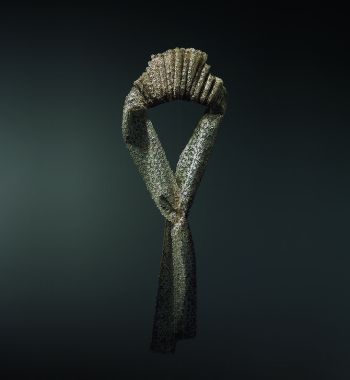
Point de France needle-lace frelange with lappets, Orne, France, ca. 1695, linen (Textilmuseum St. Gallen, acquisition from the John Jacoby Collection, 1954,01246; photo by Michael Rast).
Lace—delicate, sumptuous, enigmatic—takes over the Bard Graduate Center Gallery this fall. Trace the development of European lace from its sixteenth-century origins to the present day. See more than 150 examples of lace from the renowned collection of Switzerland’s Textilmuseum St. Gallen, including some of the world’s finest examples of handmade needle and bobbin lace that were favored by the wealthy and powerful of Bourbon France and Habsburg Spain. Learn about the women who crafted this sought-after status symbol by hand and about the evolution of Swiss chemical lace, known as guipure lace, made on embroidery machines. Explore new innovations in lace production, like laser-cut and 3D-printed lace, used in contemporary haute couture.
Curated by Emma Cormack, associate curator, Bard Graduate Center; Ilona Kos, curator, Textilmuseum St. Gallen; and Michele Majer, assistant professor, Bard Graduate Center. Threads of Power: Lace from the Textilmuseum St. Gallen is organized by Bard Graduate Center and the Textilmuseum St. Gallen. The exhibition will open at Bard Graduate Center Gallery in New York in September 2022 and will be available to tour after closing in January 2023.
◊ ◊ ◊ ◊ ◊
Emma Cormack and Michele Majer, eds., Threads of Power: Lace from the Textilmuseum St. Gallen (New York: Bard Graduate Center, 2022), 432 pages, ISBN: 978-0300263497, $75.
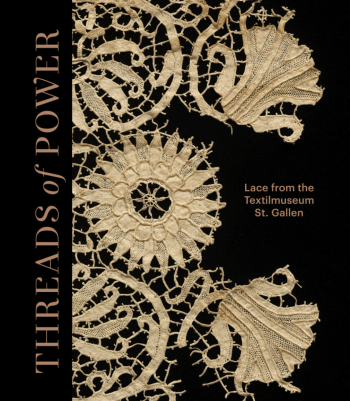 Tracing the history of lace in fashion from its sixteenth-century origins to the present, Threads of Power: Lace from the Textilmuseum St. Gallen offers a look at one of the world’s finest collections of historical lace. The book explores the longstanding connections between lace and status, addressing styles in lace worn at royal courts, including Habsburg Spain and Bourbon France, as well as lace worn by the elite ruling classes and Indigenous peoples in the Spanish Americas. Featuring new research, the publication covers a range of topics related to lace production, lace in fashion and portraiture, lace revivals, the mechanization of the lace industries in the nineteenth and twentieth centuries, and contemporary innovations in lace. With a focus on lace techniques, women lace makers, and lace as a signifier of wealth and power, this richly illustrated book includes wide-ranging contributions by curators and experts from major museums and academic institutions.
C O N T E N T S
Director’s Foreword, Susan Weber
Editor’s Note
Introduction, Emma Cormack and Michele Majer
The Emergence of Lace in Early Modern Europe
1 Barbara Karl — Lace and Status: Luxury, Power, and Control in Early Modernity
2 Femke Speelberg — Putting a Name to Lace: Fashion, Fame, and the Production of Printed Textile Pattern Books
3 Paula Hohti Erichsen — ‘Monstrous’ Ruffs and Elegant Trimmings: Lace and Lacemaking in Early Modern Italy
4 Frieda Sorber — Antwerp, A Center of Lace Making and Lace Dealing, 1550–1750
Lace in Spain and the Americas, 1500–1800
5 Amalia Descalzo Lorenzo — The Triumph of Lace: Spanish Portraiture of the Sixteenth and Seventeenth Centuries
6 Mariselle Méléndez — ‘A desire of being distinguished by an elegant dress is universal’: Clothing, Status and Convenience in Eighteenth-Century Spanish America
7 James Middleton — A Prodigious Excess: Lace in New Spain and Peru, ca. 1600–1800
8 Laura Beltrán-Rubio — ‘Covered in much fine lace’: Dress in the Viceroyalty of New Granada
The Dominance of France, 1660–1790
9 Denis Bruna — Lace and Economy under Louis XIV
10 Lesley Miller — Lace à la Mode, ca. 1690–1790
Mechanization and Revivalism: The Nineteenth Century Lace Industries
11 Emma Cormack and Michele Majer — Fashion and the Lace Industries in France, Belgium, and England, 1800–1900
12 Annabel Bonnin Talbot — Ahead of the Curve: A. Blackbourne & Co. and the Late-Nineteenth Century British Lace Industry
13 Emily Zilber — Italy to New York: Making Historic Textiles Modern at the Scoula d’Industrie Italiane
14 Anne Wanner-JeanRichard and Ilona Kos — Imitation and Inspiration: The Leopold Iklé Collection in St. Gallen
Innovations in Lace, 1900 to Today
15 Catherine Örmen — Fashion and Lace since 1900
16 Annina Dosch, Interview with Tobias Forster, Hans Schreiber, and Martin Leuthold — Lace in St. Gallen Today: Tradition and Innovation at Forster Rohner and Jakob Schlaepfer
Illustrated Checklist of the Exhibition
Glossary, compiled by Kenna Libes
Bibliography
Contributors
Index










leave a comment