Call for Papers | Women Artists in Italy, 1607–Unification
From ArtHist.net:
Reframing Methodologies: Women Artists in Italy, 1607 to the Italian Unification
Sixth Edition of the Annual International Women in the Arts Conference (AIWAC)
University of Arkansas Rome Center, 15–17 October 2026
Proposals due by 30 April 2026
Following the two exhibitions Roma Pittrice: Artiste al lavoro tra XVI e XIX secolo (Rome, Palazzo Braschi, 25/10/2024 – 04/05/2025) and Donne nella Napoli spagnola: Un altro Seicento (Naples, Le Gallerie d’Italia, 20/11/ 2025 – 22/3/2026), this conference seeks to foster critical reflections on methodologies for the study of women artists. More than fifty years after Linda Nochlin’s seminal question, “Why have there been no great women artists?”, we aim to reassess and critically examine the current state of scholarship on women and gender in the arts.
We invite scholars to present papers addressing any aspect of women artists and their participation in cultural discourses from the early modern to the modern period. The goal is to reconsider and reframe methodological approaches within the discipline. While the field has made significant advances, it has also perpetuated certain narratives and myths that have shaped—at times uncritically—the rhetoric of feminist art history. This conference aims to interrogate these assumptions and to reassess the historiographical and philological foundations of the field.
The year 1607 marks a significant turning point: the Accademia di San Luca in Rome opened its doors to women for the first time, contributing to the professionalization of women artists. In the decades that followed, other Italian cities adopted similar practices. Alongside academies, artistic training was also provided through workshops, which functioned as de facto private academies. Although only a limited number of women were admitted to official institutions—such as the Accademia di San Luca, where women were documented as members from 1607, albeit excluded from life drawing and governance—many women accessed professional training through alternative structures. These included art schools founded by women artists themselves, such as Elisabetta Sirani’s school in Bologna and Virginia da Vezzo’s in Paris. Artemisia Gentileschi likewise maintained a workshop in Naples, where she trained her daughter Prudentia as well as several male artists.
Suggested topics include, but are not limited to:
• Methodological approaches to the study of women artists (past, present, and future)
• Revisiting canonical narratives and persistent myths in feminist art history
• Archival, philological, and historiographical challenges in reconstructing women’s artistic production
• Women artists and artistic training: academies, workshops, and alternative pedagogies
• Professional networks, patronage, and mobility (local, national, and transnational)
• Women artists as teachers, workshop leaders, and agents of artistic transmission
• The role of institutions (academies, courts, convents) in shaping women’s artistic careers
• Gendered access to artistic genres (portraiture, history painting, still life, etc.)
• Women artists and the art market
• Self-representation, authorship, and artistic identity
• Women artists in relation to family workshops and dynastic practices
• Cross-cultural exchanges and the presence of Italian women artists abroad or expatriate women artists in Italy.
• The reception and historiography of women artists from the 17th to the 19th century
• Rethinking periodization: from early modern to modern frameworks
• Digital humanities and new tools for researching women artists
Selected conference papers will be published in the AIWAC Acta Colloquia post-print series, in collaboration with Brepols Publishers, following a peer-review process.
To submit a proposal, please ensure the following requirements are met:
• Abstract: Submit an abstract in English (Word format), with a maximum length of 500 words (excluding author name(s) and contact details).
• Short Biography: Include a brief biographical note of no more than 150 words.
• File Format and Naming: Save the proposal as a .doc file (PDF files will not be considered), using the following naming convention: AIWAC6_Surname.doc
• Curriculum Vitae: Include a short CV.
• Submission Method: Send all materials via email to clollobr@uark.edu and amodesti@unimelb.edu.au.
Submission Deadline: 30 April 2026
Notification of Acceptance: 18 July 2026
Presentation Format: Accepted papers will be allocated a maximum of 20 minutes for presentation.
Funding: Please note that the organizers are unable to provide financial support for travel and/or accommodation expenses for speakers or attendees.
Participation Fee: A conference participation fee will be required. Details regarding the fee will be communicated upon acceptance of proposals.
Notification Policy: Due to the high volume of submissions, only successful applicants will be notified.
Conference Venue and Format: The conference will take place at the University of Arkansas Rome Center and will feature a combination of selected paper presentations and keynote lectures.
Final Program: The complete conference program will be circulated by the end of September 2026.
Call for Papers | Art as Luxury, Luxury as Art
From TIAMSA:
Art as Luxury, Luxury as Art: Markets and the Making of Value
The International Art Market Studies Association Conference
Sotheby’s Institute of Art, New York, 22–24 October 2026
Proposals due by 29 May 2026
Luxury has long been an important context for art. In sixteenth-century Antwerp, art was a key part of the city’s thriving luxury trade; Our Lady’s Pand—the first permanent art market in Europe—was one of several panden that served these new industries. In eighteenth-century Paris, marchands-merciers such as Edme-François Gersaint sold paintings, drawings, and engravings alongside porcelain, lacquer, jewelry, and shells. At the turn of the twentieth century, the dealer Joseph Duveen not only cultivated in his American industrialist clients a taste for Old Master painting but also promoted European furniture, tapestries, and objets d’art, staging these works in lavish period rooms in his New York gallery to underscore their sumptuousness.
Art has likewise provided a crucial context for luxury. In Belle Époque Paris, Paul Poiret—the designer who arguably created fashion’s first modern lifestyle brand—used art to elevate his enterprise, enlisting artists to create textile designs and sponsoring an avant-garde art gallery. “The designer is, by definition, an artist in luxury,” he wrote. Today’s luxury fashion houses follow Poiret’s model, integrating artworks into their retail spaces, establishing their own art foundations, and developing products in collaboration with artists. Eschewing the labels ‘luxury’ and ‘fashion’, they recast themselves as ‘cultural brands’. At the same time, art businesses situate themselves ever-more explicitly within the luxury sphere. In 2019, Sotheby’s auction house reorganized into two divisions—fine art and luxury—and in 2021, Christie’s revised its website to identify itself as “a world-leading art and luxury business.”
The tenth annual TIAMSA conference focuses on the relationship between the art and luxury markets, both historically and in the contemporary moment, examining their points of intersection, their reciprocal influences, and the ways in which each has shaped—and defined itself in relation to—the other.
Proposals may consider (but are not limited to) the following themes:
• The evolving definitions of ‘art’ and ‘luxury’ over time, and the shifting status of the applied and decorative arts.
• The relative value of art vis-à-vis luxury and the influence of industrialization.
• Historical figures and businesses associated with the art market who also dealt in luxury objects.
• Historical figures and businesses in luxury fields—such as fashion and jewelry—who aligned themselves with fine art.
• Modes of display and sale across art and luxury, historically and today.
• Contemporary art businesses that increasingly rely on the sale of luxury objects, or that adopt sales and marketing tactics from the luxury sector.
• The conditions that historically led auction houses such as Christie’s and Sotheby’s to specialize in fine art—and that more recently have driven their expansion into luxury categories.
• The ‘artification’ of luxury as a business strategy, from artist-brand collaborations to art-filled retail spaces.
• The phenomenon of luxury brands establishing their own art museums, staging pop-up art exhibitions, and transforming their flagship stores into museum-like spaces.
• Art museum exhibitions focused on luxury brands, such as the Metropolitan Museum of Art’s 1983 Yves Saint Laurent exhibition, the Guggenheim’s 2000 Armani show, and the Victoria & Albert Museum’s Alexander McQueen, Dior, and Cartier exhibitions.
• Luxury’s role in expanding the definition of art, including collaborations with artists on NFTs.
• How the values of luxury are shaping art and vice-versa.
We welcome proposals from scholars at all career stages and from a variety of disciplines, including art market studies, luxury studies, art history, economic history, fashion studies, museum studies, cultural sociology, business history, and other related fields.
Please submit an abstract (no more than 300 words) and a short bio by Friday, 1 May 2026, using this form: https://forms.office.com/r/Husr007JDz
Successful papers will be notified by 29 May 2026. For inquiries, please contact tiamsaconference@sia.edu.
Call for Papers | Location in Early Modern Netherlandish Art, 1550–1800
From the MFA Boston:
Location, Location, Location: Artistic Procedures, Knowledge, and
Place in Early Modern Netherlandish Art, 1550–1800
Center for Netherlandish Art Colloquium
Online, Museum of Fine Arts Boston, 15 May 2026
Organized by Renata Nagy, Hannah Prescott, and Henrike Scholten
Proposals due by 29 March 2026
Artistic practice and practical forms of expertise do not occur in a vacuum, but are situated in a particular place, whether globally or locally. For instance, the Center for Netherlandish Art (CNA) supports the study of art from the Low Countries, but is situated in Boston; this location influences the work CNA fellows do, the objects they examine, and the networks that enhance their scholarship. This year’s CNA colloquium explores how the particularities of place shaped not just the lives of early modern artists and scholars, but also influenced their work. Talks may consider how trade networks, interpersonal dynamics, and local ecologies influenced the possibilities for learning, the availability of technical procedures, and the markets accessible to artistic practitioners.
The CNA seeks papers from emerging scholars that explore the connections between knowledge and locality in Dutch and Flemish art from approximately 1550 to 1800. We invite contributions from MA and PhD students, PhD candidates, postdoctoral researchers, and early-career museum professionals. As we amplify our efforts toward becoming truly inclusive, ensuring that diversity and equity are lived values, we actively encourage candidates from all backgrounds and in any discipline that interacts closely with art or material culture.
In the early modern period, making sense of the world encompassed a wide variety of practices, from observing objects of art and nature firsthand to learning and sharing expertise through established social networks. For instance, women active in the home displayed and disseminated knowledge through the use of everyday materials and objects; readers of natural history publications shaped visual and textual knowledge based on their own local experience; and artists active outside of artistic centers like Amsterdam were limited but also propelled by their local environments. These varied practices provide a shared terrain rather than a single interpretive framework for the exploration of knowledge and its relationship to place.
Paper topics may include but are not limited to:
• The influence of local networks on artistic production and scientific visual culture
• How the material culture of the domestic sphere shaped the development and demonstration of knowledge
• The extent that place (whether as a site of production or origin of a particular object or material) impacted art historical interpretations of something as central or peripheral
• The ways people consumed knowledge in the early modern Low Countries
• The extent that knowledge consumption can be divided into the categories of ‘local’ and ‘global’
• How global trade and the consumption of foreign materials revised established methods of artistic or craft production
• How the peripheries of artistic production, as opposed to cosmopolitan centers such as Antwerp or Amsterdam, influenced artists and scholars
• How size and portability impacted where objects were used
Two to three papers will be selected for presentation during colloquium. Selected candidates will have the opportunity to workshop their papers during a rehearsal presentation one week before the colloquium.
Please submit a title and abstract (300 words maximum) together with a CV in a single PDF file to cna@mfa.org, using ‘Call for Papers’ as the email subject line. Submissions are accepted on a rolling basis through 29 March 2026. Selected participants will be notified by 3 April 2026.
The Founders of the Center for Netherlandish Art at the MFA are Rose-Marie and Eijk van Otterloo and Susan and Matthew Weatherbie. The conference is organized by CNA Fellows Renata Nagy, Hannah Prescott, and Henrike Scholten.
Call for Papers | Baroque Stucco Marble Altars
From ArtHist.net:
Baroque Stucco Marble Altars: Materials, Conservation, and Meaning
National Gallery of Slovenia, Ljubljana, 15–16 September 2026
Proposals due by 15 April 2026
The Restoration Centre – Institute for the Protection of Cultural Heritage of Slovenia, in collaboration with the Faculty of Arts, University of Ljubljana, the Academy of Fine Arts and Design, University of Ljubljana, and the Faculty of Chemistry and Chemical Technology, University of Ljubljana, invites proposals for the international conference Baroque Stucco Marble Altars: Materials, Conservation and Meaning.
The conference will explore the complex phenomenon of Baroque stucco marble altars as both material and cultural artefacts. By bringing together experts from various disciplines, the event aims to encourage a comprehensive discussion on the artistic, technical, and historical significance of these works of art. Special attention will be given to questions of materiality, workshop practices, artistic exchanges, and the conservation and restoration of stucco marble. The conference seeks to highlight not only the aesthetic and symbolic meaning of these altars but also the diverse methods and approaches used to study, preserve, and interpret them today. We welcome contributions from conservators, restorers, art historians, and scientists investigating stucco marble from any perspective. The working language of the conference is English.
Please submit your proposal for a 20-minute paper (complete with a title, a 250-word abstract, and a short biography of no more than 100 words) to stuccomarble2026@gmail.com by 15 April 2026. Further practical information regarding the conference programme will be provided after the selection of papers.
Organisers
Restoration Centre – Institute for the Protection of Cultural Heritage of Slovenia
Faculty of Arts, University of Ljubljana
Academy of Fine Arts and Design, University of Ljubljana
Faculty of Chemistry and Chemical Technology, University of Ljubljana
Co-organisers
Slovenian Research and Innovation Agency (ARIS)
Slovenian Society for Conservation-Restoration (DRS)
National Gallery of Slovenia
Call for Papers | Creating the Sacred at Court, 1300–1800
From ArtHist.net:
Creating the Sacred at Court:
Sensorial Practices and Experiences in Europe, 1300–1800
Slovak University of Technology, Bratislava, 21–23 September 2026
Proposals due by 15 May 2026
How does the sacred come into being? Art history, architectural history, and religious studies have long demonstrated that the sacred is not merely an inherent property of spaces, objects, or images, but is constituted in part through (worldly) staging. Light regimes, overwhelming chromatic effects, dense olfactory atmospheres, architectural materials, and spatial structures capable of producing resonances, all contribute to the sensorial construction of the holy. Yet sacred space is never purely environmental. Singing and speaking, moving and sometimes even dancing participants and audiences are integral to the performative creation of the sacred as well as to its perception.
But how can we approach such past sensorial enactments and experiences today? How can we model the historical sensory dimensions of ceremonies and devotional acts on the basis of surviving spaces, furnishings, or liturgical and courtly sources? And how might contemporary cognitive science alongside digital, virtual, and AI-based methods enable new forms of analysis, simulation, and interpretation? These questions lie at the centre of the working group ‘Sacred Spaces’ within COST Action 24164: Sensing Europe’s Court Spaces at the Crossroads of Past, Present and Future (SENSES). ‘Court Space(s)’ should be understood here as the spatial and material environment of medieval and early modern courts in Europe (1300–1800), seen as playing a significant role in shaping social structures, behaviours, and ways of life. The Action explores the full gamut of sensory experiences linked with the court residence and its life throughout history until today to build a better understanding of this complex cultural phenomenon, to support its survival as European heritage, and to contribute actively to its role as shaper of a collective identity for the future.
Sacred space at court should be understood as a multiple ranging from the smallest scale to the largest. Architecturally speaking, it comprises the court chapel, or as the case may be, the church, even an entire monastery (e.g. the convent palaces of the Hispanic world, such as the Escorial and the Descalzas Reales in Madrid, Spain, but also the monastery at Brou, France, built by the widowed regent of the Habsburg Low Countries). As part of the private apartments, the oratories constitute another component, one which serves as connection. But sacred space at court includes much more, the courtly organization behind the chapel’s service frequently taking care of worldly matters such as the prince’s valuables, for instance; the great hall adjacent to the smaller chapel actually serving as auditorium of the Mass for the lower ranks at court, and so on. On a larger scale, courts established religious networks extending across their lands, such as the Habsburg archdukes serving as regents establishing seven Marian shrines in strategic sites of the Low Countries around 1600.
Focusing on courtly contexts from 1300 to 1800, the conference intends to explore the inter-sensorial performances and experiences within religious spaces of European court residences. It is explicitly conceived as forward-looking, aiming to open future avenues of research and foster shared methodological standards across disciplines.
We especially welcome contributions that
• explore inter-sensorial experience from an interdisciplinary perspective
• address the performative and embodied dimensions of sacred space at court in all its forms (such as court chapels, churches, monasteries, oratories)
• reflect epistemological questions of approaching past perception
• present proof-of-concept projects using digital, virtual, or AI-based methods
We encourage participation from art and architecture historians, scholars in cognitive sciences and historical cognition studies, olfactory heritage studies, digital humanities researchers, heritage specialists and curators, as well as digital designers and simulation experts. Early career researchers are strongly encouraged to apply.
Please submit an abstract (max 300 words) and a short CV (max one page) by 15 May 2026 to krista.dejonge@kuleuven.be and joanna.olchawa@lmu.de. Participants must register with COST (free of charge). Travel and accommodation costs of accepted speakers will be reimbursed according to COST rules. Early career researchers may also apply for Short-Term Scientific Missions. More information is available here and here.
Organisation
Andrea Vargová (Slovak U. of Technology, Bratislava)
Monika Rychtáriková (KU Leuven / Slovak U. of Technology, Bratislava)
Magdaléna Kvasnicová (Slovak U. of Technology, Bratislava)
Vojtech Chmelík (Slovak U. of Technology, Bratislava)
Scientific Committee
Krista De Jonge (KU Leuven), Chair
Monika Rychtáriková (KU Leuven)
Andrea Vargová (Slovak U. of Technology, Bratislava)
Joanna Olchawa (Ludwig-Maximilians-Universität München)
Dubravka Botica (U. of Zagreb)
Jiří Kubeš (U. of Pardubice)
Philippe Vendrix (Tours, RicercarLab, Centre d’Études supérieures de la renaissance)
Pedro Luengo Gutiérrez (U. of Seville)
Mona Hess (Otto-Friedrich-Universität Bamberg)
José Eloy Hortal Muñoz (U. Juan Carlos, Madrid)
Call for Papers | Imagining Britain
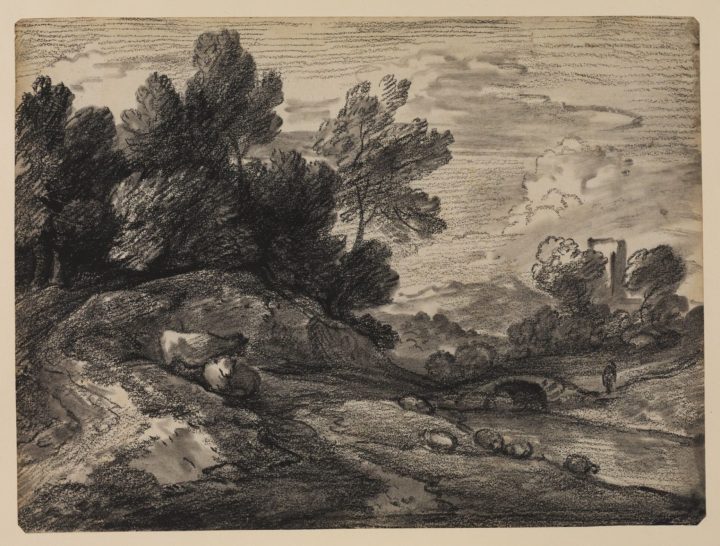
Thomas Gainsborough, Landscape with Sheep and Cattle on the Bank of a Stream, 1780–84, synthetic black chalk with stumping on wove paper, all four corners cut (London: Courtauld Gallery, Robert Clermont Witt, bequest, 1952).
◊ ◊ ◊ ◊ ◊
From The Courtauld:
Imagining Britain: Postgraduate and Early Career Research in British and Irish Art
The Courtauld Institute of Art, London, 9 June 2026
Organized by Claire Ó Nualláin and Clara Shaw
Proposals due by 9 March 2026
In recent decades, a significant aspect of British art studies has involved reflection on the nature and boundaries of the field itself, debated critically and curatorially.
A decade on from the inaugural provocation of British Art Studies volume I, published in November 2015, in which art historians responded to the statement, “There’s No Such Thing as British Art,” the expansion of the field’s geographic and intellectual perspectives has opened new research avenues. Increasingly, scholars have recognised the possibilities afforded to the study of British art when it is brought into dialogue with the arts of regions which have hitherto been marginalised in its discussion, including Ireland and former colonial territories. This introspection has instigated a reexamination of British collections, with major rehangs including at Tate Britain and the Yale Center for British Art, encouraging fresh perspectives on canonical works of art and the emergence of lesser-known artists and histories from the archive. In 2025, the Courtauld Institute of Art announced the opening of the Manton Centre for British Art, a major new initiative in the field providing new contexts in which to explore the definition, scope, and even relevance of the concept of ‘British’ art.
In light of these exciting developments in the study of British and Irish art, we wish to announce a call for papers from postgraduate and early career researchers responding to the theme Imagining Britain. This student-led symposium aims to provide an interdisciplinary, cross-period forum for fruitful discussions interrogating the role of visual and material culture in reinforcing, challenging and complicating the notion of ‘British.’
We welcome proposals for fifteen to twenty-minute papers exploring any aspect of the visual histories of Britain and Ireland from medieval to the present day that address issues including, but not limited to:
• Reflections on the historiography of British and Irish art, and the influence of major collectors and institutions in constructing its canon
• Histories of state or monarchical deployment of art and material culture to construct or shape national identity
• Case studies of the role of art and visual culture in responding to questions of British identity, particularly from underrepresented perspectives
• Longue durée analysis of the development of British art
• Analyses of canonical works of British art from post-colonial and post-Imperial perspectives
Please send paper proposals (250–400 words) and a full CV to Claire Ó Nualláin c2400367@courtauld.ac.uk and Clara Shaw c2101718@courtauld.ac.uk. The deadline for applications is Monday, 9 March. Applicants will be informed about decisions by early April. Successful applicants will be encouraged, where possible, to use institutional funding they have available for travel and accommodation, as only minimal funding from the Courtauld will be available and this will be reserved for early career candidates and those without institutional support.
Supported by the CHASE Doctoral Training Partnership.
Call for Essays | History of Emotions in Visual Culture
From the Call for Contributions, via ArtHistory.net:
Edited Volume | The History of Emotions Seen through Visual Culture
Proposals due by 30 March 2026
Today, emotions are present in every aspect of daily life: think of how joy, sadness, loneliness, and compassion, to name just a few, are emotional axes that underpin the experiences of the 21st century. This premise not only marks the contemporary, but also colours all cultural production created throughout time. To speak of a history of emotions linked to visual culture is to understand that images not only shape or produce emotions and feelings in a viewer, but also act as an active instrument that represents them. See how paintings, engravings, sculptures, films, and digital images themselves participate in the configuration of an emotional language, illustrating what should be felt, how it should be done, and how it is expressed.
From this framework, the image must be understood as a located affective element, that is, its emotionality is linked to specific practices, modes of circulation, and reception that mark the entire history. Thus, proposing an examination of visual culture from the history of emotions allows us to establish a dialogue focused on tracing how all these feelings are translated through gestures, attitudes, poses, in short, any visual message, and how these, in turn, operate in processes of power, identity, memory and individual or collective experience.
This collective volume aims to explore how emotions are produced, questioned, circulated, and perpetuated through visual practices in any historical context. The resulting book is intended to form a dialogue between the history of emotions and visual culture.
The suggested thematic areas are as follows—they are not exclusive:
1 Iconography of feeling: gestures, expressions, bodies, pain, grief, fear, desire, shame, pride, tenderness, etc. All those emotions that can be gleaned from the iconographic and iconological study of a work.
2 Emotions and the politics of images: propaganda, iconoclasm, censorship, mobilisation, memory.
3 Tactics of reception: gaze, empathy, identification, and interpretive communities.
4 The materiality of affections: image objects, relics, and transmission in museums.
5 Technologies of affections: visual technologies and affections: photography, cinema, TV, social networks, AI, digital archives.
This volume seeks relevant chapters that deal with specific and broad visual corpora (painting, engraving, illustrated press, photography, cinema, memes, video games, family archives, museography, etc.), open to any period. The interest lies in proposing an argument focused not only on representations, but also on how they were used, circulated, or in which practices they were inscribed. Proposals are accepted in Spanish and English.
To be considered, please submit a proposal with a title, an abstract (300–400 words), a brief CV (100–150 words), and five keywords by 30 April 2026 to emocionesyculturavisual@hotmail.com with the subject: “CFP — Emotions and visual culture — Surname.” Notification of acceptance will be sent by 15 May 2026. Complete chapters will be due by 30 September 2026 (extendable).
Call for Articles | A Passion for Porcelain
From the Call for Papers:
A Passion for Porcelain: Volume in Honour of Dame Rosalind Savill
The French Porcelain Society Journal, Volume 11
Proposals due by 1 April 2026; completed articles will be due by 1 October 2026
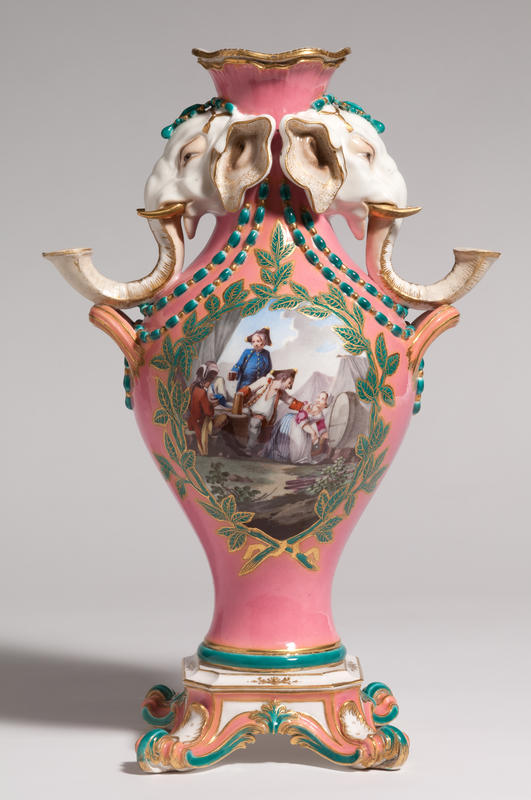
Vase à têtes d’éléphant, Sèvres Porcelain Manufactory, ca. 1760, purchased by Louis XV in December 1760 (Waddesdon Manor, no. 3013; photo by Mike Fear).
The French Porcelain Society Journal is the leading academic, peer-reviewed English-language publication on European ceramics and their histories, illustrated in full colour. After celebrating its 40th anniversary in 2024 with the publication of an issue focused on the work of twentieth-century scholars, collectors, and dealers who have contributed to advancing the study of European ceramics, the French Porcelain Society would like to honour the life and work of Dame Rosalind Savill (1951–2024), who served as President of the Society for 24 years, from 1999 until 2023. Dame Rosalind (‘Ros’) Savill was a leading expert in the production of the Vincennes/Sèvres factory during the eighteenth century and on Madame de Pompadour, one of the factory’s most prominent clients and advocates. Her internationally acclaimed research was published in The Wallace Collection Catalogue of Sèvres Porcelain (1988)—the institution that she directed from 1992 until 2011—and in the more recent Everyday Rococo: Madame de Pompadour and Sèvres Porcelain (2021), as well as in articles and contributions to other books, catalogues, academic journals, and specialist publications such as The Burlington Magazine. Ros’s indefatigable thirst for knowledge was illustrated by her interest in other topics beyond that of French eighteenth-century porcelain, from music, horticulture and birds, to furniture and arms and armour. Above all, Ros’s passion for ceramics was communicated in any conversation with her, be it in front of a museum display or around the dinner table. The next issue of The French Porcelain Society Journal wants to commemorate that passion for European ceramics with contributions that can range from object-focused case studies to articles with an academic or historiographic approach to the subject.
Topics for consideration may include but are not limited to the following:
• Insights into the production of porcelain at the Vincennes/Sèvres factory and stories relating to its personnel, agents, and collectors during the eighteenth and nineteenth centuries
• New research on specific objects or groups of objects within the remit of European ceramics, with a particular interest in French eighteenth-century faience and porcelain productions
• Contributions to the study of European ceramic factories, their histories, establishment, running and, if appropriate, disappearance
• Research on collectors of European ceramics
Submissions in the first instance should be a summary of no more than 400 words, with a brief description of the argument, a historiography, and a note of the research tools and sources used. Articles must be original; we do not accept modified versions of articles published elsewhere electronically or in print. Please include a brief biography. Articles will be peer reviewed by the editorial board and the FPS Committee of academic and museum specialists. Submissions should be between 3,000 and 6,000 words in length excluding endnotes and a house style sheet will be provided. Up to 15 high-resolution images per article will be accepted. Authors are responsible for obtaining copyright clearance. Please send abstracts as an email attachment to the FPS Journal Editorial Board (fpsjournal@gmail.com) by 1 April 2026. If your abstract is accepted, articles and images will be due by 1 October 2026. Publication is provisional on satisfactory peer review.
Call for Papers | Thinking with Materials across Histories and Practices
From ArtHist.net:
Thinking with Materials across Histories and Practices
Academy of Arts, Architecture, and Design, Prague, 1–2 October 2026
Proposals due by 31 March 2026
The Centre for Doctoral Studies UMPRUM is pleased to announce an international doctoral conference focused on materials and materiality in the methodology of art history. We invite participants to join us in October for a two-day conference at the Academy of Arts, Architecture and Design in Prague.
Referring to the material, linguistic, or pictorial turn has become a convenient way for art historians to register methodological change. However, such labels risk smoothing over more gradual transformations or historiographical precedents. If we understand the objects of our inquiry as silent messengers (Dupré, 2011), it is their material that underpins their communicative force. In what is ostensibly an object-oriented discipline, one might expect material to be a fundamental point of inquiry. As Ernst Gombrich observed, even the most ordinary object, such as a teacup, opens questions rooted in its substance, physical behaviour, and mode of production (Gombrich, 1988). An object may invite multiple avenues of analysis, yet it is the material itself that first sets these questions in motion.
However, as the material turn itself demonstrates, the interest in material has gradually slipped into the background, overshadowed by approaches that tended to privilege formal or iconographic concerns. If the material turn may be understood as an invitation to re-examine the discipline’s own history (Fricke and Lehmann, 2024), the forthcoming conference seeks to pursue it with more horizontal perspectives and microhistories in mind.
We aim to explore the following thematic areas:
Voices from beyond the Canon
In the historiography of material-oriented art history, figures such as Michael Baxandall and Henri Focillon are frequently invoked, while less canonical voices whose work engaged with materials still await fuller inclusion into this discussion. During the conference, we aim to recover perspectives from diverse linguistic and regional traditions, as well as voices that may have been overlooked or forgotten in existing historiographical frameworks.
Potential avenues of inquiry include, but are not limited to, the following questions:
• How have local art-historical discourses responded to and expanded upon the work of canonical art historians—such as Baxandall—when accounting for material and technical specificities?
• To what extent have art historians historically challenged the long-standing privileging of form over matter (material) in their interpretations of artworks?
• How has the primacy of disegno interno, or the inner idea, shaped the understanding of matter (material) as subordinate in artistic creation?
• How have art historians reflected philosophical conceptions, such as hylozoism, that treat matter as an active agent in creation?
• To what extent did modern vitalist notions of matter—as lively, self-organizing, or possessing formative capacities—shape the emergence of art history and its early approaches to objects?
Rethinking Hierarchies
The recent fascination with materiality has drawn renewed attention to objects made from diverse materials, long relegated to the category of craft, such as glass, ceramics, metalwork, or textiles. Objects historically excluded from canonical art-historical narratives, particularly those grounded in artisanal knowledge, are now becoming central to emerging efforts to rethink the canon.
Possible questions for contributors may include:
• How have art historians specializing in objects relegated to the realm of craft navigated within a scholarly discourse and jargon originally shaped by the highest-ranked genres and media, such as painting or sculptures?
• Practitioners bring processual and materially grounded forms of knowledge that can redirect theoretical questions, yet their expertise often remains marginal in methodological debates. How have practitioners of art and craft—past and present—thought about materials? What insights do they contribute to reenactments and reconstructions, particularly with regard to material intelligence?
Logistics
The conference will be held in person, but online participation is also possible. The main language of the event will be English, and papers should not exceed 20 minutes. PhD students and early career researchers are particularly encouraged to apply. To be considered, please submit a proposal of 200–300 words along with a short bio (up to 150 words) to monika.drlikova@umprum.cz and david.blaha@umprum.cz by 31 March 2026. Notifications of acceptance will be sent by the end of April 2026.
Meals for all presenters during the conference will be covered, and we hope to offer travel support, depending on pending funding arrangements. We will update participants when funding is confirmed.
Organizing Committee
David Bláha, Denisa Dolanská, Monika Drlíková, Tomáš Klička, Veronika Králíková Červená, and Veronika Soukupová
Call for Papers | Architecture and Travels between Americas and Europe
From ArtHist.net:
Atlantic Circulations: Architecture and Travels between
the Americas and Europe since the 18th Century
Seville, 4–5 June 2026
Proposals due by 28 February 2026
The inclusion of the Americas within the horizons and intellectual concerns of travelers interested in architecture and the city since the Age of Enlightenment is essential within a series dedicated to the architect’s journey. The Americas, understood as a plural and heterogeneous continental space encompassing North, Central, and South America, were not only the stage for the extension of European itineraries but also the starting point for journeys to Europe by figures of American architectural culture, as well as a substantial part of the beginnings of Atlantic circulations that, since the 18th century, have intensified between both shores of the Atlantic. A few years before the journeys to Greece by Julien-David Le Roy and James Stuart and Nicholas Revett, the naval officer and scientists Jorge Juan and Antonio de Ulloa traveled to the Peruvian Pacific coast and promoted the drawing of “Maps of City and Port Plans,” later published in the account of the voyage (1748), decisively contributing to stimulating European curiosity about South American territories and cities. From the mid-18th century onward, in fact, transatlantic circulations of architectural culture between different regions of the Americas and Europe found in travel a central element.
The role of the journeys through central Italy by the Mexican Jesuit Pedro José Márquez, between 1773 and 1813, for his studies of ancient Mexican architecture, or the Royal Expedition of Mexican Antiquities (1805–08), which included the American horizon within the antiquarian concerns of Spanish cultural circles, are just examples of shared and intersecting interests in architectural culture that found in travel a crucial element on both sides of the Atlantic since the 18th century. Parallel to scientific expeditions that documented American geography, flora, and fauna, the need to better understand territories and cities also motivated transatlantic journeys of profound political significance. Transatlantic travelers contributed to the construction of identities between Europe and the Americas, especially after the dynamics of revolution and independence. Cases such as that of Thomas Jefferson illustrate the complexity of processes involving the circulation of architectural ideas with political, social, and scientific-pedagogical implications.
The processes of colonial and capitalist globalization in the 19th century, together with the rapid technical innovation in communication and transportation, transformed the culture of transatlantic travel throughout the American continents. At the beginning of the 20th century, the shift from transatlantic sea voyages to air travel, leading to the revolution of commercial aviation in the 1950s, shortened distances while transforming the mentality and objectives of the architect’s journey between Europe and Americas. Without these transformations in the material culture of transatlantic travel, the impact of so-called ‘Americanism’ (and its counterpart, ‘anti-Americanism’) on the development of modern architecture would be incomprehensible. For several decades, the journey to o North, Central, and South America constituted a ritual act loaded with symbolic meanings linked to notions of civilization, progress, and modernity. Journeys to Europe by architects from different American contexts complemented circulating ideas with cultural values tied to history and tradition, but also to artistic avant-gardes, innovative pedagogical models, and new technologies. The transoceanic journeys of architects wove a dense network of relationships and meanings that persist to this day. If changing means of transportation conditioned the culture of transatlantic travel, successive generations of architects developed their own motivations, themes, and destinations, adding new content to its symbolic weight.
This international congress aims to investigate the role of architects’ journeys in the evolution of architectural culture between the Americas and Europe from the mid-18th century to the present day. The congress will focus on different types of journeys, traveler profiles, and territories across the American continents, from North to Central and South America, that have contributed to the Atlantic circulations of architectural culture in the Americas, from the twilight of the Enlightenment, the processes of identity construction following independence phenomena starting with the United States and later the Ibero-American nations, journeys in search of identity within Pan-American architecture up to the European wars, America and Europe in early modernity, or the role of travel in the circulation and networks of architectural culture during the second half of the 20th century. The congress will address both journeys through Europe by architects from the Americas, and journeys through the different American regions by Europeans, with special interest in transatlantic circulations and the back-and-forth exchanges of architectural culture on both sides of the ocean, emphasizing both the interpretation of architecture in the places visited and the repercussions of these journeys for the travelers’ own architectural culture, as well as for the construction of transoceanic ties, including those of a conflictive nature. The congress will gather a limited number of contributions, representing original studies on specific cases or themes to be debated at the meeting in order to reflect on the role of architects’ journeys in the evolution of architectural culture between the Americas and Europe from the mid-18th century to the present day.
This will be the seventh conference of the series, The Architect’s Journeys: Circuits and Cultural Transfers across the Mediterranean and Beyond, 18th–20th Centuries (2023–27), which aims to deconstruct any univocal interpretation of the idea of travel and to highlight the multiplicity of its methods and interpretations, as well as the material and immaterial transfers produced through the connections established with history, human geography, contexts—in the broadest sense of the term—and the places visited. During the period from the 18th to the 20th century, architects’ journeys in the Mediterranean and beyond must be read and repositioned within the broader context of the problem of confronting otherness and the very way in which the notion of identity of places is defined through their perceptions and representations from the outside.
These six congresses have already taken place:
1 Du voyage de formation au voyage professionnel en France et en Europe (París, Académie d’Architecture e all’Ecole nationale supérieure d’architecture Paris-La Villette, 1–3 June 2023).
2 I viaggi dell’architetto, La scoperta della natura e l’invenzione del paesaggio: Percezione, analisi e interpretazione dei territori oltre l’architettura, 1750–1989 (Nápoles, Palazzo Donn’Anna, 12–14 October 2023).
3 Los arquitectos y el viaje a Oriente, mediados del siglo XVIII–años 1960 (Granada, Palacio de Carlos V, la Alhambra, 23–24 May 2024).
4 Travelling in Search of the Middle Ages in Italy and Europe (Pavía-Turín, università Di Pavia-Politecnico di Torino, 11–13 November 2024).
5 L’exil comme voyage: La Méditerranée des architectes et le monde, XVIIIe–XXe siècle (Poitiers, Università de Poitiers, 3–4 April 2025).
6 Architects and Engineers: Journeys in the Polytechnic Culture Networks, Media, and New Destinations since 1794 (Karlsruhe, Karlsruhe Institute für Tecnologie, 6–8 November 2025).
The contributions of each congress will be published as part of a collection by Campisano Editori (Rome). The series I viaggi dell’architetto has already published the proceedings of the second congress La scoperta della natura e l’invenzione del paesaggio: Percezione, analisi e interpretazione oltre l’architettura, 1750–1989, edited by Gemma Belli, Fabio Mangone, and Rosa Sessa.
To propose a presentation for the June 2026 congress, please submit an abstract (maximum 2500 characters, including spaces) along with a brief author biography (maximum 500 characters, including spaces), two representative images, and a reference bibliography to viajes.arquitectura.americaeuropa@us.es before 2pm on 28 February 2026. The scientific committee will select a maximum of 20 papers. Selected proposals will be invited to participate in the edited volume derived from the congress.
The conference languages are Spanish, French, Italian, and English. The congress will be held in-person, with the opportunity for online presentations by researchers affiliated with American universities. There is no fee to participate.
Scientific Coordination
Joaquín Medina Warmburg, Karlsruher Institut für Technologie
Carlos Plaza, University of Seville
Organizing Commitee
Marta Parra, University of Seville
Teresa Rodríguez Miró, University of Seville
Marco Silvestri, Karlsruher Institut für Technologie
Organizing Institution
Universidad de Sevilla
Collaborating Institutions
Karlsruher Institut für Technologie
Escuela Técnica Superior de Arquitectura de la Universidad de Sevilla
Instituto Universitario de Arquitectura y Ciencias de la Construcción
Grupo de Investigación Ciudad, Arquitectura y Patrimonio Contemporáneos
Asociación de historiadores de la Arquitectura y el Urbanismo (AhAU)
Scientific Coordination of the Series
Antonio Brucculeri, AHTTEP, ENSA Paris-La Villette HESAM Université (FR)
Massimiliano Savorra, Università di Pavia (IT)
Scientific Committee of the Series
Paola Barbera, Università di Catania (IT)
Antonio Brucculeri, AHTTEP, ENSA Paris-La Villette HESAM Université (FR)
Juan Calatrava, Universidad de Granada (ES)
Vassilis Colonas, University of Thessaly (GR)
Cristina Cuneo, Politecnico di Torino (IT)
Marie Gaimard, ATE, ENSA de Normandie (FR)
Marilena Kourniati, AHTTEP, ENSA Paris-La Villette HESAM Université (FR)
Fabio Mangone, Università di Napoli Federico II (IT)
Caroline Maniaque, ATE, ENSA de Normandie (FR)
Joaquín Medina Warmburg, Karlsruher Institut für Technologie (D)
Nabila Oulebsir, Université de Poitiers (FR)
Sergio Pace, Politecnico di Torino (IT)
Carlos Plaza, Universidad de Sevilla (ES)
Massimiliano Savorra, Università di Pavia (IT)










 Enfilade
leave a comment