Call for Papers | European Architectural History Network Meeting 2014
Below is a selection of panels accommodating eighteenth-century topics at the 2014 EAHN conference; see the Call for Papers for more information and a full listing:
European Architectural History Network Third International Meeting
Turin, Italy, 19-21 June 2014
Proposals due by 30 September 2013
 Abstracts are invited for the sessions and round tables listed below between April 15 and September 30, 2013. Abstracts of no more than 300 words should be submitted through the conference website, along with applicant’s name, professional affiliation, title of paper or position, a short curriculum vitae, home and work addresses, e-mail addresses and telephone numbers. Sessions will consist of either five papers or four papers and a respondent, with time for dialogue and questions at the end. Each paper should be limited to a 20-minute presentation. Abstracts for session presentations should define the subject and summarise the argument to be presented in the proposed paper. The content of that paper should be the product of well-documented original research that is primarily analytical and interpretative rather than descriptive in nature.
Round tables will consist of six to eight participants and an extended time for dialogue, debate and discussion among chair(s) and public. Each discussant will have 10 minutes to present a position. Abstracts for round table debates should summarize the position to be taken in the discussion.
More information is available here»
◊ ◊ ◊ ◊ ◊
European Architecture and the Tropics
Chair: Jiat-Hwee Chang (School of Design and Environment, National University of Singapore)
Europeans have a long history of social, cultural and economic contacts and exchanges with the people of the Tropics. Although this history can be traced to an earlier time, it intensified in the past few centuries, with extensive formal and informal colonization of tropical territories by Europeans. The circulation and translation of architectural knowledge and practices between Europe and the Tropics is an inextricable part of this long and rich history.
By choosing the Tropics over other geographic categories, this session foregrounds the environmental and climatic dimensions of this history of exchange. This session will focus on how European architectural knowledge and practices were ‘acclimatized’ to the ecologies, heat and humidity of the Tropics. However, tropicalization entailed more than just environmental and climatic adaptations. Scholars in various interdisciplinary fields, particularly environmental and medical history, have shown that the tropicalization of European knowledge and practices involved social, cultural and political transformations too. David Arnold developed the concept of tropicality to suggest that tropical nature – of which climate is an important component – could be understood along the lines of Saidian Orientalism as an environmental ‘other’, deeply entwined with social, cultural, political, racial and gender alterities in contrast to the normality of the temperate zone. Tropicality is, however, not a monolithic category. Not only have the constructions of the Tropics varied with the changing social, cultural and political conditions of European colonization in the past few decades, they have also changed based on the shifting medical, environmental and other scientific paradigms of understanding the Tropics. How this climatic ‘other’ has been addressed architecturally by various actors at different historical moments has likewise been characterized by multifarious approaches.
This session invites papers that examine in a situated manner how European architecture has been tropicalized in any historical period at any tropical site. Tropicalization is of course not a one-way diffusionist process. Just as this session explores European architecture in the Tropics, the very notion of European architecture is neither immune to outside influence nor necessarily produced solely by Europeans. This session also, therefore, invites papers that explore how European architecture outside the Tropics was transformed by tropicalization and how European architecture might have been a hybrid entity coproduced by non-Europeans.
◊ ◊ ◊ ◊ ◊
How It All Began: Primitivism and the Legitimacy of Architecture in the Eighteenth and Nineteenth Centuries
Chairs: Maarten Delbeke (Faculty of Engineering and Architecture, Ghent University), Sigrid De Jong (Centre for the Arts in Society, Leiden University), and Linda Belijenberg (Centre for the Arts in Society, Leiden University)
By the turn of the eighteenth century, architects and writers questioned many of the foundations of renaissance design theory and its later developments: the role of Roman antiquity as the primary provider of architectural references; the authority of Vitruvius’ De architectura and its many editions, translations and re-workings; and also some of the very concepts that shaped this design theory, such as the idea that architecture emerged as the imitation of primitive forms of building. Challenging these authorities was not merely a matter of rejecting or reinterpreting the design principles espoused by Vitruvius or retrieved from ancient monuments. It also entailed redefining the foundations of architecture as a culturally and socially embedded artistic discipline. After all, traditional models – and primitive origins in particular – explained how architecture was enmeshed with the very fabric of society. If these authorities were challenged, new arguments had to be found explaining how architecture found its place at the centre of human culture.
In this session, we will examine one particular strain of arguments that addressed this problem: new ideas about the origins of architecture. In particular, we are interested in how the increasingly vivid debates about primitivism – the idea that any human action, institution or custom is at its purest at the moment of inception – informed new ways of thinking about architecture, its origins, and its role in society and culture. Hitherto primitivism has been considered mainly in relation to Modernism, but it emerged in the early eighteenth century as a mode of thought about the origins, meaning and legitimacy of society and cultural practices. As such, it offers a unique perspective on the still current problem of how to endow architectural forms with cultural meaning. By advocating a return to first origins, primitivism offers an alternative to history as the storehouse of architectural form and meaning. We invite papers that address the role of the quest for origins in general, and ideas on primitivism in particular, in architectural thought and practice in the eighteenth and nineteenth century. We welcome case studies about texts, buildings or oeuvres that open up wider intellectual, social and institutional contexts. We are particularly interested in how questions about origins and primitivism introduced new ideas into architectural discourse – such as the religious and symbolical, rather than the practical and tectonic origins of architecture – and configured the relation of architecture with other artistic and scientific disciplines, such as archaeology and different kinds of historiography, natural history, linguistics and ethnology. Finally, we are curious to see how the preoccupation with primitivism translated into building practice.
◊ ◊ ◊ ◊ ◊
Architects, Craftsmen, and Interior Ornament, 1400-1800
Chairs: Christine Casey (Department of History of Art and Architecture, Trinity College Dublin) and Conor Lucey (School of Art History and Cultural Policy, University College Dublin)
Is the study of interior ornament an integral part of architectural history? To date, the literature on architectural history has largely neglected the relationship between spatial form and interior ornament, resulting in the development of a sub-genre focused on interior design and decoration. Given the scale of ornament in early modern architecture across Europe, this separation of the building from its decoration militates against a holistic understanding of architecture and divides the Vitruvian triad that lay at the centre of architectural education and practice: firmitas, utilitas and venustas.
For example, in the large literature on Palladianism there has been little and discrete coverage of the interior. Perhaps the multifaceted and complex nature of interiors, mediated as they were by patron, architect and craftsman, complicates overarching historical narratives? But this separation of architecture from ornament does not reflect the real experience of buildings. Is it time to reunite these realms? Given the rehabilitation of craft in contemporary discourse, might interior ornament reclaim its place in architectural history?
Appropriately, pioneering research on Filippo Juvarra’s work in Turin provides an exemplar for broader study of the relationship between architects and craftsmen in early modern Europe.
This session aims to explore the evidence for communication and creative collaboration between architects and craftsmen, including plasterers, carvers and painters. While detailed written instructions are relatively rare, a range of other materials – such as drawings, models and building accounts – illuminates the process. To what extent were architects equipped to design ornament, and to what extent did they rely on craftsmen for ornamental design? Papers are invited that consider these issues in broad or specific terms.
◊ ◊ ◊ ◊ ◊
Public Opinion, Censorship, and Architecture in the Eighteenth Century
Chairs: Carlo Mambriani (Dipartimento di Ingegneria Civile, dell’Ambiente del Territorio e Architettura, Università di Parma) and Susanna Pasquali (Dipartimento di Architettura, Università di Ferrara)
Among the general transformations of the eighteenth century, there arose a new relationship between the press and architecture. For the first time, a space was born for the emergence of public opinion regarding architectural projects of varying scale and relevance. In those countries where the press was under direct censorship, public opinion found other outlets, such as pamphlets and anonymous letters; in all cases, though, there was evidence of a new and more critical response to changes in the built environment, replacing unrestrained praise. The aim of this session is to collect and discuss published, and unpublished, examples of the interaction between architecture and public opinion during the eighteenth century. Architecture in the periodical press, in private correspondence and in pamphlets.
Increasingly, the periodical press becomes a commercial enterprise, with direct competition between different journals and newspapers. How far was architecture – as well as other transformations of the built environment – among the themes that formed part of this process? A periodical press also develops in nations where censorship is in place. In these conditions, how exactly was architectural criticism/ debate affected? And what do other sources tell us about positions that could not be expressed in the official press?
Patronage and building type: major transformations in architecture. For works commissioned by rulers, whether kings, princes or popes, what room for criticism/opinion was there in the Eighteenth century press? What were the restrictions of censorship, either of the state, or self-imposed? What role did official Academies play in facilitating criticism? The Assembly Rooms in Great Britain, the seats of the Accademie scientifiche di dilettanti in Italy, and theatres in every nation were commissioned by collective bodies, such as the Società dei cavalieri, or similar groups of patrons. What kind of discussion developed through the projects for these buildings, and how far was that discussion open in character, involving wider public opinion? And finally, with the growth of cities, the design of open spaces and of urban-scale projects, and the emergence of competitions the European landscape changes. As new public buildings, city squares, bridges and port facilities started to appear, how were contrasting opinions on these transformations expressed? By what means, and where, did a public debate around these objects develop?
◊ ◊ ◊ ◊ ◊
Piedmontese Baroque Architecture Studies Fifty Years On
Chair: Susan Klaiber (independent scholar)
The current decade marks the fiftieth anniversary of the great flowering of studies on Piedmontese Baroque architecture during the 1960s. Proceeding from pioneering works of the 1950s such as Rudolf Wittkower’s chapter “Architecture in Piedmont” in his Art and Architecture in Italy 1600-1750 (1958), or Paolo Portoghesi’s series of articles and brief monograph on Guarini (1956), international and local scholars like Henry Millon, Werner Oechslin, Mario Passanti, and Nino Carboneri produced an impressive array of publications on the period. Some of the milestones of this scholarly output include the architecture section of the exhibition Mostra del Barocco Piemontese (1963), Andreina Griseri’s Metamorfosi del Barocco (1967), and Richard Pommer’s Eighteenth-Century Architecture in Piedmont (1967). This scholarship culminated in major international conferences on Guarini (1968) and Vittone (1970), as well as the initiation of the Corpus Juvarrianum in 1979.
This roundtable aims to commemorate the golden age of studies on Piedmontese Baroque architecture through a critical assessment of the heritage of the 1960s. Have Griseri’s and Pommer’s ‘challenging’ (Wittkower) concepts proven robust? Does a traditional geographic-stylistic designation remain fruitful for investigating a region whose two major architects built throughout Europe and whose ruling dynasty entered supraregional marriage alliances? Do recent interdisciplinary methodologies – drawing from fields like geography, sociology, or history of science – reframe the roles of agents like civic authorities, construction workers, or military engineers? Has new material evidence altered long-held assumptions? Discussion positions may directly address historiography or methodology of the 1960s, or present alternative approaches in the form of case studies or new research projects that critically engage with this historic body of scholarship on Piedmontese Baroque architecture, urbanism, and landscape.
At its previous conferences, the EAHN did not highlight the architecture of the host region in dedicated panels. Turin, however, arguably presents an ideal venue for an international roundtable with regional focus: then as now, Piedmont is a major European crossroad for cultural influences from the Italian peninsula, France and Spain, northern Europe, and the former Hapsburg empire. Piedmontese Baroque architecture continues to occupy both local and international scholars, as demonstrated by the recent series of monographic conferences in Turin on architects like Alfieri, Garove, and Juvarra organized by the Bibliotheca Hertziana together with the Venaria Reale consortium. Breaking out of these monographic constraints, this roundtable will provide an opportunity to reflect on where the field has been during the past half century, as well as where it might go in the next fifty years.
Call for Papers | Georgian Pleasures
From Bath Spa University:
Georgian Pleasures
Holburne Museum, Bath, 12–13 September 2013
Proposals due by 30 April 2013
Pleasure is the object, duty and the goal of all rational creatures.
–Voltaire
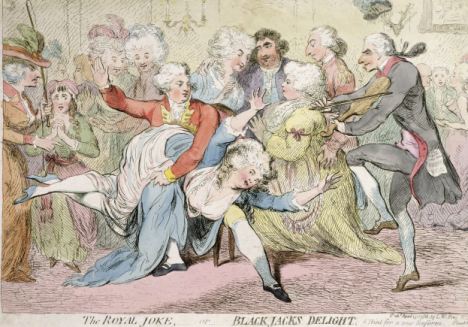 This interdisciplinary two-day conference jointly sponsored by takes the diversity of the experience of Georgian Pleasures as its theme and invites new and established academics, period performers and musicians to come together for a lively cross-disciplinary conversation exploring the conceptualization and practice of pleasure globally in the long eighteenth century. Georgian pleasures were myriad. Some were exclusive — specific to certain classes, ages or genders —others were inclusive and/or overlapping. High life or low life, licit or illicit, private or public, domestic or commercial — there were pleasures to suit all tastes and circumstances. This conference aims to explore what it was that people of the period enjoyed and what we, as academics, re-enactors and period performers, can learn about society and culture from a better appreciation of pleasure, Georgian-style. The conference will take place in Bath’s recently refurbished Holburne Museum, itself the centre-piece of Sydney Gardens, the last of Bath’s famous Georgian Pleasure Gardens.
We welcome proposals (approx. 200 words) for individual papers or individual/group performances. Panels of three papers with chair and commentator are also welcome. All proposals should be sent to the Centre for History and Culture at Bath Spa University (email historyandculture.bsu@gmail.com) by 30th April, 2013.
Potential themes include:
- Alehouses to Almacks: the pleasures of high / low life
- Urban and rustic: the pleasures of location
- Leisure, pleasure and consumption: the delights of the spa
- Female and male: gender and pleasure
- Pleasures of the imagination: music, theatre, opera & the arts
- Dangerous and illicit pleasures
- Continental pleasures
- Spas
Conference sponsors:
Centre for History & Culture, Bath Spa University: Dr Roberta Anderson, Dr Elaine Chalus, Dr Matthew Spring
Regional History Centre, University of the West of England: Dr Steve Poole
For further information, contact historyandculture.bsu@gmail.com
Call for Papers | Prisons of Stone, Word, and Flesh
Prisons of Stone, Word, and Flesh: Medieval and Early Modern Captivity, ca. 400-1800
Brown University, Providence, Rhode Island, 21 February 2014
Proposals due by 1 November 2013
We invite submissions for a one-day interdisciplinary symposium to take place at Brown University on February 21, 2014, hosted by the Cogut Center for the Humanities and sponsored by the Department of French Studies, the Department of Comparative Literature, the Medieval Studies Program, and the Department of History. Our theme will be “Prisons of Stone, Word, and Flesh: Medieval and Early Modern Captivity.” Professor Adam Kosto (History, Columbia University), author of Hostages in the Middle Ages (Oxford University Press, 2012), will serve as the keynote speaker.
If, following the thought of Michel Foucault and others, the prison is an essentially modern invention, how can we best conceptualize captivity in the time beforehand? Historical records of the medieval and early modern period (roughly 400-1800 AD) offer countless examples of human bondage, including the capture and detention of prisoners of war and the voluntary submission of hostages, as well as evolving forms of punitive incarceration. During the same time, art and literature are replete with depictions of imprisonment, often employed as a master metaphor for concepts like erotic love or mankind’s enslavement to the Devil and the body. Being held against their will even seems to have been something of a rite of passage for numerous medieval and early modern authors (such as Marco Polo, François Villon, Charles d’Orléans, Thomas Malory, and Cervantes) who found in various forms of captivity the time and inspiration necessary to create some of the most enduring works of western literature.
Submissions are sought from graduate students, faculty members, and other scholars in fields including—but not limited to—history, literature, languages, philosophy, religious studies, art and architectural history, and music. Particularly welcome are submissions which offer new methodological or theoretical approaches to issues of medieval and early modern captivity, or which examine the relationship of captivity to cultural production and/or intercultural exchange. Papers should be no more than twenty minutes in length and should be in English. Please send a 250-word abstract, along with brief contact information, to John Moreau, Mellon Postdoctoral Fellow in French Studies and Comparative Literature, at John_Moreau@Brown.edu. The submission deadline is November 1, 2013.
Call for Papers | London and the Americas, 1492-1812
Society of Early Americanists | London and the Americas, 1492-1812
Kingston University 17-19 July 2014
Proposals due by 1 September 2013
 This thematic interdisciplinary conference of the Society of Early Americanists will examine London’s connections with the Americas in the colonial era. It will focus on the role that Europe’s largest urban center played in the structuring of an Atlantic world inscribed, amidst both war and peace, by networks of trade, travel, religion, kinship, cultural identification, captivity, slavery, and governance. At the same time, participants will consider how the Americas in particular shaped the geography, both actual and metaphorical, of early modern London (that is, the cities of London and Westminster), influencing its practices, hierarchies, infrastructures, modes of representation, arrangements of space, and movements of peoples. The focus will thus be on London as both recipient and source of transmission and interaction, connected imaginatively and actually with American regions under the control of other European powers as well as with its own colonies.
Hosted by the School of Humanities at Kingston University London, the conference will take place on the University’s campus in South West London, a 25-minute train ride from central London and a short bus ride from Heathrow Airport. Housing options will include university dormitories as well as a diverse array of local hotels.
Proposals are welcome for individual papers or complete panels. Innovative panel formats are welcome along with traditional trios of 20-minute papers. Please send 250 word proposals by October 1, 2013, to: sea14london@gmail.com
Program Committee:
Kristina Bross, Purdue University, co-chair
Laura Stevens, University of Tulsa, co-chair
Eve Tavor Bannet, University of Oklahoma
George Boudreau, Pennsylvania State University Harrisburg
Brycchan Carey, Kingston University
Jonathan Field, Clemson University
Christopher Loar, University of California Davis
Oliver Scheiding, University of Mainz
Call for Papers | Framings
Framings: Interdisciplinary Conference on Frames
University of Copenhagen, 29 November — 1 December 2013
Proposals due by 17 May 2013
 The conference will bring together strands of international research on frames that took place over the past 5 years and extend the conceptual and material framework of interdisciplinary between the Humanities, Social- and Communication Sciences. Expected and welcomed are contributions from art and media history and theory, philosophy and cultural studies, dance and theater studies, film theory and film semiotics, literature and music, communication science, visual and textile studies, and computer science.
Submissions are solicited in, but not limited to, the following areas:
– frames in art and art history
– dialectical nature of frames
– framing strategies in medieval texts
– mediality of the frame
– parergon
– framing (with) textiles
– conceptual frameworks
– mirrors
– (video-)feedback
– ‘frame generators’
– self-reflexive practices
– frame as ‘metaphor generator’
– performativity of the frame
– interdisciplinary and methodological aspects of framings (more…)
Call for Papers | New Scholars Session at CAA, 2014
In addition to the session organized by Kevin Chua ‘After the Secular: Art and Religion in the Eighteenth Century’, HECAA will be represented at next year’s CAA conference with a ‘New Scholars Session’ chaired by Kristel Smentek. Information on additional panels related to the eighteenth century is available here» -CH
◊ ◊ ◊ ◊ ◊
102nd Annual Conference of the College Art Association
Chicago, 12-15 February 2014
Proposals due by 13 May 2013 (extended from 6 May)
Historians of Eighteenth-Century Art and Architecture
New Scholars Session
Kristel Smentek, Massachusetts Institute of Technology, smentek@mit.edu
The Historians of Eighteenth-Century Art and Architecture (HECAA) invite paper proposals from advanced doctoral students and recent PhDs that present innovative approaches to the interpretation of the art, architecture, and material culture of the global eighteenth century. Presenters selected for this session are expected to become members of HECAA before the conference.
Call for Papers | NEASECS 2013, New Haven
From the conference website:
Northeast American Society for Eighteenth Century Studies Conference | The Ends of War
Yale University, New Haven, 3-6 October 2013
Proposals due by 3 May 2013

Joseph Wright of Derby, The Dead Soldier, ca. 1789
(Yale Center for British Art, Paul Mellon Collection)
◊ ◊ ◊ ◊ ◊
Yale University is pleased to host the 2013 Annual Meeting of the Northeast American Society for Eighteenth Century Studies, an event it last hosted in 1993. Home to Sterling Memorial Library, the Beinecke Rare Book and Manuscript Library, the Lewis Walpole Library (in nearby Farmington), the Cushing/Whitney Medical Library, the Yale Center for British Art, and the Yale University Art Gallery, and host institution for The Papers of Benjamin Franklin, The Works of Jonathan Edwards, the Yale Editions of the Private Papers of James Boswell, and the Yale Indian Papers Project, Yale has longstanding traditions in eighteenth-century studies across the disciplines. The Beinecke, which in 2013 is celebrating its 50th anniversary, will host the conference’s welcome reception.
2013 marks the 300th anniversary of the Treaty of Utrecht, signed in April 1713, formally ending the War of the Spanish Succession, and the 250th anniversary of the Treaty of Paris, ending the Seven Years War, known in its colonial North American theater as the French and Indian War. What are The Ends of War? The phrase here reflects the elusive Johnsonian sense in the quotation on the home page, above, implying both cessation, but also paradoxically what lives on after formal cessation, as well as the deeper, more troubling sense of “ends” as aims, purposes, intentions, and perhaps unintended consequences. Do wars end, or end anything? Beyond the massive geo-cultural realignments that followed especially from the global conflicts of 1757–1763, what are the social, literary, aesthetic, and artistic consequences of war and its ends? And what did and do these ends look like at the other ends of the earth, non European, non North American? We welcome papers on any aspect of these and other related questions. In keeping with NEASECS traditions, panels and papers addressing elements of the long eighteenth century not directly related to the conference theme are also welcome.
Proposals for panels should be submitted to the Program Committee at neasecs2013@yale.edu by May 3, 2013. Panel proposals will be listed on this website on a rolling basis, as received and approved, through the Spring. Paper proposals should be sent directly to the panel organizers at the addresses they provide. The conference welcomes traditional panels of three 20-minute papers (with chair, and respondent if desired), as well as roundtables, sessions on Teaching Approaches, State-of-the-Field debates, or other sessions with variously innovative formats. Individual papers on topics not addressed in the proposed panels may be sent directly to the Program Committee, which will try to accommodate them in thematically grouped sessions. Please submit them by June 30, 2013.
For a current list of panel proposals, click here. It will download as a separate word file.
Panel organizers should notify panelists of acceptance or otherwise by June 30, 2013, and submit completed panels, noting AV or any other special requirements, to the Program Committee, at neasecs2013@yale.edu, by July 15, 2013. The conference program will be posted on the conference website in August.
Call for Papers | Cleveland Symposium for Graduate Students
39th Annual Cleveland Symposium | Splendor: Exploring Value in the History of Art
Cleveland Museum of Art, 11 October 2013
Proposals due by 1 June 2013
The 39th Annual Cleveland Symposium, to be held at the Cleveland Museum of Art on October 11, 2013, invites graduate submissions examining the theme of splendor in the visual arts. This symposium aims to explore how works of art are elevated to become objects that are prized or venerated. Specifically, in discussing the value afforded a work, we seek to further understand its historical context, materiality, visibility, agenda, and cultural significance, whether through the object’s physicality or representational function. The grandeur and renown of a work can also manifest itself through its associations, patrons, and/or esteemed artists. Possible topics might include:
– Material value of object(s), attributed upon creation or retroactively
– The use of costly or precious mediums and components
– Public, private, royal, and civic commissions
– Decorative arts
– Reliquaries and other objects with religious functions
– Artist markets and trade
– Depictions of important political or religious events
– Pomp, pageantry, and ceremony
– Gifts, personal or diplomatic
We welcome submissions from art history and architecture graduate students in all stages of their studies and from all fields and geographic regions, ranging from ancient through contemporary art. We will also consider papers from a wide range of methodologies and approaches. A monetary prize will be awarded to the speaker who presents the most innovative research in the most successfully delivered paper. To be considered, please send a 250-word abstract, recent CV, graduate level, and contact information to clevelandsymposium@gmail.com by June 1, 2013.
Call for Papers | The Eighteenth-Century Gothick
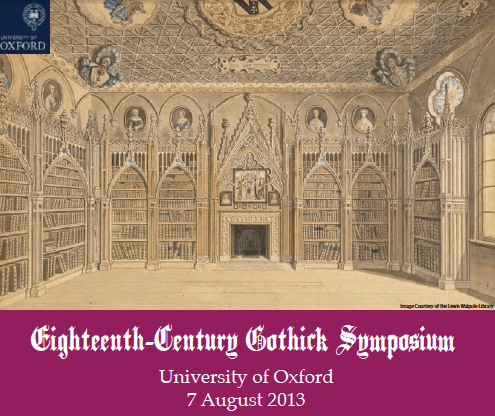
The Eighteenth-Century Gothick Symposium
University of Oxford, 7 August 2013
Proposals due by 31 May 2013
The Gothick Revival in eighteenth-century Britain is a multi-faceted phenomenon, simultaneously liminal and mainstream, historical and modern, whimsical and serious. This one-day symposium seeks to explore the revival’s many dimensions. Proposals are invited for 20-minute papers that address any aspect of the Gothic revival, and may include:
 • art
• art
• architecture
• interiors
• furniture
• antiquarianism
• history
• literature
• medievalism
• patronage
• politics
• restoration
• sexuality
Please email 250-word proposals to the symposium organisers, Oliver Cox and Peter Lindfield by 31 May 2013 at 18thCenturyGothick@gmail.com.
Call for Papers | HECAA Session at UAAC
Thanks to Christina Smylitopoulos, HECAA will be represented at this year’s UAAC Conference! Details and a full list of panels are available here»
◊ ◊ ◊ ◊ ◊
Universities Art Association of Canada / l’association d’art des universités du Canada
The Banff Centre, Banff, Alberta, 17-20 October 2013
Proposals due by 4 June 2013
HECAA Open Session (Historians of Eighteenth-Century Art and Architecture)
As the first HECAA-spsonored UAAC panel, this open session welcomes proposals for papers that consider any aspect of art and visual culture of the eighteenth-century. Please email proposals for 20-minute papers to Prof. Christina Smylitopoulos: csmylito@uoguelph.ca.










leave a comment