Call for Papers | Death: The Cultural Meaning of the End of Life
From LUCAS:
Death: The Cultural Meaning of the End of Life (LUCAS Graduate Conference)
Leiden University Centre for the Arts in Society, 24–25 January 2013
Proposals due by 15 November 2012
Keynote Speakers: Joanna Woodall (Courtauld Institute of Art) and Rosi Braidotti (University of Utrecht)
Death is a defining factor in the explorations of our subjectivity, art, history, politics, and many other aspects of our social interactions and perceptions of the world. In the modern age, conceptions of death have continued to shift and evolve, yet our perceptions are still fueled by an instinctive fear of the end of life.
In recent decades, we have rebelled against the threat of death by inventing new technologies and medicines that have drastically increased our life expectancy—diseases and disabilities are gradually disappearing. Some believe that one day we will completely conquer the aging process, and ultimately death. Life can now be seen as a new form of commodity, a material object that we can trade, sell, or buy.
Despite our attempts to shut-out death or overcome its inevitability, the end of life has remained a visible and unavoidable aspect of our society. From antiquity to the present day, perceptions of death have been represented through various different mediums: visual culture, art, literature, music, historical writing, cinema, religious symbols, national anniversaries, and public expressions of mourning.
This conference aims to explore how death has been represented and conceptualized, from classical antiquity to the modern age, and the extent to which our perceptions and understandings of death have changed (or remained the same) over time. The wide scope of this theme reflects the historical range of LUCAS’s (previously called LUICD) three research programs (Classics and Classical Civilization, Medieval and Early Modern Studies and Modern and Contemporary Studies), as well as the intercontinental and interdisciplinary focus of many of the institute’s research projects. (more…)
Call for Papers | The Louvre before the Louvre
From The Wallace Collection:
The Louvre before the Louvre: Artisans, Artists, Academies
The Wallace Collection, London, 5 July 2013
Proposals due by 15 January 2013

Pedestal clock, ca. 1712- 20. Attributed to André-Charles Boulle. Jacques-Augustin Thury, movement maker (Wallace Collection)
Now one of the world’s best-known museums, the Louvre was once a vast artistic and cultural centre of a different kind. The Louvre before the Louvre will delve into the fascinating but little known period of the Louvre’s history from 1643 to 1793, exploring the role this space played in the histories of art production and artistic sociability in early modern Paris.
Even before Louis XIV moved the Court from the Louvre to Versailles in 1682, the Louvre had already become the centre of artistic, creative, and intellectual energy in Paris. Artists and artisans of all trades – from watch-makers to history painters – were given lodgings and studio space in the same wings and corridors that accommodated cultural organs like the Menus Plaisirs du Roi (responsible for state festivities and spectacles), the royal printing press, and the royal academies (Painting and Sculpture, Architecture, Inscriptions, Science, and the Académie Française). As the palace expanded over the next two centuries, the Louvre complex (the building and surrounding streets) came to be dominated by this growing community of artists, artisans, men of letters, and their aristocratic patrons, inhabiting this space and living out their daily lives together.
The Louvre before the Louvre will reconstruct and re-evaluate this space of artistic sociability. As dust billowed and paint dripped in artists’ studios, theoretical debates were thrashed out in the academies, and groundbreaking technologies were designed in artisans’ workshops, the Louvre became a fertile ground for collaboration, the results of which are evident in many objects (e.g. by Boulle, Oppenordt, Oeben, Boucher, Oudry, Girardon, Coysevox, to name a few) now in the Wallace Collection where this conference will take place.
Seeking a more intimate understanding of the artistic and intellectual ‘neighbourhood’ of the Louvre and its effect on art and design in the period, we invite papers that explore the Louvre’s rich history, art, material objects, spaces, and social interactions during the 17th and 18th centuries. Suggested topics may include but are not limited to:
• Artistic and intellectual circles — The workings of the Royal Academies and their academicians
• Living in the Louvre — Artists’ logements/studios; social order and daily life; professional/social interactions; individual and collaborative practice
• Form and function of Louvre spaces — Key sites: Galerie d’Apollon, Salon Carré, Grande Galerie, theatres, chapels, etc.
• Patronage networks — Patrons and collectors in the Louvre
• Decoration and display — Furnishing and decoration by Louvre inhabitants; displays of collections; exhibitions
• Louvre experiences — Written and visual descriptions of life in the Louvre
• Finding boundaries — Where did the artistic communities of the Louvre begin and end? How did one ‘belong’ to the Louvre community? What did it mean to do so?
Please send proposals of no more than 300 words to amelia.f.jackson@gmail.com (Queen Mary University of London) and hannah.williams@hoa.ox.ac.uk (University of Oxford) by 15 January 2012.
Call for Papers | Imagined Worlds: Worldmaking in Arts and Literature
From the conference website:
Imagined Worlds: Worldmaking in Arts and Literature
University of Helsinki, Finland, 21-23 August 2013
Proposals due by 30 January 2013
The conference Imagined Worlds will focus on the imagined worlds created by artistic and literary works. To think of such works in terms of ‘worlds’ (or the mental representations they create in the minds of their audience) means concentrating on the representational dimensions of art and literature. The idea of worldmaking opens new perspectives in the study of art forms and their genres. It was formulated in philosophical terms by Nelson Goodman in Ways of Worldmaking (1978). His approach encompassed a broad spectrum of worldmaking across all art forms, sciences and cultural discourses and emphasized the idea that we create worlds on the basis of already existing ones. Worlds are built from the world(s) of our experience and cultural models or from already existing imagined worlds through various types of transformations.
Recent studies in cognitive narratology where questions related to how readers build up story worlds have opened a new field of study which can also function as a starting point for broader visions of the cultural imagining of worlds: ‘mapping words onto worlds’ to make sense of textual worlds can be more broadly understood as mapping signs onto worlds. Like texts, art and images do not merely mirror the world but also investigate ways of worldmaking.
Worldmaking also relates to the ideas of the works of art and literature we embrace. Asking the question ‘When is art?’ permits one to see different anachronisms and the messy temporalities of images. How an object or event functions as a work of art can explain how it may contribute to a vision and to the making of a world. (more…)
Call for Papers | Fontainebleau Art History Festival — The Ephemeral
Conference call for papers:
Third Annual Art History Festival — The Ephemeral
Fontainebleau, 31 May — 2 June 2013
Proposals due by 31 December 2012
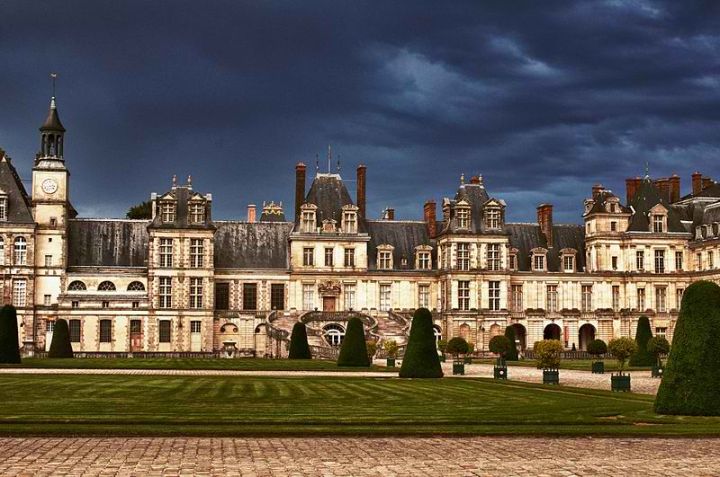
Château de Fontainebleau (Wikimedia Commons)
◊ ◊ ◊ ◊ ◊
he Ministry of Culture and Communications, the National Institute of Art History and the Chateau of Fontainebleau, with the support of the Ministry of Higher Education and Research are jointly organising the third Art History Festival. Originally conceived as a meeting point and knowledge crossroads, these three days will include conferences, debates, concerts, exhibitions, film shows, lectures and meetings in the chateau and at several sites in the town of Fontainebleau. The Festival explores a different theme every year, in 2013 it will be The Ephemeral and there will be three annual meetings: The Art History Forum, a rendezvous for all the latest news in the world of the arts; the Book Salon and art reviews; and Art & Camera, a wide-ranging look at cinema and art and future prospects.
The Festival also includes training offerings for art history teachers in schools in the form of Spring University sessions and training workshops provided and supported by the Ministry of Education.All these events are viewed from the perspective of a guest country: in 2013 this guest country will be the United Kingdom. Work involving British research or concentrating wholly or partly on the United Kingdom will be particularly welcome. This Call for Papers is intended for preferably French-speaking, experienced and novice French and foreign researchers. Contributions by young researchers, conservation specialists or restorers will be given especially careful consideration.
The Ephemeral
Art first manifested itself in the earliest standing stones or paintings as an attempt to either amplify the ephemeral (festive celebrations, temporary body ornamentation, etc.) or to defy it (by seeking to capture the fleeting nature of movement as in parietal art; or as an attempt to leave a durable, even eternal mark by building monumental structures for instance).The history of art therefore swings between permanence and transience, between two opposite extremes: the monumental and performance, the stillness of an image and art that focuses on moving images, a fixed gaze and a gaze that lingers as time passes (ephemeral sequence). (more…)
Call for Papers | Restoration Knowledge
Restoration Knowledge: Reception Models for Museology and Art History
Sapienza — University of Rome, April 2013
Proposals due by 30 October 2012
It seems to be essential, at this moment, to confirm that which not long ago may have been considered paradoxical, that is to say the need to interpret the history of restoration, of conservation, of safeguard, as a process closely related to art history, art criticism and the history of museum institutions. Furthermore, in order to cope with various different shifts, one feels the necessity to go back to the beginning and analyse the subject from different angles, alternating philological analysis with different historiographical sources and traditions in order to be able to interpret art works in the context of their true historical stratification so that theoretical, practical and scientific considerations can also gain meaning in the light of the operative, cultural and institutional positions referred to.
The conference, foreseen for April 2013, has the purpose of presenting research revealing the dynamic, reciprocally influential relationship between historic-artistic forms of thought, museum history and safeguard of the patrimony and history of restoration, being a pause for reflection after about fifteen years of studies carried out in the context of Projects of Important National Interest (PRIN), nationally coordinated by the Sapienza University of Rome, in collaboration with the Historical Archive and Data Bank of Italian Restorers (Giovanni Secco Suardo Association) for the project named Culture of restoration and restorers: reception models for museology and ancient and modern art history.
Contributions on the following subjects are required:
1. Works and References Considerations focusing on conservation matters of single works or decorative complexes proving to be particularly significant as examples of how restoration choices are intimately connected to changes of reception, critical acclaim and increased knowledge of that work. Furthermore it could be useful to consider art criticism history texts as reference for restoration history and visa versa.
2. Roles and Biographies Contributions dedicated to connoisseurs, art historians, scholars, scientific experts, restorers who have had to deal with the problem of restoration from a theoretical and practical point of view, in relation, or not, to a specific institutional situation.
3. Museums Contributions in order to understand if some museums have had a precise role in the guidelines of the restoration and conservation policy and, this being the case, how much these guidelines have met with the planning and installation criteria applied.
Those interested are invited to send, by the 30th October 2012, a brief abstract of the contribution they wish to propose (maximum 2.000 characters, spaces included), sending it to convegnorestauro2013@gmail.com. Abstracts and papers will be accepted in both English and Italian. By the 30 November 2012, after a selection carried out by the scientific committee, possible acceptance of the proposal will be communicated by e-mail.
Conference Curators
Maria Beatrice Failla (Turin University)
Susanne Adina Meyer (Macerata University)
Chiara Piva (Ca’ Foscari University Venice)
Scientific Committee: Giuseppe Basile, Olivier Bonfait, Giorgio Bonsanti, Gisella Capponi, Silvia Cecchini, Marco Ciatti, Gianluigi Colalucci, Paola D’Alconzo, Helen Glanville, Michela di Macco, Massimo Ferretti, Carlo Giantomassi, Donata Levi, Mario Micheli, Marina Righetti, Lidia Rissotto, Pilar Roig Picazo, Orietta Rossi Pinelli, Ursula Schaedler-Saub, Lanfranco Secco Suardo, Bruno Toscano, Nathalie Volle
Call for Papers | Alternative Enlightenments
From the conference website:
Alternative Enlightenments: An Interdisciplinary Conference in the Humanities
Bilkent University, Ankara, Turkey, 26-28 April 2013
Proposals due by 1 December 2012
Keynote Speakers
Wijnand Mijnhardt, Professor of History and Director of the Descartes Centre, University of Utrecht
Felicity Nussbaum, Professor of English, UCLA
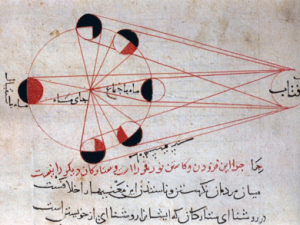 From Kant’s seminal essay “What is Enlightenment?” through the manifold critical responses of the twentieth century, the ambiguity of a term designating both a paradigmatic approach to human intellect or autonomy, and a specific historical period, remains. How distinct is the concept of Enlightenment from the era of European history long taken to have discovered or invented it? This symposium proposes an examination of Enlightenments in the plural, welcoming both revisionary accounts of the Age of Enlightenment and explorations of Enlightenment in other times and places.
With an eye to translating the idea of Enlightenment, scholars have traced its many national and regional varieties. Discussions of an Ionian or an Athenian Enlightenment, of movements of Enlightenment in the medieval caliphate or the Ottoman Empire, share the contemporary intellectual landscape with debates on the continuing relevance of the eighteenth-century Enlightenment to the current global order. We are interested in the way the term has been borrowed and translated, creating a constellation of “Enlightenments” bound together by family resemblances. Is there still a singular project of Enlightenment (i.e. the critique of received ideas and inherited values, in particular religious ones; the promotion of rational or empirical methods; the creation of cosmopolitan and secular spaces), or has the term broken out of its historical mold to designate a more fluid set of cultural projects and practices?
Where do we stand today with regard to the Enlightenment? After all, the continuation of a politics and practice of Enlightenment may depend on the spatial and temporal translations we propose to explore. Such displacements give new life to the idea of Enlightenment, even as the term is contested, criticized and transformed.
Topics of interest include:
• Ionian / Athenian Enlightenment
• Secularism, materialism, the immanent frame
• Literatures of Worldliness in East and West: Renaissance, Tanzimat, Arab and Near Eastern Enlightenments
• Orientalism and Occidentalism
• Diplomacy, correspondence, the figure of the court philosopher
• What is Enlightenment: Kant, Foucault and beyond
• (The) Enlightenment in the Americas
• The public and the private: cross-cultural studies of an Enlightenment distinction
• Travel literature, satire, and utopian fiction
• Nineteenth century national Enlightenments, nationalism vs. internationalism
• Enlightenment and Empire
• The rhetoric of Enlightenment in geopolitics, the claims of the West
• Material culture, exchange, circulation, accumulation, dispersal
• Enlightenment and its others: mysticism, hermeticism and the arcane
• The metaphorics of Enlightenment: illumination, dawn, twilight and dusk
• Where do we stand today with regard to (the) Enlightenment? Critical theory / social and political practice
Please submit an abstract of no more than 300 words to wcoker@bilkent.edu.tr by 1 December 2012.
Call for Papers | Temporary Conditions in Architecture
From the Society of Architectural Historians of Great Britain:
Transitory, Transportable, and Transformable: Temporary Conditions in Architecture
London, 18 May 2013
Proposals due by 15 October 2012
Proposals are invited for papers addressing the theme of Temporary Conditions in Architecture to be presented at the 2013 Annual Symposium of the Society of Architectural Historians of Great Britain, to be held at Alan Baxter Associates, 75 Cowcross Street, London EC1M 6EL, on Saturday 18 May 2013.
Architecture is generally regarded as being, for the most part, permanent, static and immutable. However some significant buildings are intended to be temporary, whereas others are designed to be moved from one location to another or even to be flexible enough to alter their form and appearance as the result of changing requirements. This symposium intends to explore the temporary condition in architecture and to question whether architecture needs to be either permanent, static or immutable.
Transitory: Many buildings are short-lived, but few of them are regarded as serious architecture. In 1661, triumphal arches were erected for Charles II’s coronation procession from the City of London to Westminster. Constructed largely of timber, plaster and canvas, they were architecturally elaborate yet intentionally impermanent, only to be soon swept away. Political expediency, no doubt, necessitated their quick erection, otherwise they might have been built in stone and, like Temple Bar (1670-72), still stand today, albeit not in its original location. Modern materials allow for the quick and permanent erection of buildings such as Team 4’s prize-winning Reliance Controls Electronics Factory at Swindon (1967). Yet despite the longevity of its materials, this building was intentionally short-lived and, having served its purpose, was demolished in 1991. Only the ‘thirty-year rule’ saved it from being listed, as it might well have been. Papers could consider whether the lack of permanence in architecture diminishes its value or, on the other hand, whether the permanence which listing building legislation imposes and implies, ultimately benefits it.
Transportable: The Crystal Palace (1851) was first erected, in Hyde Park, as a temporary building but was soon transported to Sydenham where it was re-erected. This was made possible by its pre-fabricated, component-based assembly process. This thinking allowed pre-fabricated buildings to be sent out across the world by the European colonial powers in both the nineteenth and twentieth centuries. Whether these be William Slater’s cast-iron church for the Ecclesiologists (1853-56) or Jean Prouvé’s steel barracks for the French army (1939), the use of transportable architecture to establish and promote religious or military, and therefore political control, was the same. Conversely, the practice of retrieving and displaying spolia as a demonstration of political control, such as Napoleon’s relocation to the Arc de Triomphe, in 1797, of the quadriga from St Mark’s Basilica, Venice, shows that architecture can be as easily brought home as it can be sent out. Papers, therefore, might like to investigate the use of transportable architecture as both a vehicle and an affirmation of colonisation and the influence which these buildings had on the national architecture, culture and society of the colony and the coloniser alike.
Transformable: If the Pyramids are regarded as the ultimate expression of permanence in architecture, then the Pompidou Centre, as originally conceived in 1971, might be the antithesis. For here the floors could move, the envelope could be reassembled, and the exposed services regularly modified. Although the floors, in the end, remained static, the building has been noticeably transformed over the years. Today, ‘Legacy’ is one of the key-words for the London 2012 Olympics. Yet few of the buildings destined to remain will be left in their original condition; many will be transformed. The side wings will be loped off Zaha Hadid’s swimming pool and the upper stage will be removed from Populous’s stadium. In considering legacy, papers might ask whether there is a real architectural legacy in such a situation and whether those few buildings which will emerge unscathed, such as, hopefully, Hopkins Architects’ velodrome, will provide the only true reminder of the Olympics.
Abstracts of not more than 250 words should be sent to Professor Neil Jackson at the School of Architecture, University of Liverpool, Abercromby Square, Liverpool L69 7ZN or e-mailed to neil.jackson@liverpool.ac.uk no later than 15 October 2012. Authors will be advised by 3 December 2012 whether or not their paper has been selected.
Call for Essays | Spaces of Work and Knowledge
Spaces of Work and Knowledge in The Long Eighteenth Century
Proposals due by 15 September 2012
Abstracts are invited for proposed submissions for publication in a forthcoming collection of essays based on the proceedings of the Spaces of Work 1770-1830 conference held at the University of Warwick April 2012. The publication will follow the broad themes of the conference, but is expanded to include articles focusing on any time within the Long Eighteenth Century, and beyond being focused on Britain to include all geographical locations. Further, the overall headings of ‘space’ and ‘work’ are to be examined in relation to forms of knowledge, broadly conceived.
We are particularly interested in interrogating under-analyzed types of work and space. For example, we hope to develop the theorization of types of work that critics have not conventionally understood as ‘work’ (the performance of music as practical activity, for instance). We also aim to bring attention to under-analysed spaces. For example, due to Romanticism’s traditionally rural focus, literary critics of this period have only recently begun to interrogate urban spaces; interdisciplinary discussion of urbanism in this period would therefore be particularly valuable.
In terms of knowledge, we are particularly interested in forms of knowledge often essentialized and therefore not understood as knowledge as such. The traditionally male knowledge of utilising a commanding voice and demeanour to assert a seemingly innate authority, for example; or the traditionally female knowledge of being able to correctly ascertain the freshness of produce. We aim to elucidate the complex nuances of the interfacing of work, space, and knowledge as three factors that fundamentally shape everyday life in order to gain a greater understanding of material life in the period.
Possible questions which articles might tackle could include:
· How do workers and their work uniquely shape space?
· How does space facilitate or hinder workers and their work?
· How is knowledge acquired, employed, or altered by types of work and working locations?
· How do the social relationships between workers and their supervisors/masters alter according to the work they are doing and the spaces in which they perform it? How does the knowledge encoded in levels of expertise affect the dynamic between supervisors and workers?
· How is knowledge encoded in gender, race, and/or class across working space?
Possible approaches could include, but are not limited to: genteel work and the city; the work of acquiring the necessary knowledge for genteel status; work in spaces of ‘leisure’ and the forms of knowledge encoded therein; work, knowledge, and (sub)urban domestic spaces; gendered working knowledge in the home; space and female accomplishment and the forms of knowledge encoded; working knowledge in relation to emergent manufacturing/industrial spaces.
Pickering & Chatto have expressed an interest in publishing the collection. The exact word length may change, but we expect articles will be approximately 8000 words in length. Abstracts for proposed articles should be 500 words in length, and be submitted no later than 15 September 2012. Please send abstracts to spacesofwork@gmail.com
Call for Papers | Eastern Resonances 2: India and the Far East
From the conference website:
Eastern Resonances 2: India and the Far East, 16th-18th Centuries
University of Paris Diderot (Paris 7), 5-7 December 2013
Proposals due by 31 October 2012
Contrary to the echo or the trace, which both imply an enduring, but fading prolongation of a presence, resonance suggests not only a continuation, but a reinforcement of a sound or image, provoked by a reflection on another surface. Taking from Stephen Greenblatt’s definition of resonance as the power of the object displayed to reach out beyond its formal boundaries to a larger world, to evoke in the viewer the complex, dynamic cultural forces from which it has emerged (“Resonance and Wonder,” in Learning to Curse, p. 170), this conference aims at studying the moves, shifts, transformations and translations through which the idea of the East resonated in Europe in general, and Britain in particular, from the early modern period to the romantic age.
Calling into question the adversarial nature of Orientalism as defined by Edward Said, our conference will address the deterritorializations and reterritorializations (to borrow the concepts developed by Deleuze and Guattari in Anti-Oedipus) through which the East reshaped itself in the West through its many reflections and reverberations. Our focus will not just be on what was lost and what was gained along the routes of such recuperations, but we also wish to chart in greater detail the routes themselves, the people who crossed them and the motivations underpinning these attempts at reaching, understanding and picturing the East.
The first of our series of two conferences on Eastern Resonances, to be held at the University of Montpellier 3 (30 May-1 June 2013), will focus on the Ottoman Empire and Persia. We are now welcoming proposals for the second conference, on India and the Far East, to be held at the University of Paris Diderot, Paris 7 (5-7 December 2013). Suggested areas of reflection for this conference could include:
1) Texts and their circulation/translation: What were the Sanskrit, Chinese and other texts that resonated in the West in this period? Through what channels did manuscripts and books travel? Why and how did they reach Britain in adapted or translated forms?
2) Places and their memories: What did travellers look back to in historical and cultural terms as they embarked on their journeys to the East? What images did they bring back with them from their eastern encounters? How did these reverberate as literary and artistic artefacts at the receiving end of the journey?
3) Actors and intermediaries: Who went East or West, and why did they? Who were their interlocutors or mediators there? Why and how were contact zones created? On what terms was trust granted and collaborative research carried on?
For Eastern Resonances 2: India and the Far East, short proposals in English (250 words) and a brief biographical statement are to be sent by October 31, 2012 to the conference organisers:
-Dr Claire Gallien, University of Montpellier 3 claire.gallien@univ-montp3.fr
-Pr Jean-Marie Fournier, University of Paris 7 jean-marie.fournier@univ-paris-diderot.fr
-Pr Ladan Niayesh, University of Paris 7 niayesh@univ-paris-diderot.fr
Papers should be 30 minutes in length and may be presented either in French or in English. We intend to publish a selected number of papers from the two conferences in a volume of essays on the topic of Eastern Resonances.
Universite Paul Valery – Montpellier III
IRCL (UMR5186)
Site Saint-Charles
Rue Henri Serre
34000 Montpellier
Email: claire.gallien@univ-montp3.fr
Visit the website at http://easternresonances.jimdo.com/
Call for Papers | Art History and Sound
From The Courtauld:
Art History and Sound – Workshop Series: ‘The Listening Art Historian’
The Courtauld Institute of Art, London, 6 December 2012, 14 March and 30 May 2013
Proposals due by 28 September 2012
Organised by Irene Noy and Michaela Zöschg with Katie Scott
Art historians constantly encounter traces of sound. These can take the form of notes in an illuminated manuscript, a textual echo of past noise and lost voices, or depictions of instruments, singers and dancers, captured on panel, canvas, paper, film or in wood, marble and bronze or spaces that have been specifically designed and built to embrace and amplify sound: pulpits, choir stalls, opera houses, the floor of the stock exchange. The aural is continuously intertwined with visual arts as content or context. In the 20th and 21st centuries especially artists have variously incorporated sounds, live and recorded, in their performances, happenings and multi-media installations putting into question the silence and fixity of visual art.
As a result of the collapse in the Enlightenment of the Renaissance notion of the unity of the arts and the substitution of a modern division of temporal from spatial art forms, art historians have generally limited their research and interpretation exclusively to the visual aspects of art and have disregarded the existence, never mind the significance, of the aural. Despite the recent broadening of art history’s disciplinary boundaries to include ‘non-traditional’ media as well as related fields, art historians are primarily trained to analyse and explain the non-ephemeral dimensions of art. When the visual approaches the transient qualities of the aural it raises problems of methodology and terminology.
This workshop series aims to explore both historical and contemporary instances of sound in art history, as well as some of the theoretical and methodological questions arising from this preoccupation. It is designed to provide an open platform for all art historians concerned with collecting, analysing, interpreting and describing sound(s) to meet and discuss ways of hearing visual art. Topics for discussion may include, but are not limited to:
• In what kind of media do art historians encounter notions of sound such as music, voice or noise and with what methods do they explore these traces of the aural?
• How do art historians, with their specific background in the analysis of visual arts, collect, listen to, ‘process’ and write about sound?
• In regards to aurality, can research fields such as soundscape, Klangkunst, acousmatic voice, developed by neighbouring disciplines, be fruitfully used in and adapted for art history?
• How does our preoccupation with the aural inform or perhaps change our understanding of the visual, and vice versa?
This workshop series will be hosted at the The Courtauld Institute of Art on three different occasions throughout the academic year 2012/13. Each workshop will consist of four papers that will function as catalysts for a subsequent round table discussion, and each workshop will address the dynamics existing between aurality and art historical material, tools and methods from a different angle, generated around the proposals we receive. We welcome proposals of 20 minutes long papers in all periods, media and regions that deal either with case studies or broader methodological questions. Please send your abstracts of 250–300 words and a short biography to irene.noy@courtauld.ac.uk and michaela.zoschg@courtauld.ac.uk by 28 September 2012. For organisational purposes, we also kindly ask you to indicate on which of the dates (indicated above) you would like to present and whether you will be able to attend all three workshops. We cannot offer travel subsidies for speakers, and therefore students from outside London are encouraged to apply to their institutions for funding to attend the workshops.










leave a comment