Call for Papers: Icons and Iconoclasm
Icons and Iconoclasm
Inaugural issue of Jefferson Journal of Science and Culture
Proposals due by 29 October 2010
The Jefferson Scholars Foundation and the Jefferson Fellows at the University of Virginia recently hosted the second biennial Forum for Interdisciplinary Dialogue. Scholars from across the United States and the World presented their research at the two-day event. On the heels of the success of this conference, the Jefferson Scholars Foundation is proud to launch a new peer-reviewed academic journal entitled the Jefferson Journal of Science and Culture. The journal is a twice-annual publication intended to present high-quality manuscripts on interdisciplinary topics. Each journal will also have a theme. The theme for the first journal will correspond to the conference — Icons and Iconoclasm. We invite scholars in all fields to submit papers exploring the many roles, uses and interpretations of icons, as well as criticisms of their iconic status. Scholars are invited to interpret the terms “image,” “icon,” and “iconoclasm” in different ways. Some topics may include:
- iconic ideas (scholarly theories, religious beliefs and practices, culture)
- mechanics of icons (construction, transmission, perception, and reception/destruction)
- iconic images (scientific models, branding, maps, artwork)
- iconic figures (historical, religious, literary, political)
Please read the submission guidelines on this website and email your manuscript to jeffersonjournaluva@gmail.com by Friday, October 29, 2010.
ASECS Panels at AHA, CAA, and MLA
Proposals due by 15 December 2010
Each year ASECS sponsors a scholar session at the annual meeting of these societies. Because ASECS is an interdisciplinary society, it encourages its members to propose a session (panel, round table) on a topic of broad scholarly interest and one that will have particular resonance and appeal for the constituencies of the AHA (historians), CAA (art historians), and MLA (literary critics). The deadline for submitting proposals is December 15.
Proposals should take into account the type of interdisciplinary work encouraged by ASECS. A non-member status waiver can be requested from the MLA, for scholars working in fields other than language and literature. A submission form is available on the ASECS website (near the bottom of the page).
Call for Papers: Art That Is or Isn’t about Happiness
Happiness or Its Absence in Art
Ben-Gurion University of the Negev, Israel, 10 March 2011
Proposals due by 31 December 2010
For this symposium we invite papers relating to various aspects of the theme of happiness in art and visual culture, including concepts which generate or shape happiness (or its absence) such as: love, innocence, religious exaltation, spiritual uplift, physical pleasure and enjoyment, entertainment, food, life and death, along with misery, despair, unrequited love. We welcome papers dealing with a work of art or type of iconography, as well as studies from the field of art theory. We are interested in discourses about the perception of happiness by the artist or within the creative process itself; the status of the beholder and the artistic attempt to create a transcendental experience. New research methods and approaches within the discipline as well as papers which adopt an original perspective will receive special attention.
We cordially invite you to propose papers by sending a title and an abstract (up to 300 words) in English, in MS Word format to happiness.arts@gmail.com by December 31st, 2010. Please remember to attach your contact details. For further inquiries please contact Ms. Ronit Milano at ronitmilano@gmail.com.
Call for Papers: The Unconscious
Tenth Annual Workshop: The Eighteenth Century and the Unconscious
Center for Eighteenth-Century Studies, Indiana University Bloomington, 11-13 May 2011
Applications due by 7 January 2011
Eighteenth-century studies in many ways emerged from and remains beholden to “the Enlightenment”-a category often understood in terms of rationality, reason, and the exercise of conscious decision making. Reason may be celebrated (see Jonathan Israel) or it may be critiqued (see Horkheimer and Adorno): in either case, it remains central to most accounts of the period. Yet the eighteenth century was also the era of empirical psychology, sentimentalism’s triumph, and the emergence of what we now call Romanticism. It may even be the era of the discovery or the invention of the unconscious (Sloterdijk). By focusing on “unconscious” eighteenth centuries, this workshop therefore asks participants to reconsider the relation of reason to un-reason and of theory to historically inclined analyses.
Any mention of the unconscious immediately invites psychoanalytic interpretation. Yet the framework and vocabulary of psychoanalysis were unknown to eighteenth-century protagonists. For the purposes of this workshop, we therefore propose a broad starting definition of the unconscious as that which is unavailable to consciousness: it may be simply invisible or it may be actively produced by some “invisibilizing” mechanism, such as repression, suppression, or forgetting. It may operate within an individual or text, or it may function throughout a culture; its effects may be social, political, legal, literary, pedagogical, or psychological. There may be structurally different forms of unavailability. While the unconscious and its effects may be analyzed in terms derived from Freud, they do not need to be-indeed, it is our hope that this workshop will provoke participants to rethink both their understandings of the eighteenth century and their accounts of conscious and unconscious processes.
We invite participants to be explicit about their methodological choices. Papers might address one or all of the following concerns:
- Was there an unconscious according to eighteenth-century protagonists; if so, how did it emerge and what functions did it serve?
- Can we historicize a concept or structure such as the unconscious? What would be gained from doing so? What would be lost?
- If there is something “eighteenth-century” about current theories of the unconscious, need their origins be found in this period, broadly construed?
- To what extent do eighteenth-century examples challenge or complicate common models of unconscious life? With its focus on oedipal dramas within the nuclear family has psychoanalysis itself blinded us to the effect of extended families, the importance of social modes of remembering and forgetting, and the emotional work of religious affiliation?
The workshop format will consist of focused discussion of four to six papers a day, amid socializing and refreshment. The workshop will draw both on the wide community of eighteenth-century scholars and on those working in this field at Indiana University-Bloomington. The workshop will cover most expenses of those scholars chosen to present their work: accommodations, travel (up to a certain limit), and most meals. We are asking for applications to be sent to us by Friday, January 7, 2011. The application consists of a two-page description of the proposed paper as well as a current brief CV (no longer than three pages). Please email or send your application to Dr. Barbara Truesdell, 400 North Sunrise Drive, Weatherly Hall North, Room 122, Bloomington, IN 47405, Telephone 812/855-2856, voltaire@indiana.edu. Papers will be selected by an interdisciplinary committee. All submissions will be acknowledged by e-mail within a fortnight: if you have not received an acknowledgment by the January 7th application deadline, please contact Barbara Truesdell or Mary Favret. We will make final decisions on participants in early February. Further information can be found on our website, or you can find us on Facebook. For additional details and queries, please contact the director of the Center, Mary Favret, Department of English, Indiana University, Bloomington, IN 47405, favretm@indiana.edu.
Call for Papers: Art and/or Pornography?
Aesthetics, Art, and Pornography
Institute of Philosophy, London, 16-18 June 2011
Proposals due by 1 February 2011
The aim of this conference is to investigate, from an interdisciplinary perspective, the artistic status and aesthetic dimension of pornographic pictures, films, and literature. Is there such a thing as pornographic art? Or are pornography and art mutually exclusive? Can a line be drawn between these two domains of representation? Or is there perhaps some interesting overlap, some common ground worth exploring? To answer these questions certain fundamental issues in the philosophy of art need to be addressed. One cannot hope to critically examine the middle ground between art and pornography without seriously engaging with current research on the definition of art, the nature of aesthetic value, aesthetic experience, aesthetic properties, the relation between art and morality, the psychology of picture perception, and the role of imagination in art. However, more is involved than just an abstract philosophical problem. In the history of art, and especially also in the contemporary world of art (construed in the broadest sense), there are many paintings, photographs, prints, films, poems, short stories, novels and graphic novels which have been labelled ‘pornographic art’. Any investigation of the artistic status and potential of pornographic representations would not be complete without a careful examination of such works that consciously explore the boundaries between art and pornography.
The conference will bring together philosophers and aestheticians, art historians and film theorists, to explore these topics. This interdisciplinary approach is intended to throw new light on these general questions, and to lead to a more accurate and subtle understanding of the range of representations that incorporate explicit sexual imagery and themes, in both high art and demotic culture, in Western and non-Western contexts.
Confirmed Speakers
MARTIN KEMP History of Art, Oxford University (Emeritus Research Professor)
PAMELA CHURCH-GIBSON Film & Cultural Studies, University of the Arts London
JERROLD LEVINSON Philosophy, University of Maryland
JESSE PRINZ Philosophy, University of North Carolina Chapel Hill
ELISABETH SCHELLEKENS Philosophy, University of Durham
Call for Papers
We invite submissions on any issue related to this topic, ranging from abstract philosophical questions to detailed analyses of particular films, paintings, photographs, novels, etc. Papers from different disciplines and theoretical perspectives are encouraged. Speakers will have a presentation time of approximately 40 minutes. Papers should not exceed 5000 words and should be accompanied by a 100-word abstract and a short CV. Please send papers to conference organiser Hans Maes (H.Maes@kent.ac.uk) by February 1, 2011. Communication of acceptance: March 15, 2011. Submissions will be refereed by an international committee, and selected on the basis of general quality and relevance to the special topic of the conference. The organisers plan to publish (a selection of) the conference papers. We welcome volunteers to serve as session chairs and commentators. We regret that we cannot cover travel or other expenses.
Organising committee: Hans Maes, Michael Newall, Murray Smith, Barry C. Smith, Jerrold Levinson, Jonathan Friday.
We gratefully acknowledge financial support from the The American Society for Aesthetics, The School of Arts and the Faculty of Humanities at the University of Kent.
Call for Papers: Performing Art Historical Research
Performing Research: Art History Not For Publication
Courtauld Institute, London, 6 May 2011
Proposals due by 10 January 2011
This conference seeks to explore the clarity, diversity, and freedom that can come from presenting art historical research directly to an audience, as opposed to through traditional publishing routes in books or academic journals. Shifting away from more static forms of analysis encouraged by the inevitable limitations of print-based media, the conference will investigate and exploit the evolving technologies at the disposal of researchers. It will give an opportunity for scholars at all stages of their careers to experiment with dynamic, alternative methods of communicating research, allowing and encouraging the format of papers to both reflect and directly comment upon the subject presented.
Building on seminar workshops on Art History and TV, Art History and Radio, and Art History and the Internet, the group invites abstracts for short 15 minute papers from all areas of the discipline. In each case the art historical research presented should be further elucidated through a novel and alternative presentation method, be it visual, aural, or action-based. Joint papers or collaborations between art historians, or between art historians and practitioners from other disciplines (especially the visual arts) are welcome and encouraged. In keeping with this ethos conference recordings will be archived in an open online forum. Possible papers: (more…)
Call for Sessions and Papers: Urban History
Urban History Group Annual Conference: Leisure, Pleasure, and the Urban Spectacle
Robinson College, University of Cambridge, 31 March — 1 April 2011
Proposals for Sessions and Papers due by 29 October 2010
This conference theme broadly explores the pursuit of pleasure in the context of the history of towns and cities. The conference organisers are interested in investigating the significance of specifically urban forms of pleasure and leisure for understanding the historical dynamics of social, economic and cultural relationships. Towns and cities have historically offered an array of pleasures to cater for ever larger concentrations of people. The types of leisure activities available to urban populations have never remained static; indeed, changing social and economic conditions have transformed popular leisure patterns over time as well as across urban space. The pursuit of pleasure, both licit and illicit, has adapted with the changing relationship between work and leisure. As working hours became increasingly rigid during the eighteenth and nineteenth centuries, so too did leisure time. The lack of free time was further exacerbated by growing pressures on land use. Thus, the pursuit of pleasure was increasingly set aside for specific buildings (inns, brothels, theatres, music halls and, more recently, fitness centres) or clearly delineated spaces (botanical gardens, public parks, public walks, gated communities and even the internet) where access could, in theory, be carefully managed. Cities, seaside towns and holiday resorts were also developed to specifically cater for a variety of tastes and pleasures. Once it was recognised that there was money to be made out of the pursuit of pleasure, cities became intertwined with the business of leisure and began to market themselves as centres of tourism, heritage and culture. Some issues that the conference seeks to consider include: (more…)
Call for Papers: Orientalism in Europe up to 1700
The conference ends where HECAA begins, but this early phase of Orientalism may still be relevant for dixhuitièmistes thinking about the topic. This is, incidentally, the first time I’ve ever seen the following in a CFP: send “a brief cv or a reference to your personal website.” For more information, see the conference website:
The Dialectics of Orientalism in Early Modern Europe, 1492-1700
University of Illinois, Urbana-Champaign, 7-8 October 2011
Proposals due by 15 November 2010
In early modern Europe, discourses on and images of the Orient and Islam are inextricably tied to the rise of national consciousness and the formation of a European identity as several Western states were striving for imperial supremacy. The goal of this international and interdisciplinary conference is to explore the dialectical function of early modern Orientalism for the creation of different notions of a collective self: national, European, and/or imperial.
We invite proposals for contributions that analyze the multiple uses of an imaginary Islam and Orient and compare at least two national orientalist discourses and/or the intersection of nation-building and the invention of Europeanness catalyzed through these discourses. Beyond being simplifications, what role do stereotypes play in the complex and often contradictory rhetorical dynamics that served to articulate, implement and promote both internal policies and supranational endeavors of imperial supremacy? To whom are these stereotypical representations addressed and through what media? In what instances does the creation of a fictive homogeneous nation lead to the conceptual “islamization” of minority groups? Is there a competition among European nation-states for the hegemony in the representation of the Oriental, and in which ways does it feed into a transnational rivalry for imperial power? What does the comparison of different national accounts of Orientalism reveal about the supposed homogeneity of the stereotypical Muslim? (more…)
Call for Papers: AAH Conference in Warwick
Association of Art Historians (AAH) Annual Conference
University of Warwick, 31 March — 2 April 2011
Proposals due by 8 November 2010
The AAH 2011 Annual Conference showcases the diversity and richness of art history in the UK and elsewhere over an extensive chronological range from ancient to contemporary (with a healthy dose in the middle). Sessions are geographically inclusive of Western Europe and the Americas, the Middle East, and Asia. A full range of methodologies is on offer, ranging from object-based studies, socio-historical analyses, theoretical discourses, visual culture of the moving image, exhibition cultures and display. The sessions reflect the composition of our wide constituency – independent or academic researchers (including students), museum curators and teachers.
Plenary Speakers
Horst Bredekamp, Humboldt University and Permanent Fellow of the Institute of Advances Studies, Berlin
Patricia Rubin, Institute of Fine Arts, New York University
If you would like to offer a paper, please email the session convenor(s) directly, providing an abstract of your proposed paper in no more than 250 words, your name and institutional affiliation (if any). You should receive an acknowledgement of receipt of your submission within two weeks. In the absence of this, please post a paper copy, including your full contact details to the convenor. Please do not send proposals to the conference convenor.
Details, including descriptions of all sessions, are available here»
Call for Papers: MAHS Conference in Grand Rapids
Midwest Art History Society 2011 Conference
Grand Rapids, MI, 14-16 April 2011
Proposals due by 15 October 2010
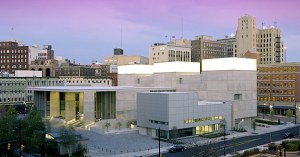
Grand Rapids Art Museum
The 2011 MAHS conference will take place in Grand Rapids, Michigan, April 14-16. The scheduled plenary speakers are Jim Dine and Rebecca Zorach. Sessions will take place at Frederik Meijer Gardens & Sculpture Park, Grand Rapids Art Museum, and the Urban Institute of Contemporary Art. Panels on the eighteenth century are included below. Proposals of no more than 250 words and a recent CV should be submitted electronically by October 15 to the respective chairs noted at the end of each description. A full list of sessions is available here»
◊ ◊ ◊ ◊ ◊
European Art and Architecture, 1600-1800
This session will consider topics concerning European visual art or material culture from 1600 to 1800. Work in all media (painting, sculpture, architecture, prints, or decorative arts) is welcomed as the focal point of the topic.
Valerie Hedquist, University of Montana, Valerie.hedquist@umontana.edu
◊ ◊ ◊ ◊ ◊
Prints and Drawings
Papers are invited dealing with any topic addressing prints and drawings as distinct genres within art history and art criticism. A variety of methodological approaches is welcomed. This session will be hosted in the Jansma Prints and Drawings Center in the Grand Rapids Art Museum.
Cindy Buckner, Grand Rapids Art Museum, cbuckner@artmuseumgr.org
◊ ◊ ◊ ◊ ◊
The Body in Art
From Paleolithic sculpture to 21st C performance and film, the human form has been central to art. This session seeks papers that examine the use of the body in both historical and contemporary art production and practice. Topics may include portraiture, the body as the site of political, social or psychological identity, the glorified or abject body, the nude, the clothed body, and the role of fashion in art.
Suzanne Eberle, Kendall College of Art & Design, eberles@ferris.edu
◊ ◊ ◊ ◊ ◊
Conservation and Appearances of Art Objects and Art Historical Interpretations
The visual appearance of a work of art object results not only from the techniques and materials used during its creation, but also the cumulative, sometimes complex physical history which results in its present condition. How does our knowledge about the technique, materials, and state of conservation inform our particular art historical interpretation of an object? How are we challenged to reconstruct the former appearance, meaning, and even the function of an artwork based on our understanding of its current state? Topics touching on these issues from a wide diversity of objects, media, historical periods and cultures are sought for submission and discussion.
Kenneth Bé, Gerald Ford Conservation Center, kbe.lute@gmail.com
◊ ◊ ◊ ◊ ◊
The Garden as Ideal
Because of the way gardens foreground the complex relationship between art and nature, they typically give physical form to various ideals regarding nature and its role in the constructed environment. This panel invites papers addressing gardens throughout history as these spaces shaped visions of how the world – or at least a portion of the world – should be ordered. Presentations might address issues of paradise, the garden as a sacred space, themes of knowledge construction, notions of nature perfected, the function of geometry, or the picturesque.
Craig Hanson, Calvin College, CraigAshleyHanson@gmail.com










leave a comment