Call for Papers: Society for French Historical Studies
57th Annual Meeting of The Society for French Historical Studies
The Citadel, Charleston, SC, 10-12 February 2011
Proposals due by 1 September 2010
The 57th Annual Society for French Historical Studies conference will be held at the Francis Marion Hotel in Charleston, South Carolina from Thursday, February 10, through Saturday, February 12, 2011 and will be hosted by The Citadel. Featured speakers include Dena Goodman (University of Michigan) and Sylvain Venayre (Université de Paris I). Featured events include a plenary session and reception Friday evening at The Citadel and a banquet on Saturday evening. Additional outings on Sunday morning February 13 to Fort Sumter and Drayton Hall Plantation, will be organized.
The program committee will make every effort to combine single papers into coherent panels, but we encourage individuals to organize complete panels composed of two or (preferably) three papers, with a chair and commentator. Roundtables and other formats will also be considered. Please do not send proposals for papers that have already been presented or that are scheduled for presentation at other conferences, or that have already been published. All conference participants must be members in good standing of SFHS at the time of the conference. (more…)
Call for Papers: Emerging Scholars of British Art at CAA
Historians of British Art: Emerging Scholars Session at CAA, 2011
New York, 9-12 February 2011
Proposals due 1 October 2010
The Historians of British Art, a CAA-affiliated society, seeks papers for an upcoming mini-session of work by emerging scholars to be held during the HBA Business Meeting at CAA in New York, Feb. 9-12, 2011. Current or recent graduate students (if a Ph.D. recipient, the degree must have been earned within the past three years) are invited to submit proposals for consideration. The papers may address any topic related to British art, architecture, and visual culture. Presentations or “works in progress” should be limited to fifteen minutes to allow for ample discussion. This is an opportunity for informal presentations of new or ongoing research followed by open discussion.
To submit a paper for consideration, send the following items to Colette Crossman, HBA 2nd Vice President, at colettecrossman@yahoo.com : (1) a one page abstract; (2) a C.V. (limited to two pages).; and (3) a brief cover letter explaining interest in the field. The deadline for submission is October 1, 2010. Decisions will be made by November 1. Upon selection, presenters are requested to join HBA if not currently a member.
Call for Papers: The Five Senses of the City
The Five Senses of the City: From the Middle Ages to the Contemporary Period
Tours, 19-20 May 2011
Proposals due by 30 November 2010
The conference The Five Senses and the City aims to explore the urban sensorial landscape (Alain Corbin), starting from the individual and collective experience of city dwellers and users, an experience which can be understood as a resource for sensible expression and action (Arlette Farge), in association with the study of the objects of sensorial perception. Our ambition is to historicize the link between urban space and the senses, as a central tool for the construction of the city as a body of significations (Jean François Augoyard). Urban reality is elaborated through “spatial practices” (Michel de Certeau), among which sensorial experiences are essential: our reflection on the urban aspects of the history of sensibility will thus concentrate on the figure of the urban dweller as a privileged observer, as well as the urban landscape and the people who live in it. The city shall furthermore be considered as the generator and amplifier of sensorial experience; it can thus appear in turn attractive or repellent to groups that approach and occupy it.
The history of sensorial experience is not linear: the hierarchy of the senses is in permanent flux, depending on the historical, geographical and cultural context. Discourses on senses and their representations are shaped by science, religion, politics, art and literature: for instance, how come the 19th century city is so often pictured in rural settings? We should also take into account and analyse the role of ethics and medicine, which are central in the shaping of socio-political distinctions: let’s consider, for instance, the perception of poor neighbourhoods since 18th century, or that of a faraway city by an amateur traveller or a scientist or again, that of inner cities today. The posture and position of the body in motion are crucial in our perceptions. Medieval and modern conceptions of the human “body” governed by humours, as well as penetrated by natural and supernatural forces, will help us to think differently about the nature and hierarchy of sensations. Furthermore, the increasingly important role of technical and urban changes since the XVIIIth century has to be taken into account, since they play a major part in the history of urban sensibility: let’s think about city lighting, means of transportation (horses, cars, trains…), infrastructures (water, gas, electricity, sewage system…). Furthermore, sensorial experience is structured by gender identities, through a series of prohibitions and possibilities. How does gender, combined with other social categories, organize the hierarchy of perceptions? How do sensations – shaped by representations – infere in the perception of a urban space (e.g. the link “Paris, the city of pleasure” – “Paris, the city of the woman”)? In other words, what does it mean to “feel at home”, to be “touched” by another person? How can we register the urban experience of the Other?
In addition to history, the history of urban sensibility calls for the cooperation of many disciplines, such as sociology, geography, ethnology, philosophy, cognition, as well as literary or theatre studies, linguistics, musicology, art and architecture history, urban planning and urbanism. (more…)
Call for Papers: SEASECS 2011 at Wake Forest
Annual SEASECS Meeting — ‘Science and the Arts in the Long Eighteenth Century’
Wake Forest University, Winston-Salem, NC, 3-5 March 2011
Proposals due by 1 November 2010
The 37th Annual Meeting of the Southeastern American Society for Eighteenth-Century Studies (SEASECS) will be held 3-5 March 2011 at Wake Forest University in Winston-Salem, NC. The theme for the conference will be “Science and the Arts in the Long Eighteenth Century.” The deadline for submission of paper proposals and full panels is 1 November 2010.
The eighteenth century has sometimes been seen in the history of science as a quiescent period between the great advances made by the likes of Descartes, Newton, and Leibniz in the seventeenth century and Darwin in the nineteenth. As Roy Porter argues in The Cambridge History of Science (2003), however, the eighteenth century is an especially rich era of interdisciplinarity because of the prominence of humanists “in the dissemination of the sublime truths of the new science” (7). By the end of the century, Romantic artists began to reject the “truths” of science and to promote the arts as alternatives to rather than disseminators of science. Thus the eighteenth century represents a kind of golden era of cross-pollination before the arts and sciences were separated into distinct, sometimes opposing, disciplinary discourses. (more…)
Call for Proposals: CAA in Los Angeles in 2012
College Art Association Annual Conference
Los Angeles, 22-25 February 2010
Panel Proposals due by 1 September 2010
CAA invites individual members to propose a session for the 2012 Annual Conference, taking place February 22–25, 2012, in Los Angeles. Proposals should cover the breadth of current thought and research in art, art and architectural history, theory and criticism, pedagogical issues, museum and curatorial practice, conservation, and developments in technology. The Los Angeles conference closes CAA’s Centennial year, which will begin at the New York meeting in February 2011.
The Annual Conference Committee welcomes session proposals that include the work of established artists and scholars, along with that of younger scholars, emerging and midcareer artists, and graduate students. Particularly welcome are those sessions that highlight interdisciplinary work. Artists are especially encouraged to propose sessions appropriate to dialogue and information exchange relevant to artists.
Proposals are only accepted online; paper forms and postal mailings are not required. To set up an account in CAA’s content management system, please email Lauren Stark, CAA manager of programs, who will register your email address and provide you with a password. For full details on the submission process, please visit Chair a Conference Session. Deadline: September 1, 2010; no late applications are accepted.
Call for Papers: Sociology of the Letter
First Annual EE Colloquium on the Sociology of the Letter
St Anne’s College, Oxford, 12–13 November 2010
Proposals due by 10 September 2010
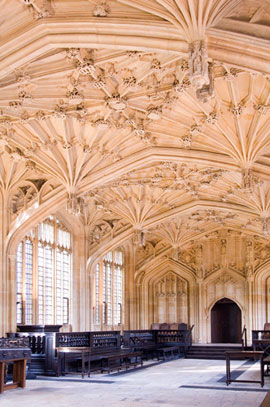
The Divinity School, Bodleian Libraries, University of Oxford
The Colloquium on the Sociology of the Letter is a new event from the Electronic Enlightenment Project, a leading scholarly resource for correspondence in the early modern period, supported by the Centre for the Study of the Book, a centre for fostering research into books across academic and professional specialisms. Both groups are scholarly departments of the Bodleian Libraries, University of Oxford. The colloquium is intended to provide a forum for both academics and graduate students exploring different aspects of both correspondence about publishing(letters to and from authors, editors, copy-editors, printers, proof-readers, printers, binders, booksellers, censors, reviewers . . .) and the publication of correspondence itself (ancient, medieval, contemporary, translations, fictional, satirical, translations . . .) in the early modern period.
Both correspondence and publishing were immensely influential in the nexus of political, religious, literary and cultural ferment in Europe and the Americas in the 16th-18th centuries. By exploring the links between the two, we expect to contextualize both and reach a deeper understanding of their social and
historical significance.
Call for Papers
The papers given by academics will be 40 minutes; those given by graduate studentswill be 20 minutes. Conference papers can be in English or French. A selection of papers will be published electronically in the Electronic Enlightenment Project’s e-journal Letterbook. Please send your proposals (max 250 words) by Friday 10 September 2010 to the following addresses:
Dr Robert V. McNamee
Director, Electronic Enlightenment Project
Bodleian Libraries, University of Oxford
Email: eecolloquium@e-enlightenment.info
Call for Papers: SAH Conference in New Orleans
Society of Architectural Historians 64th Annual Meeting
New Orleans, 13-17 April 2011
Proposals due by 14 August 2010
Members and friends of the Society of Architectural Historians are invited to submit abstracts by 14 August 2010. Abstracts of no more than 300 words should be sent directly to the appropriate session chair; abstracts are to be headed with the applicant’s name, professional affiliation [graduate students in brackets], and title of paper. Submit with the abstract a short curriculum vitae, home and work addresses, email addresses, and telephone and fax numbers. Abstracts should define the subject and summarize the argument to be presented in the proposed paper. The content of that paper should be the product of well-documented original research that is primarily analytical and interpretative rather than descriptive in nature. In addition to the following two panels, the full list of session topics can be found here»
◊ ◊ ◊ ◊ ◊
Architecture and Gastronomy
Architecture and food have long held analogies. Both can be characterized by words such as “tasteful,” “bland,” and most prominently in recent years—“organic.” Their synergy is embodied by the Latin word colere (“to till, tend”), which is also the root of our modern term “to cultivate.” Importantly, cultivation can reference both pragmatic and symbolic phenomena. Cicero notably fused the concrete and figurative inflections of the term, proposing that the human mind must be cultivated in order “to fruit.” During the Enlightenment this analogy was widened into architectural theory when J.-F. Blondel defined “taste” as the “fruit of reasoning.” Just as chefs designed recipes for fine cuisine, architectural theorists began to devise rules for good architecture. While both architecture and gastronomy are disciplines that espouse fundamental principles and standards, neither can be wholly controlled by absolute prescriptions or rigid formulae. They rely on a combination of intuition, inventiveness, and even wonder. This session aims to illuminate and clarify the reciprocity between building and eating, paying particular attention to the role of gastronomy in the expression and interpretation of architecture. Proposals can be from diverse approaches, and those that reassess the metaphorical relationship between taste and architecture are particularly welcome. Speakers may also wish to present case studies that address how the built environment, including landscape, participates in the experience of a meal. Possible questions to explore might include: What is the underlying significance of the terms like “setting” and “service” within architectural discourse? How do food markets contribute to the character of a city? In what ways does architecture structure certain forms of dining, such as ritual meals and communal feasts? How can tastes and smells help define the memory of particular places? The session is also open to presentations that examine emerging dialogues between building and eating, such as how vernacular architecture and regionalism have been aligned with contemporary movements like Slow Food and Edible Schoolyards.
Please send proposals to: Samantha Martin-McAuliffe, University College Dublin School of Architecture, Richview, Clonskeagh, Dublin 14, Republic of Ireland; samantha.martinmcauliffe@ucd.ie +353.1.716.2757.
◊ ◊ ◊ ◊ ◊
The Architecture of Spectacle: Antiquity through Early Modernity
While many recent period-specific studies address the ways that buildings and cities serve spectacle, from the perspective of visuality (Jay 1988) it may be useful to analyze how architecture for spectacle may condition visual experience itself and how it is theorized within cultural contexts. In turn, we might also ask how the requirements of facilitating or enhancing spectacle impacted the institution of architecture and its design processes, or how theaters or similar buildings adapted to new practical uses or even as models for envisioning the design and structure of the world. This session seeks papers focused on any period from antiquity to 1800, addressing how historical places for spectacle of all sorts shaped or reflected other architectural forms, how they adapted to other purposes, or how they influenced knowledge. How did forms in the theater resonate with public buildings, institutions, houses, or cities? How might columnar stage backdrops with pavilions, niches, and aediculas have both influenced and evoked urban forms? In what ways did later periods adapt monumental theaters or amphitheaters like those of the Roman world for domestic, commercial, or political purposes? Similarly, how might designers have adapted the architecture of theaters to different visual concerns in the manner Jeremy Bentham’s Panopticon, for example? What role did theaters serve in the development or construction of institutionalized knowledge in contexts like the anatomical theater or planetarium, or more generally in terms of the nature of spectacle and how visual experience itself works?
Send proposals to: John Senseney, Assistant Professor, University of Illinois at Urbana-Champaign, School of Architecture, 117 Temple Buell Hall, MC-621, 611 Lorado Taft Drive, Champaign, Illinois 61820; 217-244-5137; senseney@illinois.edu
European Architectural History Network
European Architectural History Network Conference
Brussels, 31 May — 3 June 2012
Proposals due by 19 December 2010
For those interested in architectural history and are based in Europe, do check out the European Architectural History Network, a sister counterpart to the more established Society of Architectural Historians. EAHN recently held its first international conference in Guimaraes, Portugal, and its second international conference will be in Brussels, Belgium on 31 May to 3 June 2012. One of the useful features of their website includes a searchable database of conferences, workshops, and seminars categorized by date, keyword, and country.
EAHN Mission Statement
The European Architectural History Network supports research and education by providing a public forum for the dissemination of knowledge about the histories of architecture. Based in Europe, it serves architectural historians and scholars in allied fields without restriction on their areas of study. The network seeks to overcome limitations imposed by national boundaries and institutional conventions through pursuit of the following aims:
- increasing the visibility of the discipline among scholars and the public
- promoting scholarly excellence and innovation
- fostering inclusive, transnational, interdisciplinary, and multicultural approaches to the history of the built environment
- encouraging communication among the disciplines that study space
- facilitating the open exchange of research results
- providing a clearinghouse for information related to the discipline
Call for Papers: Conference in Melbourne
14th Australasian David Nichol Smith Seminar in Eighteenth-Century Studies
Melbourne, 4-8 July 2011
Proposals due by 1 November 2010
The David Nichol Smith Seminar in Eighteenth-Century Studies is a long-running quadrennial conference. Over the years, it has spawned many influential publications. We hope our 14th seminar will be the same. Inaugurated and supported by the National Library of Australia, the Nicol Smith is the major Australasian showcase for inter-disciplinary professional and academic discussion on eighteenth-century studies. The conference attracts scholars across all the Humanities’ disciplines of history, literature, art history, and musicology, studies of material culture and anthropology and archaeology. The conference embraces every aspect of life, politics and culture during the ‘Long Eighteenth Century’, circa 1688 to 1815.
Venues: National Gallery of Victoria, State Library of Victoria, Conference Centre (city-based)
The 14th quadrennial David Nichol Smith Seminar in Eighteenth-Century Studies, to be held in Melbourne city centre on 4 to 8 July 2011, will focus on realms of power, privilege and ideas, and on themes of leisure, material culture and sociability in Europe’s long eighteenth century. We are interested in Europe’s Easts and Wests, Norths and Souths, and in effects on places far beyond. We welcome papers exploring any site of interaction in and between Europe’s private and public spheres: those outside in villas or villages, on estates, or thronging the streets of cities, or those inside in the new spaces of sociability like the lobby, salon, studio, boudoir, club, coffee house and promenade-pleasure garden. This long-established interdisciplinary seminar based in Australasia has a distinguished history, producing select publications: books of essays and special issues of international journals. Your convenors intend to continue this tradition.
- Town and Country: Villa, Palace and Town House
- Environment, Land Management and Ecology
- Antiquaries: The Discovery of the Past
- Coffee, Coffee Houses: New Tastes and Social Spaces
- Sensibilities and Sociabilitiés: Lived and Literary
- Spectacles: Art, Music, Theatre — Performed and
- Ephemeral
- Display: at Court or in a public sphere
- Europe and Asia
- Representation and Self-Representation: Portraiture, Dress and Toilette
- Reason, Un-Reason and Romanticism
- Domination, Slavery and Empire: Global & European Impacts
- The Rise of the Individual: Monarchies under Stress
- The Marginalised: Itinerants, Roma and Prostitutes
- Cosmopolitanisms and Nationalisms
- The Enlightenment and the Pacific
- Opera and Theatre in Europe in the Long Eighteenth Century
- Letter-Writing, the Novel and Poetry in Europe in the Long Eighteenth Century
- Spirituality and Space: Islamic and Christian Architecture in Europe in the Eighteenth Century
The conference committee seeks submissions of papers. Please use the online Abstract form for your submissions. Abstracts should be between 200-300 words in length. Convenors: Dr Adrian Jones OAM (adrian.jones@latrobe.edu.au) and Dr Lisa Beaven (l.beaven@latrobe.edu.au).
Call for Papers: Feminist Art History Conference
First Annual Feminist Art History Conference
American University, Washington D.C., 5-6 November 2010
Proposals due by 1 August 2010
“Continuing the Legacy: Honoring the Work of Norma Broude and Mary D. Garrard”
Keynote Speaker: Friday, 5 November 2010, 6pm
Dr. Anna Chave, Professor (Graduate School, City University of New York)
Sponsored by the Art History Program, Department of Art, College of Arts and Sciences at American University.
Conference is free and open to the public; sessions and keynote will be held at the Katzen Art Center on AU’s campus. Please submit one-page proposals on any topic of feminist interest in art history and/or visual studies with a current curriculum vita by August 1, 2010. Accepted proposals will be notified by August 31, 2010.
Email proposals and CVs to all committee members: nbroude@american.edu, mgarrar@american.edu, hlanga@american.edu, butler@american.edu










leave a comment