Call for Papers | Léopold Robert and Aurèle Robert
From the Call for Papers:
Frères d’art: Léopold et Aurèle Robert
Neuchâtel / La Chaux-de-Fonds, 9–10 November 2023
Proposals due by 31 May 2023 (extended from 14 May 2023)
Dans le cadre de l’exposition Léopold et Aurèle Robert présentée conjointement au Musée des beaux-arts de La Chaux-de-Fonds et au Musée d’art et d’histoire de Neuchâtel du 14 mai au 12 novembre 2023, l’Institut d’histoire de l’art et de muséologie de l’Université de Neuchâtel souhaite encourager la réflexion et l’échange d’idées à propos de ces deux figures artistiques à l’occasion d’un colloque international. Celui-ci se tiendra en présentiel le jeudi 9 novembre 2023 au Musée d’art et d’histoire de Neuchâtel, et le vendredi 10 novembre 2023 au Musée des beaux-arts de La Chaux-de-Fonds.
Graveur à ses débuts, encouragé à la peinture par son maître Jacques-Louis David, Leopold Robert développe, à partir des années 1820, une peinture de genre ennoblie à mi-chemin entre classicisme et romantisme. En y évoquant une vision idéalisée de l’Italie et de ses habitants, il séduit un important public européen nourri des écrits romantiques. Ses nombreuses commandes l’amènent rapidement à rationaliser sa production picturale selon des principes de déclinaison et de combinaison de motifs, et à solliciter l’aide de son cadet, Aurèle, dès 1822. Excellent dessinateur et peintre, Aurele Robert joue dès lors un rôle fondamental dans la promotion du travail de son frère. Du vivant de ce dernier comme après son décès tragique, Aurèle Robert assure, par la gravure, le dessin et la peinture, non seulement une large diffusion des œuvres de son aîné, mais en construit également la persona de créateur mélancolique et génial.
Afin d’enrichir les connaissances au sujet du travail de Léopold et Aurèle Robert, et d’encourager la recherche sur ces derniers, ce colloque international souhaite offrir un espace de débat en conviant aussi bien des jeunes chercheur.se.s que des chercheur.se.s avancé.e.s, et en invitant des spécialistes des questions évoquées. Les communications individuelles seront limitées à 30 minutes, celles en binôme à 40 minutes. Elles peuvent aborder les axes thématiques suivants mais sont également libres d’explorer d’autres pistes de réflexion :
• La fabrique picturale de Léopold et Aurèle Robert (pratiques d’atelier ; hiérarchie, statuts et rôles ; processus créateur, stratégies picturales, procédés compositionnels, rationalisation de la création)
• La peinture d’histoire et le regard ‘ethnographique’ de Léopold Robert (perception et normativité des corps ; idéalisation et genre ; fascination pour les costumes, objets, rites et musiques vernaculaires)
• L’intermédialité de l’œuvre et sa réception (diffusion multimédiale de l’œuvre peint; production d’œuvres falsifiées ou épigonales)
• Léopold et Aurèle Robert au prisme de leurs écrits (correspondance, carnets de voyage)
• Les réseaux et scènes artistiques et marchandes (amis, collègues, collectionneurs et mécènes, galeristes, etc.)
• Léopold et Aurèle Robert dans la presse et dans la littérature contemporaines
• La construction d’une figure artistique et le développement du culte de l’artiste (diffusion et promotion de l’œuvre ; mise en récit de la vie du peintre, etc.)
• Aspects mémoriels (tombeau vénitien de Léopold Robert et reliques de l’artiste, etc.)
• Aspects matériels des œuvres encore conservées, dans des perspectives de restauration ou d’attribution
Nous invitons toute personne désireuse de participer à ce colloque à soumettre une proposition de communication en français, allemand ou anglais. Les propositions doivent comprendre un titre, une esquisse de la communication (300 mots max.), et une brève biographie, et sont à envoyer sous forme de document PDF d’ici au 31 mai 2023 au courriel suivant: robert2023.iham@unine.ch. Les réponses seront communiquées début juin 2023.
Comité scientifique
Diane Antille (MAHN), Sarah Burkhalter (SIK-ISEA), Lisa Cornali (UNINE), Marie Gaitzsch (MBAC), Valérie Kobi (UNINE), David Lemaire (MBAC), Clara May (UNINE), Antonia Nessi (MAHN)
◊ ◊ ◊ ◊ ◊
Note (added 15 May 2023) — The due date has been extended from May 14 to May 31.
Call for Papers | Visualizing Antiquity: The Apelles-Problem
From ArtHist.net, which includes the German version:
Visualizing Antiquity: On the Episteme of Early Modern Drawings and Prints — Part I: The ‘Apelles-Problem’
Bildwerdung der Antike: Zur Episteme von Zeichnungen und Druckgrafiken der Frühen Neuzeit — I: Das ‚Apelles-Problem‘
Berlin-Brandenburg Academy of Sciences and Humanities, 28–29 September 2023
Organized by Ulrich Pfisterer, Cristina Ruggero, and Timo Strauch
Proposals due by 30 April 2023
The academy project Antiquitatum Thesaurus: Antiquities in European Visual Sources from the Seventeenth and Eighteenth Centuries, hosted at the Berlin-Brandenburg Academy of Sciences and Humanities (thesaurus.bbaw.de), and the Zentralinstitut für Kunstgeschichte Munich (zikg.eu) are organizing a series of colloquia in 2023–2024 on the topic Visualizing Antiquity: On the Episteme of Drawings and Prints in the Early Modern Period. These colloquia will examine the significance of drawings and prints for ideas, research, and the circulation of knowledge about ancient artifacts, architecture, and images in Europe and neighboring areas from the late Middle Ages to the advent of photography in the mid-19th century.
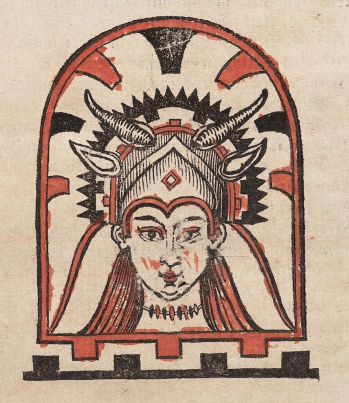
Detail of a hand-colored woodcut print from Giovanni Battista Casali, De profanis et sacris veteribus ritibus (Rome 1644), p. 67 (UB Heidelberg). More information is available here»
The first colloquium inquires into a form of the ‘Apelles problem’. According to Pliny, the Greek painter knew how to depict “what lies outside the realm of painting.” For the representation of ancient artifacts, therefore, the question is asked how in drawings and prints can ‘unrepresentable’ qualities of the depicted object—such as color, material properties, proportions, three-dimensionality, and the like—nevertheless be conveyed? In terms of colorfulness, for example, colored hand drawings have an advantage over prints, but they do not have the same range. Is an attached scale key sufficient to clarify dimensions? And what possibilities do new techniques of representation open up? Or can accompanying texts, commentaries, annotations, source citations, etc. do justice to the difficulties of depicting the above-mentioned characteristics, or help to classify and interpret the artifact depicted? These are some of the central questions posed; suggestions beyond these are welcome.
We welcome proposals for 20-minute papers in English, French, German, or Italian. Presentations will ideally combine case study and larger perspective. Publication in extended form is planned. Proposals (max. 400 words) can be submitted until 30 April 2023, together with a short CV (max. 150 words) to thesaurus@bbaw.de. Travel and hotel expenses (economy-class flight or train; 2 nights’ accommodation) will be reimbursed according to the Federal Law on Travel Expenses (BRKG).
Subsequent colloquia in the series will address other aspects of the creation of images of antiquity:
• Find and Display, Fragment and Whole
• Fake News? Fantasy Antiquities
• Collectors, Artists, Scholars: Knowledge and Intention in Collection Catalogs
Conceived by Antiquitatum Thesaurus (Ulrich Pfisterer, Cristina Ruggero, Timo Strauch)
Call for Articles | Spring 2024 Issue of J18: Color
From the Call for Papers:
Journal18, Issue #17 (Spring 2024) — Color
Issue edited by Ewa Lajer-Burcharth and Thea Goldring
Proposals due by 1 April 2023; finished articles will be due by 1 September 2023
The question of color has been at the center of artistic debates at least since the seventeenth century, and it has remained a key issue in the historiography of art. What may be at stake in reconsidering color in its historical dimensions now? Recent research on the issue has gone in two directions. On the one hand, color has been studied as a material substance and a technology. Scholars have documented the relation between technological, industrial, and commercial developments and the quality, range, and availability of pigments and colorants available to artists, manufacturers, and consumers. Another approach has focused on the key role of color in the construction of social, racial, and gender hierarchies. Recent scholarship has revealed the intimate connection between aesthetic debates on chroma and the development of the modern discourse of race. Moreover, the eighteenth century’s feminization of color entangled with the notions of make-up and artifice has been reexamined. Clearly, it is no longer viable to think of color in purely aesthetic, ideologically innocent terms.
This issue of Journal18 aims to consider how the current interest in materiality and the matter of art could be harnessed to alter–enrich, complicate, or challenge–our understanding of the historical functions and social and cultural meanings of color in the long eighteenth century. In what ways may the materialist discussion of color as a substance inflect the account of its ideological and discursive functions? What were the new meanings and effects of color as the physical product and sign of growing global trade networks, colonial and slave economies, and expanding empires? How did colored materials—pigments, dyes, feathers, shells, mineral—serve as tools of hybridity and a means to delineate cultural difference? Can color’s inherent capacity for infinite nuance offer modern art historians alternative lenses onto to the past? We welcome papers that are attuned to color’s mobility, look beyond Western Europe, and decentralize Euro-centric narratives. We are especially interested in papers that consider the broader methodological questions raised by their subject and seek to develop tools to address the urgent issues posed by color.
Issue Editors
Ewa Lajer-Burcharth, Harvard University
Thea Goldring, Harvard University
To submit a proposal, send an abstract (250 words) and brief biography by 1 April 2023 to the following three addresses: editor@journal18.org, burchart@fas.harvard.edu, and tgoldring@g.harvard.edu. Articles should not exceed 6000 words (including footnotes) and will be due by 1 September 2023. For further details on submission and Journal18 house style, see Information for Authors.
Call for Papers | Intellectual Histories of Art and the Archive
From the Paul Mellon Centre:
The Intellectual Histories of Art and the Archive
Paul Mellon Centre, London, 10 May 2023
Proposals due by 15 March 2023
Organized by Chloe Julius and Ambra D’Antone
For those interested in art’s intellectual histories, the archive offers a multitude of possibilities—especially those archives that hold the papers of art historians and critics. While the development of an idea can be traced through drafts, notes, and annotations, correspondence allows a wider intellectual context to be mapped. Yet these archives also pose certain problems, raising questions around authorship, authority, and authenticity. Given the selective and often partial nature of archive collections, what place should the discoveries they yield be afforded in a wider research project? Moreover, given the move from paper to a digital record, are the same kinds of research journeys still possible with email?
This event will bring together scholars working directly with the archives of art historians and critics to discuss the methodological questions and issues posed by archive-driven intellectual histories. While there is no geographical or historical restriction for the presentations, they should be rooted in a discussion of a particular archive. Presentations on early-stage research projects are encouraged.
This event has been organised in conjunction with the workshop Abiding Present: Challenges of Time in Art History, which will take place 11–12 May 2023 at The Warburg Institute. The workshop will explore anew art history’s complex dealings with time and the relationship between the present and the past in art history, initiating a dialogue that critically considers old and new methods in our field.
Please submit a one-hundred word abstract for a fifteen-minute presentation by 11.59pm (GMT) on Monday, 15 March 2023 listing “The Intellectual Histories of Art and the Archive” as the subject line to: events@paul-mellon-centre.ac.uk. Incomplete or late submissions will not be considered.
This is a collaboration between the Paul Mellon Centre for Studies in British Art and the Warburg Institute, London. The co-convenors of this workshop are Chloe Julius, current holder of the PMC’s Archive & Library Fellowship, and Ambra D’Antone, Research Associate, Bilderfahrzeuge International Research Project, Max Weber Stiftung.
Call for Contributions | Antiquitatum Thesaurus Blog
From ArtHist.net, which includes the call in German as well:
Antiquitatum Thesaurus Blog
Berlin-Brandenburg Academy of Sciences and Humanities
Antiquitatum Thesaurus is the youngest research project hosted at the Berlin-Brandenburg Academy of Sciences and Humanities (BBAW). The project investigates drawings and prints of the 17th and 18th centuries based on artefacts from antiquity, and links them with the ancient objects that they document as well as with other evidence of their reception in a digital repository. In addition, we are interested in establishing a platform for an ongoing exchange of information to complement and enrich the database and the digital environment.
Cataloguing the graphic material and the connected artefacts, numerous questions arise, further research areas open up, and interesting connections emerge that cannot always be discussed in depth within the framework of a fixed and preset input mask of a database.
We are very keen to build a long lasting and fruitful contact with the academic community through
• the research tools we make available in our database by cataloguing the graphic material and artefacts represented, and for which we would appreciate your feedback
• an academic dialogue and exchange by blog entries
For our blog section, we are looking for writers interested in contributing essays written to show individual insights and expertise on a specific topic. Blogs are a great way to generate fresh content; they are quick and easy to assimilate, thought provoking, able to generate academic discussion, to take stock of a situation, to give a precise answer to an open question, and much more. In addition, blogs offer the authors the opportunity to introduce themselves to the academic community and draw attention to their websites, academic interests, research fields, and possibly help to establish contacts for cooperation.
Blog contributors could cover one of the following topics, though other proposals are welcome as well:
• methodological approaches in dealing with graphic arts (drawings and prints) in their documentary value
• insights into collectors or personalities involved in either collecting ancient artefacts or exchanging graphic materials
• short reports on ongoing research related to the interests and research areas of Antiquitatum Thesaurus
• short reports on comparable projects dealing with digital humanities
• new finds and discoveries
Some simple guidelines
• Blog postings should be no less than 700 and no more than 2,000 words in length and should contain essential references.
• Postings can include illustrations (no more than 10) provided with captions and rights cleared for website use.
• We would appreciate the provision of links to bibliography (DOI), digital copies and websites (permalink).
• Languages: German, English, Italian, French.
To better evaluate the content of postings and coordinate their sequence, we ask for short proposals first. If you are interested in providing a guest contribution for the Antiquitatum Thesaurus blog page, please send us your application by completing the submission form available at our website. Blog proposals can be submitted at any time to thesaurus@bbaw.de.
Call for Papers | Dutch and Flemish Drawings 1500–1800
From ArtHist.net:
Making, Collecting, and Understanding Dutch and Flemish Drawings, 1500–1800
Amsterdam, 1–2 June 2023
Proposals due by 1 March 2023
This international symposium will celebrate Old Master drawings on the occasion of the exhibition The Art of Drawing: Master Drawings from the Age of Rembrandt in the Peck Collection at the Ackland Art Museum, on view at the Rembrandt House Museum (18 March – 11 June 2023).
Research in early modern Dutch and Flemish drawings touches on a wide variety of issues, including the study of materials and techniques; issues of attribution and oeuvre cataloging; and expanding our understanding of the provenance, collecting, and display of works on paper. This symposium aims to be wide ranging and inclusive of both art historians and conservation scientists. It offers scholars a chance to come together to present and discuss recent research in this specialized field, which now evolves to encompass new methodologies and concerns.
We invite scholars from all phases of their careers to submit proposals for papers. Subjects of interest include, but are not limited to: close studies of individual artists or drawings, connoisseurial concerns such as attributions of drawings to Rembrandt and his School, recent advances in technical research such as XRF imaging and watermark analysis, the study of early collections, and the sources and history of use of certain materials. We also welcome considerations that treat methodological concerns generally, or provide historiographic context for the field.
Lectures will be 20 minutes in length. To propose a topic, please send a short abstract (200 words) and a CV by 1 March 2023 to PeckDrawingsSymposium@rijksmuseum.nl. The organizers will respond by 15 March 2023.
Organizing Committee
• Dana Cowen, Ackland Art Museum, University of North Carolina at Chapel Hill
• Robert Fucci, University of Amsterdam
• Ilona van Tuinen, Rijksmuseum, Amsterdam
• David de Witt, The Rembrandt House Museum, Amsterdam
Call for Articles | Spanish Royalty in Naples, 1598–1713
From ArtHist.net:
Spanish Royalty in Naples: Between Art and Architecture, 1598–1713
Edited by Laura García Sánchez
Proposals due by 28 February 2023; final papers due by 31 August 2023
The series Temi e frontiere della conoscenza e del progetto (Themes and Frontiers of Knowledge and Design), published by ‘La scuola di Pitagora’ and edited by prof. Ornella Zerlenga of the University of Campania ‘Luigi Vanvitelli’ in Italy, is launching a call for papers for a forthcoming open access volume entitled Reali spagnoli a Napoli: fra arte e architettura (1598–1713), edited by Prof. Laura García Sánchez, lecturer at the Department of Art History of the University of Barcelona. The series, multidisciplinary in nature, includes volumes that propose a critical reflection on architecture, the city, the environment, and industrial design, investigating disciplinary sources and cultural trends with a focus on the themes of form, structure, innovation, representation, and communication.
The broad scope of the proposed theme allows for a transversal look at the figure of the Viceroy and his closest collaborators and relatives as authentic protagonists of an interesting historical and artistic period. During this period, Naples was not only one of the most prosperous cities in Italy but also one of the largest in Europe and an investment for the Spanish monarchs that dominated it. This unique metropolis had a Spanish presence that lasted four centuries. Traces can still be seen today in the layout of its streets, in some of the city’s most representative monuments as well as the habits and customs of the Neapolitans. This relationship gave rise to one of the city’s most mythical neighbourhoods, the Quartieri Spagnoli, which was founded in the 16th century to house the Spanish military garrisons during the period of the Aragonese’s struggle with the French who, like the Spanish, wanted to take control of the city. Once the war was over, a relatively quiet secular rule began during which Spanish proxies remodelled Naples. The chronology of the volume spans the long period between the reign of Philip III (1598) and the end of the War of the Spanish Succession (1713), a stage in which the figure of the Viceroy was decisive for many reasons in that he not only exercised the administrative and governing function as representative of the Spanish monarchy, but also played an important role in promoting the cultural activities of what was called the Spanish Siglo de Oro and which, in other words, represented the Baroque language par excellence.
In the territories of the Hispanic monarchy, the Viceroys, as alter egos of the king and therefore of noble lineage, travelled frequently. The office or ‘job’ usually lasted from three to six years. During this stay in Naples, the incumbent controlled not only the economic resources, which allowed him to build a residence and surround himself with the most famous artists, thus increasing the prestige of the crown. The Viceroys were not only faithful deliverers of the political power of the kings but also played the role of patrons of the arts, so much so that during the 17th century, it is possible to recognise a significant influence of Naples in Spain through their work. Many of the works that today are exhibited at the Prado Museum in Madrid were sent to Spain by the Viceroys as gifts for the king or, on specific commission, to decorate the royal palaces.
The role of the wives of viceroys is also interesting in this cultural exchange. Women did not possess property titles but did accompany their husbands, which, for example, was not possible for those governing Latin America. This made the role of the vicereine very active in the Kingdom of Naples. Their participation in public ceremonies aroused much interest, helping to consolidate Spanish power in the city.
Original and unpublished contributions are favoured with a focus on the relations between Naples and Spain during the period indicated; without excluding other topics, the following themes are proposed:
• The Viceroys’ journey to Naples: methods; route to Italy; length of stay in Naples; entourage (family, secretaries, servants); trousseaux; gifts to Neapolitan dignitaries.
• Contact with local artists: patronage networks.
• The Spanish influence on Neapolitan religion and beliefs.
• The Vicereine: the role of the wife between interests and influence on locals.
• The Viceroys’ collections: interests; preferences; influence on Spanish artists.
• Investments in public works to demonstrate Spanish power and the expansion of the Hispanic monarchy in Italy: the reform of urban spaces (creation of fountains; squares; etc.).
• The Viceroys and the stories of their return from Spain and vice versa.
• The return of the Viceroys to Spain: construction of palaces and convents; collection of works of art and books from the Kingdom of Naples.
• Founding of convents as family ‘pantheons’, to which the Viceroys donated many Italian works of art.
• Stories of travellers and travel descriptions.
• Representation of the Viceroys in art.
• The Viceroys as seen by the Neapolitan nobility and people.
• The Spanish influence on the architecture of the Kingdom of Naples.
To submit a proposal, please send the provisional title and an abstract of no more than 3,000 characters (including spaces). The material must be sent by 28 February 2023 to ornella.zerlenga@unicampania.it and laura.garcia@ub.edu. The authors of the selected abstracts will be contacted by 31 March 2023, after which the editorial guidelines for the text and images of the paper will be sent by email. Papers must be written between 15,000 and 30,000 characters (including spaces) by 31 August 2023 and sent to the above-mentioned email addresses.
Volumes published in this series will be pre-screened by at least two members of the Scientific Committee, who will assess whether the contribution responds to the research lines of the Series, whether it is based on an adequate bibliographical analysis related to the proposed theme, and whether it offers a careful examination of the sources and/or current trends with respect to the proposed theme. Once this preliminary assessment has been passed, the paper will be submitted to the international Double-blind Peer Review criterion and sent to two anonymous reviewers, at least one of whom must be external to the Scientific Committee. The reviewers, i.e., professors and researchers of recognised competence in the specific fields of study and belonging to various Italian and foreign universities and research institutes, constitute the Refereeing Committee. The list of anonymous reviewers and refereeing procedures is available to national and international scientific assessment bodies.
Texts in Italian, French, Spanish and English are accepted. Translation into English is also required for those submitted in Italian, French and Spanish.
Call for Papers | HECAA at 30
More information is available from the conference website:
HECAA at 30: Environments, Materials, and Futures in the Eighteenth Century
Boston, Cambridge, and Providence, 12–14 October 2023
Proposals due by 1 April 2023
The Historians of Eighteenth-Century Art and Architecture are delighted to announce that the Call for Papers for HECAA@30: Environments, Materials, and Futures in the Eighteenth Century is now available. Please visit the conference website for a list of open sessions and details. Applications for participation are due to session chairs by 1 April 2023.
This in-person conference will take place in Boston, Cambridge, and Providence from 12–14 October 2023, with morning plenary sessions followed by gallery sessions, tours, and architectural site visits each afternoon.
On the land of the Massachusett and neighboring Wampanoag and Nipmuc peoples, Boston developed in the eighteenth century as a major colonized and colonizing site. Its status today as a cultural and intellectual hub is shaped by that context, making it a critical location to trace the cultural legacies of racism and social injustice between the eighteenth century and today. For whom is ‘eighteenth-century art and architecture’ a useful category? What eighteenth-century materials, spaces, and images offer tools or concepts for shaping our collective futures? In considering these questions, we aim to expand HECAA’s traditional focus on Western European art and architecture and specifically encourage proposals from scholars working on Asia, Africa and the African diaspora, Indigenous cultures, and the Islamic world.
We welcome proposals for contributions to panels, gallery sessions, roundtables, and workshops. Scholars at any career stage, and all geographic and material specializations, are encouraged to apply. We look forward to seeing you in Boston!
Image: Desk and Bookcase, mid 18th century. Puebla, Mexico (MFA Boston, Henry H. and Zoe Oliver Sherman Fund, 2015.3131).
Call for Papers | Arts and Culture in the Capuchin Order
From ArtHist.net:
De habitudine Ordinis ad artem: Arts, Religion, and Culture in the Capuchin Order between the 16th and 18th Centuries
University of Teramo, 12–14 April 2023
Proposals due by 19 February 2023
Officially founded in 1528 with the bull Religionis Zelus by Pope Clement VII, the Order of the Friars Minor Capuchin lived the twenty years preceding the Council of Trent imitating St Francis and his first companions through preaching and the teaching of young people. Despite the escape to Switzerland of the famous Vicar and preacher Bernardino Ochino in 1542, the Order survived, and the Council of Trent (1547–63) gave great impetus to the Order’s spread, thanks partly to the participation of the Vicar General Bernardino da Asti as consultant. In 1574 Pope Gregory XIII allowed the Capuchins to found convents outside the Italian peninsula. Friars went to France, Spain, and the German-speaking regions; and new settlements were founded in Switzerland, Belgium, Austria, Bohemia, Bavaria, Westphalia, and Ireland. A century after their founding, the Capuchins had more than 40 provinces, 1200 friaries, and nearly 20,000 brothers. As missionaries, the Order was extremely active, evangelizing throughout the world; from Northern Europe to Brazil, from Congo to the Middle East, from North Africa to the West Indies, they were one of the main players, in close contact with sovereigns and the Holy See.
While many Capuchins had studied the visuals arts before entering the Order, especially in the years between 1618 and 1761, the Capuchin way of life was often antithetical to artistic practice. In fact, in the General Chapter of 1627, friars were forbidden to accept any painting or carving work requested by laymen. And yet, although the culture of the arts was not originally part of the Order’s activities and artistic practice was in many cases hindered, there were many who reached high levels in the cloister, especially in painting and wooden sculpture. During the 17th and 18th centuries, many Capuchins devoted themselves to painting, driven by different motivations: for pleasure and in response to commissions from nobles and benefactors. Sculpture was practised even more frequently, often for decorating the small churches that, according to the Constitutions, were not allowed to be sumptuous, but decorated only with poor and simple ornaments. The right combination of simplicity of material and preciousness of form was expressed in the works of the friar cabinet-makers (marangoni).
While numerous studies have addressed the relationship between the arts and the Capuchin Order, many questions remain under unexplored. This conference De habitudine Ordinis ad artem: Arts, Religion and Culture in the Capuchin Order between the 16th and 18th Centuries—organised by the University of Teramo with the patronage of the Seraphic Province of the Immaculate Conception of the Capuchin Friars Minor, the International Society of Franciscan Studies, and the Capuchin Historical Institute—will consider the difficult and elusive relationship between art, culture, religion, and the Capuchin Order on an international level, with particular attention paid to historical contexts and religious dimensions—a prerequisite for understanding Capuchin artists, the production of art objects, patronage, and Capuchin relations with the secular world globally. With the aim of fostering discussion and scientific debate, other topics relevant to the theme of the conference are also welcome. The most significant contributions will be considered for publication.
The conference will be divided into five sessions:
• the Capuchin Order in the context of the post-Tridentine Church
• artistic practice between norms, prohibitions, and customs
• cultural objects of the Capuchin world: use and circulation
• capuchin patronage
• images, knowledge, and preaching between devotion and catechesis
Each proposal must consist of two parts: the paper abstract (max 2000 characters including spaces) and a speaker profile (max 1500 characters including spaces) highlighting the curriculum vitae and professional position. The two parts must be combined in a single Word or PDF file. Interested parties must submit proposals by 19 February 2023, by uploading the documents here.
Scientific Committee
Massimo Carlo Giannini (University of Teramo) president
Raffaella Morselli (University of Teramo)
Alessandro Zuccari (Sapienza University of Rome)
Giorgio Fossaluzza (University of Verona)
Vincenzo Criscuolo (Capuchin Historical Institute)
Grado Giovanni Merlo (University of Milan)
Luigi Pellegrini (University of Chieti-Pescara)
Luca Siracusano (University of Teramo)
Cecilia Paolini (University of Teramo)
Organisation and scientific coordination
Pietro Costantini, pcostantini@unite.it
Call for Articles | Japonisme and Fashion
From the Call for Papers:
Japonisme and Fashion — Special Issue of the Journal of Japonisme, 2024
Edited by Elizabeth Emery and Mei Mei Rado
Articles due by 1 July 2023
Japanese garments and textiles have captured the European imagination since the seventeenth century, exerting particular influence on European and American fashion after the 1860s when artists such as Whistler, Tissot, and the Rossettis competed to acquire kimono from shops such as that of Emile and Louise Desoye at 220 rue de Rivoli in Paris. They promptly emulated Japanese motifs in their own artistic creations, such as Whistler’s Princesse du pays de la porcelaine (1864–65). From paintings, poetry, and music to clothing, costume design, and cosplay, artists and designers from around the world have continued to create new japoniste works inspired by Japanese fashion.
Building on recent interest on the worldwide impact of Japanese fashion (museum exhibits and publications by scholars such as Akiko Fukai), this special issue of the Journal of Japonisme, to be published in 2024, welcomes complete essays in English (translation from French may be possible; please enquire) dedicated to figures or movements from around the world that have taken Japanese garments, textiles, or patterns as inspiration for new artistic creations. Each submission should be no longer than 20 pages (including notes) and may include up to 12 images, which will appear in color online, but black and white in print. Authors are responsible for obtaining the relevant permissions. For information about format, submission, and peer review please consult the Author Instructions. Articles should be submitted by 1 July 2023 via Editorial Manager. For more information or questions, please contact submissionsJOJ@gmail.com.
The Journal of Japonisme accepts submissions dedicated to the worldwide reception of Japanese art and culture in history, visual culture including the history of art and design, the decorative arts, painting and the graphic arts, architecture, fashion, film, literature, aesthetics, art criticism, and music. Articles related to collectors of Japanese art, either specific museums or individuals, are also encouraged.










 Enfilade
leave a comment