Call for Papers | New Directions, Online Seminar Series
From ArtHist.net and the NDENCA website:
New Directions in Eighteenth- and Nineteenth-Century Art
Online Seminar Series, 15 June — 9 September 2020
Proposals due by 15 June 2020
This digital series of five online seminars (one every fortnight) seeks to showcase new and innovative research being undertaken on eighteenth- and nineteenth-century art and its histories. We invite contributions for papers investigating any aspect of the artistic, visual, and material cultures of this period and produced across the globe. Sessions will be hosted via video conferencing software and will take the form of a 40-minute seminar, with time following for questions. We welcome proposals from PhD researchers, early career academics, and museum professionals, particularly those from underrepresented groups. Please send abstracts of 300 words and short biographies to ndencaseminar@gmail.com by 15 June 2020. The series is organised by Dr Freya Gowrley and Dr Madeleine Pelling.
Call for Papers | British Art and Natural Forces
From PMC:
British Art and Natural Forces: A State of the Field Research Programme
Paul Mellon Centre, London, October–November 2020
Proposals for various formats due by 30 June 2020
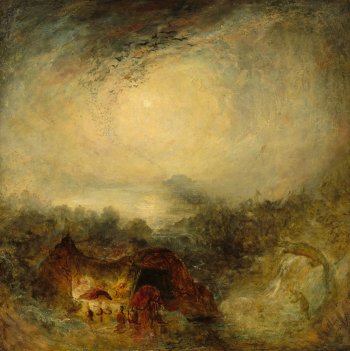
J.M.W. Turner, The Evening of the Deluge, ca. 1843, oil on canvas, 30 x 30 inches (London: National Gallery of Art, Timken Collection, 1960.6.40).
In the year 2020, the Paul Mellon Centre marks its 50th anniversary as an institution dedicated to the study of British art and architecture. It is a year in which artistic practice and the practice of art history have met with the unprecedented force of a global pandemic. In the midst of this crisis, the PMC is initiating a major, multi-part programme of research events that focuses on the encounter between artistic or art historical practice and the forces of the natural world, and places such encounters in both contemporary and historical perspectives.
In doing so, we hope not only to respond to the exigencies of the current moment, but to foreground some of the most vital activities and conversations taking place within the field of British art studies. In recent years, scholars have concentrated with new intensity on the overlaps between artistic, geophysical, biological and ecological bodies of knowledge.
The theme also speaks to many of the new interdisciplinary collaborations that are currently shaping art-historical practice, which have seen scholars of the visual arts working across different subject-fields to explore natural histories, indigenous forms of knowledge, animal studies, concepts of the post-human and revitalized theorisations of the sublime.
Finally, the theme of this series exploits the astonishingly rich and diverse representations of natural forces found throughout the history of British art, from the Anglo-Saxon period to the present day. The programme will seek to explore such representations in the light of current debates and theoretical frameworks, and with the acknowledgement that human agency and reflexive awareness are natural forces in their own right.
We welcome proposals for 20-minute research papers dealing with any period or category of British art and visual culture, and that address the ways in which artistic or art-historical thinking and practice have shaped or been shaped by the encounter with natural forces, whether benign or cataclysmic, short- or long-term, visible or invisible. We also welcome proposals from artists and others whose contributions might take unexpected forms.
Schedule and Format
The events in this programme will be hosted over October and November of 2020. They may encompass virtual, in-person, audio, and print modes: the formats will be confirmed in the early autumn, and will take shape in line with UK government advice on public gatherings. Spanning eight weeks, the events will be sequential in character, and are designed to forge and facilitate a set of expansive conversations that unfold over time.
How to Submit
Please send proposals of 400 words maximum together with a short biography of no more than 100 words to events@paul-mellon-centre.ac.uk by 30 June 2020.
Call for Papers | SEASECS 2021, Ft. Myers
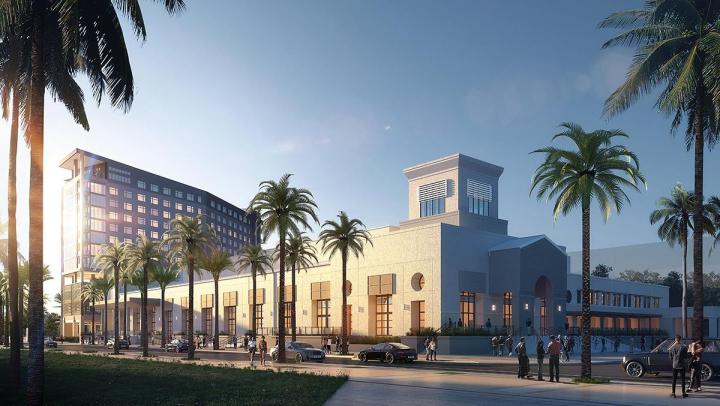
The Luminary & Co. Hotel, part of Marriott International’s Autograph Collection, is a new hotel, scheduled to open summer 2020.
◊ ◊ ◊ ◊ ◊
SEASECS 2021 — Oceans Rise, Empires Fall: Tidal Shifts in the Eighteenth Century
The Luminary & Co. Hotel, Ft. Myers, Florida, 18–20 February 2021
Session Proposals due by 15 June 2020
Individual Papers and Fully-formed Panels due by 15 October 2020
The 47th meeting of The Southeastern American Society for Eighteenth-Century Studies (SEASECS) will take place 18–20 February 2021 in Ft. Myers, Florida, a historically rich, culturally vibrant city also known as a winter getaway for its warm temperatures, tropical scenery, and beautiful shorelines. Situated on the gulf coast and the banks of the Caloosahatchee River, Ft. Myers has a distinct history informed by its relationship with land and water, which inspires our theme: “Oceans Rise, Empires Fall: Tidal Shifts in the Eighteenth Century.” At this time, we invite session proposals related to this theme or any aspect of the long eighteenth century. We welcome proposals for traditional panel and roundtable topics as well as innovative session formats.
Please send your session proposal including title, short description of the session format and topic, and your contact information, to Mary Crone-Romanovski at mromanovski@fgcu.edu by 15 June 2020. Submitted panel topics will be included on the general CFP for SEASECS 2021. Fully-formed panels and individual paper proposals will be due by 15 October 2020.
Call for Articles | Art Institute Review
The Art Institute of Chicago is launching a new digital journal, Art Institute Review:
Art Institute Review, Fall 2021: Instability
Issue edited by Delinda Collier and Robyn Farrell
Proposals due by 15 July 2020
Instability is the hallmark of our present moment—ways of living, working, and relating have been dramatically altered over the course of mere weeks. What if the current state of flux is but an expression of the mutable nature of reality? Encounters between cultures through colonization, migration, trade, and war have, through the instability they wrought, regularly propelled change. Technology in particular has a fraught relationship with instability, capable of exacerbating and ameliorating it simultaneously. How might we take this moment to understand instability and its effects, past and present, in radically different ways?
In the art world, instability is both catalyst and consequence. It is legible as a force that has shaped—and is actively reshaping—museum collections. It exists in the toppling of received art-historical hierarchies and the rewriting of dominant narratives, through means as diverse as academic scholarship and grassroots movements like Decolonize This Place. Artists of past centuries could not have foreseen that their work would be subject to the forces of instability, evolving over decades as its materials degrade. Conservators negotiate instability daily, paying attention to materials and environments in order to forecast and forestall deterioration. Some contemporary artists, meanwhile, deliberately flirt with instability as a creative force, experimenting with frailty, precariousness, organic materials, and viewer participation as ways of ceding control of their work.
The inaugural issue of the Art Institute Review invites you to interrogate instability in any of the multifarious ways it manifests in art objects, art history, and the art world. We seek proposals that critically engage instability in relation to technology, materiality, and making; narratives and identity; interpretive methodologies; museological concerns; and epistemologies of the field; and the intersection of these dimensions with social justice and equity. How has instability been not only a force to intervene against but also one that has fostered new, beneficial states or ways of being? In what ways is instability shaping new ways of practicing criticality, structuring our temporalities, or reframing our perceptions of conflict or compassion? Proposals may address art of any time or place. We especially welcome proposals focused on historically underrepresented objects or narratives and proposals from emerging scholars.
This issue is coedited by Delinda Collier, Associate Professor of Art History, Theory, and Criticism, the School of the Art Institute of Chicago and Robyn Farrell, Assistant Curator of Contemporary Art, the Art Institute of Chicago.
To respond to the call for papers, please email a Word document to journal@artic.edu. Your proposal should contain the following:
• your name, email, and (if you wish) a link to your website
• which of the following formats your submission falls into: scholarly essay (4,000–6,000 words); conversation or dialogue (2,000–3,000 words); visual, textual, or sound art; other (please explain)
• working title
• a one- or two-sentence précis encapsulating the central idea of your contribution
• an abstract (no more than 250 words; see “What we’re looking for” at artic.edu/journal for more guidance)
• a brief description (no more than 100 words) of the ways, if any, in which your contribution will leverage the capabilities of digital presentation. Does your proposal require any features beyond text and individual static images?
Visit artic.edu/journal for further details on the journal and the submission process.
Call for Articles and Notes | Metropolitan Museum Journal
Metropolitan Museum Journal 56 (2021)
Submissions due by 15 September 2020
The Editorial Board of the Metropolitan Museum Journal invites submissions of original research on works of art in the Museum’s collection. The Journal publishes Articles and Research Notes. All texts must take works of art in the collection as the point of departure. Articles contribute extensive and thoroughly argued scholarship, whereas research notes are often smaller in scope, focusing on a specific aspect of new research or presenting a significant finding from technical analysis. The maximum length for articles is 8,000 words (including endnotes) and 10–12 images, and for research notes 4,000 words with 4–6 images.
The process of peer review is double-blind. Manuscripts are reviewed by the Journal Editorial Board, composed of members of the curatorial, conservation, and scientific departments, as well as external scholars. Articles and Research Notes in the Journal appear both in print and online, and are accessible via MetPublications and the Journal‘s home page at the University of Chicago Press. The deadline for submissions for volume 56 (2021) is 15 September 2020.
Inspiration from The Met.
Submission guidelines are available here.
Please send materials to journalsubmissions@metmuseum.org.
Call for Papers | Palaces in Eighteenth-Century Madrid
An earlier version of this announcement (from ArtHist.net) appeared yesterday; here’s a more complete version from the Call for Papers, which includes the Spanish. Also, please note the qualification of the date:
Palaces for Rent: Real Estate in Madrid in the Eighteenth Century / Palacios en alquiler: Patrimonio inmobiliario en el Madrid del siglo XVIII
Universidad Nacional de Educación a Distancia (UNED), Madrid, 12 November 2020*
Proposals due by 30 June 2020
This conference is the second in a series devoted to palaces in eighteenth-century European cities. The first conference, which focused on Rome, was hosted by the Art History Department at the UNED (Madrid) last year. In this second edition we seek to explore the case of Madrid during the eighteenth century. On the one hand, the majority of the nobility continued to live in rented palaces at the Court even though they owned properties within the city that they, in turn, rented out to other families. On the other, there was a discrepancy between the magnificence of the Spanish nobility and the quality and decoration of Madrid’s palaces. It was common for nobles to live in rundown old buildings, in most cases only slightly refurbished, which differed from other homes only in size. Over the course of the eighteenth century, and after the Alcázar was destroyed by fire, there was a noticeable change in the location of the city’s palaces. Firstly, the focus of the Court shifted towards the Buen Retiro, fostering the construction of new palaces on the eastern side of the Prado that conformed with both the canons of academic taste and the beautification and modernization of the capital promoted during the reigns of Ferdinand VI and, especially, Charles III. Secondly, during this period, domestic interiors underwent an important renewal as fashionable residences were adapted to new uses and social practices. This phenomenon, which reached its luxurious peak during the reign of Charles IV, provoked intense commercial activity as it spread to other social groups, such as the emerging bourgeoisie, the new administrative elite of the State, and the foreign diplomats who resided in the capital.
The purpose of this second conference is to gather specialists with different areas of expertise in order to delve into the uses and practices of housing in Madrid during the eighteenth century, taking into account the social and urban transformations of the city and the changes in the uses of domestic space in palaces, either coming whether by long-term residents (the nobility, the middle class, or public servants) or short-term ones (diplomats, travelers, businessmen, agents, etc.).
Potential topics for discussion could include but are not limited to:
• Palaces in Bourbon Madrid, architectural and artistic aspects.
• Internal organization of palaces, spaces and etiquette, from theory to practice.
• The palace as the place of courtly sociability and courtly society.
• Supply and demand in the housing market, sales or rentals.
• Decoration and interior design of the residences of the nobility.
• Structure of noble households in Madrid, servants, duties, etc.
• Ambassadors, legates, cardinals and other representatives and their Madrid residences.
• Topographies of noble and diplomatic power.
We invite scholars at all stages of their careers to propose 20-minute presentations, preferably focused on case studies. The official language for the conference is Spanish, but we accept English, Portuguese, Italian, and French. For the sake of clarity all communications with foreign colleagues, as well as their proposals, should be in English.
Candidates are invited to submit their proposals by 30 June 2020 to: palacesforrent@gmail.com. They should include an abstract (up to 500 words) and a brief CV with recent publications (max. 1 page). Unfortunately, it will not be possible to cover travel and accommodation costs for participants. Applicants will be notified of the final selection by 15 July 2020.
* The date could be subject to change in the following months due to COVID-19 crisis and the subsequent health regulations. In case there would be travel restrictions the organization of the congress would provide adequate solutions to allow e-participation for non local speakers.
Scientific Direction
Dra. Miriam Cera Brea, UNED
Dra. Pilar Diez del Corral Corredoira, UNED
Dr. Álvaro Molina Martín, UNED
Scientific Committee
Dra. Natalia González Heras, Universidad Complutense de Madrid
Dra. Giada Lepri, La Sapienza, Roma
Dr. Carlos Sambricio, Universidad Politécnica de Madrid
Dra. Mercedes Simal, Universidad de Jaén
Dr. José Antonio Vigara Zafra, UNED
Call for Papers | The Myth of Versailles and European Courts
From the Château de Versailles:
The Myth of Versailles and European Courts, 18th and 19th Centuries
Château de Versailles, 17–19 June 2021
Proposals due by 31 October 2020
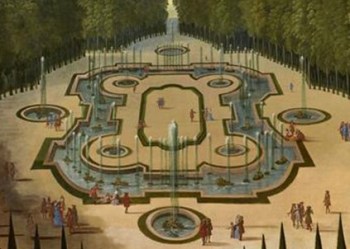
Étienne Allegrain, View of the Feasting Chamber Grove, 1688–93, oil on canvas (Château de Versailles, MV754).
In conjunction with the research programme Court Identities and the Myth of Versailles in Europe: Perception, Adherence, and Rejection (18th-19th centuries) led by the Centre de recherche since 2017.
At the end of the feudal age, the royal and princely courts represented a European phenomenon in terms of political, social and cultural content: monopolisation of power for the benefit of a single figure, gathering of a group of individuals around a sovereign and their family (princes, courtiers, domestic and military officers), development of a specific sociability and way of life, governed by ceremonial procedures, the search for ostentation and entertainment. These courts were as numerous and diverse as the dynasties that ruled them; nevertheless, some acquired a prescriptive value, such as the Court of Burgundy in the 15th century and the Italian courts of the 16th century. In the 17th and 18th centuries, it was the French Court of the Bourbons, and in particular that of Louis XIV, that became archetypal: an illusionary world, based on a reality observed and experienced by the contemporaries of the kings of France, was constructed and maintained for a long time by European monarchies, up until their demise for the most part in the early 20th century, at a time when political configurations were changing, shifting from shared power with assemblies to the establishment of republics.
The two contradictory yet complementary elements that characterise the idea of myth—the real and the reconstruction of the real—are best embodied, in France at least, at Versailles. Both a royal residence, a mode of government and a social whole, Versailles is an architectural, administrative and spectacular expression of the ‘absolute’ power associated with the figure of Louis XIV. The objective of the programme Court Identities and the Myth of Versailles in Europe: Perception, Adherence, and Rejection (18th-19th Centuries), which will conclude this conference, is to analyse the modus operandi of the myth of Versailles in the monarchic Europe of the 18th and 19th centuries. Two fundamental questions must therefore be raised: how did the illusion surrounding Versailles among the contemporaries at court under the Ancien Régime and later visitors in the 19th century develop and what did it entail? And reciprocally, how did this illusion establish itself in the courts of Europe, with all possible nuances, ranging from imitation to rejection and simple adherence? The focus of this conference will therefore be twofold: understanding how the different aspects specific to the identity of Versailles have fuelled an illusion, but also discerning how this illusion gave rise to other accomplishments, whether architectural, ritual or political.
1. The production of the myth, from the real to the imaginary: creation, transformations, challenges (17th–19th centuries)
The myth of Versailles spread across the courts of Europe until the decline of parish civilisation in the early 20th century. It was built up through various accounts given by foreign visitors who established a personal relationship with the Bourbon Court, whether as contemporary witnesses direct from royal Versailles until 1789, or as curious visitors to the remains of a lost time, moved by a wide range of feelings, from nostalgia to castigation. This myth was developed on the basis of illusion, fed by an observed or imagined reality. It differs from the objective historical commentary: it is the subjectivity of the ‘visitor’ that gives rise to the myth.
In October 2019, the Centre de recherche du château de Versailles made available a database entitled Visitors to Versailles among its online resources. One of the aims of the conference will be to draw on this body of works in various ways:
A chronological approach
• Impressions of royal Versailles: contemporaries of the first Versailles of Louis XIV, changing views under Louis XV then Louis XVI and Marie-Antoinette, taking into account the legacy of Louis XIV as well as the changes to parish life and the spatial planning (word in the grounds, retreat to the Petit Trianon, creation of an English landscape garden, etc.).
• Versailles viewed after the Revolution: during the Empire, during the Restoration and in particular during the July Monarchy, a pivotal period that marked the shift from illusion to history with the construction of the musée de l’Histoire de France by Louis-Philippe and the accompanying literature (Alexandre de Laborde, etc…).
A sociological approach
• determine which actors participated in the development of the myth and acted as a vector. To understand their expectations and their perspectives, the discussion could cover the different criteria that forge that specific identity of visitors: their geographical origins, their social background, their language and their political, religious and national culture.
A thematic approach
• Ceremonial customs most often observed: the lever/coucher, public meals, mass, the movements of the king and the royal family between these various moments, as well as festivities and entertainment, etc.
• Locations that draw particular attention: the chateau façades, the Grande galerie, the Chambers of the king and queen, the State apartments, the chapel, the opera, the Petit and the Grand Trianon, the gardens and their ponds.
• More general elements that visitors systematically associate with Versailles: water system and the Machine de Marly, pomp and extravagant expenditure, the vanity of the kings of France and the idolatry of their subjects, Marie-Antoinette and her rural life in Trianon, and, after 1789, the consequences of the Revolution (damage, pillaging, sales, departure of the royal family for Paris).
2. The applications of the myth, from the imaginary to the real: receipt and vagaries of the Versailles paradigm (18th–20th centuries)
The second research focus aims to understand the effectiveness of this illusion of Versailles. By connecting the myth, as it was invented by visitors, to the accomplishments it gave rise to, we will seek to understand how a ‘model’ works and can (or not) become the norm. We therefore wish to examine the impact of Versailles on the courts of Europe by comparing the conduct and structure of these courts with the perceptions of their citizens with regard to the Versailles paradigm. With this in mind, the ways in which Versailles was experienced, transcribed, glamorised, denigrated, accepted, copied or refuted must be identified: how did the myth come about? Did it stimulate practices and creations, participate in the creation of a European and cosmopolitan spirit, while being both admired and hated? And if so, what were the motivations behind this? Why use Versailles as inspiration or conversely, reject it or remain unmoved?
Nevertheless, the aim is not to spark a comparative study, point by point, between a ‘model’ and its possible ‘imitation’ which would seek only to compare factual data. On the contrary: rather than approaching the question from the point of view of influence, we will consider it from the point of view of interactions, in order to understand the interplay between an illusion and its concrete applications in architecture, parish organisation, social and artistic practices (protocol, dance, theatre, music). The objective is to understand the underlying rationale, the motivations and the issues that presided over these dynamics of ownership: why in some cases draw on Versailles rather than on competing models, and conversely, why in other cases favour antagonistic trends over the Versailles paradigm? We must also ensure that this question is differentiated from that of a more global ‘French model’: which elements strike us at the Court of Versailles specifically?
Particular interest will go to proposals that examine European courts in the 18th century and even more so the 19th century, when Versailles had lost its initial vocation. We are notably looking for studies on the following themes:
• The means and challenges of variations on the theme of Versailles, as at Lunéville, Caserte and Herrenchiemsee.
• The legacy of Versailles in France, in the Imperial courts and in the ceremonial functioning of the Third Republic.
• The role of the myth of Versailles on the European stage throughout the 19th century, particularly with regard to recent monarchies: the Kingdom of Belgium (1831), the Kingdom of Greece (1833), the unified Kingdom of Italy (1861), the Kingdom of Romania (1881), the Tsardom of Bulgaria (1908), the Kingdom of Montenegro (1910), among others. The 19th century was the true century of courts, whose multiplication went hand in hand with the rise of nationalism. It was also the century of the dominance of new ‘models’—Prussian and Russian, in particular—to which Versailles could be compared.
Proposals for papers must be sent to Flavie Leroux, before 31 October 2020. The must include in 5,000 characters maximum, the title of the paper, the content of the paper (point of study, method used, sources used), biographical information, and the applicant’s contact details. These proposals for papers will be examined by the coordination committee and the steering committee. Applicants will receive a response regarding their participation in the conference by the end of December 2020.
Joint Coordination
• Gérard Sabatier, Professor Emeritus at the université de Grenoble II, project manager for the programme “Court identities and the myth of Versailles in Europe…”
• Mathieu da Vinha, Scientific Director of the Centre de recherche du château de Versailles
• Flavie Leroux, research fellow for the programme “Court identities and the myth of Versailles in Europe…”
Steering Committee
• Antonio Álvarez-Ossorio, Universidad Autónoma de Madrid
• Maciej Forycki, Uniwersytet Adam Mickiewicz, Poznań
• Mark Hengerer, Ludwig-Maximilians-Universität, Munich
• Christine Jeanneret, Centre de recherche du château de Versailles and Danish National Museum, Frederiksborg, Danemark
• Jean-Marie Le Gall, université Paris 1 Panthéon-Sorbonne
• Francine-Dominique Liechtenhan, Centre national de la recherche scientifique
• Philip Mansel, The Society for Court Studies, President of the GIP-CRCV
• Andrea Merlotti, Centro Studi La Venaria Reale
• Friedrich Polleroß, Universität Wien
• José Luis Sancho Gaspar, Patrimonio Nacional, Madrid
• Marie-Christine Skuncke, Uppsala Universitet
• Jonathan Spangler, Manchester Metropolitan University
• Thomas W. Gaehtgens, Getty Research Institute, Los Angeles
Call for Papers | La Chiesa di San Rocco
From ArtHist.net (where the posting includes the Italian version of the CFP) . . .
The Church of San Rocco: Confraternal Religious Space and Sanctuary
Churches of Venice: New Research Perspectives, Number 9
Venice, 2–4 December 2021
Organized by Maria Agnese Chiari Moretto Wiel and David D’Andrea
Proposals due by 21 June 2020
The project Churches of Venice: New Research Perspectives (Chiese di Venezia: Nuove prospettive di ricerca)—begun in 2010 and from 2017 supported by the Department of Philosophy and Cultural Heritage at Ca’ Foscari University, Venice and currently sponsored by Save Venice Inc.—consists of a multi-year program of interdisciplinary conferences each focused on a specific Venetian church. The project is designed to engage different disciplines for a deeper understanding of the complex social and religious phenomena embodied in Venetian churches, physical spaces created to serve a variety of religious functions and meanings. In addition to investigating Venetian churches from ‘new research perspectives’, the project also strives to disseminate the latest research to the general public through the publication of the conference proceedings in a dedicated book series published by Viella.
After having studied the churches of San Bartolomeo (2011), Scalzi (2012), San Lazzaro dei Mendicanti (2013), San Zaccaria (2014), San Pietro di Castello (2015), San Giacomo dall’Orio (2017), San Polo (2019), and Santa Maria dei Servi (forthcoming in 2020), the conference scheduled for December 2021 will investigate, for the first time in a systematic way, the history of the church of San Rocco. The conference is scheduled for three days, with the last sessions to take place on site in the church. Participants will have access to a professional photographer who will take images on request for use at the conference and in the subsequent publication.
The church of San Rocco is the only Venetian church that is both a confraternal devotional space and a sanctuary that houses the body of the titular saint, who was translated to Venice in 1485 and located in the main altar since 1520. The power of Saint Rocco to heal those stricken by the plague made the church an international pilgrimage destination. To properly venerate San Rocco, the confraternity adorned the religious space with significant works of art and constructed an organ and choir gallery to foster liturgical devotion focused on the altar-reliquary. The original church, built in 1489, was heavily restructured by Giovanni Scalfarotto between 1726 and 1733. The rebuilt façade, completed by Bernardino Maccaruzzi in 1769, unifies the confraternity’s ritual space, which encompasses the square and the adjacent streets.
The conference proposes to examine, in a broad chronological and interdisciplinary approach, significant aspects of this devotional space, where processions, festivals, and pilgrimages reaffirmed the status of the confraternity and the healing power of San Rocco both in Venetian life and in universal Catholic devotion.
In particular, the organizers would like to examine the following themes:
• Origins of the cult of San Rocco in Venice, the foundation of the Scuola and the building of the church, and the relationship between the church and confraternity.
• The church in the 15th and 16th centuries: architecture, altars, and decorative furnishings. The relationship between the church of San Rocco and the other confraternal churches in Venice.
• The transformations and renovations of the church in the 17th and 18th centuries.
• The church of San Rocco and ritual spaces: San Rocco and the urban context; Venetian festivals and the church; music.
• San Rocco as an international pilgrimage site.
• Liturgy and devotional objects: (the reliquary of San Rocco, the miraculous Crucifix, the miraculous image of Christ Carrying the Cross; devotion to the Holy Eucharist); the Scuola’s printed images; the relationship with Venice’s other devotions for the plague, the Redentore and Madonna della Salute.
• The relationships between the Scuola and clergy: confraternal chaplains; the Franciscans of the Frari, and nearby parish churches (San Tomà and San Pantalon).
• The cult of San Rocco in Venetian territories: San Rocco and the lazzaretti; devotional images, churches and chapels dedicated to San Rocco in the Venetian state; the cult of San Rocco along the Adriatic coasts.
Paper proposals, consisting of a brief abstract (250 words maximum) and a brief CV, should be sent by email attachments to chiesedivenezia@gmail.com by 21 June 2020. Accepted proposals will be announced by 15 September 2020.
Call for Papers | Enlightening the Plates of the Encyclopédie
From the Call for Papers:
Enlightening the Plates of the Encyclopédie:
Perspectives and Research on the Recueil de planches, 1762–1772
Sorbonne University, Paris, 27–29 May 2021
Proposals due by 30 September 2020
For several decades and due to the impulsion provided by the pioneering work of Jacques Proust, John Lough, Richard N. Schwab and then Frank A. Kafker, the studies on the Encyclopédie, ou Dictionnaire raisonné des sciences, des arts et des métiers (1751–1772) by Diderot and D’Alembert proliferated. Many conferences, books and articles, including those published since 1986 in the review Recherches sur Diderot et sur l’Encyclopédie, testify to this. Easier access to the work thanks to digital editions (the one designed by the Redon company, commercially distributed since 2000, and then the ARTFL edition, freely accessible on the web) have also contributed to this dynamic. The online publication in 2017 of a first critical digital edition of the work (ENCCRE) is a new stage in the interest shown by historians from all disciplines in this essential monument of the Age of Enlightenment.
Despite the founding studies already cited, Madeleine Pinault-Sørensen’s seminal contributions and many other works dedicated to the 11 volumes of plates of the Encyclopedie, the latter remain far less known and studied than the 17 volumes of articles (1751–1765) that came before and refer to them, as if the illustrations and their relationship to the text, although considered as one of the most important innovations of the Encyclopedie, had in the end met less interest than the articles themselves.
Today, ENCCRE—thanks to its high-quality digitization of the engraved plates and its ability to directly relate illustrations and explanations—allows us to rediscover this iconographic treasure with a fresh eye and offers new resources for exploring it. More generally, new technologies encourage us to imagine specific ways of analyzing these illustrations, the explanations that accompany them, their reciprocal links, and their relationship with the volumes of articles. It is therefore essential to hold an international conference to review the research specifically dedicated to the plates of the Encyclopédie.
In this perspective, we launch a call for papers for the conference Les Planches de l’Encyclopédie en lumière which will be held over three days at Sorbonne University from 27 to 29 May 2021 and within the framework of which the common reflection will be organized around four main axes (hereafter, we will refer to the Recueil to designate the 11 volumes of the Recueil de planches sur les sciences et les arts, and to ‘series’ to designate each of the thematic chapters which constitute it, such as ‘Anatomie’, ‘Bouchonnier’, or ‘Draperie’). The questions addressed by each of the axes are not limitative:
1. The manufacture of the engraved plates and series of the Recueil, i.e. all the questions relating to the modalities of their intellectual manufacture and the history of their editorial production: what are the sources of the plates? How were they used (additions, modifications, arrangement)? Have preparatory drawings been preserved? To what extent do these elements shed light on the content of the plates and the intentions of their author(s)? Furthermore, what are the elements that make it possible to reconstruct and, possibly, date the stages of the making of a series?
2. The contributors of the plates, i.e. the Encyclopédie’s draftsmen and engravers: who are they? What place did their work for the Encyclopédie hold in their career? What role(s) have they played in the Encyclopédie? What is their contribution (explicit attributions and attribution hypotheses)? Do they differ from each other according to technical and/or stylistic criteria?
3. The explanations of the plates, i.e. all the questions relating to the ‘Explications’ which form the first part of each series of the Recueil before the corresponding engraved plates. This essential subject can be approached from several angles:
• authors: what do we know about the authors whose explanations bear the explicit signature? To what extent can we attribute to them the many unsigned plates in the book? Are they also contributors for articles on the same subjects?
• editor: question of Diderot’s role, not only as author of explanations, but also as editor of the entire collection (organization of the series, writing of the introductory pieces presenting the volumes, etc.): at the end of the detailed statement of volume II (1763), he states that he “reviewed all the arts and crafts [explanations] on the manuscript and on the plates”;
• relations with the engraved plates: different types of links between explanations and illustrations according to the series? Additional cross-references to the articles (with the effects of repetition, correction or replacement)? There is also the more general question of the relationship between text and image as the Encyclopédie establishes it and, sometimes, takes them up as a central theme.
It is also possible to study in this perspective the relations between articles and plates in a given field: concordance or not between the articles and the figures they describe? Possible replacement of the plates on which the articles were written and for what reasons? Questions which also refer to the problem of the manufacture of a series (axis n° 1), whether or not associated with the writing of the articles.
4. The place of the plates of the Encyclopédie in the history of illustration in the 18th century: can we situate the traditional and innovative parts of the Recueil in relation to the standards of the time, according to the weight, place, and roles of the illustrations in the book? According to the link that the plates maintain within the book with their explanations and the articles associated with them? To what extent can the book be considered as an illustrated corpus? More generally, to what extent the Recueil can be considered as a part of the history of the circulation of knowledge in the 18th century?
The proposed papers must necessarily fall within one or more of the previous axes. They may consist of a case study or address a more general issue.
Proposals should be sent before 30 September 2020 to enccre@gmail.com. Proposals will include a title and an abstract of about fifteen lines, supplemented by some general information: your status within your institution (and department if necessary), main research topics, list of publications related to the themes of the colloquium and/or the French 18th century. The languages of the conference are French and English.
Steering Committee
Alexandre Guilbaud, Sorbonne Université
Alain Cernuschi, Université de Lausanne
Malou Haine, Université Libre de Bruxelles
Christine Le Sueur, Université Claude Bernard Lyon 1 Alain Sandrier, Université de Caen Normandie
Scientific Committee
Alain Cernuschi, Université de Lausanne (responsible for the follow-up)
Malou Haine, Université Libre de Bruxelles (responsible for the follow-up) Emmanuel Boussuge, chercheur associé au CELLF (CNRS, Sorbonne Université) Thierry Depaulis, chercheur indépendant
Alexandre Guilbaud, Sorbonne Université
Charles Kostelnick, Iowa State University
Marie Leca-Tsiomis, Université Paris-Ouest Nanterre
Susan H. Libby, Rollins College
François Pépin, professeur agrégé au Lycée Louis le Grand
Stéphane Schmitt, CNRS, Archives Henri-Poincaré
Yann Sordet, Bibliothèque Mazarine
Pierre Wachenheim, Université de Lorrain
Call for Essays | Women and the Art and Science of Collecting
From ArtHist.net:
Women and the Art and Science of Collecting: Eighteenth-Century Collecting Beyond Europe
Edited by Dr. Arlene Leis and Dr. Kacie Wills
Abstracts due by 1 July 2020, with case studies due by 31 October 2020 and longer essays due 1 December 2020
We are inviting chapter abstracts for a collection of essays designed for academics, specialists, and enthusiasts interested in the interrelations between art and science in women’s collections and collecting practices beyond Europe in the long 18th century. This volume will follow our forthcoming compendium on the topic entitled, Women and the Art and Science of Collecting in Eighteenth-Century Europe, published by Routledge. This book recovers women’s histories through numerous interdisciplinary discourses pertaining to the subject of collecting, and it examines their interests, methodologies, and practices in relation to cultures of art and science.
In the second volume, we continue this discussion and consider women’s relationships to collecting of European and non-European objects, gathered, exchanged, and displayed within colonies and with indigenous cultures beyond Europe. Responding to ideas about indigenous collecting raised by Nicholas Thomas, Jennifer Newell, Greg Dening, Anne D’Alleva, Adriana Craciun, Mary Terrall, and others, we also aim to consider intercultural exchanges and collections of objects relatively unknown to Europeans. European collecting often traces its roots to biblical mythologies, such as the stories of Adam (naming and owning) and Noah (rescuing and preserving). What are the histories of collecting beyond Europe? And in what ways did women actively participate in or challenge those stories?
We hope to explore a diverse range of theoretical contexts, such as art historical, material culture, feminist, social, performance, gender, colonial, archival, and literary. We welcome essays that take a material culture approach and are particularly keen on research that makes use of new archival resources. We encourage interdisciplinary perspectives and are especially interested in essays that reveal the way in which women’s collections outside of Europe participated in cultures of art and science.
The compendium will consist of around ten essays of 6,000–6,500 words (with footnotes), each with up to four illustrations. In addition to these more traditional essays, we are looking for shorter (circa 1,000 words) case studies on material objects of interest from the period. The subject of women’s collections and art and science is also central to these smaller contributions, and each will include one illustration.
We aim to address the following topics and questions:
• The practice of collecting as cultural construct
• Decolonizing collecting
• What motivated women to collect in places outside of Europe? What were they collecting? How were women’s collections beyond Europe similar or different to their European counterparts?
• Women’s travel, immigration, exploration and the mobility of objects
• Collaborations
• Classification, taxonomies and methodologies of collecting outside of Europe
• Religious collections
• Display
• Collecting for power and status
• Preservation, creation and learning
• The aesthetics of collecting beyond Europe
• Women’s exchanges/interactions with indigenous populations
• Collections formed as a means of making sense of the world
All inquiries should be addressed to Arlene Leis, aleis914@gmail.com or Kacie Wills, kacie.wills@gmail.com . Essay abstracts of 500 words and 300 word abstracts for smaller case studies are due July 1, 2020 and should be sent along with a short bio to: kacie.wills@gmail.com and aleis914@gmail.com. Finished case studies will be due October 31, 2020, and long essays will be due December 1, 2020.










leave a comment