Call for Proposals | Espacio, Tiempo y Forma (November 2021)
From the Call for dossiers’ proposals:
Espacio, Tiempo y Forma. Serie 7. Historia del Arte (November 2021)
Initial proposals due by 30 September 2020
The UNED Art History Department’s journal, Espacio, Tiempo y Forma. Serie VII. Historia del Arte, issues a new call for dossier’s proposals that aims to be regular. The journal holds a yearly based call for papers to build the Miscellanea but also has a dossier section, which is coordinated by a guest editor.
This new call points to open the dossier section to financed research project teams who are looking for a suitable and peer-reviewed place to publish some of the outcomes of their research team or even work in progress. Our journal provides a suitable sphere to publish the team’s research along with other authors concerned with the same or related topics, in order to create a dossier with a core written by the research team and a few extra contributions by external authors.
We invite scholars from Art History and related disciplines to submit, via the journal’s website, their proposals to the guest editor before 30th September by sending a title, a short abstract of the topic of their choice, a short CV of the coordinator, and a list from 3 to 5 members of their team who will be participating in the dossier with their short CVs. Each team should submit only one proposal.
Proposals are evaluated on the following criteria:
• Alignment with journal’s editorial policy
• Quality of research team
• Innovation and academic impact
• A transversal approach of the subject is desirable but not exclusive
The selected editor should be able to ensure the delivery of his/her team’s outcomes, engage with new contributors interested in the topic, choose 50% of the reviewers, work with tight deadlines and manage with proof-reading of the final draft. Our journal, on the other side, offers a solid background in scholarly publication (since 1988), peer-reviewed, short-time response for publication, academic editing and great exposure through an open-access system. Furthermore, our journal is indexed and has the quality seal of the FECYT (Fundación Española para la Ciencia y Tecnología). Contributions in Spanish or English are preferred but other European languages will be considered. Questions may be directed to Dr. Pilar Diez del Corral Corredoira, (UNED), diezdelcorral@geo.uned.es.
Deadlines
• 30 September 2020: research projects’ proposals due
• 15 October 2020: publication of selected guest editor
• 1 November 2020: launching of the call for external authors
• 30 March 2021: articles due
• November 2021: launching of the new issue
Call for Articles | Fall 2021 Issue of J18: The ‘Long’ 18th Century?
From J18:
Journal18, Issue #12 (Fall 2021) — The ‘Long’ 18th Century?
Issue edited by Sarah Betzer and Dipti Khera
Proposals due by 15 August 2020; finished articles will be due by 15 April 2021
This issue takes off from the ubiquity of the phrase ‘the long eighteenth century’. Proliferating in calls for participation and panel descriptions—not to mention its prominent position in the description of this journal—if the mark of an elongated eighteenth century is inescapable, we propose that this terminology merits further scrutiny. What is meant by the ‘long’ eighteenth century? From which vantage points, and for whom, is it long? And to what ends has this elongation been directed?
It is our contention that we must understand the rise of a ‘long’ eighteenth century alongside the significant transformation of art historical inquiry into expanded geographical and cultural terrains. Since 2003, the study of eighteenth-century art has been enriched by a new commitment to ‘worlding’, even if decolonizing art histories remains an ongoing and incomplete project. As a result, habitual chronological slices, whether defined by European political history or by European stylistic shifts (e.g., Baroque, Rococo, Neoclassical), have been ripe for reconsideration as scholars have asked new questions about the transmission and sedimentation of practices, experiences, and art objects around the world. When the focus on histories of colonialism and slavery forces us to look anew at the bodies, lands, and knowledge presented in art, how do our narratives change and how do the sites and objects of our inquiry shift? What are the implications of this broadened scope of inquiry for habits of locution and the habits of mind that underwrite them? While the habitual slicing up of Britain’s eighteenth century to 1688–1815 is not that far out of alignment with France’s 1643–1815, it looks very different from the perspective of, for instance, South Asia, where an end point has tended rather to be located in the 1830s. What impact, if any, has a ‘worlding’ of art history had upon our thinking about the relative length or shortness, narrowness or breadth, of the eighteenth century? What conceptually binds an eighteenth century once we have taken up the project of tracking the entanglements of art, commerce, and empire across worlds? For whom is the eighteenth century long, from what vantage points, whether local, regional, or transregional, and to what ends? And what relationship does this designation have to the equally omnipresent ‘long’ nineteenth century, as well as to accounts of the Enlightenment, its seductions, and its repercussions?
We invite contributions that reflect upon a ‘long’ and ‘broad’ eighteenth century—its contours, analytic possibilities, and limits. We particularly welcome submissions that explore new models for tracking intellectual and artistic through-lines and inheritances, and that spur us to rethink periodization, or stylistic terminology that has been too often limited in its utility by being yoked to the goal of a successional narrative telos. Authors are encouraged to explore this wide-angle view by way of one term, one object, one phenomenon, or one margin. We welcome interventions that originate in art history or in other allied humanistic disciplines.
Issue Editors
Sarah Betzer, University of Virginia
Dipti Khera, New York University
To submit a proposal, send an abstract of 250 words (or 500 words for multi-authored proposals) and a brief biography to editor@journal18.org and sbetzer@virginia.edu by 15 August 2020. Accepted articles should not exceed 6000 words (including footnotes) and will be due on 15 April 2021. For further details, see Information for Authors.
Accepted authors will be invited to participate in a session convened for the College Art Association annual conference in New York City in February 2021 for presentation and collaborative workshopping of their contributions. Remote participation will be welcomed.
Call for Participation | Blackness, Immobility, and Visibility, 1600–1800
From the Call for Participation:
Blackness, Immobility, and Visibility in Europe, 1600–1800
Journal18 | Creating a Collaborative Scholarly Resource
Contributions due by 1 August 2020
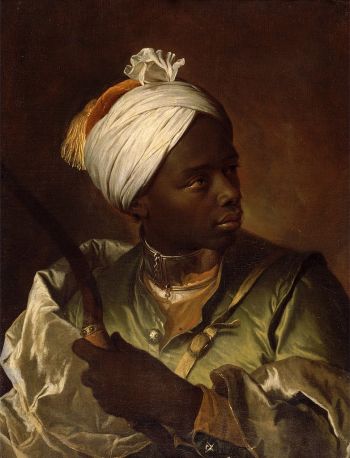
Hyacinthe Rigaud, Young Black Man Carrying a Bow, 1697, oil on canvas (Musée des Beaux-Arts de Dunkerque).
As people across the world step into the fourth or fifth month of a global pandemic and nearly universal lockdown, movement has gained new valence as an aspirational condition of human life. Concurrently, the Black Lives Matter movement singularly illuminates the racialization of the purportedly universal freedom to cast breath, stretch one’s legs, move of one’s own will. One aspect of recent protests and mobilizations has been to show how this ‘immobilization’ and related violence has a very long history and has been enshrined in monuments that are being dismantled around the world. At this crucial juncture, Journal18 is initiating a project to create a collaborative resource for teaching, research, and collective discussion around these issues.
Over the course of the 17th and 18th centuries, European powers formulated, debated, and enacted myriad policies and laws to direct and restrict the movements of people of color in Europe, usually in conjunction with similar or more severe steps taken across sites of empire. Of note is how these measures usually privileged the proprietary rights of colonizers and enslavers over the lives of people of color, and how through such measures ‘blackness’ acquired the characteristics of a legible visual category. Blackness as lived experience and colonial category thus both illuminates and often (mis)informs art historical assessments of race in 17th- and 18th-century European art and visual culture, especially in relation to lives that spanned and were interconnected across the globe.
Journal18 invites its readers to contribute to a timeline chronicling the representation and regulation of black bodies in Europe, ca. 1600–1800. Setting these dates in relation to black lives that scholars have judiciously traced within colonial archives and a selection of works of European and colonial art that picture black sitters or subjects, our goal is to create a digital resource for use by researchers, educators, and students of the long 18th century. Given the critical role of dates in art historical scholarship, our aim is to underscore through the spatial proximities of a timeline, historical affinities that can allow us to connect what we can see within works of art with what we are learning to discern in the archives.
How to participate:
Our goals is to create a timeline of events and artworks—a pedagogical tool that is not exhaustive in scope, but rather a cross-referential visualization of the juxtapositions and connections through this history.
1 Take a look at the Google Doc (www.shorturl.at/gBHJK) containing preliminary dates, events, and artworks relating to the presence and movement of black bodies in Europe during the period under consideration. This is a starting point, but there is still much to add.
2 We invite you to add to the document: pertinent dates, relevant artworks (submitted either as copyright-free digital images or as hyperlinks), the names or accounts of relevant historical actors, or anything else that might contribute to or improve the proposed timeline (including any necessary corrections to existing items).
3 Please contact our Notes & Queries editor, Zirwat Chowdhury (zirwat@ucla.edu) with any questions and additional suggestions, or if you have any trouble accessing or editing the document.
4 Make sure you have made all your contributions by 1 August 2020. We hope to publish the timeline in Journal18 for the start of the Fall 2020 semester.
◊ ◊ ◊ ◊ ◊
Note (added 24 June 2020) — The original posting incorrectly listed the due date as August 15.
Call for Papers | ASECS 2021, Toronto
From the Call for Papers for the conference:
2021 American Society for Eighteenth-Century Studies Conference
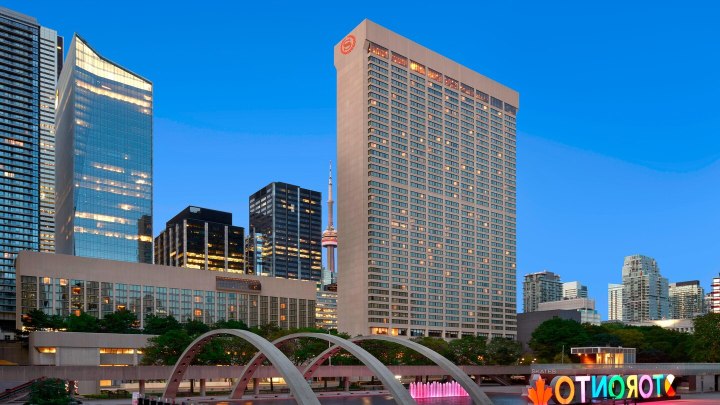
Sheraton Centre, Toronto, 8–10 April 2021
Proposals due by 15 September 2020
Proposals for papers to be presented at the 52nd annual meeting of the American Society for Eighteenth-Century Studies, in Toronto, are now being accepted. In addition to sessions newly proposed for the 2021 meeting, this Call for Papers includes sessions carried over from the (cancelled) 2020 annual meeting in St. Louis that are seeking additional presenters. Sessions carried over from St. Louis that are not part of the CFP but that will be presented in Toronto are listed here.
Proposals should be sent directly to the session chairs no later than 15 September 2020. Along with our annual business meeting, HECAA will be represented with the Anne Schroder New Scholars’ Session, chaired by Susanna Caviglia (already booked from 2020). A selection of additional sessions that might be relevant for HECAA members is included below. A full list of panels is available as a PDF file here.
◊ ◊ ◊ ◊ ◊
The Rise of the House Museum: Domestic Curatorial Practices
Kirsten Hall (The University of Texas at Austin), kirstenahall@utexas.edu; and Teri Fickling (The University of Texas at Austin), terifickling@utexas.edu
When Elizabeth Bennet and the Gardiners are led on a tour of Pemberley by housekeeper Mrs. Reynolds, Elizabeth owns, “Mrs. Reynolds could interest her on no other point. She related the subjects of the pictures, the dimensions of the rooms, and the price of the furniture, in vain.” As the Pemberley tour proves, the rising popularity of country house tours as a leisure pursuit suggests that the gentry had become captivated by the prospect of seeing up close how others—especially the rich, powerful, or famous of the present and past—lived through their catalogues of “fine carpets and satin curtains.” On one hand, “great house” tourism shored up class hierarchies, celebrating the prestige of the aristocracy. On the other hand, the case of Mrs. Reynolds seems to show how the practices of archiving and exhibiting were increasingly open not just to the elites of clubs and universities but also to women and, to some extent, the working class. This panel invites papers that address the popularity of domestic curatorial practices in the long eighteenth century, inviting a range of interdisciplinary perspectives that may consider topics such as: collecting, curating, and housekeeping in the public vs. private spheres; the relationship between literary genres like biography, the novel, the travel guide, and the encyclopedia and house tours; taxonomic and empirical methods in the arts and sciences; tourism and secular pilgrimage; women and museums; historic preservation, antiquarianism, and historical consciousness; current scholarly practices in historicizing ordinary life in the eighteenth century; and the status of eighteenth-century historic house museums today.
◊ ◊ ◊ ◊ ◊
Mineralogy and Artful Metamorphosis
Tara Zanardi (Hunter College), tzanardi@hunter.cuny.edu; and Christina Lindeman (University of Southern Alabama), clindeman@southalabama.edu
The burgeoning field of mineralogy in the eighteenth century not only pointed to the increase in the scientific study and mining practices of minerals, such as amethyst and emeralds, but also to their greater manipulation by artisans, architects, and artists in the creation of decorative objects, textiles, jewelry, interiors, and garden grottoes. Since antiquity humans have analyzed and contemplated minerals for their beauty, intricate structures, purported mystical and therapeutic powers, economic benefits, and spiritual and chemical properties. In the 1700s, they were avidly incorporated in elite and amateur collections and displayed in natural history cabinets, and this interest became more systematic and rigorous, aided by a constellation of institutions and governing bodies that funded expeditions and fostered scientific inquiry. This session invites papers to consider the multiple and complex roles of minerals in artistic and natural history contexts. How did the raw materials, mined at home or abroad, relate to nationalistic and imperial pursuits and the kinds of terrestrial bounty boasted by nations? How were such materials then catalogued, displayed, wielded, or molded in their new, ‘civilized’ environments? How were such natural objects sources of pleasure, instruction, wonder, spirituality, and the exotic? Ultimately, how did these minerals undergo metamorphosis in new and artful ways that embodied an individual’s or collective taste, knowledge, and identity? We also welcome papers that address the explorative methods of quarries and the labor used to extract minerals.
◊ ◊ ◊ ◊ ◊
Colonial Matter
Kaitlin Grimes (University of Missouri-Columbia), krgxb6@mail.missouri.edu; and Danielle Ezor (Southern Methodist University), dezor@mail.smu.edu
The long eighteenth century witnessed a freer and faster movement of increasingly diverse goods around the world than had ever existed before. New objects, materials, and consumables traversed oceans and crossed over lands to serve new global marketplaces. These material goods travelled not just from or to Europe as much recent scholarship has suggested, but between global metropoles well outside of Europe, as for example between China and New Spain or India and East Africa. However, colonialism facilitated the movement of these goods, and so colonialism also marked these objects, materials, and consumables. Studies of traded materials provide a greater understanding of relations between colonizer and colonized as well as illustrate how particular materials were received and perceived in an eighteenth-century colonial context. This panel seeks to explore the connection between material culture and colonialism and to decentralize Europe as the main purveyors of these materials. Such topics could include but are not limited: colonial materials, objects used to house, contain, or exhibit colonial goods and consumables and their display; the trade and/or market of colonial goods in the long eighteenth century; and colonial interpretations of such objects and consumables. The goal of this panel is to develop an ongoing conversation on the relationship between material culture and colonialism within the long eighteenth century and how colonialism’s role in spreading objects aids in the comprehension of eighteenth-century material and visual culture.
◊ ◊ ◊ ◊ ◊
Collecting, Antiquities, and Eighteenth-Century Art
Lauren DiSalvo (Dixie State University); lauren.disalvo@dixie.edu; and Katherine Iselin (University of Missouri), ktp.iselin@gmail.com
The influence of the Greco-Roman world permeated eighteenth-century visual and material culture following the excavations that began at Pompeii and Herculaneum. Demand for large-scale sculpture and their copies, Greek vases, and the many Neoclassical paintings that were influenced by antiquity rose in the wake of eighteenth-century excavations as collectors passionately sought such objects. Likewise, more portable souvenirs such as prints, micro-mosaics, fans, gems, and architectural models also found their way into collectors’ hands. This panel seeks papers that examine the intersections of collecting, antiquities, and eighteenth-century art. What new perspectives can be used to explore how Greco-Roman art functioned in collecting during the long eighteenth century? This panel looks to examine collecting more broadly, including collections of specific collectors, types of popular collectibles, or reworked Greco-Roman artifacts. Papers focusing on non-traditional or little-known objects and collectors are particularly welcome.
◊ ◊ ◊ ◊ ◊
Spanish Sensorium
Elena Deanda (Washington College), edeanda2@washcoll.edu
Sensorium is the seat of sensation in the human limbic system. It receives, processes, and interprets sensory stimuli. Humans normally respond more to visual components than to other stimuli. Therefore, most of our experience knowing distant places and periods is through the visual imagination. Yet in order to fully understand the civilization and culture of another country, we need to engage with and experience elements of their environment in order to forge perceptual connections with their time and space. We are inviting scholars who are interested in ‘flipping’ the traditional conference panel and offer new approaches to knowing the eighteenth century in general and the Ibero-American eighteenth century, in particular. We propose a panel with a sensorial approach to imperial Spain and its material culture, through the stimulation of the senses, be them visual, auditory, tactile, gustatory, vestibular (motion), or proprioceptive (body awareness). We welcome proposals from eighteenth century specialists on the Ibero-American history, literature, art, and materiality who work with sounds, smells, food, or physical forms both in the peninsula and/or in the Americas, and who would like to offer a sensorial experience to reduced audiences in an interactive way. This non-traditional panel will be integrated by a limited number of experiential interventions guided by a panelist who will provide a short explanatory talk.
◊ ◊ ◊ ◊ ◊
The Visual Gothic
Kristin O’Rourke (Dartmouth College), kmo@dartmouth.edu
The burning of Notre Dame cathedral made clear how present the Gothic still is today in everyday life in Paris and throughout much of Europe: as tourist attraction, as spectacle, as nostalgia, as cultural or religious symbol. This panel strives to think about how the visual image of the Gothic impacted contemporary art and literature of the eighteenth and early nineteenth centuries. The ‘new’ Gothic fantasy of Walpole’s Strawberry Hill, Gilpin’s picturesque tours, the Troubadour style in French art, and the restoration and completion of centuries-old cathedrals, for example, demonstrate how the Gothic re-gained a hold over architecture, painting, and literature at a time of political and social change throughout Europe. Was the Gothic revival a rejection of the classicism spurred on by the Grand Tour and Napoleon’s empire, or one aspect of a nascent Romanticism? How do politics and religion figure into an aesthetic focus on the vernacular and idiosyncratic aspects of the Gothic as opposed to the universalizing rationality of the classical tradition? Can we read an anti-modern, anti-Enlightenment reaction in the art of the time, or was the Gothic just another form of exoticism?
◊ ◊ ◊ ◊ ◊
The Woman of Color in the Eighteenth Century
Regulus Allen (Cal Poly, San Luis Obispo), rlallen@calpoly.edu; and Nicole Aljoe (Northeastern University); n.aljoe@northeastern.edu
The republication of the 1808 novel The Woman of Colour, A Tale; the debut of Belle, a film inspired by the 1779 portrait of Dido Elizabeth Belle; the reissue of the 1767 text The Female American; a new edition of Lady Mary Wortley Montagu’s 1763 Turkish Embassy Letters; and work by scholars such as Lyndon Dominique, Felicity Nussbaum, and Sarah Salih have facilitated a greater focus on eighteenth-century representations of women of color, and have indicated that such depictions are more prevalent and complex than the criticism has previously suggested. This panel invites papers from all disciplines as we consider verbal and visual depictions of women of African, American, or Asian descent and their impact on eighteenth-century culture and society.
◊ ◊ ◊ ◊ ◊
Visualizing the French Empire
Izabel Gass, izabel.gass@gmail.com; and Philippe Halbert (Yale University), philippe.halbert@yale.edu
In recent years, art history’s ‘global turn’ has worked to acknowledge the vital role that non- Western cultures and imperialism played in the formation of European art and material culture. This commitment to more inclusive narratives has had a pronounced impact on many fields that privilege and address eighteenth-century art and history. For example, the study of British culture in this period has in many instances been fully eclipsed by the emergence of a ‘British Atlantic World’ and a model of empire that no longer views colonies in isolation from metropolitan centers, and vice versa. This phenomenon is comparatively less pronounced among scholars of French art and those exploring the various legacies of France’s ‘first’ overseas empire, which at its height stretched from Cayenne to Québec and also included points in Africa, India, and the Indian Ocean. This panel seeks to address, and hopefully redress, this disparity as we meet in Saint Louis, founded by the French in 1764 and North America’s last French colonial settlement. We are interested in two lines of inquiry: first, historiographical and methodological papers that explore why, exactly, French visual culture (inclusive of canonical art and material culture) of the long eighteenth century has received less of a global perspective within art history; second, papers that take on this global perspective in exploring topics and themes within the visual culture of a larger, lived French colonial experience.
◊ ◊ ◊ ◊ ◊
The Politics of Citation (Roundtable)
Sal Nicolazzo (UCSD), snicolazzo@ucsd.edu
As scholars such as Sara Ahmed have argued, and as movements like #CiteBlackWomen insist, citation is political. This roundtable seeks to open up conversations about the politics of citation in eighteenth-century studies, broadly understood. Which scholars, theorists, and intellectual traditions should we be citing more, and why? How do patterns of citation and non-citation reveal the dynamics of race and gender as they structure the field of eighteenth-century studies? What might citation tell us about the history of our field? What new approaches might we take to eighteenth-century forms and networks of citation? In particular, this panel’s priority is to amplify the work of BIPOC (Black, Indigenous, and people of color) scholars, intellectual traditions, and histories.
◊ ◊ ◊ ◊ ◊
Playing with Pigments: Color Experiments in the Visual Arts
Daniella Berman (Institute of Fine Arts, NYU and Metropolitan Museum of Art), daniella.berman@nyu.edu; and Caroline M. Culp, (Stanford University and Metropolitan Museum of Art), cmculp@stanford.edu
With the emergence of novel pigments and dyes—some from the New World—prompting myriad experimentation in color and facture, the eighteenth century is widely acknowledged as a turning point for artists’ materials. This panel explores the impact of such innovations on artistic practice across the long eighteenth century. The microcosm of color in art exemplifies larger trends of the period as technological and scientific advances transformed the ways in which color was perceived, described, transmitted, commodified, thematized, and preserved. From furniture and paper makers to aquatint engravers and history painters, artists and artisans were invested in discussions about hue, discoloration, and the impact of time on color. Explorations in alternative mediums such as encaustic and enamel aspired to the most saturated, the most authentic, or the most durable color palettes. Advances in printmaking revolutionized the circulation of chromatic knowledge, including a new understanding of Old Masters through reproductive engravings and the transmission of cultural and botanical information about distant lands. We welcome papers that consider the full spectrum of artistic production and experimentation across the visual arts during this transformational period. Papers considering the science and materials of color, the restoration of historic palettes, or issues of pigmented materials’ change over time are also encouraged.
◊ ◊ ◊ ◊ ◊
William Hogarth in the 21st Century
Debra Bourdeau, taylo13f@erau.edu
William Hogarth’s engravings invite us to view the streets, parlors, insane asylums, prisons and gambling houses of 18th-century London. Through his ‘modern moral subjects’, his satirical
eye exposed hypocrisy, aristocratic excess, and overwrought devotion to foreign artists. His influence can be seen in political cartoons, graphic novels, and even cinema. This panel will discuss Hogarth’s place in 21st-century culture. During this time that seems desperately to need keen, perspicacious satire, can we turn to Hogarth as a paragon? What can an artist so inextricably linked to 18th-century life teach us about ourselves? He clearly demonstrated a need for social change in his time, but do the issues that he decried remain as pervasive almost 300 years later?
◊ ◊ ◊ ◊ ◊
Publishing Natural History
Eleanore Neumann (University of Virginia); and Agnieszka Ficek (City University of New York – Graduate Center), anna.ficek@gmail.com
Natural history in the global eighteenth century involved an interconnected set of practices. A lady sketched her exotic plant specimens while also collecting mineral samples. A botanist mailed seeds to his network of colleagues and then recorded the anatomy of quadrupeds. A gentleman investigated volcanic eruptions while sketching the physiognomy of Indigenous peoples. Each of these practitioners also consumed and contributed to a proliferation of illustrated natural history publications, which included everything from periodicals to multivolume scientific treatises and from travel accounts to entries in Diderot and d’Alembert’s Encyclopédie. Authors, artists, printmakers, and publishers often collaborated across borders to produce an extraordinarily wide variety of texts and images that organized and displayed nature. This session invites papers that reconsider natural history as it was practiced and presented through publications in the long eighteenth century. What does the interplay of image and text or an examination of whole books and compendia reveal about how the natural world was understood? How did readers engage with these publications in their daily lives, artistic practices, and professional pursuits? How was Indigenous knowledge of the natural world represented and/or interpreted for Western readers? Why was the publication of natural history far more abundant for certain imperial powers? How was natural history and its practice narrated in actual and fictional accounts? Was the translation of drawings into print affected by the cross-cultural nature of scientific publication? We invite papers covering any geographical area or methodological approach for this interdisciplinary panel.
◊ ◊ ◊ ◊ ◊
Networks and Practices of Connoisseurship in the Global Eighteenth Century
Valérie Kobi (Universität Hamburg), valerie.kobi@uni-hamburg.de; and Kristel Smentek (MIT), smentek@mit.edu
The eighteenth century was the age of the connoisseur, the disciplined interpreter and assessor of artworks whose authority, like that of the natural philosopher, was founded on his (more rarely her) extensive and sustained visual analysis of physical things. An era of accelerating trade and imperial conquest, the eighteenth century was also a period of an expanding global consciousness. This panel seeks to link eighteenth-century connoisseurship to a corresponding awareness of the diversity of artistic practice in different regions of the globe. Studies of connoisseurship have tended to be local, focusing, for example, on Western European or Chinese art to the exclusion of works from unfamiliar artistic traditions to which eighteenth-century art experts, collectors, and colonial administrators were also increasingly exposed. Questions we are interested in pursuing include: What were the channels through which encounters with art from afar were made possible? What methods were used to analyze and categorize art from other parts of the globe? And how might a recognition of the conventionality of artmaking have shaped local definitions of art and artistic quality in such regions as Asia, the colonial Americas, and Europe? We welcome papers that investigate the social, institutional, and commercial networks of international information and object exchange that facilitated eighteenth-century engagements with unfamiliar art. Proposals that introduce new interdisciplinary and methodological approaches are especially encouraged.
◊ ◊ ◊ ◊ ◊
Raw: Materials, Merchants, and Movement
Brittany Luberda (Baltimore Museum of Art), bluberda@artbma.org
During the eighteenth century, maritime trade networks circulated goods ranging from mahogany to silver, cotton to ginseng. How did the influx or movement of mass raw material transform social or visual environments? Papers are invited which explore the extraction or transportation of raw goods between municipalities or continents from any decade or geography. Topics might include the establishment or disruption of material movement due to war, economy, taste, or invention, human trafficking, environmentalism, or artistic production. Speakers are also welcomed to focus on a specific product, object, anecdotal history, literary record, or conceptual framework related to material acquisition and mobility. The moderator will open with a history of silver mining in Potosi, Bolivia and its reappraisal in a present-day museum display of pan- American colonial histories.
◊ ◊ ◊ ◊ ◊
Material Forms
Chloe Wigston Smith (University of York), chloe.wigstonsmith@york.ac.uk
This panel focuses on how material objects were shaped by empire, colonialism and geographic circulation in the eighteenth century. It engages, in particular, the form and aesthetics of objects that moved through different spaces and regions of the global eighteenth century. How were ceramics and textiles, and other products, redesigned for export to specific destinations? How did individuals adapt imported goods by altering their appearance and affordances? What kind of material entanglements emerged in the contact zones? What kind of hybrid and intercultural objects were created? What do these remade, reworked, and refashioned things illuminate about the intersections of material culture and empire? The panel invites especially papers that address the transculturation of material objects. We hope to assemble an interdisciplinary group of papers, so proposals from across humanities disciplines are especially welcome. Please send an abstract of no more than 300 words and a brief biography.
◊ ◊ ◊ ◊ ◊
Imagining the Future in Ruins
Thomas Beachdel (Hostos, CUNY), trb202@nyu.edu
Ruins were popular for artists, writers, travelers, and tastemakers throughout Europe during the eighteenth century. By their very nature, ruins are dualistic, acting as sites of memory and erasure, sites of presence and transience, evocative of grand, sublime ideas while at the same time falling physically to dust. Ruins represent a way of thinking about the future. In his Paris Salon writing of 1767, Denis Diderot evoked the present and an imagined future: “…in our imagination we scatter over the ground the rubble of the very buildings we still inhabit in that moment…we are sole survivors of an entire nation that is no more…Such is the first tenet of the poetics of ruins.” Reflecting this, French artist Hubert Robert showed pendant paintings at the Paris Salon of 1796 with the Louvre as their subject. Project for the Transformation of the Grand Gallery of the Louvre shows how the Grand Gallery might appear upon its completion, while Imaginary View of the Grand Gallery of the Louvre in Ruins shows it as a future ruin, projecting it as a far distant image of monumentality. Worldwide, as we stand on the brink of an uncertain, or much different future than imagined, Diderot’s poetics of ruins takes on a reinvigorated meaning. This panel seeks papers that not only address the significance of ruins as a means of imagining the future, both as a symbol of loss and greatness or continuity, but also, more widely, how the future was imagined in the global eighteenth century.
◊ ◊ ◊ ◊ ◊
Ephemeral Objects
Matthew Gin (Harvard University), matthewgin@gmail.com
The term ‘ephemeral’ can be used to describe a wide variety of objects. There are, on the one hand, things like pamphlets, tickets, and broadsheets that have been traditionally categorized as ephemera. While on the other are objects that also existed only momentarily but are more difficult to categorize. By way of example are sugar sculptures, napkin art, and the elaborate temporary decorations built for festivals. Ephemeral objects abounded in the eighteenth century and especially notable is the sheer volume of printed matter that emanated from the Republic of Letters. The survival rate for ephemeral material from the eighteenth century, broadly speaking, is relatively poor but what does remain serves as vital evidence of the politics and culture of this period. This panel invites papers that address ephemeral objects either directly or obliquely. Among the questions to be considered are: in what ways do ephemeral things actually prove to be enduring? And how might they confound ideas about permanence? Through what media are ephemeral objects perpetuated and known? And what limitations and opportunities do these sources present? How do texts capture the momentariness of an object or image? What do ephemeral items reveal about histories of collecting, sociability, or consumption? Papers that take an interdisciplinary or global approach to these and other pertinent questions are especially welcome.
◊ ◊ ◊ ◊ ◊
‘Canada or the Tower’: Finding, Depicting, and Imagining Canada
Cristina S. Martinez (University of Ottawa), martinezcsm@gmail.com
In 1763, with the conclusion of the Seven Year’s War, Canada was annexed to the British Empire. Alluding to the important political event is the anonymous print Canada or the Tower. In it, John Wilkes (exactly as portrayed by William Hogarth’s earlier satirical print) sits next to a devil-like Lord Bute, coins in hand, who is nudging the politician to accept a bribe while poking him with a stick on which is inscribed ‘have Canada or to the Tower’, indicating that Wilkes had to choose between governance of Canada or prison. His supporter, Lord Temple, leans on Wilke’s chair to exclaim ‘O! Liberty O! my Country’. In The Death of General Wolfe (1770), a landmark history painting by Benjamin West, a Native American, the St. Lawrence River and a glimpse of Québec city are shown. In these works and others, is Canada seen as a land of opportunities, a commodity to exploit, or a territory fraught with difficulties and people to overcome? This panel invites reflections on how a real or imagined Canada came into view throughout the eighteenth century. How were its landscape, foreboding climate, geographical position, inhabitants and tales represented in prints and drawings, literature, theatre and other arts? How did these, in turn, shape public opinion, policies, legislation, viewpoints on taxation, etc.? The panel solicits proposals on these matters as well as on the myths and fabulations that rendered Canada an attractive or a feared land.
◊ ◊ ◊ ◊ ◊
Note (added (30 June 2020) — The original Call for Papers did not include Kristin O’Rourke’s session on The Visual Gothic; the posting has been updated to include it here, along with an updated full CFP (as a PDF file with link at the top and here).
Call for Essays | ECTI Issue, Scholarship in a Time of Crisis
From the Call for Papers:
Scholarship in a Time of Crisis
Special Issue of The Eighteenth Century: Theory and Interpretation
Essays due by 15 August 2020
Two important thinkers from the century we study significantly shaped their careers in response to advertisements, what we now call ‘Call for Papers’. In 1749, Jean-Jacques Rousseau responded to a question put forth by the Academy of Dijon, “Has the restoration of the sciences and arts contributed to the purification of morals?” And in 1784, Immanuel Kant replied to the question published in Berlinishe Monatsschrift, “What is Enlightenment?” Whether or not one agrees with their respective answers, both Rousseau and Kant addressed a climate of urgency and the pressing needs of their time. Given our own current challenges, we invite our contributors and readers to do the same. We therefore invite all interested parties to respond to one or more of the following questions: How are we as scholars of eighteenth-century studies uniquely positioned to respond to the current crises—those inspired by global pandemic, social isolation, systematic racism, and economic collapse? What literary frameworks do you feel we bring to an understanding of today’s headlines? And how have you experienced these challenges—and response to these challenges—within your own institution, teaching, or research?
We currently face a difficult future in higher education and in particular the humanities, but such adversity does not mean that we should stop doing what we’re doing. We at ECTI feel that the eighteenth century has a great deal to say to our present moment, and we want to hear your experiences and thoughts. We hope to receive a wide variety of responses, which will be published in our online supplemental issue of ECTI. We imagine the responses to be between 1,000 and 3,000 words. The format should follow the guidelines of the journal (i.e., Chicago Style), but we do not expect heavily footnoted pieces. Additionally, we anticipate a special print issue to emerge from this project. Please send in your responses to ecti@usc.edu by 15 August 2020. And feel free to email us if you have any further questions.
Call for Papers | The Architectural Model
From ArtHist.net (19 June 2020) . . .
The Architectural Model as Tool, Medium, and Agent of Change
Special issue of Architectural Theory Review, edited by Matthew Mindrup and Matthew Wells
Proposed articles due by 15 September 2020
The architectural model has long held an important role in the edification of buildings, not least as a descriptive tool, a source of inspiration and a medium for studying new designs. Since around the fifteenth century it has served primarily as an explanatory guide for clients and builders, but there is ample evidence to support the view that it also played an important role in the generation and formulation of new designs over that same timespan, during critical moments of change in social, technical or even institutional practices. This latter role is often overlooked in architectural history and theory, even though it enjoys a similar longevity. Addressing this lacuna, we seek submissions that examine architectural modelling practices and theories which emerged from or helped to define critical moments of evolution in the history of architecture. This special issue will show how the employment of architectural models in these instances is a crucial indication of architecture’s history and capacity the discipline’s capacity for self-reflection.
Whether physical, conceptual, or digital, models stand somewhere between theoretical concepts and contingent realities, reflective of both settings, thereby allowing us to use them as instruments in our understanding of both situations. Long familiar in the sciences is the transition in cosmology from a Ptolemaic cosmology to a Copernican one. Recent research has taken a closer look at similar roles which the architectural model has had on architectural practice including the commercialisation of model making practices upon design during the post-war years in the United States; the role of paper in translating drawings to models in sixteenth-century Italy, the effect of artists and art practice on architectural models in the education of German architects during the early twentieth century and the emergence of the digital model in construction practices over the past thirty years.
The wide range of ways in which the model affects change in architectural culture warrants closer inspection. What are the ‘theories’ that motivate the form and function of models for architecture in those moments? We invite authors to consider this problem from any angle, reading the model in the broadest terms possible. Submissions may consider with new questions cases of apparently canonical importance, or address the ideas and projects of underrepresented practitioners and organizations. They might consider instances in which models (or practices involving the model, or modelling) have become sites of disciplinary adoration and/or discursive attention. How has the architectural model been an essential tool, medium or agent of change? This number of ATR hopes to shed light on a still relatively scarce archive of architectural modelling practices that motivates and mobilizes individuals, institutions and industries to rethink the built environment.
We seek papers that fall into one of four categories:
1) Modelling change — How can models (and their exhibition) be seen and understood as lodestars for critical moments of change in architectural culture?
2) Modelling theories — What particular moments or epochs in architectural theory were particularly concerned with conceptualising the model or, likewise, how were theories of architecture affected by models themselves?
3) New materials and techniques — What new model-making materials and tools, as well as the role of models (and mock-ups) emerged to advance the testing of particular formal, material, structural or technical solutions? How did new model-making materials and tools suggest new roles for the model, and how did this inform new developments in architectural practice and pedagogy?
4) Agency of the architect-as-model-maker — What is the model-maker’s role as an actor in the production of the built environment? Either as an architect, or as a practitioner in their own right? What can the examination of model-makers within architectural practices and those without tell us about their role in architectural culture?
We welcome the submission of previously unpublished, research-based writing that addresses these questions. Scholarly texts of between 4000 and 8000 words (including notes) will undergo double-blind, peer review. Although authors are invited to submit papers on people, places, and projects across the globe, all submissions must be written in (or translated into) English for consideration.
The deadline for the submission of completed manuscripts is 15 September 2020. Please submit manuscripts to the journal’s website. The editors welcome expressions of interest prior to paper submissions and are available for discussing possible contributions. For any questions regarding this issue please contact:
Matthew Mindrup, matthew.mindrup@sydney.edu.au
Matthew Wells, matthew.wells@gta.arch.ethz.ch
Manuscript submission guidelines can be found on the Architectural Theory Review website.
Call for Papers | Hidden Gems
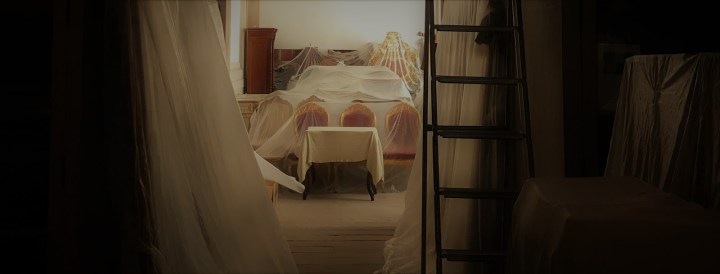
Storeroom, National Palace of Ajuda, Lisbon
◊ ◊ ◊ ◊ ◊
From ArtHist.net:
Hidden Gems: ICDAD Virtual Conference
ICOM International Committee for Museums and Collections of Decorative Arts and Design, 15–16 October 2020
Proposals due by 1 July 2020
The 2020 Annual Conference and General Assembly of ICOM International Committee for Museums and Collections of Decorative Arts and Design was meant to take place in Lisbon, Portugal, in October of 2020. Due to the COVID-19 pandemic, the ICDAD board has elected to postpone the previously selected theme of ‘Revivals’ to 2021, when we hope to meet in Lisbon in person. All proposals already submitted for the ‘Revivals’ meeting will be eligible for the 2021 meeting, and the CFP will re-open for new proposals at a future date. In October of 2020, ICDAD will instead host an online meeting centered around the theme of ‘Hidden Gems’.
Every public decorative arts and design collection has hidden corners and unplumbed depths, and many private collections are difficult for outsiders to access during the best of times, much less during a pandemic. As institutions and individuals face the possibility that we might not be able to visit each other’s museums and discuss with colleagues in person for some time, ICDAD is thrilled to host a two-day virtual conference and general assembly exploring these hidden holdings in decorative arts and design collections around the world.
Does your collection have objects that you wish scholars and visitors knew more about? What is the subject on which you have always wanted to present an exhibition or essay, or a small yet significant story that has not yet been highlighted at your institution? If you work with a private collection, what in your holdings would you most like to see made accessible to the wider design community? We welcome presentations that address any of these questions, as well as issues related to:
• Challenging collections that require special treatment, both physically and intellectually
• Stories of ‘hidden’ or underrepresented collectors, or unexpected ways that a collection may have come together
• Works by designers and makers who were previously unknown or under-explored
• Collection access and display, physical and digital, their challenges and best practice examples
Please send an abstract of 250–300 words including your name, job position, institution, short CV, photo (headshot), ICOM number and ICDAD membership confirmation (1), to Shoshana Resnikoff at editor@icom-icdad.org by 1 July 2020. Notification of acceptance: 31 July 2020.
The conference will be held digitally 15–16 October 2020. Presentations should not exceed 20 minutes in length and should be accompanied by a PowerPoint slide show. The official language of the conference is English. The annual general assembly will take place online during these dates as well. Please contact Shoshana Resnikoff at editor@icom-icdad.org with any questions, and we look forward to seeing you (online!) in October.
(1) Please note: ICDAD welcomes abstracts from museum professionals worldwide, members and non-members alike. However, all participants must be members of ICDAD and ICOM at the moment of the conference. If accepted to present at the meeting, please get in contact with your national ICOM committee for membership registration. See icom.museum/en/get-involved/become-a-member/.
Call for Papers | Watteau and His Universe: Networks and Influences
From the Call for Papers (with the French version here) . . .
L’univers de Watteau: Réseaux et influences autour d’Antoine Watteau (1684–1721)
Musée de l’Armée – Hôtel National des Invalides, Paris, 17–18 November 2021
Proposals due by 15 October 2020
Pierre Antoine Quillard, The Four Seasons: Spring, ca. 1725–29, oil on canvas, 42.5 × 33.5 cm (Madrid: Colección Carmen Thyssen-Bornemisza en depósito en el Museo Nacional Thyssen-Bornemisza, inv. CTB.1930.90).
To commemorate the tricentenary of the death of Antoine Watteau (Valenciennes, 1684–1721, Nogent-sur-Marne), a two-day symposium will be held in Paris, at the Musée de l’Armée – Hôtel National des Invalides, in partnership with the Fine Arts Paris fair, 17–18 November 2021.
Since the major retrospective of 1984, several important publications have been produced. In 1996, Pierre Rosenberg and Louis-Antoine Prat co-signed the catalogue raisonné of Watteau’s drawings.1 In 2010, Christoph Martin Vogtherr conducted an extensive survey (historical and material) of French paintings by Watteau and his entourage in the collections of Prussian palaces,2 continued by an exhibition in the musée Jacquemart-André.3 Since 2014, Martin Eidelberg has been developing the Watteau and His Circle project, alongside the catalogue raisonné of his paintings: A Watteau Abecedario.
Eidelberg’s Watteau and His Circle project is the inspiration for this symposium. His research on artists who gravitated around Watteau, such as Pierre Antoine Quillard4 or Nicolas Lancret,5 together with the work of other scholars on those and other artists in the orbit of Watteau, have called into question the tradition of the solitary work of the artist. In 1932, Robert Rey was the first to consider Watteau’s followers as satellites, situating the artist as a central figure who set in motion an entire system around him.6 This term of satellites implies a notion of attraction and of concentric circles revolving around a central figure and occasionally crossing each other. However, within the framework of this symposium, this conception does not necessarily imply a hierarchy among the elements, but sees them interacting independently of their perceived importance. Masters, contemporaries, followers, friends, merchants, and collectors all took part in Watteau’s universe.
This symposium, Watteau and His Universe: Networks and Influences of Antoine Watteau (1684–1721), aims to study the figures gravitating around the painter who made him a central figure in eighteenth-century century French art.7 Close investigation of fellow painters, printmakers, merchants, collectors, amateurs, and friends is necessary in order to further our knowledge of Watteau. Communications will be expected to draw upon the works of art (drawings, paintings, etchings), so that they are exploited for their intrinsic value; the same goes for archival elements offering direct insight into the careers and interactions between Watteau and his universe.
The symposium will be divided into three parts:
1. Artists around Watteau
2. Watteau’s Social Milieu
3. Watteau on the Art Market: Collectors, Amateurs, Merchants
The symposium is organized in partnership with the international Fine Arts Paris fair (16–23 November 2021) and will be held in the auditorium of the Musée de l’Armée – Hôtel National des Invalides. Twenty-minute papers will be given in French and English (without translation). Since the organization of this symposium is a private initiative without public funding, please include at the end of your proposal your partner institution(s), your city of residence (in November 2021) and your ability or not to finance your trip. Requests for travel subventions will be studied on a case by case basis in order not to disadvantage students and independent researchers.
Publication of the symposium proceedings is planned within 12 months of the event. In order to speed up the publication process of the proceedings, upon notification of their acceptance, symposium participants will be asked to write their papers according to the established editorial standards. These will be forwarded with the approval notices.
Formatting
• Last name, first name, home institution
• Proposed title of the communication
• Summary of the proposal in 500 words (±10%, the count must appear at the end of the document)
• Illustrations (5 maximum, optional) – .word or .pdf document
• Proposals must be sent to watteau2021@gmail.com with the subject ‘NAME + Watteau 2021 Symposium’
For any questions, contact: Axel Moulinier (Doctoral student in History of Art, École du Louvre, University of Burgundy) via watteau2021@gmail.com.
Steering Committee
• Martin Eidelberg (Professor Emeritus, Rutgers University, New Jersey)
• Guillaume Faroult (Curator of 18th-century French paintings and British and American paintings, Paris, Louvre Museum)
• Margaret Morgan Grasselli (Visiting Lecturer, Department of History of Art and Architecture, Harvard University, and Visiting Senior Scholar for Drawings, Harvard Art Museums)
• Axel Moulinier (Doctoral student in History of Art, École du Louvre, Paris; University of Burgundy, Dijon)
• Louis-Antoine Prat (Art historian)
• Pierre Rosenberg, president (Member of the French Academy)
• Christoph Martin Vogtherr (Director General of the Foundation for Prussian Castles and Gardens Berlin-Brandenburg)
Notes
1 Rosenberg P. et L.-A. Prat, Antoine Watteau, 1684–1721: Catalogue raisonné des dessins (Paris and Milan: Gallimard-Electa, Leonardo Arte, 1996), 3 volumes.
2 Vogtherr C.M., Französische Gemälde, I: Watteau, Pater, Lancret, Lajoüe (Berlin: Akademie Verlag, coll.« Bestandskataloge der Kunstsammlungen », 2011).
3 Vogtherr C.M. and M. Tavener Holmes, De Watteau à Fragonard: Les fêtes galantes, exhibition catalogue, Paris, musée Jacquemart-André, 2014 (Paris, Culture Espaces, Fonds Mercator, 2014).
4 Eidelberg M., “P. A. Quillard, An Assistant to Watteau,” The Art Quarterly (1970): 39–70.
5 Eidelberg M., “The Young Lancret and Watteau,” in Watteau and His Circle, http://208.106.158.90/younglancret.htm.
6 Rey R., Quelques Satellites de Watteau: Antoine Pesne et Philippe Mercier, François Octavien, Bonaventure de Bar, François-Jérôme Chantereau, thèse complémentaire pour le doctorat ès lettres (Paris: Librairie de France, 1932).
7 Huyghe R., “L’Univers de Watteau,” (préface) in Adhémar H., Watteau sa vie, son oeuvre (Paris: P. Tisné, 1950).
Selective Bibliography
• Dacier É., A. Vuaflart, and J. Hérold, Jean de Jullienne et les graveurs de Watteau au XVIIIe siècle (Paris: Rousseau, 1922).
• Eidelberg M., “P. A. Quillard, An Assistant to Watteau,” The Art Quarterly (1970): 39–70.
• Eidelberg M., “Autour du nom de Quillard,” Bulletin de la Société de l’Histoire de l’Art Français (1979): 129–140.
• Eidelberg M., “Jean-Jacques Spoëde: Watteau’s ‘Special Friend’,” Gazette des beaux-arts (2000): 179–196.
• Eidelberg M., Watteau et la fête galante, exhibition catalogue, Musée des Beaux Arts de Valenciennes, 2004 (Paris and Valenciennes: Réunion des musées nationaux, Musée des beaux-arts de Valenciennes, 2004).
• Eidelberg M., Rêveries italiennes: Watteau et les paysagistes français au XVIIIe siècle, exhibition catalogue, Musée des Beaux Arts de Valenciennes, 2015-2016 (Gand: Snoeck, 2015).
• Glorieux G., A l’enseigne de Gersaint: Edme-François Gersaint, marchand d’art sur le pont Notre-Dame (1694–1750) (Paris: Champ Vallon, 2002).
• Glorieux G., “Michel-Joseph Ducreux (vers 1665–1715), marchand de masques de théâtre et d’habits de carnaval au temps de Watteau,” Bulletin de la Société de l’Histoire de l’Art Français de l’année (2007): 119–129.
• Moulinier A., “Les Satellites de Watteau,” Cahiers du dessin français (Paris: Galerie de Bayser, 2020).
• Moureau F. and M.M. Grasselli (dir.), Antoine Watteau (1684–1721): Le peintre, son temps et sa légende [colloque international, Paris, October 1984] (Paris and Genève: Champion, Slatkine, 1987).
• Rosenberg P., Watteau et son cercle dans les collections de l’Institut de France, exhibition catalogue, Chantilly, Musée Condé, 1996–1997 (Chantilly, Musée Condé, 1996).
• Sheriff M.D., ed., Antoine Watteau: Perspectives on the Artist and the Culture of His Time (Newark: University of Delaware, 2006).
• Vogtherr C.M., Französische Gemälde, I: Watteau, Pater, Lancret, Lajoüe (Berlin: Akademie Verlag, coll.« Bestandskataloge der Kunstsammlungen », 2011).
• Vogtherr C.M. and M. Tavener Holmes, De Watteau à Fragonard: Les fêtes galantes, exhibition catalogue, Paris, musée Jacquemart-André, 2014 (Paris, Culture Espaces, Fonds Mercator, 2014).
• Vogtherr C.M. and J. Tonkovich, Jean de Jullienne: Collector and Connoisseur (London: Wallace Collection, 2011).
• Wintermute A., Watteau and His World: French Drawing from 1700 to 1750, exhibition catalogue New York, Frick Collection, 1999–2000; Ottawa, National Gallery of Canada, 2000 (London and New York: Merrell Holberton Publishers, American Federation of Arts, 1999).
Call for Papers | Bodily Realities: Engaging the Discourse of Dis/Ability
From ArtHist.net:
Bodily Realities: Engaging the Discourse of Dis/Ability
46th Annual Cleveland Symposium for Graduate Students
Case Western Reserve University and the Cleveland Museum of Art, 30 October 2020
Proposals due by 17 July 2020 (extended from 26 June 2020)
The physical body is often a contested space for artists and art audiences, but one that offers abundant possibilities for exploring and expressing identity. Physical ability or disability is a key component of identity and can have a profound impact on artistic production, subject matter, and reception. Art can play a significant role in shaping the often problematic discourse surrounding this topic. Bodily Realities: Engaging the Discourse of Dis/Ability seeks to generate a dialogue about the relationship between ability and disability in the visual arts and art museums in an effort to understand the role of bodily differences in artistic practice, representation, and viewership. This symposium will address the ways in which the visual arts and artists either confirm or challenge the perceived dichotomy of the normative and non-normative physical body.
The Department of Art History and Art at Case Western Reserve University invites graduate students to submit abstracts for its 2020 Annual Symposium Bodily Realities: Engaging the Discourse of Dis/Ability. The Cleveland Symposium is one of the longest-running annual art history graduate symposia in the United States, organized by students in the joint graduate program with the Cleveland Museum of Art.
Petra Kuppers will provide the keynote address. Dr. Kuppers is a disability culture activist, a community artist, and a Professor of English, Women’s Studies, Theatre and Dance, and Art and Design at the University of Michigan. She also teaches on the low-residency MFA in Interdisciplinary Arts at Goddard College and leads The Olimpias, a performance research collective (www.olimpias.org). Thematically, her work encompasses disability studies, performance studies, critical theory and poetics, medical humanities, and the general fields of arts and expression, arts and health, and arts and community building. Her Disability Culture and Community Performance: Find a Strange and Twisted Shape (2011) explores arts-based research methods, and her most recent academic monograph is Theatre & Disability (2017). Her Studying Disability Arts and Culture: An Introduction (2014) is full of practical exercises for classrooms and studios. Her other academic books include Disability and Contemporary Performance: Bodies on Edge (2003), The Scar of Visibility: Medical Performance and Contemporary Art (2007), Community Performance: An Introduction (2007, second edition 2019), Somatic Engagement (2011), and Disability Arts and Culture: Methods and Approaches (2019).
This year’s symposium welcomes innovative research papers that explore the issues of ability and disability in and around the creation, reception, and circulation of the visual arts. Submissions may explore aspects of this theme as manifested in any medium as well as in any historical period and geographical location. Different methodological perspectives are welcomed.
Potential topics may include, but are not limited to:
• The role of physical disability in the construction of identities
• How the body relates to notions of normativity, abnormality, and hybridity
• Disability as a physical reality, but a social construct
• Stigmatization and stereotypes of the disabled body
• The fragmented, altered, disfigured, or modified body
• The body as a site of trauma, violence, pain, and/or effort
• The body’s relationship to health, illness, and recovery
• Clinical uses of art and artistic practice for disabled and non-disabled bodies
• The intersections of body and mind in the discourse of disability
• The power dynamics of ability and disability
• Accessibility in the art museum and cultural sites
• Interactions with disabled bodies through performance
• The body as subject and/or medium in performance art and body art
• The bias of ableism in art historical discourse
• The in/visibility of disability
• The Disability Arts and Culture Movement
Current and recent graduate students in art history and related disciplines are invited to submit a 350-word abstract and a CV to clevelandsymposium@gmail.com by Friday, 26 June 2020. Selected participants will be notified by the end of July. Paper presentations will be 20 minutes in length and should be accompanied by a PowerPoint presentation. Three papers will be awarded prizes.
Please note: Planning for this year’s symposium is already underway, but given the current situation with the COVID-19 pandemic, we understand that plans may need to be amended. Alternative arrangements are being made to transition to an online platform should an in-person symposium be infeasible.
Please direct all questions to Katie DiDomenico and Mackenzie Clark at clevelandsymposium@gmail.com.
Call for Papers | Curating, Care, and Community
From the British Art Network:
Curating, Care, and Community
Online Seminar, 3 September 2020
Proposals due by 26 June 2020
This online seminar will seek to explore how to care for others both within and beyond the curatorial community. The word curator derives from the Latin word curare, ‘to care’. Curators are charged with the physical and intellectual care of collections—the artworks, objects, and narratives found within cultural institutions. However, it is evident to the seminar organisers, a group of early career curators from a range of disciplinary backgrounds, that the concept of care within the sector must stretch beyond the guardianship of cultural heritage, to the care and concern for those everywhere. With this in mind, what role does ‘care’ play in a more holistic sense in a curators work? How do we care for each other, within both the institutional and local communities? Contributions are invited from across a range of disciplines, read the full abstract and find out more information here.










leave a comment