Call for Papers | Between Revolution and Reaction: French Art
Details of this graduate student colloquium are available at H-ArtHist:
Between Revolution and Reaction: French Art in the European Context, 1750–1830
Zentralinstitut für Kunstgeschichte, Munich, 1 June 2016
Proposals due by 15 February 2016
Due to political and social Umwälzungen/alterations, between ca. 1750 and 1830 political key notions and aesthetic conceptions of the modern era changed considerably. It therefore seems legitimate to consider the decades around 1800 as an epoch-making turn. The colloquium offers insights into current research concerning French art of this period. It focuses on the dynamics between revolution and reaction as well as on functions of the cultural policy during the French revolutionary period and on the establishment of new artistic pictorial/Zeichen- and symbolic systems.
The half-day colloquium offers six doctoral students the possibility to present their dissertation project in a paper that should not be longer than 10 minutes. Papers and discussions can be in German, French, and English. Speakers residing outside Munich will receive a lump sum of 200,- euro covering travel expenses. Applications containing a short cv and an abstract of the paper (not to exceed 3000 signs in length) must be sent to frz1800@zikg.eu by February 15, 2016.
Organized by Iris Lauterbach and Christine Tauber, Zentralinstitut für Kunstgeschichte, Munich
Call for Papers | Allegory and Topography
From H-ArtHist:
Allegory and Topography in Early Modern Period (16th–18th Centuries)
Institut national d’histoire de l’art, Paris, Paris, 9–10 June 2016
Proposals due by 10 February 2016
Organized by Étienne Jollet and Antonella Fenech Kroke
The arts of the early modern period, from the Renaissance to the end of the eighteenth century, attach great importance to the allegory as a mode of visual evocation of the invisible universal—be it the Christian divine or the human values. Defined in this manner, the notion of allegory appears far removed from the understanding of topography intended as expression of the specificity of a ‘place’, all together visible, physical and particular. However, this tension between the universal and the particular, the invisible and the visible, the intangible and the tangible, figure and place, meaning and representation, characterizes the culture and the arts of early modern. During this period, Western Europe thinks out a new order of the world and, at the same time, endeavors to describe it and to figure it through complex symbolic representations set in a significant space, which then is ‘place’.
Four major questions constitute the principal axes of this symposium.
• The first one is the place of allegory. Allegory deploys its figures in a meaningful extension and in variable ways—for instance, in the tension between allegory and personification.
• The second issue concerns allegory of ‘place’ (but also allegory of specific places): this dimension is especially important because of the constitution, since the Renaissance, of increasingly strong political entities gradually defining their boundaries, until the appearance of modern notion of borders at the end of the eighteenth century.
• The third point focuses on the relation and on the tension between allegory and the world. The early modern period is characterized by a renewal of comprehension of the world and by the discoveries of regions of the Earth still unknown to Europeans: in this particular context, how does allegory challenge the new topographical knowledge and, first and foremost the development of cartography? But beside this kind of issues, one can also question the links between allegory and other ‘worlds’, as those intangible of the soul which shape other visual
forms of allegorical cartographies.
• The fourth question concerns allegorical spaces, that is to say the space as a notion provided by different meaning but irreducible to a precise signification: mainly the landscape in which an allegorical meaning is just potentially to be found in natural features (for example, the entrance of a grotto, a waterfall, a volcano, etc.) allowing sometimes the representation of the nature’s sublime to emerge.
This call for papers is an invitation to all scholars working in the field in a plural and interdisciplinary perspective. We encourage to propose submissions for the conference, both emerging and established researchers. Please send your proposal, in English or French (max. 500 words including a short bibliography) with a one-page curriculum vitae to the organizers: allegory.topography@gmail.com. The deadline for the call for paper is February 10, 2016.
The symposium is sponsored by the HiCSA, University Panthéon-Sorbonne and the Centre André Chastel (UMR 8150), University Paris-Sorbonne.
Call for Papers | Rethinking Pictures: A Transatlantic Dialogue
From H-ArtHist:
Rethinking Pictures: A Transatlantic Dialogue
Paris, 19–20 May 2016
Proposals due by 25 January 2016
On the occasion of the launch of Picturing, the first volume of the Terra Foundation Essays, a new publication series exploring themes of critical importance to the history of arts and visual culture of the United States, the Deutsches Forum für Kunstgeschichte, Paris, and the Terra Foundation for American Art are jointly organizing a conference that will further the transatlantic dialogue about what pictures are and what they do.
Since the 1980s, theories of visual studies in Anglo-American scholarship and of Bildwissenschaft in German art history have expanded the field of potential subjects for study, building an extensive body of literature and introducing innovative methodologies and approaches. Developed nearly contemporaneously, these theories about the nature and reception of images have run parallel to one another. While on the Anglophone side visual studies have branched out to a wide range of media following a socio-critical impetus, Bildwissenschaft finds origins in Aby Warburg’s methods and (among other approaches) is notably nourished by a hermeneutic perspective. Over the last decade on both sides of the Atlantic, new avenues of inquiry have questioned the purely visual nature of images to consider them as objects that possess agency or vitality in and of themselves. Pictures are now understood as inviting complex experience in which the entire body, not only the eye, is solicited, and as invoking multiple temporalities, by collapsing past and present. Attention is called to the materials that constitute the object world and the ways in which their circulation creates social relationships that become part of their meaning over time. In alignment with object-centered approaches in anthropology, material culture, media studies, and philosophy, recent theories of the visual have raised questions of affect, subjectivity, and medium in Anglo-American scholarship, while socio-historical considerations have gained particular ground in the German literature. As renewed attention to the art work’s “materiality” shifts the terms of investigation, this conference invites speakers to reflect on the differences and convergences between the intellectual traditions of visual studies and Bildwissenschaft. Are there ways to think about pictures anew by bringing these models more closely together? Does the move away from visuality towards the material offer possibilities for overcoming early differences between these two approaches?
We seek proposals for 20-minute talks introducing new ideas and propositions. We especially welcome submissions from early- and mid-career scholars. Presentations are encouraged to focus on specific objects and historical conditions in order to anchor theoretical questions. While binary considerations of comparative methodologies and the scope of national traditions will certainly arise, the discussion will be plural and interdisciplinary, inviting reflections on the various forms of study of the visual arts in Europe, the United States, and beyond. Please submit abstracts no longer than 500 words in English along with a CV, to rethinkingpictures@gmail.com by January 25, 2016. The symposium will cover travel and lodging. Selected participants will be notified by February 15, 2016.
Call for Papers | HBA Young Scholar Session at CAA 2016
Historians of British Art Young Scholar Session
College Art Association, Washington, D.C., 5 February 2016
Proposals due by 18 December 2015
The Historians of British Art, a CAA-affiliated society, seeks papers for an upcoming mini-session of work by emerging scholars to be held during the HBA Business Meeting at CAA in Washington, D.C. (February 5, 2016). Current or recent graduate students are invited to submit proposals (if a Ph.D. recipient, the degree must have been earned within the past three years). Papers may address any topic related to British art, architecture, and visual culture and should be limited to fifteen minutes. This is an opportunity for informal presentations of new or ongoing research followed by open discussion.
To submit a paper for consideration, please send the following items to Craig Hanson, HBA President, at CraigAshleyHanson@gmail.com: (1) a one page abstract; (2) a C.V. (limited to two pages).; and (3) a brief cover letter explaining interest in the field. The deadline for submission is December 18, 2015. Upon selection, each presenter will be requested to join HBA if not already a member.
Call for Papers | ‘Showing Off’: Design and Ostentation
From H-ArtHist:
‘Showing Off’: Design and Ostentation
The Twenty-Fifth Annual Parsons/Cooper Hewitt Graduate Student Symposium on the History of Design
Cooper Hewitt, Smithsonian Design Museum, New York, 7-8 April 2016
Proposals due by 25 January 2016
What makes an object desirable? And why do we show it off? From Veblen’s theories of conspicuous display to Bourdieu’s concept of “ostentatious discretion,” scholars have long been fascinated with how display and extravagance, or their converse (e.g. studied reserve or ironic shabbiness) act as signs of economic and/or cultural capital.
The symposium will explore issues relating to ornament and excess—or their conspicuous avoidance—in relation to social structures, aesthetics, technology, politics and economics. Proposals might consider the invention, uses and semiotics of materials whether natural or synthetic, mundane or exotic; relationships of beauty and value; luxury studies and branding; normcore and humblebragging in design; collecting and collections; or the display of objects, including virtual or cinematic display. Objects of study might include jewelry, fashion or other articles of personal adornment; interiors, interior design and furniture; industrial design, e.g. cars or home appliances; ostentatious technologies, e.g. watches, glasses, headsets or home theaters; or hotels, casinos, museums, apartment buildings, stores, theaters or other public or private sites of demonstrative architecture.
Proposals are welcome from graduate students at any level in fields such as Art History, History of Design, Design Studies, Fashion Studies, History of the Decorative Arts, Cultural Anthropology, History of Architecture, Consumer Studies, Design and Technology, Media Studies, Museum Studies, Food Studies, etc.
The symposium’s Catherine Hoover Voorsanger Keynote speaker will be Ulysses Grant Dietz, Chief Curator and Curator of Decorative Arts at the Newark Museum. The Keynote will be on Thursday evening, April 7, 2016 and the symposium sessions will be in the morning and afternoon on Friday, April 8.
To submit a proposal, send a two-page abstract, one-page bibliography and a c.v. to Ethan Robey, Associate Director, MA Program in the History of Design and Curatorial Studies, robeye@newschool.edu. The symposium is sponsored by the MA Program in the History of Design and Curatorial Studies offered jointly by Cooper Hewitt, Smithsonian Design Museum and Parsons School of Design.
Call for Papers | Placing Prints: New Developments, 1400–1800
From The Courtauld:
Placing Prints: New Developments in the Study of Print, 1400–1800
The Courtauld Institute of Art, London, 12–13 February 2016
Proposals due by 22 November 2015
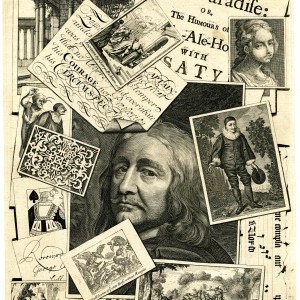 Traditionally, the history of printmaking has fallen in the space between art history and the history of the book. Often ‘reproductive’ and multiple in nature, prints have long been marginalized in art historical scholarship in favour of the traditional ‘high’ arts. The inherent complexities in the manufacture and sale of print, often involving multi-faceted networks of specialist craftsmen, artists, publishers and sellers, has also led to much confusion. Not knowing how prints are made has affected our ability to understand the medium and its aesthetic qualities. However, recent scholarship has opened up new avenues for placing prints in Renaissance and Early Modern Europe. From the techniques applied in the making of prints to the individuals involved in their production, distribution and use, current research is continuing to shape our understanding of this complex field.
This conference aims to showcase new developments in the study of prints, challenging and developing traditional approaches. We are looking for papers that address a wide variety of issues and plan, over
the course of the two-day conference, to have a series of panels devoted to different themes. Some issues to consider include, but are not limited to, the following:
• the question of the ‘reproductive’ print and the idea of originality in printmaking
• the print in art criticism
• the development of new genres of print
• the question of the ‘popular’ print and the place of cheap prints on the early modern market
• the relationship between word and image in print
• the social uses of prints, in collections and other environments
• seriality and sequencing in prints
• the role of prints as transmedial agents, triggering the production of the same composition in different media
• techniques and innovations in the making of prints
• networks and relationships behind the production and sale of prints; the notion of collaboration
• colour: coloured printing, hand-coloured prints and processes of translating colour into in a monotone linear medium
The conference will include a pop-up display in the Courtauld Gallery’s print room, curated for the occasion. This will provide the opportunity to engage directly with objects related to the themes discussed.
We invite papers from both established and emerging scholars in universities, museums and galleries. Our aim is to provide a platform for sharing approaches and developing future collaborations between scholars working with prints. For this reason, we are also willing to consider papers delivered in French, Italian and German. However, speakers must provide an English translation of their text and be willing to answer questions and contribute to discussions in English. Unfortunately, funding for speakers is not available and speakers from outside London are encouraged to apply to their institutions for subsidies to attend the colloquium.
Abstracts for 20-minute papers, not exceeding 250 words should be sent with a brief academic CV (100 words) by 22 November to: placingprints@courtauld.ac.uk.
Organised by Naomi Lebens, Tatiana Bissolati, Bryony Bartlett-Rawlings and Chloe Gilling (The Courtauld Institute of Art).
Call for Papers | Nouveau Reach: Past, Present, and Future of Luxury
From the conference website:
Nouveau Reach: Past, Present, and Future of Luxury / Passé, présent et avenir du luxe
Ryerson University, Toronto, 11–14 May 2017
Proposals for complete panels and individual papers due by 15 March 2016
Nouveau Reach: Past, Present, and Future of Luxury brings together leading thinkers in luxury studies and industry to explore the future of luxury in the Canadian and global contexts. Taking place in Toronto, Canada from 11 to 14 May 2017, we invite scholars of anthropology, business, fashion, fine art, history, modern languages, museum studies, material art & design, and social sciences to share findings on historical and contemporary developments in luxury studies. We also invite established professionals currently working in luxury market—via fashion, curatorship, fine arts, auctioneering, design, commerce, and travel—to contribute their expertise and insight on the future of luxury in the global context.
The three-day conference is co-organized by Brock University and The School of Fashion at Ryerson University. It features both traditional panels of 20-minute papers and interactive workshops led by leading industry experts. Please submit 4-member panel proposals that include 300-word (max) abstracts per presenter and a 200-word rationale for the panel, as well as a brief curriculum vitae for all presenters by 15 March 2016. Proposals for individual papers will also be considered. Graduate students are strongly encouraged to apply. Participants will be asked to submit completed papers in January 2017 for consideration for a special issue of Luxury: History, Culture, Consumption by Bloomsbury Publishing.
Topics can include, but are not limited to:
• The history of and new frontiers in luxury
• Trajectories in Canadian luxury
• Luxury and global markets
• Luxury and the public
• Luxury as business model
• Curating luxury
• Luxury and nation, race, and/or sex
• Cultural/literary/artistic representations of luxury
• Luxury consumption and/or production
• Luxury and space
• Scandals, ruptures, and slippages in the pursuit of luxury
Please submit proposals, in Word format, to NouveauReachCAN@gmail.com.
Organizing Committee
Jessica Clark, History, Brock University
Nigel Lezama, Modern Languages, Literatures & Cultures, Brock University
Alison Matthews David, The School of Fashion, Ryerson University
Robert Ott, The School of Fashion, Ryerson University
Plenary Speakers
Jonathan Faiers, University of Southampton, Editor, Luxury: History, Culture, Consumption
Giorgio Riello, University of Warwick, The Luxury Network
Jana Scholze, Victoria & Albert Museum, Co-curator of the 2015 exhibition What is Luxury?
Call for Papers | Sculpture and Parisian Decorative Arts in Europe, Part II
From H-ArtHist:
The Role of Sculpture in the Design, Production, Collecting, and
Display of Parisian Decorative Arts in Europe, 1715–1815, Part II
Paris, 14–15 March 2016
Proposals due by 4 November 2015
International Conference Part II, following the first held on 29 August 2015 at Mons, European Capital of Culture.
Between 1715 and 1830 Paris gradually became the capital of Europe, “a city of power and pleasure, a magnet for people of all nationalities that exerted an influence far beyond the reaches of France,” as Philip Mansel wrote, or as Prince Metternich phrased it, “When Paris sneezes, Europe catches cold.” Within this historical framework and in a time of profound societal change, the consumption and appreciation of luxury goods reached a peak in Paris.
The focus of this one-day international conference will be to investigate the role of the sculptor in the design and production processes of Parisian decorative arts, from large-scale furniture and interior decoration projects to porcelain, silver, gilt bronzes and clocks. In the last few years a number of studies were carried out under the auspices of decorative arts museums and societies such as the Furniture History Society and the French Porcelain Society. It now seems appropriate to bring some of these together to encourage cross-disciplinary approaches on a European level and discussion between all those interested in the materiality and the three-dimensionality of their objects of study.
The relationships between, on the one hand, architects, ornemanistes and other designers, and on the other sculptors, menuisiers, ébénistes, goldsmiths, porcelain manufacturers, bronze casters and other producers, as well as the marchands merciers, will be at the heart of the studies about the design processes. A second layer of understanding of the importance of sculpture in the decorative arts will be shown in the collecting and display in European capitals in subsequent generations, particularly those immediately after the French Revolution, as epitomised by King George IV.
Overall, the intention of this conference is to attempt to shed light on the sculptural aspect of decorative arts produced in Paris in the long 18th century and collected and displayed in the capitals of Europe. Without pretending to be exhaustive, this study day—and its publication—hopes to bring together discussions about the histories and methodologies that could lead to furthering the study of hitherto all too often neglected aspects of the decorative arts.
Research questions may include (non-exhaustive list):
• What are the specificities of the Parisian approach to three-dimensional sculptural design that made it collectable, or was it only collectable in Europe due to its availability at vastly reduced prices when the art market was flooded by the revolutionary auctions?
• What relationships can be established between the ‘Frenchness’ of sculptural designs produced in Paris and the large number of ‘foreign’ designers and craftspeople there (coming in particular from the Low Countries and Germany)?
• What was the impact of public authorities (e.g. guilds and schools), intermediaries (marchands merciers, agents, etc.), private salons, societies and other networks, on the three-dimensional design aspect decorative arts produced in Paris?
• Taste leaders: the role of the monarch, the court, Paris vs. Versailles, and their interest in ‘sculptural’ decorative arts
• Taste disseminators: the role of prints and treatises regarding ‘sculptural’ decorative arts
• The collaborative efforts between architects, designers, sculptors, cabinet makers, ‘porcelainiers’, bronze casters, goldsmiths, engravers, etc. were they specific to luxury items produced in Paris? Were certain disciplines more appropriate for ‘sculptural design’?
• How do case studies inform us about the role of sculptors in the design and production processes for decorative arts?
• How is sculptural illusionism in painted decorative panels, such as those by Tournai-born Piat-Joseph Sauvage (1744–1818) or in the Casa del Labrador at the royal palace of Aranjuez, related to the design and perception of Parisian decorative arts?
• What was the impact of collectors of old/existing Parisian decorative arts on the design of spaces to display these in European capitals?
• Are centre-periphery theories applicable to the interpretation of decorative arts produced in Paris and its hinterland? Is the work of Abraham Roentgen and his bronze casters an appropriate case study for this?
Potential speakers are invited to submit proposals for conference papers. These should be limited to a maximum of 300 words, should be accompanied by a brief CV (no more than a few lines) and should be sent to the Low Countries Sculpture Society by Wednesday 4 November 2015. A scientific committee drawn from the Society and invited scholars will take a decision on selected speakers shortly after that date. For foreign participants one hotel night in Paris and modest travel expenses can be covered. Please note that this conference is planned shortly after the opening on 10 March 2016 of the TEFAF Fair at Maastricht to encourage American colleagues to attend.
Call for Papers | European Portrait Miniatures
From H-ArtHist:
European Portrait Miniatures: Artists, Functions and Collections
The Tansey Miniatures Foundation, Celle, 11–13 November 2016
Proposals due by 31 March 2016
In January 2013 the Tansey Miniatures Foundation held its first conference on European portrait miniatures. At the time a conscious decision was made to cover a broad spectrum. It is precisely the consideration of miniature painting from various viewpoints that opens up an in-depth understanding of this special form of portraiture. The 2016 conference will therefore once again cover a wide range of aspects:
• Individual miniaturists, specific workshop contexts, and places of production
• Use of both court and private types and their protagonists
• Iconographic aspects in the context of representation or intimacy
• Evolution of techniques and materials
• Less well-known collections in museums
The symposium will be held on the occasion of the planned opening of the sixth exhibit of the Tansey Miniatures Foundation and the publication of the accompanying catalogue, Miniatures from the Baroque Period in the Tansey Collection. The conference will be in English. Lectures should not exceed 25 minutes and are to be published separately following the conference (information on the publication of the 2013 lectures is available here). The Tansey Miniatures Foundation will assume travelling expenses, accommodations, and meals. Exposés should be in English and no longer than 1500 characters. They should be submitted by March 31, 2016, including name, address, and, if applicable, institution, and be sent to bernd.pappe@miniaturen-tansey.de.
Organisation
Bernd Pappe, Berne (Art Historian and Restorer)
Juliane Schmieglitz-Otten, Celle (Head of the Residence Museum at Celle Castle)
Call for Papers | Creating Markets, Collecting Art
Of the twelve sessions slated for inclusion in the conference, Creating Markets, Collecting Art, I’ve listed details for two that seem particularly relevant for the eighteenth century. The full listing is available here. –CH
Creating Markets, Collecting Art: Celebrating 250 Years of Christie’s
Christie’s King Street, London, 14–15 July 2016
Proposals due by 7 December 2015
To commemorate the anniversary of the foundation of Christie’s auction house in 1766 a two-day conference will be held at Christie’s King Street, St James’s. Organised by Christie’s Education, the theme of Creating Markets and Collecting Art has been chosen to reflect a progressive, collaborative and cross-disciplinary approach to the study of works of art. The conference is designed to explore the interrelationship between commerce, collecting and the idea of the ‘academy’ and how this has evolved over time.
Confirmed keynote speakers include Professor Craig Clunas, University of Oxford and Inge Reist, Director of the Frick Collection’s Center for the History of Collecting.
Please send your proposal to the Session Convenor/s listed at the top of each Session by 7 December 2015. Papers should be 20–25 minutes in length and there will be 3–4 in each 2-hour session, with time for discussion. Proposals should be accompanied by a brief biography and the whole submission not more than 250 words. Please also cc your proposal to conference2016@christies.edu. We look forward to hearing from you.
Rebecca Lyons, Head of Subject: Renaissance to Modern
M Michael, Academic Director, London
Véronique Chagnon-Burke, Academic Director, New York
◊ ◊ ◊ ◊ ◊
Christie’s and the Birth of the European Art Market
Filip Vermeylen, Erasmus University Rotterdam; vermeylen@eshcc.eur.nl
The basic structure of today’s global art market has its roots in the eighteenth and nineteenth centuries with the establishment of auction houses and art dealerships. These are fascinating times when the art markets of Europe were becoming inter-connected and the cross-border trade in works of art was expanding rapidly. Christie’s in London was a prime mover of these developments, as the company fast rose to primacy after its inception in 1766. This session aims to explore how Christie’s pioneering business practices were instrumental in shaping the London art market, and how the company was able to secure the sale of the most prominent art collections of the period. The session thereby addresses one of the seminal themes of the conference by examining how intermediaries in the art ecosystems may have shaped national tastes in the visual arts in the early years of Christie’s, and how this relates to the business models of the major auction houses in the contemporary art market. In addition, the internationalization of the art trade invites interesting comparisons with today’s emerging art markets.
◊ ◊ ◊ ◊ ◊
Home Subjects: The Art Market and the Domestic Sphere in Britain
Anne Nellis Richter, American University and Morna O’Neill, Wake Forest University; anne.nellis@gmail.com / oneillme@wfu.edu
The commonly-held assumption that the English style of living is intertwined with tastes in collecting and patronage can be traced back centuries. In the 1790s, for example, when important Italian paintings were being imported into Britain during the French Revolution, the idea that such pictures might be unsuitable for English collectors and houses gained a certain currency. One critic wrote, “A most puerile objection is…made against the pictures of Paul Veronese, because…they cannot be admitted into our London houses.” The decoration of the private home has become the focus of a tremendous amount of academic energy during the past five years. What is missing from these accounts, however, is a consideration of the vital role that the art market played in enabling the decoration of interiors at all social ranks. This session seeks to reconsider the relationship between the art market and the domestic sphere in the eighteenth through early twentieth centuries. We welcome proposals that explore the complicated set of expectations governing the acquisition and sale of artworks intended for private display, including but not limited to the role of the art dealer as interior decorator, the auction ‘house’ and the domestic ideal, and the relationship between private and public modes of display and decoration, plotting a new trajectory for modernity traced through the private, domestic sphere.










leave a comment