Call for Papers | All the Beauty of the World
From the Call for Papers:
All the Beauty of the World: The Western Market
for Non-European Artefacts, 18th–20th Centuries
Berlin, 13–15 October 2016
Proposals due by 15 February 2016
In the wake of the Western expansion, a fast growing number of non-European artefacts entered the European market. They initially made their way into princely cabinets of curiosities. Made possible by the forced opening and exploitation of more and more parts of the world and pushed by social and technological changes of the time, the 18th century brought a boom of the market of non-European artefacts in Europe. This came along with the emergence of a broader collecting culture and the development of a rich museumscape.
This market and its development in terms of methods and places of exchange and monetary and ideological value of the objects are in the focus of an international symposium organised by the Institute for Art History in cooperation with the Center for Art Market Studies at Technical University Berlin, in collaboration with the Institut d’histoire moderne et contemporaine (CNRS) and the Labex TransferS (PSL) in Paris. The keynote lecture will be given by Professor Timothy Brook, holder of the Republic of China Chair at the University of British Columbia.
The aim of the symposium is to examine how the market for non-European artefacts developed between the 18th and 20th centuries and to which extend it was entangled with the history of museums and private collections. The following five topics will serve as main axis: actors and networks, places of purchase and trade, transfer and transport, prices and value and expertise. The axes are entangled and should not be regarded as separated topics.
1 Actors and networks
Who were the actors of the market (e.g. art dealers, commercial agents, carriers but also diplomats, travellers, expats, missionaries or military as well as museums and collectors)? Which regional specifications can be identified? Who were the key figures of the market(s)? Which networks can be spotted? How did they work?
2 Places of purchase and trade
What were the centres of the purchase and/or trade of art objects (in the countries of origin as well as in Europe)? How did they develop in the course of the period of examination? Which significance did the primary markets and their political/social development have for the European market? Did the European market turn into the primary market at a certain time? What were the main places for purchase and trade in Europe (e.g. auctions houses, galleries, private houses)? What marketing methods can be identified?
3 Transfer and transport
What were the (political, social, technological) circumstances of the transactions? To what extent did technological developments (e.g. establishment of railway lines) influence the market offer? How were the objects brought to Europe (e.g. export and import regulations, methods of transport)?
4 Prices and value
Which payment methods or methods of exchange did exist? How did they impact the value of objects? How was the value of an object determined? To what extent did this value change in space and time (difference between primary and secondary market; development in the course of time)? Despite the monetary value of a price: which other function in the act of purchase can be identified (e.g. legitimation of possession)? And to what extent did the change of the price and value shape the European collections? Here, we are especially interested in the shift from an economy of looting or/and bazaar in the countries of origin to the pricing and “rational” marketing after the arrival and commercialisation of the objects in Europe.
5 Expertise
How did the perception of and the knowledge about non-European art develop? How was the knowledge generated and transferred? Which role did individual actors (e.g. dealers, museums, collectors) play in the development of the perception of the objects? To what extent did the development of expertise influence the supply, the display of the objects and the character of the collections?
The focus of the investigation will be on the development between the 18th and the 20th centuries. Papers exploring the market development before 18th century and especially those comparing the development before and after 1700 are also welcome. The conference language is English. Papers should be a maximum of 20 minutes in length, and preference will be given to proposals that stimulate dialogue and engage with broader topics. Please send proposals (max. 300 words) with a short academic CV to c.howald@tu-berlin.de by 15 February 2016 at the latest. Selected speakers will be notified by 15 March 2016. Financial assistance with travel expenses for speakers may be available (subject to grant approval).
Convenors
Bénédicte Savoy (TU Berlin)
Charlotte Guichard (CNRS, IHMC, Paris)
Christine Howald (TU Berlin)
Call for Articles | Material Fictions, Special Issue of ECF
From the Call for Articles:
Material Fictions
Special Issue of Eighteenth-Century Fiction, proposed for Autumn 2018
Completed manuscripts due by 15 July 2017
Edited by Eugenia Zuroski Jenkins and Michael Yonan
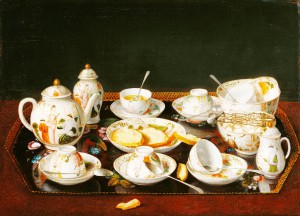 ECF invites manuscripts exploring material cultures of the long eighteenth century and the fictions crafted in and through objects, built environments, and other material entities. How did eighteenth-century things tell stories? How did the design of objects engender particular narratives, whether personal, political, or social? Did things collaborate with texts to generate broader fictions, or did they posit counter-fictions to written literature? What kinds of methodologies might we cultivate to ‘read’ eighteenth-century material culture, and what insight might such readings yield? Conversely, what might the material thing’s resistance to being ‘read’ tell us about the methods of interpretation and analysis we bring to the eighteenth century? This special issue will be an opportunity to explore the intersections between literary and cultural studies, art history, anthropology, and other fields. It is an opportunity to ask what the eighteenth century specifically can bring to the larger interdisciplinary project of material culture studies.
Deadline for manuscripts: 15 July 2017
Manuscripts: 6,000–8,000 words, French or English
Publication of this special issue is proposed for the autumn of 2018.
Editors Eugenia Zuroski Jenkins, McMaster University, and Michael Yonan, University of Missouri.
Eighteenth-Century Fiction, ecf@mcmaster.ca
‘Submissions’
En français:
Les Fictions matérielles
La rédaction sollicite des articles pour un numéro spécial consacré aux cultures matérielles du XVIIIe siècle et aux fictions conçues dans et à travers les objets, les environnements bâtis et d’autres entités matérielles. Au XVIIIe siècle, comment les objets ont-ils raconté des histoires? Comment la conception d’objets a-t-elle engendré des récits particuliers, qu’ils soient personnels, politiques ou sociaux? Comment les objets collaborent-ils à la composition textuelle générant des fictions plus larges, ou introduisant de la contre-fictions au sein de la littérature? Quels types de méthodologies peut-on cultiver (ou non) à la « lecture » la culture matérielle du XVIIIe siècle, et que pourraient apporter ces idées à notre lecture? Ce numéro spécial sera l’occasion d’explorer les intersections entre les études littéraires et culturelles, l’histoire de l’art, l’anthropologie, et d’autres domaines. C’est l’occasion de demander comment le XVIIIe siècle peut contribuer au plus grand projet interdisciplinaire d’études de la culture matérielle. Ce numéro est ouvert à la discussion de toutes sortes de représentations des cultures matérielles et ne se limite pas à la fiction narrative.
La date limite est le 15 juillet 2017 (6 000 – 8 000 mots).
La publication est proposée pour l’automne 2018.
Les rédacteurs: Eugenia Zuroski Jenkins de l’Université McMaster et Michael Yonan de l’Université de Missouri.
Eighteenth-Century Fiction, ecf@mcmaster.ca
‘Submissions’
Call for Papers | Art History for Artists
◊ ◊ ◊ ◊ ◊
Conference organizers stress that they welcome papers addressing the latter half of the eighteenth century, too! Details are available from the conference website. From the CFP:
Art History for Artists: Interactions between Scholarly
Discourse and Artistic Practice in the 19th Century
Berlin, 8–9 July 2016
Proposals due by 1 March 2016
The conference seeks to examine the shaping of art history as a discipline during the 19th century in relation to artistic training and exchanges between artists and scholars. The development of art history has been associated with an array of socio-political and economic factors such as the formation of a bourgeois public, the politics of national identity and state legitimacy or the needs of an expanding art market. This conference aspires to explore yet another, less studied dimension: the extent to which the historical study of art was also rooted in an intention to inform contemporary artistic production.
The scholarship produced by the first generations of art historians in this period was intertwined with their interest in the art of their time, its quality and future development. Throughout the century many art historians made studies entirely dedicated to contemporary art and sought to provide artists with new ideals. The connection between scholarly discourse and artistic practice was also validated at an institutional level. Since the late 18th century courses in art history, along with courses in history, archaeology, art theory and aesthetics, had been systematically incorporated into the curricula of art academies, schools of design, academies of architecture and polytechnics. These spaces of art education were among the first institutional homes of art history, and played an important role in the shaping of the discipline well before the establishment of autonomous university chairs—a development largely overlooked in the history of art history, but also in the history of art education.
The historical study of art questioned academic normativity and multiplied the aesthetic models available for artists. Reacting against the growing commodification of art, many artists claimed a new role as creators for art history and for the museum, as an alternative to the market. At the same time, the influx of empirical knowledge on past art was often seen as a burden for artistic creativity. The overall reflective turn upon art and its past, tainted by the Hegelian announcement of the end of art, influenced the work of artists in multifarious ways that remain to be explored.
Three main axes of inquiry will be privileged:
1. Scholarly courses in art education: institutional frameworks
Based on concrete cases, papers may address the training in art history, archaeology, art theory and aesthetics offered in institutions of art education and consider the artistic, political or economic considerations linked to its introduction to the curriculum. Topics of interest may include teaching approaches and goals, the media and technologies of illustration (prints, casts, museum collections, photography), or the profile of professors.
What was the impact of a systematised art historical and theoretical knowledge on academic doctrines, practical training and the overall objectives of art education? How did the particular institutional framework of art education and exposure to the problems of artistic practice affect the scholarly discourses produced in this context? Did teaching artists, architects or craftsmen generate different objects of study, focuses, methods and ultimately a different kind of scholarship to that produced at universities or in museums?
2. The art historian and the present
Based on case studies, papers may explore the changing attitudes of art historians, archaeologists and art theorists towards their engagement in contemporary artistic production. From the 1870s onwards, primarily in Germany, such an engagement was downplayed in the name of objective and unbiased scholarship detached from practical considerations, alongside the growing academic recognition of art history and other art-related disciplines and their presence in the university. Nonetheless, the complex entanglement of scholarly discourse and contemporary art never really abated even well after this date.
A main focus of the conference is also on the extent to which contemporary artistic experimentations provided art scholars with new perspectives for evaluating past artistic achievements or for studying aesthetic experience. Papers exploring cases of fertile interactions or conflicts between artists and art scholars are particularly welcome.
3. The artist as producer of art discourse
This section seeks to explore the reactions of artists to the emergence of a community of professional specialists claiming control over art discourse and the formation of parallel or counter discourses by art practitioners. In focus here are the reformulations of art-historical canons by artists in their works, writings or teachings, as well as their contributions to art theory, aesthetics and criticism. Especially welcome are papers that look at artists’ attempts to visualise art history and explore the concerns shared by artists and historians about the various ways of representing history.
The conference will cover the period from the mid-18th century to the first two decades of the 20th century. Cases of peripheral, extra-European or colonial contexts, as well as contributions focusing on the circulation of teaching models, discourses and actors across institutions or national boundaries are particularly welcome. The conference languages will be English and German. Accommodation, and travel costs up to 100€ will be covered for all speakers. Full coverage of travel expenses may also be available, subject to grant approval.
The deadline for proposals is March 1st, 2016. Candidates will be informed within two weeks from this date on the outcome of their application. 25 minutes will be allowed for each paper. Please send proposals (max. 500 word abstract and short cv) to Eleonora Vratskidou: evratskidou@gmail.com.
Convenor
Eleonora Vratskidou, Alexander von Humboldt Postdoctoral Fellow-TU Berlin
Scientific Committee
Heinrich Dilly, Martin-Luther-Universität Halle-Wittenberg Pascal Griener, Université de Neuchâtel
Hubert Locher, Philipps-Universität Marburg
Olga Medvedkova, CNRS-ENS (Centre Jean Pépin) Michela Passini, CNRS-ENS (IHMC)
Matthew Rampley, University of Birmingham Bénédicte Savoy, TU Berlin
Eleonora Vratskidou, TU Berlin
Call for Papers | Paragons and Paper Bags: Early Modern Prints
From the Rijksmuseum:
Paragons and Paper Bags: Early Modern Prints from the Consumer’s Perspective
Rijksmuseum, Amsterdam, 9 June 2016
Proposals due by 1 March 2016
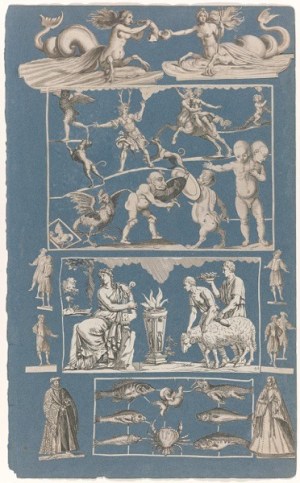
Blue album sheet with cut out prints of various printmakers, ca. 1690–1720
The scholarly research on early modern printmaking has evolved from a focus on the Romantic concept of the Peintre-Graveur to studies of artists and printmakers in their specific cultural and socioeconomic context. In addition, the idea that publishers played a vital role in artistic, commercial, and organisational aspects of printmaking is now widely accepted. Both art-historical and art-technical research on these matters have resulted in reference works and exhibition catalogues of high standard. In these studies, however, the position of the consumer has often been ignored or dealt with only briefly. In addition, print collections in the past have often failed to recognise the importance of contemporary adaptations, signs of usage, and collecting conditions.
However, for a proper understanding of early modern culture, it is crucial to study the consumption of printed images and the socioeconomic and artistic processes behind it. Prints were a widespread and artistically diverse medium and the creative process of a print did not stop after printing. Researching the creative afterlife of prints is therefore an essential development in the study of early modern visual culture. Although the consumption and reception of early modern books has received increasing attention in the past decades, only some scholars such as Peter Schmidt (Gedruckte Bilder in handgeschriebenen Büchern. Zum Gebrauch von Druckgraphik im 15. Jahrhundert, 2003), Jan van der Waals (Prints in the Golden Age: From Art to Shelf Paper, 2006), Kathryn Rudy (Virtual Pilgrimages in the Convent: Imagining Jerusalem in the Late Middle Ages, 2011), and Suzanne Karr Schmidt (Altered and Adorned: Using Renaissance Prints in Daily Life, 2011) have integrated the consumer’s side of the print market and the concrete use of prints in their research.
In order to stimulate this promising evolution, the Rijksmuseum Amsterdam is organising an international conference on early modern prints, ranging from precious artistic prints that were carefully collected to cheap printed images that were used and discarded. Paragons and Paper Bags: Early Modern Prints from the Consumer’s Perspective will take place at the Rijksmuseum on Thursday 9 June 2016. The aim of this symposium is to further develop this new approach in order to achieve new insights on target audiences, the application and usage of prints, and special collection practices.
The organisers particularly welcome object-based proposals regarding printed pictorial material or written primary sources. Topics for discussion may include, but are not limited to:
Techniques
• Prints with particular engraving or printing techniques, colouring, or multi-sheet compositions, resulting in a special visual or practical experience
Usage and manipulation
• Prints that were applied to objects, furniture or walls
• Prints that were altered by the consumer, deviating from the printmaker’s intentions such as censoring, colouring, and cutting
• Manuscripts and printed books in which prints were added and integrated
• Prints as a source of inspiration for other forms of art
• Prints depicted on other works of art
• Printed primary sources or archival documents on the intended use of specific prints
Target audiences and collection practices
• Print albums that reveal particular contemporary collection practices or the target market for specific prints or print genres
• Prints or primary sources on prints that were created on the initiative of a private individual or professional organisation with a particular purpose in mind
• The appreciation and appraisal of specific prints and printed oeuvres
• Printed primary sources or archival documents on the consumers of early modern prints
• Printed primary sources or archival documents on target audiences of specific prints
The organisation will consider proposals for 20-minute papers, presenting the findings of new or ongoing research. The application, consisting of a proposal abstract (maximum 300 words and an image) and a concise curriculum vitae, should be sent to j.luyckx@rijksmuseum.nl before 1 March 2016. The final program of the conference will be announced later that month.
Scientific Committee
Thomas Döring (Herzog Anton Ulrich-Museum, Braunschweig), Erik Hinterding (Rijksmuseum Amsterdam), Huigen Leeflang (Rijksmuseum Amsterdam), Ger Luijten (Fondation Custodia, Paris), Jeroen Luyckx (Rijksmuseum Amsterdam/ Illuminare – University of Leuven), Mark McDonald (The Metropolitan Museum of Art, New York), Jane Turner (Rijksmuseum Amsterdam), An Van Camp (Ashmolean Museum, Oxford), Peter van der Coelen (Museum Boijmans Van Beuningen, Rotterdam), Jan Van der Stock (Illuminare – University of Leuven), Joris Van Grieken (Royal Library of Belgium, Brussels), Joyce Zelen (Rijksmuseum Amsterdam/ Radboud University Nijmegen)
Call for Papers | Gendering Museum Histories
From H-ArtHist:
Gendering Museum Histories
Ashmolean Museum of Art and Archaeology Museum, Oxford, 7–8 September 2016
Proposals due by 11 March 2016; poster proposals due by 29 April 2016
Museums and Galleries History Group Biennial Conference
This conference addresses the relationship between museums, galleries and gender during the last 400 years. Museums can be understood as buildings, institutions, collections, displays, interpretations and groups of people; each of these aspects has both reflected and shaped ideas about gender and its construction and meaning. While the gendering of collections and museum displays has attracted some attention (for example Porter 1990; Machin 2008), too often other gendered aspects of museum and gallery history, such as employment practices or visitors, have been mentioned only in passing; yet it seems likely that museums have been responsible both for defining and for subverting gender roles and identities. This conference aims to draw attention to this topic and to bring ideas and practices relating to gender from different periods of museum history into productive dialogue.
We are delighted that the keynote speaker will be Merete Ipsen, Director of the Women’s Museum in Aarhus, Denmark, who will be speaking about gender in museums between the 1970s and the present.
We welcome proposals for 20-minute papers which address the points below, or which address other aspects of gender and museum history (papers dealing with contemporary museums should also have a historical comparative aspect). We are keen to receive proposals which engage with the full spectrum of gender presentation.
Topics may include but are not restricted to:
• Gender, display and curatorial practice
• Interpreting and narrating gender in museums
• Museum collecting/collections and gender
• Gendered performances: museum and gallery visitors
• Gender and invisible workers: museum photographers, copyists, clerks, warders, assistants etc.
• Gender and volunteering
• The development of museum governance: trustees, committees, &c
• Gender, philanthropy and patronage/matronage
• Museums and the enforcing/contestation of gender roles
• Gendered space and gendered buildings
• Gender, sexuality and museums
• Gendered objects of study in museums: personality museums, &c
Please submit a 300-word proposal, along with a 1-page CV, to gendermuseumhistory@gmail.com, by 11 March 2016. We will consider proposals for 3-paper panels; please submit individual paper proposals along with a rationale for the panel as a whole and indicate if you will supply a chair for the panel or not.
We also welcome proposals for posters as there are likely to be a relatively small number of paper slots. Posters should address the themes given above. Proposals for posters should be received by 29 April 2016 (same email address) and should include title, author(s) and brief description (200–300 words) of the poster content. The final poster format will be as follows:
• Maximum size A2
• Orientation may be landscape or portrait
• The title of the poster and the names and contact details of all authors should appear at the top
Please note, all participants whether speakers or poster presenters will have to cover their own costs including conference registration (though it is anticipated this will be less than £10 for MGHG members).
Call for Papers | Identity in Art and Art History
From H-ArtHist:
Graduate Student Symposium: Identity in Art and Art History
San Jose State University, 16 April 2016
Proposals due by 26 February 2016
The Art History Association at San José State University invites advanced undergraduate and graduate students in art history and related disciplines to submit proposals that engage art in dialogue with identity for consideration for a 20-minute presentation at the 22nd Annual Graduate Student Symposium, Identity in Art and Art History. Cultural identity informs art, and art informs cultural identity at the collective and individual level. Cultural identity has a tremendous impact on the philosophies and methods engaged by artists, and it contributes greatly to works of art understood as embodiment, performance, representation or, occasionally, provocation to an operation of meaning. But what do art historians mean when we invoke ‘identity’?
Possible subjects include, but are not limited to, the following:
• the nature of representation and construction of identity
• identity in the context of globalization or global exchange
• identity as expressed in popular culture
• gendered and/or racialized identity
• identity of artist as innovator, investigator, or integrator
• displaying identity in museums, galleries and exhibitions
• images of patriotism and national identity
• urban image construction and the city
• the role of images in the construction of collective identity
• fluidity and shifting identity; art works that resist fixed identifications
• performative identity
We welcome proposals for 20-minute presentations on academic and creative inquiry into cultural identity. Submissions must include a 300-word abstract; completed 10-page paper; author’s name, institutional affiliation and biographical statement; one-page curriculum vitae with contact information, academic status, and relevant work; and brief recommendation from advising professor. All candidates will be contacted by the second week of March, 2016. Please email all documents in PDF format to the SJSU Art History Association: sjsuarthistory@gmail.com.
Call for Papers | Auricular Style: Frames
The Auricular Style of the seventeenth century regularly occasions evocations of subsequent Rococo designs (for better or worse, though even consideration of the latter might make for a useful contribution). . . The Rijksmuseum is planning an exhibition on the Auricular Style (kwabstijl) in 2018. From the conference website:
Auricular Style: Frames
The Wallace Collection, London, 5–6 October 2016
Proposals due by 29 January 2016
This two-day international conference will be the first dedicated to the Auricular Style, centring on one of its most significant manifestations, the picture frame. The conference aims to stimulate awareness and study of this important but neglected style by bringing together research in fine and decorative art histories. It will consider the origins and development of the style in different materials, together with its dissemination between European centres. The conference will explore how other areas of the decorative and applied arts fed into the creation of picture frames, and were in their turn nourished through the influence of these sculptural objects.
Fourteen speakers are anticipated, and currently include Karen Hearn (University College London), Jacob Simon (National Portrait Gallery), Hubert Baija (Rijksmuseum), Daniela Roberts (University of Würzburg), Allison Stielau (McGill University) and Ada de Wit (Radboud University / Wallace Collection). Displays to run simultaneously with the conference are planned with the Guildhall Art Gallery, and Ham House, London.
Relevant topics include, but are not limited to, connections between countries (Italy, France, Bohemia, the Netherlands, Britain, Germany and Scandinavia); the Van Vianens; Fontainebleau; the grotesque; ‘Medici’ frames; the influence of prints; Auricular settings; craftsmanship; the style’s decline and its revivals. Poster presentations exhibited during the conference will be edited with the papers and published, fully illustrated, for free download on The Frame Blog, which it is hoped will become a hub for future related research.
Enquiries and submissions (300–400 word abstracts as Word documents) to alabone.g@gmail.com. Registration free for speakers and poster contributors. Agreed travel and accommodation expenses reimbursed for speakers.
Convenors: Gerry Alabone (Tate / City and Guilds of London Art School) and Lynn Roberts (The Frame Blog) in association with the Institute of Conservation (Gilding and Decorative Surfaces Group).
Call for Papers | Human Kind: British and Australian Portraits
From The University of Melbourne:
Human Kind: Transforming Identity in British and Australian Portraits, 1700–1914
The University of Melbourne & National Gallery of Victoria, Melbourne, 8–11 September 2016
Proposals due by 12 February 2016
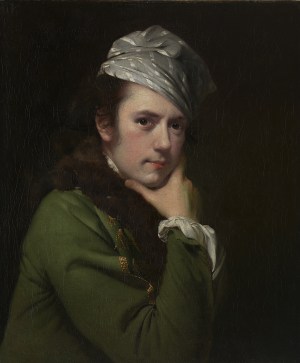
Joseph Wright of Derby, Self-portrait, 1765–68, oil on canvas (Melbourne: National Gallery of Victoria)
Inspired by the outstanding collection of the National Gallery of Victoria, this interdisciplinary conference will be the largest gathering of international and Australian scholars to focus on portraits. It will provide a unique opportunity to explore both British and Australian portraits through a dynamic interchange between academics and curators.
Papers are invited that focus on British or Australian portraits between 1700 and 1914, which can be interpreted as separate fields or as overlapping or comparative studies. The portraits may be in any public or private collection worldwide, but in particular in the National Gallery of Victoria. They may be in any medium, including painting, print, drawing, sculpture and photography.
The conference aims to be both informed and provocative and to provide a robust forum for new and contemporary perspectives. These will include:
• How portraits shape social values and invent new possibilities for defining ‘human kind’
• The importance of place and provenance in the interpretation of portraits
• How portraits form a bridge of self-interpretation between Britain and colonial society
• The bonding role of portraits, their exchange as gifts, as agents in friendship and social cohesion, as testament to empathy and kinship
• The interaction of portraits with other art forms and cultural media, including theatre, literature and music, photography and film
• The role of portraits as records of social exclusion, isolation and displacement
• Issues of authorship, attribution, restoration and the multiplication and copying of portraits.
Please email abstracts of no more than 250 words and a short CV to portrait-conference@unimelb.edu.au. Deadline for proposals is Friday, 12 February 2016.
Keynote Speakers
• Mark Hallett, Director of Studies, Paul Mellon Centre for Studies in British Art
• Martin Myrone, Lead Curator Pre-1800, Tate Gallery
• Kate Retford, Senior Lecturer, Department of History of Art, Birkbeck University of London
The Paul Mellon Centre for Studies in British Art has provided funding for graduate bursaries. Please direct your enquiries to portrait-conference@unimelb.edu.au.
Call for Papers | Hers & Hers: Women as Artists, Clients, and Consumers
Hers & Hers: Women as Artists, Clients, and Consumers
California State University, Sacramento, 16 April 2016
Proposals due by 22 February 2016 [revised, extended deadline]
Keynote speaker: Sheryl E. Reiss (President, Italian Art Society), ‘Noble Exemplars of Their Sex’: Tomb Monuments Commissioned for and by Women during the Italian Renaissance
The past three decades have seen an increased amount of scholarship about women who were artists and women who were either sponsors of art projects or purchasers of art objects between about 1500 and 1800. Publications and presentations have resulted in a greater awareness of the significant role played by women in the art market in the 18th century and earlier. For the 12th Annual Art History Symposium at California State University, Sacramento, we welcome proposals for 20-minute papers that provide new information and/or insights about women artists, clients, or consumers in the 16th, 17th, or 18th centuries.
Please send:
(1) A 300-word proposal
(2) A short biographical statement (one paragraph)
(3) Full contact information
Send all three items as e-mail attachments to ruth.hansen@csus.edu by February 22, 2016. Questions about the symposium may be addressed to Professor Catherine Turrill (turrillc@csus.edu).
Call for Papers | Imagining Apocalypse
Imagining Apocalypse
Oxford University, 18 June 2016
Proposals due by 28 February 2016
The University of Oxford research network, Romanticism and Eighteenth-Century Studies Oxford invites proposals for a one-day interdisciplinary conference to be held at Oxford University on 18 June 2016 on the subject of Imagining Apocalypse. A plenary lecture will be given by Professor Fiona Stafford (Professor of English Language and Literature, University of Oxford). The conference aims to bring together academics from across English, History, Theology, History of Art, and Music to reassess the numerous responses to the idea of apocalypse produced during the long eighteenth century (1660–1830).
Possible topics might include, but are not limited to:
• The French Revolution as apocalyptic
• Millenarial cults, the Bible, and prophecy
• The summer of 1816 and apocalyptic anxiety
• Secular doomsday and apocalypse without millennium
• Scientific predictions concerning the end of the world
• The figure of the ‘Last Man’
• Parodies and satires of apocalypse
• The apocalyptic city
• Apocalypse as ‘unveiling’
• Post-apocalypse
• The legacy of long eighteenth-century depictions of apocalypse
Please email abstracts of no more than 250 words to catherine.redford@hertford.ox.ac.uk no later than Sunday 28 February 2016 along with a short biographical note. Proposals for roundtables and panels, as well as traditional 20-minute papers, are welcome.










leave a comment