Exhibition | Longing: Painting from the Pahari Kingdoms
From the press release (3 December 2025) for the exhibition:
Longing: Painting from the Pahari Kingdoms of the Northwest Himalayas
Cincinnati Art Museum, 6 February — 7 June 2026
Curated by Ainsley Cameron
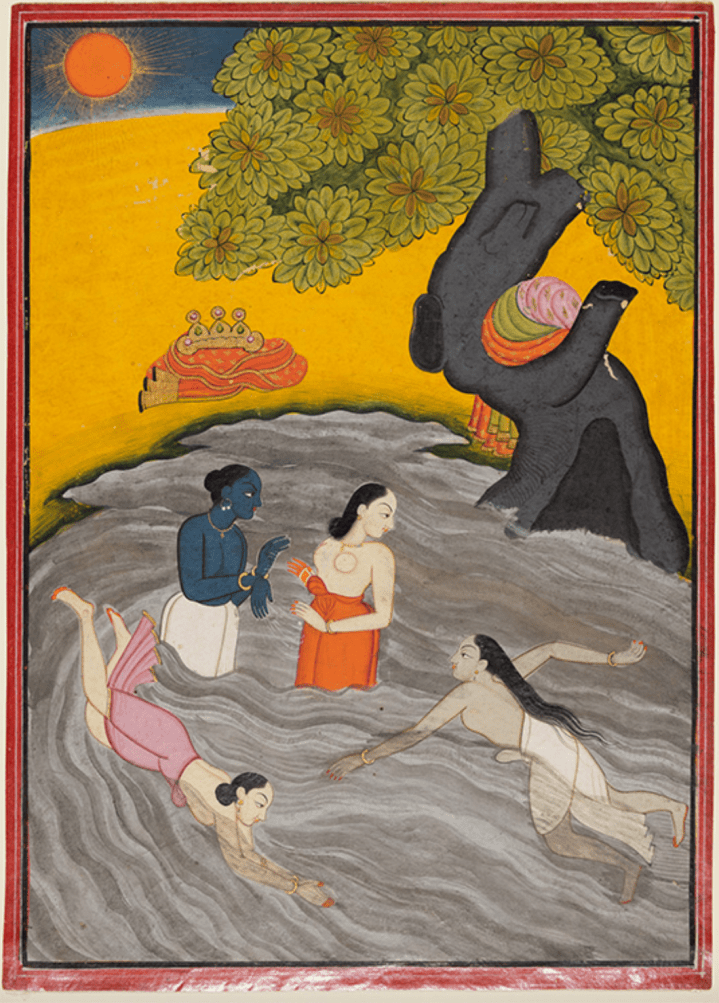
Krishna Playing with the Gopis in the Yamuna River, ca. 1770, India, Himachal Pradesh, Nurpur, opaque watercolor and gold on paper, (Cleveland Museum of Art, purchase and partial gift from the Catherine and Ralph Benkaim Collection and Millikin Purchase Fund, 2018.118).
Featuring more than 40 works of art, Longing: Painting from the Pahari Kingdoms of the Northwest Himalayas will present colorful court paintings from present-day India dating between the 17th and 19th centuries. Practicing unique techniques, artists produced these small, portable paintings primarily for royal, noble, and priestly patronage. The paintings were often given as gifts between regional nobility, families, and political allies creating large networks of artistic exchange.
Influenced by the region’s culture and politics, the artworks portray longing in several ways: through paintings of devotees who long to connect with the divine, through individuals and couples who yearn for romance, and through rulers and noblemen who longed to be at the center of political control. The exhibition encourages visitors to experience art as multisensory. Select paintings will be paired with scent or touch opportunities, while others are paired with musical soundscapes, to heighten the works’ bhava (emotion or mood) and encourage multiple ways to physically, intellectually, and emotionally connect with the art.
“This exhibition explores paintings through the lens of a shared human emotion,” reflects Ainsley M. Cameron, PhD, Curator of South Asian Art, Islamic Art & Antiquities at CAM. “Through color, form, and composition, paintings that portray devotional and cultural values, amorous alliance, or political gain also reveal an emotive force reflective of the region in which they were produced. I’m excited to share the vibrant painting histories of the Pahari region with Cincinnati audiences, to encourage our visitors to actively participate in their museum experience, to interact with art in multiple ways, and to forge new connections with the works on display.”
Longing is part of a larger research project connecting the South Asian art collections at the Cincinnati Art Museum, the Cleveland Museum of Art (CMA), and the National Museum of Asian Art (NMAA) in Washington, DC. Alongside scholars based in India, curators from these three museums are working collaboratively to research, publish, and display works from the Catherine Glynn Benkaim and Ralph Benkaim Collection. Beginning in April 2026, the CMA and the NMAA will also present exhibitions of paintings from the Pahari kingdoms. These three distinct thematic exhibitions are presented in the publication Pahari Paintings: Art and Stories, a lavishly illustrated volume that foregrounds recent research in paintings from this mountainous region. Published by the Cleveland Museum of Art and Yale University Press, the volume celebrates both the Benkaim Collection and this cross-institutional collaboration.
Sonya Rhie Mace, Sarang Sharma, and Vijay Sharma, eds., Pahari Paintings: Art and Stories (New Haven: Yale University Press, 2026), 368 pages, ISBN: 978-0300286489, $65. With contributions by Catherine Glynn Benkaim, Ainsley Cameron, Debra Diamond, and Vrinda Agrawal
Exhibition | Of the Hills: Pahari Paintings
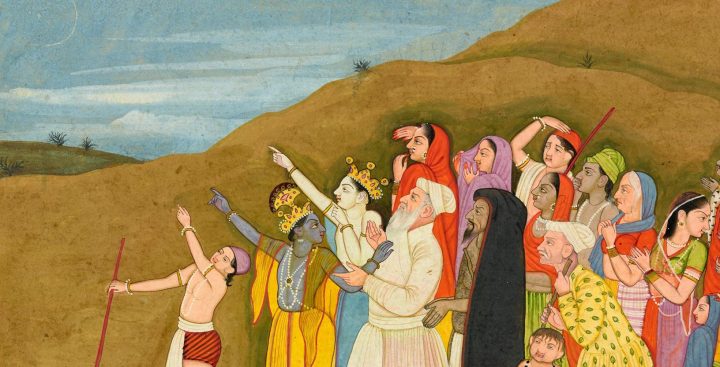
Attributed to an artist from the generation (ca. 1725–ca. 1785) after Nainsukh and Manaku, Krishna and His Family Admire a Solar Eclipse, from a Bhagavata Purana (Ancient Tales of the Lord), canto 10.82 (detail); India, Himachal Pradesh state, 1775–80; opaque watercolor on paper (Washington DC: National Museum of Asian Art, Smithsonian Institution, Freer Collection, Purchase from the Catherine and Ralph Benkaim Collection—Charles Lang Freer Endowment, F2017.13.5).
◊ ◊ ◊ ◊ ◊
Opening this spring at the National Museum of Asian Art:
Of the Hills: Pahari Paintings from India’s Himalayan Kingdoms
National Museum of Asian Art, Washington DC, 18 April — 26 July 2026
Curated by Debra Diamond
The tallest mountains on earth rise from the plains of northern India in a series of steep hills, snowy peaks, and narrow valleys. From the same Himalayan region arose some of the world’s most beautiful—yet least understood—works of art. Discover the extraordinary beauty and unique history of paintings made for Hindu kings in India’s Pahari (hill) region between the 1620s and 1830s. Pahari artists worked in radically different styles ranging from lyrical and naturalistic to boldly colored and abstracted. Of the Hills: Pahari Paintings from India’s Himalayan Kingdoms illuminates new scholarship on the collaborative artist communities in which most painters worked. Learn about the political, cultural, and religious contexts of these forty-eight exquisite works, and look closely to enter a world of fine detail that delights and astounds.
The exhibition celebrates the remarkable collection of Pahari paintings the museum acquired from renowned art historian Catherine Glynn Benkaim and Ralph Benkaim. Some of these artworks have never been exhibited publicly before. We’ve brought these rare pieces into conversation with our historic collections and paintings on loan from the Cleveland Museum of Art. Of the Hills is accompanied by the major publication Pahari Paintings: Art and Stories and runs concurrently with Pahari exhibitions at the Cleveland Museum of Art and the Cincinnati Art Museum.
Sonya Rhie Mace, Sarang Sharma, and Vijay Sharma, eds., Pahari Paintings: Art and Stories (New Haven: Yale University Press, 2026), 368 pages, ISBN: 978-0300286489, $65. With contributions by Catherine Glynn Benkaim, Ainsley Cameron, Debra Diamond, and Vrinda Agrawal
Exhibition | Epic of the Northwest Himalayas: Pahari Paintings
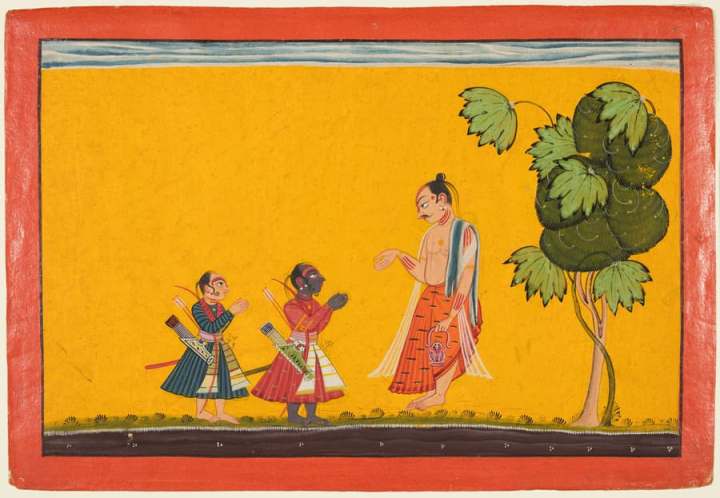
Rama and Lakshmana with the sage Vishvamitra, from the ‘Shangri’ Ramayana, ca. 1700, Northern India, Pahari kingdoms, gum tempera and ink on paper; page: 22 × 32 cm (Washington, DC: National Museum of Asian Art, Smithsonian Institution, purchase and partial gift from the Catherine and Ralph Benkaim Collection—Funds provided by the Friends of the National Museum of Asian Art, S2018.1.9).
◊ ◊ ◊ ◊ ◊
Opening this spring at The Cleveland Museum of Art:
Epic of the Northwest Himalayas: Pahari Paintings from the ‘Shangri’ Ramayana
The Cleveland Museum of Art, 19 April — 16 August 2026
Curated by Sonya Rhie Mace
Forty paintings are reunited from a widely dispersed pictorial series that presents the story of the Hindu divine hero Rama. The timeless tale, more than 2,000 years old, remains a cultural force across southern Asia. Potent themes of righteousness, vengeance, and loyalty are explored through dramatic episodes in which demons are vanquished, lovers are separated, and monkeys, bears, and a man-eagle save the day. Magic abounds, and emotions fly with warriors’ arrows. Three digital stations present more than 100 gently animated images of paintings from multiple collections reassembled into their original episodic sequences.
Created with blazing colors for a royal collection around 1700, the ‘Shangri’ Ramayana has been a beloved and enigmatic series among scholars and collectors for the past century. New evidence from previously unpublished paintings reveals many more artistic styles and triple the number of total folios than have been previously recognized. It argues in favor of a collaborative model of production involving artists from across the alpine region of Pahari India, which straddles the present-day state of Himachal Pradesh and that of Jammu and Kashmir. Twelve lenders generously contributed to this focused exhibition. The unbound pictorial series began to be divided as early as the 1760s, suggesting that its spiritual merit was intended to be shared among multiple owners. Its title derives from the kingdom of Shangri, where a member of the royal family sold his 275 folios to a dealer in Delhi, beginning in 1962. Hundreds more paintings, however, have been in other royal collections.
The exhibition celebrates the publication of the Catherine Glynn Benkaim and Ralph Benkaim Collection of Pahari paintings, which includes three pages of the ‘Shangri’ Ramayana that are on view and contextualized in Epic of the Northwest Himalayas. The exhibition runs concurrently with Pahari exhibitions at the National Museum of Asian Art in Washington, D.C. and the Cincinnati Art Museum.
Sonya Rhie Mace, Sarang Sharma, and Vijay Sharma, eds., Pahari Paintings: Art and Stories (New Haven: Yale University Press, 2026), 368 pages, ISBN: 978-0300286489, $65. With contributions by Catherine Glynn Benkaim, Ainsley Cameron, Debra Diamond, and Vrinda Agrawal
Exhibition | The Myth of Rembrandt in the Century of Fragonard
Now on view at the MBA Draguignan:
Le Phare Rembrandt: Le Mythe d’un Peintre au Siècle de Fragonard
Musée des Beaux-Arts de Draguignan, 15 November 2025 — 15 March 2026
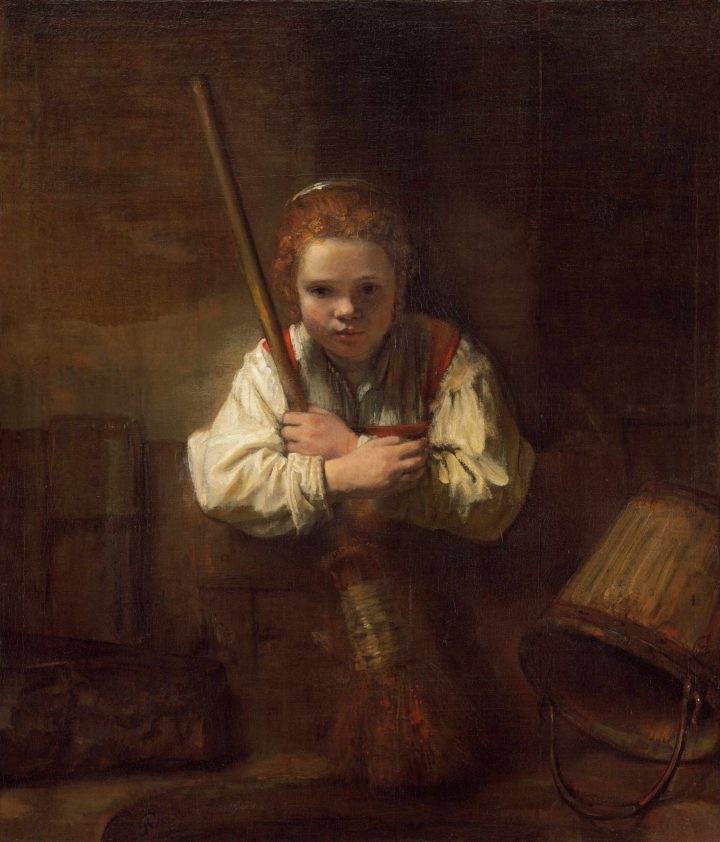
Rembrandt Workshop (possibly Carel Fabritius), A Girl with a Broom, 1646–51 (Washington DC: National Gallery of Art, 1937.1.74).
Le Phare Rembrandt invite le public à plonger dans l’univers de Rembrandt à un moment crucial : un demi-siècle après sa mort (en 1669), son nom devient un véritable mythe en Europe, et particulièrement à Paris, devenue capitale du marché de l’art. De plus en plus de tableaux du maître hollandais y sont importés, pour ensuite être exportés vers l’Allemagne, l’Angleterre ou la Russie.
L’originalité de l’exposition réside dans sa volonté de faire découvrir comment l’art de Rembrandt a été perçu au XVIIIe siècle en France, où ses œuvres influencent profondément les artistes et collectionneurs. À travers une sélection de cinquante œuvres visibles à l’époque, dont des peintures attribuées à Rembrandt ou réalisées par des artistes ayant étudié ou collectionné son travail tels que Chardin ou Fragonard, l’exposition explore les thèmes de l’imitation et de l’appropriation de son art.
Le Phare Rembrandt: Le Mythe d’un Peintre au Siècle de Fragonard (Paris: In Fine éditions d’art, 2025), 304 pages, ISBN: 978-2382032343, €35. With contributions by Jaco Rutgers, Jacqueline Carroy, Isabelle Arnulf, Jean-Pierre Maranci, Ivan Alexandre, Dominique Païni, Érick Desmazières, Gaëtane Maës, Anna Tummers, Jan Blanc, Quentin Buvelot, Dominique Brême, Ariane James-Sarazin, Yohan Rimaud, Laura Bossi.
From the CODART announcement:
This ambitious exhibition explores the undiminished aura of the Dutch master, focusing on two fascinating portraits seized during revolutionary confiscations and attributed to Rembrandt in the eighteenth century. . . .
Exhibition | Dealing in Splendour
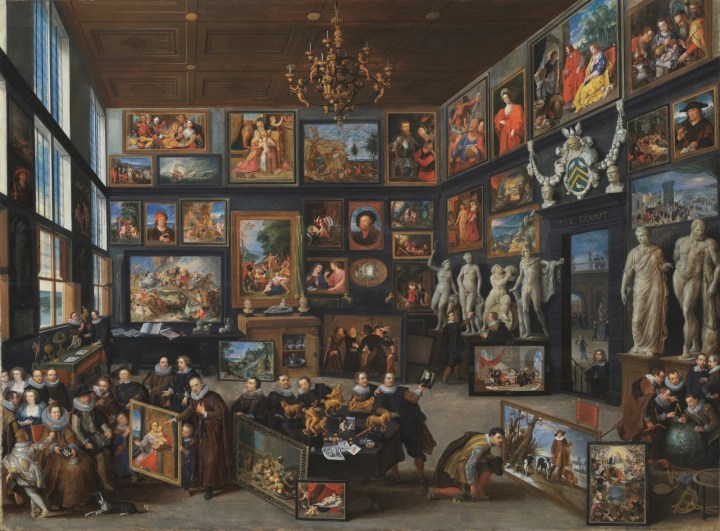
Willem van Haecht, The Gallery of Cornelis van der Geest, 1628, oil on panel
(Antwerp, Rubenshuis, City of Antwerp Collection, Rubenshuis)
◊ ◊ ◊ ◊ ◊
Now on view in Vienna at the Liechtenstein Garden Palace:
Dealing in Splendour: A History of the European Art Market
Noble Begierden: Eine Geschichte des Europäischen Kunstmarkts
Gartenpalais Liechtenstein, Wien, 30 January — 6 April 2026
Curated by Stephan Koja, Christian Huemer, and Yvonne Wagner
With a history reaching back over four centuries, the Collections of the Princely Family of Liechtenstein are part of a long tradition of collecting that spans many generations. Essential to this at all times has been a policy of active collecting. In the past as in the present, new acquisitions shaped the appearance of the galleries. The art collection has thus been formed not only by the personal tastes of the various princes but also by the art market with its changing sales strategies, trend-setting individuals, and economic factors.
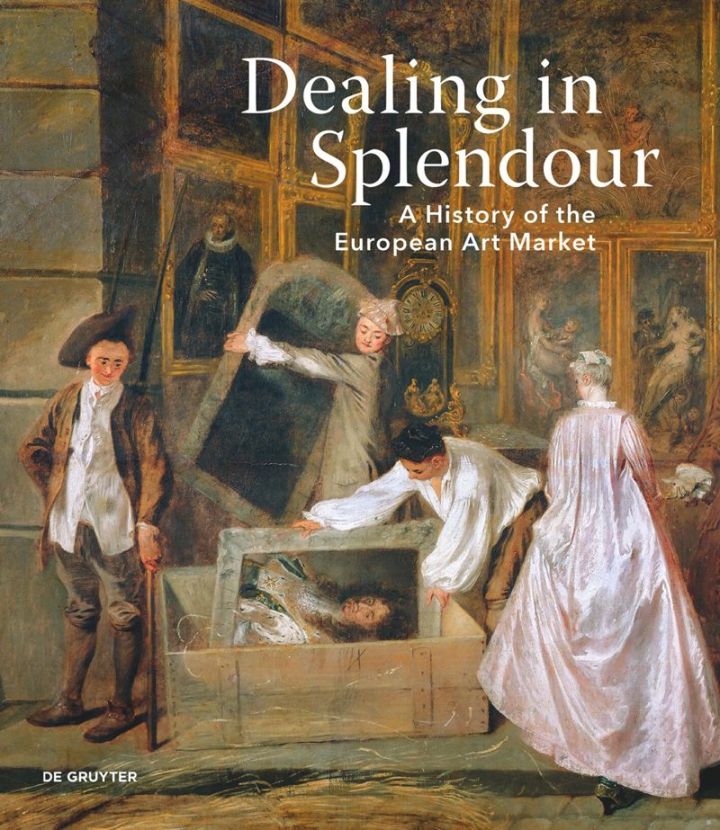 Against this background, Dealing in Splendor addresses the fascinating history of the European art market. Spotlights will be shone on structures, centres of innovation, influential personalities, and marketing methods from antiquity to the nineteenth century, revealing that many of these methods have changed very little up to the present day. Auctions were held in ancient imperial Rome. In Antwerp, art trade fairs were already attracting an international clientele in the sixteenth century, and the first catalogues raisonnés of Old Masters were compiled by art dealers in the eighteenth century.
These and other enthralling insights into the history of the European art market await you at the Liechtenstein Garden Palace in Vienna, with major works from the Princely Collections appearing alongside sensational loans in the largest annual temporary exhibition we have mounted to date. The extensive catalogue will boast essays by leading experts in the field of art market scholarship, bringing interdisciplinary approaches to bear in a volume that will provide a comprehensive overview of the subject.
Art as a Commodity: The Flourishing Art Market of Antiquity
Even in ancient Roman times, there was a flourishing art market, sustained by a network of collectors, connoisseurs, buyers, and agents. Early forms of serial production and market adjustment were already developed and continued to have an effect into the early modern age. The great demand for classical Greek works led to a burgeoning production of replicas, variations, and reduced-size copies, which Roman collectors acquired specifically for particular rooms and functions. Workshops all over the Mediterranean specialized in reproducing famous representational formulas in order to provide objects in various price ranges—from monumental copies in marble to small bronze statuettes.
International Trade: Forchondt
Prince Karl Eusebius I von Liechtenstein had a particularly long and intensive connection with the Forchondt family of dealers. They had an international presence with branches in Antwerp, Vienna, and the Iberian Peninsula, shipping works of art and furniture in all price categories to destinations as far afield as South America. Karl Eusebius’s son, Prince Johann Adam Andreas I, was likewise a client of the Forchondts, from whom he purchased many of his most important acquisitions, including paintings by Rubens and van Dyck. This business relationship with the Forchondts, holders of an imperial privilege as jewellers to the imperial court, lasted until the reign of Prince Joseph Wenzel I.
Serial Production in the Fifteenth Century
In the Italian city-states of the fifteenth century, the emergent ruling families, foremost among them the Medici in Florence, made systematic use of art patronage. By erecting imposing monuments, they shaped the appearance of the cities and demonstrated their power. They commissioned chapels and altarpieces, and alongside the Church were the most prominent and important patrons of the era. However, there were also classes of customers with smaller purses. The prices for works of art depended on the materials used, the time and labour involved, and the prestige of the masters who had made them. The workshops produced particularly popular motifs in various price ranges, some being offered for sale as ready-made works, without having been previously commissioned. Outlay and labour were reduced by turning out multiple copies of a work with just minor variations, or by serial production in suitable materials such as terracotta.
The Brueg(h)el Dynasty
Pieter Bruegel the Elder was one of the most important Flemish painters of his time. His compositions were so successful that copies of his works were made in his workshop and in those of his descendants. A whole dynasty of painters and numerous imitators drew on his works even after his death, continuing to sell them, often with only minimal changes, at a healthy profit.
The Beginnings of Large-scale Production in the Low Countries
One notable feature of Holland’s seventeenth-century Golden Age was the unusual wealth of art works, particularly paintings, in the homes of its burghers. In order to keep up with demand artists developed methods that shortened their working hours and increased their productivity. To achieve this, they specialized in particular genres, one such practitioner being Jan van Goyen, whose reduced palette both limited his material expenses and became his hallmark. His landscapes earned him international acclaim. Jan Davidsz. de Heem was famous for his opulent still lifes. Rachel Ruysch made a successful speciality of the flower still life.
Souvenirs from the Grand Tour
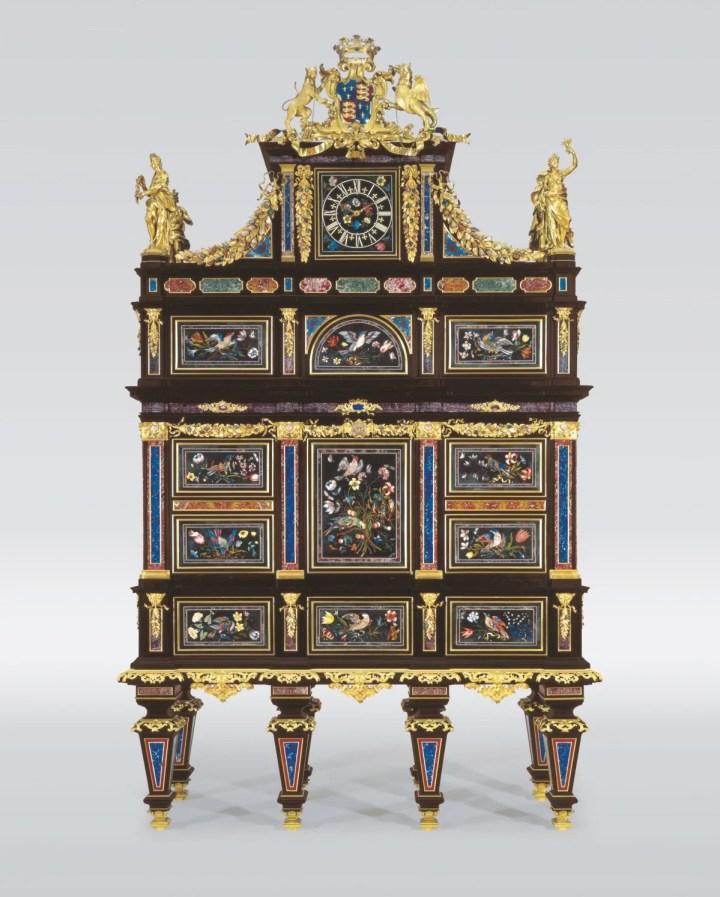
Baccio Cappelli and Girolamo Ticciati, Galleria dei Lavori, Badminton Cabinet, 1720–32 (Collection of the Princely Family of Liechtenstein, acquired in 2004 by Prince Hans-Adam II von und zu Liechtenstein).
In the seventeenth and eighteenth century, journeys taking in the centres of European culture were an important part of the education of scions of the nobility. In British society in particular, the so-called Grand Tour was regarded as the height of fashion, with the result that in the countries visited, in particular Italy with Rome as its cultural centre, a veritable industry grew up to cater for these young tourists, with accommodation, cicerones, and guidebooks to the sights—and souvenirs of the sights to take back home. The most popular of these were the views known as capricci—compositions of various statues, ruins, and edifices that in reality stood nowhere near one another. In Rome, the most successful artists in this field were Giovanni Battista Piranesi and Giovanni Paolo Pannini. It was regarded as especially prestigious to have one’s likeness painted by a well-known portraitist, or best of all by Pompeo Girolamo Batoni. The phenomenon of the souvenir was possibly carried to its greatest extreme by Henry Somerset, third duke of Beaufort, who commissioned the monumental Badminton Cabinet from the grand-ducal Galleria dei Lavori in Florence.
From Dilettante to Connoisseur: Edme-François Gersaint
During the eighteenth century, Paris and London became centres of innovation in the art market. There the auction scene was given fresh impetus with the arrival of influential experts and auctioneers, elegant auction rooms, printed sale catalogues, and exhibitions that became veritable social spectacles. A pioneering role in these developments was played by Edme-François Gersaint, who blazed new trails with his shop on the Pont Notre Dame, his auctions, and his detailed auction catalogues.
Art Historians, Expertise, and the Establishment of Canons of Works
Attributions and provenances—which had assumed increasing importance over the previous century—now lay in the hands of scholars, whose opinions as proclaimed in catalogues raisonnés influenced contemporary tastes and above all the price of works included in these publications. The value of the works increased or decreased depending on their purported authenticity (or lack of it). In many cases the criteria for authenticity were necessarily limited to stylistic characteristics. These were duly contested, in scholarly circles and elsewhere. This can be seen particularly clearly in the case of Rembrandt, whose body of works expanded or contracted depending on the scholar surveying his oeuvre.
Art for the Masses: The Revolutionary Art Market of the Nineteenth Century
In the nineteenth century the art market was revolutionized. New forms of presentation and serial production and the reproduction of images in huge numbers made art into a mass medium that circulated all over the world. Firms such as Goupil et Cie professionalized these mechanisms by systematically providing reproductions of famous works of art for various categories of buyer. At the same time dealers such as Charles Sedelmeyer established the phenomenon of the art spectacle, which—accompanied by deliberately dramatic presentation, advertising, and skilful use of media—attracted huge crowds. Thus, in the nineteenth century various innovative strategies directed at a wide sector of the public came together to shape the art market of the time, forming the basis for the present-day art business.
Curators
Stephan Koja, Director of the Princely Collections of Liechtenstein
Christian Huemer, Head of the Belvedere Research Center
Yvonne Wagner, Chief Curator of the Princely Collections of Liechtenstein
Christian Huemer and Stephan Koja, eds., Dealing in Splendour: A History of the European Art Market (Berlin: De Gruyter Brill, 2026), 448 pages, ISBN: 978-3689241063 (German) / ISBN: 978-3689241070 (English), €59 / $65.
Exhibition | Satirical Prints in Georgian London and Dublin
The exhibition recently closed in Dublin with the catalogue available from Churchill House Press and Centro Di:
Artists and Pirates: Satirical Prints in Georgian London and Dublin
Irish Architectural Archive, Dublin, 13 November 2025 — 8 January 2026
The Driehaus Museum, Chicago, 15 May — 13 September 2026
Curated by Silvia Beltrametti and William Laffan
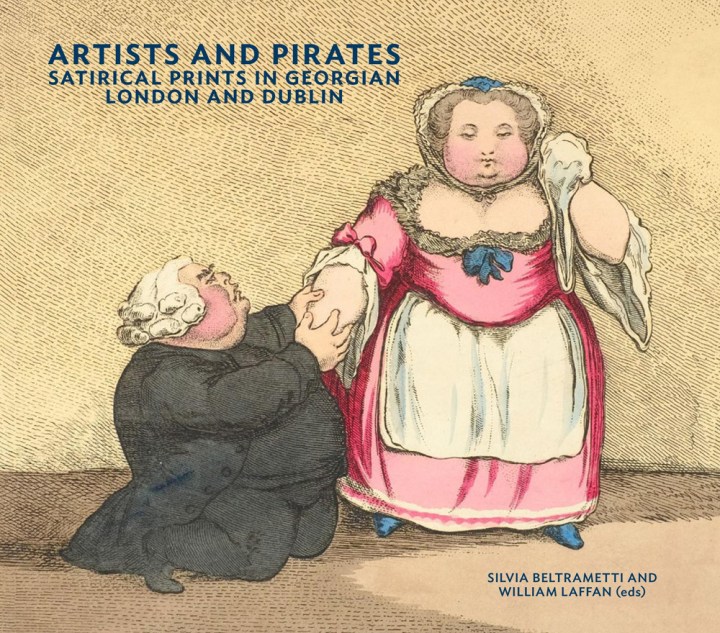 Single-sheet satire emerged in the louche milieu where politics and high society of late Georgian London intersected. Artists such as James Gillray (1756–1815) and Thomas Rowlandson (1757–1827) combined devastating wit with graphic brilliance to lampoon the great and the good, the vain and the vacuous, creating timeless images inspired by moments of fleeting controversy or scandal. Availing of a legal loophole under which copyright law protecting images did not apply to Ireland, a business of pirating caricatures by London satirists also flourished in Regency Dublin. The work of these Dublin plagiarists—which though derivative is paradoxically inventive and vibrant—as well as prints of Irish subject matter by English caricaturists such as Gillray, is the subject of this exhibition and the accompanying publication. Caricature dealt with the great political issues of the day, including religious toleration and contested concepts of liberty, but was also a vehicle to explore less elevated and often risqué (sometimes scatological or pornographic) subject matter. Single-sheet satire, Georgian England’s greatest artistic innovation, and its smaller but still dynamic offshoot in early nineteenth-century Dublin offer a fascinating—and very funny—chronicle of the human comedy.
Silvia Beltrametti and William Laffan, eds., Artists and Pirates: Satirical Prints in Georgian London and Dublin (Fenit, County Kerry: Churchill House Press with Centro Di, 2025), 184 pages, ISBN: 978-8870385939, €30. With additional contributions by James Kelly (Professor of History at Dublin City University), David Fleming (Professor of History at the University of Limerick), and Ben Casey (PhD candidate, University of Maynooth).
◊ ◊ ◊ ◊ ◊
Note (added 15 February 2026) — The original posting omitted the Chicago venue, though a note suggested the possibility, with reference to the Centro Di website. At The Driehaus Museum, the show will be titled Ink and Outrage: 18th-Century Satirical Prints in London and Dublin.
Exhibition | The Count of Artois, Prince and Patron
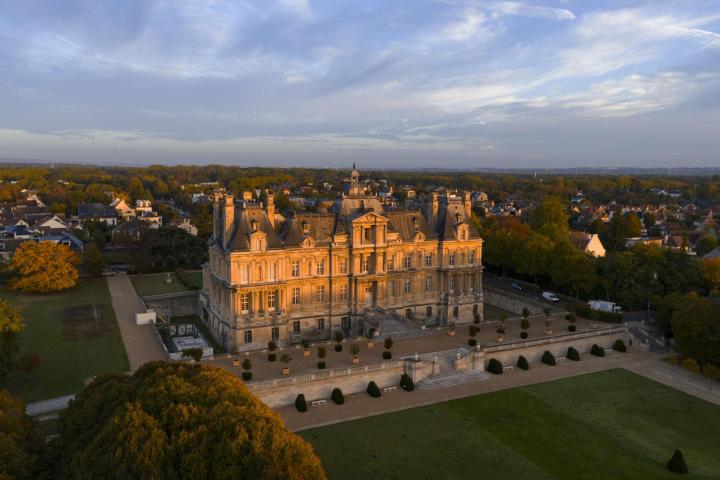
Château de Maisons, in Maisons-Laffitte, a northwest outer suburb of Paris, about 12 miles from the city center
(Photo: © EPV / Thomas Garnier)
◊ ◊ ◊ ◊ ◊
From the Château de Versailles:
The Count of Artois, Prince and Patron: The Youth of the Last King of France
Château de Maisons, Maisons-Laffitte, 14 November 2025 — 2 March 2026
The result of a partnership between the Centre des Monuments Nationaux and the Palace of Versailles, this exhibition traces the life of the Count of Artois (1757–1836), brother of Louis XVI and the future Charles X, through his residences, his artistic projects, and his passions. From the splendor of the Château de Maisons to the count’s exile in 1789, it reveals the journey of a refined prince at the heart of the 18th century.
The exhibition begins with a presentation of the Château de Maisons in the 18th century and then traces the life of the Prince of Artois from his birth to his exile. The prince’s personality, his life, his patronage, and his taste are explored through a great variety of objects: graphic arts, paintings, objets d’art, sculptures, furniture, curiosities, and books. The exhibition also highlights the prince’s interest in architecture, as he was the last owner of the Château de Maisons under the Ancien Régime. Sourced primarily from the collections of the Palace of Versailles, the exhibition benefits from additional prestigious loans from the National Archives, the National Library of France, the Louvre Museum, the Mobilier National, the Château de Fontainebleau, the Carnavalet Museum, the Musée de l’Armée – Invalides, the municipal library of Versailles, and the Fine Arts Museums of Amiens and Reims, as well as from private collections.
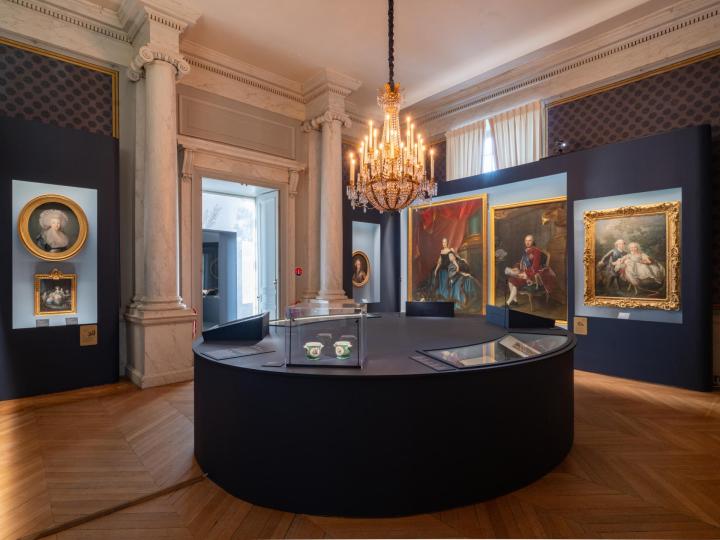
The exhibition as installed at the Château de Maisons
(Photo: © EPV / Thomas Garnier)
◊ ◊ ◊ ◊ ◊
The Count of Artois, Future Charles X
Reputed for his frivolous spirit and taste for luxury, the Count of Artois was both an attractive and controversial figure, eccentric yet conservative. Charles-Philippe of France, known under the title Count of Artois, was born in Versailles on 9 October 1757. He was the grandson of Louis XV and the brother of Louis XVI and the future Louis XVIII. He became King of France upon the death of the latter in 1824, under the name Charles X, and soon emerged as the representative of the most uncompromising Catholic faction. He was consecrated at Reims the following year. The July Ordinances of 1830, which restricted freedom of the press and dissolved the Chamber, triggered an uprising that became known as the Three Glorious Days. Faced with the revolt, Charles X abdicated and left France. His exile led him first to Scotland, then to Prague, and finally to Istria (a peninsula shared by Slovenia, Croatia, and Italy), where he died on 6 November 1836.
A Taste for Innovation
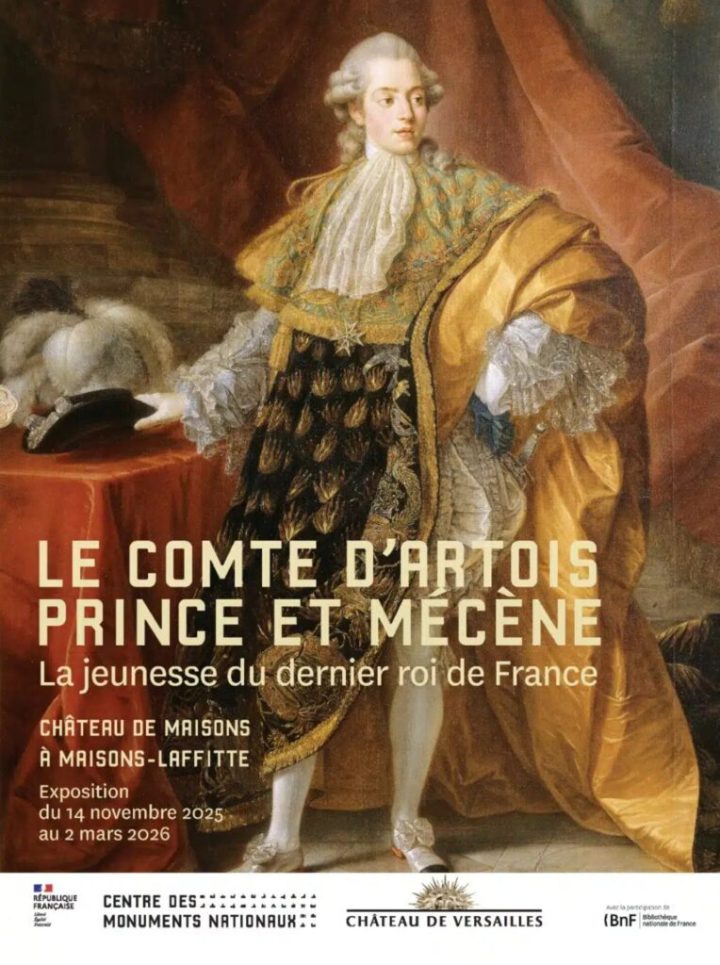 From an early age, the Count of Artois distinguished himself through his marked interest in splendor and refinement, coupled with an unrestrained passion for the modern currents of art and fashion. He was very close to Marie-Antoinette at the beginning of her reign, and they shared this common enthusiasm. However, unlike the queen, constrained by the demands of court etiquette, the Count of Artois enjoyed far greater freedom to adopt and promote the latest trends.
The château de Maisons, a masterpiece by François Mansart, was built from 1633 onward for René de Longueil, a magistrate of the Parliament of Paris. Designed as a pleasure residence, it became, as early as the 17th century, a place admired by the court. King Louis XIV himself visited it several times. In the following century, the estate entered a new era of splendor when, in 1777, the Count of Artois acquired it. He commissioned the architect François-Joseph Bélanger to transform the château with ambitious embellishment projects, refined interior decoration, and modern gardens. The count intended to make it both a setting for entertainment and a symbol of aristocratic refinement. But the upheavals of 1789 brought the work to a halt, and the prince’s property was confiscated.
After the Revolution, the château passed through various hands, from Marshal Lannes under the Empire to the banker Jacques Laffitte, who subdivided the park. The château was saved from ruin at the beginning of the 20th century thanks to its listing as a historic monument and its acquisition by the State. Today, restored and open to the public, the Château de Maisons remains a jewel of the Grand Siècle and still bears the mark of the Count of Artois’s lavish ambitions, whose tenure constitutes one of the most brilliant episodes in its history.
A Dialogue between Collections
The partnership established in 2013 between the Centre des Monuments Nationaux and the Palace of Versailles creates a dialogue between collections that are too often overlooked and major landmarks of France’s national heritage. Temporary exhibitions allow both institutions to pool their resources in order to offer as many people as possible the opportunity to discover, or rediscover, chapters of French history within the prestigious setting of national monuments. The CMN and the Palace of Versailles have concluded a deposit agreement that will allow the return and presentation, in situ, of works that were once at Maisons during the time of the Count of Artois, seized during the Revolution, and later kept at Versailles.
Curators
• Laurent Salomé, director of the National Museum of the Palaces of Versailles and Trianon
• Vincent Bastien, scientific collaborator at the Palace of Versailles
• Benoît Delcourte, chief curator at the Palace of Versailles
• Raphaël Masson, chief curator at the Palace of Versailles
• Clotilde Roy, responsible for enriching the collections of the Centre des Monuments Nationaux
• Gabriel Wick, doctor of history
Vincent Bastien, Benoît Delcourte, and Clotilde Roy, eds., Le Comte d’Artois, Prince et Mécène: La Jeunesse du Dernier Roi de France (Paris: Éditions du patrimoine, 2025), 96 pages, ISBN: 978-2757710821, €16.
Exhibition | Painters, Ports, and Profits
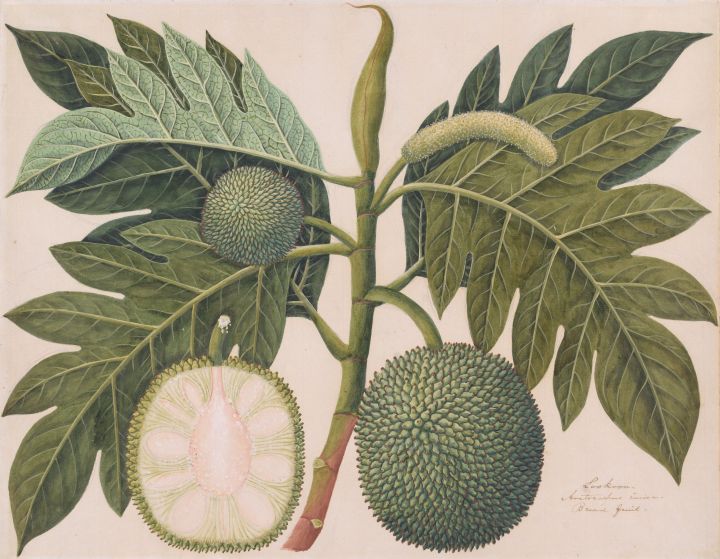
Unknown artist (Company style), Breadnut (Artocarpus camansi), ca. 1825, watercolor, gouache, and graphite on medium, slightly textured, cream laid paper, sheet: 15 × 19 1/4 inches (New Haven: Yale Center for British Art, Paul Mellon Fund, B2022.5).
◊ ◊ ◊ ◊ ◊
From the press release for the exhibition, which opens today:
Painters, Ports, and Profits: Artists and the East India Company, 1750–1850
Yale Center for British Art, New Haven, 8 January — 21 June 2026
Curated by Laurel Peterson and Holly Shaffer
The Yale Center for British Art presents Painters, Ports, and Profits: Artists and the East India Company, 1750–1850 from January 8 through June 21, 2026. Spanning a century of artistic production, the exhibition reveals the material and technical innovations of the Indian, Chinese, and British artists whose work and lives were shaped by the British East India Company’s global reach. Featuring more than one hundred objects, Painters, Ports, and Profits highlights the beauty and range of the extraordinary artwork produced within the context of one of the most powerful and ruthless corporations in history.
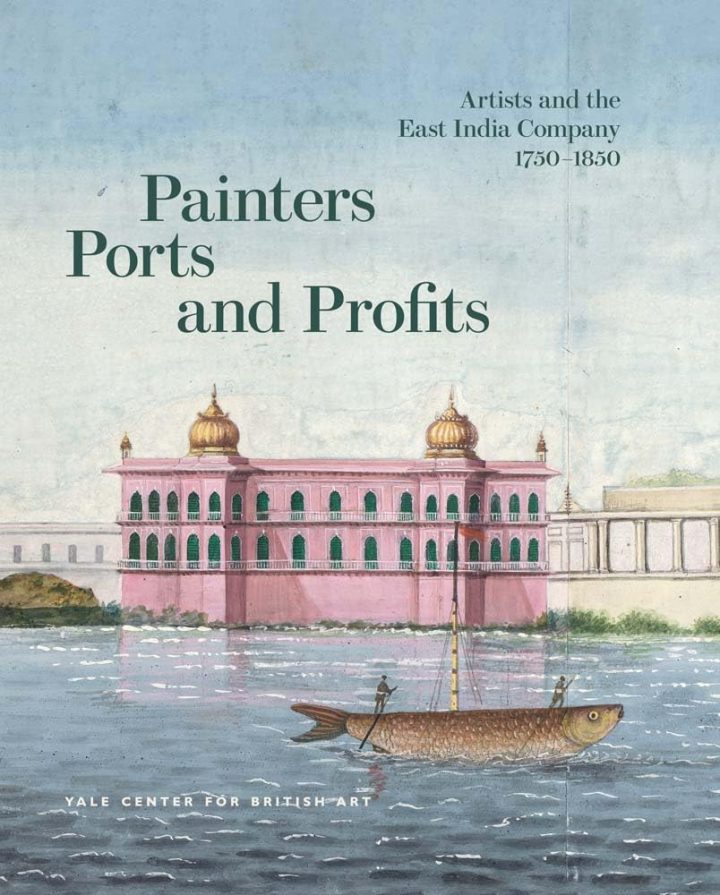 “This exhibition brings to light an astonishing chapter of global art history, when artistic innovation and exchange flourished under the shadow of empire,” said Martina Droth, Paul Mellon Director of the Yale Center for British Art. “It tells the story of direct encounters between artists from different continents and traditions, who responded to one another by experimenting with new materials and methods. We are thrilled to share these important, and rarely seen, works from our collection and to invite new reflection on their artistic legacy.”
Between 1750 and 1850, the Company’s growing commercial, military, and political operations linked an incredibly varied group of artists—amateurs, soldiers, and professionals—into a vast network that stretched from London to Calcutta (Kolkata) to Canton (Guangzhou). As goods, people, and ideas circulated through the Company’s networks, artists experimented with papers, pigments, and methods, adapting techniques from different traditions to develop a striking visual language that connected art to the expanding global economy.
“We are excited to take visitors on a journey to ports and trading cities across India and China where artists produced captivating and innovative works of art,” said exhibition curators Laurel O. Peterson and Holly Shaffer. “The period of the East India Company is one in which art and business intersected. There is a profound tension between the ventures of a global corporation and the works of beauty created by the artists in its orbit. With technical brilliance, these artists ingeniously fused traditions and materials together to develop new ways of making, picturing, and selling.”
Years in development, the preparations for Painters, Ports and Profits included extensive original research and careful technical study by curators and conservators at the YCBA in collaboration with conservation scientists at Yale’s Institute for the Preservation of Cultural Heritage. The resulting exhibition illuminates the museum’s deep holdings of Asian art, showcasing many exceptional works that have hardly ever or never been displayed. Highlights of the exhibition include stunning small- and large-scale portraits, such as the monumental Woman Holding a Hookah at Faizabad, India (1772) by Tilly Kettle and the intimate Portrait of a Woman (ca. 1850) by an artist from the circle of eminent painter Lam Qua. Watercolor drawings of a great Indian fruit bat by Bhawani Das (1778–82) and breadnut by an artist once known (ca. 1825), among others, record the flora and fauna of the Company’s domain with striking naturalism. A spectacular thirty-seven-foot-long scroll uses delicate watercolor to depict the city of Lucknow, India, in panoramic detail, which recent technical analysis has revealed was completed by multiple artists working in collaboration.
Painters, Ports, and Profits: Artists and the East India Company, 1750–1850 is organized by the Yale Center for British Art. The exhibition is curated by Laurel O. Peterson, Assistant Curator of Prints and Drawings at the YCBA, and Holly Shaffer, Associate Professor in the Department of the History of Art and Architecture at Brown University.
r e l a t e d p r o g r a m m i n g
First Look | Painters, Ports, and Profits: Artists and the East India Company, 1750–1850
Thursday, 15 January, 4pm, Lecture Hall and Livestream
Spring Exhibitions Openings
Thursday, 26 February, 4pm, Lecture Hall and Livestream
Curator Tours
Thursdays, 22 January, 26 March, 16 April, 21 May, and 18 June, 4pm
Docent Tours
Saturdays, 3pm
The catalogue is published by YCBA and distributed by Yale UP:
Laurel O. Peterson and Holly Shaffer, eds., Painters, Ports, and Profits: Artists and the East India Company, 1750–1850 (New Haven: Yale Center for British Art, 2026), 280 pages, ISBN: 978-0300286540, $65. With contributions by Mark Aronson, Tim Barringer, Swati Chattopadhyay, Soyeon Choi, Anita Dey, Gillian Forrester, Navina Najat Haidar, Richard R. Hark, Emma Hartman, Brooke Krancer, Margaret Masselli, Kaylani Madhura Ramachandran, Romita Ray, Yuthika Sharma, Marcie Wiggins, Winnie Wong, and Tom Young.
Featuring more than one hundred objects drawn primarily from the YCBA’s collection, including architectural drawings, watercolors, and hand-colored aquatints, the catalog critically reconsiders the vibrant creative exchanges between artists in India, China, and Britain during a period driven by ruthless commercial and colonial expansion.
Exhibition | Gainsborough: The Fashion of Portraiture
Aimee Ng, the exhibition’s curator, is the subject of a recent feature by Alexandra Starr in The New York Times (20 December 2025). From the press release (3 November 2025) for the exhibition:
Gainsborough: The Fashion of Portraiture
The Frick Collection, New York, 12 February — 11 May 2026
Curated by Aimee Ng
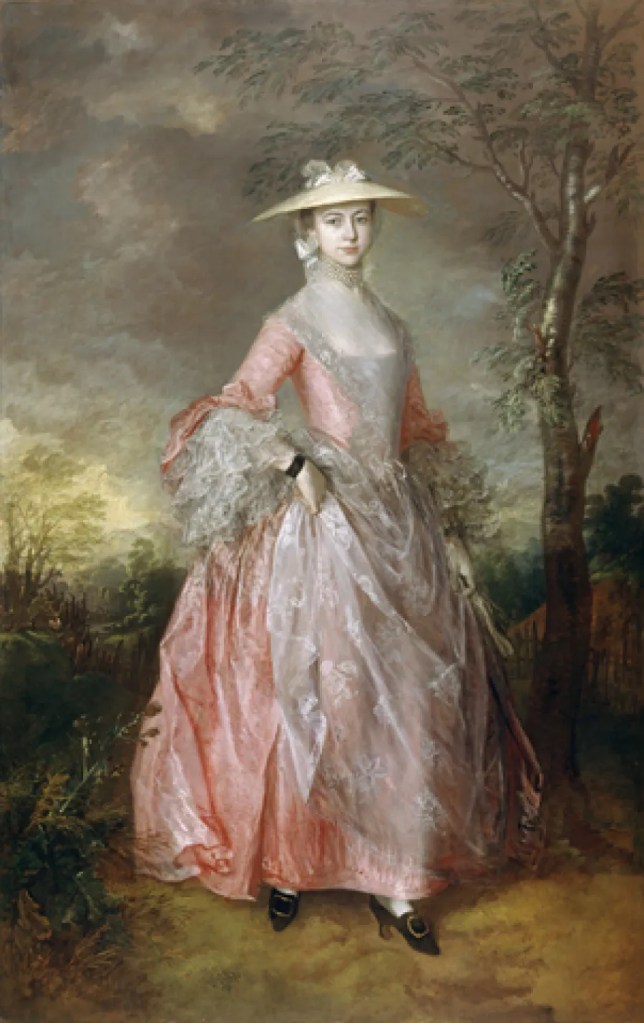
Thomas Gainsborough, Mary, Countess Howe, 1763–64, oil on canvas, 243 × 154 cm (English Heritage, Kenwood House, London).
Beginning 12 February 2026, The Frick Collection will present its first special exhibition dedicated to the English artist Thomas Gainsborough, and the first devoted to his portraiture ever held in New York. Displaying more than two dozen paintings, the show will explore the richly interwoven relationship between Gainsborough’s portraits and fashion in the eighteenth century. The works included represent some of the greatest achievements from every stage of this period-defining artist’s career, drawn from the Frick’s holdings and from collections across North America and the United Kingdom.
The trappings and trade of fashion filled the artist’s world—in magazines and tailor shops, at the opera and on promenades—and his portraits were at the heart of it all. This exhibition invites visitors to consider not only the actual clothing the painter depicted, but also the role of his canvases as both records of and players in the larger conception of fashion: encompassing everything from class, wealth, labor, and craft to formality, intimacy, and time. Recent technical investigations also shed light on Gainsborough’s artistic process, including connections to materials that fueled the fashion industry.
Gainsborough: The Fashion of Portraiture is organized by Aimee Ng, the museum’s Peter Jay Sharp Chief Curator. She states: “The spectacular and at times, to modern eyes, absurd fashions in portraits by Thomas Gainsborough and his contemporaries continue to fascinate viewers today. The appeal of these demonstrations of taste, status, and wealth persists in tension with increased recognition, over the last few decades, of the injustices that often made such extravagance possible. This exhibition necessarily deals with clothing and personal attire, while exploring how fashion was understood in Gainsborough’s time, how it touched every level of society, and how portraiture itself was as much a construction and invention as a sitter’s style.”
Aimee Ng, Gainsborough: The Fashion of Portraiture (New York: Rizzoli Electa, 2026), 200 pages, ISBN: 978-0847876235, $50. With an additional essay by Kari Rayner.
The exhibition is complemented by a richly illustrated catalogue authored by Aimee Ng, with an additional essay by Kari Rayner, Associate Conservator of Paintings at the J. Paul Getty Museum. Along with entries for each work in the show, the catalogue features essays on portraiture and self-fashioning in Gainsborough’s era, on materials and techniques that linked clothing and paintings, and on the roles of class and time in eighteenth-century style. The volume considers how and why Gainsborough and his sitters—from dukes and duchesses to the artist’s family members to the once-enslaved writer and composer Ignatius Sancho—shaped how they would be immortalized in paint. The book also touches on the longstanding appeal of Gainsborough’s art, particularly its renewed popularity a century after the painter’s death among American collectors such as the Fricks, Vanderbilts, and Huntingtons.
Major support for Gainsborough: The Fashion of Portraiture is provided by an anonymous donor in honor of Ian Wardropper. Additional funding is provided by Barbara and Bradford Evans, Kathleen Feldstein, Michael and Jane Horvitz, Dr. Arlene P. McKay, The Helen Clay Frick Foundation, James K. Kloppenburg, David and Kate Bradford, Katie von Strasser – InspiratumColligere, the Dr. Lee MacCormick Edwards Charitable Foundation, Edward Lee Cave, Mr. and Mrs. Hubert L. Goldschmidt, Jennifer Schnabl, the Malcolm Hewitt Wiener Foundation, Bradley Isham Collins and Amy Fine Collins, Siri and Bob Marshall, Bailey Foote, Alexander Mason Hankin, Brittany Beyer Harwin and Zachary Harwin, and Otto Naumann and Heidi D. Shafranek. The exhibition catalogue is funded by Dr. Tai-Heng Cheng.
Exhibition | Hercules: Hero and Anti-Hero
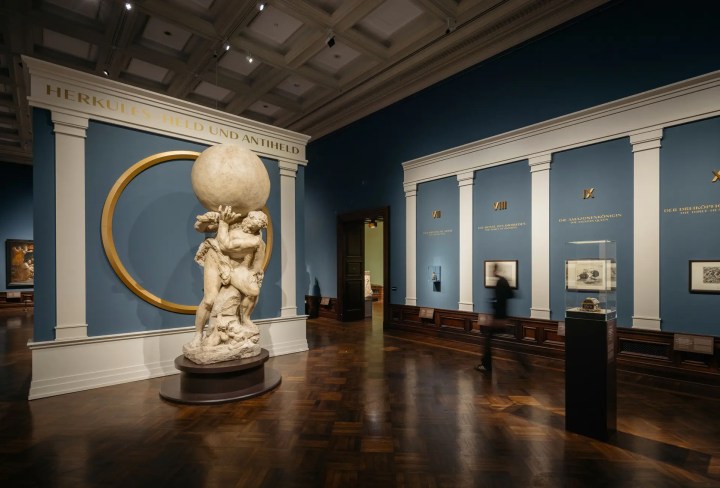
Exhibition photo with a mid-19th-century plaster cast after Balthasar Permoser’s ‘Saxon Hercules’. As noted on the SKD’s Instagram account, “The original crowned the Wall Pavilion of the Dresden Zwinger from 1718 to 1945, symbolising its patron, Augustus the Strong, with his astonishing physical strength and the Herculean efforts he undertook every day as the Saxon-Polish ruler. Where Hercules dwells with the vault of heaven, the Garden of the Hesperides cannot be far away. And so Permoser’s Hercules gazed upon the orange trees in the Zwinger courtyard, which bore the apples of the Hesperides, as it were, and promised Saxony a golden age.”
◊ ◊ ◊ ◊ ◊
From the press release for the exhibition:
Hercules: Hero and Anti-Hero
Gemäldegalerie Alte Meister, Zwinger, Dresden, 22 November 2025 — 28 June 2026
Hercules (‘Heracles’ in Greek), the best-known hero of classical antiquity, is one of the most enduring and popular mythical figures anywhere in the world. His name is universally known, and the phrase ‘a Herculean task’ is an everyday expression for anything requiring extraordinary strength and effort.
The Staatliche Kunstsammlungen Dresden (Dresden State Art Collections, SKD) is dedicating an exhibition to this demigod in the Winckelmann Forum of the Semper Gallery of the Zwinger. With Hercules: Hero and Anti-Hero, the Skulpturensammlung bis 1800 (Sculpture Collection up to 1800) and the Gemäldegalerie Alte Meister (Old Masters Picture Gallery) present a wide range of depictions of this mythological character. Featuring 135 objects, including top-quality sculptures, paintings, prints, coins, armour, and works of the goldsmith’s art, the exhibition explores the question of why Hercules has been such a fascinating figure for millennia and continues to be so today—one need only think, for example, of some of the major films of recent years.
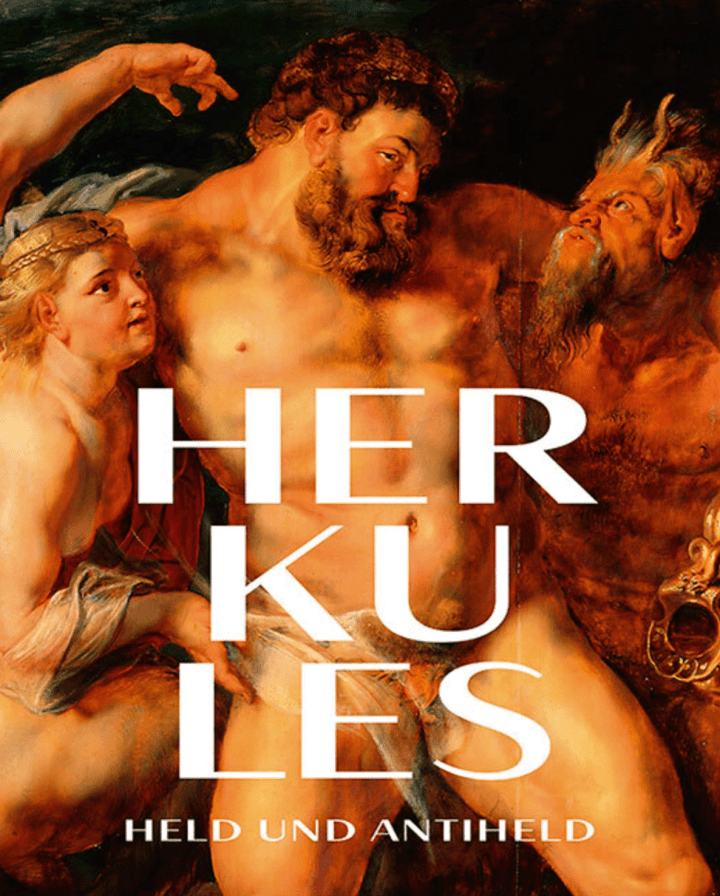 As the son of the supreme deity Zeus and the Theban queen Alcmene, Hercules was a demigod—with superhuman strength and human flaws. His popularity was revived during the Renaissance. In Rome, dozens of large-scale Hercules statues were already known in the sixteenth century, and these had a huge influence on early modern art. The exhibition showcases works of art from classical antiquity to the neoclassical period, with some glimpses into the present day. Alongside objects from the rich holdings of the Staatliche Kunstsammlungen Dresden, there are prestigious loans from such eminent institutions as the Vatican Museums in Rome, the Prado in Madrid, the Louvre in Paris, and the Ny Carlsberg Glyptotek in Copenhagen.
In a prologue and five chapters, the exhibition explores the famous ‘Labours of Hercules’, his relationships with women, his anti-heroic escapades, and his role as a model of virtue for rulers such as Alexander the Great and August the Strong. Balthasar Permoser’s colossal Saxon Hercules, created for the Rampart Pavilion of the Dresden Zwinger, bears witness to this.
Hercules was evidently not only strong and virtuous. In some situations, he behaved dishonourably, succumbed to vice, or committed cruel injustices, even against his own children. He often fought against evil for the good of humanity, but he was also a murderer, rapist, drunkard, and thief. Through significant works of art and an extensive accompanying programme, the exhibition encourages reflection on the role of heroism in history and its relevance in our society today. Particular attention is paid to the extraordinary narrative richness of the myth.
Videos telling eight of the stories about Hercules have been created specially for the exhibition. Dresden-born actor Martin Brambach—known for his role as Chief Inspector Peter Michael Schnabel in the television series Tatort—relates important and amusing episodes from the life of the hero and anti-hero. A multimedia guide is available free of charge.
Holger Jacob-Friesen, ed., Herkules: Held und Antiheld (Dresden: Sandstein Kultur, 2025), 200 pages, ISBN: 978-3954988945, €38.










 Enfilade
leave a comment