Exhibition | Coins, Medals, and the Rule of Law

Der Medailleur Jacques-Antoine Dassier setzte 1753 Charles de Montesquieu ins Medaillenrund. In dessen Hauptwerk De l’Esprit des lois von 1748 entfaltete er eine Theorie der Gewaltentrennung, die erheblichen Einfluss auf die Entwicklung des modernen Verfassungsstaates hatte (Staatliche Museen zu Berlin, Münzkabinett, ex Slg. Thomas Würtenberger / Karsten Dahmen)
◊ ◊ ◊ ◊ ◊
From the Staatliche Museen zu Berlin:
Ius in nummis: Die Sammlung Thomas Würtenberger
Bode-Museum, Berlin, 26 May 2023 — 7 April 2024
Eine Sonderausstellung des Münzkabinetts der Staatlichen Museen zu Berlin
Ius in nummis: Die Sammlung Thomas Würtenberger ist in ihrer Breite einzigartig. Sie wurde über den Zeitraum eines halben Jahrhunderts zusammengetragen und umfasst mehr als 3.000 Objekte—vornehmlich Medaillen und einige Münzen—mit dem Fokus auf die neuzeitliche Rechtsgeschichte Westeuropas in zunehmend globaler Perspektive. Jedes Objekt erschließt dabei ein Stück juristischer Vergangenheit.
Iūs, iūris, n. bedeutet unter anderem Recht. Regeln und Gesetze ordnen und durchdringen seit Jahrtausenden den Alltag der Menschen. Recht und Gerechtigkeit bilden dabei dynamische Spannungsfelder. Rechtshandlungen und Rechtsauffassungen gehen von Individuen aus. Rechtsstaat und Unrechtsstaat oder Verfassungsstaat und Willkürherrschaft erinnern an die Konsequenzen gelebter Wertesysteme. Die Rechtsgeschichte erkundet mittels vielfältiger Quellen Ereignisse wie Rechtssetzungen und Rechtsakte, aber auch individuelle Rechtspersonen und Rechtskulturen.
nummus -ī, m. bezeichnet eigentlich Münzen und Geldstücke, doch hat es sich bewährt, auch ein verwandtes Medium unter diesen Begriff zu fassen: die Medaille. Für die Rechtsarchäologie bietet sie eine ergiebige Primärquelle. Von Moses bis zu den Menschenrechten eröffnet die Medaillenkunst ein weites Panorama der Inszenierung von Recht.
Die Ausstellung Ius in nummis: Ein Sammlungsüberblick in zwölf Segmenten
Das Münzkabinett hat es sich zur Aufgabe gesetzt, die Sammlung Würtenberger zu verwahren und zugänglich zu machen. Die digitale Erfassung seit 2020 ist die Voraussetzung der ersten systematischen Erschließung dieses Kulturguts. Ausstellung, Katalog und Begleitprogramm sind dicht am Puls laufender Forschungsarbeiten um diese wichtige Neuerwerbung angesiedelt. Präsentiert wird zunächst die Fragestellung der Spezialsammlung „Ius in nummis“. Weiterführend geht es aber nicht zuletzt um die Erkenntnispotenziale numismatischer Quellen für die Rechtsgeschichte.
Weitgehend geschlossen überliefert, zeigen numismatische Objekte das nahezu vollständige Bild einer erfolgreichen Kulturtechnik. Je nach Materialität und Auflage exklusiv oder für Jedermann halten sie Personen, Dinge und Ereignisse fest. Als mobile und beständige Medien können Medaillen über politische, religiöse und kulturelle Barrieren hinweg von Mensch zu Mensch gehen. Und bisweilen künden die Oberflächen dieser handlichen Denkmale von wechselvollen Objektgeschichten.
Die Ausstellung bietet innerhalb des thematisch, geografisch und diachron vielfältigen Bestandes eine erste Orientierung. Zwölf Segmente präsentieren anhand von Schwerpunkten einen Sammlungsüberblick. Von Symbolen, Individuen, Strukturen, Institutionen, bis hin zu Revolutionen und Verfassungsfragen werden dabei stets weiterhin aktuelle Themen im Medaillenrund vergleichbar.
Heutige Perspektiven auf Fragen von Recht und Gerechtigkeit
Eine eigens für Ius in nummis ins Leben gerufene Edition des Berliner Medailleurkreises flankiert die Ausstellung. Aktuelle Perspektiven auf die großen und kleinen Fragen von Recht und Gerechtigkeit kommentieren im Medaillenrund die Ausstellungsthemen. Beteiligt sind der Berliner Medailleurkreis sowie Mitglieder der Deutschen Gesellschaft für Medaillenkunst.
Zur Ausstellung wird ein Begleitband erscheinen.
Exhibition | Léopold and Aurèle Robert
From the Musée d’art et d’histoire in Neuchâtel:
Léopold et Aurèle Robert. Oh saisons…
Musée des beaux-arts, La Chaux-de-Fonds / Musée d’art et d’histoire, Neuchâtel, 14 May — 12 November 2023
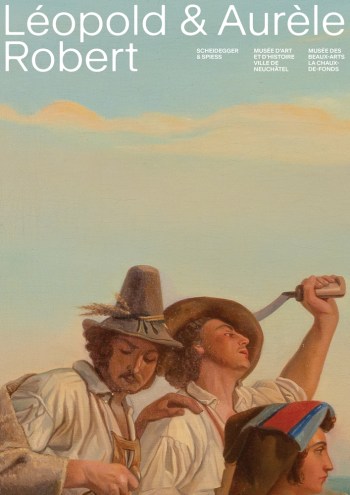 The Neuchâtel artist Léopold Robert (1794–1835), who enjoyed European acclaim during his lifetime, embodies the myth of the Romantic painter, doomed to a tragic fate and shrouded in mystery.
Educated in Paris at the École des Beaux-Arts and later in the studio of Jacques-Louis David, Robert moved to Italy in 1818. His genre paintings brought him great popular success during the first half of the 19th century but were less fulsomely received by the critics. The Musée d’art et d’histoire de Neuchâtel and the Musée des beaux-arts de La Chaux-de-Fonds have joined forces to pay tribute to the work of Léopold Robert and his brother Aurèle (1805–1871). The exhibition also re-examines Aurèle’s role, considering him not only as a ‘disseminator’ of Léopold’s oeuvre, but also as an artist in his own right. The joint exhibition focuses on Léopold Robert’s unfinished Seasons cycle and features works from both institutions as well as several prestigious loans. The exhibition in La Chaux-de-Fonds is given over to ‘Spring’, while Neuchâtel celebrates ‘Summer’ and ‘Winter’. The exhibition also explores how these masterpieces were produced and circulated, and examines their depiction of music, dance, and the beauty ideal. The exhibition is enriched by contributions from artist Gina Proenza that offer a direct, contemporary response to the historical works of Léopold and Aurèle Robert.
The catalogue (in French) is distributed by ACC Art Books:
David Lemaire and Antonia Nessi, eds., Léopold & Aurèle Robert (Scheidegger & Spiess, 2023), 240 pages, ISBN: 978-3858818874, £45.
◊ ◊ ◊ ◊ ◊
Note (added 26 October 2023) — The posting was updated to correct the dates of the exhibition (here originally given as 15 May — 15 October).
Exhibition | Hogarth’s Britons
Now on view in Derby:
Hogarth’s Britons: Succession, Patriotism, and the Jacobite Rebellion
Derby Museum & Art Gallery, 10 March — 4 June 2023
Curated by Jacqueline Riding and Lucy Bamford
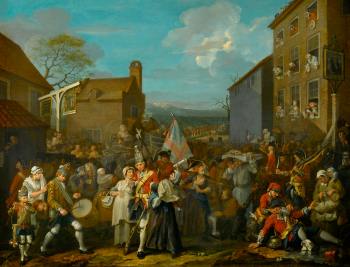
William Hogarth, The March of the Guards to Finchley, 1749–50, oil on canvas (London: The Foundling Museum).
No other artist defines our image of 18th-century Britain quite like William Hogarth. His vibrant narrative paintings, reproduced and circulated widely through print, engaged with some of the most pressing social and political issues of the times. Amongst these was Jacobitism, a campaign to restore the exiled Stuart dynasty to the throne of Great Britain. This exhibition explores Hogarth’s response to this threat, including the last and most serious of all attempts: the Jacobite Rebellion of 1745. Led by Prince Charles Edward Stuart (‘Bonnie Prince Charlie’) with support from France, the Jacobite Army would eventually reach Derby before retreating back north to Scotland and defeat at the Battle of Culloden.
Led by Derby Museums, Hogarth’s Britons has been produced in partnership with the National Gallery and the National Portrait Gallery and is the first exhibition of Hogarth’s works to be staged in Derby. It brings many pieces that have never before been seen in the city, including Hogarth’s masterpiece, The March of the Guards to Finchley (Foundling Museum, London). Others, such as the newly discovered portrait of the Prince by Allan Ramsay (National Galleries of Scotland), will be returning to Derby for the first time since the rebellion of 1745. The exhibition also brings together items from national and private collections, representing local divided loyalties and the experience of life under Jacobite-army occupation.
Hogarth’s Britons: Succession, Patriotism, and the Jacobite Rebellion is co-curated by Jacqueline Riding, acclaimed art historian and author of Jacobites (2016) and Hogarth: Life in Progress (2021); and Lucy Bamford, Senior Curator of Art at Derby Museums.
Jacqueline Riding, Hogarth’s Britons (London: Paul Holberton Publishing, 2023), 120 pages, ISBN: 978-1913645458, £18 / $25.
◊ ◊ ◊ ◊ ◊
Note (added 29 February 2024) — The original posting was updated to include information on the catalogue.
Exhibition | Hair and Body Hair
From the Musée des Arts Décoratifs:
Des cheveux et des poils / Hair and Body Hair
Musée des Arts Décoratifs, Paris, 5 April — 17 September 2023
Curated by Denis Bruna

Poster for the exhibition Des cheveux et des poils © Aurélien Farina. Jacob Ferdinand Voet, Portrait of a Man, before 1689 (Sotheby’s / Art Digital Studio); model photographer: © Virgile Biechy.
Following the success of the exhibitions La mécanique des dessous (2013), Tenue correcte exigée! (2017), and Marche et démarche (2019), the Musée des Arts Décoratifs continues its exploration of the relationship between the body and fashion with an exhibition on hair styles and body hair grooming. Des cheveux et des poils (Hair & Hairs) demonstrates how hairstyles and the grooming of human hair have contributed to the construction of appearances for centuries. Hair is an essential aspect of one’s identity and has often been used as a means of expressing our adherence to a fashion, a conviction, or a protest while invoking much deeper meanings such as femininity, virility, and negligence, to name just a few.
Through 600 works, from the 15th century to the present, the exhibition explores themes inherent in the history of hairstyles, as well as questions related to facial hair and body hair. The trades and skills of yesterday and today are highlighted with iconic figures: Léonard Autier (favorite hairdresser of Marie-Antoinette), Monsieur Antoine, the Carita sisters, Alexandre de Paris, and more recently studio hairdressers. Great names in contemporary fashion such as Alexander McQueen, Martin Margiela, and Josephus Thimister are present with their spectacular creations made from this unique material that is hair.
Fashion and Extravagance
The exhibition opens with the evolution of feminine hairstyles as a social indicator and marker of identity. In the Middle Ages, in response to the command of Saint Paul, the wearing of the veil was imposed on women until the 15th century. Gradually, women abandoned it in favor of extravagant hairstyles that were constantly renewed. In the 17th century, hairstyles such as ‘to the Hurluberlu’ (dear to Madame de Sévigné) and ‘to the Fontange’ (after the name of Louis XIV’s mistress) were emblematic of a real fashion phenomena. Around 1770, high hairstyles known as Poufs appeared, among the most extraordinary of Western hair modes. Finally, in the 19th century, women’s hairstyles—whether inspired by ancient Greece, or known as ‘the giraffe’, in curls, or ‘the Pompadour’—could be just as convoluted.
To Beard or Not to Beard
After the hairless faces of the Middle Ages, a turning point occurred around 1520 with the appearance of the beard, symbol of courage and strength. In the early 16th century, the three great Western monarchs: Francis I, Henry VIII, and Charles V were young and wore beards, which were then associated with the virile and warrior spirit. From the 1630s until the end of the 18th century, the hairless face and the wig were the hallmarks of courtiers. Facial hair did not reappear until the early 19th century with the mustache, sideburns, and beard: the period was by far the hairiest in the history of men’s fashion. A multitude of small objects used (mustache wax, brushes, curling irons, wax, etc.) attest to the enthusiasm for mustaches and beards. During the 20th century, the rhythm of bearded, mustached, and smooth faces continued, until the return of the beard among Hipsters in the late 1990s. The maintenance of hairiness among these young urbanites has given rise to the profession of barber, which had disappeared since the 1950s. Today, the thick beards tend to give way to the mustache that had deserted faces since the 1970s.
Keeping, eliminating, hiding, or displaying hair on other parts of the body is a subject also addressed in the exhibition through the representation of nude bodies in visual arts and written testimonials. Hairiness is rare, or even absent from ancient painting. The hairless body is synonymous with the antique and idealized body, while the hairy body is associated with virility or triviality. Only enthusiasts of virile sports such as boxing and rugby, as well as erotic illustrations or medical engravings, show individuals covered in hair. Around 1910–1920, when women’s bodies were exposed, advertisements in magazines touted the benefits of hair removal creams and more efficient razors to eliminate them. In 1972 actor Burt Reynolds posed naked with his hairy body on display for Cosmopolitan magazine, but fifty years later, an abundance of hair is no longer in fashion, even for men. Since 2001, athletes being photographed naked for calendars like Les dieux du stade (The Gods of the Stadium) have had rigorously controlled hairiness.
Between True and False
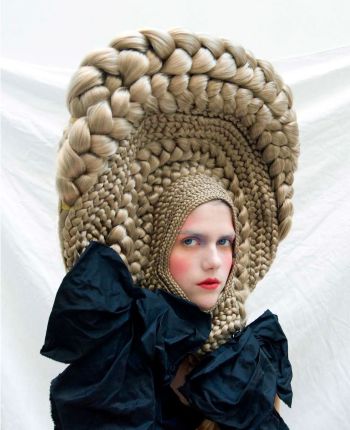
Marisol Suarez, Braided wig, © Katrin Backes.
Hair styling is an intimate act. Moreover, a well-born lady could not show herself in public with her hair down. A painting by Franz-Xaver Winterhalter, dated 1864, depicting Empress Sissi in a robe and with her hair untied, was strictly reserved for Franz Joseph’s private cabinet. Louis XIV, who became bald at a very young age, adopted the so-called ‘bright hair’ wig, which he then imposed on the court. In the 20th century, Andy Warhol had the same misfortune: the wig he wore to hide his baldness became an icon of the artist. Nowadays, hairpieces and wigs are used in high fashion, during fashion shows or, of course, to compensate for hair loss.
The natural hair colors and their symbolism are presented along with what they convey. Blonde is said to be the color of women and childhood. Red hair is attributed to sultry women, witches, and some famous stage women. As for black hair, it would betray the temperament of brown and brunettes. From the experimental colorations of the 19th century to the more certain dyes from the 1920s: artificial colors are not forgotten. The work of the hairdresser Alexis Ferrer who makes digital prints on real hair is also presented.
Trades and Skills
The exhibition reveals the different hair professions: barbers, barber-surgeons, hair stylists, wigmakers, ladies’ hairdressers, etc., through archival documents and a host of small objects: signs, tools, various products, and the astonishing perming machines and dryers of the 1920s.
In 1945, the creation of haute coiffure elevated the profession to the rank of an artistic discipline and a French savoir-faire. 20th-century hairdressing was marked by Guillaume, Antoine, Rosy and Maria Carita, and Alexandre de Paris styling princesses and celebrities. Nowadays, great hairstyling is mainly expressed during the fashion shows of prestigious fashion houses. Sam McKnight, Nicolas Jurnjack, and Charlie Le Mindu were invited to the exhibition to create extraordinary hairstyles for top models and show business personalities.
A Hairy Century
Finally, a special focus will allow us to evoke the iconic hairstyles of the 20th and 21st centuries: the 1900 chignon, the 1920s garçonne haircut, the 1930s permed and notched hair, the 1960s pixie and sauerkraut, the 1970s long hair, the 1980s voluminous hairstyles, the 1990s gradations and blond streaks, not to mention afro-textured hair.
The arrangement of hair in a particular form can reveal belonging to a group and manifest a political and cultural expression in opposition to society and the established order. More ideological than aesthetic, the Iroquois crest of the punks, the neglected hair of the grunges, or the shaved heads of the skinheads are strong moments of hair creativity.
Wearing the hair of another, known or unknown, has an eerie dimension, and this superstition seems well-entrenched. Despite these apprehensions, some creators choose to transcend this familiar material into fashion objects. This is the case of contemporary designers such as Martin Margiela, Josephus Thimister, and Jeanne Vicerial. The question of identity, treated lightly or more deeply, is often at the heart of the reasoning, whether the hair is real or fake.
Presented in the Christine & Stephen A. Schwarzman’s fashion galleries of the Musée des Arts Décoratifs, the exhibition is curated by Denis Bruna, Curator in Chief, Fashion and Textile Department, Collections before 1800. The scenography is by David Lebreton of the Designers Unit agency. The Musée des Arts Décoratifs has benefited from exceptional loans from the Château de Versailles, the Musée des Beaux-Arts d’Orléans, the Musée du Louvre and the Musée d’Orsay.
Denis Bruna, ed., Des cheveux et des poils (Paris: Les Arts Décoratifs, 2023), 288 pages, ISBN: 978-2383140139, €55. With contributions by Marie Brimicombe, Denis Bruna, Yanis Cambon, Astrid Castres, Pierre-Jean Desemerie, Ana Escobar Saavedra, Saga Esedín Rojo, Louise Guillot, Guillaume Herrou, César Imbert, Sophie Lemahieu, Maëva Le Petit, Aurore Mariage, Anne-Cécile Moheng, Sophie Motsch, Marie Olivier, Dominique Prevôt, Hélène Renaudin, Raphaël Sagodira, and Bastien Salva.
◊ ◊ ◊ ◊ ◊
Diane Pernet provides a useful summary with lots of images and an interview with Denis Bruna here»
◊ ◊ ◊ ◊ ◊
Note (added 11 August 2023) — Rosa Lyster reviewed the show for The NY Times: “Big Hair and Big Thoughts at a Paris Museum,” The New York Times (28 July 2023). An exhibition with over 600 items explores the evolution of women’s hairstyles, questions around body hair, and more. But hair is never just hair.
Exhibition | Doucet and Camondo: A Passion for the 18th Century
Now on view at the Musée Nissim de Camondo:
Doucet et Camondo: une passion pour le XVIIIe siècle
Musée Nissim de Camondo, Paris, 16 March — 3 September 2023
Curated by Juliette Trey
 Between 1906 and 1912, the celebrated couturier and great patron of the arts, Jacques Doucet (1853–1929), lived in an hôtel particulier built especially to house his collection of 18th-century art on the Rue Spontini in the 6th arrondissement of Paris. Drawings held a particularly important place in it. The exhibition Doucet et Camondo: une passion pour le XVIIIe siècle evokes the mansion through the watercolors done by the decorator Adrien Karbowsky (1855–1945) and forges the link between Doucet and Moïse de Camondo (1860–1935), who purchased some of the items in his collection from Doucet.
Les Arts Décoratifs et l’Institut national d’histoire de l’art (INHA) présentent, au musée Nissim de Camondo, une exposition consacrée à la riche collection d’œuvres d’art du XVIIIe siècle constituée par Jacques Doucet. Célèbre couturier et grand mécène, Jacques Doucet (1853–1929) est aussi l’un des plus importants collectionneurs de son temps. Une sélection de dessins, photographies et documents d’archives conservés à l’INHA retrace l’histoire de ce prestigieux patrimoine. L’exposition dévoile les décors éphémères de l’hôtel particulier situé rue Spontini dans le XVIe arrondissement que Doucet fait spécialement édifier pour accueillir cet ensemble de tableaux, dessins, sculptures, meubles et objets d’art du XVIIIe siècle. Elle met en lumière les œuvres ayant appartenu à Jacques Doucet, conservées notamment au musée Nissim de Camondo, ancien hôtel particulier de Moïse de Camondo, tissant ainsi le lien entre ces deux grands collectionneurs.
More information is available here»
Juliette Trey, Jacques Doucet et Moïse de Camondo: Une Passion pour le XVIIIe Siècle (Paris: Les Arts Décoratifs / INHA, 2023), 48 pages, €12.
Exhibition | The Sassoons
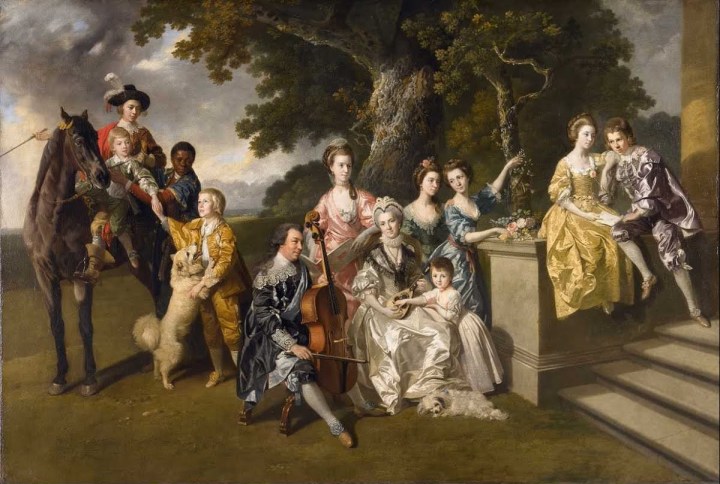
Johan Zoffany, The Family of Sir William Young, 1767–69, oil on canvas; 45 × 66 inches (National Museums Liverpool, Walker Art Gallery). Formerly in the Philip Sassoon Collection.
◊ ◊ ◊ ◊ ◊
From the press release (17 November 2022) for the exhibition:
The Sassoons
The Jewish Museum, New York, 3 March — 13 August 2023
Organized by Claudia Nahson and Esther da Costa
The Jewish Museum presents The Sassoons, an exhibition that reveals the fascinating story of a remarkable Jewish family, highlighting their pioneering role in trade, art collecting, architectural patronage, and civic engagement from the early 19th century through World War II. The exhibition follows four generations from Iraq to India, China, and England, featuring a rich selection of works collected by family members over time.
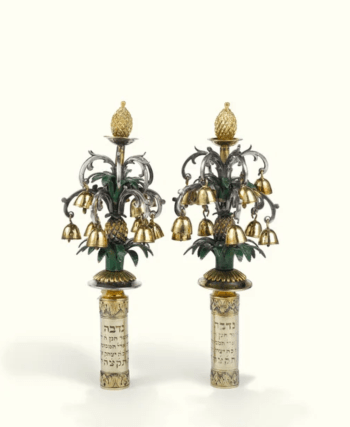
Torah finials, England, probably London, 1804, dedicated in 1834/35 (Hebrew inscription date), silver parcel gilt, and enamel, 6 inches (Collection of Jane and Stuart Weitzman). Formerly in the Reuben and Flora Sassoon Collections.
Over 120 works—paintings, Chinese art, illuminated manuscripts, and Judaica—amassed by Sassoon family members and borrowed from numerous private and public collections are on view. Highlights include Hebrew manuscripts from as early as the 12th century, many lavishly decorated; Chinese art and ivory carvings; rare Jewish ceremonial art; and Western masterpieces including paintings by Thomas Gainsborough and Jean-Baptiste-Camille Corot, and magnificent portraits by John Singer Sargent of various Sassoon family members. The Sassoons explores themes such as discrimination, diaspora, colonialism, global trade, and war that not only shaped the history of the family but continue to define our world today.
The exhibition narrative begins in the early 1830s when David Sassoon, the patriarch of the family, was forced to leave his native Baghdad due to the increasing persecution of the city’s Jewish population. Establishing himself in Mumbai (then Bombay) and initially involved in the cotton trade, his vision led the family from Iraq to India, China, and finally England where his descendants gradually settled over the decades. His activities soon grew to include the opium trade, which had escalated after the collapse of the East India Company in the mid-19th century, ending its monopoly and allowing private companies to engage in this profitable enterprise. He aligned with and benefitted from British colonial interests soon extending his business to China and England by deploying his eight sons to oversee new branches in Shanghai, Hong Kong, and London.
Although less known, the Sassoon women were discerning collectors. The exhibition will pay special attention to these unsung patrons of art. Rachel Sassoon Beer became the first woman in Britain to edit two newspapers, The Sunday Times and The Observer, and played a crucial role reporting on the Dreyfus affair in Britain. Her painting collection, sold at auction in 1927, listed, among other great works, one drawing and 15 paintings by Corot, a Constable, and a Peter Paul Rubens. Of a younger generation, Hannah Gubbay, a Sassoon on both her father’s and her mother’s side, was a major collector of 18th-century art, furniture, and porcelain, as was her cousin, Mozelle Sassoon.
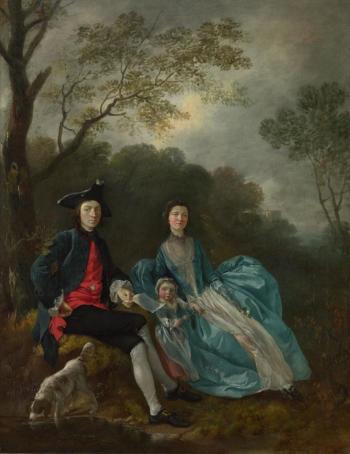
Thomas Gainsborough, Portrait of the Artist with His Wife and Daughter, ca. 1748, oil on canvas, 36 × 28 inches (London: National Gallery; acquired under the acceptance-in-lieu scheme at the wish of Sybil, Marchioness of Cholmondeley, in memory of her brother, Sir Philip Sassoon, 1994). Formerly in the Philip Sassoon Collection.
The exhibition also highlights the distinguished properties of the Sassoons in the United Kingdom. A Member of Parliament for the Conservative Party, Sir Philip Sassoon made active use of his three great residences, Park Lane (now destroyed) and Trent Park in London, and Port Lympne in Kent. Surrounded by landscaped gardens (in the case of Trent Park and Port Lympne) and filled with priceless works of art, all three were used by the government for high-profile cabinet meetings and receptions of foreign dignitaries and celebrities. Paintings of Port Lympne by Sir Winston Churchill, a frequent visitor, are featured.
The last section of the exhibition focuses on the service of a younger generation of Sassoons in the First World War. Sir Victor Sassoon served in the Royal Flying Corps, barely surviving an airplane crash that left him permanently disabled. Sir Philip Sassoon, private secretary to Field Marshal Douglas Haig, recruited his artist friends including John Singer Sargent to cover the war, and several of these works will be on display. A very different war is experienced through the poetry of Siegfried Sassoon. Though a brave and much decorated soldier, his graphic and shocking portrayal of the trenches and fierce criticism of the establishment were emblematic of a generation scarred by war’s brutality. Some of the journals he wrote and illustrated during battle, including his famous anti-war statement, will be on view.
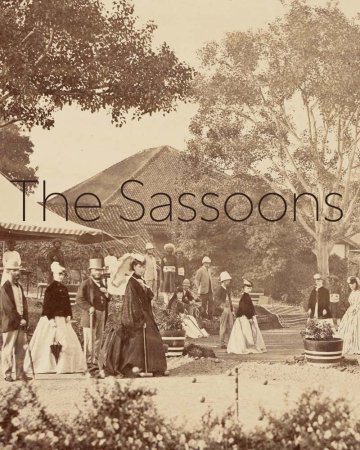 During the Second World War, some 18,000 Jewish refugees arrived in Shanghai fleeing Nazi Europe. They were able to survive the war thanks to the money raised by members of the Baghdadi Jewish community who resided in the city at the time. Prominent among them was Sir Victor Sassoon who donated considerable funds and placed several buildings at the disposal of the International Committee for European Immigrants.
Numerous private and public collections have contributed loans to the exhibition including His Majesty King Charles III, the British Museum, the National Gallery of London, the National Trust of Britain, the Tate, the Victoria & Albert Museum, the British Library, the Houghton Hall Collection, the Cambridge University Library, the Fitzwilliam Museum, the National Gallery of Ireland, the Israel Museum, the Metropolitan Museum of Art, the Museum of Fine Arts Boston, the Cleveland Museum of Art, and the Yale Center for British Art.
The Sassoons is organized by Claudia Nahson, Morris and Eva Feld Senior Curator at the Jewish Museum, New York, and Esther da Costa Meyer, Professor Emerita at Princeton University. The exhibition design is by Leslie Gill and Adam Johnston, Leslie Gill Architect; graphic design by Miko McGinty.
Esther da Costa Meyer and Claudia J. Nahson, The Sassoons (New Haven: Yale University Press, 2023), 256 pages, ISBN: 978-0300264302, $60.
The Burlington Magazine, March 2023
The eighteenth century in the March issue of The Burlington . . .
The Burlington Magazine 165 (March 2023)
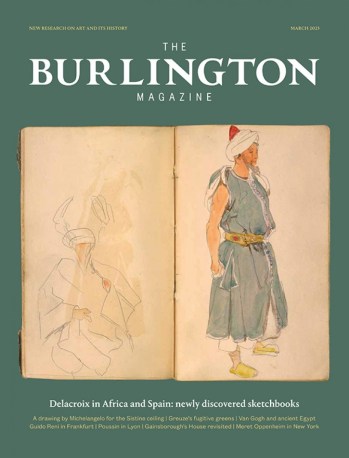 E D I T O R I A L
• “Omai,” p. 219.
Given his undisputed central place in the history of British art, it is surprising that the three-hundredth anniversary of the birth of Joshua Reynolds is not being celebrated this year with more éclat. The principal tribute will be an exhibition Reframing Reynolds: A Celebration (24 June – 29 October 2023) at the Box in Plymouth, the city where Reynolds made his reputation—he was born on 16th July 1723 at Plympton, on its outskirts. The exhibition will explore the patronage he enjoyed from the Eliot family of Port Eliot, St Germans, and will be supplemented by the museum’s collection of paintings by Reynolds, the largest outside London.
Reynolds’s reputation rests largely on his portraits, so it might have been expected that the museum that contains the largest number, the National Portrait Gallery, London (NPG), would have marked the occasion with an exhibition of its own, but given that it has been closed for the past three years for a comprehensive redevelopment and redisplay, due to be unveiled on 22nd June, it has had other priorities. Yet any disappointment that the NPG is neglecting Reynolds in his anniversary year was allayed by the announcement last August that it is seeking to raise £50 million to acquire one of his greatest paintings, the full-length portrait of Omai, the first Polynesian to visit Britain. Universally praised ever since it was first seen in public, at the Royal Academy of Arts in 1776, it is a work both of great beauty and of compelling historic interest as a document of the earliest European encounter with Pacific cultures. . . Keep reading here»
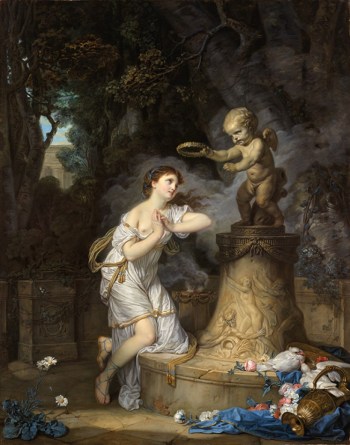
Jean-Baptiste Greuze, A Young Woman Praying at the Altar of Love (Votive Offering to Cupid), 1767, oil on canvas, 146 × 113 cm (London: The Wallace Collection).
A R T I C L E S
• Yuriko Jackall, Barbara H. Berrie, John K. Delaney, and Michael Swicklik, “Greuze’s Greens: Ephemeral Colours, Classical Ambitions,” pp. 268–79.
Jean-Baptiste Greuze was criticized in his lifetime for the unduly muted palette of some of his paintings. New technical analysis, combined with the recent discovery of a list in his handwriting of pigments he used, has revealed that his greens have faded because they incorporate fugitive yellow lakes, a practice Greuze continued even after its disadvantages were obvious.
R E V I E W S
• Roko Rumora, Review of the exhibition Chroma: Ancient Sculpture in Color (The Metropolitan Museum of Art, 2022–23), pp. 312–15.
• Desmond Shawe-Taylor, Review of the newly opened, expanded Gainsborough’s House (Sudbury), pp. 322–25.
• Friso Lammertse, Review of the newly renovated Royal Museum of Fine Arts, Antwerp (KMSKA), pp. 332–35.
• Simon Swynfen Jervis, Review of Jean-Pierre Fournet, Cuirs dorés, ‘Cuirs de Cordoue’: un art européen (Éditions d’art Monelle Hayot, 2019), pp. 342–43.
• Gauvin Alexander Bailey, Review of Aaron Hyman, Rubens in Repeat: The Logic of the Copy in Colonial Latin America (Getty Research Institute, 2021), pp. 343–44.
• Stephen Bann, Review of Joanthan Ribner, Loss in French Romantic Art, Literature, and Politics (Routledge, 2022), pp. 344–45.
• Charlotte Gere, Review of Julius Bryant, Enriching the V&A: A Collection of Collections, 1862–1914 (Lund Humphries and V&A Publishing, 2022), pp. 345–46.
• Jennifer Johnson, Review of Sam Rose, Interpreting Art (UCL Press, 2022), p. 350.
Symposium | Spain and the Hispanic World

Giovanni Vespucci, World Map, 1526, ink and colour on four sheets of parchment, 85 × 262 cm
(New York: The Hispanic Society of America)
◊ ◊ ◊ ◊ ◊
This week at the RA, in connection with the exhibition Spain and the Hispanic World, on view until 10 April 2023:
Spain and the Hispanic World Symposium: Cross-Cultural Exchanges
Royal Academy of Arts, London, 24 March 2023
The Royal Academy of Arts will host an academic symposium exploring the global exchange of Spanish art and culture—from the Islamic legacy of Al-Andalus to the transatlantic connections between Spain and Latin America. This interdisciplinary symposium, timed to coincide with our exhibition of treasures from the Hispanic Society Museum & Library, explores current academic perspectives on the histories of cultural exchange surrounding the Spanish and Latin American worlds.
We begin by considering material cultures through the movement of objects, tracing global exchange in the contexts of empire and colonialism. We move on to consider global imperialism through the lens of faith, studying religious art and objects. From the society of Al-Andalus to the history of Spanish Catholicism in Mexico, we look beyond the export of Spanish culture, to the influences and exchanges that were simultaneously being brought back into Iberia. Finally, we explore the legacies of Spanish art and literature in Latin America, investigating the layers of cultural difference caused by colonialism, as well as using a materials-based approach to investigate how these layers appear in objects and artworks. The symposium concludes with an artist in-conversation with Ana Maria Pachecho, exploring how the themes and ideas discussed throughout the day are still relevant to contemporary artist practice.
This intensive one-day symposium is a key moment in driving forward conversations and discussions on the art of the Latin world and is open to scholars, enthusiasts, and anyone wanting to know more about this groundbreaking exhibition. Ticket fees (£45 / £15) include exclusive early-morning access to the RA’s exhibition Spain and the Hispanic World starting at 8:30am and a drinks reception at 6:00pm.
This will be the first iteration of an annual symposium made possible by the Armando Garza-Sada Sr. Endowment for the Arts.
S P E A K E R S
Andrew M. Beresford is Professor of Medieval and Renaissance Studies at the University of Durham, and has published widely on Iberian art and literature, focusing principally on the cults of the saints and the signifying potential of the human body. His most recent book (2020) offered a study of the flaying of St Bartholomew.
Caroline Egan is Assistant Professor of Colonial Latin American Literature in the Department of Spanish and Portuguese at Northwestern University. Her research examines the portrayal of Indigenous languages in the sixteenth and seventeenth centuries, focusing especially on works composed in and about Nahuatl, Quechua, and Tupi and their circulation in the transatlantic world. Dr Egan has published in the Bulletin of Hispanic Studies, Hispanic Review, and Latin American Literature in Transition Pre-1492-1800, edited by Rocío Quispe-Agnoli and Amber Brian (Cambridge University Press).
Akemi Luisa Herráez Vossbrink is a Researcher at Nicolás Cortés Gallery in Madrid, an Old Master gallery focusing on Spanish, Italian, and Latin American art from the fifteenth century to the early twentieth century. She has been the Enriqueta Harris Frankfort Curatorial Fellow at the Wallace Collection, as well as a curatorial fellow at the National Gallery and the Meadows Museum. Her doctoral thesis at Cambridge focused on Spanish seventeenth-century artist Francisco de Zurbarán and his reception in the Americas.
Claudia Hopkins is Director of the Zurbarán Centre for Spanish and Latin American Art at Durham University, and Associate Editor of the Getty-funded journal Art in Translation. She has published widely on nineteenth- and twentieth-century Spanish art and curated the exhibition La España romántica. David Roberts y Genaro Pérez Villaamil (Real Academia de Bellas Artes de San Fernando, Madrid, 2021–22). Her forthcoming book discusses Spanish art in relation to attitudes to al-Andalus and Morocco (from Romantic liberalism in the 1830s, to colonial discourse before Moroccan independence in 1956).
IIona Katzew is Curator and Department Head of Latin American Art at the Los Angeles County Museum of Art (LACMA). Her most recent exhibition Archive of the World: Art and Imagination in Spanish America, 1500–1800 (2022) foregrounds the museum’s notable holdings of viceregal art. She was project director and co-curator of Painted in Mexico, 1700–1790: Pinxit Mexici (2017–18), which travelled to the Metropolitan Museum of Art and Fomento Cultural Banamex, Mexico City. She holds fellowships from the Metropolitan Museum of Art, the Getty, and Fulbright. In 2018 she was selected by Artsy as one of the top 20 international curators taking a cutting-edge approach to art history.
Emmanuel Ortega is the Marilynn Thoma Scholar and Assistant Professor in Art of the Spanish Americas at the University of Illinois at Chicago, and a Scholar in Residence at the Newberry Library for 2022–23. Ortega has lectured internationally on images of autos-de-fe, nineteenth-century Mexican landscape painting, and visual representations of the New Mexico Pueblo peoples in Novohispanic Franciscan martyr paintings. Ortega has curated the exhibition Contemporary Ex-Votos: Devotion Beyond Medium, at the New Mexico State University Art Museum.
Adjoa Osei is a Research Fellow at Trinity College, University of Cambridge. She is a cultural historian whose research explores themes that are at the intersection of Performing Arts, Afro-Latin American Studies, and Francophone Studies. Her PhD, from the University of Liverpool, was in Latin American Studies, and her MPhil, from the University of Oxford, was in Portuguese Studies. Her research has been published in journals including Atlantic Studies and the Journal of Romance Studies, and she is a BBC New Generation Thinker.
Gabriela Siracusano is Scientific Researcher at CONICET (National Research Council, Argentina) and Director of the Centro MATERIA at the Universidad Nacional de Tres de Febrero (UNTREF), as well as Chair Professor at the Universidad de Buenos Aires. She has been a Guggenheim Fellow and a Getty Scholar, and has authored books including Pigments and Power in the Andes (London, Archetype, 2011) and Materia Americana (2020) (in co-edition with Agustina R. Romero). She received the 2022 Gratia Artis Award by the National Academy of Fine Arts.
Lucy West is Assistant Curator at Dulwich Picture Gallery, where her focus is on the Spanish and Italian paintings. She was previously Assistant Curator of Paintings at the Royal Collection Trust, London, and has worked across curatorial departments at the Ferens Art Gallery, Hull; the National Gallery, London; and Compton Verney, Warwickshire. Lucy is also completing an AHRC-funded PhD with the National Gallery, the Bowes Museum, and Leeds University, interrogating the roles of art dealers and agents in the market for Old Master paintings in nineteenth-century Britain.
Ana Maria Pachecho is a Brazilian artist who has lived in England since 1973. Pacheco is best known for her dramatic polychrome wooden sculptures. Her work draws upon the rich diversity of Latin American culture with echoes of African art, a reminder of the slave trade’s links with Brazil. She was the National Gallery’s Associate Artist between 1997 and 2000, when she produced the monumental multi-figured sculpture Dark Night of the Soul, inspired by the work of the sixteenth-century Spanish mystic, Saint John of the Cross. Her work has been shown in Cathedrals at Chichester, Norwich, and Salisbury, and most recently at the Galway International Arts Festival in 2022.
Colin Wiggins was Head of Education and Special Projects Curator at the National Gallery. He was responsible for the Associate Artist scheme and worked with artists such as Paula Rego, Peter Blake, and Michael Landy.
Print Quarterly, March 2023
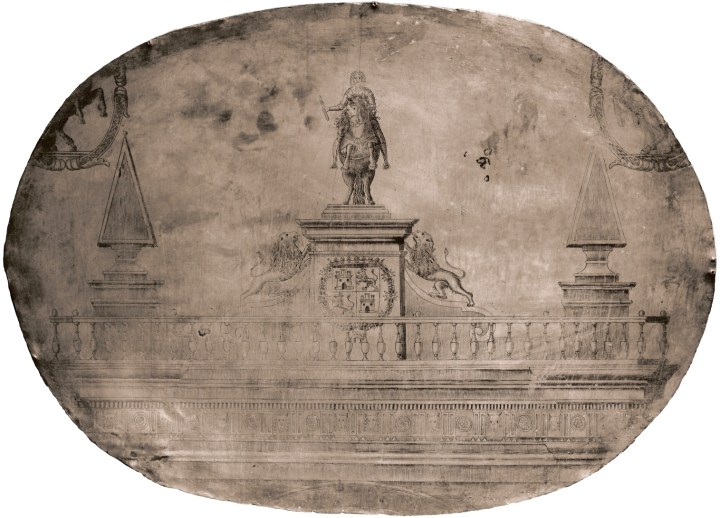
Juan Francisco Rosa, Equestrian Monument to Philip V, ca. 1738–45, engraved copper-plate, 26 × 36 cm (Chicago: Carl and Marilynn Thoma Foundation). The plate was cut into an oval, likely from what was originally a rectangle, and used as a support for an oil painting; on the other side is The Christ Child with St Joseph.
◊ ◊ ◊ ◊ ◊
The long eighteenth century in the latest issue of Print Quarterly:
Print Quarterly 40.1 (March 2023)
A R T I C L E S
• Emily C. Floyd with Suzanne Stratton-Pruitt, “Juan Francisco Rosa: Engraver to the Elite in Eighteenth-Century Lima,” pp. 33–51.
This article explores the life and works of the limeño engraver Juan Francisco Rosa (active in Lima, Peru, 1735–1756), with in-depth discussions pertaining to popular themes in his prints, patrons and contributions to the historic documentation of events and lost works in Lima. It adds two remarkable works to his oeuvre—a copperplate, now cut in two, and an illumination associated with a patent of nobility. The plate documents a famous statue of Philip V that was placed in 1738 on the bridge over the river Rímac and soon destroyed in the 1746 earthquake. The article demonstrates that Rosa produced important commissions for powerful organizations and individuals in the viceregal hierarchy, suggesting his prominence as an artist in mid-eighteenth-century Lima.
N O T E S A N D R E V I E W S
• Antony Griffiths, “Altered Plates,” pp. 63–66. Drawing attention to an anecdote in a 1726 biography of the London publisher, newspaper editor, and controversialist Abel Roper, this note charts the chronology of an altered plate by William van de Passe depicting the Duke of Buckingham on horseback in the first state, published 1625. The plate was then modified around 1630/32 in the second state to represent James, 1st Duke of Hamilton, before being transformed again in the third state of 1654–58 to portray Oliver Cromwell as Lord Protector. The plate is documented to have been subjected to a fourth “very profitable” change, altered to portray William III, though no impression has yet been found.

Romeyn de Hooghe, Les Monarches Tombants (James II falls off the back of a unicorn at left, Louis XIV on a globe at right, while William III is raised on a shield in the background), 1689, etching, sheet includes letterpress text below the image (Amsterdam: Rijksmuseum).
• Peter van der Coelen, Review of Meredith McNeill Hale, The Birth of Modern Political Satire: Romeyn de Hooghe (1645–1708) and the Glorious Revolution (Oxford University Press, 2020), pp. 66–68. Peter van der Coelen is persuaded by Hale’s argument that the satires De Hooghe produced between 1688 and 1690 were decisive for the development of political satire as a genre and that the birth of the genre should therefore be located not in eighteenth-century England but in the Dutch Republic of the late seventeenth century.
• Helmut Gier, Review of Eckhard Leuschner and Friedrich Polleross, eds., “Der Augsburger Kupferstecher und Verleger Johann Ulrich Kraus (1655–1719),” in Frühneuzeit-Info 32 (2021), pp. 68–71. A review of nine conference papers addressing Johann Ulrich Kraus, one of whose most important contributions to the history of art was the reception and dissemination in central Europe of the art favoured at the court of Louis XIV.
• Stephen Salel, Review of Timothy Clark, Hokusai: The Great Picture Book of Everything (British Museum Press, 2021), pp. 71–73.
• Janis A. Tomlinson, Review of the exhibition catalogue, Véronique Gerard, ed., Goya: Génie d’Avant-Garde. Le Maître et son École (Musée des Beaux-Arts and Éditions Snoeck, 2020), and “Goya peintre,” in Technè 53 (2022), pp. 73–75. Did Goya have a workshop? Whereas Goya’s prints seem to be a well-defined body of work, whose technique has been well-studied, as have their preparatory drawings and visual and historical sources, the paintings are another matter. Imitations, copies and forgeries began to circulate within a decade of Goya’s death and continue to complicate our understanding of his oeuvre. . . [These] two contributions . . . address some of these questions in very different ways.
• Heather Hyde Minor, Review of Ginevra Mariani, ed., Giambattista Piranesi: Matrici incise 1743–1753 (Edizioni Gabriele Mazzotta, 2010); Giambattista Piranesi: Matrici incise 1756–1757. Le Antichità Romane Lettere di giustificazione 2 (Edizioni Gabriele Mazzotta, 2014); Giambattista Piranesi: Matrici incise 1761–1765 (Editalia, 2017); and Giambattista Piranesi: Matrici incise 1762–1769 (De Luca Editori d’arte, 2020), pp. 102–06. This review explores the four-volume series of publications dedicated to cataloguing and discussing the 964 autograph printing plates by Giovanni Battista Piranesi in the collection of the Istituto Centrale per la Grafica in Rome. Further Matrici incise volumes are expected to be published in due course.
• Roger Kneebone, Review of the exhibition catalogue, Monique Kornell, ed., Flesh and Bones: The Art of Anatomy (Getty Research Institute, 2022), pp. 106–11. This review highlights the complex intersections between artists, engravers, anatomists and clinicians over four centuries. Worthy of note are the ways multiple perspectives from different kinds of parties informed the appearance of anatomical illustrations depending on their purpose and audience, resulting in images that were not always neutral in their ‘factual’ representations.
Exhibition | Claude Gillot: Satire in the Age of Reason

Claude Gillot, Scene of the Two Carriages / Les Deux carrosses, ca. 1710–12, oil on canvas, 127 × 160 cm
(Paris: Musée du Louvre, RF2405)
◊ ◊ ◊ ◊ ◊
Now on view at The Morgan:
Claude Gillot: Satire in the Age of Reason
The Morgan Library & Museum, New York, 24 February — 28 May 2023
Curated by Jennifer Tonkovich
Around 1700, as an increasingly pious Louis XIV withdrew to Versailles, Paris flourished. The dynamic artistic scene included specialists such as Claude Gillot (1673–1722) who forged a career largely outside of the Royal Academy, designing everything from opera costumes to tapestries.
 Known primarily as a draftsman, Gillot specialized in scenes of satire. He found his subjects among the irreverent commedia dell’arte performances at fairground theaters, in the writings of satirists who waged the Quarrel of the Ancients and Moderns, and in the antics of vice-ridden satyrs whose bacchanals exposed human folly. Gillot’s amusing critiques and rational perspective heralded the advent of the Age of Reason while his innovative approach attracted the most talented artists of the next generation, Antoine Watteau and Nicolas Lancret, to his studio.
With over seventy drawings, prints, and paintings, including an exceptional contingent from the Louvre, Claude Gillot: Satire in the Age of Reason explores the artist’s inventive and highly original draftsmanship and places his work in the context of the artistic and intellectual activity in Paris at the dawn of a new century.
The catalogue accompanying the exhibition, published by Paul Holberton, will provide the first comprehensive account of Gillot’s career.
Jennifer Tonkovich, Claude Gillot: Satire in the Age of Reason (London: Paul Holberton, 2023), 240 pages, ISBN: 978-1913645373, $60.










leave a comment