Exhibition | The Grand Dauphin (1661–1711)
Now on view at Versailles:
The Grand Dauphin (1661–1711): Son of a King, Father of a King, but Never a King
Château de Versailles, 14 October 2025 — 15 February 2026
Curated by Lionel Arsac and Lorène Legrand
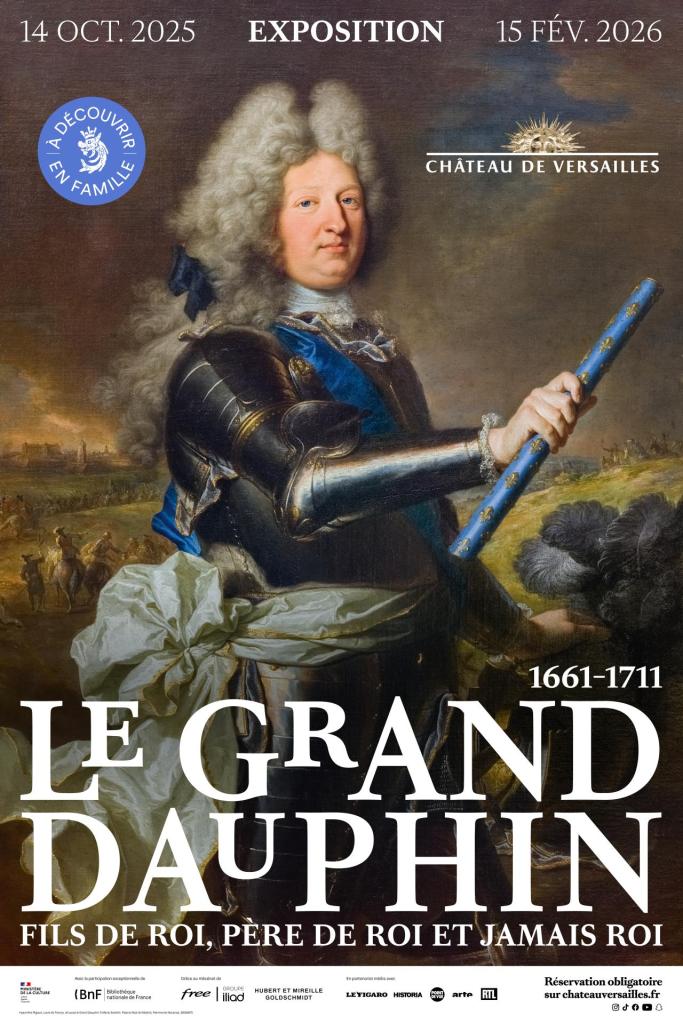 The Palace of Versailles is presenting an exhibition devoted to the Grand Dauphin, Louis de France, the eldest child of Louis XIV. It traces the life of this often overlooked prince through nearly 250 works from French and international collections. As heir to the throne, he was the focal point of Bourbon dynastic ambitions, without ever reigning, but his education, residences, and taste for the arts reflect the destiny which was his due.
Born in 1661 at the château de Fontainebleau, Louis de France was the first son of Louis XIV and Maria Theresa of Spain. During his lifetime as Dauphin, he was called ‘Monseigneur’ but was given the name ‘Grand Dauphin’ after his death in 1711, to distinguish him from his son, the Duke of Burgundy.
This heir to the crown died prematurely of smallpox in April 1711 at the château de Meudon, four years before his father. His eldest son, the Duke of Burgundy, died a year later, leaving behind two children. The eldest child, the two-year-old Duke of Anjou, became the dauphin and acceded to the throne in 1715 after the death of Louis XIV under the name Louis XV. Although the Grand Dauphin did not reign, he remains a key figure in the Bourbon dynasty: grandfather to Louis XV, great-great-grandfather to Louis XVI, Louis XVIII and Charles X, and father of Philip V, first sovereign of the Spanish branch of the Bourbons, which still reigns to this day.
The Grand Dauphin’s entire life was spent preparing to be king, and he received a rigorous education in the arts, war, and government. His life was summed up by Saint-Simon in the famous formula: “Son of a king, father of a king, but never a king.” It embodies the paradox of a prince who was trained to rule, but was never crowned.
Aside from his political duties, the Grand Dauphin also developed a keen taste for the arts and the pleasures of the court. He was an avid collector and assembled a large number of works of art, some of which will be exhibited for the first time due to exceptional loans, notably from the Prado Museum in Madrid.
The exhibition, created with the exceptional participation of the BnF Museum, turns the spotlight on what it meant to be the Dauphin of France under the Ancien Régime by retracing the major stages of the life of the Grand Dauphin. It is presented in three sections mirroring Saint Simon’s formula, and explores his education as a prince, his life at court, and his involvement in affairs of state.
Lionel Arsac and Lorène Legrand, eds., Le Grand Dauphin: Fils de Roi, Père de Roi et Jamais Roi (Dijon: Éditions Faton, 2025), 472 pages, ISBN: 978-2878444087, €54.
Exhibition | Turner & Constable
Opening soon at Tate Britain:
Turner & Constable: Rivals and Originals
Tate Britain, London, 27 November 2025 — 12 April 2026
Curated by Amy Concannon, with Nicole Cochrane and Bethany Husband
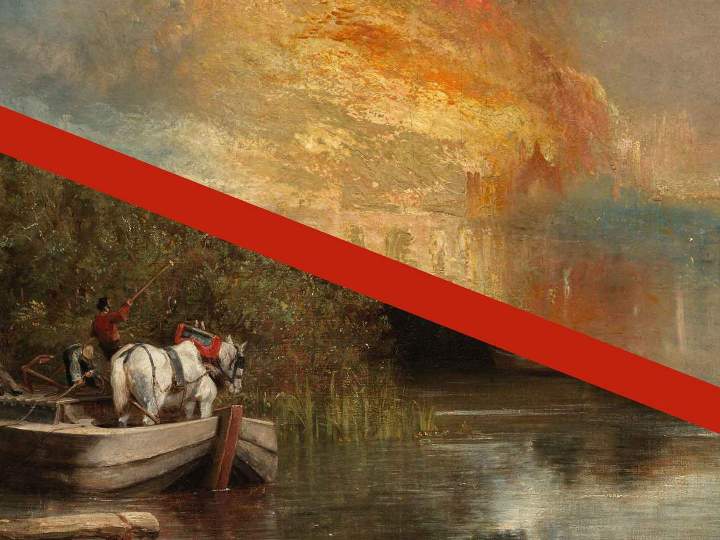 The definitive exhibition of two pivotal British artists in the 250th year of their births
Two of Britain’s greatest painters, J.M.W. Turner and John Constable were also the greatest of rivals. Born within a year of each other—Turner in 1775, Constable in 1776—the art critics of the day compared their paintings to a clash of ‘fire and water’.
Raised in the gritty heart of Georgian London, Turner quickly became a young star of the art world despite his humble beginnings. Meanwhile Constable, the son of a wealthy Suffolk merchant, was equally determined to forge his own path as an artist but faced a longer, more arduous rise to acclaim. Though from different worlds, both artists were united in their desire to transform landscape painting for the better.
With the two painters vying for success through very different but equally bold approaches, the scene was soon set for a heady rivalry within the competitive world of landscape art. Turner painted blazing sunsets and sublime scenes from his travels, while Constable often returned to depictions of a handful of beloved places, striving for freshness and authenticity in his portrayal of nature.
Marking 250 years since their births, this landmark exhibition explores Turner and Constable’s intertwined lives and legacies. Discover unexpected sides to both artists alongside intimate insights seen through sketchbooks and personal items. Experience many of the artists’ greatest works, with over 170 paintings and works on paper. Highlights include Turner’s momentous 1835 The Burning of the Houses of Lords and Commons, not seen in Britain for over a century and The White Horse 1819, one of Constable’s greatest artistic achievements. This is a one in a lifetime opportunity to explore the careers of the two greatest British landscape painters, seen—as they often were in their own time—side by side.
Amy Concannon, ed., Turner and Constable: Rivals and Originals (London: Tate Publishing, 2025), 240 pages, ISBN: 978-1849769853, £32. With additional contributions from Thomas Ardill, Nicole Cochrane, Sarah Gould, Katharine Martin, Nicola Moorby, Nick Robbins, Emma Roodhouse, and Joyce Townsend.
Exhibition | Enlightenment Princess: Marie Catherine de Brignole-Sale
Now on view at Chantilly:
From Monaco to Chantilly, A Princess of the Enlightenment in Search of Freedom
Château de Chantilly, 18 October 2025 — 4 January 2026
Curated by Mathieu Deldicque and Thomas Fouilleron
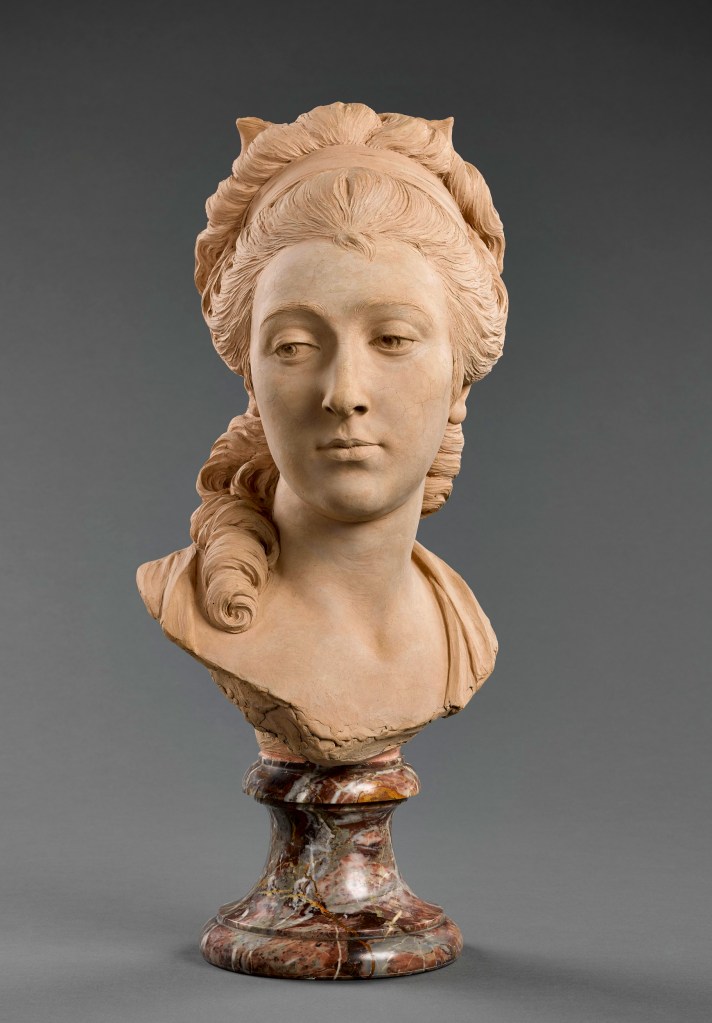
Claude Dejoux, The Princess of Monaco (Marie Catherine de Brignole-Sale), 1783, terracotta (Paris: Musée du Louvre).
Following the 2024 exhibition on the romantic destiny of Louise d’Orléans, the first Queen of the Belgians, the Musée Condé now turns its attention to another little-known yet remarkable woman who left a lasting mark on its history: Marie Catherine de Brignole-Sale, Princess of Monaco and later Princess of Condé (1739–1813). Thanks to an ambitious partnership with the Princely Palace of Monaco, this landmark exhibition, a collaborative research project involving the archives of the palace and those of the Condé Museum, sheds new light on the romantic life and artistic patronage of an extraordinary figure whose influence spanned the Age of Enlightenment and the French Revolution.
The Princess from the Sea
Born in Genoa on 16 September 1738, the only daughter of the Marquis of Brignole-Sale and a doge’s niece, Marie Catherine came from one of the most powerful families in this influential Mediterranean republic. Raised in Paris, she was celebrated as “the prettiest woman in France” and soon caught the attention of Prince Honoré III of Monaco (1720–1795). Though significantly older and initially hoping for a more prestigious match within the French nobility, the Prince ultimately opted for a less exalted but more financially advantageous alliance. After the sumptuous wedding on 15 June 1757, which was fraught with formal tensions, the new, young Princess of Monaco lived up to expectations by giving birth to two little princes. She is a regular at Parisian salons and confidently navigates the Hôtel de Matignon, the royal couple’s Parisian residence. The collections from the Prince’s Palace of Monaco will allow visitors to relive the splendour of Monaco and admire, among other treasures, dynastic portraits exceptionally leaving the palace walls to be exhibited at Chantilly.
A Resounding Split
The marriage did not last. Marie Catherine’s growing boredom, persistent rumours of an affair with the Prince of Condé, her refusal to move to Monaco, and the jealous nature of Honoré III, along with accounts of his mistreatment, gradually led to a deepening crisis. This culminated in the princess petitioning the Parliament of Paris for a legal separation of property and person. Swayed by the influence of the Prince of Condé, the court ruled in her favour on 31 December 1770.
Love and Friendship: The Princess of Monaco and the Prince of Condé
From then on, the Princess of Monaco was emancipated. As a reader of the philosophers of the Enlightenment, she existed in her own right and was free to live out her passions alongside her dear friend, Louis Joseph de Bourbon, Prince de Condé (1736–1818), whom she never left. In Paris, near the Palais Bourbon, which the Prince had expanded at great cost as a reflection of his love for the princess, architect Alexandre Brongniart designed the Hôtel de Monaco for the Princess in the 1770s. Though the residence was destroyed during the Revolution, it was later rebuilt and has housed the Polish Embassy since 1937. Brongniart’s monumental architectural plans reflect the ambition of a princess who was both builder and patron, offering a glimpse into the refined interiors she envisioned.
The Betz Refuge of a Woman of the Enlightenment
Not far from Chantilly, but still at somewhat of a distance, Marie Catherine chose the Château de Betz (now Crépy-en-Valois in the Oise department) as the ultimate refuge and expression of her personal preferences. There, echoing what the Prince of Condé envisioned at the Palais Bourbon and at Chantilly, she championed a new Rousseau-inspired taste: a return to nature and the rise of English-style gardens. At the same time, she embraced the latest Asian exotic trends and supported the early stirrings of a neo-medieval aesthetic destined for a brilliant future. They were surrounded by some of the most innovative and gifted architects, sculptors, landscape designers, painters, and draughtsmen of the final years of the Ancien Régime. From one Temple of Friendship to another, the emotions shared by this aesthetically minded couple were immortalised in stone, marble, and plaster by artists such as Jean-Baptiste Pigalle and Claude Dejoux. Hubert Robert— the great stylist, painter, and garden designer—worked for the princess. Superb leaves from his work illustrate the innovative aesthetic that Marie Catherine deploys in her gardens at Betz: the neo-Gothic style.
The Monaco Migrant in the Revolution
The French Revolution hit the Princess of Monaco and the Prince of Condé hard. The ruthless prince of the blood quickly took command of one of the main armies of the counter-revolution, and the Princess of Monaco followed him on the roads of emigration throughout Europe, from Italy to Russia. The exhibition traces the romantic journey of a couple caught in the upheaval of revolution, torn between despair and a deep sense of honour.
Princess of Condé, at Last
Her hardships only really came to an end during her final years in England (1801–1813), when the now widowed Princess of Monaco was finally able to marry her eternal lover and become, at last, the Princess of Condé, before breathing her last in 1813 at Wimbledon, without ever having had the chance to return to France. The touching marriage contract of a couple over 70 years old, far from their homeland, brings this first monographic exhibition dedicated to the Princess of Monaco to a close. Its aim is to restore this great patron to her rightful place, to better understand her role in the arts, and to bring her hotels, parks, and châteaux back to life through previously unseen sculptures, paintings, drawings, engravings, and archival documents.
Curators
Thomas Fouilleron, Director of the Archives and Library of the Prince’s Palace of Monaco
Mathieu Deldicque, Lead Heritage Conservator, Director of the Condé Museum
Mathieu Deldicque and Thomas Fouilleron, eds., De Monaco à Chantilly, une princesse des Lumières en quête de liberté (Paris: In Fine éditions d’art, 2025), 208 pages, ISBN: 978-2382032336, €35.
Exhibition | Kids! Between Representation and Reality
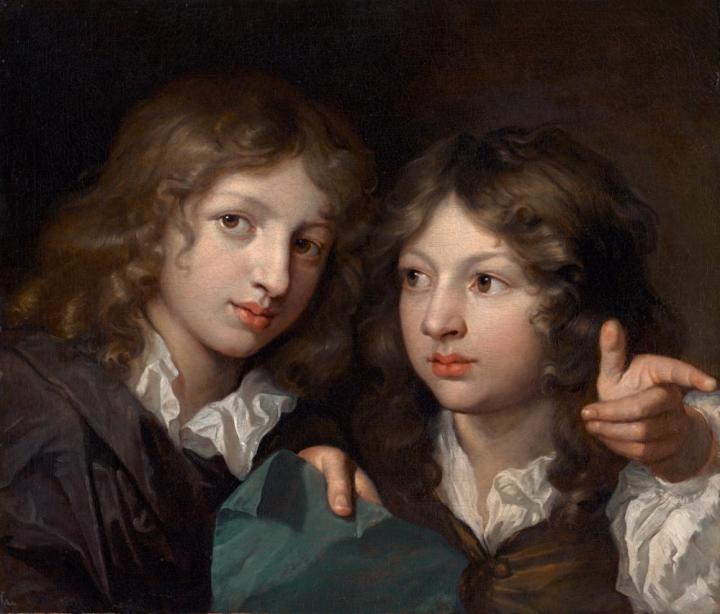
Caspar Netscher, A Portrait of Two Boys, Presuambly the Artist‘s Sons Everardus and Constantijn, ca. 1680–83
(Amsterdam: Collection Bob Haboldt)
◊ ◊ ◊ ◊ ◊
From the press release for the exhibition:
Kids! Between Representation and Reality
Bucerius Kunst Forum, Hamburg, 28 November 2025 — 6 April 2026
The exhibition Kids! Between Representation and Reality at the Bucerius Kunst Forum is dedicated to the representation of children in art from the 16th to the 21st century. Six chapters approach the subject from different perspectives and show not only paintings but also photographs, works on paper, prints, media art, and sculptures. The exhibition includes works by Tizian, Anthonis van Dyck, Oskar Kokoschka, Paula Modersohn-Becker, Nobuyoshi Araki, Thomas Lawrence, Joshua Reynolds, Rineke Dijkstra, Judith Leyster, Christoph Amberger, Gerhard Richter, and many more. The multifaceted nature of the exhibition illuminates the diverse perspectives and functions of children’s pictures over the centuries. Whether as a symbol of power and domination, as an expression of compassion or as snapshots of happy and sad childhoods: The depictions bear witness to the changing understanding of childhood over the centuries and at the same time illustrate the significance phase of life.
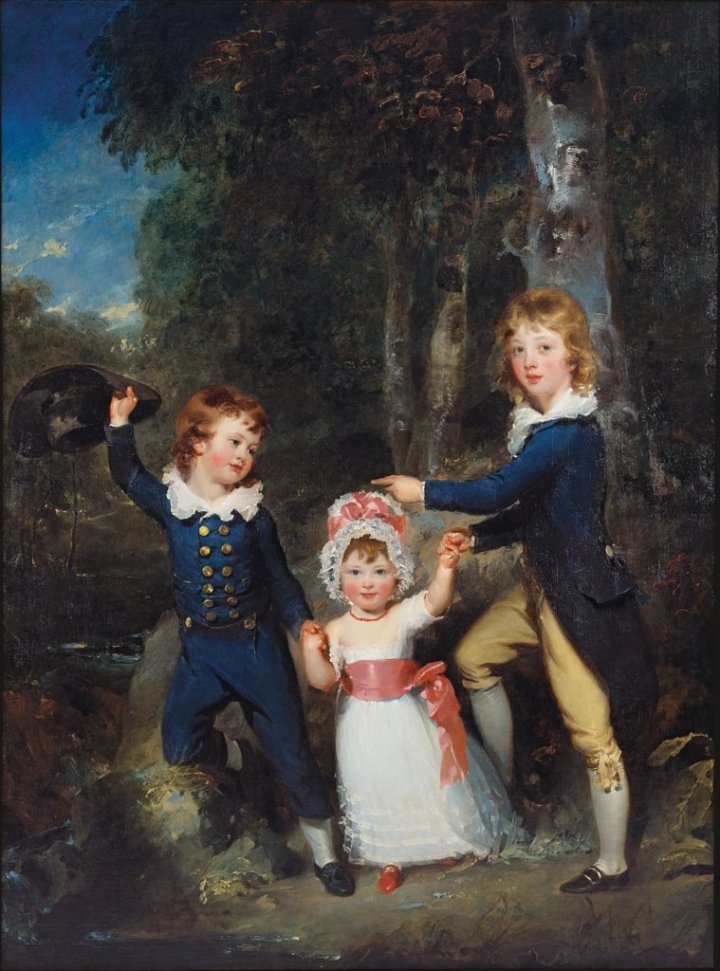
Thomas Lawrence, Portrait of the Children of Lord George Cavendish, 1790 (Frankfurt am Main: Städel Museum, Permanent Loan from the Adolf and Luisa Haeuser Foundation for Art and Culture).
The topic of images of children reflects the values and norms of a society and their changes in a special way. Images of children can be used to draw conclusions about social structures and power relations. Origin, status, and sometimes gender play an important role here. At the same time, over the centuries, social groups have influenced each other in the staging of their children and adapted their own representations in the process. How children are shown today is therefore linked to the reception of images of children from earlier times.
The exhibition reveals such cross-references and influences from the past to the present day and also identifies recurring patterns. The exhibition thus begins with a presentation of depictions of Madonna, in which the ideas of mother-child relationships and their influence up to the present day become clear. The father, on the other hand, usually fades into the background. Only when it comes to presenting the progenitor of the family do fathers proudly and consciously show themselves at the side of their young offspring. Until modern times, intimate father-child images were a rarity.
Created in aristocratic circles around 1500, the child portrait was intended to underpin the continuity and claim to power. Against this backdrop, portraits were often created showing the successors to the throne in armor as small adults. In this way, they were prepared for the future role of general and ruler. A playful variant is the portrait historié, in which the children were depicted as ancient gods, for example. Daughters were depicted at a very young age for reasons of marriage policy. Through strategic marriage promises and early marriages, it was possible to expand one’s own political influence and territorial power. In the course of the 16th century, the upper classes also portrayed their children, albeit less elaborately. In the 17th century, however, the representative and extravagant portrait of a child became increasingly popular in wider society.
In the 17th century in particular, Dutch and Spanish genre painters took up the motif of poor children, which still lives on today. The artists were not necessarily interested in taking a socially critical stance. It is not uncommon for children in financially disadvantaged, often precarious life situations to have a smile written all over their faces. Child labor was not fundamentally rejected either. It was seen as a positive contribution that children could make to the family income.
 Photographs illustrate how differently children grow up globally and structurally to this day. For many children, the street and not the nursery is the place where they come together, interact socially and play together. How the depiction of children has changed over the centuries is made particularly clear in the exhibition by the works of deceased adolescents. In the past, portraits of deceased children were the only means of preserving their memory. Today, commemoration takes place in a different way—for example through lifelike photographs that show children in happy life situations.
The most serious change, which testifies to a different conception and definition of childhood, took place at the end of the 17th century and in the 18th century. Children were now allowed their own development—as close to nature as possible and away from the adult world. The children’s room also became increasingly important, and toys and special children’s literature were regarded as fundamental elements of its furnishings. The theme of ‘being a child’ is still one of the most popular pictorial themes in the visual arts today: trying things out, pushing oneself to the limits, drawing, playing, and togetherness are characteristic of the most important phase of a person’s life.
For the first time at this exhibition, young visitors can borrow a discovery case free of charge at the ticket office or cloakroom. The kit offers elementary school-aged art explorers the opportunity to experience art in a playful way and contains various viewing tools and materials. A telescope, colored glasses, a prism, and a magnifying glass invite them to explore the exhibition and the museum on their own. The kit also includes exciting tasks that draw attention to details in the art. In this way, they learn more about art in a playful way, actively engage with the works, and develop their own perspectives on them.
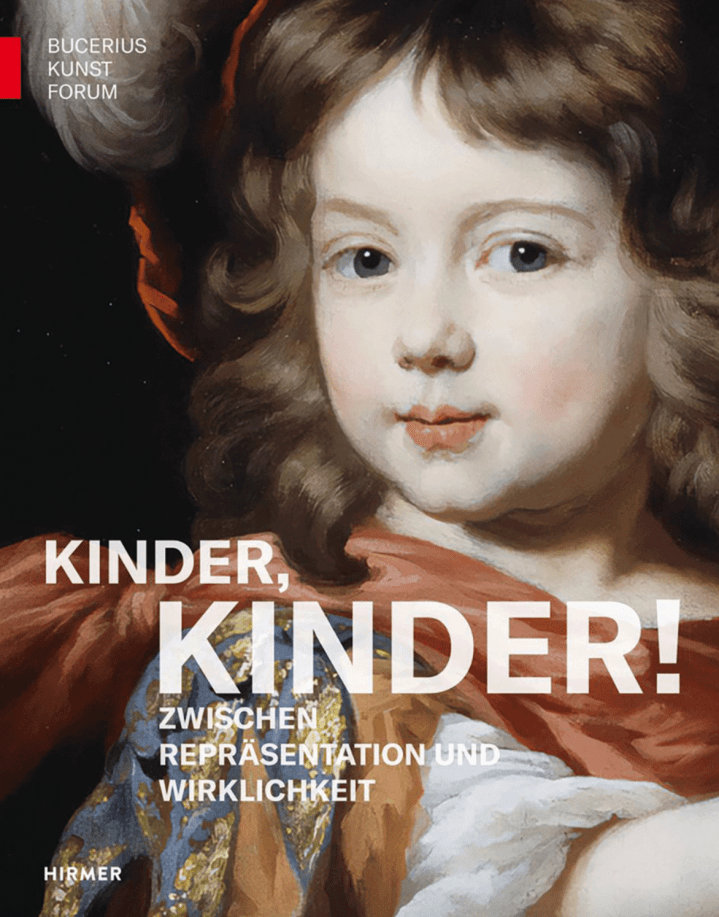
Katrin Dyballa, ed., Kinder, Kinder! Zwischen Repräsentation und Wirklichkeit (Munich: Hirmer Verlag, 2025), 288 pages, ISBN: 978-3777444963, €50.
Exhibition | Franz Xaver Messerschmidt

Installation view of the exhibition Franz Xaver Messerschmidt: More Than Character Heads
(Wien: Lower Belvedere; photo by Johannes Stoll).
◊ ◊ ◊ ◊ ◊
From the press release for the exhibition:
Franz Xaver Messerschmidt: More Than Character Heads
Lower Belvedere, Vienna, 31 October 2025 — 6 April 2026
Curated by Katharina Lovecky and Georg Lechner, with Kati Renner
Franz Xaver Messerschmidt (1736–1783) is presented as an artist at a cultural and political turning point in history. His portraits of members of the court and the aristocracy, scholars, scientists, and writers offer an insight into the social structures of his day. Furthermore, his now iconic ‘Character Heads’, which he started working on in 1770, are also interpreted as a phenomenon of their time. The exhibition compares Messerschmidt’s sculptures to the work of other artists with whom he has often been associated with the aim of critically questioning possible parallels and influences.
General Director Stella Rollig: “No other artist from the Belvedere’s collection holds equal fascination for both the public and artists in the same way as Messerschmidt. Was he a genius or an outsider? Many identities have been attributed to him through history, some of which are pure fiction. This exhibition considers these various interpretations from today’s perspective and shows the full scope of his work in a way that has not been seen for a long time.”
 Franz Xaver Messerschmidt is one of the pivotal artists in the Belvedere’s collection. The museum holds the world’s largest selection of works by this sculptor and has showcased these in its permanent displays for over a century. From around 1769 Messerschmidt’s portraits reflected a new image of humanity, permeated with the ideas of the Enlightenment, with emphasis moving away from Baroque pomp to place a greater focus on the individual. Moreover, the patrons and personalities he portrayed—such as Maria Theresia Felicitas von Savoy-Carignan, physicians Gerard van Swieten and Franz Anton Mesmer, and art writer Franz Christoph von Scheyb—shed light on the cultural, political, and intellectual world of the eighteenth century.
Although Messerschmidt’s ‘Character Heads’ are now famous, they remain a puzzle to this day. The psychopathological interpretation—extremely popular since the twentieth century—is a narrow lens through which to view these objects and ignores the fact that the sculptor was responding to the profound social and intellectual changes of the eighteenth century in his work. The exhibition aims to situate Messerschmidt’s ‘Character Heads’ in the context of that period’s preoccupation with facial expressions and to read them as a phenomenon of their time. Comparisons with works by artists such as Joseph Ducreux, William Hogarth, and Jakob Matthias Schmutzer confirm that the fascination with the face (and its aberrations) was by no means unique in this age.
“Despite the fact that Messerschmidt’s intentions remain unclear, we can identify key intellectual trends from the eighteenth century in his ‘Character Heads’—even now they still inspire direct responses from viewers. Their frontality and expressive power are classic examples of the departure from academic neoclassicism,” said curator Katharina Lovecky.
Curator Georg Lechner added: “Messerschmidt’s ‘Character Heads’ have had an eventful exhibition history reflecting their varied reception—from amusing curiosity to important works of art history. After the Baroque Museum was opened in the Lower Belvedere, Messerschmidt’s sculptures became established museum pieces and were permanently incorporated into art-historical debate.”
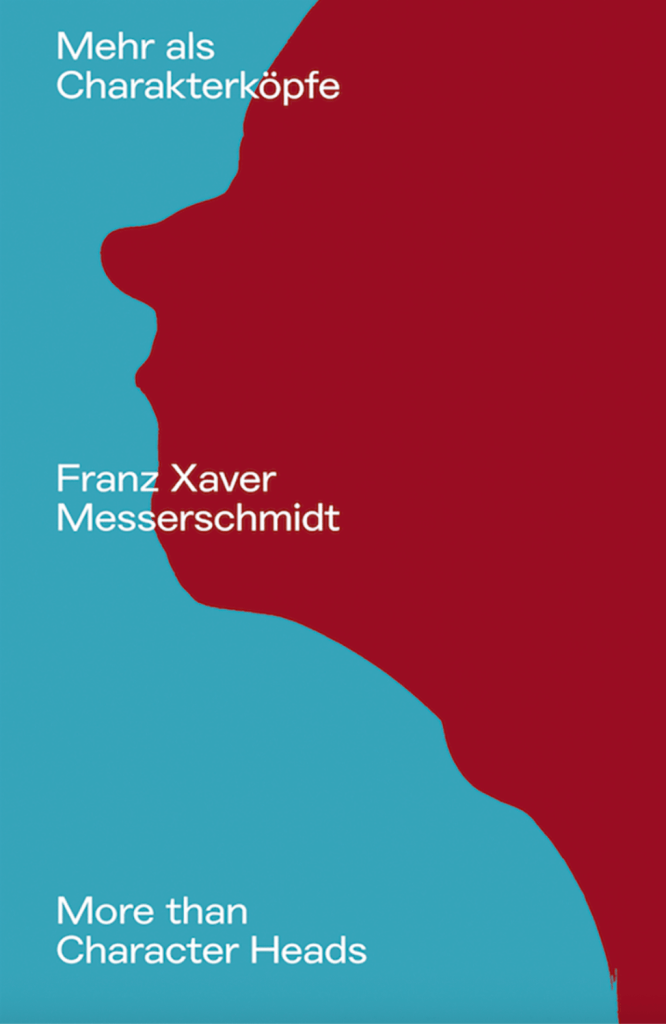
Georg Lechner, Katharina Lovecky, and Stella Rollig, eds., Franz Xaver Messerschmidt: Mehr als Charakterköpfe / More than Character Heads (Cologne: Verlag der Buchhandlung Walther und Franz König, 2025), 208 pages, ISBN: 978-3753309064, €35. Bilingual catalogue.
Exhibition | Wright of Derby: From the Shadows
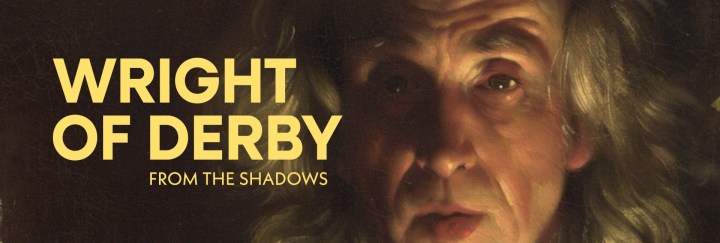
Detail from Joseph Wright, An Experiment on a Bird in the Air Pump, 1768
(London: The National Gallery)
◊ ◊ ◊ ◊ ◊
From the press release for the exhibition:
Wright of Derby: From the Shadows
National Gallery, London, 7 November 2025 — 10 May 2026
Derby Museums, 2026
In the autumn of 2025, the National Gallery will present Wright of Derby: From the Shadows, the first exhibition dedicated to Joseph Wright ‘of Derby’ (1734–1797) at the National Gallery, and the first exhibition to focus on his ‘candlelight’ series. The exhibition is organised in partnership with Derby Museums where it will travel in 2026.
Following on from recent exhibitions such as Turner on Tour (2022) and Discover Constable & The Hay Wain (2024), this exhibition will put the spotlight on a well-known British artist in the National Gallery Collection whose work has come to symbolise an era. Traditionally, Wright of Derby has been viewed as a figurehead of the Enlightenment, a period of scientific, philosophical and artistic development in the 17th and 18th century. Challenging this conventional view, the exhibition contributes to the ongoing re-evaluation of the artist, portraying him not merely as a ‘painter of light’ but as one who deliberately explores the night-time to engage with deeper and more sombre themes, including death, melancholy, morality, scepticism, and the sublime.
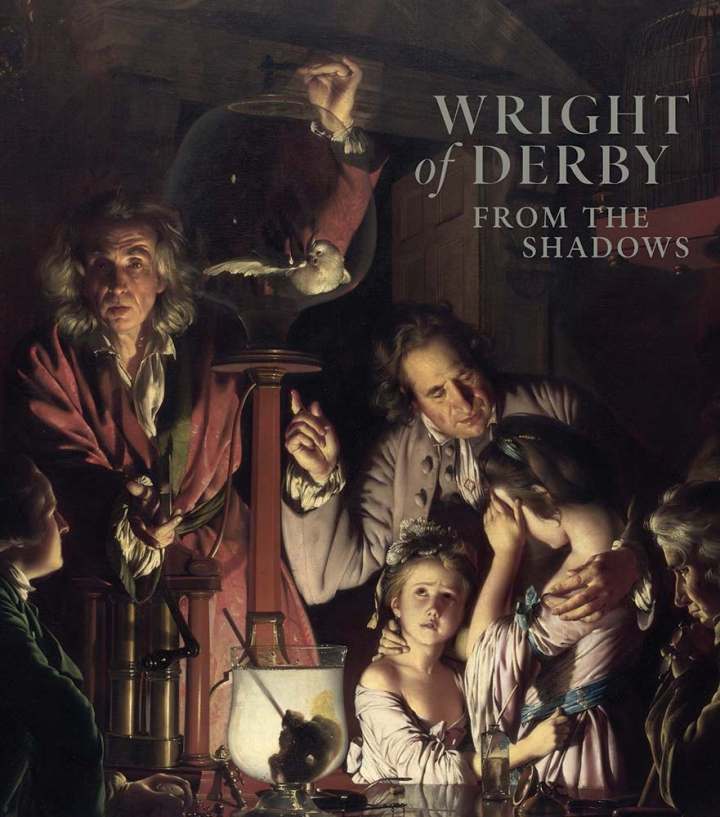 This exhibition will focus on Joseph Wright’s career between 1765 and 1773, during which time he made a series of candlelit scenes. We will show a number of masterpieces from this period including Three Persons Viewing the Gladiator by Candlelight (1765, private collection), A Philosopher giving that Lecture on the Orrery in which a lamp is put in place of the Sun (1766, Derby Museum and Art Gallery), and the National Gallery’s An Experiment on a Bird in the Air Pump (1768). This marks the first time in 35 years that all these works will be brought together. In these ‘candlelight’ paintings, Wright of Derby shows thrilling moments, not just of discovery but of shared learning. His dramatic depictions of natural and artificial light link his work back to the artistic traditions of the Renaissance and artists such as Caravaggio, whose strong light and deep shadows were rarely employed in British art before the mid-18th century.
Yet Wright of Derby also engaged with very contemporary questions around the act of observation, spectacle and education raised by philosophers of the Enlightenment. In his masterpiece An Experiment on a Bird in the Air Pump, a travelling lecturer shows a well-established experiment to a family audience whose reactions range from wonder to horror. In The Orrery, the first of his paintings on a ‘scientific’ subject, a philosopher presents a lecture on astronomy using a clockwork model of the solar system as the centrepiece, the sun replaced by an oil lamp. In Three Persons Viewing the Gladiator by Candlelight, one artist holds up a drawing of the central sculpture for critical assessment. These works explore moral ambiguity in acts of looking, as well as the intellectual influence of ‘high’ art.
Wright ‘of Derby’ was working at a turning point for art viewing in the 18th century, when the public display of art and the instigation of annual contemporary art exhibitions were being promoted. The Air Pump was completed the same year as the creation of the Royal Academy and was intended to be accessible to a broad public (though it was displayed at the Society of Artists). Mezzotint prints of Wright’s works, which played a key role in establishing his international reputation, will also be on display. These luxury prints highlight how the artist took full advantage of popular reproduction techniques of his time to expand his reputation both at home and abroad.
Wright of Derby: From the Shadows will show over twenty works, including other paintings, works on paper, and objects that explore both Wright of Derby’s artistic practice and the historic context of scientific and artistic development in which they were made. Seventeen artworks will be coming from Derby Museums, who hold the world’s largest collection of Wright’s work. In 2026, Wright of Derby: From the Shadows, will travel to Derby Museum and Art Gallery, bringing two of Wright’s most famous works, The Air Pump and The Orrery, back to his hometown for the first time in 80 years.
Christine Riding and Jon King, Wright of Derby: From the Shadows (London, National Gallery London, 2025), 96 pages, ISBN: 978-1857097467, £20.
The Burlington Magazine, October 2025
The long 18th century in the October issue of The Burlington:
The Burlington Magazine 167 (October 2025)
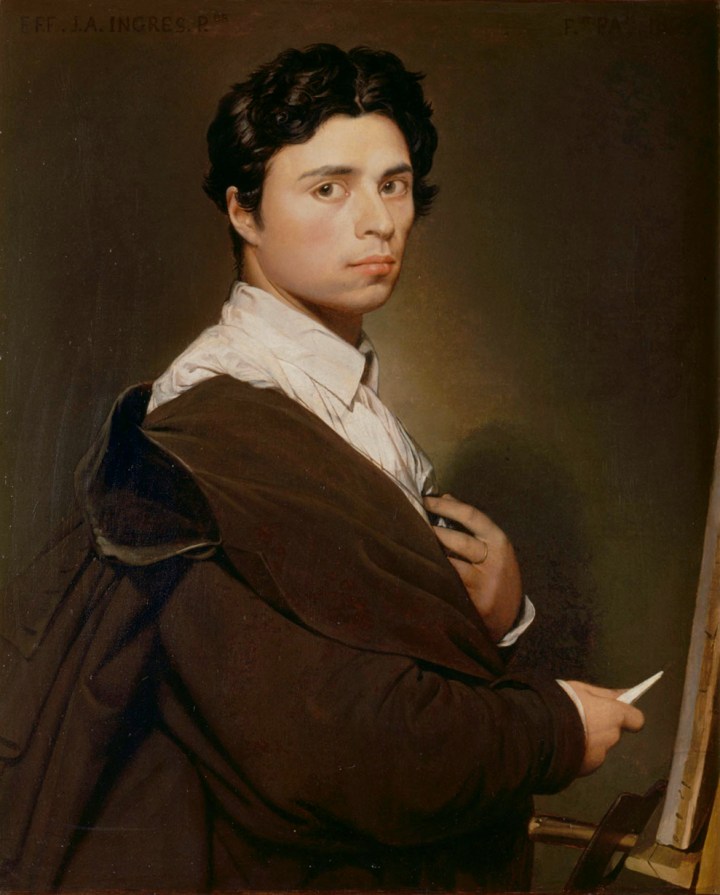
Jean-Auguste-Dominique Ingres, Self-Portrait at the Age of Twenty-Four, 1804, revised 1850–51, oil on canvas, 77 × 61 cm (Musée Condé, Chantilly).
e d i t o r i a l
• “The Story of Art at 75,” p. 959.
Gombrich’s The Story of Art is seventy-five years old this year. Its clarity of conception and expression, civilised values, and the enormous benefits that have undoubtedly resulted from its publication should be a cause for continuing admiration and celebration.
a r t i c l e s
• Sylvain Bédard, “New Proposals about Ingres’s Self-Portrait at the Age of Twenty-Four,” pp. 982–93.
Of all the self-portraits painted by Jean-Auguste-Dominique Ingres, that of 1804 now in the Musée Condé, Chantilly, remains the most discussed. The focus of criticism when it was exhibited in 1806, the painting was taken up again and transformed by the artist during his old age. Here a revised sequence for these modifications is proposed and corrections are made to its earlier history.
• Emma Roodhouse, “Scraps of Genius, Taste and Skill: Works by John Constable in the Mason Album,” pp. 994–1001.
An album emerged at auction in 2020 and was acquired by Colchester and Ipswich Museums. It included hitherto unknown and very early works by John Constable and was compiled by the Mason family, the artist’s relatives in Colchester. These juvenilia are assessed here and placed in the context of Constable’s artistic evolution and his wide social circle.
• Edward Corp, “A Recently Identified Scottish Portrait of Bonnie Prince Charlie by Katherine Read,” pp. 1012–15.
There is a set of three portraits showing the exiled King James III (1701–66) and his two sons, Prince Charles Edward Stuart (1720–88) and Prince Henry Benedict Stuart, Cardinal Duke of York (1725–1807), which are here attributed to Katherine Read (1723–78) and were painted while she was living in Rome between 1750 and 1753. The paintings, which are all in a Somerset collection, have similar dimensions and are framed within painted stone ovals, which have chips and carvings; it seems evident that they were made to be displayed together.
r e v i e w s
• Hugh Doherty, Review of the exhibition catalogue La Rotonde de Saint-Bénigne: 1000 ans d’histoire, ed. by by Franck Abert, Arnaud Alexandre, and Christian Sapin (Faton, 2025), pp. 1033–35.
• Cloe Cavero de Carondelet, Review of the exhibition catalogue Tan lejos, tan cerca: Guadalupe de México en España, ed. by Jaime Cuadriello and Paula Mues Orts (Prado, 2025), pp. 1039–41.
• Elena Cooper, Review of Cristina Martinez and Cynthia Roman, eds., Female Printmakers, Printsellers, and Print Publishers in the Eighteenth Century: The Imprint of Women, c. 1700–1830 (Cambridge: Cambridge University Press, 2024), pp. 1052–53.
• Clive Aslet, Review of Juliet Carey and Abigail Green, eds., Jewish Country Houses (Brandeis University Press, 2024), pp. 1056–57.
o b i t u a r y
• Colin Thom, Obituary for Andrew Saint (1957–2024), pp. 1059–60.
A longstanding editor for the Survey for London, an astute architectural scholar, and a personable educator, Andrew Saint effortlessly combined many skills. His time as a professor in the University of Cambridge’s Department of Architecture shaped numerous future careers, and his contributions to the Survey enriched the history of London’s urban fabric.
The Burlington Magazine, September 2025
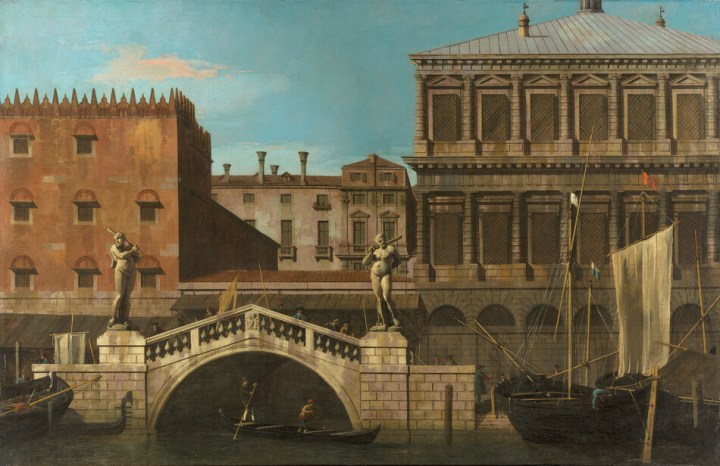
Canaletto, Cappriccio: The Ponte della Pescaria and Buildings in the Quay, Showing Zecca on the Right, 1744(?), oil on canvas, 84 × 130 cm
(Royal Collection Trust, © His Majesty King Charles III 2025)
◊ ◊ ◊ ◊ ◊
The long 18th century in the September issue of The Burlington:
The Burlington Magazine 167 (September 2025) | Italian Art
a r t i c l e s
• Gregorio Astengo and Philip Steadman, “Canaletto’s Use of Drawings of Venetian Buildings by Antonio Visentini,” pp. 896–905.
The use by Canaletto of measured drawings by Antonio Visentini and his assistants is fully considered here for the first time. He ingeniously utilised them at different points in his career to provide images of buildings in both his ‘vedute’ and ‘capricci’. This creative borrowing was possible because both painters formed part of the same successful network of artists, scientists, and patrons.
r e v i e w s
 • Philippe Bordes, Review of the exhibition Duplessis (1725–1802): The Art of Painting Life / L’art de peindre la vie (Inguimbertine, Carpentras, 2025), pp. 924–27.
• Colin Bailey, Review of Katie Scott and Hannah Williams, Artists’ Things: Rediscovering Lost Property from Eighteenth-Century France (Getty Research Institute, 2024), pp. 946–48.
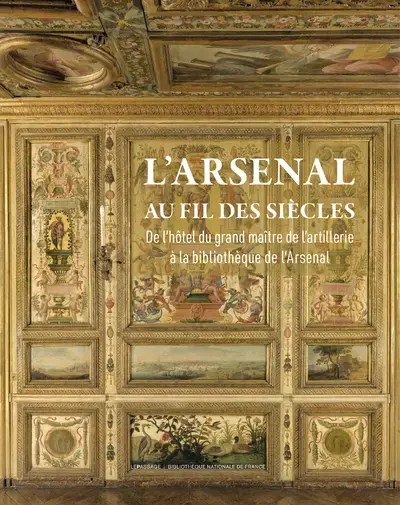
• Karl-Georg Pfändtner, Review of Olivier Bosc and Sophie Guérinot, eds., L’Arsenal au fil des siècles: De l’hôtel du grand maître de l’Artillerie à la bibliothèque de l’Arsenal (Le Passage / BNF, 2024), pp. 951–52.
• Timothy Revell, Review of Lieke van Deinsen, Bert Schepers, Marjan Sterckx, Hans Vlieghe, and Bert Watteeuw, eds., Campaspe Talks Back: Women Who Made a Difference in Early Modern Art (Brepols: 2024), pp. 952–53.
• Jonathan Yarker, Review of Katherine Jean McHale, Ingenious Italians: Immigrant Artists in Eighteenth-Century Britain (Brepols, 2024, p. 953.
• Conal McCarthy, Review of Deidre Brown, Ngarino Ellis, and Jonathan Mane-Wheoki, Toi Te Mana: An Indigenous History of Māori Art (University of Chicago Press, 2025), pp. 953–54.
Exhibition | Vanbrugh: The Drama of Architecture
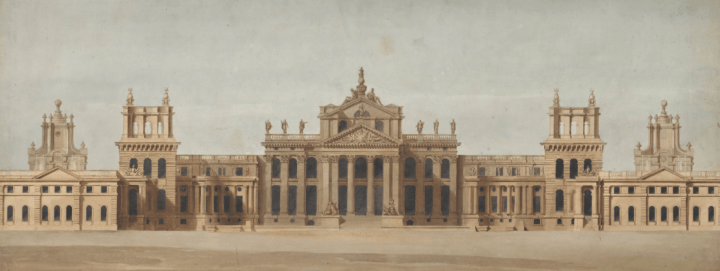
Soane office, Royal Academy Lecture Drawings of the work of Sir John Vanbrugh, Blenheim Palace, elevation
(London: Sir John Soane’s Museum, SM 74/4/8)
◊ ◊ ◊ ◊ ◊
The exhibition opens in the spring; the book launches this fall:
Vanbrugh: The Drama of Architecture
Sir John Soane’s Museum, London, 4 March — 28 June 2026
Curated by Charles Saumarez Smith
300 years after his death, a major new exhibition exploring one of the UK’s greatest architects—Sir John Vanbrugh (1664–1726)—will open in the spring at Sir John Soane’s Museum. Some of the UK’s most admired and loved country houses like Blenheim Palace and Castle Howard were the result of Vanbrugh’s genius, becoming cornerstones of English Baroque. Soane cited him as one of his great influences, saying Vanbrugh had “all the fire and power of Michelangelo and Bernini.”
Curated by Sir Charles Saumarez Smith CBE and architect Roz Barr, the exhibition will feature never-before-exhibited drawings from the collections of the V&A, the Royal Institute of British Architects, the National Portrait Gallery, and Sir John Soane’s Museum, including many in Vanbrugh’s own hand. Perhaps overshadowed by contemporaries Nicholas Hawksmoor and Sir Christopher Wren, the emotional impact and imagination of Vanbrugh has continued to be admired, particularly by architects, in the centuries since. The exhibition will highlight Vanbrugh’s enduring architectural ideas and influence, including on two of the most influential architects of the 20th century, Robert Venturi (1925–2018) and Denise Scott Brown (b.1931). A new short film by filmmaker Jim Venturi, their son, will explore this connection and will be shown on loop in the Museum’s Foyle Space. Vanbrugh: The Drama of Architecture will introduce new audiences to the work of an English Baroque architect, adventurer, playwright, and spy 300 years after his death.
Charles Saumarez Smith, John Vanbrugh: The Drama of Architecture (London: Lund Humphries, 2025), 272 pages, ISBN: 978-1848227316, £30.
◊ ◊ ◊ ◊ ◊
Book tickets at Wigmore Hall:
Book launch | John Vanbrugh: The Drama of Architecture
The Wigmore Hall, London, 20 November 2025, 12.30pm
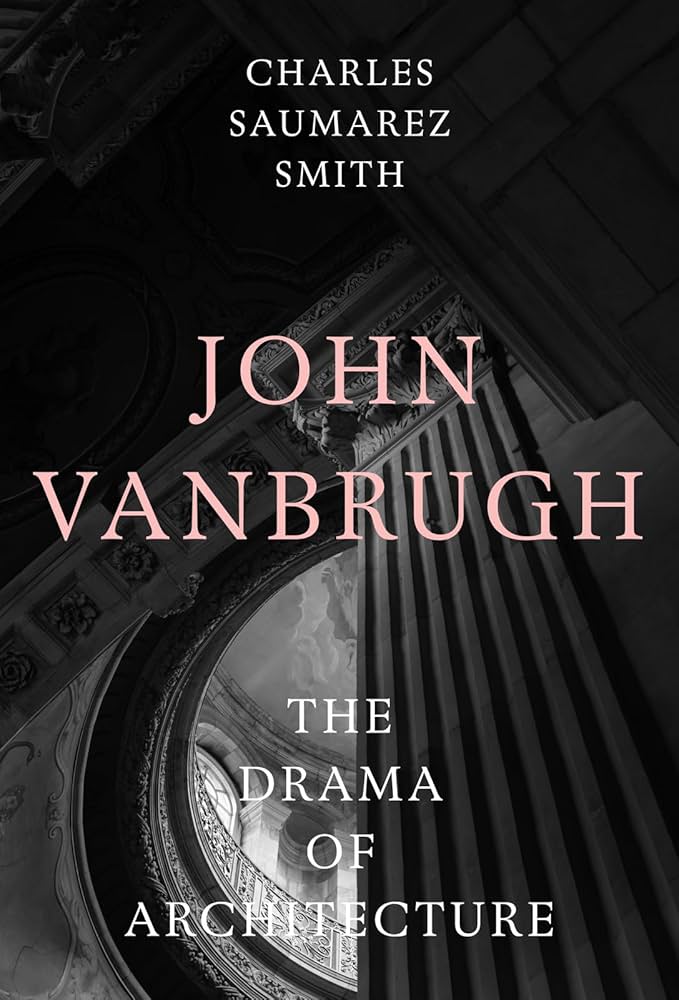 Charles Saumarez Smith will give a lunchtime talk on Vanbrugh’s extraordinary life: his upbringing; why he spent so much time in a French gaol; the writing of The Relapse and The Provoked Wife; and how he came to design Castle Howard with no previous experience of architecture. Saumarez Smith will give particular attention to Vanbrugh’s work as a theatrical impresario and the designer of the Queen’s Theatre, Haymarket, so disastrous as a venue for plays, but where all of Handel’s early operas were performed. He will then describe Vanbrugh’s quarrel with the Duchess of Marlborough and his later work as an architect, at King’s Weston, Claremont, Grimsthorpe, Seaton Delaval, and Stowe. In recent years, Vanbrugh’s reputation as an architect has been eclipsed by his subordinate, Nicholas Hawksmoor. This talk and the accompanying book will explain Vanbrugh’s originality and influence on later architects from Robert Adam to Robert Venturi and Denise Scott Brown.
Exhibition | Mary Linwood: Art, Stitch and Life
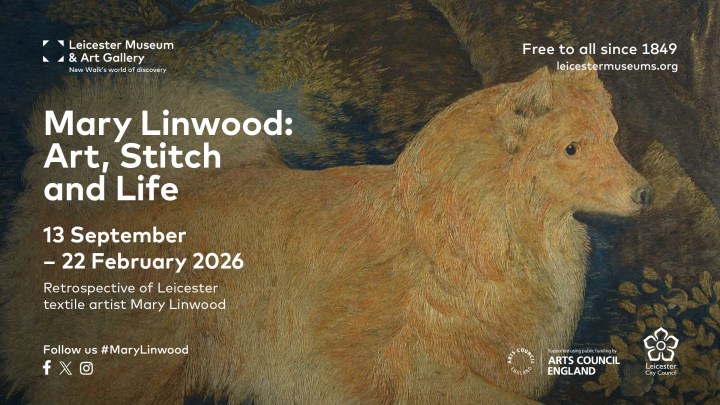
Mary Linwood, Pomeranian Dog, detail, needlework, 68 × 86 cm
(Leicester Museum & Art Gallery)
◊ ◊ ◊ ◊ ◊
Now on view, as noted by Adam Busiakiewicz for the Art History News blog:
Mary Linwood: Art, Stitch, and Life
Leicester Museum & Art Gallery, 13 September 2025 — 22 February 2026
A retrospective of the Leicester textile artist Mary Linwood (1755–1845)
Leicester’s Mary Linwood was a celebrity artist in the early 1800s but has since been largely forgotten. She created detailed embroidered versions of famous British paintings using a technique known as needle painting. Linwood was not only a talented artist but also an innovator and entrepreneur. Alongside running a successful school for young ladies in Leicester, she exhibited her embroidered works in touring exhibitions and established the first gallery in London to be run by a woman. In her lifetime, Linwood was supported by the wealthy and powerful, and was widely respected and well known. Since her death, however, she has been overlooked and undervalued. This exhibition is the first retrospective of Mary Linwood’s work since 1945, featuring 14 embroidered works from the Leicester Museums collections. Alongside these historic pieces are new textile artworks by Ruth Singer, reflecting on Linwood’s life and legacy.
Ruth Singer, Lost Threads: Mary Linwood’s Legacy (2025), 60 pages, £15. Available for purchase here.
◊ ◊ ◊ ◊ ◊
It’s also a fine opportunity to remind readers of Heidi Strobel’s recent book, The Art of Mary Linwood: Embroidery, Installation, and Entrepreneurship in Britain, 1787–1845. –CH










 Enfilade
leave a comment