Study Day | The Face in Public Sculpture
From ArtHist.net:
L’intime face au public: Le visage dans la sculpture publique des XVIIIe et XIXe siècle en France et dans la sphère germanique
INHA Paris, 25–26 November 2024
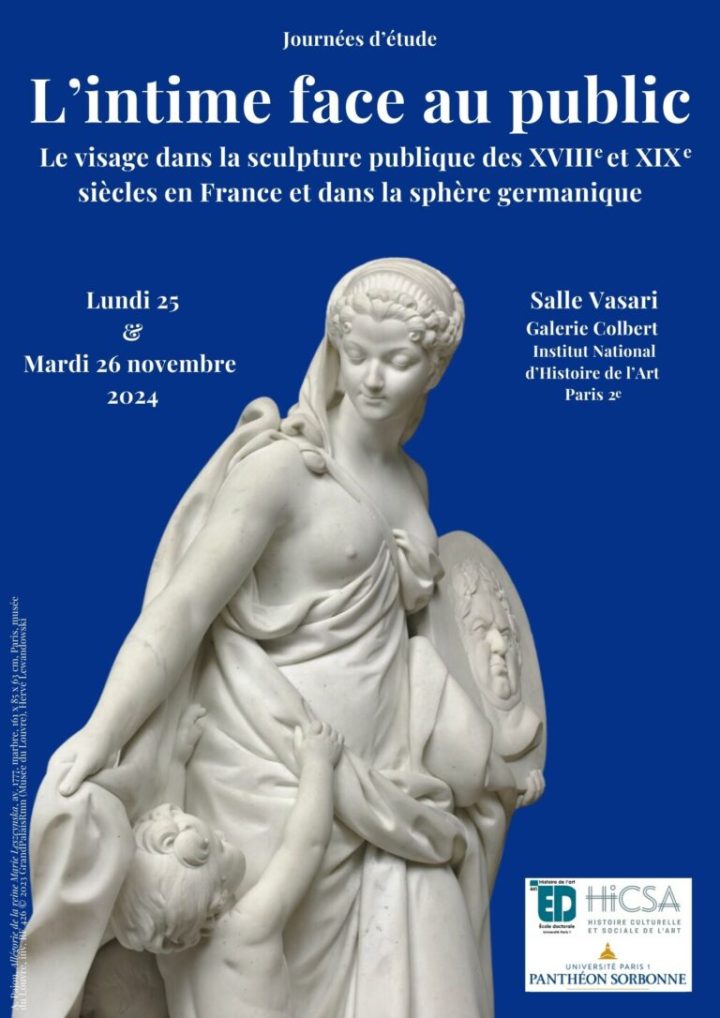 Cette journée d’étude dédiée à la sculpture souhaite s’intéresser à un élément en particulier : le visage. Partie essentielle de la figure sculptée, le visage a ce double rôle de permettre l’identification et l’expression. Cette double responsabilité est davantage mise en évidence au cours des XVIIIe et XIXe siècles, avec l’essor des portraits et de l’intérêt porté à l’intériorité, et plus largement à l’intime. Cette manifestation souhaite mettre en parallèle cette notion d’intimité avec celle du public, qui lui est souvent opposée. La sculpture étant l’art par excellence de l’espace public, l’objectif est de confronter le visage qui relève de l’intime, avec les impératifs liés à la sculpture publique. Ce sujet est d’autant plus pertinent que les statues présentes dans l’espace public ont été sujettes à un décorum en constante évolution tout au long du XIXe siècle.
Le type statuaire de prédilection était et reste le portrait, en buste ou bien en pied. Honneur pour une personne, outil de propagande, image officielle, le visage sculptural compte de nombreuses fonctions qui se dessinent au XVIIIe siècle et se précisent au XIXe siècle, avec le déplacement d’une fonction religieuse et royale de la sculpture à une fonction civique. Oscillant entre idéalisation et ressemblance, la figuration du visage dans le médium sculptural est un concept questionnable dans les XVIIIe et XIXe siècles franco-allemands. Outre les similitudes dans leurs ascendants artistiques et textuels, ces deux étendues géographiques nous permettront d’interroger les circulations artistiques qui ont eu lieu, et surtout d’analyser comment les évolutions politiques, qui ont touchées tant la France que la sphère germanique, ont conduit à une affirmation nationale qui s’incarne dans la sculpture publique. Cette journée d’étude vise ainsi à questionner la représentation du visage dans la statuaire publique franco-germanique du XVIIIe et XIXe siècle, à analyser ses théories, ses pratiques, ses techniques, ses possibles typologies et la perception qu’en a le spectateur.
l u n d i , 2 5 n o v e m b r e
14.00 Accueil des participants
14.30 Introduction générale — Justine Cardoletti, Sarah Touboul-Oppenheimer, Émilie Ginestet
14.45 Conférence d’ouverture / Opening Lecture
• Animated Features: Making Public Faces Private — Malcolm Baker (Distinguished professor of the History of Art, University of California, Riverside)
15.30 Session 1 | Visage du vivant, visage du mort / The Face of the Living, the Face of the Dead
Chair: Guilhem Scherf (Conservateur général du patrimoine au département des Sculptures, musée du Louvre)
• La statuaire publique franco-germanique : Objet de transmission de l’intime et Sujet altruiste ou quand le visage inerte devient une table de conversion des affects qui Comptent pour les siècles et les siècles — Bruno Bouchard (Professeur, Université du Québec à Rimouski)
• Jean-Baptiste Carpeaux : un instantané en pierre — Francis Mickus (Doctorant en Histoire, Université Paris 1 Panthéon-Sorbonne)
• Le visage du mort : portrait intime, portrait public — Eric Sergent (Maître de conférences en histoire de l’art et du patrimoine, Université de Haute-Alsace)
• L’intime et l’obscène. Moulages anthropologiques et masques mortuaires au XIXe siècle — Martial Guédron (Professeur d’Histoire de l’art moderne, Université de Strasbourg)
m a r d i , 2 6 n o v e m b e r
9.00 Accueil des participants / Greeting participants
9.30 Session 2 | Le visage d’un statut : l’illustre et le populaire / The Face of a Status: The Illustrious and the Popular
Présidence : Émilie Ginestet (Doctorante en Histoire de l’art moderne, Université Toulouse –Jean Jaurès), Sarah Touboul-Oppenheimer (Doctorante en Histoire de l’art, Université Paris 1 Panthéon-Sorbonne)
• Intimes fragments : la fonte du Louis XV de Bouchardon, gestation et reliques d’un monument parisien —Ulysse Jardat (Conservateur du patrimoine, responsable du département Décors, mobilier et arts décoratifs, Musée Carnavalet-Histoire de Paris)
• Goethe par David d’Angers. Production collective d’une persona — Gregor Wedekind (Professeur d’Histoire de l’art moderne et contemporain, Johannes Gutenberg-Universität Mainz)
• Christian Daniel Rauch à Halle : début, puissance d’action et vulnérabilité du monument — Wiebke Windorf (Professeur d’Histoire de l’art moderne, Martin-Luther-Universität Halle-Wittenberg)
• Visages du quotidien : la sculpture de genre dans les monuments publics au XIXe siècle — Michaël Vottero (Docteur en histoire de l’art habilité à diriger des recherches et Conservateur en chef du patrimoine, conservateur des monuments historiques, DRAC Bourgogne-Franche-Comté)
14.00 Session 3 | Expression du visage, expression du monument / Facial Expression, Expression of the Monument
Présidence : Émilie Roffidal (chargée de recherche HDR CNRS Framespa-UMR 5136)
• From the Fontaine de Grenelle to the Laiterie at Rambouillet: The Theme of the Distracted Head in Mid-to-Late 18th-Century French Sculpture — Tomas Macsotay (Professeur d’Histoire de l’art moderne, Universitat Pompeu Fabra)
• De face ou de profil ? L’orientation de la tête dans les monuments publics aux rois de France à l’époque moderne — Étienne Jollet (Professeur d’Histoire de l’art moderne, Université Paris 1 Panthéon-Sorbonne)
• Élever une figure chartraine au XIXe siècle — Maéva Bouderlique (Doctorante en Histoire de l’art contemporain, Nantes Université)
• Le Gavarni de Denys Puech : le monument comme image-récit biographique — Marie-Lise Poirier (Doctorante en Histoire de l’art, Université du Québec à Montréal)
16.30 Session 4 | Du privé au public : enjeux du Beau et de l’identification dans le buste / From Private to Public: Issues of the Beautiful and Identification in Busts
Présidence : Justine Cardoletti (Doctorante en Histoire de l’art moderne, Université Paris 1 Panthéon-Sorbonne)
• La figure antique et la notion du Beau au XVIIIe siècle : évolution et transformation du goût dans l’espace nobiliaire — Hector Chapron (Doctorant en Histoire de l’art moderne, Sorbonne Université)
• Gaetano Merchi (1747–1823). Itinéraires européens du portrait sculpté entre pratique publique et privée — Gaia Mazzacane (Doctorante en Histoire de l’art, École Normale Supérieure de Pise)
17.15 Conclusion des journées — Justine Cardoletti, Émilie Ginestet, Sarah Touboul-Oppenheimer
17.30 Cocktail de clôture
Conference | The Secularization of Religious Assets
From ArtHist.net and the Centre André-Chastel:
The Secularization of Religious Assets in Enlightenment Europe: Urban Development, Architecture, and Art Works
La sécularisation des établissements religieux dans l’Europe des lumières: Ville, architecture et œuvres d’art
Institut National d’Histoire de l’Art, Paris, 27 November 2024
Organized by Ronan Bouttier, Gernot Mayer, and Raluca Muresan
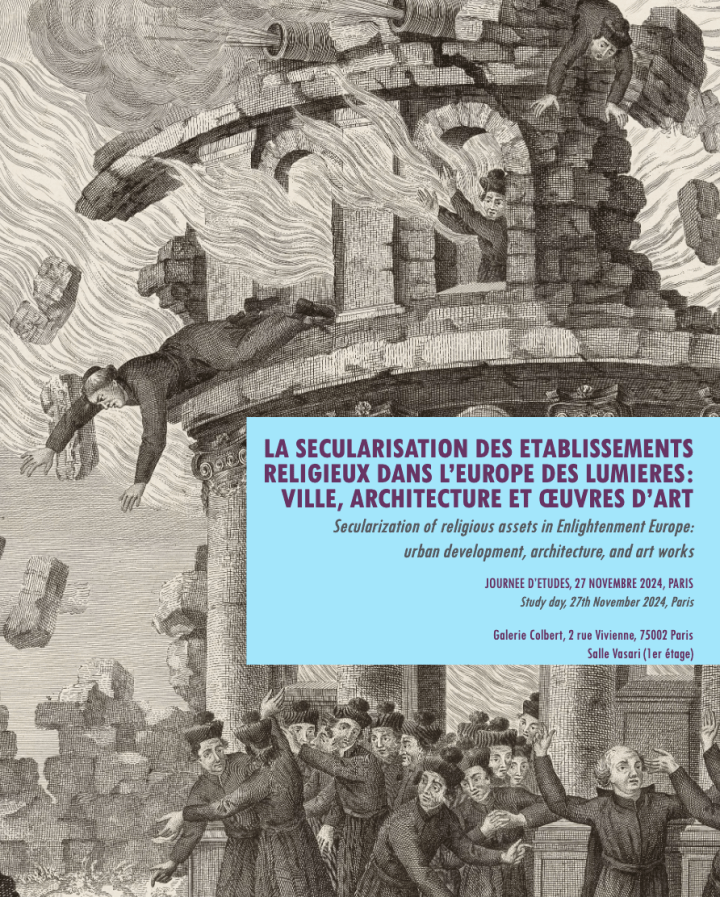 The suppression of the Society of Jesus in 1773 marks the last step of the Order’s progressive dissolution initiated fifteen years earlier, in Europe and in its colonies. This act of suppression was the culmination of a broader secularisation movement concerning religious congregations across Europe, from the 1760s to the French Revolution. In most cases, the State intended to take over the management of properties belonging to religious congregations described as useless for the common interest. Whether driven by reformatory or by economic interests, all acts of suppression and secularisation had the same consequences: a large number of movable assets and real property, estates and art works were either reallocated to other religious congregations or put on sale, when not confiscated altogether.
p r o g r a m m e
9.00 Welcome of participants
9.15 Welcoming address
9.30 Introduction by the organizers
10.00 Confiscation Procedures
Chair: Raluca Muresan (Sorbonne Université, Paris)
• Paola Benussi (Archivio di Stato, Venise), La sécularisation des patrimoines ecclésiastiques dans les régions « d‘outre-mer » de la République de Venise
• Raffaele Marronne (Scuola Normale Superiore, Pise), ‘Volle entrare per tutte le sagrestie’: The Dispersion of the Artistic Heritage of the Lay Confraternities of Siena following the Leopoldine Suppressions (1785)
• Etienne Couriol (LARHRA, Université Lyon 3), Ce que dit la presse périodique lyonnaise et bordelaise de la vente des biens des Jésuites
11.30 Pause
12.00 Sécularisation et développement urbain / Secularization and Urban Development
Chair: Ronan Bouttier (Université Paris 1 Panthéon-Sorbonne)
• Richard Biegel (Université Charles, Prague), Les transformations des édifices sacrés de Prague au siècle des Lumières et leurs conséquences urbaines
• Pierre Coffy (Univ. Paris 1 Panthéon-Sorbonne/Univ. Statale di Milano), Préparer le terrain pour l’essor de la «ville moderne»: Suppression et réemploi des biens religieux dans le Milan des Habsbourg d’Autriche
13.00 Lunch break
14.30 Sécularisations, remplois et dispersions / Secularization, Reuse, and Dispersal
Chair: Gernot Mayer (Université de Vienne)
• Alberto Garin (Universidad Francisco Marroquín, Guatemala), Le couvent des Jésuites de la Antigua Guatemala
• Katia Martignago (Università degli Studi di Napoli Federico II, Naples), The Venetian Jesuits’ Convent after 1773
• Sylvia Stegbauer (Belvedere Research Center, Vienne), Architectural Properties of the Marian Congregations in Transition
• Márta Velladics (Université Eötvös Loránd, Budapest), Success or Failure? The Utilisation of the Abolished Monasteries in Hungary between 1782 and 1802
17.00 Final Discussion
• Emilie d‘Orgeix (Ecole Pratique des Hautes Etudes, Paris)
• Jean-Philippe Garric (Université Paris 1 Panthéon-Sorbonne)
• Olga Medvedkova (CNRS, Centre André Chastel, Paris)
18.00 Thanks from the organizers
Organizers
• Ronan Bouttier, Université Paris 1 Panthéon-Sorbonne
• Gernot Mayer, Universität Wien, Vienne
• Raluca Muresan, Sorbonne Université, Paris
Scientific Committee
• Jean-Philippe Garric, Université Paris 1 Panthéon-Sorbonne
• Richard Kurdiovsky, Österreichische Akademie der Wissenschaften, Vienne
• Olga Medvedkova, CNRS, Centre André Chastel, Paris
• Émilie d’Orgeix, Ecole Pratique des Hautes Etudes, Paris
Image: Extinction de la Société des Jésuites, detail, 1773, engraving, 58 × 39 cm (Wien Museum, Inv. 21288).
Symposium | Portraiture in a Trans-Asian Context
From ArtHist.net:
Making the Subject of Portraiture in a Trans-Asian Context, ca. 1000–Present Day
SOAS University of London, 5–7 December 2024
Registration due by 22 November 2024
Portraits have commonly been understood as naturalistic likenesses of human beings, centred on the face. The work of scholars such as Jean Borgatti, Richard Brilliant (1990), and Joanna Woodall (1997) opened the field in conceptualising portraiture as a truly multi-local genre, foregrounding the relational and performative processes of portraiture. This conference addresses the performative function of portraiture in constructing subjectivities in Asian contexts, in order to reveal important cultural, social, religious, and philosophical ideas key to understanding particular societies and cultures within Asia and its diasporas.
The symposium focuses on the portraiture of Asia with two specific purposes in mind. First, to decentre studies of Asian portraiture from Eurocentric conceptions of subjecthood and thus to expand the field of portraiture studies; second, to foreground the connections, transfers and tensions articulated by portraiture within trans-Asian contexts. The focus on Asia should not be read as exclusionary, but rather as the intent to initiate a dialogue with existing research on the portraiture of other regions such as Africa and Europe. Thirty-five years after Borgatti, Brilliant and Woodall’s contributions to the field of portraiture studies, the symposium Making the Subject of Portraiture in a Trans-Asian Context ca. 1000-Present Day proposes to take stock of a changing field by contributing the scholarship of art, cultural and literary history in the trans-Asian context.
Registration links are at the event page (participants will need to register individually for each day). Please direct inquiries to Conan Cheong (656531@soas.ac.uk) and Mariana Zegianini (mz15@soas.ac.uk) of the Department of the History of Art and Archaeology, at SOAS University of London.
t h u r s d a y , 5 d e c e m b e r
17.15 Doors open at Wolfson Lecture Theatre, Senate House
17.30 Welcome by Charlotte Horlyck (Head of the School of Arts, SOAS University of London)
17.45 Let’s Change the Subject: Joanna Woodall (The Courtauld Institute of Art)
18.00 Panel 1 | Portraiture and Technology
Chair: Ashley Thompson (SOAS University of London
• Margaret Hillenbrand (University of Oxford) — Read Your Mind: Facial Recognition Technology and Contemporary Chinese Portraiture
• Xinrui Zhang (The Courtauld Institute of Art) — Maskbook: Selfhood and Portraits of Chinese Artists and Environmental Activists
• Wiebke Leister (Royal College of Art and Ashley Thorpe, Royal Holloway) — A Hannya Manifesto: Performative Photographic Portraiture as Contemporary Demon Meta-Noh Play to Construct Feminist Frameworks for Interpretation
19.30 Evening Drinks
f r i d a y , 6 d e c e m b e r
13.15 Doors open at S312, Paul Webley Wing, Senate House
13.30 Panel 2 | Portraying Femininity
Chair: Henning von Mirbach (The Courtauld Institute of Art)
• Wen-chien Cheng, Royal Ontario Museum (Online) — Genre Crossing: The Fluidity of Female Portraits in Late Imperial China
• Doreen Mueller (Leiden University) — Becoming Ōtagaki Rengetsu: Misrepresenting a Buddhist Nun
• Amanda (Xiao) Ju (University College London) — From the Personal to the General: Xing Danwen’s Photographic Diaries
• Bahar Gürsel (Middle East Technical University, Online) — Studio Portraits of Female Domestic Workers in Late 19th- and Early 20th-Century Java and Singapore
15.15 Coffee Break
15.45 Panel 3 | The Diasporic / Displaced Subject
Chair: Marcus Gilroy-Ware (SOAS University of London)
• Nicole-Ann Lobo (Princeton University) — Self-Portraits of Francis Newton Souza in Bombay & London, 1949–61
• Jung Joon Lee (Rhode Island School of Design) — Surface Reading: Oksun Kim’s Berlin Portraits and the Aesthetics of Inscrutability
• Yingbai Fu (SOAS University of London) — Dressing Like a Princess: The Old-fashioned Horse-hoof Cuffs in the Portrait of Der Ling (c. 1885–1944) for American Eyes
• Haely Chang (Hood Museum of Art, Dartmouth College) — A Portrait of Public Self: Reading Na Hyesŏk’s Self-Portrait through Vernacular Photo Albums
17.30 Coffee Break
18.00 Panel 4 | Altered Masculinities
Chair: Richard Hylton (SOAS University of London)
• Giorgio Strafella (Palacký University Olomouc, Czech Republic) — The Experimental and Intellectual Roots of Shen Jingdong’s Hero and Hundred Family Names Portraits
• Amanda Wangwright (University of South Carolina, Online) — Seeing the Truth in Uncut Jade: Modernist Naturism, Traditional Ideals, and Timeless Truths in Portrait of Xu Langxi
• Michele Matteini (New York University, Online) — The Underbelly of Qing Portraiture: Flaccid Skin, Defective Bodies, and Old Age in the Qianlong Era
s a t u r d a y , 7 d e c e m b e r
9.15 Doors open at DLT Lecture Theatre, Ground Floor, Main Building
9.30 Panel 5 | Image-Text Relationships
Chair: Malcolm McNeill (SOAS University of London)
• Yiyang Gao (University of Oxford, Online) — Intertextual Subjectivity at the Qing Court: Portraiture in Wanguo laicho tu and Tributary Dramas Revisited
• Mengxuan Sui (Tsinghua University Art Museum, Online) — The Portraiture of Female Literati: A Study on Qu Bingyun (1767–1810) and Her Peers
• Nicholas L. Chan (The Chinese University of Hong Kong, Online) — A 1979 Calendar: Portraits of Figures from the Dream of the Red Chamber
11.00 Panel 6 | The Performing Subject
Chair: Natasha Morris (SOAS University of London)
• Junyao He (The Courtauld Institute of Art) — Emperor or Bodhisattva? The Qianlong Emperor as Bodhisattva Manjushri in the collection of the Potala Palace, Lhasa, Revisited
• Conan Cheong (SOAS University of London) — Memorialising Monastic Subjectivity: Photographs and Wax Figures of Buddhist Monks in Luang Prabang, Lao PDR
• Ziyi Shao (SOAS University of London) — The Origins and Image Translation of the Three Horizontal Paintings of Tsongkhapa’s Life Stories in Fanhualou
12.30 Lunch Break
13.30 Panel 7 | Testing the Boundaries
Chair: Stephen Whiteman (The Courtauld Institute of Art)
• Leslie V. Wallace (Coastal Carolina University) — White General and Other Portraits of Gyrfalcons at the Court of the Qianlong Emperor (r. 1795–1796)
• Natasha Morris (SOAS University of London) — ‘Opening the Face of Isfahan’: Portraiture in 17th-Century Persian Painting
• Chang Tan (Penn State University) — Living Matter: Portraiture in Zhuang Hui’s “Nature Photography”
15.00 Closing Remarks (Conan Cheong and Mariana Zegianini)
Symposium | Apprentices and Networks of Learning, 1650–1950
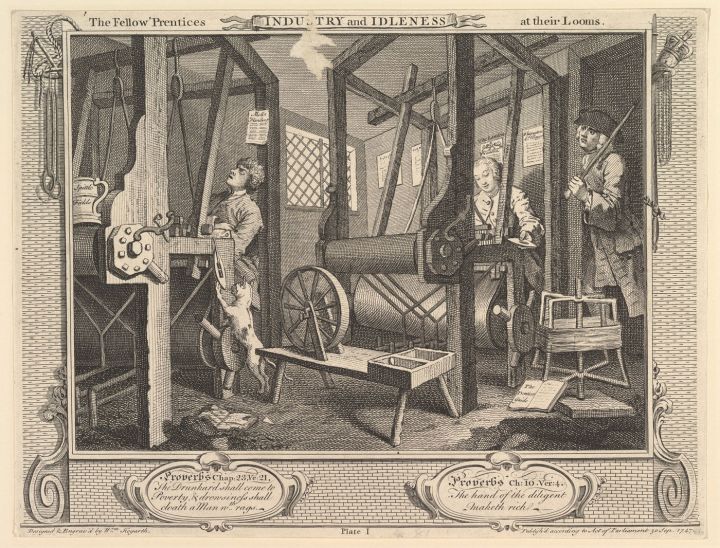
William Hogarth, Industry and Idleness, Plate I: The Fellow ‘Prentices at Their Looms, October 1747, etching and engraving
(Houston: Sarah Campbell Blaffer Foundation)
◊ ◊ ◊ ◊ ◊
This Saturday at the MFAH:
Skillful Hands: Apprentices and Networks of Learning, 1650–1950
Online and in-person, Museum of Fine Arts Houston, 9 November 2024
Established in 2014, the biennial Rienzi symposium focuses on topics inspired by the decorative arts, with papers presented by emerging scholars.
The 2024 symposium, Skillful Hands: Apprentices and Networks of Learning 1650–1950, explores the networks of learning available—and unavailable—to diverse groups of people, examining how access to training and materials through apprenticeships shaped craft traditions. Selected participants present their research on Saturday, 9 November 2024, on the MFAH main campus in Lynn Wyatt Theater, located in the Kinder Building. Entrance is included with Museum admission. The event is live streamed and can be accessed here.
Before the late 19th century, apprenticeships regulated by European craft guilds were the primary means of training in craft trades. These apprenticeships offered a valuable alternative to traditional education but often excluded women, immigrants, Indigenous and enslaved peoples, and children from low-income families. With the onset of the Industrial Revolution, informal apprenticeships emerged to adapt to new innovations and technologies. Outside traditional European models, skills were acquired through forced migration, local environments, and informal training in various colonial regions. These diverse experiences contributed to a network of skilled craftspeople, both anonymous and renowned.
p r o g r a m
11.15 Welcome — Christine Gervais (the Fredricka Crain Director, Rienzi)
11.20 Keynote
Making Time: Competition and Collaboration in Early Modern European Artisanal Networks — Lauren R. Cannady (Assistant Professor of Humanities, University of Houston–Clear Lake)
12:05 Session 1
• Tactile Nomenclature: Transgenerational Transmission of Silk Weaving Knowledge in Early Modern Iran —
Nader Sayadi (Visiting Assistant Professor, University of Rochester)
• Es Artisanes Du Roi: The Public Prohibition and Private Protection of Women’s Artisanal Knowledge in the Paris of Louis XIV, 1661–1715 — Jordan Hallmark (PhD student, Harvard University)
1.00 Lunch break
1.40 Session 2
• The Racial Afterlife of Revolutionary Goldsmithing and Absent Apprenticeships from Haiti to Bordeaux — Benet Ge (Williams College)
• ‘Perfect’ Imitations: Learning in The Spanish Colonial Philippines — Lalaine Little (Director, Pauly Friedman Art Gallery, Misericordia University)
2.35 Break
2.50 Session 3
• Haitian Cabinetmaking Community in New Orleans: The Apprentices of Jean Rouseau and Dutreuil Barjon — Lydia Blackmore (Decorative Arts Curator, Historic New Orleans Collection)
• Passing on Knowledge: Learning the Upholsterer’s Trade in the 19th Century — Justine Lécuyer (Sorbonne Université, Paris)
Conference | The Art of Mourning, 1750–1850
From ArtHist.net:
The Art of Mourning: Emotion and Restraint in the Visual Arts, 1750–1850
Die Kunst des Trauerns. Gezügelte Gefühle in den Bildkünsten, 1750–1850
Martin von Wagner Museum der Universität Würzburg, 5–6 December 2024
 In a much-discussed essay of 1986, Yve-Alain Bois identified “The Task of Mourning” as a characteristic feature of painting in the advanced twentieth century. However, this emotionally charged purpose had already been ubiquitous in many forms of artistic expression in the decades around 1800, before being eclipsed by the more materialistic art movements from the middle of the nineteenth century. Prior to that, images of mourning occur with overriding frequency, to such an extent that they lend themselves for questioning the very polarity of neo-classicism and romanticism.
From ca. 1750, mournful motifs and sentiments are conspicuously present in virtually all genres within the visual arts. Art historical research has addressed this phenomenon mainly by asking for the impact of secularization and dissolving iconographic norms (e.g., Werner Busch, Das sentimentalische Bild, 1993). In fact, mourning as existential subject matter is isolated, sometimes devoid of moralistic or theological linkage, for the first time during the so-called ‘saddle period’. In tombs designed by Antonio Canova, old and new motifs of figural grief are constantly played through; John Flaxman fills one sheet after the other with sorrowful processions; within the paper architecture of Étienne-Louis Boullée, mourning and the sublime are connected through the void of cenotaphs; the school of David chooses, in a rather obsessive manner, scenes informed with teariness; large numbers of mourning figures populate the works of the Düsseldorf School. In painting as in sculpture, let alone the graphic arts, grief and sorrow are everywhere; military commanders, politicians, artists, popes are bemoaned, just as family members, suicides and persons sentenced to death. Lost honor or lost homeland, even the flow of time, are occasions of mourning.
These new ways of depicting grief feature a clear distinction from Baroque pathetic formula. The contrary stance compared to everything before is experienced in the most immediate manner—but how to grasp it conceptually? For sure, images of mourning are hallmarked by emotional control; thus we can understand them as an inversion of heightened expression and pathos. Why, then, is there a desire for pictures of painful yet patiently endured loss just in the age of enlightenment and its aftermath, i. e. in a period that is characterized by faith in progress like none before it? For what reason these pictures were considered particularly appropriate for transformations of Christian imagery? Is there a deeper connection between the new visual dimension of mourning and changed gender-specific attributions? Can we establish a causality between the withdrawal of mourners into themselves on one side, and neo-classicist reductionism on the other? What are the effects of the expanded canon of antiquities, operated by contemporary archaeology, on the iconography of mourning? How to define the share of human science—of new anthropological concepts, early forms of psychology, or research into human emotions in terms of physical and medical scholarship—in the visualization of mourning? How to relate, in a methodically sound fashion, the boom of mourning in the visual arts with social and political upheaval?
This conference seeks to explore, on a large scale, these and other questions around the historical theme of mourning. The Art of Mourning is the first edition of the Würzburg Wellhöfer-Colloquium. Every two years, it will investigate research topics from the history of art between 1750 and 1850 from an interdisciplinary perspective.
Organisation
Michael Thimann (Georg-August-Universität Göttingen/Deutsche Gesellschaft für die Erforschung des 19. Jahrhunderts) und Damian Dombrowski (Julius-Maximilians-Universität/Martin von Wagner Museum der Universität Würzburg)
Kontakt
Martin von Wagner Museum der Universität Würzburg, mvw-museum@uni-wuerzburg.de
d o n n e r s t a g , 5 d e z e m b e r
Michael Thimann, Damian Dombrowski — Begrüßung und Einführung / Welcome and Introduction
Impulsvortrag | Keynote Lecture
• Werner Busch, FU Berlin — Die Kunst des Trauerns: Gezügelte Emotionen in den Bildkünsten, 1750–1850
Sektion 1 | Sentimentalisierte Trauer / Sentimentalised Mourning
• Cordula Grewe, Indiana University Bloomington — Seelenmalerei, oder: Wie bewahrt man seine Fassung?
• Franca Buss, Universität Hamburg — Um die Wette weinen. Johann August Nahls Grabmal für Maria Magdalena Langhans und die Sentimentalisierung des Todes
• Lisa Hecht, Philipps-Universität Marburg — Trauer oder Langeweile? Die Eleganz des ‚Nichtstuns‘ in Damenbildnissen des englischen 18. Jahrhunderts
Sektion 2 | Trauer-Orte / Places of Mourning
• Daniela Roberts, Julius-Maximilians-Universität Würzburg — Die Tugend überdauert den Schmerz: Horace Walpoles Grabmal für seine Mutter in der Westminster Abbey
• Eric Sergent, Laboratoire de recherche historique Rhône-Alpes —Mourning and Grief in French Funerary Sculpture
• Martina Sitt, Kunsthochschule Kassel — Trauer-Plätze des Klassizismus: Vielschichtige Aspekte der Gestaltung von Licht und Raum
Sektion 3 | Entgöttlichte Trauer? / Grief without Deity?
• Noémi Duperron, Université de Genève — ‘Touch(ing) with Sentiment’: Gavin Hamilton’s Grievers and Smith’s Theory of Moral Sentiments
• Maria Schabel, Julius-Maximilians-Universität Würzburg — Erneuerung religiöser Bildsprache? Fallstudien biblischer Trauerikonographie um 1800 am Beispiel zweier Werke Johann Martin von Wagners
• Lorenzo Giammattei & Antonio Soldi, Sapienza Università di Roma — Comparing Perspectives of Eternity in the Elaboration of the Mourning Theme in Painting: From Death for a Religiously Connoted Afterlife to Death as an Opportunity to Create an Ethical and Virtuous Model for the Present Time
f r e i t a g , 6 d e z e m b e r
Sektion 4 | Trauern an der Epochenschwelle / Mourning in the Age of Transition
• Damian Dombrowski, Julius-Maximilians-Universität Würzburg — ‘l’ultimo soffio di felicità in Europa’? Tiepolo’s Sense of Loss
• Isabelle Le Pape, DRAC Normandie, Rouen — From Caspar David Friedrich to Courbet’s Enterrement à Ornans: The Image of Mourning in French and German Romantic Painting
• Susanne Adina Meyer, Università di Macerata — Morire con grazia: Bilder des Trauerns im Spiegel des römischen Kunstdiskurses
Sektion 5 | Antike als Trauer-Modell / Antiquity as a Model of Mourning
• Carolin Goll, Julius-Maximilians-Universität Würzburg — Trauern in der griechischen Tragödie: Martin von Wagners Zeichnungen nach Euripides
• Johannes Myssok, Kunstakademie Düsseldorf — Canova and the Art of Mourning
• Jochen Griesbach, Julius-Maximilians-Universität Würzburg — Niobe ist überall? Zur Antikenrezeption mütterlicher Trauer in Bildern des 18. und 19. Jahrhunderts
Sektion 6 | Politisches Trauern / Political Mourning
• Tobias Kämpf, Friedrich-Alexander-Universität Erlangen — Mourning at Missolonghi: Political Artworks as Compensations for Loss
• Cigdem Özel, Universität Wien — Trauern für die Monarchie am Beispiel von Miniaturporträts Eduard Ströhlings
• Philip Schinkel, Universität Hamburg — Grenzen überschreiten: Männertränen im belgischen Nationalmythos bei Louis Gallait
Conference | Gothic (Revival) Spaces, 1750–1900

From John Britton, Graphical and Literary Illustration of Fonthill Abbey Wiltshire, with Heraldical and Genealogical Notices of the Beckford Family (1823).
◊ ◊ ◊ ◊ ◊
From ArtHist.net:
Gothic (Revival) Spaces: Concepts and Reinterpretation of British and Continental Domestic Architecture, 1750–1900
Würzburg, 14–16 November 2024
Organized by Daniela Roberts and Christina Clausen
Critical engagements with so-called Gothic spaces in fiction is arguably one of many intellectual explorations in the field of Gothic literature. These literary representations of space may emphasise the semiotic structure of fictional spaces in terms of plot, atmosphere and mood but they also reflect on characteristics and behavioural patterns of the narrative’s protagonists.
Until recently, however, less sustained scholarly attention has been paid to the relationship between Gothic architecture and Gothic literature and the architectural style of the Middle Ages as prototype of the Gothic Revival space. In the discipline of art history, on the other hand, a critical focus on Neo-Gothic architecture that highlights design, styles and architectural precursors inhabits a much more prominent role. And yet one could argue that scholarly enquiries into the complexity of spatial structures and effects including the re-contextualised Gothic forms and features as well as the social and performative functions of spaces, especially Gothic Revival interiors and furniture, are yet to emerge. With the conference Gothic (Revival) Spaces, we critically engage with the imaginary spaces in literature and the actually built or designed architectural spaces, since there’s little doubt that the evolution of the fictional and the tangible, material Gothic space is closely intertwined.
Organisation
• Daniela Roberts (daniela.roberts@uni-wuerzburg.de), Institut für Kunstgeschichte, Julius-Maximilians-Universität Würzburg
• Christina Clausen (clausen@kunst.tu-darmstadt.de), Fachgebiet Architektur- und Kunstgeschichte, Universität Darmstadt
t h u r s d a y , 1 4 n o v e m b e r
13.00 Arrival
13.30 Welcome and Introduction — Daniela Roberts (Julius-Maximilians-Universität Würzburg) and Christina Clausen (Technische Universität Darmstadt)
14.00 Opening Lecture
• Dale Townshend (Manchester Centre for Gothic Studies / Manchester Metropolitan University) — Towards a Poetics of Gothic Space
14.45 Break
15.15 Section 1 | Literary and Visual Fiction of Gothic Space
Chair: Daniela Roberts
• Antje Fehrmann (Freie Universität Berlin) — Fragmented Gaze versus Spatial Narrative: Horace Walpole and his Appropriation of Medieval Architecture
• Nicolas Marine (Universidad Politécnica de Madrid) — A Broad Mass of Existence: The House of the Seven Gables and the view from the Gothic House
• Maria Duran Marques (Universidade de Lisboa) — Gothic Fictions – Walpole’s Influences on Ferdinand II of Portugal and his Gothic Revival Projects in the Domestic Sphere
• Christina Clausen (Technische Universität Darmstadt) — Interactions between Pictorial Spaces in Painting and Neo-Gothic Interior Designs
f r i d a y , 1 5 n o v e m b e r
9.30 Section 2 | Constitution and Perception of Gothic Space
Chair: Antje Fehrmann
• Ute Engel (Martin-Luther-Universität Halle-Wittenberg) — The Chapel in the Woods and The Vyne: The Ambiguity of Gothic (Revival) Spaces
• Michal Lynn Shumate (Scuola IMT Alti Studi, Lucca) — Pointed Arches and Atmosphere: Cataloguing Roman Gothic
• Margarida Elias (Universidade Nova de Lisboa) — The Gothic Revival in Lisbon during the 19th Century
12.00 Lunch
14.00 Section 3 | Concepts of Historicisation and Authenticity as a Construction of Political Identity
Chair: Christina Clausen
• Meinrad von Engelberg (Technische Universität Darmstadt) — Von Laxenburg nach Stolzenfels: Die politische Bedeutung der deutschen Neugotik
• Mélina Collin (Université Paul-Valéry Montpellier 3) — American Gothic: Andrew Jackson Downing and the Democratisation of the Gothic Revival Style in the United States
• Dominik Müller (ETH Zürich) — Pyramids, Hexagons, and Pinnacles: Batalha’s Influence
• Madalena Costa Lima (Universidade de Lisboa) — Concepts of Gothic: Judgements and Sensibilities towards a Not Yet Defined Style in the Long 18th Century
17.30 Break
18.00 Keynote Lecture
• Peter Lindfield (Welsh School of Architecture, Cardiff University) — Creating Multi-layered Gothic (Revival) Spaces in 18th- and 19th-Century Britain: The Fashionable and Eccentric
s a t u r d a y , 1 6 n o v e m b e r
9.30 Section 4 | Neo-Gothic Interior in the Context of Stylistic Pluralism
Chair: Michal Lynn Shumate
• Matthew Winterbottom (Ashmolean Museum, Oxford) — Furnishing Gothic Revival Space
• Tommaso Zerbi (Deutsches Historisches Institut in Rom) — Tracing Empire and Domestic Gothic in the Eternal City (online)
• Katrin Kaufmann (Vitrocentre Romont) — Light and Colour in the Gothic Revival: Stained Glass as a Constitutive Element of Neo-Gothic Interior Design
• Ole W. Fischer (Staatliche Akademie der Bildenden Künste, Stuttgart) — Learning from Morris? From Red House to Bloemenwerf: Henry van de Velde and the Invention of L’Art Nouveau from the Spirit of Gothic
13.00 Closing Discussion
Conference | The Expert’s Eye
From the conference website and programme:
El ojo experto: Método, límites y la disciplina de la Historia del Arte
The Expert’s Eye: Method, Limitations, and the Practice of Art History
Online and in-person, Museo Arqueológico Nacional, Madrid, 24–25 October 2024
Organized by Pilar Diez del Corral Corredoira and David Ojeda Nogales
 The work of the art historian revolves around the art object, and the need to tailor one’s methodology to that object gives the discipline its variety and richness. Yet paradoxically, to stress that art works are the centre of art history feels almost transgressive at a time when basic questions of identification and dating are increasingly deemphasized in training new generations of scholars and curators.
The new art history, by contrast, has shown itself perfectly capable of conducting research without having to study or even look at the art object. Without discrediting the results, which are sometimes more characteristic of departments of history or anthropology, the ease with which art-historical fact is blurred can be surprising. Over the last fifty years, the notable decrease in studies that examine the most fundamental problems of dating and authorship has raised questions about the usefulness of prevailing methodologies, leading to extreme cases in which a trained or expert eye is considered unnecessary, or at least insufficient, to deal with objects lacking documentary or other external proof of origin, creator, or date. By contrast, having an educated eye implies knowing the difference between a Roman bust from the first century AD and a modern copy, between discovering the hand of Leonardo and detecting an excellent falsification. In light of these trends, this conference aims to interrogate and challenge the abandonment of visual, material, and historical expertise among art historians.
Watch online here»
Technical coordination
• Marta I. Sánchez Vasco, misanchezvasco@gmail.com
Scientific coordination
• Pilar Diez del Corral Corredoira, diezdelcorral@geo.uned.es
• David Ojeda Nogales, dojeda@geo.uned.es
Scientific committee
• Amaya Alzaga Ruiz (UNED)
• Jeffrey Collins (Bard Graduate Center, Nueva York)
• Ana Diéguez Rodríguez (Instituto Moll)
• Pilar Diez del Corral Corredoira (UNED)
• David Ojeda Nogales (UNED)
• Markus Trunk (Universität Trier)
j u e v e s , 2 4 o c t u b r e
10.00 Presentación institucional a cargo de Isabel Izquierdo Peraile, directora del Museo Arqueológico Nacional
10.30 Conferencia plenaria
• Jeffrey Collins (BGC, NY) — Experts, Eyes, and Expert Eyes: A View from the Decorative Arts
11.30 Pausa café
11.50 Bloque 1
Modera P. Diez del Corral
• Hans R. Goette (DAI) — Remarks on Excavation Context and Epigraphy Serving Stylistic Analysis by Experts in Classical Archaeology: The ›Esquiline Sculptures‹ ‒ ca. 200 or 400 AD?
• Matteo Cadario (UNIUD) — I rischi dei giudizi ‘stilistici’ nello studio della scultura antica
• David Ojeda (UNED) — La desaparición del ‘ojo experto’: El problema del tiempo en el estudio de la escultura antigua
13.30 Pausa comida
15.00 Bloque 2
Modera Jeffrey Collins
• Benjamin Binstock (Independiente) — Less is More: Recognizing Young Rembrandt’s Painting-by-Painting Development
• Miguel Hermoso (UCM) — Truco o trato: Ojo crítico y pintura de la Edad Moderna
• Pilar Diez del Corral Corredoira (UNED) — Aprendices, copistas y falsarios: El dibujo de Carlo Maratta y sus seguidores
16.15 Pausa café
16.30 Bloque 3
Modera Ana Diéguez
• Beatriz Campderá Gutiérrez (MAN) — El ojo experto en las colecciones medievales
• Eduardo Lamas e Isabelle Lecocq (KIK-IRPA) — Inventory at the Service of the Expert Eye
• Sacha Zdanov (ULB) — Interrogating Erwin Panofsky’s Artistic Relativity: Methodological Reflections on the Aesthetic Diversity of Netherlandish Pictorial Production around 1500
• Rafael Villa (UNIGE) — Connoisseurship and French Stained Glass: On the Abandonment of a Method
v i e r n e s , 2 5 o c t u b r e
9.30 Conferencia plenaria
• Carmen Marcos Alonso (subdirectora del MAN) — Protección y enriquecimiento del Patrimonio Cultural: La labor de los museos en la expertización de bienes culturales
10.15 Bloque 4
Modera Amaya Alzaga
• José Luis Guijarro (Universidad Nebrija) — El ‘silencio de los expertos’: Consideraciones en torno a las responsabilidades legales del historiador del arte en el ejercicio de su labor
• Isabel Menéndez (UNED) — Historiadores y peritos en la valoración de la obra de arte
• Adolfo Gandarillas (UPO) — La Inteligencia Artificial y las tecnologías avanzadas aplicadas al patrimonio artístico: Herramientas y recursos del nuevo connoisseur
11.30 Pausa café
11.50 Mesa redonda
Online Symposium | Drawn to Blue
From the University of Amsterdam, as announced at ArtHist.net:
Drawn to Blue
Online, 12–13 November 2024
Organized by Edina Adam, Leila Sauvage, and Michelle Sullivan
This two-day online symposium, co-organized by the J. Paul Getty Museum and the University of Amsterdam, brings together art historians and paper and textile conservators to share their new research on the history of early modern blue paper.
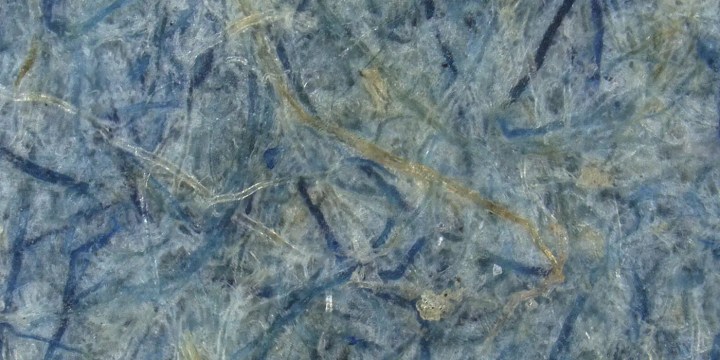
Made from discarded blue rags, early modern blue paper was a humble material. However, producing it required expert knowledge, and its impact on European draftsmanship was transformative. The rich history of blue paper, from the fifteenth to the mid-eighteenth centuries, illuminates themes of transcultural interchange, international trade, and global reach. Inspired by the recent Getty exhibition Drawing on Blue: European Drawings on Blue Paper, 1400s–1700s and coinciding with the current exhibition Drawn to Blue: Artists’ Use of Blue Paper at the Courtauld, this two-day online symposium brings together art historians and paper and textile conservators to share their new research on the history of early modern blue paper.
Registration is available here»
All times listed in Pacific Time and Central European Time.
t u e s d a y , 1 2 n o v e m b e r
9.00am / 6.00pm Opening remarks by Edina Adam, Leila Sauvage, and Michelle Sullivan
9.10am / 6.10pm Artistic and Non-artistic Use of Blue Paper
• Presence of the Blue Paper inside French Paintings of the 18th Century — Lorenzo Giammattei and Selene Secondo, La Sapienza Università di Roma
• Seeds of Blue: Archival Evidence of the Use of Blue Paper as Seed Packets — Maria Zytaruk, University of Calgary
10.15am / 7.15pm Raw Materials, Trade, Economics
• Blue Paper: Its Life, Origin, History and Artistic Exploration — Judith Noorman, University of Amsterdam
• Paper, Pastels, and Patriotism: Artistic Innovation and the American Revolution — Megan Baker, University of Delaware
11.20am / 8.20pm Works in Progress: Study, Examination, Collection Surveys on Blue Paper
• Surveying The Morgan’s Blue Paper Collection — Elizabeth Gralton, Reba Fishman Snyder, and Rebecca Pollak, The Morgan Library & Museum
• The Blue Paper Project at the Art Gallery of Ontario: Developing an Architecture for Close Looking of Drawing Supports — Maia Donnelly, Joan Weir, and Tessa Thomas, Art Gallery of Ontario
• The Blue Papers of Allan Ramsay at the National Galleries Scotland — Charlotte Park, Clara de la Pena McTigue, and Charlotte Topsfield, National Gallery of Scotland
w e d n e s d a y , 1 3 n o v e m b e r
9.00am / 6.00pm Technical Case Studies
• On Blue: The Portrait Drawings of Ottavio Leoni — Georg Dietz et al., Kupferstichkabinett, Staatliche Museen zu Berlin
• Out of the Blue? Tracing Object Biographies, Early Conservation Treatments, and the Original Appearance of Italian Old Master Drawings on Blue Paper at the Kunstmuseum — Annegret Seger, Rebecca Honold, and Max Ehrengruber, Kunstmuseum Basel
• Blue Paper in Late-19th Century Paris: Mary Cassatt Pastel Supports — Tom Primeau, Philadelphia Museum of Art
10.30am / 7.30pm Printing on Blue Paper
• From Aldus to Zanetti, Parenzo to Proops, Venice to Volhynia: Three Centuries of Hebrew Printing on Blue Paper in Southern, Western, Central, and Eastern Europe — Brad Sabin Hill, George Washington University
• Blueprint(s) — Armin Kunz, C.B. Boerner Gallery
• Etched in Blue: A Unique Set of Prints by the Abbé de Saint-Non — Rachel Hapoienu, Courtauld Gallery of Art
11.55 am / 8.55pm Roundtable
Moderated by Ketty Gottardo, Courtauld Gallery of Art
Program participants reflect on new insights, questions raised, and future avenues of research.
Conference | Unfolding the Coromandel Screen
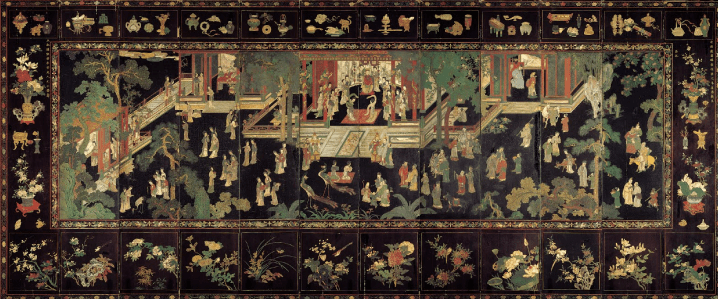
Coromandel Screen, Kangxi reign (1662–1722), Qing dynasty, carved lacquer, 258 × 52 × 3.5 cm
(Art Museum, The Chinese University of Hong Kong, 2001.0660)
◊ ◊ ◊ ◊ ◊
From the conference website and programme:
Unfolding the Coromandel Screen: Visual Mobility, Inscribed Objecthood, and Global Lives
Online and in-person, City University of Hong Kong, 22–23 November 2024
Organized by by Lianming Wang and Mei Mei Rado
During the second half of the seventeenth century, the production of Coromandel screens, also known as kuancai (‘carved polychrome’), flourished along China’s southeast coast. These screens became immensely popular both domestically and in European markets, establishing connections between regional artisans, merchants, and prominent European figures, including royalty and nobility. In the last two decades of this century, Coromandel screens emerged as one of China’s most frequently exported commodities, rivaling porcelain and challenging Japanese lacquerware exports. Their significance extends far beyond the common perception of them as merely mass-produced craftwork of inferior quality.
 With the generous support of the Bei Shan Tang Foundation, the Department of Chinese and History at City University of Hong Kong will host a two-part academic event titled Unfolding the Coromandel Screen to celebrate the department’s tenth anniversary. The conference, organized by Lianming Wang (City University of Hong Kong) in collaboration with Mei Mei Rado (Bard Graduate Center, New York), will take place on-site at City University of Hong Kong and via Zoom from 22 to 23 November 2024. It will bring together an international group of art historians, museum curators, conservators, collectors, and global historians. Participants will explore various aspects of the Coromandel screen and its intricate histories, including its interrelations with paintings, prints, decorative arts, palatial and interior designs, global maritime trade, and the fashion industry. Following the conference, the speakers will join a two-day traveling seminar from 24 to 25 November, visiting lacquer and conservation workshops as well as museum collections in Hong Kong and Guangzhou.
Registration for both onsite and online participation is available here»
Advisory Board
May Bo Ching (City University of Hong Kong), Burglind Jungmann (UCLA), Mei Mei Rado (Bard Graduate Center, New York), Anton Schweizer (Kyushu University), Ching-Fei Shih (National Taiwan University), Lianming Wang (City University of Hong Kong), Xiaodong Xu (†) (Art Museum of The Chinese University of Hong Kong)
Supporting Institutions
Art Museum of The Chinese University of Hong Kong, Indra and Harry Banga Gallery of City University of Hong Kong , Hong Kong Maritime Museum, Lee Shau Kee Library of The Hong Kong University of Science and Technology, Guangdong Provincial Museum, Guangzhou Museum, Chen Clan Ancestral Hall – Guangdong Folk Arts Museum
f r i d a y , 2 2 n o v e m b e r
8.30 Registration
9.00 Welcome and Introduction
• May Bo Ching (City University of Hong Kong), Lianming Wang (City University of Hong Kong), and Mei Mei Rado (Bard Graduate Center, New York)
9.15 Keynote
• Transcultural Treasures: Kuancai (Coromandel) Screens in China and Abroad — Jan Stuart (National Museum of Asian Art, Washington DC)
10.00 Coffee break
10.15 Panel 1 | Coromandel Screens as Sites of Power Representation
Chair: Libby Chan (Indra and Harry Banga Gallery, City University of Hong Kong)
• Place, Scale, and Medium in Several Cartographic Coromandel Screens — Stephen Whiteman (The Courtauld Institute of Art, London)
• Picture of the Immense Sea: Temporal and Spatial Transformation on the Birthday Celebration Screen of
Nan’ao (in Chinese with English subtitles) — Weiqi Guo (Guangzhou Academy of Fine Arts)
11.15 Panel 2 | Coromandel Screens and Intra-Asian Visual Entanglements
Chair: Wan Chui Ki Maggie (The Chinese University of Hong Kong)
• Coromandel Screens and Japanese Seminary Painters in Macau — Yoshie Kojima (Waseda University, Tokyo)
• When the Barbarians Came by Sea: Hunting Screens in China and Japan — Lianming Wang (City University of Hong Kong)
• Transcultural Pictorial Dynamics: Coromandel Screens and Joseon Court Painting and Visual Culture — Yoonjung Seo (Myongji University, Seoul)
12.40 Lunch break
14.00 Panel 3 | Format, Motif, and Technique: Understanding Coromandel Screens
Chair: Daisy Wang (Hong Kong Palace Museum)
• A Screen So Grand: Coromandel Screens from the Perspective of Scale — Tingting Xu (University of Rochester, New York)
• Decoding Frames: Unveiling Names, Provenance, and Connections of the Framed Images on the ‘Dutch
Tribute Screen’ in the National Museum of Denmark, Copenhagen — Xialing Liu (Central Academy of Fine Arts, Beijing / Utrecht University)
• Textiles, Taste, and Templates: Kuancai Screen Motifs and Techniques — Ricarda Brosch (Museum am Rothenbaum – World Culture and Arts, Hamburg)
• Copy Culture and Commodification in Coromandel Screens and Related Lacquerwares, 1680–1780 — Tamara Bentley (Colorado College)
15.40 Coffee Break
16.00 Panel 4 | Materials and Conservation: Perspectives from Labs and Workshops
Chair: Josh Yiu (Art Museum, The Chinese University of Hong Kong)
• On the Origins and Regional Differences of the Kuancai Screens (in Chinese with English subtitles) — Bei Chang (Southeast University, Nanjing) and Linlong Li (Centre de recherche sur les civilisations de l’Asie orientale, Paris)
• A Conservator’s Perspective: Technical Examination and Treatment Strategies for Coromandel Lacquer from the Kangxi Period — Christina Hagelskamp (The Metropolitan Museum of Art, New York)
• Scientific Analysis of a Coromandel Cabinet from the Victoria and Albert Museum, London — Julie Chang (Fu Jen Catholic University, Taipei) and Lucia Burgio (Victoria and Albert Museum, London)
18.00 Museum Visit — Might and Magnificence: Ceremonial Arms and Armour across Cultures,
Indra and Harry Banga Gallery, City University of Hong Kong
19.00 Dinner
s a t u r d a y , 2 3 n o v e m b e r
9.15 Keynote
• The Taste for Coromandel Lacquer in France in the 17th and 18th Centuries: Trade, Reception, and Customs — Stéphane Castelluccio (CNRS, Centre André Chastel, Paris)
10.00 Coffee Break
10.30 Panel 5 | Coromandel Screens as Global Artefacts
Chair: Phil Kwun-nam Chan (Art Museum, The Chinese University of Hong Kong)
• On the ‘Exoticness’ of the Coromandel Lacquerware — Ching-Ling Wang (Rijksmuseum Amsterdam)
• Coastal Landscape and Scenes of Europeans on Coromandel Folding Screens — Rui Oliveira Lopes (Museu das Convergências, Porto)
• Differences and Commonalities: Links between 17th- and 18th-Century Coromandel Export Lacquer Pieces and Luso-Asian Lacquers of the Previous Century — Ulrike Körber (IHA/FCSH//IN2PAST – Universidade Nova de Lisboa)
12.00 Lunch break
13.30 Panel 6 | Coromandel Screens and Their Global Lives, Part One
Chair: Nicole Chiang (Hong Kong Palace Museum)
• Beyond the Closet: The Taste for Coromandel Lacquerware Furniture in Holland and England, ca. 1675–1700 — Alexander Dencher (Rijksmuseum Amsterdam)
• ‘Sawed, Divided, Cut, Clift, and Split Asunder’? A Case Study of a European Chest of Drawers Decorated with Excerpts from a Coromandel Screen of Known Pictorial Model — Grace Chuang (Independent Scholar, Detroit)
• Reframing the West Lake in French Furniture and Interiors — Nicole Brugier (Ateliers Brugier, Paris)
14.30 Coffee Break
14.45 Panel 7 | Coromandel Screens and Their Global Lives, Part Two
Chair: Florian Knothe (University Museum and Art Gallery, The University of Hong Kong)
• The ‘Japanese Cabinet’ at the Hermitage in Bayreuth, Germany — Patricia Frick (Museum für Lackkunst, Münster)
• The Ludic Afterlife of Coromandel Screens: Integrating the Swinging Woman into 18th-Century French Interiors — Weixun Qu (Washington University in St. Louis)
16.00 Short Break
16.15 Panel 8 | The Afterlives of the Coromandel Screens
Chair: May Bo Ching (City University of Hong Kong)
• Art Dealer Florine Langweil and the European Market for Coromandel Screens in the Early 20th Century — Elizabeth Emery (Montclair State University, New Jersey)
• Inspiring Art Deco in Britain: The Architect, the Theatre, and the Coromandel Screen — Helen Glaister (Victoria and Albert Museum, London)
• Shifting Identities and Global Circulation of the Coromandel Screen in Early-20th-Century Buenos Aires — Mariana Zegianini (SOAS University of London)
• The Framework of Modernism: Lacquer Screen and Fashion Imagination in the 1920s — Mei Mei Rado (Bard Graduate Center, New York)
Exhibition | Colonial Crossings: The Spanish Americas

Unidentified workshop, Cuzco, Peru, Our Lady of the Rosary of Chiquinquirá with Female Donor, late 17th–early 18th century, oil and gold on canvas (Collection of Carl & Marilynn Thoma, 2013.046; photo by Jamie Stukenberg).
◊ ◊ ◊ ◊ ◊
Now on view at Cornell’s Johnson Museum of Art:
Colonial Crossings: Art, Identity, and Belief in the Spanish Americas
Johnson Museum of Art, Cornell University, Ithaca, New York, 20 July 2024 — 15 December 2024
Curated by Andrew Weislogel and Ananda Cohen-Aponte, with students in the course Colonial Connectivities: Curating the Arts of the Spanish Americas
The artworks featured in this exhibition span more than three hundred years of history, five thousand miles of territory, and two oceans, introducing the rich artistic traditions of Mexico, Venezuela, Colombia, Ecuador, Peru, Bolivia, Cuba, Puerto Rico, and the Philippines during the period of Spanish colonial rule (approximately 1492–1830).
This first exhibition of colonial Latin American art at Cornell considers the profound impact of colonization, evangelization, and the transatlantic slave trade in the visual culture of the Spanish empire, while also manifesting the creative agency and resilience of Indigenous, Black, and mixed-race artists during a tumultuous historical period bookended by conquest and revolution.
At first glance, these religious images, portraits, and luxury goods might seem to uphold colonial structures that suggest a one-way flow of power from Europe to the Americas. Yet closer consideration of these artists’ identities, materials, techniques, and subjects reveals compelling stories about the global crossings of people, commodities, and ideas in the creation of new visual languages in the Spanish Americas. These artworks testify to entangled cultural landscapes—from paintings of the Virgin Mary with ties to sacred sites of her apparition, to lacquer furniture bearing the visual stamp of trade with East Asia, they embody a plurality of cultural, material, and religious meanings.
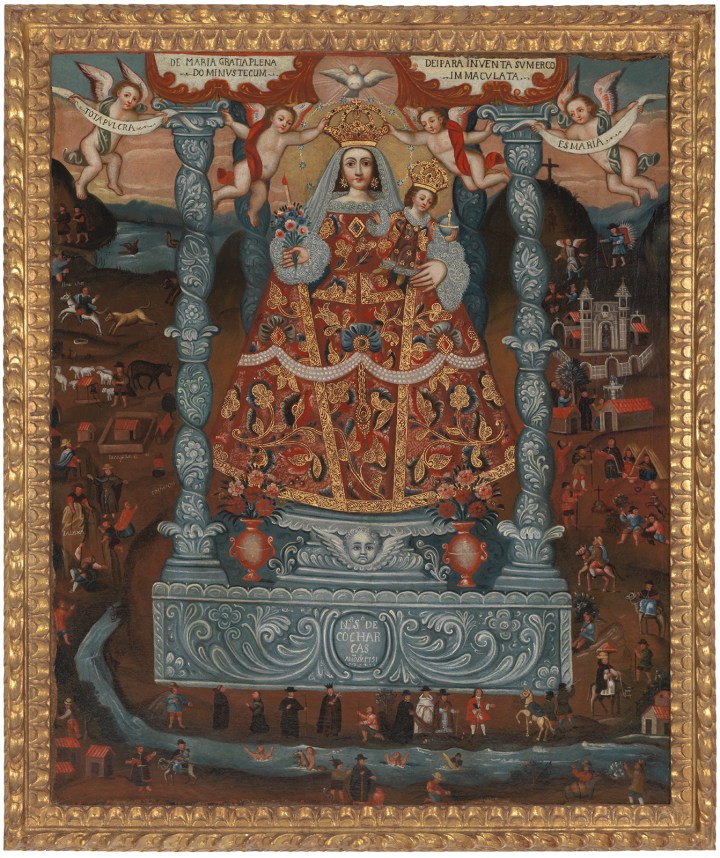
Unidentified workshop, Peru, Our Lady of Cocharcas, 1751, oiil and gold on canvas (Collection of Carl & Marilynn Thoma, 2011.040; photo by Jamie Stukenberg).
Colonial Crossings was curated by Dr. Andrew C. Weislogel, Seymour R. Askin, Jr. ’47 Curator of Earlier European and American Art at the Museum, and Dr. Ananda Cohen-Aponte, Associate Professor of the History of Art & Visual Studies, and the students in Colonial Connectivities: Curating the Arts of the Spanish Americas (ARTH 4166/6166):
Osiel Aldaba ’26
Miguel Barrera ’24
Daniel Dixon ’24
Juliana Fagua Arias, PhD student
Miche Flores, PhD student
Isa Goico ’24
Sara Handerhan ’24
Emily Hernandez ’25
Ashley Koca ’25
Maximilian Leston ’26
Maria Mendoza Blanco ’26
Lena Sow, PhD student
Nicholas Vega ’26
We are grateful to lenders Carl and Marilynn Thoma, the Denver Museum of Art, the Hispanic Society of America, and the Division of Rare and Manuscript Collections, Cornell University Library; and to David Ni ’24, the 2023 Nancy Horton Bartels ’48 Scholar for Collections, for organizational support.

Unidentified artist, Quito, Ecuador, Noah’s Ark, detail, late 18th century, oil on canvas (Collection of Carl & Marilynn Thoma, 2000.004).
◊ ◊ ◊ ◊ ◊
The Johnson Museum will also present this symposium:
Symposium | Reimagining the Américas: New Perspectives on Spanish Colonial Art
Online and in-person, Saturday, 9 November 2024
At this free symposium, presented in conjunction with the exhibition, established scholars whose work encompasses a variety of regions and approaches to colonial Latin American art history will offer new methodologies, seeking to expand the boundaries of this visual culture. Presentations will explore the exhibition’s thematic emphases on materiality and sacredness, hybridity and cross-cultural exchange, colonial constructions of race, and recovering art histories marked by silence and erasure.
• Time-Warping the Museum: Temporal Juxtapositions in Displays of Spanish Colonial Art — Lucia Abramovich, Museum of Fine Arts, Boston
• Framing Miracles for a New World: The Oval — Jennifer Baez, University of Washington
• Trent as Compass: Directions, Circuits, and Crossings of the Visual and Canonical in Spanish America — Cristina Cruz González, Oklahoma State University
• Splendor and Iridescence: Pearls in the Art of the Spanish Americas — Mónica Dominguez Torres, University of Delaware
• ‘Your Plenteous Grandeur Resides in You’: Asian Luxury in Spanish American Domestic Interiors — Juliana Fagua Arias, Cornell University
• Supplicant Africans: From Baptizands to Emblems of Abolition —Elena FitzPatrick Sifford, Muhlenberg College
• Voices of Influence: Exploring Power Dynamics in the Conservation of Musical Heritage in Colonial Latin America — Patricia García Gil, Cornell University
• Invisible Soldiers and Constant Servants: The Pre-Hispanic Roots of the Andean Cult of Angels — Maya Stanfield-Mazzi, University of Florida
A schedule will be posted soon. Please email eas8@cornell.edu to register in advance for in-person attendance. Click here to join the webinar.










 Enfilade
leave a comment