Exhibition | Jean-Baptiste Greuze: Enlightening Childhood
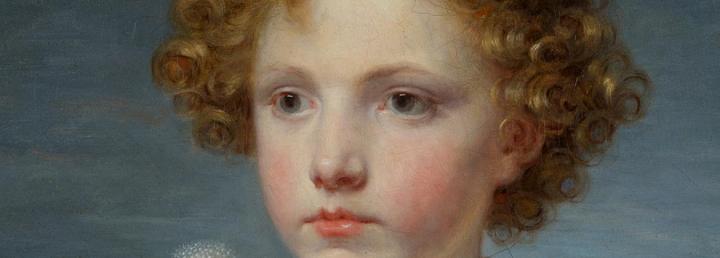
Jean-Baptiste Greuze, Young Shepherd Holding a Flower, detail, 1760–61, oil on oval canvas, 72.5 × 59.5 cm
(Paris: Petit Palais, PDUT1192)
◊ ◊ ◊ ◊ ◊
Greuze was born on this day (August 21) 300 years ago; the exhibition opens next month at the Petit Palais:
Jean-Baptiste Greuze: L’enfance en lumière
Petit Palais, Paris, 16 September 2025 — 25 January 2026
Curated by Annick Lemoine, Yuriko Jackall, and Mickaël Szanto
A little-known and misunderstood artist today, Greuze was nonetheless acclaimed by the public, adulated by critics, and sought after by the greatest collectors.
Jean-Baptiste Greuze (1725–1805) is undoubtedly one of the most important and daring figures of 18th-century France. To mark the 300th anniversary of his birth, the Petit Palais is paying tribute to this painter of portraits and genre scenes, who knew more than anyone else how to translate the human soul. This exhibition invites visitors to rediscover Greuze’s work through the prism of a central theme in his painting: childhood. Echoing the preoccupations of the philosophers Diderot, Rousseau, and Condorcet, the artist invites us to reflect on the place of the child within the family, the responsibility of parents in the child’s development, and the importance of education in shaping the child’s personality. With empathy, the artist questions the place of children in 18th-century society, their future, and their emancipation. He mirrors the major issues of his time. He also examines the transition to adulthood and the birth of love. Using the codes of his time, he tackles the theme of consent, which is strikingly topical today. Bringing together around a hundred paintings, drawings, and prints from all over the world, this exhibition is an opportunity to rediscover the singular work of this major artist of the Age of Enlightenment.
Curators
• Annick Lemoine, General Curator of Heritage, Director of the Petit Palais
• Yuriko Jackall, Director of the Department of European Art & Allan and Elizabeth Shelden Curator of European Paintings, Detroit Institute of Arts
• Mickaël Szanto, Senior Lecturer, Sorbonne University
Annick Lemoine, Yuriko Jackall, and Mickaël Szanto, Jean-Baptiste Greuze: l’enfance en lumière (Paris Musées, 2025), 304 pages, ISBN: 978-2759606177, €49.
Exhibition | Greuze, une palette d’émotions
Greuze, une palette d’émotions: Dessins du Louvre et oeuvres de Tournus
Hôtel-Dieu, Musée de Tournus, 24 May — 21 September 2025
Curated by Xavier Salmon
 To mark the 300th anniversary of the artist’s birth in 1725, the famous Burgundy town where he was born has joined forces with the Musée du Louvre to pay him a well-deserved tribute. Chosen from the rich collection of the Cabinet des Dessins, thirty of the master’s works reflect both his creative process and his desire to turn some of his most accomplished drawings into works in their own right, destined for a clientele of connoisseurs and collectors. All the master’s favorite themes are illustrated here: genre scenes, moralistic subjects, expressive heads, and portraits. They underline the extent to which Denis Diderot was right when he described Jean-Baptiste Greuze as a “delicate and sensitive soul” who had imposed himself on his century.
Jean-Baptiste Greuze: Les dessins du Louvre (Dijon: Éditions Faton, 2025), 80 pages, ISBN: 978-2878443981, €18.
Exhibition | Treasures from the Terra Sancta Museum
From the press release (14 August) for the exhibition:
To the Holy Sepulcher: Treasures from the Terra Sancta Museum
The Frick Collection, New York, 2 October 2025 — 5 January 2026
Kimbell Art Museum, Fort Worth, 15 March — 28 June 2026
Organized by Xavier Salomon, with Jacques Charles-Gaffiot and Benoît Constensoux
Unparalleled masterpieces of European decorative arts to be shown at the Frick and the Kimbell.
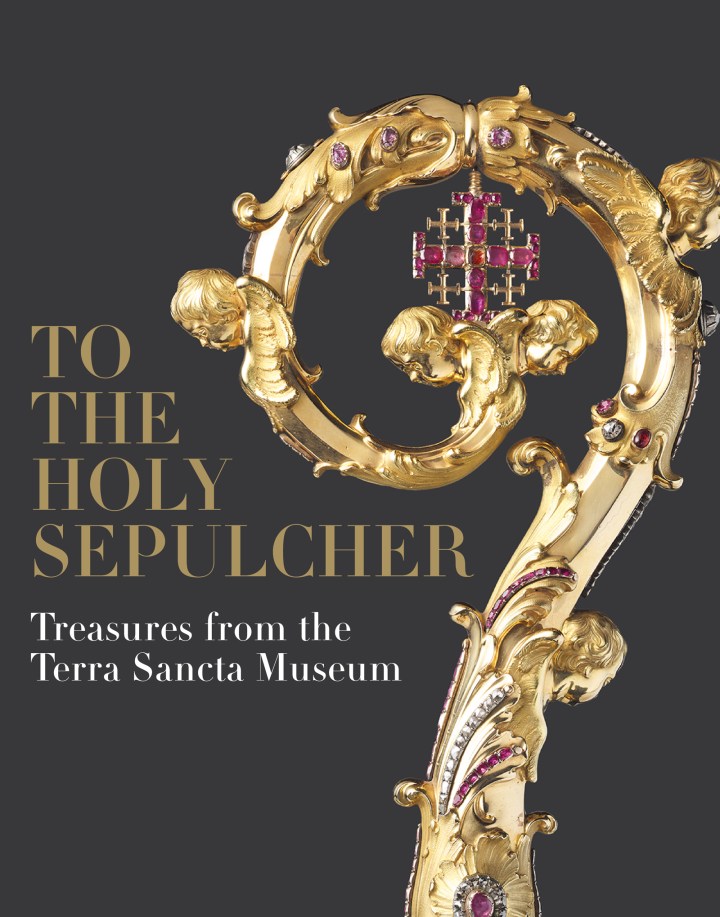 Beginning this fall, The Frick Collection will present a stunning exhibition of more than forty objects on loan from the Terra Sancta Museum. Ranging from liturgical objects in gem-encrusted gold and silver to richly decorated vestments in velvet, damask, and other fine materials, the works were created for the Church of the Holy Sepulcher in Jerusalem and were largely unknown until their rediscovery by scholars in the 1980s. They represent the pinnacle of European craftsmanship in these fields during the seventeenth and eighteenth centuries, and many have no parallel anywhere in the world. To the Holy Sepulcher: Treasures from the Terra Sancta Museum offers visitors the opportunity to view these objects for the first time in North America.
The exhibition features a selection from the Treasure of the Custody of the Holy Land, established in 1309 by the Franciscan order to oversee Christian holy sites in Jerusalem and the Middle East. One of the major sites that the Custody oversees (alongside other Christian denominations) is the Church of the Holy Sepulcher—the holiest place in Christianity, believed to be the site of Jesus Christ’s crucifixion, burial, and resurrection. Over the centuries, European Catholic monarchs and Holy Roman Emperors sent sumptuous gifts to the Franciscans in Jerusalem, often in the form of liturgical objects and vestments. The golden age of this gift-giving occurred from the early 1600s to the late 1700s, the range represented in the exhibition. The Franciscans have safeguarded the works ever since, using them in Mass and other religious ceremonies to the present day.
Ahead of the opening of the Custody’s new Terra Sancta Museum at Jerusalem’s St. Savior Monastery, objects from its incredible collection have been traveling to institutions in Europe and now North America. A 2013 exhibition showcased loans from the Holy Sepulcher at the Palace of Versailles, and more recent presentations have been held at the Calouste Gulbenkian Museum, Lisbon; the Gaiás Centre Museum, Santiago de Compostela; and the Museo Marino Marini, Florence. After the Frick debuts its unique U.S. exhibition in New York, To the Holy Sepulcher will travel to the Kimbell Art Museum in Fort Worth, Texas (March 15 through June 28, 2026).
The exhibition is organized by Xavier F. Salomon, the Frick’s Deputy Director and Peter Jay Sharp Chief Curator, along with Jacques Charles-Gaffiot and Benoît Constensoux, members of the Terra Sancta Museum’s Scientific Committee. The presentation continues the Frick’s strong tradition of shows centered on European gold- and silversmithing of this period. Past highlights include Gold, Jasper, and Carnelian: Johann Christian Neuber at the Saxon Court (2012); Pierre Gouthière: Virtuoso Gilder at the French Court (2016–17); Luigi Valadier: Splendor in Eighteenth-Century Rome (2018–19); and The Gregory Gift (2023). The award-winning Valadier exhibition was curated by art historian Alvar González-Palacios, who in the 1980s rediscovered and published the Custody of the Holy Land’s artistic holdings for the first time, laying the groundwork for this unprecedented project.
Commented Salomon, “This exhibition represents a completely unique opportunity for visitors, building on the Frick’s successful past presentations highlighting masters of European decorative arts. Displayed for the first time in the United States, the exquisite objects in this show are rare survivals, as similar objects were often severely damaged, melted down, or otherwise lost—nothing like them survives in the countries in which they were created. We are deeply grateful for this collaboration with the Custody of the Holy Land as we look ahead to the opening of the Terra Sancta Museum, which will offer a more permanent public display of these treasures.”
For his work on the exhibition, occurring over a period of years, Salomon has been awarded the Cross of Merit (Crucem Ex Merito) by the Equestrian Order of the Holy Sepulchre of Jerusalem. The ceremony for this prestigious honor will take place this fall. To the Holy Sepulcher will be Salomon’s final exhibition at the Frick Collection, after a tenure of more than a decade at the helm of the museum’s Curatorial Department. Following the show’s opening, in November, Salomon will take up the role of Director of the Calouste Gulbenkian Museum in Lisbon.
Objects Organized by Country of Origin
The show marks the first presentation in all three rooms of the Frick’s new Ronald S. Lauder Exhibition Galleries, which opened earlier this summer. Visitors will first encounter an introduction to the Church of the Holy Sepulcher, including an eighteenth-century scale model of the church, exquisite vestments, a gilded reliquary, and a monumental silver relief depicting the Resurrection. The exhibition’s display will then be organized geographically by the countries in which the objects on view were created and subsequently sent to Jerusalem.

Antonio de Laurentiis, Throne of Eucharistic Exposition, 1754, gold, gilt copper, almandine garnets, amethysts, rock crystal, diamonds, rubies, emeralds, sapphires, carnelians, peridots, smoky quartzes, glass and doublets, 68 inches tall (Jerusalem: Terra Sancta Museum).
Objects from the Kingdom of France mainly comprise prestigious gifts for use in worship, commissioned and sent by Kings Louis XIII, Louis XIV, and Louis XV. Some of these are completely unique survivals, similar metallic objects having been melted down by later monarchs or during the French Revolution.
The Holy Roman Empire is represented by donations from Emperor Charles VI and his daughter, Empress Maria Theresa. These include complete sets of vestments and gold and silver objects such as a large sanctuary lamp, as well as a ewer and basin and an engraved gilt-silver dish that have secular forms but served liturgical functions.
The Kingdom of Spain was by far the leading donor to the Church of the Holy Sepulcher. Gifts on view from Spain trace its monarchs’ enduring devotion to holy sites, including Philip II (represented by a beautiful chalice) and Philip IV and his son Charles II (who gave a massive Throne of Eucharistic Exposition along with candlesticks and vases featuring the royal arms of Spain).
Highlights of the section devoted to the Kingdom of Portugal were given by John V, known as ‘the Magnanimous’ for his luxurious commissions. These include vestments and a gold sanctuary lamp, which have no surviving parallels in Portugal today.
Finally, gifts from modern-day Italy are divided into sections for the Kingdom of Naples and the Republics of Venice and Genoa. Venice is represented by vestments and a pair of monumental silver torchères, which stand at more than eight feet tall, while Genoa gave a beautiful cope featuring intricate embroidered floral designs and a spectacular scene of St. George attacking the dragon. The Neapolitan gifts are among the finest examples in the show and were all given by King Charles III, later king of Spain. These include an exquisite crucifix in gold, lapis lazuli, and gemstones; a highly adorned Throne of Eucharistic Exposition topped with a crown; and the magnificent crozier that graces the exhibition catalogue’s cover.
Rich Dialogues with the Frick’s Permanent Collection
The objects in the exhibition also offer illuminating connections to works from the Frick’s permanent collection. Chief among them is Giovanni Bellini’s St. Francis in the Desert. The saint’s spiritual vision and stigmatization depicted in the panel are believed to have taken place in 1224, just five years after Francis visited North Africa, which may have included a trip to holy sites in Jerusalem. By the 1250s, his followers had established a base there, which led to the creation of the Custody of the Holy Land. Visitors to the exhibition will be able to view Bellini’s celebrated painting in its traditional location in the museum’s Living Hall.
A large Throne of Eucharistic Exposition and a set of candlesticks in the exhibition were given by Philip IV of Spain, a few years after Diego Velázquez painted the Frick’s captivating portrait of the king, on view in the museum’s West Gallery. Louis XIII, who donated several silver objects and a set of fleur-de-lys vestments, and Holy Roman Empress Maria Theresa, who gave a gold sanctuary lamp, are both depicted in portrait medals in the Frick’s new Medals Room. Maria Theresa and her father, Charles VI, were also intimately connected to Vienna’s Du Paquier manufactory; many pieces of goldwork in the exhibition feature patterns used in Du Paquier porcelain, examples of which are shown in a new passage on the museum’s second floor.
Finally, a number of objects in the show were gifts of Louis XIV of France and his successor, Louis XV, including a set of vestments with the latter’s coat of arms. Both monarchs are the subjects of sculptures in the museum’s galleries. Louis XV’s official mistresses also have notable connections to the Frick: Madame de Pompadour commissioned François Boucher’s series The Four Seasons, in the museum’s West Vestibule, while Madame du Barry commissioned Jean-Honoré Fragonard’s Progress of Love, which adorns the Fragonard Room.
Programming and Catalogue
The exhibition will be complemented by a number of engaging public programs. In mid-October, Xavier Salomon will present a ticketed lecture in the museum’s new Schwarzman Auditorium on the background and significance of the show and its objects. Musical programming will focus on liturgical pieces, bringing to life the devotional contexts for which the exhibition’s objects were intended. Finally, art-making programs, both free and ticketed, will explore metalworking techniques involved in the creation of several works in the show.
To the Holy Sepulcher: Treasures from the Terra Sancta Museum is accompanied by a lavishly illustrated exhibition catalogue. In addition to entries for each work on display, essays highlight the rediscovery of the Treasure of the Custody of the Holy Land, the history of the Franciscans in the Holy Land and the sites they oversee, the creation and donation of the objects in the Treasure, the use of such objects in the Catholic liturgy, and an overview of the new Terra Sancta Museum.
Xavier F. Salomon with Marie-Armelle Beaulieu, Jacques Charles-Gaffiot, Benoît Constensoux, Alvar González-Palacios, Maria Pia Pettinau Vescina, Béatrix Saule, and Danièle Véron-Denise, To the Holy Sepulcher: Treasures from the Terra Sancta Museum (New York: The Frick Collection in association with D Giles Limited, 2025), 384 pages, ISBN: 978-1913875756, $90.
New Book | Splendour in Venice: From Canaletto to Guardi
The exhibition was noted here at Enfilade in May 2024. The catalogue will soon be available from ACC Art Books and Simon & Schuster:
Luísa Sampaio, with Alberto Craievich, Mar Borobia, and Vera Mariz, Splendour in Venice: From Canaletto to Guardi (Lisbon: Calouste Gulbenkian Foundation, 2025), 208 pages, ISBN: 978-9899119208, £45.
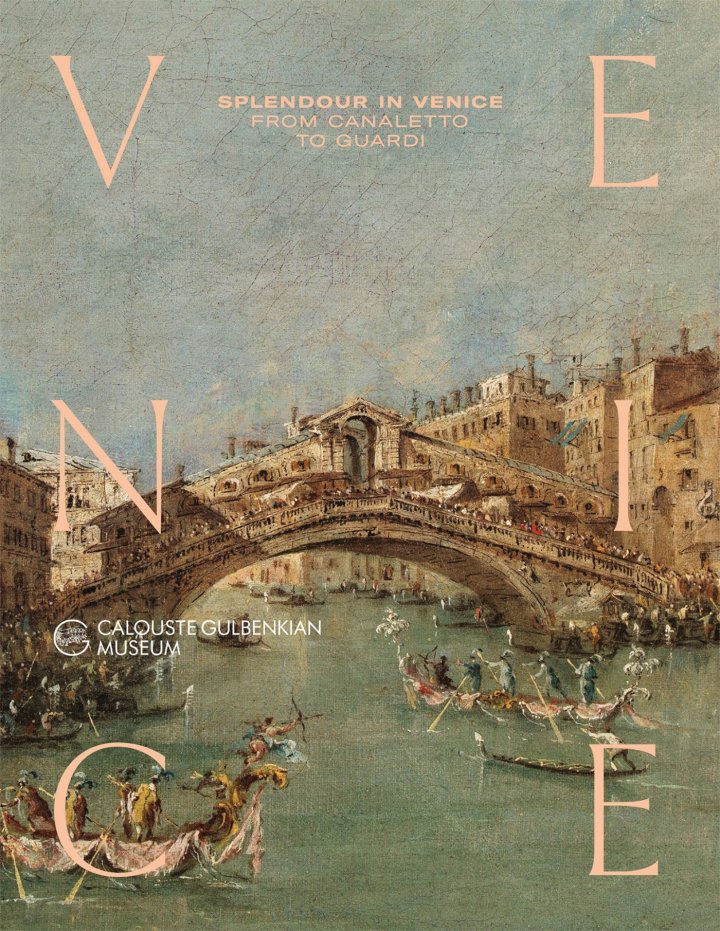 In October 2024 The Calouste Gulbenkian Museum in Lisbon, in collaboration with the Museo Thyssen-Bornemisza in Madrid, presented the exhibition Splendor in Venice: From Canaletto to Guardi, devoted to 18th-century Venetian painting. Artists such as Canaletto, Francesco Guardi, Bernardo Bellotto, and Giambattista Tiepolo—creators of some of the most brilliant compositions of their time and undeniable highlights in the collections of both Iberian museums—were among the artists showcased in the exhibition.
This accompanying publication is divided into two parts: the first featuring three essays and the second comprising individual catalogue entries. Mar Borobia, Chief Curator of Old Master Painting at the Museo Thyssen-Bornemisza, opens the first part with an essay on the history of the collection of 18th-century Venetian painting belonging to the Madrid museum. Next, Vera Mariz, curator at the Calouste Gulbenkian Museum, reflects on Gulbenkian’s admiration for the work of Francesco Guardi, which led him to purchase 19 paintings by the Italian master for his collection. Finally, Alberto Craievich, director of Ca’ Rezzonico, Museo del Settecento Veneziano, explores the artistic context of the city of Venice during the 18th century. The second part consists of 34 catalogue entries written by Luísa Sampaio, the curator of the exhibition.
Luísa Sampaio is in charge of collections management at the Calouste Gulbenkian Museum. As a curator, she takes care of the departments of Painting, Sculpture, and the works of René Lalique. She has curated various international exhibitions devoted to artists including Turner, Fantin-Latour, Carpeaux, and Rodin. She recently curated the exhibition René Lalique and the Age of Glass (2020). She is the author of the Calouste Gulbenkian Museum’s painting catalogue (2009).
The Burlington Magazine, August 2025
The long 18th century in the August issue of The Burlington:
The Burlington Magazine 167 (August 2025) | Decorative Arts
e d i t o r i a l
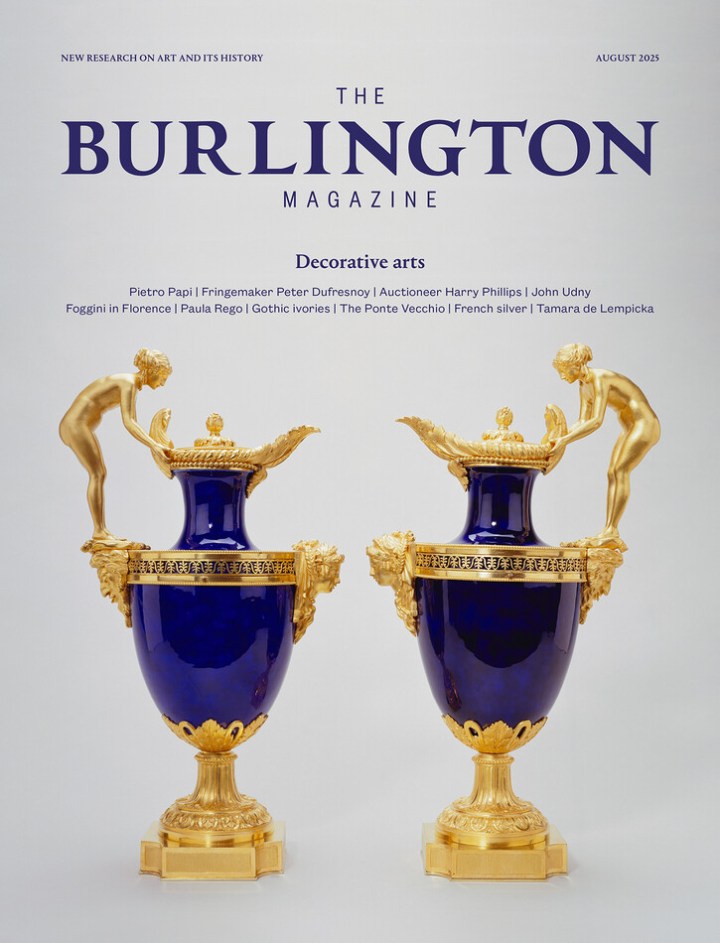 • Studying the Decorative Arts, p. 755.
The serious study of the decorative arts and the pleasures that derive from it have been an important feature of The Burlington Magazine since the early twentieth century. But how healthy is this field of research today? Arguably, it remains a specialised endeavour rather than holding a very prominent place in the mainstream of art-historical studies; and although there are some brilliant advocates for it and encouraging developments, an uncertain future is the key concern, as is the case with so many areas of scholarship in universities, museums and the market.
l e t t e r
• Philip McEvansoneya, “Lefèvre in Ireland,” pp. 756–57. Response to Humphrey Wine’s article in the May issue, “Napoleon Crossing the Alps: British Press Reaction to the London Exhibitions of David, Lefèvre, Wicar, and Lethière,” pp. 450–59.
a r t i c l e s
• Annabel Westman, “Peter Dufresnoy, Fringe and Lacemaker Extraordinaire,” pp. 758–75.
The French fringe and lacemaker Peter Dufresnoy excelled at his craft and trade in Restoration London. A close study of written sources and surviving works by him facilitates a reconstruction of his brilliant career. His patrons included the Duke of Lauderdale (Ham House), Mary Howard, Duchess of Norfolk and 7th Baroness Mordaunt (Drayton House), the Earl of Exeter (Burghley House) and the Dowager Queen Catherine of Braganza.
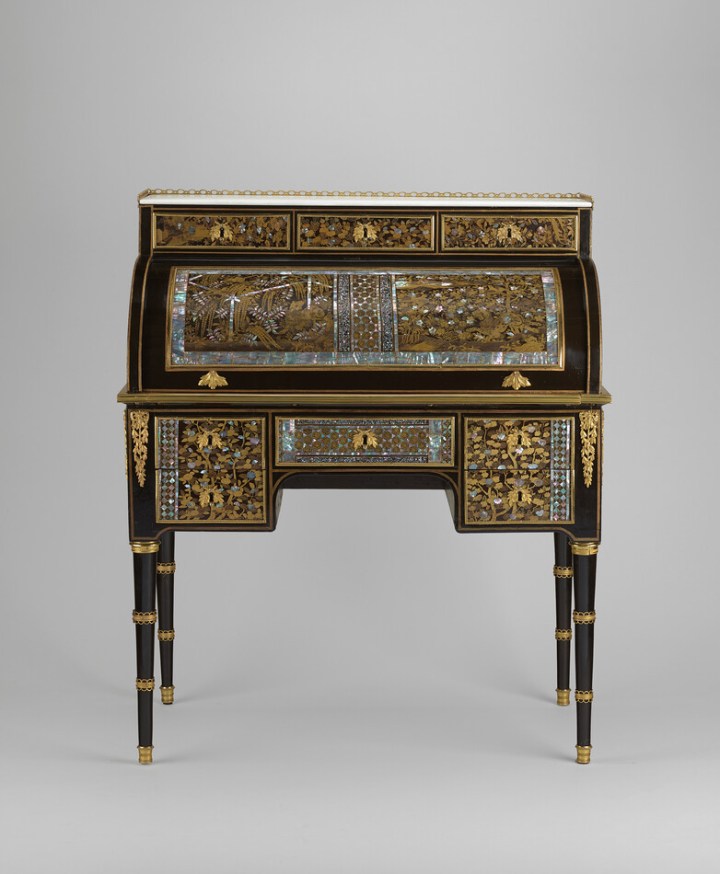
Roll-top desk. France, ca.1790, mounted with 16th-century Japanese lacquer, wood, black lacquer, gold and silver lacquer, mother of pearl, leather and gilt metal mounts, 110 × 95 × 55 cm (Royal Collection Trust; © His Majesty King Charles III 2025). The desk was acquired by the Prince of Wales (the future George IV) from Harry Phillips.
• Helen Jacobsen, “Harry Phillips and the Development of the London Decorative Art Market, 1796–1839,” pp. 776–91.
Analysis of sale catalogues assists in an assessment of the career of Harry Phillips, the least known of London’s significant Regency auctioneers. He specialised in decorative arts sales and his clients included William Beckford, the Prince of Wales and the Earl of Yarmouth. Notable works acquired at his auctions are now in the Royal Collection and the Wallace Collection, London.
• Brendan Cassidy, “John Udny and the ‘Battle of Pavia’ Tapestries, 1762–74,” pp. 792–99.
To commemorate Emperor Charles V’s victory at the Battle of Pavia in 1525, a set of seven tapestries illustrating key moments in the conflict were presented to the emperor by the Netherlands in 1531. They are now in the Museo di Capodimonte, Naples, and their provenance between 1762 and 1774 is established here by connecting them to John Udny, a Scottish diplomat, art collector and dealer.
• Romana Mastrella, “Two Monumental Maiolica Amphoraefrom the Papi Workshop: New Insights and Contexts,” pp. 800–05.
Recently acquired by the Metropolitan Museum of Art, New York, two large ‘istoriato’ maiolica vases [1670] featuring scenes from Torquato Tasso’s poem ‘Gerusalemme Liberata’ illustrate the continued presence of pottery workshops in seventeenth-century Urbania. Two previously unpublished documents help to contextualise their maker, Pietro Papi, as well the Papi family workshop, within the social and economic dynamics of central Italian ceramic production.
r e v i e w s
 • Christopher Baker, “New Collection Displays at the National Gallery, London,” pp. 806–15.
In May 2025, as the final part of its bicentenary celebrations, the National Gallery, London, unveiled extensive new displays of its paintings. Juxtaposing the familiar and the unexpected, they provide fresh perspectives on its outstanding and expanding collection.
• David Pullins, Review of the newly renovated Frick Collection in New York, pp. 816–19.
• Nicola Ciarlo, Review of the exhibition Giovan Battista Foggini: Architetto e scultore granducale (Palazzo Medici Riccardi, Florence), pp. 824–27.
• Charles Saumarez Smith, Review of the new V&A East Storehouse in London, pp. 837–39.
• Kirstin Kennedy, Review of Peter Fuhring, The French Silverware in the Calouste Gulbenkian Collection (Calouste Gulbenkian Foundation, 2023); and Charissa Bremer-David, with contributions by Jessica Chasen, Arlen Heginbotham, and Julie Wolfe, French Silver in the J. Paul Getty Museum (J. Paul Getty Museum, 2023), pp. 840–42.
• Humphrey Wine, Review of Nicolas Lesur, Pierre Subleyras (1699–1749) (Arthena, 2023), pp. 848–49.
• Françoise Barbe, Review of Marco Spallanzani, Otto studi sul vetro a Firenze, Secoli XIV–XVIII (Edifir Edizioni, 2024), pp. 849–50.
• Marika Sardar, Review of Sonal Khullar, ed., Old Stacks, New Leaves: The Arts of the Book in South Asia (University of Washington Press, 2023), 850–51.
Exhibition | Giovan Battista Foggini (1652–1725)
Closing soon at the Palazzo Medici Riccardi:
Giovan Battista Foggini: Grand Ducal Architect and Sculptor
Palazzo Medici Riccardi, Florence, 10 April — 9 September 2025
Curated by Riccardo Spinelli
 Florence celebrates the artistic genius of Giovan Battista Foggini (1652–1725) with a monographic exhibition, promoted by the Metropolitan City of Florence and organised by the Fondazione MUS.E. Curated by Riccardo Spinelli, it marks the third centenary of the artist’s death, presenting the extraordinary figure of a man who, through his ‘interdisciplinary’ work, shaped the artistic language of late-Medicean Florence. This unique opportunity will showcase the design, stylistic, and technical prowess of Foggini, highlighting the breadth of his interventions and the distinctive signature that set a standard in Florence. His grand and eloquent style quickly gained recognition, earning the admiration of the Medici and his contemporaries, while also inspiring younger artists, who saw in him a brilliant master with an almost inexhaustible creative imagination.
Through a selection of sculptures, drawings, and artefacts, the exhibition traces Foggini’s career, from his training in Rome at the Medici Academy, founded by Cosimo III de’ Medici, to his return to Florence, where he became the Grand Ducal sculptor, court architect, and director of the Galleria Manufactories. These workshops, commissioned by the prince, were dedicated to the production of marvellous inlaid works in hard stones and precious metals. Foggini’s style, characterised by a late-Baroque language influenced by Roman art yet distinctly original, defined the image of late 17th-century Florence, paving the way for future generations.
Riccardo Spinelli, ed., Giovan Battista Foggini: Architetto e scultore granducale (Florence: Edifir Edizioni, 2025), 336 pages, ISBN: 978-8892802964, €40.
Exhibition | An Ecology of Quilts
Opening next month at the American Folk Art Museum:
An Ecology of Quilts: The Natural History of American Textiles
American Folk Art Museum, New York, 26 September 2025 — 1 March 2026

Wholecloth Quilt, England or United States, 1785–90, cotton and linen, 96 × 93 inches (New York: American Folk Art Museum, Gift of Cyril Irwin Nelson in honor of Laura Fisher, 1995.13.3).
An Ecology of Quilts: The Natural History of American Textiles brings together approximately 30 examples, spanning the 18th to 20th centuries, from the Museum’s rich collection of more than 600 quilts and presents them from an ecological perspective, tracing patterns of relationships between the environment and traditional quilting practices. This groundbreaking exploration of the natural history of American textiles proposes an eco-critical inquiry into the many facets of global material culture that emerged in the early American republic through the 20th century.
Looking beyond the quiltmaker, An Ecology of Quilts is centered around the origins of textile production and how it informs the artistry of quiltmaking, exploring the environmental and social impact of cultivating and harvesting raw materials; the networks of overland and ocean trade required to transport dyestuffs, fibers, and fabrics; and the technologies and industrial techniques developed to process them, such as the cotton gin—all of which allowed quiltmaking to flourish as a quintessential American art form. As the exhibition documents, textiles represent an intricately woven web of environmental resources, craft and scientific knowledge, global movement, and creative collaboration. Speaking not only to the work of individual American quilters but also to the contributions of countless artisans and laborers around the globe, quilts survive as powerful material metaphors for human relationships and entanglements within the natural world.
Exhibition | In Vino Veritas, 1450–1800

Abraham Bosse, The Prodigal Son: Riotous Living, 1635, etching, platemark: 26 × 32.5 cm
(The Cleveland Museum of Art, 1929.560.2)
◊ ◊ ◊ ◊ ◊
Opening next month at The Cleveland Museum of Art:
In Vino Veritas (In Wine, Truth)
The Cleveland Museum of Art, 7 September 2025 — 11 January 2026
For millennia, wine has played a significant role not only in the human diet but also in cultural myths, rituals, and festivities. As a result, wine—its ingredients, making, drinking, and effects on the human body and mind—has been a constant muse for artistic creation. The exhibition In Vino Veritas (In Wine, Truth), a phrase coined by the Roman polymath Pliny the Elder, celebrates the presence and meaning of wine in prints, drawings, textiles, and objects made in Europe between 1450 and 1800. Drawn from the museum’s collection, more than 70 works by artists from throughout Europe explore wine’s myths, symbols, and stories. These images reveal how diverse cultures and religions ascribed meaning and transformational properties to the so-called nectar of the gods.

Marcantonio Raimondi, after Raphael, The Wine Press, ca. 1517–20, engraving, sheet: 18.6 × 14.7 cm (The Cleveland Museum of Art, 1922.479).
The ancient Greeks believed that the god Dionysus (in Rome, Bacchus) lived within wine: to drink wine was to partake of the god’s power. Fascinated by ancient culture, Italian Renaissance artists, such as Andrea Mantegna and Raphael, imagined scenes of boisterous festivals, or bacchanalia, along with the exploits of Bacchus and his coterie of satyrs, nymphs, and fauns. In Northern Europe, Pieter Bruegel the Elder, and later Jean-Honoré Fragonard, transformed bacchanalia into raucous peasant festivals and sensuous garden parties fueled by wine, at times tinged with moral judgment. Simultaneously, wine played a critical allegorical role in images made within the Judeo-Christian tradition. The Old Testament and Hebrew Bible traced wine’s invention to Noah. Numerous stories from these texts, portrayed by Lucas van Leyden and others, leveraged wine as an important plot element, with the ability to unify and enlighten, or to incapacitate and deceive. Many artists, such as Albrecht Dürer, used wine, grapes, and the vine to symbolize the Catholic rite of the Eucharist and its origin in Christ’s Last Supper. Throughout the exhibition, wine appears in scenes of devotion, harvest, celebration, music making, and transgression, signaling community cohesion as well as the pleasures—and hazards—of surrendering to one’s senses.
Exhibition | Framed! European Picture Frames
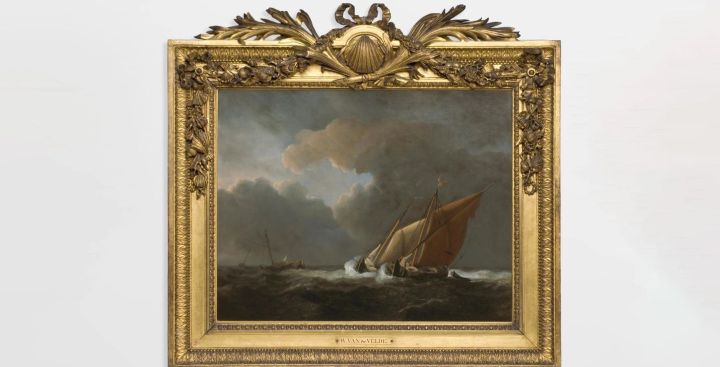
Willem van de Velde the Younger, Two Dutch Vessels Close-Hauled in a Strong Breeze, 1672, oil on canvas (Philadelphia Museum of Art, John G. Johnson Collection, 1917, Cat. 591).
◊ ◊ ◊ ◊ ◊
Now on view at the Philadelphia Museum of Art (Lynn Roberts includes a helpful interview at The Frame Blog with the show’s curator Tara Contractor and conservator Nicolette Absil) . . .
Framed! European Picture Frames from the Johnson Collection
Philadelphia Museum of Art, 21 December 2024 — November 2025
Curated by Tara Contractor
The installation highlights picture frames as works of art in their own right, exploring their shifting forms and functions from the altar-like frames of the Renaissance to the experimental, artist-designed frames of the late 1800s. It includes thirteen frames from the Johnson Collection, which, together, express the craftsmanship and variety of European frames through the centuries.
The Magazine of the Decorative Arts Trust, Summer 2025
The Decorative Arts Trust has shared select articles from the summer issue of their member magazine as online articles for all to enjoy. The following articles are related to the 18th century:
The Magazine of the Decorative Arts Trust, Summer 2025
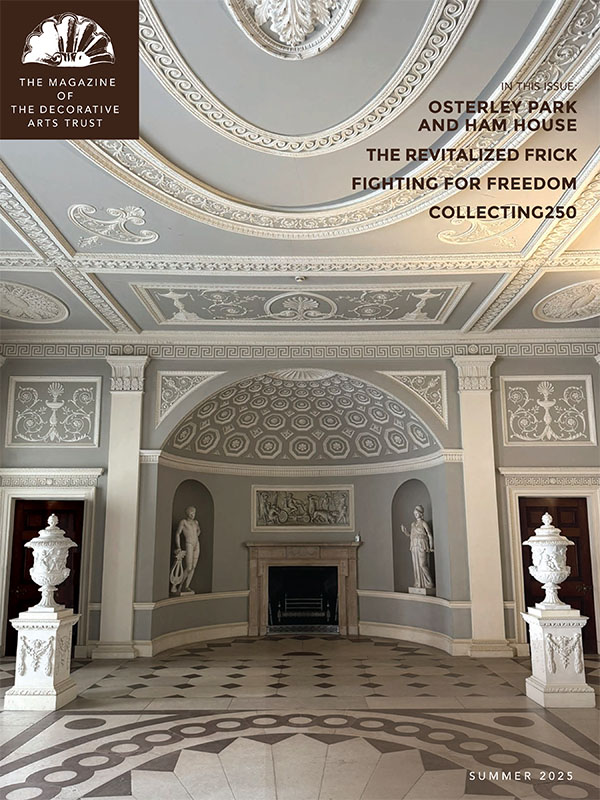 • “Time Travel in the Thames Valley: Ham House and Osterley Park” by Megan Wheeler Link»
• “Whose Revolution at the Concord Museum” by Reed Gochberg Link»
• “Fighting for Freedom: Black Craftspeople and the Pursuit of Independence” by William A. Strollo Link»
• “Decorative Arts Shine at the Reopened Frick” by Marie-Laure Buku Pongo Link»
• “A Room of Her Own: New Book Explores the Estrado” by Alexandra Frantischek Rodriguez-Jack Link»
• “Luster, Shimmer, and Polish: Transpacific Materialities in the Arts of Colonial Latin America” by Juliana Fagua Arias Link»
The printed Magazine of the Decorative Arts Trust is mailed to Trust members twice per year. Additional membership information is available here.










 Enfilade
leave a comment